



AI in Appliances and Electronics Market Trends, Companies, Revenue / Sales Performance, Manufacturing Yield, Fab Capacity, Export & Import Dynamics, Supply Chain Analysis, Competitive Landscape, and Growth Forecast
AI in Appliances and Electronics Market (By Component: Hardware, Software, Services; By Technology: Machine Learning, Natural Language Processing, Computer Vision, Speech Recognition, Others; By Application: Smart Refrigerators, Smart Ovens, Smart Washing Machine, Smart TVS, Smart Speakers, Smartwatches, Security Systems with Smart Cameras, Other) - Global Industry Analysis, Size, Trends, Leading Companies, Regional Outlook, and Forecast 2026 to 2035
Source: https://www.precedenceresearch.com/ai-in-appliances-and-electronics-market
 Get a Sample
 Table Of Content


What is AI in Appliances and Electronics Market Size in 2026?
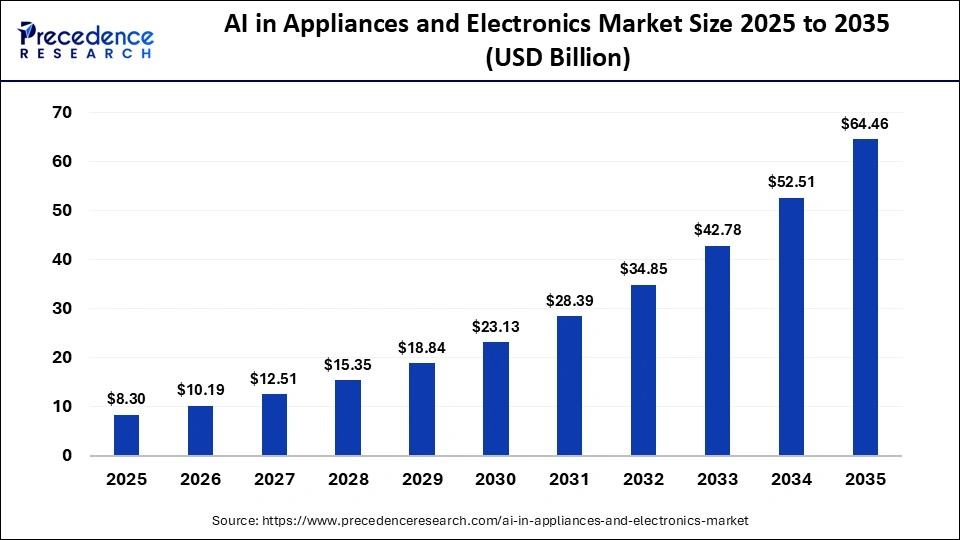
The global AI in appliances and electronics market size was calculated at USD 8.30 billion in 2025 and is predicted to increase from USD 10.19 billion in 2026 to approximately USD 64.46 billion by 2035, expanding at a CAGR of 22.75% from 2026 to 2035. The market is expanding rapidly, driven by rising consumer demand for smart home appliances amid increasingly busy lifestyles and urbanization. Growing emphasis on energy efficiency, the expansion of on-device AI capabilities, the proliferation of IoT-connected ecosystems, and continuous product innovations by leading electronics manufacturers integrating AI technologies are further accelerating market growth.
Key Takeaways
- By region, North America held the largest market share in 2025.
- By region, Asia Pacific is projected to grow at the fastest CAGR during the foreseeable period.
- By component, the software segment held the largest market share in 2025.
- By component, the services segment is expected to grow at a significant rate in the coming years.
- By technology, the machine learning segment held the largest market share in 2025.
- By technology, the speech recognition segment is projected to grow at the fastest CAGR during the foreseeable period.
- By application, the smart TVs segment held the largest market share in 2025.
- By application, the security system with smart cameras segment is projected to grow at the fastest CAGR during the foreseeable period.
Market Overview
The Artificial Intelligence in appliances and electronics market focuses on the integration of artificial intelligence technologies, such as computer vision, machine learning, and voice recognition, into everyday devices, enabling them to sense user behavior, learn usage patterns, and operate autonomously with optimized energy consumption. The market is experiencing a significant shift from passive appliances to intelligent, proactive assistants that deliver highly personalized experience and seamless connectivity within smart home ecosystems. Growth is being driven by increasing demand for convenience, enhanced energy efficiency to minimize power wastage, and the rising adoption of voice-controlled, interconnected smart home environments.
AI in Appliances and Electronics Market Trends
- Rapid Adoption of Edge AI and TinyML: The market is witnessing strong adoption of edge AI and TinyML technologies, enabling AI processing directly on devices. This shift reduces cloud dependency, enhances data privacy, and enables faster, localized decision-making in smart appliances.
- Growth of Hyper-Personalization: Increasing demand for hyper-personalized experiences is significantly driving market growth. AI-enabled devices are learning users' daily habits and preferences to automate repetitive tasks and optimize time and energy usage.
- Rising Demand for Smart Kitchens: Advanced smart kitchen appliances, including AI-enabled refrigerators and ovens, are gaining traction globally. Features such as recipe recommendations, AI-based food recognition, and Wi-Fi-connected monitoring are enhancing user convenience and efficiency.
- Expansion of Voice-Controlled Interfaces: Voice-controlled interfaces have become a standard feature in interconnected home ecosystems. They are widely integrated into smart TVs, kitchen appliances, and home audio systems, offering seamless and hands-free operation.
Market Scope
| Report Coverage | Details |
| Market Size in 2025 | USD 8.30 Billion |
| Market Size in 2026 | USD 10.19 Billion |
| Market Size by 2035 | USD 64.46 Billion |
| Market Growth Rate from 2026 to 2035 | CAGR of 22.75% |
| Dominating Region | North America |
| Fastest Growing Region | Asia Pacific |
| Base Year | 2025 |
| Forecast Period | 2026 to 2035 |
| Segments Covered | Component, Technology, Application, and region |
| Regions Covered | North America, Europe, Asia-Pacific, Latin America, and Middle East & Africa |
Segment Insights
Component Insights
Why Did the Software Segment Dominate the AI in Appliances and Electronics Market?
The software segment dominated the market, holding the largest share in 2025, driven by rising demand for personalization, intelligent user interfaces, and advanced automation capabilities that enable devices to learn and adapt to users' daily routines. The growing shift toward edge AI, where data processing occurs locally rather than in the cloud, has further accelerated the demand for software solutions that ensure faster performance, enhanced security, and improved data privacy. Additionally, consumers increasingly prefer smart appliances such as refrigerators and washing machines that can automate repetitive tasks while optimizing energy consumption based on individual behavior patterns.
The services segment is expected to grow at the fastest rate in the upcoming period due to the increasing complexity of integrating AI with physical devices and the rising consumer demand for seamless smart ecosystem support. Services play a critical role in installation, system integration, maintenance, and regular software updates for AI-powered and connected appliances. The growing shift toward personalized and cloud-based AI functionalities further strengthens demand for ongoing technical support. As appliances such as smart refrigerators, AI-enabled TV remotes, and washing machines become more sophisticated, continuous setup assistance, performance optimization, and troubleshooting services are becoming essential.
Technology Insights
What Made Machine Learning the Dominant Segment in the AI in Appliances and Electronics Market?
The machine learning segment dominated the market by holding the largest share in 2025, owing to the unmatched offerings of machine learning algorithms like personalized functionality, predictive maintenance, and enhanced user experience with energy efficiency. ML algorithms analyze user behavior and customize the functionality of devices like temperature settings based on usage patterns or TV content suggestions. ML can optimize resource usage, like managing battery life in smartphones and optimizing energy consumption of devices in a smart home. Also, ML-powered devices can identify potential failures and send alerts to users or manufacturers that reduce downtime and repair costs.
The speech recognition segment is projected to grow at the fastest CAGR during the foreseeable period due to its ability to provide a hands-free and natural user experience that enhances accessibility and personalized device interaction conveniently. Many users prefer voice commands over typing or searching that allows them to multitask other tasks as well. It allows individuals with any kind of disability to easily operate devices in the smart home as per the user's preference. Voice commands offer faster execution without the need for complex tasks or tactile interfaces.
Application Insights
Why Does the Smart TVs Segment Lead the AI in Appliances and Electronics Market?
The smart TVs segment held the largest market share in 2025, owing to the rising demand for personalized streaming experiences and integrated voice assistants. AI enhances user experience through real-time image upscaling, audio optimization, and tailored content recommendations based on viewing history and preferences. Smart TVs increasingly function as central hubs within smart home ecosystems, integrating voice assistants such as Siri, Google Assistant, and Alexa for seamless control. Additionally, AI-powered features like viewing habit analysis, advanced picture enhancement, and the growing popularity of on-demand content and cloud gaming services are key factors supporting the segment's dominance.
The security system with smart cameras segment is projected to grow at the fastest CAGR during the foreseeable period, driven by rising safety concerns, rapid advancements in edge AI, and increasing integration of IoT-enabled devices. AI-powered smart cameras have become a core component of smart home ecosystems, offering proactive and intelligent surveillance solutions to address evolving security challenges. Advanced features such as facial recognition, license plate recognition, motion detection, and real-time monitoring have become standard, further accelerating segment growth.
Regional Insights
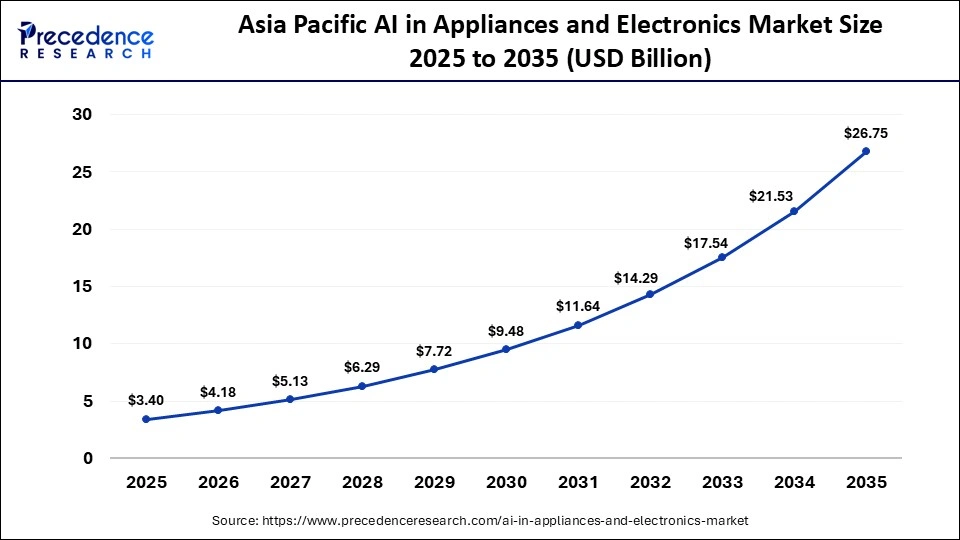
Asia Pacific AI in Appliances and Electronics Market Size and Growth 2026 to 2035
The Asia Pacific AI in appliances and electronics market size is expected to be worth USD 26.75 billion by 2035, increasing from USD 3.40 billion by 2025, growing at a CAGR of 22.91% from 2026 to 2035
What Made North America the Dominant Region in the AI in Appliances and Electronics Market?
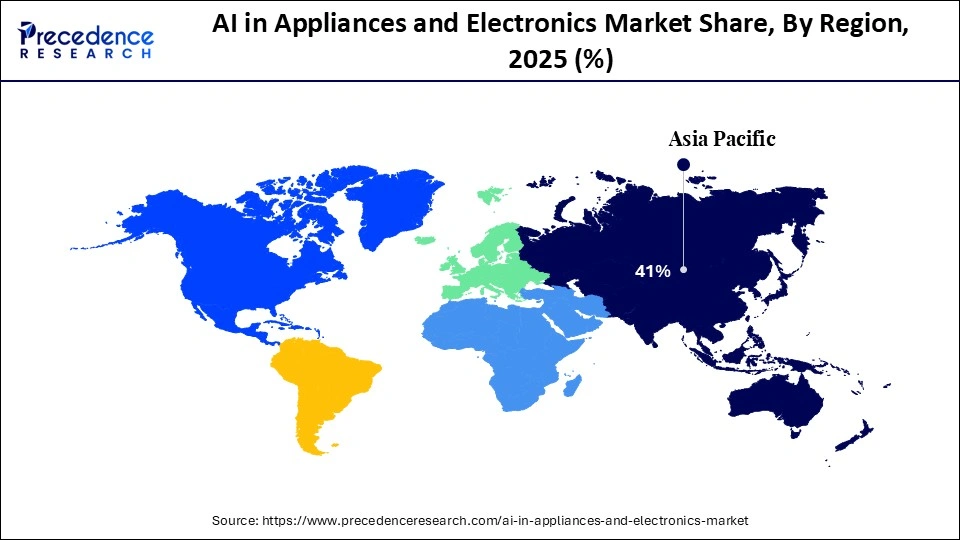
North America dominated the AI in appliances and electronics market by holding a major share in 2025 due to a combination of factors like advanced technological ecosystems, substantial investments in research and development, and a strong focus on energy efficiency and environmental regulations. The proliferation of on-device AI and edge computing capabilities has further strengthened the region's market position. Additionally, rising consumer demand for smart, premium connected devices, along with widespread adoption of voice assistants and app-controlled home appliances, continues to drive market growth across North America.
Public and private institutions are making significant investments to accelerate AI adoption in everyday appliances and electronics, supported by strong government initiatives that are driving innovation in the market. The region is witnessing a rapid shift toward on-device AI deployment in products such as smartphones and smart cameras, enhancing performance, enabling real-time processing, and strengthening data security and user privacy.
U.S. AI in Appliances and Electronics Market Analysis
The U.S. is a major contributor to the market within North America due to the rising consumer demand for smart home appliances, such as refrigerators, TVs, and kitchen devices with AI-powered systems, shifting lifestyle preferences, and innovative product launches by leading companies. There is a rising demand for smart TVs, IoT-enabled refrigerators, and voice-controlled assistants like Siri and Alexa, which form the backbone of the connected home ecosystems.
Why is Asia Pacific Rapidly Growing in the AI in Appliances and Electronics Market?
Asia Pacific is projected to grow at the fastest CAGR during the foreseeable period due to rising consumer adoption of smart home devices, increasing disposable incomes, and the expansion of connected lifestyles in urban areas. The deployment of advanced technologies such as Edge AI and 5G is enabling faster, more secure, and localized AI processing in appliances, enhancing user experience. Additionally, the region's strong manufacturing base, government support for AI innovation, and growing awareness of energy-efficient smart devices are further driving market growth.
China AI in Appliances and Electronics Market Analysis
China is considered a major contributor to the market within Asia Pacific, driven by the rising adoption of advanced digital technologies that are transforming the household appliances sector and enhancing manufacturing capabilities. The rapid integration of AI in home appliances, including voice-controlled devices and facial recognition features, enables highly personalized user experiences. Additionally, government initiatives such as the ‘AI Plus Initiative' by the State Council are promoting AI adoption across science and technology, industrial development, and consumer electronics, further accelerating market growth.
Major leading players in the area are rapidly integrating AI systems into their operations to maintain a competitive edge. For instance, Chinese home appliance manufacturer Gree Electric Appliances has embedded its proprietary AI framework into the DeepSeek R1 and plans to develop an industry-focused AI model based on the DeepSeek platform, highlighting the region's drive toward advanced, AI-enabled product innovation.
AI in Appliances and Electronics Market Value Chain Analysis
- AI Platforms and Model Building: The stage deals with the creation of large language models and algorithms for tasks like voice recognition and predictive maintenance with computer vision.
Key Players: OpenAI, Google DeepMind, H2O.ai, C3.ai, and Databricks. - OEM Appliance & Electronics Manufacturers: The stage involves the integration of AI into physical devices made by OEMs, where they focus on edge AI to process data locally without cloud platforms.
Key Players: LG Electronics, Bosch, Samsung, Apple, and Sony. - Distribution & Retail Channels: AI-enabled appliances reach consumers through online and offline retail networks.
Key Players: Amazon, Best Buy, and Alibaba Group.
Top Companies in the AI in Appliances and Electronics Market
- Samsung Electronics
- LG Electronics
- Haier Smart Home
- Whirlpool Corporation
- Robert Bosch GmbH
- Panasonic Holdings
- Xiaomi Corporation
- Miele & Cie. KG
- Ecovacs Robotics
- Dyson
- Amazon (Alexa Ecosystem)
- Alphabet (Google/Gemini)
- Apple (HomeKit/Apple Intelligence)
- NVIDIA (AI Hardware)
- Hisense
- Electrolux AB
Recent Developments
- In March 2026, HONOR, a leading marketer in China, introduced its expanding AI device ecosystem at MWC 206 and is working on its long-term commitment to build human-centric AI with new species of smartphones that reshape future AI devices and their integration with motion and spatial awareness.(Source:
https://www.eqs-news.com) - In February 2026, India's leading electronics company, Samsung, gained top industry recognition across computing, wearables, home appliances, and smartphones with the integration of AI systems in its products. (source: https://news.samsung.com)
- In January 2025, a leading electronics industry player, Bosch, introduced a personalized AI designed for the kitchen and launches first cordless stick vacuums for the North America region with micro clean technology and a warranty of motors for up to 10 years. (Source: https://www.businesswire.com)
Segments Covered in the Report
By Component
- Hardware
- Software
- Services
By Technology
- Machine Learning
- Natural Language Processing
- Computer Vision
- Speech Recognition
- Others
By Application
- Smart Refrigerators
- Smart Ovens
- Smart Washing Machine
- Smart TVS
- Smart Speakers
- Smartwatches
- Security Systems with Smart Cameras
- Other
By Region
- North America
- Asia Pacific
- Europe
- Latin America
- Middle East & Africa
For inquiries regarding discounts, bulk purchases, or customization requests, please contact us at sales@precedenceresearch.com
Frequently Asked Questions





Ask For Sample
No cookie-cutter, only authentic analysis – take the 1st step to become a Precedence Research client
 Get a Sample




 sales@precedenceresearch.com
 Schedule a Meeting
