



Cardiorespiratory Assessment Units Market Size, Companies, Share, Patient Volume, Treatment Adoption Rates, Pricing Analysis, Regulatory Landscape, Competitive Positioning, and Demand Forecast
Cardiorespiratory Assessment Units Market (By Product Type: Stress ECG Systems, Cardiopulmonary Exercise Testing (CPET) Systems; By Technology: Treadmill-Based Systems, Wearable/Patch-Based CPET; By Application: Disease Diagnostics, Sports and Human-Performance Assessment; By End-User: Hospitals, Sports-Performance and Research Labs) - Global Industry Analysis, Size, Trends, Leading Companies, Regional Outlook, and Forecast 2026 to 2035
Source: https://www.precedenceresearch.com/cardiorespiratory-assessment-units-market
 Get a Sample
 Table Of Content


What is the Cardiorespiratory Assessment Units Market Size in 2026?
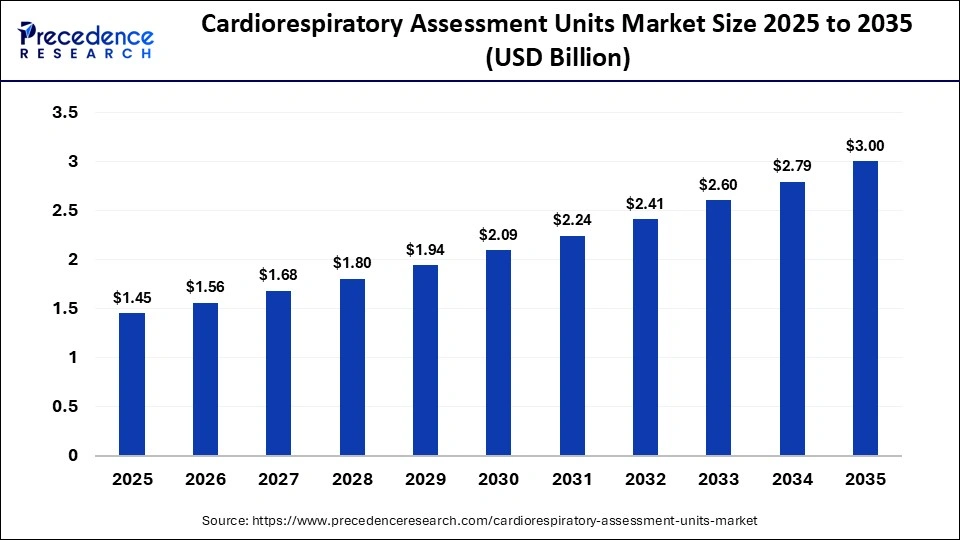
The global cardiorespiratory assessment units market size accounted for USD 1.45 billion in 2025 and is predicted to increase from USD 1.56 billion in 2026 to approximately USD 3.00 billion by 2035, expanding at a CAGR of 7.55% from 2026 to 2035. This market is growing due to the rising incidence of chronic respiratory diseases, driven by factors like rising tobacco consumption, aging populations, and industrial air pollution, which necessitate long-term management and even frequent, accurate diagnostics.
Key Takeaways
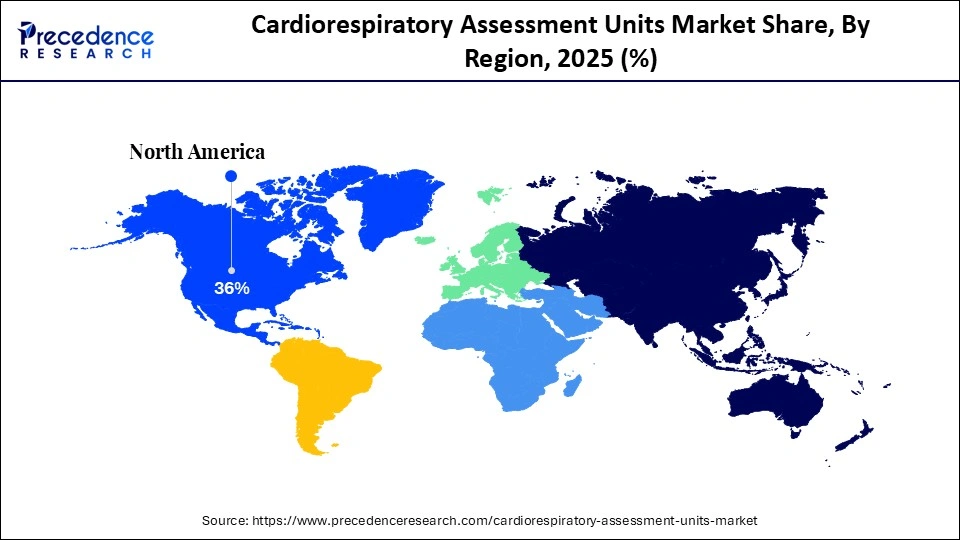
- North America dominated the global cardiorespiratory assessment units market with a share of approximately 36% in 2025.
- Asia-Pacific is expected to grow at the fastest CAGR of 8.23% between 2026 and 2035.
- By product type, the stress ECG systems segment dominated the market in 2025.
- By product type, the cardiopulmonary exercise testing (CPET) systems segment is expected to expand at the fastest CAGR between 2026 and 2035.
- By technology, the treadmill-based systems segment held the largest market share in 2025.
- By technology, the wearable/patch-based CPET segment is expected to grow with the highest CAGR in the market during the studied years.
- By application, the disease diagnostics segment contributed the biggest market share in 2025.
- By application, the sports and human-performance assessment segment is expected to expand rapidly in the market in the coming years.
- By end-user, the hospitals segment held a major market share in 2025.
- By end-user, the sports-performance and research labs segment is expected to expand at the fastest CAGR between 2026 and 2035.
What Drives the Cardiorespiratory Assessment Units Market?
Cardiorespiratory assessment units are specialized, noninvasive tests that work within clinical, physiotherapy, or cardiopulmonary exercise testing (CPET) to evaluate the condition of the heart, muscles, and lungs during rest and exercise. The cardiorespiratory assessment units industry is mainly driven by the growing prevalence of chronic heart and lung diseases, a fast-aging global population, and the rising adoption of and need for early diagnostic tools. As the elderly population grows, there is a greater susceptibility to cardiovascular conditions, driving the need for specialized, long-term diagnostic and monitoring devices.
How is AI Influencing Cardiorespiratory Assessment Units?
Artificial intelligence (AI) is changing the cardiorespiratory assessment units industry from a reactive to a proactive, data-driven, and personalized discipline. AI-based models can automatically extract features from respiratory sounds, including coughs and lung sounds, to detect conditions such as pneumonia and COPD with high sensitivity and specificity. They can detect minor changes that are otherwise difficult to detect through human assessment. AI and machine learning (ML) algorithms can analyze large volumes of data and recommend appropriate interventions for specific conditions.
What are the Key Trends Influencing the Cardiorespiratory Assessment Units Market?
- Home-Based Care Expansion: The COVID-19 pandemic accelerated the acceptance of home-based respiratory and cardiac diagnostics. Patients with chronic conditions such as COPD, asthma, and heart failure are increasingly utilizing portable devices to handle their health outside of traditional clinical settings.
- Enhanced Diagnostics: AI and ML algorithms are being integrated into CPET software along with ECG monitors to enhance accuracy, automate data interpretation, and offer real-time, predictive insights.
- Wearable Sensors: The market is witnessing a high need for wearable ECG, photoplethysmography, and oxygen saturation sensors that provide continuous monitoring without restricting patient movement.
- Predictive Analytics: AI algorithms can forecast exacerbations in conditions such as COPD with up to 78% accuracy, enabling early intervention.
- Data Analysis: AI algorithms determine subtle patterns in test results that might be missed by human observers, thus elevating the accuracy of cardiac diagnostics.
- Tailored Treatment Approaches: Advances in genomics, along with molecular diagnostics, are allowing the development of personalized therapy plans and devices.
Future Market Outlook
- Expansion in Emerging Markets: It is driven by high patient volumes, enhancing healthcare infrastructure, and growing chronic disease prevalence. As developed markets reach saturation, producers are shifting their aim to these regions to capture growth via increased access to advanced diagnostic and monitoring devices.
- Infrastructure Development: It is characterized by significant investment in hospital growth, the establishment of dedicated cardiac or respiratory centers, along with the integration of advanced diagnostic technologies. Moreover, the market is moving towards modernized, digitally enabled facilities to manage the rising prevalence of chronic cardiovascular and respiratory illnesses.
Market Scope
| Report Coverage | Details |
| Market Size in 2025 | USD 1.45 Billion |
| Market Size in 2026 | USD 1.56 Billion |
| Market Size by 2035 | USD 3.00 Billion |
| Market Growth Rate from 2026 to 2035 | CAGR of 7.55% |
| Dominating Region | North America |
| Fastest Growing Region | Asia Pacific |
| Base Year | 2025 |
| Forecast Period | 2026 to 2035 |
| Segments Covered | Product Type, Technology, Application, End-User, and Region |
| Regions Covered | North America, Europe, Asia-Pacific, Latin America, and Middle East & Africa |
Segmental Insights
Product Type Insights
Which Product Type Segment Dominated the Cardiorespiratory Assessment Units Market?
The stress ECG systems segment held a dominant position in the market in 2025. This is due to its high diagnostic accuracy for coronary artery disease, cost-effectiveness compared to imaging options, and the growing global prevalence of cardiovascular diseases. The integration of AI and advanced software into automated stress ECG systems has decreased manual errors and improved accuracy in data analysis, making them more efficient and reliable.
The cardiopulmonary exercise testing (CPET) systems segment is expected to grow at the fastest CAGR throughout the forecast period. It acts as the "gold standard" for objectively understanding the integrated physiological response of the cardiac, pulmonary, muscular, and metabolic systems to exercise. Modern CPET systems are now increasingly integrating AI and cloud-driven data analytics, which enhance interpretation accuracy and even simplify complex data analysis.
Technology Insights
Why Did the Treadmill-Based Systems Segment Dominate the Market?
The treadmill-based systems segment dominated the cardiorespiratory assessment units market in 2025 because treadmills are considered the gold standard for cardiovascular stress testing, providing superior diagnostic accuracy, versatility, and even high adoption rates in clinical settings. Treadmill stress tests are thus highly effective for detecting ischemic heart disease and coronary artery disease, and assessing exercise tolerance.
The wearable/patch-based CPET segment is expected to show the fastest growth over the forecast period because of the capability for continuous, remote, non-invasive, and long-term monitoring, which addresses the restriction of traditional, episodic hospital-based testing. As healthcare shifts towards homecare settings, these patches are now ideal for monitoring patients after hospital discharge, decreasing readmission rates.
Application Insights
How the Disease Diagnostics Segment Dominated the Market?
The disease diagnostics segment registered its dominance over the global cardiorespiratory assessment units market in 2025. This is due to the surge in global prevalence of chronic respiratory and cardiovascular diseases, which created an urgent, high-volume need for accurate, rapid, and early detection. Early detection of diseases such as lung cancer is crucial for enhancing survival rates, which has driven investment in and even utilization of sophisticated diagnostic equipment.
The sports and human-performance assessment segment is expected to witness the fastest growth in the market over the forecast period, due to the rising acceptance of precision analytics to maximize athlete performance, the preventive health aim of identifying hidden cardiac issues such as arrhythmias in athletes, and the wider application of CPET in determining anaerobic thresholds. Moreover, the integration of technology has made assessment tools more accurate, portable, and user-friendly, thus expanding their usage beyond elite sports into recreational athletics.
End-User Insights
Which End-User Segment Led the Cardiorespiratory Assessment Units Market?
The hospitals segment led the market in 2025. This is due to hospitals handling the highest volume of severe cardiovascular cases, which include heart failure, arrhythmias, and coronary artery disease, which demand specialized, advanced, and usually invasive diagnostics. Moreover, they have specialized teams like cardiologists, surgeons, and trained nurses, capable of performing, interpreting, and responding to complex diagnostic tests and emergency care needs.
The sports-performance and research labs segment is expected to gain the highest market share between 2026 and 2035, due to the increasing need for using fitness assessments for proactive health, injury prevention, and personalized training programs, which has further driven the use of these devices in sports performance centers. Moreover, the growth of dedicated sports performance labs together with high-performance training centers globally has increased the acceptance rate of these assessment units.
Regional Insights
North America Cardiorespiratory Assessment Units Market Size and Growth 2026 to 2035
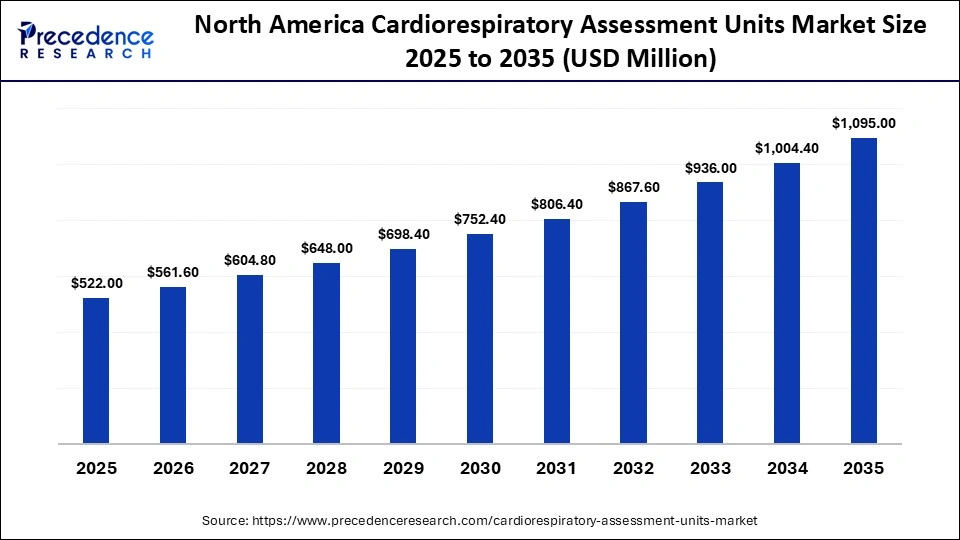
The North America cardiorespiratory assessment units market size is estimated at USD 522.00 million in 2025 and is projected to reach approximately USD 1,095.00 million by 2035, with a 7.69% CAGR from 2026 to 2035.
Why North America Dominated the Cardiorespiratory Assessment Units Market?
North America held a major market share of approximately 39% in 2025. This is due to the presence of well-equipped, advanced hospital networks, along with a high adoption rate of innovative, minimally invasive, and AI-driven diagnostic technologies, such as portable capnography, along with AI-powered ECG, which contribute to market leadership.
U.S. Cardiorespiratory Assessment Units Market Size and Growth 2026 to 2035
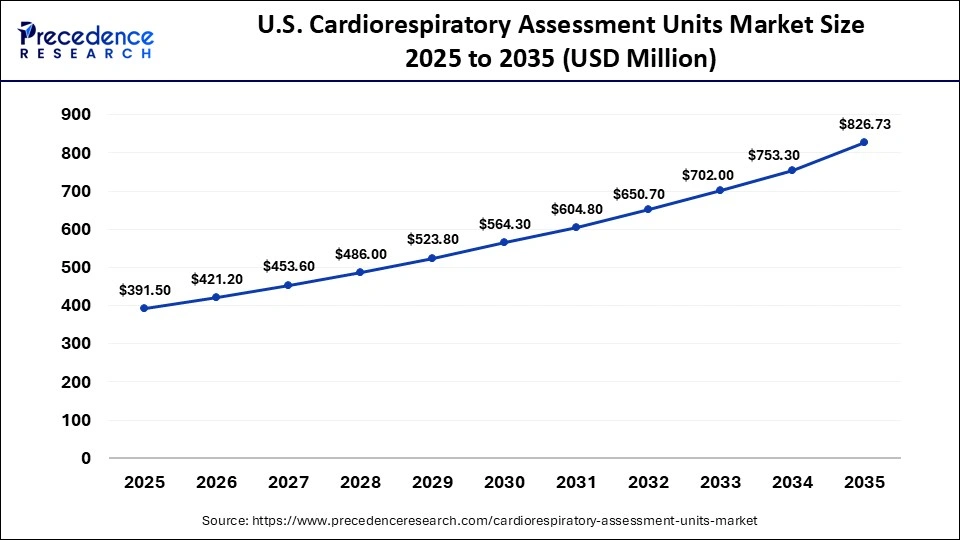
The U.S. cardiorespiratory assessment units market size is calculated at USD 391.50 million in 2025 and is expected to reach nearly USD 826.73 million in 2035, accelerating at a strong CAGR of 7.76% between 2026 and 2035.
U.S. Market Trends
The U.S. leads the market in North America, due to a strong, rapid shift towards portable diagnostic devices, e.g., handheld, wireless ultrasound, such as GE HealthCare's Vscan Air SL, and even wearable, remote, patient monitoring tools. AI-powered diagnostic tools are changing cardiac care by offering faster, more precise, real-time data, such as in ECG, imaging, and monitoring. Public health campaigns and even growing knowledge are driving routine, early screening for heart health, thus, before conditions become severe.
How is Asia-Pacific Growing in the Cardiorespiratory Assessment Units Market?
Asia-Pacific is expected to experience the fastest growth with a CAGR of 8.23% during the predicted timeframe, due to the high prevalence of chronic illnesses, a fast-aging population, and significant investments in healthcare infrastructure. A significant rise in the geriatric population, which is more vulnerable to both respiratory and heart conditions, has created a sustained demand for diagnostic and monitoring tools. Government bodies also make constant efforts to raise awareness about early diagnosis and screening of chronic diseases.
China Market Trends
China's market is driven by a high prevalence of chronic respiratory and cardiovascular diseases, rapid aging of the population, and increased government investment in healthcare infrastructure. The rapid growth of national chest-pain-center networks has fueled the need for advanced, rapid diagnostic and emergency monitoring equipment.
What Makes Europe a Significant Region in the Cardiorespiratory Assessment Units Market?
Europe is expected to grow at a significant CAGR throughout the forecast period. This is due to a high prevalence of chronic cardiovascular and respiratory diseases. There is a significant shift toward homecare settings for monitoring, which is anticipated to grow at a high rate. The burgeoning medical device sector and growing research activities foster market growth. Favorable government support, evolving regulatory landscape, and increasing investments also contribute to market growth.
UK Market Trends
The UK market is driven by the AI-enabled spirometry, and ECG diagnostics are gaining rapid uptake to shorten diagnosis times. Moreover, wearables paired with AI-based analytics alert clinicians to the early signs of decompensation in heart failure patients. To tackle backlogs, the market is aiming for minimally invasive systems, like transcatheter valves and pulsed-field ablation platforms.
What Makes Latin America a Notable Region in the Cardiorespiratory Assessment Units Market?
Latin America is expected to grow at a notable CAGR throughout the forecast period. The region is undergoing a surge in cardiovascular diseases, which include hypertension, heart failure, and even coronary artery disease, which necessitates constant, real-time monitoring. There is a strong, rising adoption of advanced, minimally invasive hemodynamic monitoring systems that provide real-time data analysis to improve patient outcomes.
Brazil Market Trends
Brazil's market is driven by an aging population, the high prevalence of chronic disorders, and rapid technological adoption, mainly in the Southeastern region. There is a significant shift towards connected respiratory sensors along with wearable cardiovascular monitors, such as AI-driven devices, to track breathing patterns together with heart health outside hospitals.
Will the Middle East and Africa Grow in the Cardiorespiratory Assessment Units Market?
The Middle East and Africa are expected to grow at a considerable CAGR in the upcoming period. It is driven by a high burden of chronic diseases, remarkable infrastructure investment, and fast adoption of advanced technologies. There is a rising preference for user-friendly, portable, and even rapid testing devices that offer immediate, actionable results in emergency and primary care settings.
UAE Market Trends
The UAE market is driven by a high prevalence of cardiovascular and respiratory diseases, rapid acceptance of digital healthcare, and even government-led infrastructure investment. There is a strong shift towards wearable health technology, AI-driven diagnostic tools, and remote patient monitoring. The UAE government's commitment to enhancing healthcare under Vision 2030, which includes investments in public hospitals and mandates for telehealth, drives the acceptance of advanced technology.
Cardiorespiratory Assessment Units Market Supply Chain Analysis
- R&D
The latest research focuses on integrating advanced technologies, such as AI and ML, to enhance precision and accuracy.
Key Players: Abbott Laboratories, MGC Diagnostics, and COSMED.
- Clinical Trials and Regulatory Approval
Clinical trials assess the safety, efficacy, and accuracy of cardiorespiratory assessment units in humans. Regulatory agencies approve these diagnostics based on trial data.
Key Players: hVIVO, Clario, Biotrial, Milo Healthcare, and IQVIA
- Distribution to Hospitals, Pharmacies
Diagnostics are delivered across hospitals and pharmacies either through distributors or wholesalers or through online platforms.
Key Players: Sam's International, GMD India, and MGC Diagnostics.
- Patient Support and Services
Patient support refers to providing financial assistance and guiding patients about the use and benefits of advanced diagnostics.
Cardiorespiratory Assessment Units Market Companies
- MGC Diagnostics Corporation
- General Electric Company
- Schiller AG
- Vyaire Medical Inc.
- Koninklijke Philips N.V.
- Medtronic plc
- COSMED Srl
- Sam's International
- MedPines
- BPL Medical Technologies
Recent Developments
- In April 2025, Medtronic announced a collaboration with Retia Medical, an innovative digital health firm that develops advanced hemodynamic solutions, to distribute the Argos cardiac output monitor. The Argos monitor offers healthcare professionals with accurate hemodynamic data to fund the treatment of high-risk surgical and even critically ill patients.
- In March 2025, GE HealthCare declared the U.S. launch of Flyrcado injection at the 2025 American College of Cardiology Annual Scientific Session & Expo. The firm showcased new AI-driven innovations, reflecting its strategy to leverage AI to assist in increasing efficiency and allowing seamless integration of data over the cardiology care pathway.
Segments Covered in the Report
By Product Type
- Stress ECG Systems
- Cardiopulmonary Exercise Testing (CPET) Systems
By Technology
- Treadmill-Based Systems
- Wearable/Patch-Based CPET
By Application
- Disease Diagnostics
- Sports and Human-Performance Assessment
By End-User
- Hospitals
- Sports-Performance and Research Labs
By Region
- North America
- Asia Pacific
- Europe
- Latin America
- Middle East & Africa
For inquiries regarding discounts, bulk purchases, or customization requests, please contact us at sales@precedenceresearch.com
Frequently Asked Questions





Ask For Sample
No cookie-cutter, only authentic analysis – take the 1st step to become a Precedence Research client
 Get a Sample
.webp)



 sales@precedenceresearch.com
 Schedule a Meeting
