



Chronic Venous Occlusions Treatment Market Size, Companies, Share, Patient Volume, Treatment Adoption Rates, Pricing Analysis, Regulatory Landscape, Competitive Positioning, and Demand Forecast
Chronic Venous Occlusions Treatment Market (By Treatment Type: Pharmacological Treatment, Surgical Treatment, Minimally Invasive Treatment, Compression Therapy; By Diagnosis Type: Duplex Ultrasound, Venography, Computed Tomography, Magnetic Resonance Imaging; By Product Type: Medication, Devices, Therapeutic Equipment; By End-User: Pharmacological Treatment, Surgical Treatment, Minimally Invasive Treatment, Compression Therapy) - Global Industry Analysis, Size, Trends, Leading Companies, Regional Outlook, and Forecast 2026 to 2035
Source: https://www.precedenceresearch.com/chronic-venous-occlusions-treatment-market
 Get a Sample
 Table Of Content


What is Chronic Venous Occlusions Treatment Market Size in 2026?
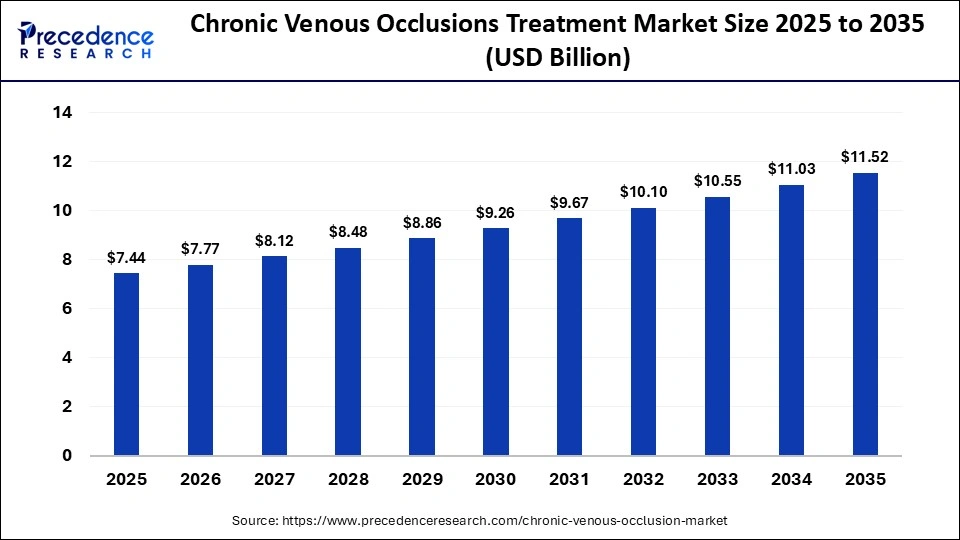
The global chronic venous occlusions treatment market size was calculated at USD 7.44 billion in 2025 and is predicted to increase from USD 7.77 billion in 2026 to approximately USD 11.52 billion by 2035, expanding at a CAGR of 4.47% from 2026 to 2035. The market is driven by rising preference for minimally invasive procedures, along with advancements in techniques like endovenous laser therapy and radiofrequency ablation.
Key Takeaways
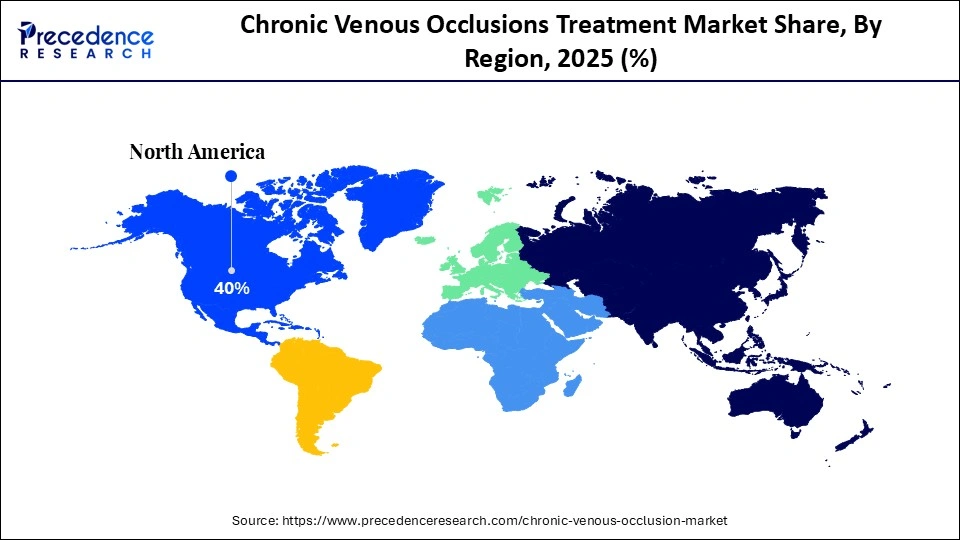
- North America dominated the market with the largest share of 40% in 2025.
- Asia Pacific is expected to grow at a significant CAGR during the forecast period.
- By treatment type, the pharmacological treatment segment dominated the market with the largest share in 2025.
- By treatment type, the surgical treatment segment is expected to grow at the fastest CAGR during the forecast period.
- By diagnosis type, the duplex ultrasound segment dominated the market with the largest share in 2025.
- By diagnosis type, the venography segment is predicted to grow at the fastest CAGR during the forecast period.
- By product type, the medication segment dominated the market with the highest share in 2025.
- By product type, the devices segment is expected to grow at the fastest CAGR during the forecast period.
- By end-user, the hospitals segment dominated the market with the highest share in 2025.
- By end-user, the ambulatory surgical centers segment is expected to grow at the fastest CAGR during the forecast period.
What is the Chronic Venous Occlusions Treatment Market
Chronic venous occlusions are a long-term blockage of a vein, most commonly in the legs or arms, that disrupts normal blood flow and may lead to swelling, pain, heaviness, and skin changes. Treatment aims to relieve symptoms, prevent disease progression, and minimize complications. Management typically includes a combination of medical devices and medications, where devices such as specialized instruments or implants help restore and maintain proper circulation, while drugs support symptom control and address underlying vascular issues. These therapies are commonly used to manage conditions like varicose veins, venous ulcers, oedema, and deep vein thrombosis, and are provided across hospitals, clinics, ambulatory surgery centers, trauma units, and other healthcare facilities.
How are Technological Advancements Influencing the Chronic Venous Occlusions Treatment Market?
The chronic venous occlusions treatment market is influenced by significant technological advancements, driven by the increasing adoption of advanced minimally invasive treatment options that enhance clinical outcomes and improve overall treatment effectiveness. Techniques such as endovenous laser therapy and radiofrequency ablation are increasingly preferred due to their ability to effectively restore venous function while minimizing surgical trauma.
Alongside innovations in catheter-based systems, stents, and imaging guidance, these approaches contribute to better patient outcomes, shorter recovery periods, and reduced complication rates, making them highly appealing to both patients and healthcare professionals. Additionally, improvements in endovascular devices, imaging guidance systems, and drug-coated technologies are enhancing procedural success rates and expanding treatment accessibility, thereby driving market growth.
Major Market Trends
- Growing Awareness and Early Diagnosis: Rising awareness about chronic venous disorders among healthcare professionals and the public is encouraging earlier diagnosis and timely intervention. Educational campaigns and improved understanding of symptoms and risk factors are leading to increased treatment uptake, positively influencing demand for chronic venous occlusion therapies.
- Integration of Digital Health Solutions: Telehealth services, remote monitoring tools, and mobile health applications are becoming integral to chronic venous care. These digital solutions enhance patient engagement, enable continuous follow-up, and improve treatment adherence, making care delivery more efficient and supporting overall market expansion.
- Increasing Healthcare Expenditure: Growing healthcare investments across developed and emerging regions are strengthening research, infrastructure, and access to advanced vascular treatments. Higher funding for innovation and specialized care is expanding the availability of effective therapies, creating favorable growth opportunities in the chronic venous occlusion market.
- Advancements in Minimally Invasive Technologies: Innovations in minimally invasive procedures and advanced imaging techniques are transforming treatment approaches. Technologies such as endovenous laser therapy and radiofrequency ablation offer safer procedures, faster recovery, and improved outcomes, driving their adoption among healthcare providers and boosting market growth.
- Rising Focus on Preventive Healthcare: Greater emphasis on preventive strategies, including lifestyle management and early screening programs, is reshaping disease management. Healthcare systems are prioritizing risk reduction and early intervention, which may lower severe complication rates while increasing demand for diagnostic and early-stage treatment solutions.
Market Scope
| Report Coverage | Details |
| Market Size in 2025 | USD 7.44 Billion |
| Market Size in 2026 | USD 7.77 Billion |
| Market Size by 2035 | USD 11.52 Billion |
| Market Growth Rate from 2026 to 2035 | CAGR of 4.47% |
| Dominating Region | North America |
| Fastest Growing Region | Asia Pacific |
| Base Year | 2025 |
| Forecast Period | 2026 to 2035 |
| Segments Covered | Treatment Type, Diagnosis Type, Product Type, End-User, and region |
| Regions Covered | North America, Europe, Asia-Pacific, Latin America, and Middle East & Africa |
Segment Analysis
Treatment Type Insights
Why Did the Pharmacological Treatment Segment Dominate the Chronic Venous Occlusions Treatment Market?
The pharmacological treatment segment dominated the market with the highest share in 2025, as medications remain the first-line approach for managing chronic venous occlusions. Drug therapies are widely prescribed to improve vascular function, reduce inflammation, prevent clot progression, and relieve symptoms such as swelling and pain. Their non-invasive nature, ease of administration, and suitability for long-term management make them a preferred choice among both physicians and patients, particularly in early and moderate stages of the disease.
The surgical treatment segment is projected to grow at the fastest rate during the forecast period, driven by increasing demand for definitive and long-term solutions. As disease severity progresses or when drug therapy provides limited relief, patients are increasingly opting for interventional procedures to restore proper blood flow. Advancements in minimally invasive surgical techniques, improved safety profiles, and faster recovery times are accelerating adoption, reflecting a significant shift toward procedural management in chronic venous care.
Diagnosis Type Insights
What Made Duplex Ultrasound the Dominant Segment in the Chronic Venous Occlusions Treatment Market?
The duplex ultrasound segment dominated the market with the highest share in 2025, as it remains the preferred first-line diagnostic tool for chronic venous occlusions. Its non-invasive nature, cost-effectiveness, and ability to assess both venous structure and blood flow make it highly reliable for initial evaluation. Clinicians widely favor duplex ultrasound due to its safety, patient comfort, and strong diagnostic accuracy, reinforcing its leading position in routine vascular assessments.
The venography segment is projected to expand at the fastest CAGR during the forecast period, driven by rising demand for detailed imaging in complex or unclear cases. Although traditionally invasive, recent advancements have improved its safety and precision, making it increasingly attractive for comprehensive visualization of venous blockages. Meanwhile, computed tomography (CT) and magnetic resonance imaging (MRI) continue to serve specialized roles, but growth momentum is stronger for advanced venographic techniques as providers prioritize high-resolution diagnostic clarity.
Product Type Insights
Why Did the Medication Segment Lead the Chronic Venous Occlusions Treatment Market?
The medication segment led the market with the highest share in 2025, as drug therapy remains the primary approach for managing chronic venous occlusion. Medications play a key role in controlling symptoms, preventing clot progression, and addressing underlying vascular complications. Strong presence of established pharmaceutical players and continuous development of improved treatment protocols further support this segment's leading position.
The devices segment is projected to grow at the fastest CAGR during the forecast period, driven by advancements in minimally invasive technologies and improved treatment outcomes. Innovative interventional devices are increasingly being adopted alongside pharmacological therapies to enhance overall patient care. Growing awareness of integrated treatment approaches and demand for more effective procedural solutions are accelerating growth in this segment.
End-User Insights
How Does the Hospitals Segment Dominate the Chronic Venous Occlusions Treatment Market?
The hospitals segment dominated the market with the highest share in 2025, primarily due to their advanced infrastructure, availability of specialized vascular experts, and ability to manage complex cases. Hospitals are often the preferred setting for chronic venous occlusion treatment as they offer integrated services, including detailed diagnostics, interventional procedures, and post-operative care under one roof.
The ambulatory surgical centers segment is projected to grow at the fastest CAGR during the forecast period, driven by increasing demand for convenient and cost-effective treatment options. These centers are gaining popularity for minimally invasive procedures, shorter hospital stays, and faster recovery times. Their focus on outpatient care and operational efficiency is attracting patients seeking streamlined treatment experiences.
Regional Insights
North America Chronic Venous Occlusions Treatment Market Size and Growth 2026 to 2035
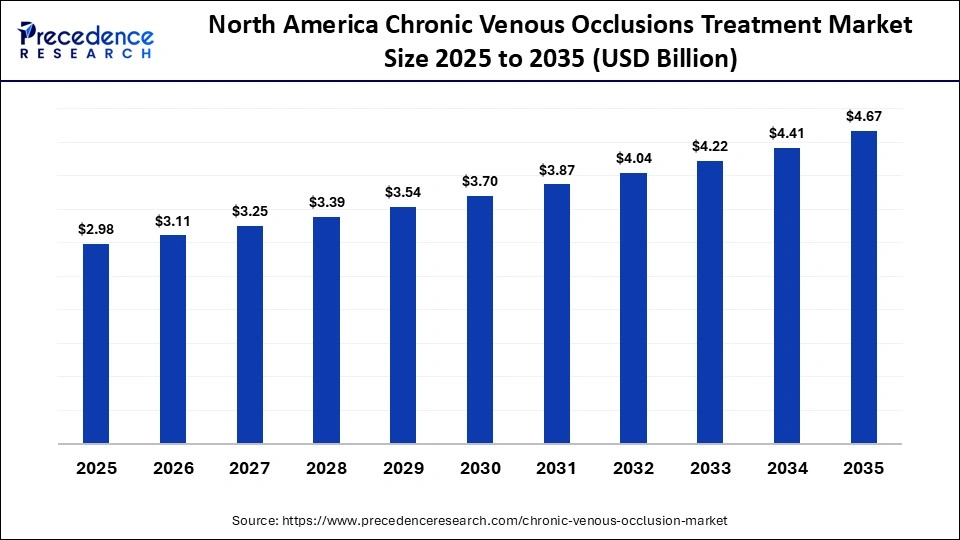
The North America chronic venous occlusions treatment market size is estimated at USD 2.98 billion in 2025 and is projected to reach approximately USD 4.67 billion by 2035, with a 4.59% CAGR from 2026 to 2035.
What Made North America the Dominant Region in the Chronic Venous Occlusions Treatment Market?
North America dominated the chronic venous occlusions treatment market with the largest share in 2025, supported by advanced healthcare infrastructure, high disease prevalence, and strong adoption of innovative therapies. The region's growing aging population is more vulnerable to venous conditions such as varicose veins, deep vein thrombosis, and chronic venous insufficiency, driving steady demand for effective treatment solutions. High awareness levels, early diagnosis practices, and supportive reimbursement frameworks further strengthen market growth. In addition, the presence of leading companies such as Boston Scientific, Medtronic, and 3M fosters continuous innovation in minimally invasive devices and compression systems, reinforcing the region's leadership position.
U.S. Chronic Venous Occlusions Treatment Market Size and Growth 2026 to 2035
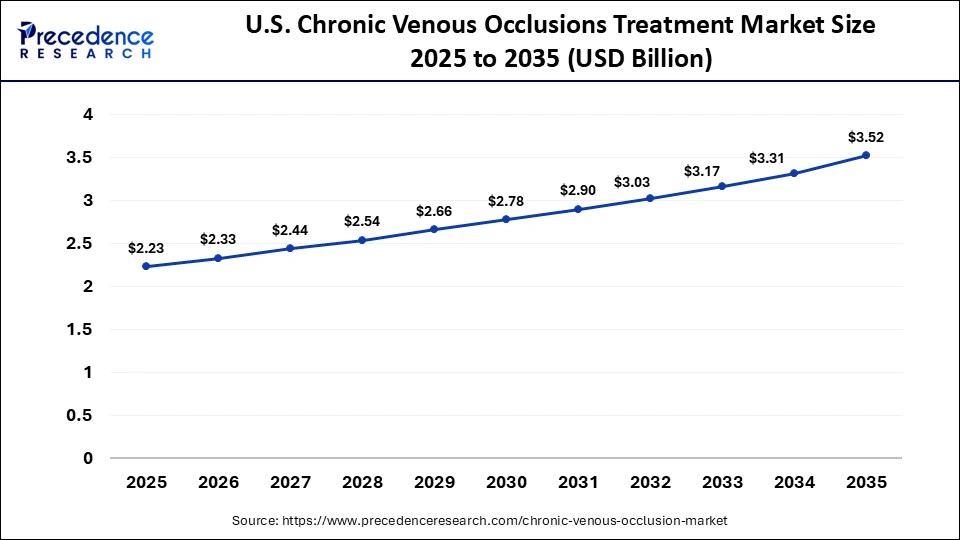
The U.S. chronic venous occlusions treatment market size is calculated at USD 2.23 billion in 2025 and is expected to reach nearly USD 3.52 billion in 2035, accelerating at a strong CAGR of 4.67% between 2026 to 2035.
U.S. Market Analysis
The U.S. is a major contributor to the North American market, driven by a high prevalence of venous disorders and a well-established healthcare infrastructure. Factors such as obesity, sedentary lifestyles, and a rapidly aging population contribute to the increasing incidence of varicose veins, deep vein thrombosis, and chronic venous insufficiency, creating sustained demand for advanced treatment options. Strong patient awareness, early screening practices, and supportive reimbursement systems further enhance treatment accessibility. In addition, the presence of leading companies such as Boston Scientific, Medtronic, and Pfizer supports continuous innovation and rapid adoption of minimally invasive and pharmacological therapies, reinforcing the country's leadership in the market.
Why is Europe Considered the Second-Largest Market?
Europe is the second-largest market for chronic venous occlusions treatment. The region benefits from well-established healthcare systems and a consistent emphasis on medical research and innovation. Major countries such as Germany, the UK, France, Italy, and Spain play an important role in driving regional growth, each contributing by expanding treatment access and technological adoption. Strong research activities, supportive healthcare frameworks, and rising use of advanced venous therapies and diagnostic technologies are collectively accelerating market expansion across Europe.
Germany Market Analysis
Germany stands as the largest market in Europe, accounting for a significant market share in 2025. This leadership position is supported by the country's highly developed healthcare system and a considerable patient population affected by cardiovascular and venous disorders. Germany offers broad insurance coverage, advanced medical infrastructure, and strong clinical expertise, which together ensure wide access to modern treatment options. The country also places strong emphasis on medical innovation, with continuous investment in research and development, particularly in minimally invasive procedures and vascular care advancements.
How is the Opportunistic Rise of Asia Pacific in the Chronic Venous Occlusions Treatment Market?
Asia Pacific is expected to grow at a significant rate throughout the forecast period, supported by ongoing improvements in healthcare infrastructure and rising awareness of venous disorders. Countries such as China, Japan, India, Australia, and South Korea contribute to regional growth, each progressing at its own pace in terms of healthcare access and technological adoption. Expanding medical facilities, rising disposable incomes, and increasing use of advanced treatment technologies for conditions such as venous thrombosis are collectively strengthening the market outlook across the region.
India Market Analysis
The market in India is growing, driven by the continuous expansion of healthcare infrastructure and growing awareness of venous disorders among patients and providers. The country is witnessing greater adoption of advanced treatment approaches, along with increasing participation from the private healthcare sector. The rise of specialized vascular centers and dedicated clinics, combined with India's strong presence in medical tourism, is playing an important role in strengthening the market, particularly in the field of vascular care.
What are the Advancements in the Chronic Venous Occlusions Treatment Market in Latin America?
Latin America is expected to have significant market growth, driven by advancements in medical technology and an increasing awareness of venous diseases. The rise in the aging population, coupled with a growing prevalence of lifestyle-related conditions are additional factor that is contributing to a high demand for effective treatment options. Countries such as Brazil and Argentina are leading players.
Brazil Market Trends
New devices and techniques, such as endovenous laser therapy and radiofrequency ablation, are becoming increasingly popular in the region. These advancements not only help to improve patient outcomes but also reduce recovery times, making them attractive options for both patients and healthcare providers.
What are the Key Trends in the Chronic Venous Occlusions Treatment Market in the Middle East and Africa?
The Middle East and Africa are expected to have significant growth in the market. This growth is driven by rising awareness and education about chronic venous diseases. The increasing prevalence of chronic venous diseases and advancements in medical technology are also key drivers of market growth. Telemedicine and mobile health applications are also gaining traction, allowing for more accessible consultations and follow-ups. Countries like Brazil and Mexico are leading players.
Saudi Arabia Market Trends
As healthcare systems in the region adapt to various technological advancements, the market is likely to witness further growth, driven by the need for efficient and effective care solutions. There is also a growing emphasis on raising awareness about chronic venous diseases among healthcare professionals and the general public.
Value Chain Analysis
- Research and Development:
This stage focuses on developing innovative drugs, stents, and minimally invasive devices to improve safety, efficacy, and patient outcomes.
Key Players: Boston Scientific Corporation, Medtronic, Terumo, Cook Medical, Gore, Sciton - Regulatory Affairs:
This stage ensures therapies and devices meet safety standards and obtain approvals before commercialization and market entry.
Key Players: 3M, Bayer AG, Pfizer, Sanofi, Viatris, Hikma Pharmaceuticals - Clinical Research:
This stage involves conducting trials to validate safety, effectiveness, and long-term benefits while supporting approvals and reimbursement.
Key Players: Angio Dynamics, Coloplast, ConvaTec, Tactile Medical
Key Players Operating in the Market
- 3M
- Angio Dynamics
- Bayer AG
- Boston Scientific Corporation
- Coloplast
- ConvaTec
- Cook Medical
- Gore
- Leucadia Pharmaceuticals (Hikma)
- Medtronic
- Pfizer
- Sanofi
- Sciton
- Tactile Medical
- Terumo
- Viatris
Recent Developments
- On November 6, 2025, the U.S. FDA cleared the Recana thrombectomy system for treating venous in-stent restenosis and native vessel obstructions, expanding mechanical thrombectomy tools. (Source: https://intervene-med.com)
- On November 10, 2025, Embolization Inc.'s polymer-based NED coil was used for the first time in a clinical procedure for arterial and venous embolization. (Source: https://evtoday.com)
- On December 3, 2025, CE Mark was received for Penumbra's Lightning Bolt 12 and Lightning Bolt 6X with Trax devices in Europe, broadening access to advanced thrombectomy tech. (Source: https://evtoday.com)
- On January 6, 2026, Gore's Viabahn Fortegra venous stent wins U.S. FDA approval, indicated for the treatment of deep venous disease in IVC, iliac, and iliofemoral veins. (Source: https://evtoday.com)
- On January 26, 2026, Penumbra launches Lightning Flash 3.0 CAVT system to treat venous thromboembolism (VTE), targeting more efficient clot removal.
- On February 5, 2026, Angio Dynamics and The PERT Consortium launched the ALPHA-PE Research Fund to advance independent pulmonary embolism research, indirectly supporting venous occlusion care. (Source: https://www.morningstar.com)
Segments Covered in the Report
By Treatment Type
- Pharmacological Treatment
- Surgical Treatment
- Minimally Invasive Treatment
- Compression Therapy
By Diagnosis Type
- Duplex Ultrasound
- Venography
- Computed Tomography
- Magnetic Resonance Imaging
By Product Type
- Medication
- Devices
- Therapeutic Equipment
By End-User
- Pharmacological Treatment
- Surgical Treatment
- Minimally Invasive Treatment
- Compression Therapy
By Region
- North America
- Asia Pacific
- Europe
- Latin America
- Middle East & Africa
For inquiries regarding discounts, bulk purchases, or customization requests, please contact us at sales@precedenceresearch.com
Frequently Asked Questions





Ask For Sample
No cookie-cutter, only authentic analysis – take the 1st step to become a Precedence Research client
 Get a Sample
.webp)



 sales@precedenceresearch.com
 Schedule a Meeting
