



Chronic Wound Care Medications Market Size, Companies, Share, Patient Volume, Treatment Adoption Rates, Pricing Analysis, Regulatory Landscape, Competitive Positioning, and Demand Forecast
Chronic Wound Care Medications Market (By Medication Class: Topical antimicrobials, Anti-inflammatory agents, Analgesics and local anesthetic,s Other wound therapeutics; By Wound Type: Diabetic foot ulcers, Venous leg ulcers Surgical wounds with delayed healing, Other chronic wounds; By Dosage Form: Ointments, Creams Gels, Injectable biologics, Oral systemic adjunct medications; By Distribution Channel: Hospital pharmacy Institutional and clinic procurement; By End User: Hospitals, Wound care clinics, Long-term care facilities, Other end users) - Global Industry Analysis, Size, Trends, Leading Companies, Regional Outlook, and Forecast 2026 to 2035
Source: https://www.precedenceresearch.com/chronic-wound-care-medications-market
 Get a Sample
 Table Of Content


What is the Chronic Wound Care Medications Market Size?
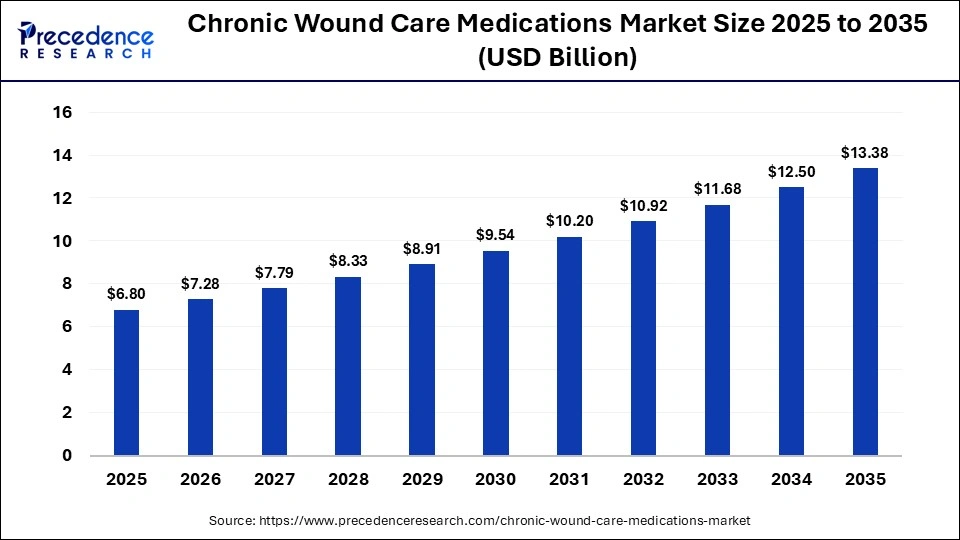
The global chronic wound care medications market size was calculated at USD 6.80 billion in 2025 and is predicted to increase from USD 7.28 billion in 2026 to approximately USD 13.38 billion by 2035, expanding at a CAGR of 7.00% from 2026 to 2035. The market is witnessing substantial growth due to an intense surge in chronic, non-healing wounds and the demand for advanced, effective, and faster-acting, patient-focused therapeutic solutions.
Key Takeaways
- North America dominated the market with a major market share of 36.70% in 2025.
- Asia Pacific is expected to grow at the fastest CAGR between 2026 and 2035.
- By medication class, the topical antimicrobials segment contributed the highest market share of 29.40% in 2025.
- By medication class, the growth factors and regenerative biologics segment is expected to grow at a strong CAGR of 10.30% between 2026 and 2035.
- By wound type, the diabetic foot ulcer segment held a major market share of 34.50% in 2025.
- By wound type, the other chronic wounds segment is expected to expand at a notable CAGR of 10.80% from 2026 to 2035.
- By dosage form, the ointments segment captured the highest market share of 24.70% in 2025.
- By dosage form, the injectable biologics segment is poised to grow at a healthy CAGR of 11.80% between 2026 and 2035.
- By distribution channel, the hospital pharmacy segment generated the biggest market share of 34.80% in 2025.
- By distribution channel, the online pharmacy segment is expanding at the fastest CAGR of 12.60% between 2026 and 2035.
- By end user, the hospitals segment accounted for the largest market share of 32.60% in 2025.
- By end user, the wound care clinics segment is projected to grow at a solid CAGR of 8.50% between 2026 and 2035.
Market Overview
The chronic wound care medications market includes pharmaceutical and biologic agents used to manage non-healing wounds by supporting debridement, controlling bioburden, reducing pain and inflammation, and accelerating tissue repair. It covers topical antimicrobials, enzymatic debriders, growth factor therapies, anti-inflammatory products, analgesic and anesthetic formulations, and select systemic adjunct medicines used alongside standard wound care. Revenues include prescription and OTC products supplied through hospital, retail, online, and institutional channels across key chronic wound indications.
How is AI Transforming the Chronic Wound Care Medications Market?
Artificial intelligence (AI) is transforming the chronic wound care medications market by revolutionizing passive treatments into proactive, data-driven, and personalized care. AI predicts healing trajectories, identifies high-risk patients 48-72 hours before complications manifest, and suggests personalized treatments. AI-integrated dressings monitor pH, temperature, and moisture, releasing medication on-demand in response to real-time data, which accelerates healing in refractory wounds.
AI-powered mobile application enable patients to monitor wounds at home, enhancing engagement and reducing the need for high-cost, in-person visits. Additionally, AI facilitates drug discovery and formulation development, accelerating the creation of advanced wound care medications tailored to specific patient needs.
Major Trends in the Chronic Wound Care Medications Market
- Rise of Advanced Wound Dressings and Bioactives: There is a significant shift from traditional gauze toward advanced, bioactive dressings that maintain a moist environment and actively promote tissue regeneration.
- Increased Adoption of Negative Pressure Wound Therapy (NPWT): NPWT devices, including portable and single-use systems, are seeing higher utilization to speed up the healing of complex, high-exudate chronic wounds.
- Enhanced Digitalization and Smart Wound Care: The integration of AI-powered imaging, sensors for real-time monitoring of pH and moisture levels, and tele-wound care platforms is transforming management from passive to proactive, data-driven approaches.
- Shift to Home Care Settings: Due to the rising need for long-term care and patient comfort, there is a strong trend toward managing chronic wounds at home using user-friendly, advanced, and often disposable devices.
Market Scope
| Report Coverage | Details |
| Market Size in 2025 | USD 6.80 Billion |
| Market Size in 2026 | USD 7.28 Billion |
| Market Size by 2035 | USD 13.38 Billion |
| Market Growth Rate from 2026 to 2035 | CAGR of 7.00% |
| Dominating Region | North America |
| Fastest Growing Region | Asia Pacific |
| Base Year | 2025 |
| Forecast Period | 2026 to 2035 |
| Segments Covered | Medication Class , Wound Type , Dosage Form , Distribution Channel , End User , and region |
| Regions Covered | North America, Europe, Asia-Pacific, Latin America, and Middle East & Africa |
Segment Insights
Medication Class Insights
How Did the Topical Antimicrobials Segment Dominate the Chronic Wound Care Medications Market?
The topical antimicrobials segment dominated the market with a major share of 29.40% in 2025. This leadership is primarily attributed to the rising prevalence of diabetic foot ulcers and pressure ulcers, as well as a shift toward proactive bioburden management. The segment is largely composed of advanced silver-based and iodine-based antimicrobial dressings that provide a sustained release of active ingredients. These dressings offer effective, swift, patient-friendly, and cost-efficient care. Topical antimicrobials are preferred because they integrate seamlessly into structured, pathway-based wound hygiene protocols, effectively reducing excessive exudate and disrupting bacterial biofilms.
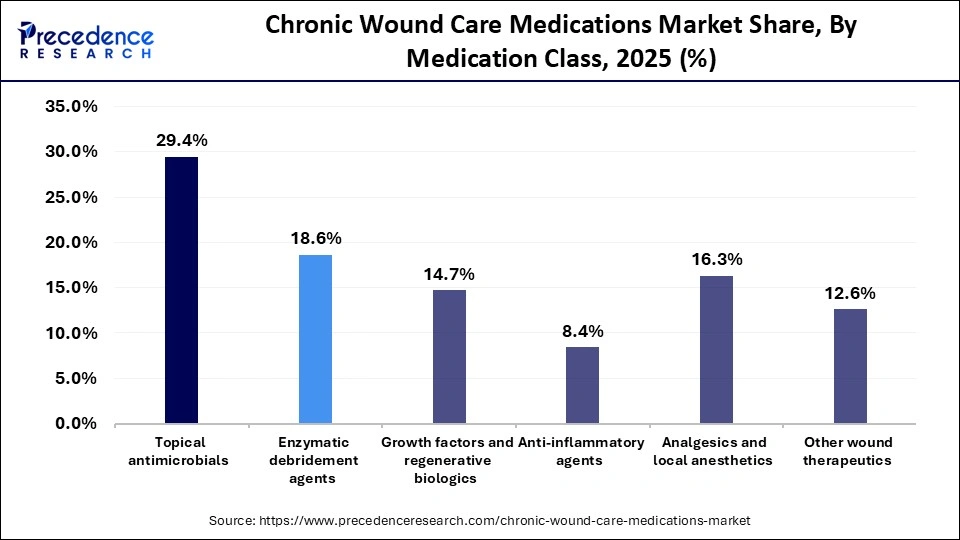
The growth factors and regenerative biologics segment is expected to grow at a CAGR of 10.30% in the coming years. This growth is mainly driven by the ability of these medications to actively promote tissue repair in non-healing wounds, such as diabetic foot ulcers. Improved Medicare reimbursement for advanced biologics, particularly in outpatient and home care settings, accelerated their adoption. These biologics reduce the need for amputations and shorten hospitalization periods, making them more cost-effective in the long run and driving the demand for advanced treatments.
Wound Type Insights
What Made Diabetic Foot Ulcer the Leading Segment in the Chronic Wound Care Medications Market?
The diabetic foot ulcer segment led the market with a 34.50% share in 2025. This dominance results from the rising incidence of foot complications and the growing adoption of advanced wound care products aimed at preventing amputations. The increase in the elderly population and rising obesity rates directly contribute to a higher risk of chronic, non-healing wounds. Diabetic neuropathy and peripheral artery disease are significant contributing factors, with neuropathic ulcers being the most common. Government initiatives, reimbursement policies for advanced care, and increased research in 3D bioprinting for wound healing.

The other chronic wounds segment is anticipated to grow at the fastest CAGR of 10.80% over the forecast period. This growth is driven by the increasing geriatric population, rising obesity rates, and a growing incidence of complex, hard-to-heal chronic wounds that require advanced and specialized treatments. The development of novel wound dressings, such as bioactive dressings, stem cell therapies, and growth factors, has improved healing for these wounds. Moreover, the expansion of specialized wound care clinics, centers, and home healthcare services is boosting diagnosis and treatment rates for these complex, non-healing conditions.
Dosage Form Insights
Why Did the Ointments Segment Dominate the Chronic Wound Care Medications Market?
The ointments segment dominated the market with a 24.70% share in 2025, primarily due to their high effectiveness in maintaining a moist, occlusive, and bacteria-free wound environment. This is crucial for treating chronic, non-healing wounds. Many ointments, including those containing silver or antibacterial agents, offer superior protection against infections, which is a major challenge in chronic wound management. Additionally, ointments are user-friendly, supporting the shift toward home healthcare and serving as a cost-effective alternative to advanced dressings, making them a preferred choice.
Chronic Wound Care Medications Market Share, By Dosage Form, 2025 (%)
| Dosage Form | 2025 |
| Ointments | 24.7% |
| Creams | 19.6% |
| Gels | 17.4% |
| Sprays | 9.1% |
| Solutions | 14.3% |
| Injectable biologics | 6.4% |
| Oral systemic adjunct medications | 8.5% |
The injectable biologics segment is expected to expand at the fastest CAGR of 11.80%. This growth is attributed to their ability to provide targeted, minimally invasive, and highly effective treatment for deep tissue defects. They allow for precise, direct application to the wound bed, which accelerates healing, promotes tissue regeneration, and reduces infection risk by delivering bioactive agents that stimulate cell proliferation. Innovations in drug delivery systems are extending the therapeutic duration, increasing their efficacy, and decreasing the need for frequent applications.
Distribution Channel Insights
How Did the Hospital Pharmacy Segment Lead the Chronic Wound Care Medications Market?
The hospital pharmacy segment led the market with a 34.80% share in 2025. This is because hospitals are primary centers for treating chronic wounds, offering immediate access to prescription medications, advanced dressings, and specialized therapies. Hospital pharmacies ensure the timely availability of wound care medications for inpatients and outpatients, supporting clinician-led treatment protocols. Additionally, the integration of chronic wound management programs within hospitals, combined with high patient volumes and complex care needs, drives the dominance of this distribution channel in the market.
Chronic Wound Care Medications Market Share, By Distribution Channel, 2025 (%)
| Distribution Channel | 2025 |
| Hospital pharmacy | 34.8% |
| Retail pharmacy | 23.7% |
| Online pharmacy | 9.6% |
| Institutional and clinic procurement | 31.9% |
The online pharmacy segment is anticipated to grow at the fastest CAGR of 12.60% during the projection period. This growth is primarily attributed to the increasing demand for convenient, doorstep delivery, especially for elderly patients. The rising prevalence of diabetes, pressure ulcers, and venous ulcers necessitates regular, long-term access to specialized dressings and medications efficiently. Increased use of e-prescriptions, telemedicine consultations, and AI-driven inventory management allows for better, faster service. Online platforms often offer lower prices and subscription models, attracting cost-conscious patients.
End User Insights
What Made Hospitals the Dominant Segment in the Chronic Wound Care Medications Market?
The hospitals segment held a 32.60% market share in 2025. This is mainly due to a high patient volume for complex, non-healing wounds such as diabetic foot and pressure ulcers. Hospitals care for the most severe, chronic, and non-healing wounds that require intensive care and advanced, high-cost wound care products. An increase in surgical procedures and hospital-acquired pressure ulcers also necessitates specialized wound treatments. Hospitals and clinics have the infrastructure for advanced, technology-driven wound care and are major buyers.
Chronic Wound Care Medications Market Share, By End User, 2025 (%)
| End User | 2025 |
| Hospitals | 32.6% |
| Wound care clinics | 28.4% |
| Home healthcare | 23.7% |
| Long-term care facilities | 11.6% |
| Other end users | 3.7% |
The wound care clinics segment is expected to grow at a CAGR of 8.50% in the upcoming period, driven by the rising prevalence of diabetes and obesity, which lead to more complex, non-healing wounds needing specialized, multidisciplinary care. Chronic wounds require expert treatment, better provided by dedicated wound care centers rather than general practices. These clinics are quicker to adopt new, high-value, bioactive dressings, negative pressure wound therapy, and regenerative medicine, essential for treating stubborn, long-term wounds.
Regional Insights
What is the North America Chronic Wound Care Medications Market Size?
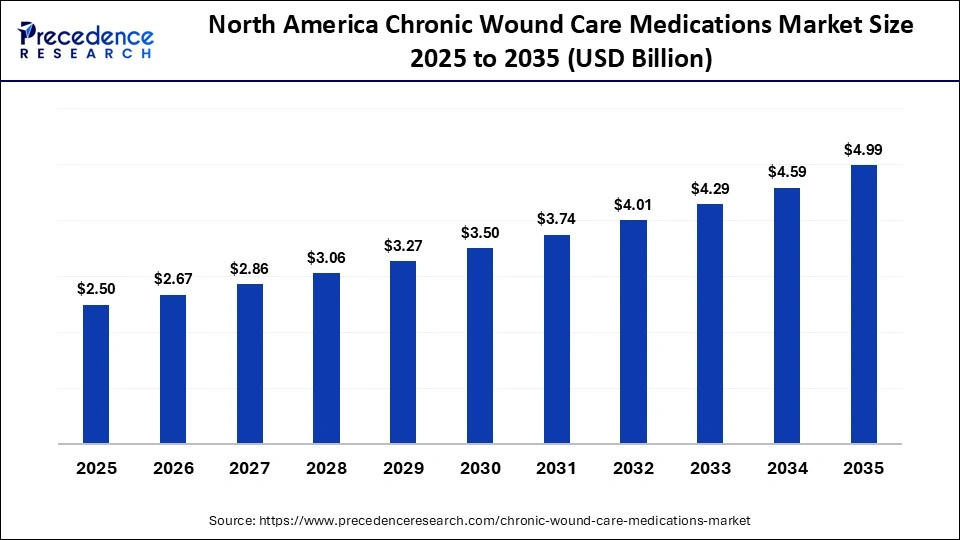
The North America chronic wound care medications market size is estimated at USD 2.50 billion in 2025 and is projected to reach approximately USD 4.99 billion by 2035, with a 7.16% CAGR from 2026 to 2035.
How Did North America Dominate the Chronic Wound Care Medications Market?
North America dominated the market with a major share of 36.70% in 2025. This is mainly due to high rates of diabetes and obesity, a large aging population, and advanced healthcare infrastructure. The presence of major multinational companies like 3M, Smith and Nephew, and ConvaTec supports rapid product adoption and technological progress. Favorable reimbursement policies for advanced wound treatments also promote the use of premium, high-cost products. The expansion of home healthcare, telemedicine, and specialized wound clinics encourages the use of portable, easy-to-use advanced wound care devices.
U.S. Chronic Wound Care Medications Market Size and Growth 2026 to 2035
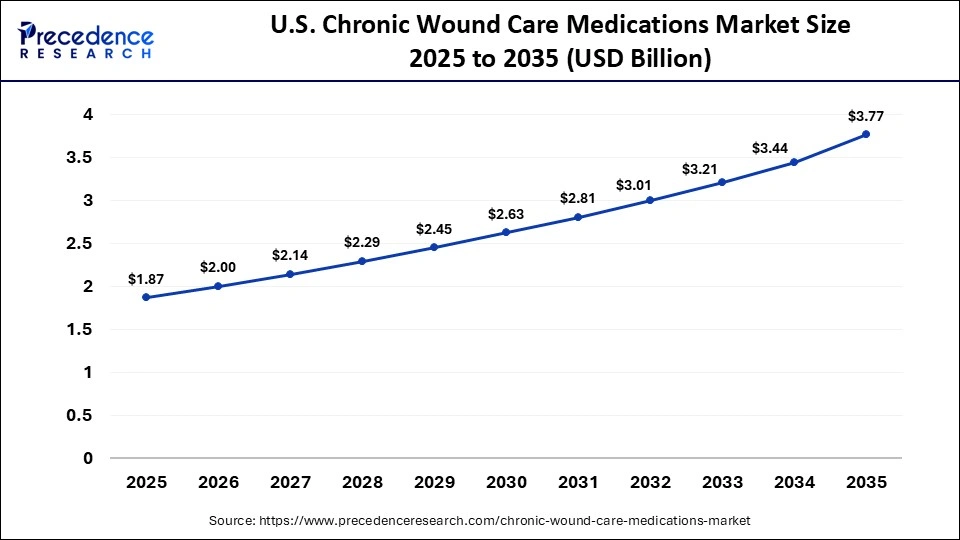
The U.S. chronic wound care medications market size is calculated at USD 1.87 billion in 2025 and is expected to reach nearly USD 3.77 billion in 2035, accelerating at a strong CAGR of 7.26% between 2026 and 2035.
U.S. Chronic Wound Care Medications Market Trends
The U.S. holds a dominant position in the North American market, largely due to high spending on chronic wounds supported by Medicare and private insurance. The market focuses on reducing hospital stays through innovative, efficient, and often expensive technologies. Major players such as 3M, Smith and Nephew, and Johnson and Johnson are leading the market with advanced therapies, including bioengineered skin substitutes, NPWT, and smart dressings.
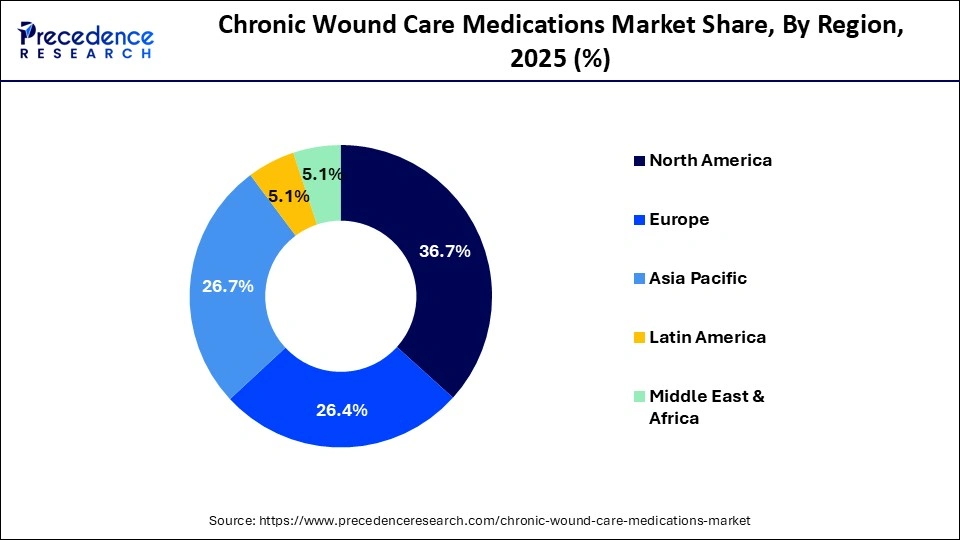
Why is Asia Pacific Considered the Fastest-Growing Region in the Chronic Wound Care Medications Market?
Asia Pacific is projected to experience the fastest growth during the forecast period. This growth is driven by a high prevalence of diabetes, particularly causing diabetic foot ulcers, a rapidly aging population in countries like India and China, and increasing demand for advanced healing solutions. There is a significant shift from traditional gauze toward advanced wound care products that promote faster healing. Growing healthcare expenditure, improving infrastructure in developing nations, and greater awareness make advanced treatments more accessible, fueling demand for advanced wound management.
India Chronic Wound Care Medications Market Trends
India is emerging as a major player in the market, with a rapidly growing diabetic population fueling demand for advanced wound care products, especially for diabetic foot ulcers. There is a quick shift toward using more advanced dressings and adopting telemedicine for remote wound monitoring. Make in India initiatives promote local manufacturing, providing more affordable alternatives and strengthening both the domestic market and exports market.
How is Europe Growing in the Chronic Wound Care Medications Market?
Europe is expected to grow at a considerable CAGR in the upcoming period. The growth of diabetes and ageing, and the high prevalence of chronic wounds in European countries, are driving the market. The market is expanding due to advanced healthcare infrastructure, effective reimbursements, and increased availability of innovative wound therapy treatments. Furthermore, European research partnerships for regenerative medicine and bioengineered wound therapies are growing more and more, supporting the strong position. Meanwhile, research collaborations and investments in the areas of regenerative medicine and bioengineered wound therapies are on the rise in Europe.
Germany Market Trends
The German market is growing due to favourable government support, increasing investments, and the rising adoption of advanced technologies. Suitable reimbursement policies help reduce financial burden on patients, enabling them to access advanced and high-quality treatment.
Will the Middle East and Africa Grow in the Chronic Wound Care Medications Market?
The Middle East and Africa region is considered to be a significantly growing area due to the rising prevalence of diabetes, obesity, and chronic vascular diseases. To tackle the rising tide of chronic wounds, governments and healthcare entities are prioritizing the modernization of health services and enhancing access to specialized wound care. However, the increasing awareness of infection prevention and enhanced treatments for wounds is driving the adoption of new wound care drugs and treatments. Additionally, increased medical services policies and the proliferation of home-care services will encourage the expansion of the market in the future across the region.
UAE Market Trends
The UAE market is driven by the rising prevalence of chronic wounds, growing research and development activities, and technological advancements. People are becoming aware of chronic wounds and their complications in the later stages of life, encouraging them to seek early treatment.
Chronic Wound Care Medications Market Value Chain Analysis

Chronic Wound Care Medications Market Companies
- Smith+Nephew
- Solventum
- Mölnlycke Health Care
- ConvaTec Group
- Coloplast
- B. Braun
- PAUL HARTMANN
- Urgo Medical
- Essity (BSN Medical)
- Organogenesis
- MiMedx
- Integra LifeSciences
- Medline Industries
- Johnson and Johnson
- Eurofins Scientific.
Recent Developments
- In July 2025, Convatec received clearance in the UK, EU, Australia, and the U.S. for Aquacel™ ConvaFiber™, a next-generation Hydrofiber dressing aimed at managing various wounds. Set to be available in 2026, this innovation builds on Convatec's 1996 Hydrofiber technology and is designed to enhance absorbency and maintain structural integrity during use. Aquacel™ dressings have shown cost-effectiveness and superior healing rates. David Shepherd, Convatec's COO, emphasized its potential to improve patients' quality of life.
(Source: https://www.convatecgroup.com) - In February 2025, Biomiq Inc launched PureGel™, a super-oxidizing nano-hydrogel delivering stable hypochlorous acid for wound management. Made in Ontario, this Class II medical device addresses rising healthcare costs and antibiotic resistance. PureGel™ is proven to eliminate biofilm bacteria and outperforms traditional antimicrobials. Co-Founder Robert Fuller highlighted the importance of locally made solutions.
(Source: https://biomiq.health) - In January 2025, Fesarius Therapeutics received FDA 510(k) clearance for its DermiSphere hydrogel Dermal Regeneration Template (DermiSphere hDRT), a novel collagen-based matrix promoting tissue integration and faster healing for full-thickness wounds. CEO Tom Roueche expressed excitement for its potential to transform wound care.
(Source: https://www.prnewswire.com)
Segments Covered in the Report
By Medication Class
- Topical antimicrobials
- Enzymatic debridement agents
- Growth factors and regenerative biologics
- Anti-inflammatory agents
- Analgesics and local anesthetics
- Other wound therapeutics
By Wound Type
- Diabetic foot ulcers
- Venous leg ulcers
- Pressure ulcers
- Arterial ulcers
- Surgical wounds with delayed healing
- Other chronic wounds
By Dosage Form
- Ointments
- Creams
- Gels
- Sprays
- Solutions
- Injectable biologics
- Oral systemic adjunct medications
By Distribution Channel
- Hospital pharmacy
- Retail pharmacy
- Online pharmacy
- Institutional and clinic procurement
By End User
- Hospitals
- Wound care clinics
- Home healthcare
- Long-term care facilities
- Other end users
By Region
- North America
- Latin America
- Europe
- Asia-pacific
- Middle and East Africa
For inquiries regarding discounts, bulk purchases, or customization requests, please contact us at sales@precedenceresearch.com
Frequently Asked Questions





Ask For Sample
No cookie-cutter, only authentic analysis – take the 1st step to become a Precedence Research client
 Get a Sample




 sales@precedenceresearch.com
 Schedule a Meeting
