



Energy Efficient Lighting Technology Market Size, Key Companies, Company Market Share, Power Generation Capacity, Energy Consumption, Pricing Trends, Investment Analysis, Competitive Positioning, and Demand Forecast
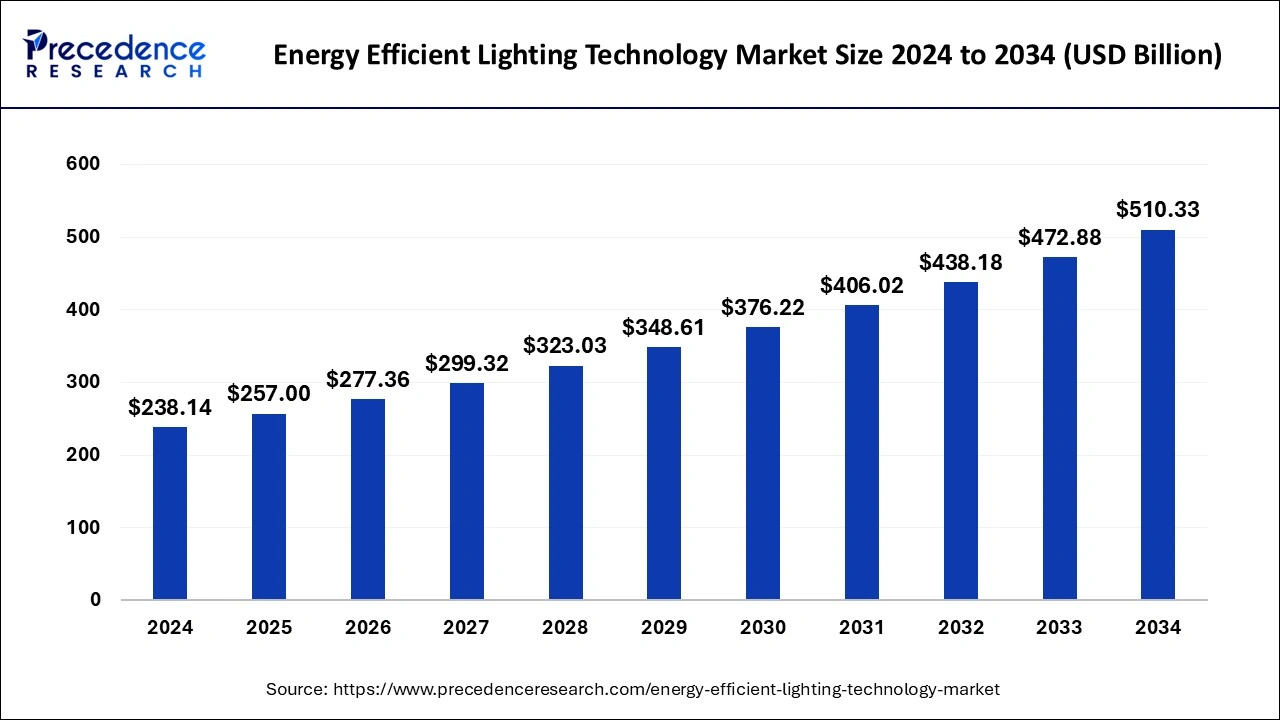
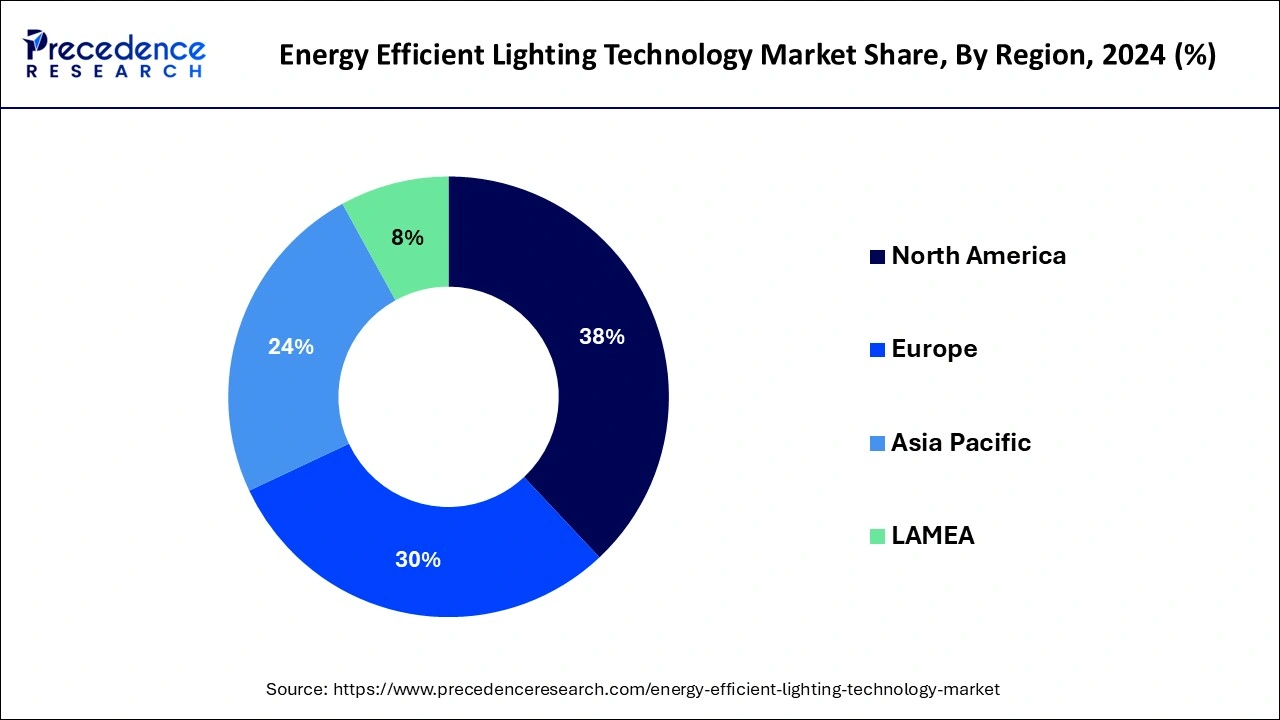
The global energy efficient lighting technology market is projected to grow from USD 277.35 billion in 2026 to USD 545.95 billion by 2035, registering a CAGR of 7.83%. Growth is driven by rising demand for energy-efficient solutions, sustainability initiatives, favorable government policies, smart city development, rapid urbanization, and AI-powered lighting systems that optimize brightness, energy consumption, and usage patterns. North America dominated the market in 2025 with a 38% share, supported by strong regulatory support and LED adoption, while Asia Pacific is expected to witness solid growth due to rapid industrialization, urbanization, rural electrification, and increasing government initiatives promoting energy-efficient lighting.
Source: https://www.precedenceresearch.com/energy-efficient-lighting-technology-market
 Get a Sample
 Table Of Content


Energy Efficient Lighting Technology Market Size and Forecast 2026 to 2035
The global energy efficient lighting technology market size was accounted for USD 277.35 billion in 2026 and is anticipated to reach around USD 545.95 billion by 2035, growing at a CAGR of 7.83% from 2026 to 2035. The growing demand for environmental sustainability, rising adoption in household and industrial areas, and favorable government policies promote the energy efficient lighting technology market.
Energy Efficient Lighting Technology Market Key Takeaways
- North America dominated the global energy efficient lighting technology market with the largest market share of 38% in 2025.
- Asia Pacific is expected to expand at a solid CAGR during the forecast period.
- By type, the light emitting diode segment accounted for the highest market share in 2025.
- By application, the commercial segment dominated the global market in 2025.
Market Overview
Energy-efficient lighting technology is a light that uses much less energy than conventional incandescent lights. This can save up to 90% of energy, resulting in lower carbon dioxide emissions. However, the brightness and light quality of these lights are not hampered. There are generally two different types of energy-efficient lights such as compact fluorescent lights (CFLs) and light-emitting diodes (LEDs). LEDs can be further classified into industrial and commercial lighting, under-cabinet lighting, recessed downlights, LED replacement bulbs, and holiday lights. The selection of the lights depends on their purpose. Apart from saving energy, these lights also have a longer lifespan compared to incandescent bulbs. Additionally, they do not release heat while lighting, making it more efficient.
Impact of AI in the Energy Efficient Lighting Technology Market
Artificial intelligence (AI) can be used to design novel lighting technology based on user preferences and usage patterns. Based on environmental factors, AI-based algorithms and sensors can optimize light settings in real-time. AI can also adjust brightness and color through various software or mobile applications. Thus, AI aids personalized lighting experience, enhancing user comfort and energy efficiency. Additionally, AI can also provide data about the energy consumption of light, resulting in reduced costs. AI can enable dimming or switching off lights in unoccupied spaces, conserving more energy and expanding the lifespan of light bulbs. Moreover, AI-driven natural light patterns can improve sleep quality, mood, and overall well-being of an individual.
Energy Efficient Lighting Technology Market Growth Factors
- Growing Demand for Energy-Efficient Solutions: The global energy-efficient lighting technology market is primarily driven by the rising demand for energy-efficient solutions owing to the rising energy prices and significantly growing energy consumption.
- Favorable Government Policies: Several government agencies release guidelines and launch green building initiatives to promote environmental sustainability.
- Increasing Investment: The increased investment by the manufacturers to produce energy-efficient products, potentiate the market.
- Rising Consumer Awareness: The rising consumer awareness for energy-efficient products is driving the demand for energy-efficient lighting technology.
- Rapid Urbanization: Rapid industrialization and rapid urbanization increase the number of real estate residential and commercial projects is expected to boost the growth of the market in the forthcoming years.
- Development of Smart Cities: The ongoing projects of smart cities in numerous countries and the rising deployment of smart buildings across the globe are anticipated to drive the demand for energy-efficient lighting technology during the forecast period.
- Growing Research and Development: Manufacturers are investing heavily and are focusing on new product developments that can offer improved energy efficiency.
Market Outlook
- Industry Growth Overview: The energy efficient lighting technology market is witnessing massive growth due to the heavy demand for intelligent bulbs that last for a long time with great design and effective impact. The smart urbanization upgrades are a call for massive revenue for the market that elevates innovation in the lighting production line.
- Sustainability Trends: The specialized semiconductor and AI approach is an eye to the green development prediction and vulnerability that spots eco-friendly impact in real time. The use of biodegradable plastics in the luminaires and flexible models is fitting the natural demand for optimized lights.
- Global Expansion: The market expansion is backed by municipal responsibilities and factories' sincere workflow pattern that heavily operates on electricity and great lighting. The integration system perk is a power key for the market reach.
Market Scope
| Report Coverage | Details |
| Market Size in 2026 | USD 277.35 Billion |
| Market Size by 2035 | USD 545.95 Billion |
| Growth Rate From 2026 to 2035 | CAGR of 7.83% |
| Largest Market | North America |
| Base Year | 2025 |
| Forecast Period | 2026 to 2035 |
| Segments Covered | Type, Application, Region |
| Regions Covered | North America, Europe, Asia-Pacific, Latin America, and Middle East & Africa |
Market Dynamics
Driver
Growing Demand for Sustainability
The growing demand for sustainability is a major growth factor in the energy efficient lighting technology market. Several government organizations impose stringent regulations to promote environmental sustainability. The World Health Organization has also launched the “UN 2020-2030 Strategy for Sustainability Management” to enhance environmental sustainability. Such initiatives promote the use of energy efficient lighting technology as they reduce energy consumption by 90% and release less carbon dioxide emissions. The increasing construction of green buildings globally necessitates the use of energy efficient lighting technology. Such lighting technology minimizes light pollution and significantly reduces electricity costs.
Restraint
High Costs
The major challenge of the energy efficient lighting technology market is the high costs of such lighting technology. Compared to conventional incandescent, energy-inefficient bulbs, LEDs or CFLs are more expensive. This limits the affordability of many low- and middle-income groups or population globally, hindering market growth.
Opportunity
Latest Innovations
The future of the energy efficient lighting technology market is promising, owing to growing research and development activities to drive the latest innovations in lighting technology. The development of organic light-emitting diodes (OLEDs) presents superior advantages over conventional LEDs. OLEDs emit light from a flexible thin film, enabling more creative designs and enhanced energy efficiency potential. Several researchers are also investigating to development of lights by harvesting organisms such as fireflies, fungi, bacteria, etc. as they can emit light. They do not emit heat or release carbon and are natural sources of light. Integrating advanced technologies such as AI and the Internet of Things (IoT) results in smart lights, enabling enhanced security.
Segments Insights
Type Insights
The light emitting diode segment dominated the global energy efficient lighting technology market in 2025, in terms of revenue. The LED lightings has gained immense traction among the global population as it saves around 75% energy. It deployment of the LEDs can significantly reduce the energy consumption and can lead to low operational costs as compared to the traditional lighting technologies. Moreover, the toxicity of the CFL bulbs that contains harmful gases and chemicals, which has an adverse effect on the environment is compelling the consumers to opt for the safer and cheaper alternatives. Therefore, the demand for the LED segment is expected to grow significantly in the upcoming years and hence this segment is also expected to be the fastest-growing segment during the forecast period.
Application Insights
The commercial segment accounted largest revenue share in 2025. This can be attributed to the increased adoption of the energy efficient lighting technology in the commercial spaces. The energy efficient lighting technology helps the commercial units to reduce the energy consumption and reduce the overall operational costs, which provide better opportunities to increase profits. The rising industrialization and rising number of business across the globe has significantly contributed towards the growth of the commercial segment.
On the other hand, the residential is estimated to be the most opportunistic segment during the forecast period. This is mainly due to the rising government expenditure on the electrification of rural areas and villages. Moreover, rapid urbanization, rapidly growing urban population, growing number of residential real estate projects, and rising awareness regarding the benefits of the energy efficient lighting technology are the major factors that are expected to boost the growth of this segment during the forecast period.
Regional Insights
Why Does North America Dominate the Global Energy Efficient Lighting Technology Market?
North America dominated the global energy efficient lighting technology market with the largest market share of 38% in 2025. The major growth factor driving market growth in North America is favorable government policies. The U.S. General Services Administration has recommended federal buildings to use cost-effective and energy-efficient lighting products. The U.S. Department of Energy also promotes the use of LEDs and estimates that the majority of lighting installations will be LEDs by 2035 in the U.S. Suitable regulatory frameworks facilitate the approval of advanced and more efficient lighting technology. The presence of key players leads to the development of lighting technology, contributing to the market. Moreover, increasing funding by government and private organizations favor market growth.
U.S. Energy Efficient Lighting Technology Market Size and Growth 2026 to 2035
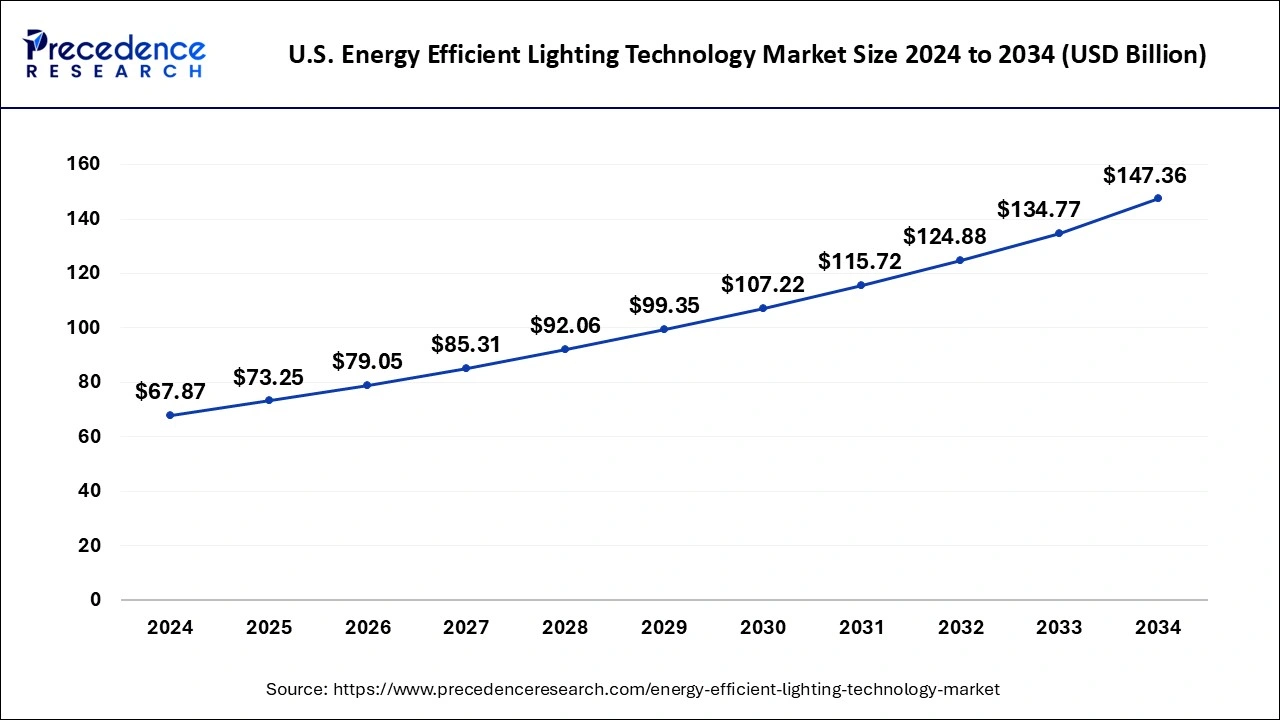
The U.S. energy efficient lighting technology market size was evaluated at USD 73.25 billion in 2025 and is predicted to be worth around USD 158.15 billion by 2035, rising at a CAGR of 8.00% from 2026 to 2035.
What Factors Are Driving the Growth of the Energy Efficient Lighting Technology Market in Asia Pacific?
Asia Pacific is estimated to be the most opportunistic market during the forecast period. Asia Pacific is witnessing rapid industrialization, rapid urbanization, increased FDIs, and growing government initiatives to deploy sustainable and energy efficient solutions. The growing focus on the electrification of the rural areas in the nations like India, China, and Indonesia is presenting lucrative growth opportunities to the market players. Furthermore, rising government initiatives to promote the adoption of the energy efficient lighting technology is estimated to have a significant impact on the market growth. For instance, the Government of India invested around US$ 132 million in 2017 in EESL program, an energy efficient building program to encourage the adoption of the energy efficient lighting technology across the nation.
China Market Trends
China's fascinating lighting system is a proactive decision for accelerating smart city projects. This brings the initiatives of the regional market in the countryside developmental progress. The cooperative semiconductor materials trends are attracting businesses into lighting production that meets efficiency at its core. The technology is a fundamental asset for lighting businesses to showcase their performance at the tech fuelled and popular platforms.
Europe's Lights in Action
Europe energy efficient lighting technology market is considered to be a significantly growing area, due to its spectacular advancement hype. Automation, connected technologies and sustainable components are beaming in the lighting portfolio. The luminous updates work on the duration pattern to stand out in the competition, specifically designed for responsible operating industries. The manufacturing, medical, home settings and construction sectors are the main customers of this portfolio that seeks sustainability and efficiency for developing bright innovation under effective light inspection.
Germany Market Trends
Germany is ahead with its massive contribution to the local lighting facilities that deliver satisfaction to the regional community. The technologies embedded into these upgrades bring value to the street development. Whereas heavy spending on halogen bulbs accelerates supply and demand for the same. This stimulates the bright businesses across the countryside residential lighting energy, serving a range of light designs with great efficiency.
Latin America's Market Spotlight
Latin America's market is expected to grow at a notable CAGR in the foreseeable future. LED highlights in the regional market innovation capture the sustainability needs as well. This brings adaptability for green innovation in high-performing factories and warehouses that highly rely on sustainable factors for reducing the cost impact. Heavy industrialization helps the regional market to expand with more proficiency and responsibility for high-end operations.
MEA's Bright Innovations in the Market
MEA market is expected to grow at a considerable CAGR in the upcoming period. The ambience-based architectures are showering great deals and business opportunities to the regional market. The connectivity projects are deploying smart brightness to ensure consistent operations in favor of public safety. This concern sparks a range of possible innovations and advanced integration, working as a light navigation to the pedestrian and vehicles as well.
UAE Market Trends
UAE trends involve LED deployment in building projects and by regulatory authorities' order for smart bulbs. The tech- and innovation-connected bulbs are unlocking the potential performance of the famous brands that rapidly zoom in on the advanced needs of the commercial, industrial, and residential sectors for their respective bright developments.
Energy Efficient Lighting Technology Market Companies
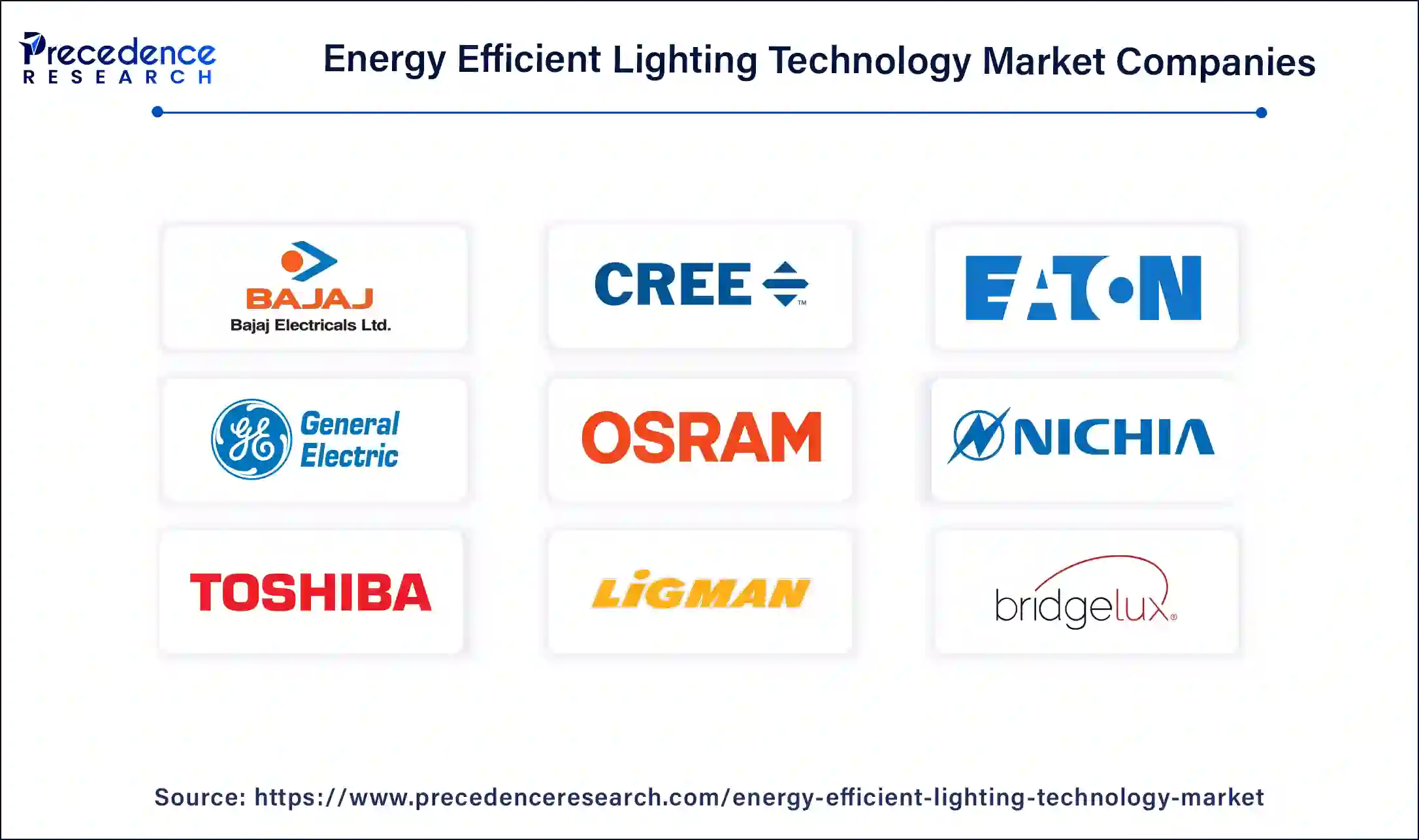
- Bajaj Electricals Ltd.
- Cree Inc.
- Eaton Corporation
- General Electric Company
- OSRAM Licht Group
- Apple Inc.
- Nichia Corporation
- Toshiba Lighting & Technology Corporation
- LIGMAN Lighting Co.
- Bridelux Inc.
Latest Announcement by Industry Leaders
- Prof. Mark Maslin, Professor of Earth System Science at the University College London, envisioned that the IEA goal of achieving net zero carbon saving could be possible by electrifying as much of the energy saving system as possible. He also said that this could enable flexibility in energy supply, demand, and storage, and re-using waste heat.
Recent Developments
- In December 2024, Qwatt Technologies launched the industry's first 36V LED Module for signage and lighting applications. The product offers 10-year warranty, providing energy-efficiency, extended lifespan, and cutting-edge performance.
- In July 2024, Energy Efficiency Services (EESL) announced a partnership with Padma Vadhya, an entrepreneur assisting in maintaining Hyderabad's lighting infrastructure, to expand the reach of energy efficient solutions in Telangana, India. The partnership was made to establish retail franchises that improve access to energy-efficient technologies.
Segments Covered in the Report
By Type
- Incandescent Lamp
- Light Emitting Diode
- Arc Lamp
- Gas Discharge Lamps
By Application
- Residential
- Commercial
- Government
By Geography
- North America
- U.S.
- Canada
- Europe
- U.K.
- Germany
- France
- Asia Pacific
- China
- India
- Japan
- South Korea
- Rest of the World
For inquiries regarding discounts, bulk purchases, or customization requests, please contact us at sales@precedenceresearch.com
Frequently Asked Questions





Ask For Sample
No cookie-cutter, only authentic analysis – take the 1st step to become a Precedence Research client
 Get a Sample




 sales@precedenceresearch.com
 Schedule a Meeting
