



Esophageal Atresia Treatment Market Size, Companies, Share, Patient Volume, Treatment Adoption Rates, Pricing Analysis, Regulatory Landscape, Competitive Positioning, and Demand Forecast
Esophageal Atresia Treatment Market (By Treatment Type: Surgical Repair Procedures, Non-Surgical / Supportive Care; By Complication Management: Stricture Management & Dilation Therapy, Reflux & GERD Management, Respiratory Complication Management Long-term Feeding & Nutrition Support; By Diagnostic Modality: Prenatal Diagnosis, Postnatal Diagnostic Tools; By End-User: Hospitals & Surgical Centers, Neonatal Intensive Care Units (NICUs), Outpatient & Specialty Clinics) - Global Industry Analysis, Size, Trends, Leading Companies, Regional Outlook, and Forecast 2026 to 2035
Source: https://www.precedenceresearch.com/esophageal-atresia-treatment-market
 Get a Sample
 Table Of Content


What is the Esophageal Atresia Treatment Market Size?
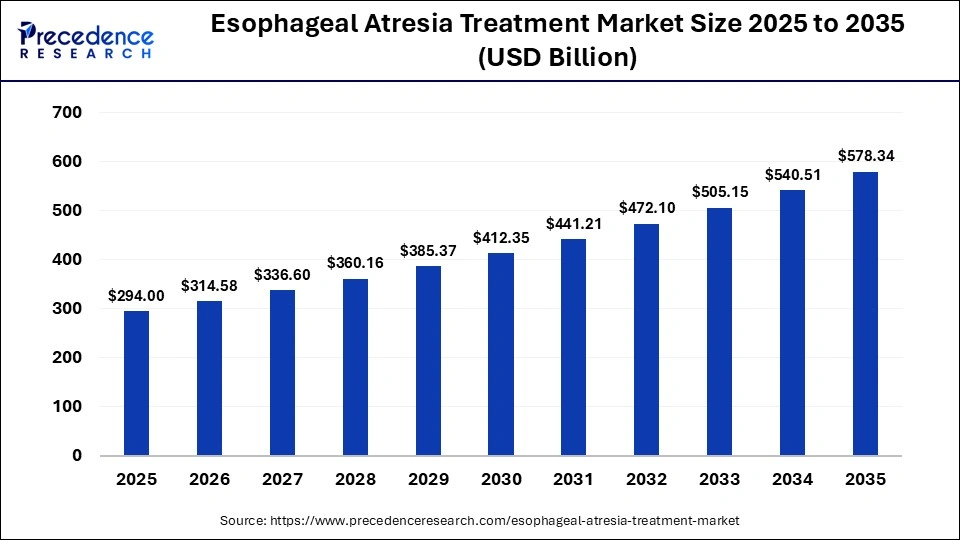
The global esophageal atresia treatment market size was calculated at USD 294.00 billion in 2025 and is predicted to increase from USD 314.58 billion in 2026 to approximately USD 578.34 billion by 2035, expanding at a CAGR of 7.00% from 2026 to 2035.The esophageal atresia treatment market is mushrooming due to an increase in the incidence of congenital anomalies, evolution and improvement in neonatal intensive care, and utilization of minimally invasive surgical techniques. Growth is propelled by improved newborn screening, enhanced perioperative care, and rising global healthcare access.
Market Highlights
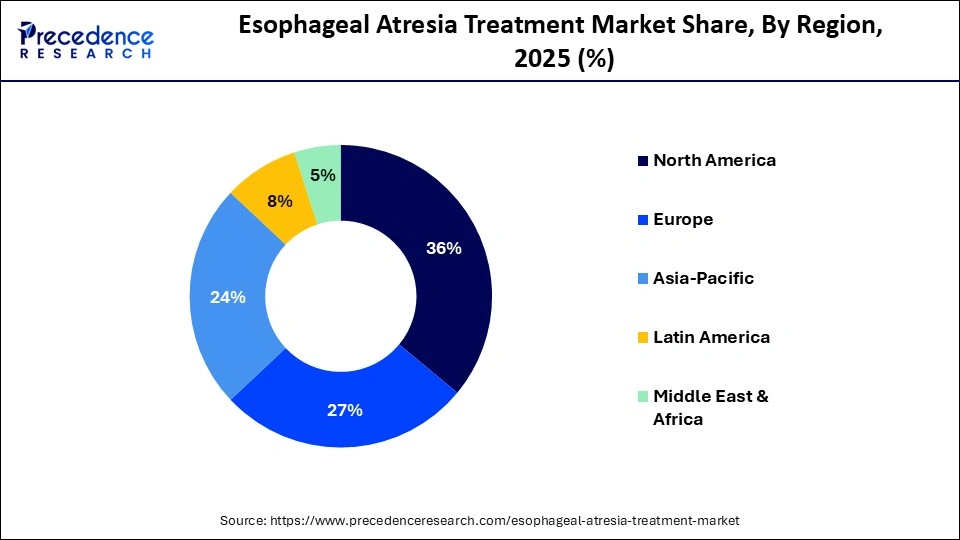
- North America dominated the market, holding a share of approximately 36% in 2025.
- Asia Pacific is observed to be the fastest-growing region during the forecast period.
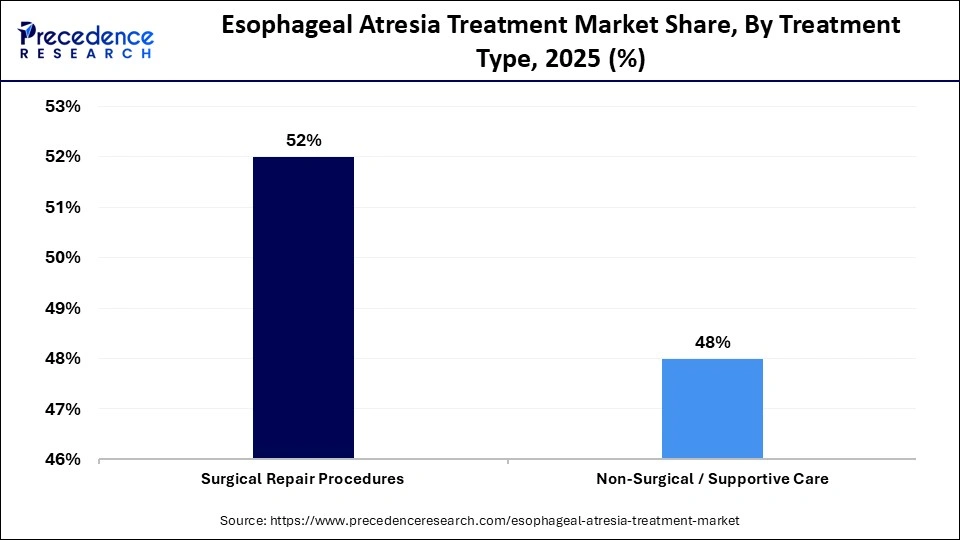
- By treatment type, the Surgical Repair Procedures segment held the largest esophageal atresia treatment market share, accounting for approximately 52% in 2025.
- By treatment type, the minimally invasive / thoracoscopic procedures segment is expected to grow at a remarkable CAGR between 2026 and 2035.
- By complication management, the stricture management & dilation therapy segment held a major market share of approximately 39%
- By complication management, the respiratory complication management segment is expected to be the fastest growing segment between 2026 and 2032.
- By diagnostic modality, the postnatal diagnostic tools segment dominated the market with a share of approximately 78% in 2025.
- By diagnostic modality, the prenatal diagnosis segment is expected to grow at the highest CAGR between 2026 and 2035.
- By end-user, the hospitals & surgical centers segment led the elastography imaging market with a share of approximately 59% in 2025.
- By end-user, the neonatal intensive care units (NICUs) segment is expected to show the fastest growth in the forecast period.
What is the Landscape of the Esophageal Atresia Treatment Market?
The esophageal atresia treatment market is burgeoning due to advancements in intensive care of neonates, heightened awareness, and specialized surgical technologies. The current market is pivoting towards non-invasive or minimally invasive techniques like thoracoscopic repair to reduce morbidity, enhance management of long gap cases, and improve survival rates. Enhanced neonatal care, better fetal screening, and improved accessibility to specialized pediatric care are boosting this market.
The market advances towards minimizing long-term impact on children, focusing on esophagus-preserving techniques rather than secondary repair. Huge funding in research in esophageal regeneration and complex aerodigestive issues is further expanding their market.
What is the role of AI in Driving Innovation within the Esophageal Atresia Treatment Market?
Artificial intelligence is starting to change the esophageal atresia treatment market by enhancing diagnostic and surgical precision, enabling personalized care, enhancing long-term management protocols for infants with congenital conditions, and developing advanced medical devices. AI-powered devices have the potential to minimize risk and improve the outcome of complicated procedures, but these devices are at a nascent stage regarding their widespread standardized adoption. AI is pivoting this market towards minimally invasive techniques and a personalized approach with a focus on enhancing the quality of life of children with this condition.
Esophageal Atresia Treatment Market Trends
- Minimally Invasive Surgery: It is rapidly expanding in the market due to its ability to provide better cosmetic results, reduced post-op pain, minimized musculoskeletal complications, and a shorter recovery time compared to traditional open thoracotomy surgery.
- Advanced Management for Long-Gap EA: This market is showing remarkable growth in specialized centers as it shifts away from esophageal replacement to preserving the original esophagus with a surge in robot-assisted surgeries in newborns.
- Improved Pre & Postoperative Care: Improved neonatal care for better stabilization before surgical intervention and enhanced survival rate by pivoting towards managing long-term complications have boosted this market.
- Technological Advancements & Specialized Care: This market is expanding due to better prenatal screening, increased awareness, and specialized pediatric centers that focus on tailored treatment plans.
Market Scope
| Report Coverage | Details |
| Market Size in 2025 | USD 294.00 Billion |
| Market Size in 2026 | USD 314.58 Billion |
| Market Size by 2035 | USD 578.34 Billion |
| Market Growth Rate from 2026 to 2035 | CAGR of 7.00% |
| Dominating Region | North America |
| Fastest Growing Region | Asia Pacific |
| Base Year | 2025 |
| Forecast Period | 2026 to 2035 |
| Segments Covered | Treatment Type, Complication Management, Diagnostic Modality, End-User, and Region |
| Regions Covered | North America, Europe, Asia-Pacific, Latin America, and Middle East & Africa |
Segmental Insights
Treatment Type Insights
The surgical repair procedures segment dominated the esophageal atresia treatment market with a share of 52% in 2025. Esophageal atresia is a congenital life-threatening structural defect that requires immediate intervention by surgical repair of the esophagus that allows feeding and prevents complications. As there are no non-surgical alternatives, surgical intervention remains the standard of care. The specialized regional hospital ensures a high success rate, making surgery the default choice.
The minimally invasive/thoracoscopic procedures segment is expected to grow at the highest CAGR over the studied period. This procedure is experiencing immense growth due to its various benefits over traditional surgery, like minimizing musculoskeletal complications, better cosmetic outcomes, and rapid recovery, which overall reduces surgical morbidity and improves the quality of life of children.
Complication Management Insights
The stricture management & dilation therapy segment leads the esophageal atresia treatment market with a share of 39% in 2025. The anastomotic stricture is the most common post-op complication, and dilation is established as the first-line minimally invasive solution for this chronic issue, making it the leader in this sector. This therapy is preferred for its safety and higher success rates. Advancements in technologies have made the process faster, safer, and more precise. The dominance of stricture management and dilation therapy is propelled by necessity, potency, and their role as the primary minimally invasive and frequently repetitive management for the most common complication in pediatric esophageal repairs.
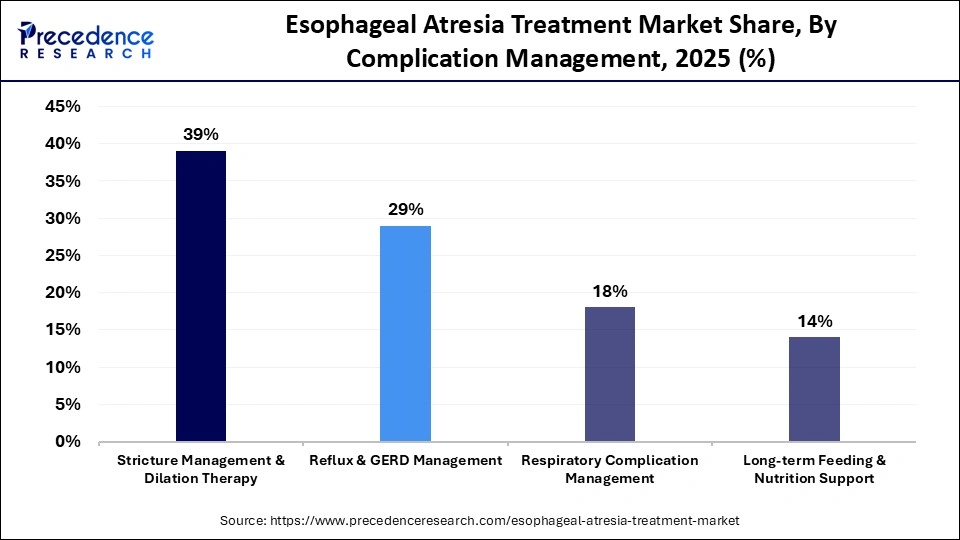
The respiratory complication management segment is expected to account for the highest growth in the coming years. It is expanding rapidly as surgical intervention has enhanced survival rates; these survivors suffer from long-term respiratory morbidities that are present till adulthood. The management is pivoting towards proactive multidisciplinary care, hence driving the demand for specialized therapeutic and diagnostic solutions wherein respiratory health is a primary focus.
Diagnostic Modality Insights
The postnatal diagnostic tools segment led the market, accounting for approximately 78% of the share in 2025. It is leading the market as they provide immediate, accurate, and actionable anatomical information crucial for surgical emergency treatment of neonates. The postnatal diagnostic tools are widely available, fast, and cost-effective, and they are crucial for surgical planning, leading to their dominance in this market. In the treatment market, the postnatal diagnostic tools are the primary drivers.
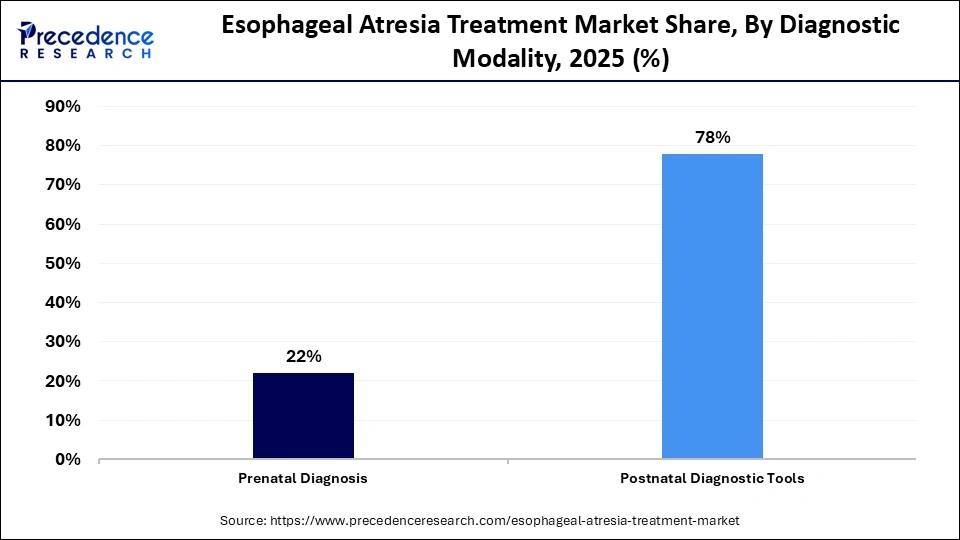
The prenatal diagnosis segment is observed to grow rapidly in the foreseen period. It is experiencing significant growth due to early detection, which allows for comprehensive pre-birth planning. With advancing image technology, the diagnostic accuracy has improved significantly, which further expands its market. This market is propelled by their capacity to pivot management from emergency post-natal care to planned, proactive specialized care, which improves survival rates.
End-User Insights
The hospitals & surgical centers segment contributed the biggest market share of approximately 59% in 2025, due to the crucial need for specialized, rapid postnatal care, NICU support, and high-cost specialized procedures. This segment provides necessary expertise, advanced technology, and multispecialty teams to manage high-risk congenital esophageal atresia cases and postoperative complications. The initial, essential high-cost phase of the treatment occurs entirely within hospitals and surgical centers.
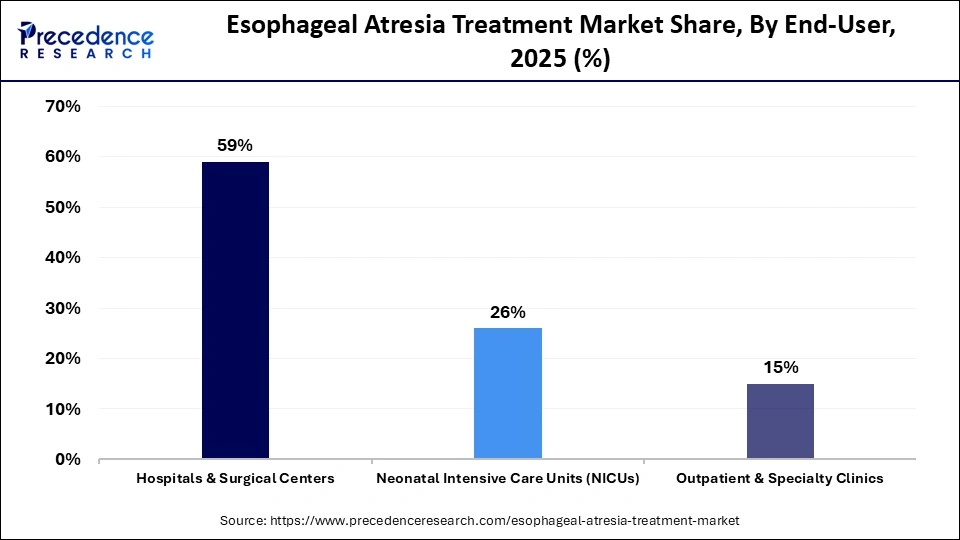
The neonatal intensive care units segment is expected to witness the fastest growth between 2026 and 2035. It is expanding rapidly due to a surge in the preterm birth rate, a rise in the investments in advanced neonatal infrastructure, and an increase in the survival rate in complex cases. Improved surgical technology and specialized, multidisciplinary care in NICUs are essential to manage high-risk newborns, thus propelling the market demand.
Regional Insights
How Big is the North America Esophageal Atresia Treatment Market Size?
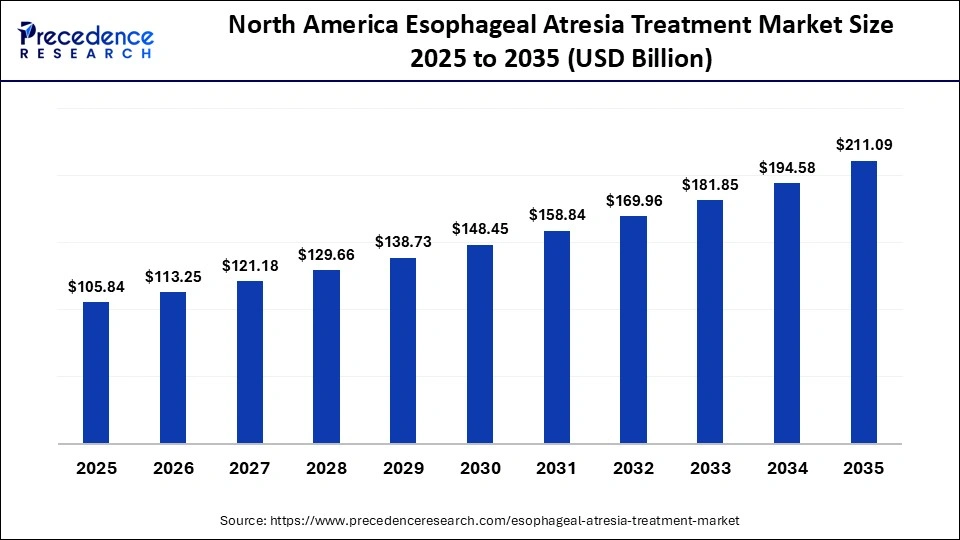
The North America esophageal atresia treatment market size is estimated at USD 105.84 billion in 2025 and is projected to reach approximately USD 211.09 billion by 2035, with a 7.15% CAGR from 2026 to 2035.
Which Factors Drive the Esophageal Atresia Treatment Market in North America?
North America dominated the market with a share of approximately 36% in 2025. Its dominance is primarily due to the high incidence of this condition in this region, a robust and well-established healthcare ecosystem, and favorable reimbursement for complicated neonatal surgeries. Key innovations of R&D, like the Flourish Pediatric Esophageal Atresia Device and Magnamosis, along with government policies and regulatory approvals like the FDA Humanitarian Device Exemption, NORD, and educational initiatives, are further expanding the market in this region. The robust, rapid adoption of cutting-edge technologies that improves long-term outcomes and increases the market value. This is a leader in market revenue due to its superior access to advanced medical technologies and higher case detection rate.
What is the Size of the U.S. Esophageal Atresia Treatment Market?
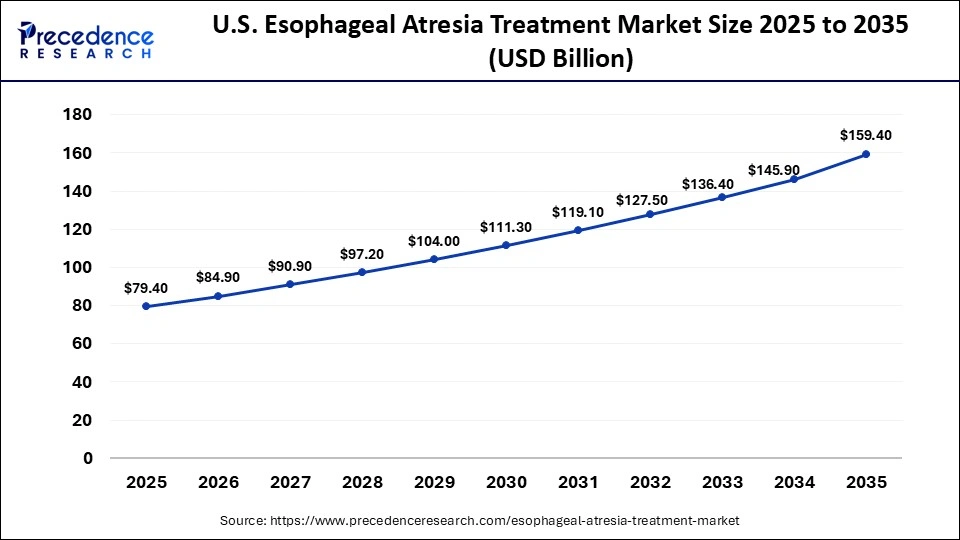
The U.S. esophageal atresia treatment market size is calculated at USD 79.4 billion in 2025 and is expected to reach nearly USD 159.4 billion in 2035, accelerating at a strong CAGR of 7.22% between 2026 and 2035.
U.S Market Trends
The U.S. dominates the esophageal atresia market in the North American region due to its well-established healthcare infrastructure, high density of specialized pediatric surgical centers, and rapid adoption of new surgical and technological advancements. Strong insurance and reimbursement systems in the US facilitate access to costly, advanced, and long-term treatment procedures, including specialized surgeries and postoperative care, which expands its market. The U.S. dominates in terms of high-cost, specialized, and technical approaches. The development of guidelines to reduce complications further strengthens the U.S. market position.
How Will Asia Pacific Grow in the Esophageal Atresia Treatment Market?
Asia Pacific is expected to be the fastest-growing region in the foreseen period due to a surge in birth rate, an increase in the prevalence of congenital diseases, a rapidly enhancing neonatal healthcare ecosystem, and a rise in accessibility to healthcare. Government initiatives aimed at advancing healthcare, coupled with a rise in income, are enabling better access to specialized treatment. This region provides cost-effective healthcare services paired with skilled professionals and high-quality infrastructure, further expanding its market in this region.
China Market Trends
China holds a major share due to its huge population base, surge in birth rate, and rapid advancement in pediatric surgical technology. A high incidence of congenital defects with localized innovation in surgical treatment has led China to become a major hub in this region. Innovation in China has led to advancements in diagnostic imaging and surgical procedures, further boosting its market. China is immensely growing due to its high birth rate, heightened awareness, and growing healthcare expenditure.
Which Region Is Experiencing the Most Significant Growth in the Esophageal Atresia Treatment Market?
Europe is experiencing rapid expansion in the esophageal atresia treatment market by holding the second-largest revenue share of 27% in 2025. It is due to the high incidence of anomalies, robust healthcare infrastructure, and rapid adoption of new-age technology, minimally invasive and robot-assisted surgical techniques. This market is driven by increased centralization that boosts knowledge sharing, improves patient outcomes, and standardizes care. Heightened awareness of treatment options paired with favorable reimbursement for advanced high-cost procedures further boosts the market.
Germany Market Trends
Germany is leading this market due to the high density of specialized centers, advanced surgical techniques, and extensive research capabilities. The German Society of Pediatric Surgery provides detailed guidelines for the treatment of esophageal atresia; this ensures consistent, high-standard treatment approaches across the country. Various government initiatives and R&D, like Telemedical Interdisciplinary Care for Patients with EA (TIC-PEA), Techniker Krankenkasse (TK) Insurance Data Analysis, and Surgical R&D Focus (MIS and Foker Technique), further boost the market. The German dominance is maintained through exceptional treatment outcomes, innovative treatment options, and specialized centers for rare congenital diseases.
Esophageal Atresia Treatment Market Value Chain Analysis
- R&D
It emphasizes enhancing neonatal survival, lowering long-term health risk, and managing "long-gap" cases.
Key Players: Cook Medical, Asan Medical Center, Bambino Gesù Children's Research Hospital
- Clinical Trials and Regulatory Approvals
It hinges on prioritizing intensive clinical data, specialized pediatric expertise, and an accelerated regulatory approval process
Key Players: Cook Medical, Biostage, Inc., Ethicon (Johnson & Johnson)
- Formulation and Final Dosage Preparation
It focuses on the specialized pharmaceutical, nutritional, and medical device production needed for fetal care.
Who are the Major Players in the Global Esophageal Atresia Treatment Market?
The major players in the esophageal atresia treatment market include Cook Medical LLC, Medtronic Plc, Boston Scientific Corporation, Teleflex Incorporated, Olympus Corporation, Applied Medical Resources Corporation, Taewoong Medical, B. Braun Melsungen AG, Merit Medical Systems, ELLA-CS, Johnson & Johnson (Ethicon), Smiths Group plc (Smiths Medical), Ambu A/S, M.I. Tech, Endo-Flex GmbH
Recent Development
- In October 2025, Medtronic announced the launch of the Endoflip™ 300 impedance planimetry system in India. It aids in the diagnosis of patients with esophageal motility disorders. (Source: https://news.medtronic.com)
- In February 2025, a symposium held by Cleveland Clinic Children's promoted the first neonatal minimally invasive surgical technique. This technique benefits over open surgery, including reduced pain, minimal blood loss, faster recovery times, and lower risks of complications. (Source: https://consultqd.clevelandclinic.org)
Segments Covered in the Report
By Treatment Type
- Surgical Repair Procedures
- Primary anastomosis
- Staged repair
- Thoracoscopic / Minimally invasive surgery
- Open thoracotomy
- Non-Surgical / Supportive Care
- Feeding support (gastrostomy, jejunostomy)
- Dilation therapy for strictures
- Acid suppression & motility management
By Complication Management
- Stricture Management & Dilation Therapy
- Reflux & GERD Management
- Respiratory Complication Management
- Long-term Feeding & Nutrition Support
By Diagnostic Modality
- Prenatal Diagnosis
- Ultrasound screening
- Fetal MRI / advanced imaging
- Postnatal Diagnostic Tools
- X-ray & contrast esophagography
- Endoscopy / bronchoscopy
- Manometry / motility studies
By End-User
- Hospitals & Surgical Centers
- Neonatal Intensive Care Units (NICUs)
- Outpatient & Specialty Clinics
By Region
- North America
- Europe
- Asia-Pacific
- Latin America
- Middle East & Africa
For inquiries regarding discounts, bulk purchases, or customization requests, please contact us at sales@precedenceresearch.com
Frequently Asked Questions





Ask For Sample
No cookie-cutter, only authentic analysis – take the 1st step to become a Precedence Research client
 Get a Sample
.webp)



 sales@precedenceresearch.com
 Schedule a Meeting
