



Esophageal Cancer Therapeutics Market Size, Companies, Share, Patient Volume, Treatment Adoption Rates, Pricing Analysis, Regulatory Landscape, Competitive Positioning, and Demand Forecast
Esophageal Cancer Therapeutics Market (By Therapy Type: Chemotherapy, Immunotherapy (PD-1/PD-L1, IO combinations), Targeted Therapy, Other Therapies (supportive/adjunct oncology drugs); By Cancer Type: Esophageal Squamous Cell Carcinoma (ESCC), Esophageal Adenocarcinoma (EAC); By Stage of Disease: Locally Advanced/Resectable Disease, Neoadjuvant therapy, Adjuvant therapy, Metastatic/Advanced Disease; By End-User: Hospitals & Oncology Centers, Specialty Cancer Clinics, Academic & Research Institutes) - Global Industry Analysis, Size, Trends, Leading Companies, Regional Outlook, and Forecast 2026 to 2035
Source: https://www.precedenceresearch.com/esophageal-cancer-therapeutics-market
 Get a Sample
 Table Of Content


What is the Esophageal Cancer Therapeutics Market Size?
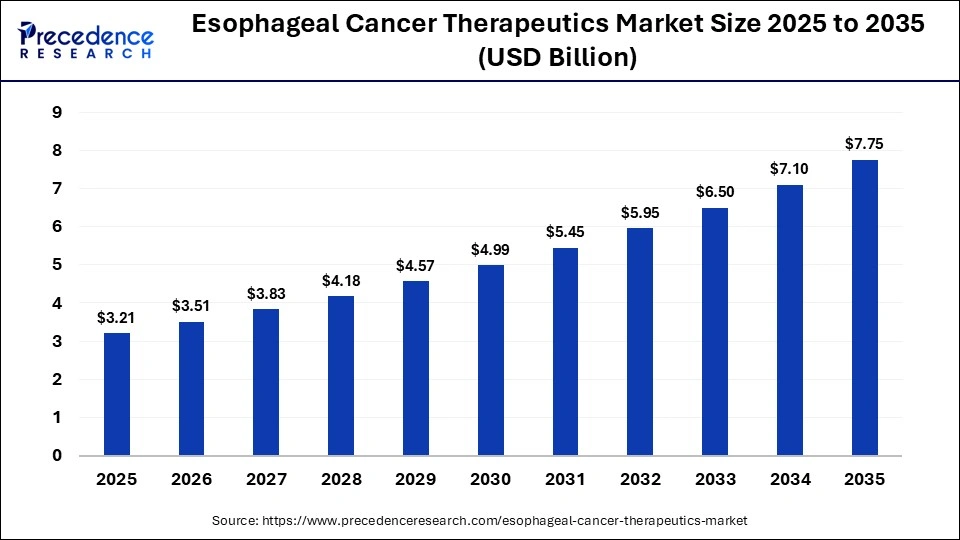
The global esophageal cancer therapeutics market size accounted for USD 3.21 billion in 2025 and is predicted to increase from USD 3.51 billion in 2026 to approximately USD 7.75 billion by 2035, expanding at a CAGR of 9.22% from 2026 to 2035. The esophageal cancer therapeutics market is growing exponentially as there is a surge in esophageal cancer, improved early-stage diagnostic techniques, and the growing demand for personalized medicines.
Market Highlights
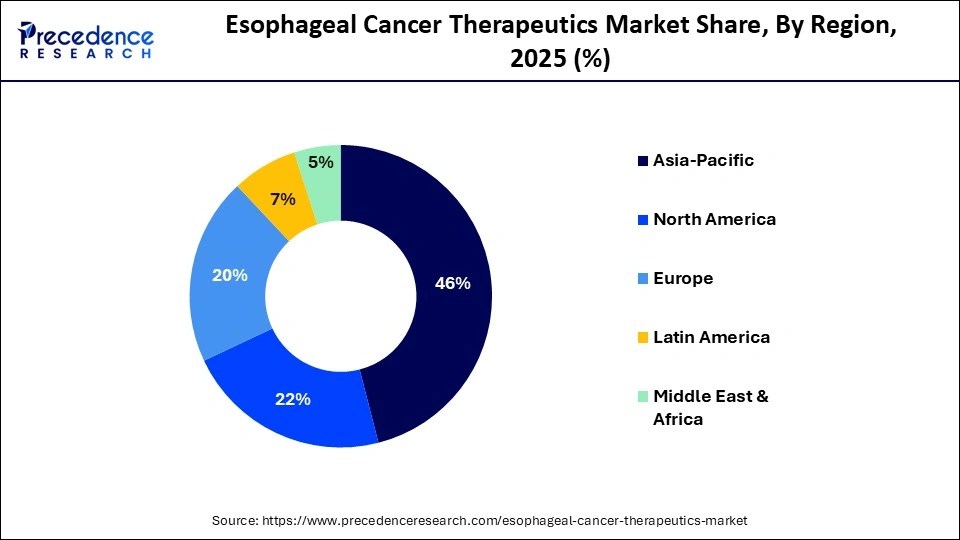
- Asia-Pacific dominated the market, holding a share of approximately 46% in 2025.
- North America is expected to be the fastest-growing region during the forecast period.
- By therapy type, the chemotherapy segment held the largest market share of approximately 36% in 2025.
- By therapy type, the immunotherapy segment is expected to grow at a remarkable CAGR between 2026 and 2035.
- By cancer type, the esophageal squamous cell carcinoma (ESCC) segment dominated the esophageal cancer therapeutics market with a share of approximately 58% in 2025.
- By cancer type, the esophageal adenocarcinoma (EAC) segment is expected to grow rapidly during the forecast period.
- By stage of disease, the metastatic/advanced disease segment held the largest revenue share of approximately 62% of the market in 2025.
- By stage of disease, the locally advanced/resectable disease segment is expected to grow at a rapid CAGR between 2026 and 2035.
- By end-user, the hospitals & oncology centers segment held the largest revenue share of approximately 64% in the industry.
- By end-user, the specialty cancer clinics segment is expected to grow with the highest CAGR between 2026 and 2035.
What are Esophageal Cancer Therapeutics?
The global esophageal cancer therapeutics market includes pharmaceutical and biologic treatments used for the management of esophageal malignancies, including esophageal squamous cell carcinoma (ESCC) and esophageal adenocarcinoma (EAC). Esophageal cancer therapeutics is a multifaceted approach that includes surgery, chemotherapy, radiation, targeted therapy, and immunotherapy to remove tumors, shrink them, or manage advanced diseases.
This market is surging due to an increase in the incidence of disease, which is propelled by obesity, an increase in smoking, and alcohol consumption. Advancements in diagnostic and surgical technology have enabled earlier, more accurate diagnosis, leading to early intervention and improving the overall survival rate. The market is showing a paradigm shift as it focuses more on personalized, less invasive therapies, promoting investment and long-term growth.
What is the Role of AI in the Esophageal Cancer Therapeutics Market?
Artificial intelligence is significantly impacting the market by improving patients' prognoses, as it helps in early detection of cancer, improves diagnostic accuracy, and personalizes treatment plans. It acts as an aid in real-time endoscopic analysis, optimizing treatment selection & predicting therapy responses. Integration of AI helps to reduce human error, minimize variability, and enhance early targeted intervention. Although it seems AI is promising, it is not without challenges, such as limited data and data privacy & security.
Esophageal Cancer Therapeutics Market Trends
- Targeted and Immunotherapy Advancements: There is a need for superior & far more effective treatment as traditional treatment yields poor survival rates. Immunotherapies such as PD1 inhibitors are very effective in advanced, recurrent, or metastatic esophageal cancer. This expansion is driven by advancement in molecular profiling, which allows personalized treatment.
- Rising Incidence: There is a surge in the incidence of esophageal cancer, especially adenocarcinoma, which is fuelled by a rise in obesity rate, GERD due to sedentary lifestyle, an increase in smoking and alcohol consumption, and an aging population.
- Strategic Collaborations: As disease burden is increased, the need for new, innovative, multimodal, and targeted treatment is increased. There is a surge in collaboration to fund and execute large-scale clinical trials and to develop novel immunotherapies.
Market Scope
| Report Coverage | Details |
| Market Size in 2025 | USD 3.21 Billion |
| Market Size in 2026 | USD 3.51 Billion |
| Market Size by 2035 | USD 7.75 Billion |
| Market Growth Rate from 2026 to 2035 | CAGR of 9.22% |
| Dominating Region | Asia Pacific |
| Fastest Growing Region | North America |
| Base Year | 2025 |
| Forecast Period | 2026 to 2035 |
| Segments Covered | Therapy Type, Cancer Type, Stage of Disease, End-User, and Region |
| Regions Covered | North America, Europe, Asia-Pacific, Latin America, and Middle East & Africa |
Segmental Insights
Therapy Type Insights
Which Therapy Type Segment Led the Esophageal Cancer Therapeutics Market?
The chemotherapy segment led the market with a share of approximately 36% in 2025, because it is a standard, foundational, and extensively used therapy in all stages of cancer, particularly in advanced & metastatic stages. It is a core therapy for esophageal cancer, as it is frequently diagnosed in advanced stages. It is usually a first-line treatment due to its widespread accessibility and affordability.
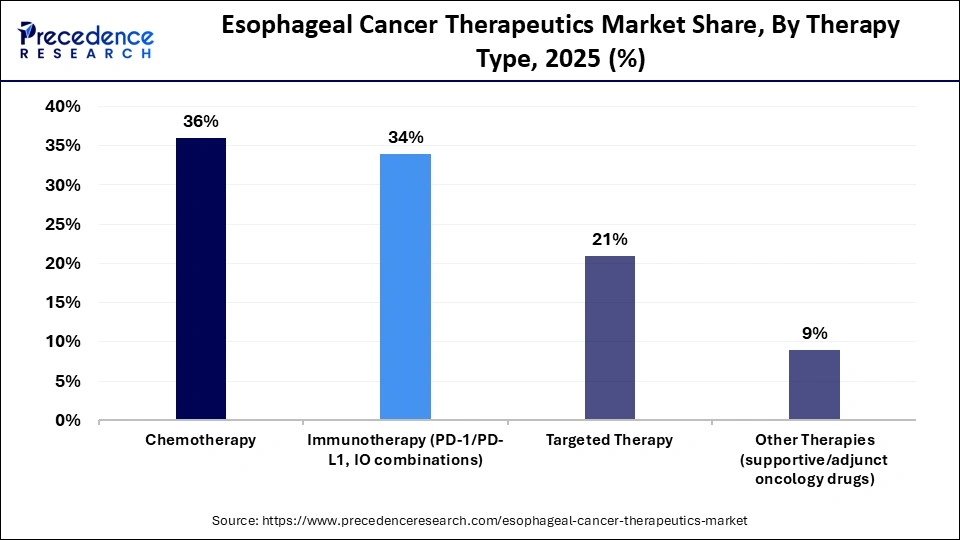
The immunotherapy segment is expected to grow at the fastest CAGR in the market between 2026 and 2035, driven by the high clinical efficacy of PD-1/PD-L1 inhibitors and increasing use in combination with chemotherapy, which improves the overall survival rate and reduces cancer recurrence. Advances in genomic technologies and the growing need for targeted treatment augment the segment's growth.
Cancer Type Insights
How the Esophageal Squamous Cell Carcinoma (ESCC) Segment Dominated the Market?
The esophageal squamous cell carcinoma (ESCC) segment dominated the esophageal cancer therapeutics market with a share of approximately 58% in 2025, due to the rising prevalence of ESCC. Usually, this cancer is detected in advanced stages, and it requires extensive, long-term treatment, as it is an aggressive cancer leading to higher mortality rates. ESCC is mainly caused by smoking, alcohol consumption, and nutritional factors, driving continuous demand for therapeutic agents. The increasing number of patients with unmet medical needs, a poor prognosis, & an increase in the number of novel therapies also drive the segment's growth.
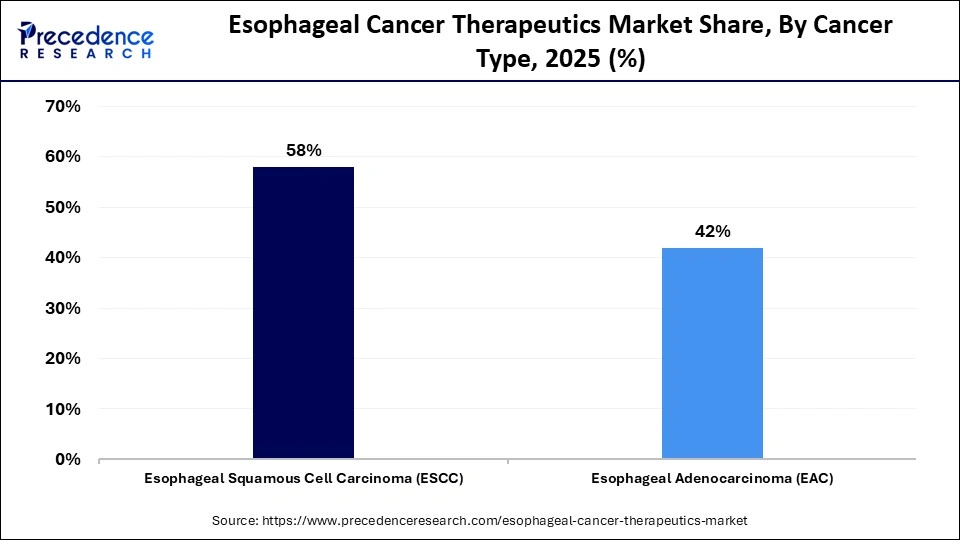
The esophageal adenocarcinoma (EAC) segment is expected to be the fastest-growing segment in the coming years, driven by a surge in the global incidence of EAC due to rising obesity, GERD, and smoking, as there has been a change in lifestyle in recent years. The market is expected to continue its uptrend as therapies become more accessible and personalized, leading to better outcomes in advanced cancer.
Stage of Disease Insights
Which Stage of Disease Segment Dominated the Esophageal Cancer Therapeutics Market?
The metastatic/advanced disease segment held a major market share of approximately 62% in 2025, primarily because most patients are diagnosed in later stages. As this cancer is often diagnosed in a later stage, it focuses more on palliative care, system management, and prolonging the survival rate. The advanced/metastatic stage is the primary driver for revenue generation in this market due to expensive modern, specialized, and often prolonged treatment regimens.
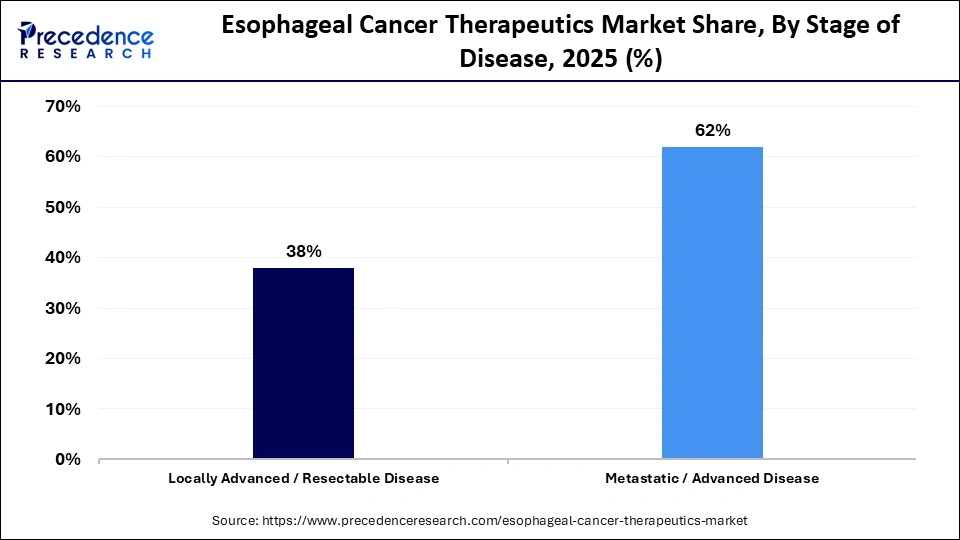
The locally advanced/resectable disease segment is expected to grow with the highest CAGR in the market during the studied years, due to intensive, revolutionized multimodal treatment offering better, more durable, and less toxic options than conventional ones that improve the patient survival rate significantly. The adoption of minimally invasive and robotic-assisted surgery has reduced operative mortality and enhanced recovery. While these therapies are expensive, they have reduced mortality and recurrence, making them a high-value and fast-growing market.
End-User Insights
Why Did the Hospitals & Oncology Centers Segment Dominate the Market?
The hospitals & oncology centers segment accounted for the highest revenue share of approximately 64% in the esophageal cancer therapeutics market in 2025, due to the need for an extensive, multidisciplinary, and highly specialized approach to the treatment, which can be achieved only in hospital settings. A massive portion of these therapies is complex and requires inpatient clinical monitoring, which is best handled in hospitals or oncology centers. In advanced cancer cases, it requires advanced machinery and specialized equipment.
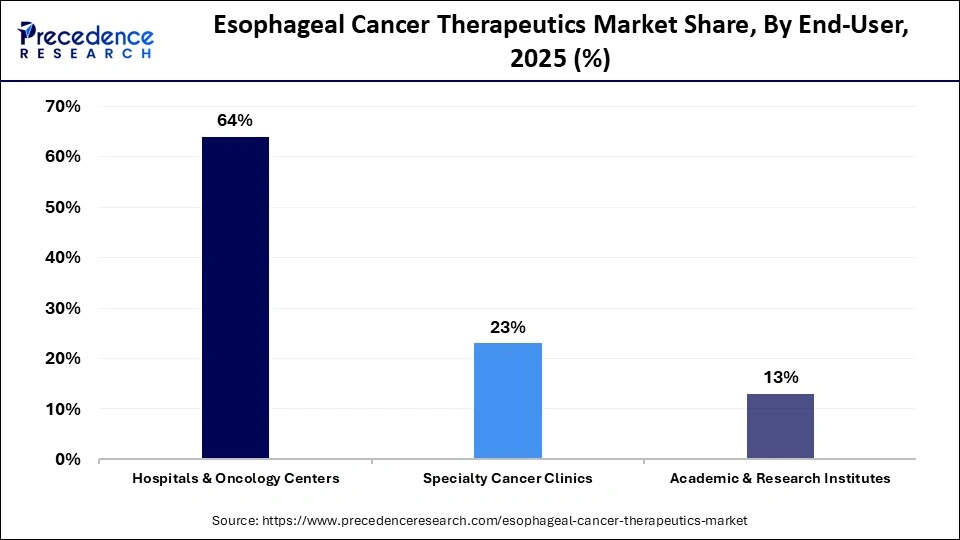
The specialty cancer clinics segment is expected to expand rapidly in the forecast period. These clinics are better equipped to provide personalized medicine and advanced immunotherapies, improving the efficacy of the treatment and multidisciplinary approach, which are essential for complex cases. The rapid expansion is supported by a shift from a conventional approach to a more innovative, targeted approach, where a specialized expert is required.
Regional Insights
What is the Asia Pacific Esophageal Cancer Therapeutics Market Size?
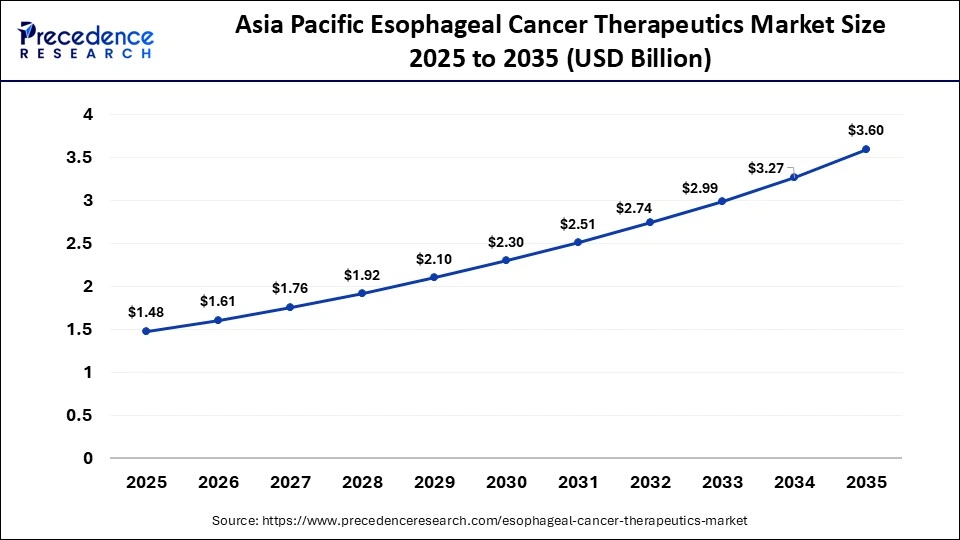
The Asia Pacific esophageal cancer therapeutics market size is expected to be worth USD 3.60 billion by 2035, increasing from USD 1.48 billion by 2025, growing at a CAGR of 9.30% from 2026 to 2035.
Which Factors Drive the Esophageal Cancer Therapeutics Market in Asia-Pacific?
Asia-Pacific dominated the market with a share of approximately 46% in 2025. This region exceptionally shows higher incidence and mortality rates of cancer, fuelled by factors like a sedentary lifestyle and an unhealthy diet. The high prevalence has led to the adoption of innovative therapies, improved healthcare infrastructure, and an increase in investment in novel drugs.
Rapid, cost-effective pharmaceutical production improves the accessibility and affordability of the treatment. Key initiatives from Governments include strengthening public-sector diagnostic infrastructure, accelerated regulatory approvals, and support for clinical trials, such as personalized peptide vaccines in Japan, to improve long-term outcomes.
China Market Trends
China dominates this market, as it witnesses the highest incidence of esophageal cancers. Huge investments in R&D, clinical trials, and rapid adoption of immunotherapies propel market growth. The Chinese regulatory board has implemented policies to increase the review and approval of anticancer drugs, reducing the time to market. They often integrate traditional Chinese medicine with therapy to improve the survival rate. China is at the forefront of the immunotherapy market as it is developed and implemented domestically.
How Will North America Grow in the Esophageal Cancer Therapeutics Market?
North America is expected to be the fastest-growing region over the foreseen period, due to the rise in adenocarcinoma incidence, well-established healthcare infrastructure, and robust R&D. The rise in adenocarcinoma is due to obesity and GERD due to an unhealthy diet. The presence of major pharmaceutical firms facilitates massive investment in clinical trials, especially novel and targeted therapies. Favorable reimbursement policies support high-cost cancer treatment. A huge portion of global oncology trials, which were over 2,000 in 2024, are based in North America.
U.S. Market Trends
The U.S. holds a massive market share in the North American region due to increased incidence of disease, an aging demographic, rapid adoption of newer therapies, and strong healthcare infrastructure. Major R&D trends in the U.S. are the development of subcutaneous formulations to improve patient convenience and reduce time in clinics and the expansion of immunotherapy treatment. Various government initiatives like the Cancer Moonshot Program and Project Renewal further expand the market.
Which Region Has Shown Notable Growth in the Esophageal Cancer Therapeutics Market?
Europe is expected to grow at a notable CAGR in the foreseeable future, due to an increase in the prevalence of esophageal cancers caused by sedentary lifestyles, an aging population, enhanced diagnostic capabilities, and high-cost therapies. Europe heavily focuses on personalized medicine to improve the survival rate. Europe is also investing heavily in various R&D programs like Cancer Core Europe and the PRESSURE Consortium, which improve market share. Various government initiatives, like Europe's Beating Cancer Plan & EU Cancer Mission, further expand the market.
Germany Market Trends
Germany is leading the market in Europe, driven by advanced healthcare infrastructure, high healthcare expenditure, access to newer treatments, and robust research infrastructure. German clinics are pioneers in personalized immunotherapy, and initiatives like the National Decade Against Cancer further increase market share. German clinics are known for integrating high-tech intervention with holistic care to improve quality of life during treatment.
Esophageal Cancer Therapeutics Market Value Chain Analysis
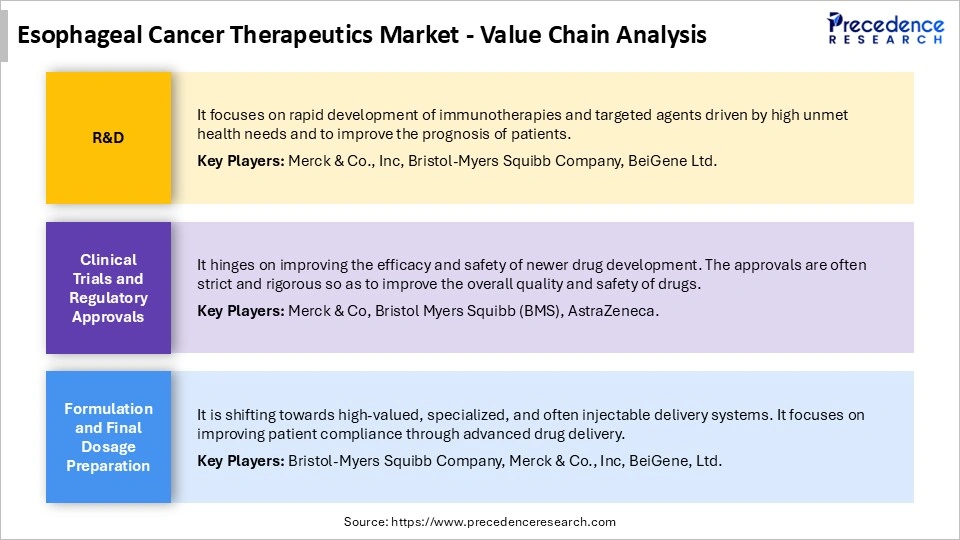
Who are the Major Players in the Global Esophageal Cancer Therapeutics Market?
The major players in the esophageal cancer therapeutics market include Bristol-Myers Squibb (BMS), Merck & Co, F. Hoffmann-La Roche (Genentech), AstraZeneca, Eli Lilly and Company, BeiGene, Novartis AG, Pfizer Inc, and Sanofi.
Recent Developments
- In July 2025, AstraZeneca announced that it received breakthrough therapy designation from the U.S. Food and Drug Administration for its IMFINZI (durvalumab) for patients with resectable gastric and gastroesophageal junction cancers. The drug is an immunotherapy with proven reduction in cancer progression and recurrence. (Source: https://www.astrazeneca-us.com)
- In July 2025, CivicaScript launched a generic version of an oral chemotherapy drug, capecitabine, which can be used for the treatment of various cancer types, including esophageal and gastroesophageal junction cancer. The company focuses on transparency and collaboration throughout the value chain from manufacturing through dispensing. (Source: https://civicascript.com)
- In June 2025, Glenmark launched TEVIMBRA in India after receiving approval from the CDSCO. TEVIMBRA is an anti-PD1 monoclonal antibody for the second-line treatment of locally advanced/metastatic NSCLC and ESCC. It is also available in the U.S., EU, Australia, and China. (Source: https://www.pharmabiz.com)
Segments Covered in the Report
By Therapy Type
- Chemotherapy
- Platinum-based regimens
- Fluoropyrimidines
- Taxanes
- Immunotherapy (PD-1/PD-L1, IO combinations)
- Targeted Therapy
- HER2-targeted agents
- VEGF/VEGFR inhibitors
- Other molecular targets
- Other Therapies (supportive/adjunct oncology drugs)
By Cancer Type
- Esophageal Squamous Cell Carcinoma (ESCC)
- Esophageal Adenocarcinoma (EAC)
By Stage of Disease
- Locally Advanced/Resectable Disease
- Neoadjuvant therapy
- Adjuvant therapy
- Metastatic/Advanced Disease
By End-User
- Hospitals & Oncology Centers
- Specialty Cancer Clinics
- Academic & Research Institutes
By Region
- North America
- Europe
- Asia-Pacific
- Latin America
- Middle East & Africa
For inquiries regarding discounts, bulk purchases, or customization requests, please contact us at sales@precedenceresearch.com
Frequently Asked Questions





Ask For Sample
No cookie-cutter, only authentic analysis – take the 1st step to become a Precedence Research client
 Get a Sample
.webp)



 sales@precedenceresearch.com
 Schedule a Meeting
