



Europe Urinary Incontinence Therapeutics Market, Europe Market Size, Segmentation, Regional Analysis, Pharmacological Treatment, Urge Incontinence, Stress Incontinence, and Therapeutic Advancements.
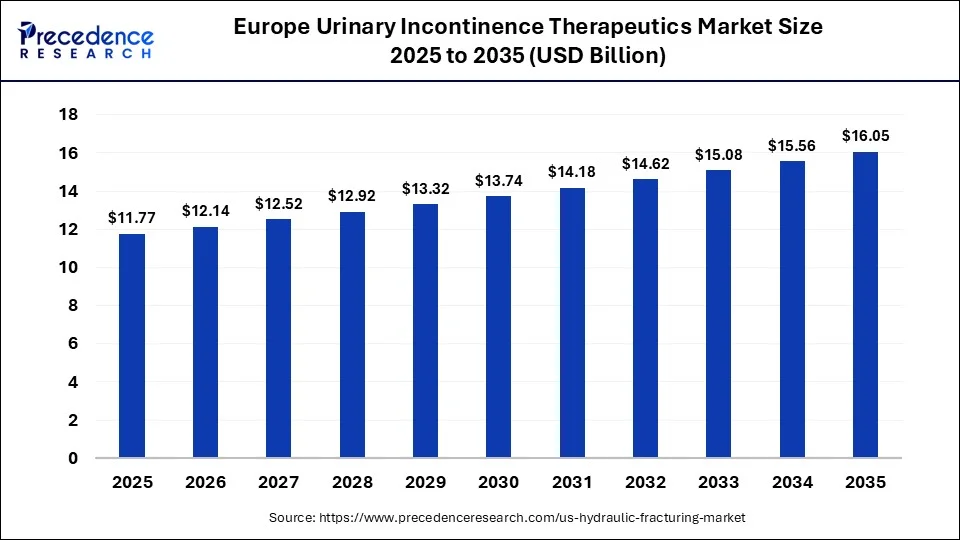
The European urinary incontinence therapeutics market is valued at 11.77 billion in 2025. The market is witnessing a major transformation towards a personalized and directed mode of treatment. This trend was analyzed by our Senior Research Analyst, Deepa Pandey curated the report. Her analysis is useful to pharma companies, healthcare providers, urology specialists, and investors in the industry in comparing the situation with one another and in making strategic decisions.
Source: https://www.precedenceresearch.com/europe-urinary-incontinence-therapeutics-market
 Get a Sample
 Table Of Content


Europe Urinary Incontinence Therapeutics Market Demand, Size, and Growth Rate Forecast 2035
Healthcare systems are becoming more structured and personalized in the treatment of bladder control disorders across Europe. Traditional urinary incontinence therapeutics are moving into the spotlight. Urinary incontinence is associated with diminished quality of life. There is an ever-increasing need for therapeutic options that will help this population achieve better outcomes, especially in aging. Deepa Pandey brings over 5 years of experience in market analysis in healthcare and life science. She notes a transformational shift in the urology care landscape in Europe, where patient awareness and the innovation of pharmaceutical play a key role in shaping practice patterns.
Key Takeaways
- By incontinence type, the urge incontinence segment led the market with a share of 39.65% in 2025.
- By drug class analysis, the antimuscarinic segment led the market with a 38.45% share in 2025.
- By therapy type analysis, the pharmacological therapy segment captured a major revenue share of 67.85% in 2025.
- By route of administration, the oral segment captured the largest market share of 72.85% in 2025.
- By distribution channel, the hospital pharmacies segment led the market with a share of 25.85% in 2025.
- Strong clinical adoption, with 425,000+ implants and an 82% five-year success rate in OAB patients.
- Europe's aging population is driving OAB demand, with 22% of EU citizens aged 65+ and Italy among the oldest populations.
- Growing need for elderly care services is expected to support urinary incontinence treatment demand.
- Astellas' OAB franchise faces pressure, with global Betmiga/Myrbetriq sales declining 14.2% YoY.
- Pierre Fabre continues investing in innovation, supported by €250 million in R&D spending and strong international revenue.
The European urinary incontinence therapeutics market encompasses medicines and other therapies. They treat urinary incontinence and urinary control issues. Population ageing and the ongoing development of pharmaceutical and minimally invasive treatment therapies are all contributing to the growth of market demand.
The traditional antimuscarinic-based therapy paradigm is being shifted in the European setting towards greater use of β3-adrenergic agonists, combination agents, intravesical therapy, neuromodulation, and more personalized therapy pathways. Antimuscarinics and β3 agonists are now both accepted by current European Association of Urology (EAU) guidelines for OAB treatment. Also, there are newer drugs (e.g., vibegron) available in Europe.
Expert Analyst View
The Europe urinary incontinence therapeutics market is expected to grow from USD 11.77 billion in 2025 to USD 16.05 billion in 2035, with an absolute growth of USD 4.28 billion, displaying robust growth.
Compared to the rest of the world, the moderate overall growth rate shows how mature and well-established the European pharmaceutical markets are. Further, importantly, whether there is a well-established way of addressing the challenges caused by the use of oral pharmacological treatments. But the real market structure is rapidly evolving when compared with what is reflected in the CAGR.
The most significant advances have been in the shift from traditional antimuscarinic therapy to β3 agonists and other drugs with unique tolerability and delivery features. The EAU's female LUTS guidance confirms that β3-agonists are an effective treatment for OAB and are recommended as a second-line therapy following conservative management. The guidance additionally provides that mirabegron is superior to placebo in treating OAB with urgency urinary incontinence, as well as vibegron.
Incontinence Type Analysis
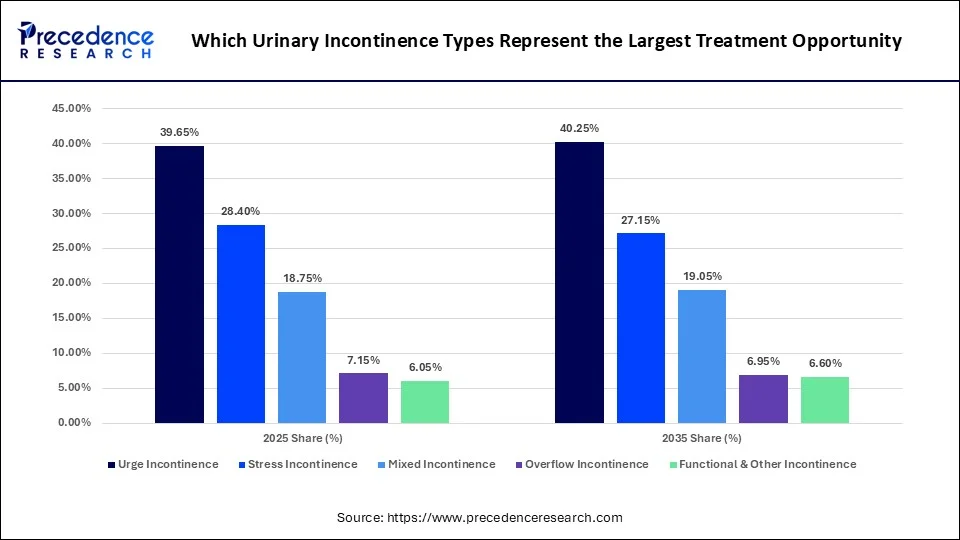
Which Urinary Incontinence Types Represent the Largest Treatment Opportunity?
Source: Precedence Research Database
The urgency incontinence treatment segment is the largest and is projected to account for 40.25% of the total market by 2035, with a CAGR of 3.31% in Europe. This exemplifies the pivotal place that urgency associated with OAB holds in pharmacological prescription. Most of the classes of drugs approved are used only for urgency-related symptoms. Functional incontinence is the smallest group with 6.05% market share in 2025 with the CAGR (4.04%) within the market. This increases at this rate due to better diagnoses and management of conditions that were not diagnosed or managed before.
Expert Analyst View
In 2025, the share of urge incontinence is estimated to be 39.65% of the market. This figure is expected to decline to 40.25% by 2035. The lack of a large degree of weakness suggests the importance of OAB-related urgency and urgency urinary incontinence in pharmacological treatment. Antimuscarinics are a key component of OAB management according to the EAU, and β3 agonists like mirabegron and vibegron have been recognised to help relieve symptoms of urgency urinary incontinence. Functional & other Incontinence is supplied with the highest CAGR of 4.04% but from a smaller market base.
Drug Class Analysis
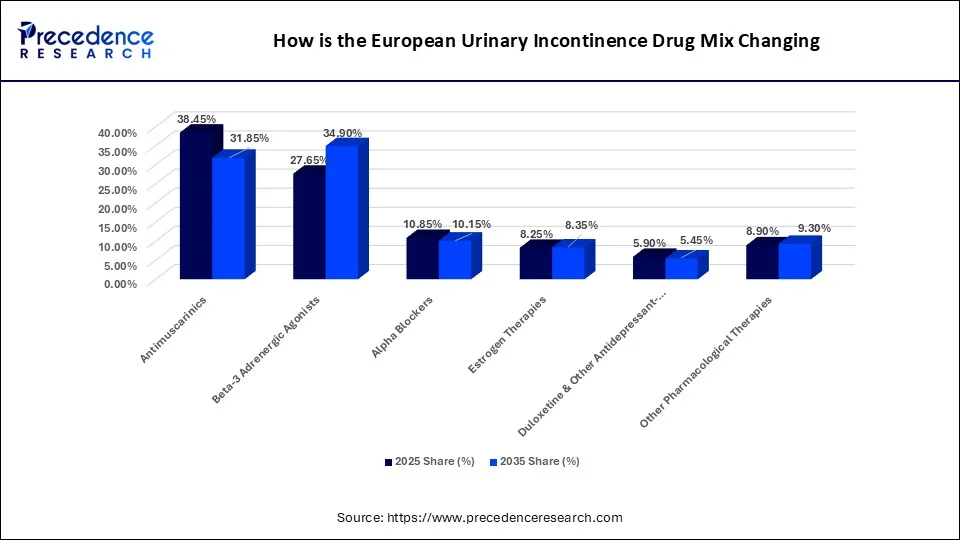
How is the European Urinary Incontinence Drug Mix Changing?
Source: Precedence Research Database
The European drug-class mix is one of the more significant shifts in the treatment landscape overall. Antimuscarinics hold the largest share in 2025, but even this decreases to 31.85% by 2035, with the class maturing and being threatened by generic competition, at a CAGR of 1.22%. The beta-3 adrenergic agonists saw a rise opposite to the rest, rising from 27.65% to 34.90% during the forecast period at a CAGR of 5.65%. Poised to become the largest superimposed drug class during the forecast period.
Expert Analyst View
The drug-class mix is one of the biggest structural shifts in the European market. The highest-selling drug class in 2025 is antimuscarinics (38.45%), which is expected to decrease to 31.85% by 2035. Conversely, β3-adrenergic agonists are expected to grow from 27.65% to 34.90%, which is the highest modeled class of drugs by 2035.
This change is in line with the European clinical guidance. Based on the EAU guidelines, β3 agonists are equally as effective as antimuscarinics for treating OAB but are associated with fewer dry mouth events, allowing them to be increasingly used to treat
the condition. On the other hand, the European drug scene has grown to include more than mirabegron. Vibegron (Obgemsa) has been approved by the EMA for the symptomatic treatment of OAB in adults, including urgency, increased urinary frequency, and urge incontinence, in June 2024.
Key Drug-Class Transition
Why are Β3 Agonists Gaining Importance?
| Indicator | Antimuscarinics |
β3 Agonists |
| 2025 Market Share | 38.45% | 27.65% |
| 2035 Market Share | 31.85% | 34.90% |
| Supplied CAGR | 1.22% | 5.65% |
| Primary Application | OAB/storage symptoms | OAB/urgency/UUI |
| Major European Products | Multiple established agents | Mirabegron, vibegron |
| Key Commercial Theme | Mature treatment base | Class expansion and substitution |
| Treatment Consideration | Efficacy, tolerability, cognition | Efficacy, tolerability, cardiovascular considerations |
Source: Precedence Research Database
Consideration of the trade-offs required comes into play, especially when European patients are older. The treatment is shifted from a base of OAB symptoms toward a focus on storage symptoms, which occurs with the use of antimuscarinics. Commercial β3 agonists, represented by mirabegron and vibegron, sit around class expansion and substitution. Treatment considerations are not cognitive but rather efficacy, tolerability, and cardiovascular effects. The EMA's pivotal study revealed that Mirabegron marketed in Europe as Betmiga for urgency. Vibegron reduced the number of micturition and urgency urinary incontinence episodes per day when compared to placebo, according to the association.
Expert Analyst View
Senior Researcher Aditi Shivarkar stated that competitive opportunity is not limited to the launch of individual OAB products. It covers class migration, tolerability differentiation, adherence, combination therapy, and preference of physicians. This change is significant for elderly people. Product labelling in Europe focuses on the issue of anticholinergic effects and cognition in the elderly. Furthermore, NICE also recommends against immediate-release oxybutynin in older women if they are at risk of sudden deterioration in physical or mental health.
Therapy Type Analysis
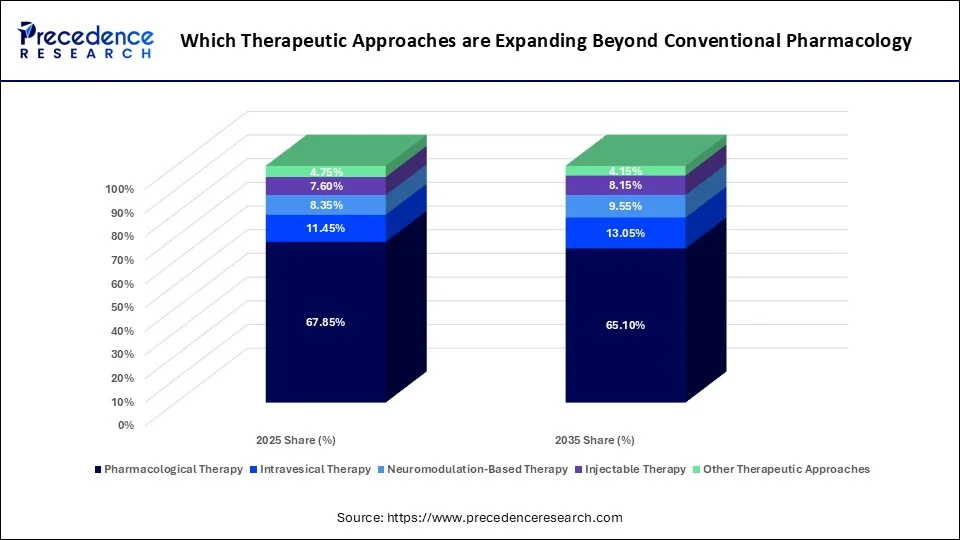
Which Therapeutic Approaches are Expanding Beyond Conventional Pharmacology?
Source: Precedence Research Database
Treatment delivery continues to be dominated by pharmacological therapy, accounting for 67.85% of the treatment delivery market in 2025, dropping to 65.10% by 2035, at a 2.72% CAGR, due to the increased share of other modalities in the market. Among the five therapy categories, neuromodulation-based therapy has the fastest growth trajectory at 4.60%, rising from 8.35% to 9.55% in the coming years, as advanced symptom management increasingly becomes available to patients.
Expert Analyst View
Pharmacological therapy is the main treatment modality. This is expected to represent a decreasing percentage of the market, down from 67.85% to 65.10%. Neuromodulation-based therapy has recorded the highest CAGR of 4.60%, while intravesical therapy has a projected CAGR of 4.50%.
There is a shift toward this trend when treatment with oral medications or bladder assist devices is unsuccessful, with the persistence of OAB symptoms, or when patients do not tolerate the agents well. For urinary retention and OAB symptoms, such as urinary urge incontinence, Medtronic's InterStim system is cleared for use in patients with OAB symptoms who have failed or can't tolerate more conservative treatment.
Neuromodulation and Advanced Therapy Intelligence
What Evidence Supports Growth in Advanced Urinary Therapies?
| Indicator | Documented Evidence |
| InterStim therapy | Indicated for OAB and urinary urge incontinence after conservative treatment failure/intolerance |
| European availability | Medtronic markets InterStim systems in European markets |
| Long-term evidence | Five-year OAB data reported by Medtronic |
| Five-year therapeutic success | 82% in the company's cited completers analysis |
| Worldwide implant base | More than 425,000 patients reported by Medtronic. |
| Innovation focus | Recharge-free systems, evaluation systems and patient programming |
Source: Precedence Research Database
Advanced urinary therapy is mainly driven by the evidence of growth for sacral neuromodulation. InterStim therapy is an indication when using more conservative therapies has proven unsuccessful or intolerable. OAB and urinary urge incontinence, and Medtronic sells the systems in European markets.
With a worldwide implant base of over 425,000 patients and therapeutic success rates of 82% in patients, the company has reported on five-year outcomes for OAB. These figures are company-disclosed and are not specifically for the European market. But rather are indicative of clinical durability and commercial scale, not a direct measure of the European market.
Expert Analyst View
Neuromodulation is seen as ‘of strategic importance because of the additional treatment options for patients who are not improving with medication. Additionally, its commercialization is different from typical pharmaceutical drugs. To implement new adopters in the program, specialists need to be trained, the procedures need to have capacity for it, the program needs to be reimbursed, the hospitals need to be prepared, it needs to be the right patient, and the devices need to be well managed in the years ahead. The area of administration is analyzed to determine if an herbicide-resistant variety has been developed.
Route of Administration Analysis
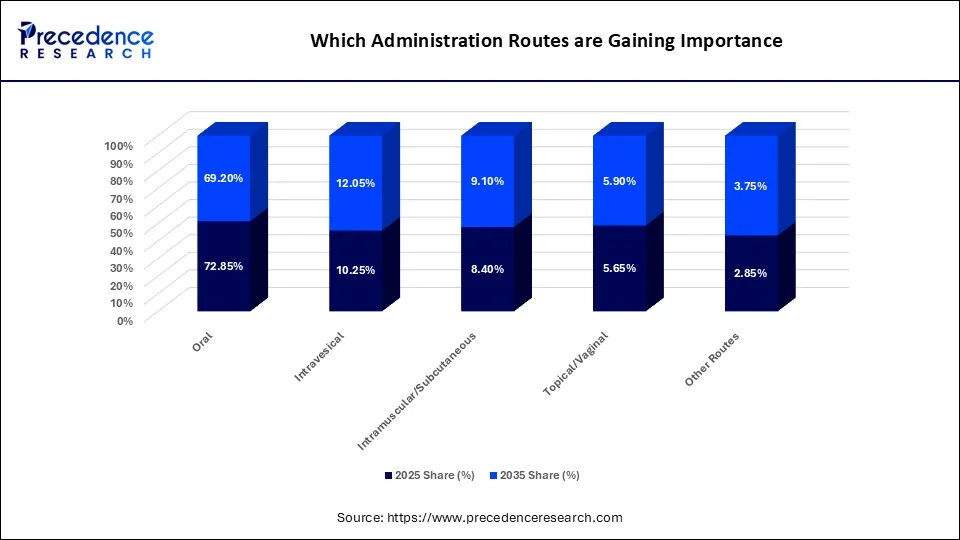
Which Administration Routes are Gaining Importance?
Source: Precedence Research Database
The oral route is the dominant segment in the market. Its share of the market has decreased by 3.65 pp, or at a 2.62% CAGR, from 72.85% to 69.20%. Other routes in the table record the highest compound annual growth rates (CAGR), from 2.85% to 3.75%, on this list representing new delivery methods that are continuing to grow from a modest volume.
Expert Analyst View
The mouth is the usual route, with five astounding cases (96.35% falling over the forecast period. Other Routes is the highest CAGR for the supplied market segment at 6.08%, and intravesical administration grows at 4.89%. The transition reflects the growing importance of therapies which are delivered directly to the bladder or act on bladder function, at which point oral therapies are falling short in efficacy, tolerability, or suitability.
Distribution Channel Analysis
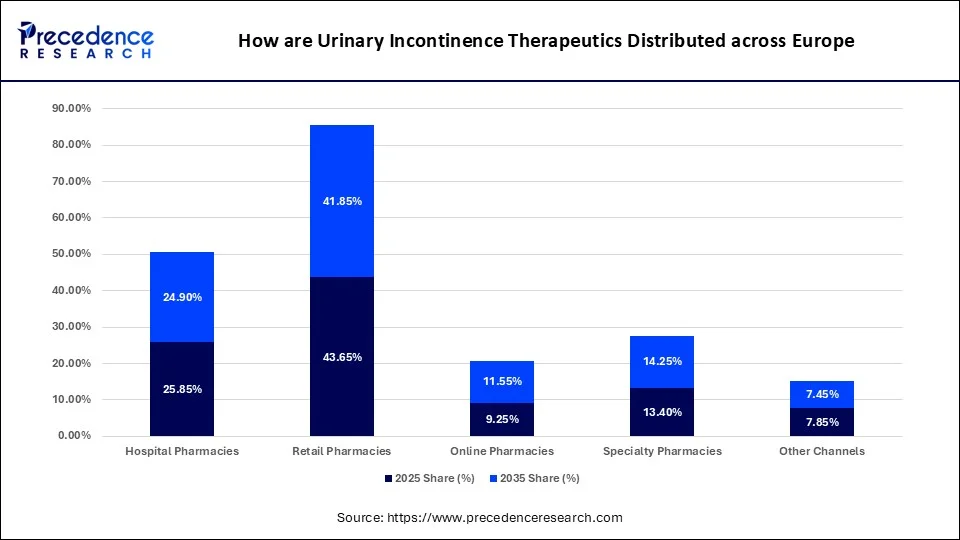
How are Urinary Incontinence Therapeutics Distributed across Europe?
Source: Precedence Research Database
Retail outlets continue in the top spot as a channel with a 43.65% share of total sales in 2025, dropping slightly to 41.85% by 2035 at a 2.72% CAGR. This is congruent with the high number of outpatient prescriptions generated by chronic OAB treatment. The most remarkable direction change is easily seen in online pharmacies, with a 5.54% CAGR, as digital prescription fulfillment starts gaining traction.
Expert Analyst View
In 2025, retail pharmacy will still be the distribution channel with the biggest share of the market (43.65%). The most significant channel shift is towards online pharmacies, which are gaining ground from 9.25% to 11.55% and have a supplied CAGR of 5.54%.
Often, chronic OAB therapies require repeat prescriptions and continued monitoring, making this trend even more relevant. On the other hand, digital adoption remains different across individual European markets, as individual regulations govern general pharmacy regulations and prescription requirements, all of which impact reimbursements.
End-User Analysis
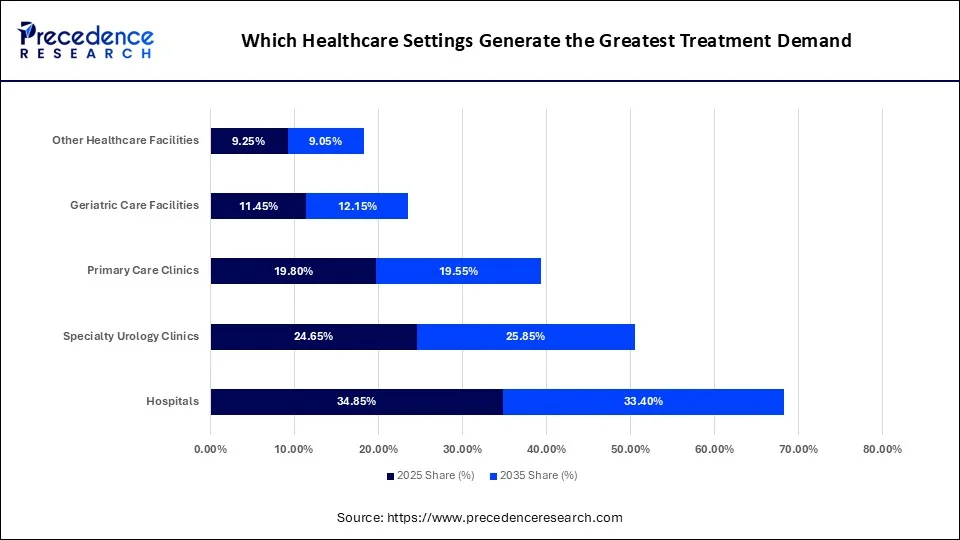
Which Healthcare Settings Generate the Greatest Treatment Demand?
Source: Precedence Research Database
Hospitals account for the highest end-user share in 2025 (34.85%). This is expected to drop slightly to 33.40% (CAGR of 2.70%) due to the trend of shifting the specialist diagnosis and treatment process to other locations. Geriatric care facilities increase by a direct 3.76% CAGR and go from 11.45% to 12.15%. Other healthcare facilities see a slight contraction of between 9.25% and 9.05% in their performance at 2.93% CAGR.
Expert Analyst View
The highest individual share can be found for hospitals (34,85%). Concurrently, urology specialization groups grow at 24.65% to 25.85%. The high incidence of urinary symptoms in the elderly population is reflected in the data recorded by geriatric care facilities, which show an average of 3.76% CAGR.
A growing number of specialist outpatient services are important in relation to advanced treatments. They involve procedures like neuromodulation or intravesical therapy that rely on a level of clinical expertise beyond the scope of most hospital facilities.
Patient Group Analysis
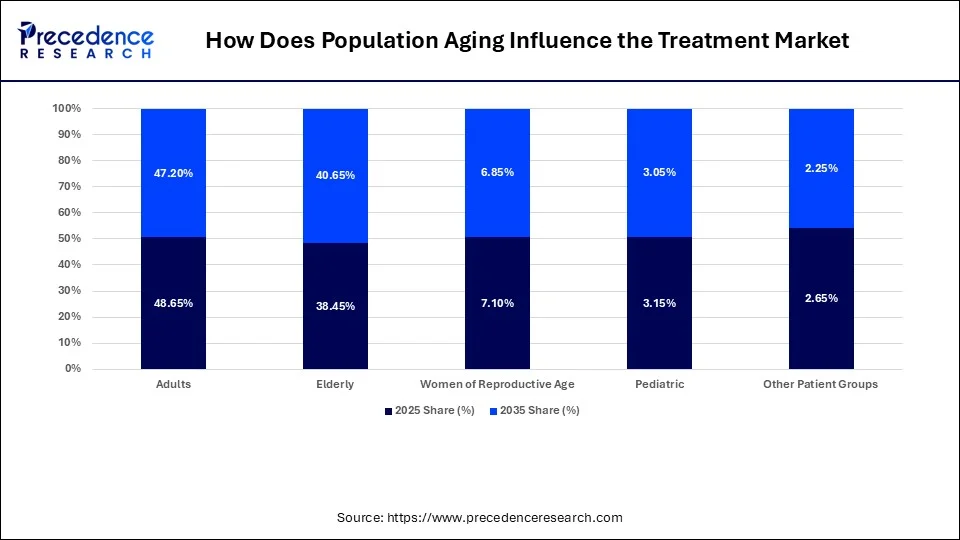
How Does Population Aging Influence the Treatment Market?
Source: Precedence Research Database
The adult market will account for the largest number of patients (48.65% of the total market in 2025), compounded at a 2.84% CAGR from 2025 to 2035. The population aged 65 years and above is the highlight, as it grew from 38.45% to 40.65% at a 3.73% CAGR, closely following the demographic ageing trend in Europe.
Expert Analyst View
The aging population segment is the fastest-growing segment of the population, as the proportion of elderly in the total population has been growing from 38.45% to 40.65% across the forecast period. Eurostat has recorded the EU's median age in 2025 at 44.9
years, up from 39.6 years in 2005 and reflecting the ongoing trend of demographic ageing in the EU.
Demographic Demand Indicators
| Demographic Indicator | Europe / EU 2025 |
| Total EU population | 450.6 million |
| Population aged 65+ | 99 million |
| Share aged 65+ | 22.0% |
| Share aged 80+ | 6.0% |
| Median age | 44.9 years |
| Italy population aged 65+ | 24.7% |
| Portugal population aged 65+ | 24.3% |
| Bulgaria population aged 65+ | 24.0% |
Source: Precedence Research Database
As per our Senior Researcher Aman Singh, the demographic context of Europe is quite clear, as long as it is not searched in the context of the market model. EU had a population of 450.6 million. As of 1 January 2025, 22.0% (99 million) of these were aged 65 and over. The senior citizens aged 80 and above accounted for 6.0% of the population. The EU population aged at a steady pace, with a median age of 44.9 years compared with 39.6 years in 2005.
Italy is also in the high category for the proportion of older people aged 65 and over, with a rate of 24.7%, slightly above that of Portugal (24.3%) and Bulgaria (24.0%). The data from Eurostat also confirms that aging is another trend across the whole continent of Europe, as in all the EU countries, the number of older adults grew from 2005 to 2025.
Expert Analyst View
Population ageing will thus create a sustainable platform for treatment demand, not a flash of demand. Demographic growth is not a clear predictor of pharmaceutical revenue, however. The percentage of the underlying population that becomes commercially addressable depends upon the rates of diagnosis, consultations by physicians, treatment adherence, reimbursement, selection of therapy, and transition to treatment with a pharmaceutical.
Country Analysis
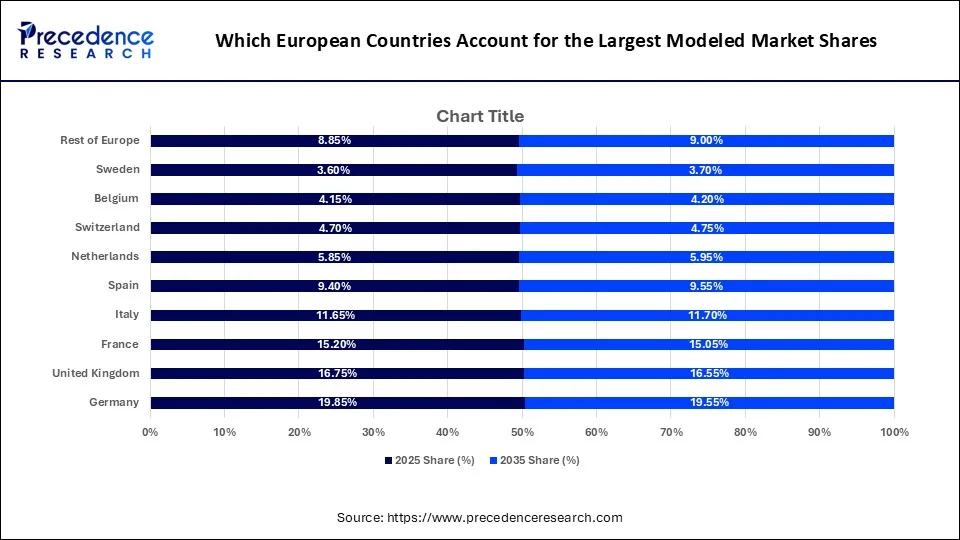
Which European Countries Account for the Largest Modeled Market Shares?
Source: Precedence Research Database
Germany is the largest national market at a 19.85% share in 2025, easing slightly to 19.55% by 2035 at a 2.99% CAGR. Its large-scale healthcare and pharmaceutical investments largely secure the town. The United Kingdom is following closely, with growth of 16.75%, with the growth rate settling down at 16.55% at a 3.02% CAGR due to a mature urology care system. Even though it's where treatment is most available, and everyone is striving to understand the importance of older adults, France's market share dropped slightly from 15.20% to 15.05% at a 3.05% CAGR.
Expert Analyst View
At 19.85%, Germany is the biggest country segment, followed by the UK with 16.75% and France with 15.20%. Sweden (3.43%), the Netherlands (3.34%), and Spain/Rest of Europe (3.32%) experience the highest country CAGR among the fastest-growing countries. Variations by country can be attributed to population size, age differences, the cost of health care services, disease diagnosis rates, the health care reimbursement system, health care service access, and the availability of drugs.
Country-Level Demographic Opportunity
How Does Aging Differ Across Major European Markets?
| Country | 2025 Strategic Demographic Indicator | Market Relevance |
| Germany | Large elderly population base; 80+ share around 7% |
Large mature treatment market |
| Italy | 65+ population share 24.7%; 80+ nearly 8% | High aging-related demand |
| France | Large overall population and established healthcare infrastructure | Broad patient and provider base |
| UK | Mature NHS-based urology and primary-care pathway | Strong institutional purchasing influence |
| Spain | Aging population and growing treatment access | OAB and elderly-care opportunity |
| Netherlands | High healthcare infrastructure maturity | Specialty and advanced treatment adoption |
| Sweden | Older population profile and high supplied market CAGR | Specialist-care opportunity |
Source: Precedence Research Database
There is high demand for aging services. Italy, the elderly population aged 65 years and over accounts for 24.7% of the population, and 8% are aged 80 years and over. With around 80+ percent, Germany has the highest percentage of elderly consumers. Although its size is not the fastest-growing mature treatment market in Europe, it currently does boast the most mature base of consumers.
The opportunity for the UK is more a result of the NHS-based urology pathway. The primary-care pathway is delivered, as it means that institutional purchasing decisions. This has too much influence on treatment adoption, as opposed to demographics.
Expert Analyst View
Italy is significant from a demographic-demand point of view due to the relatively high percentage of older adults, with significant past and future pressure on the healthcare sector, instead of Germany, which has a large healthcare and pharmaceutical base.
Subsequently, the expansion of the population is different from the opportunity for access to treatment in Europe, which must also be distinguished for manufacturers. A shrinking country with an aging population might prove itself to have great demand for treatment per capita, but still have a smaller overall pharmaceutical market.
Major Therapeutic Product Intelligence
Which Established and Newer Therapies are Shaping the European Market?
| Therapy/Product | Company | Therapeutic Class | European Relevance |
| Betmiga | Astellas | β3 agonist/mirabegron | OAB urgency and urge incontinence |
| Obgemsa | Pierre Fabre | β3 agonist/vibegron | EU-authorized OAB therapy |
| Antimuscarinic therapies | Multiple manufacturers | Muscarinic antagonists | Established OAB treatment |
| Duloxetine | Multiple manufacturers | SNRI | Selected stress urinary incontinence |
| Botox Therapeutic | AbbVie | Botulinum toxin A | OAB and selected neurogenic urinary incontinence |
| InterStim | Medtronic | Sacral neuromodulation | OAB/urge incontinence and urinary retention |
Source: Precedence Research Database
There are several drug classes and one kind of device therapy, and these offer a broad window of opportunity in Europe. Betmiga is Astellas' mirabegron brand, which continues to be a pillar β3-agonist treatment for OAB, including urgency and urgency incontinence. Another votegron marketer, Obgemsa, is also the newer EU-approved product in the class. This was recently given marketing authorization by the European Commission in June 2024 for symptomatic treatment of adult OAB. As an alternative to the pharmacological path, Medtronic's InterStim is a product for treating OAB, urge incontinence, and urinary retention known as sacral neuromodulation.
Expert Analysis View
European OAB and incontinence care is no longer a one-pathway market with a price tag, with the five different drug-based treatments being the only available options; the presence of a device-based option, InterStim, presents a challenge. Driven by competitive dynamics, new products are developed not only within a defined drug class, but also to fight for a place in a particular modality.
Company Intelligence
What are Leading Companies Contributing to the European Urinary Incontinence Treatment Ecosystem?
Astellas
Astellas markets mirabegron as Betmiga in Europe. The company's FY24 results showed consolidated global sales of ¥170.0 billion. The combined BETANIS, MYRBETRIQ, and BETMIGA franchise fell by 14.2% year-over-year. This is a total global franchise revenue figure and not Europe-specific urinary incontinence revenue.
As the existing β3-agonist franchise grew mature and became more competitive, the company's FY2025 guidance called for the reduction of mirabegron sales to negative ¥36.0 billion.
Pierre Fabre
Pierre Fabre is the marketing authorization holder of Obgemsa/vibegron in the EU. In 2025, €3.2 billion was earned, of which 71% was from abroad, and €250m was spent on R&D. Numbers are not limited to urinary incontinence revenue; it includes company-wide performance.
AbbVie
AbbVie is the worldwide commercializing company of Botox Therapeutic in several indications, including specific uses for OAB and NUI. The product is part of the expansion of injectable bladder therapy in patients who fail to get an adequate response to conventional pharmacological treatment.
Medtronic
The neuromodulation segment is being covered by Medtronic's InterStim platform. The company has over 425,000 patients currently treated with InterStim worldwide, as well as over 30 years of experience in sacral neuromodulation.
Expert Analyst View
Reflecting the evolution of treatment options for OAB. The competitive landscape includes not just traditional pharmaceutical companies but also large pharmaceutical companies. They are offering oral OAB therapies, and specialty pharmaceutical
companies are developing newer β3 agonists. Biopharmaceutical companies producing injectable therapies, medical-device companies specializing in OAB neuromodulation, generic manufacturers of mature antimuscarinic and other therapies, and specialty-care providers offering procedure-based treatments. The competition is thus expanding to other treatment modalities, not just to particular pharmaceutical products.
Clinical and Regulatory Treatment Environment
What do European Guidelines Indicate about Pharmacological Treatment?
| Treatment Area | Current European Evidence/Guidance |
| Antimuscarinics | Established OAB pharmacological treatment |
| β3 agonists | Recommended option for OAB after conservative treatment |
| Mirabegron | Established European β3 agonist |
| Vibegron | EU-authorized OAB treatment |
| Combination treatment | Mirabegron + solifenacin supported in selected patients. |
| Duloxetine | Selected stress-predominant incontinence |
| Vaginal estrogen | Option for menopausal genitourinary symptoms |
| Neuromodulation | Option for selected refractory patients |
| Botulinum toxin | Advanced treatment option in appropriate patients |
Source: Precedence Research Database
Despite the change in guidance to β3 agonists as a second-line option after conservative management. Clinical guidelines in Europe argue that antimuscarinics still constitute a well-established medicine for OAB management. Mirabegron is a well-known, existing β3 agonist, and vibegron is the newer EU-approved drug in the same class. The EAU also recommends the combination of mirabegron with solifenacin in selected patients, a sign that the combination of those two mechanisms is now considered more than just competitive. Anticholinergics and β3 agonists as OAB treatments are also mentioned in NICE guidance in the UK, specifically with regard to mirabegron and vibegron.
Expert Analyst View
EAU 2026 Female LUTS guideline is a reprint of the 2025 guideline with minor formatting changes. The guideline is based on high-certainty evidence that β3 agonists are effective at improving symptoms related to OAB. The guideline recommends that β3 agonists are as effective as antimuscarinics for managing OAB and have fewer cases of dry mouth.
Anticholinergics and β3 agonists are also mentioned in the guidance of NICE, adding mirabegron and vibegron to its recommendations for OAB. The treatment options for acute urinary retention are categorized into Diagnosis, behavioral/conservative management, oral pharmacotherapy, alternative pharmacotherapy/combination treatment, intravesical/injectable therapy, and neuromodulation or other advanced treatment.
Buyer Intelligence
What Factors Influence Therapeutic Selection in European Urinary Incontinence Care?
| Buyer/Decision Criterion | Importance |
| Clinical efficacy | Very High |
| Safety and tolerability | Very High |
| Patient age and comorbidities | Very High |
| Reimbursement status | Very High |
| Acquisition cost | High |
| Generic availability | High |
| Treatment adherence | High |
| Physician familiarity | High |
| Administration convenience | High |
| Long-term outcomes | High |
| Hospital procedure capacity | High for advanced therapies |
| Quality-of-life improvement | High |
| Patient preference | High |
| Specialist training | High for neuromodulation/invasive treatment |
Source: Precedence Research Database
I believe, unlike traditional consumer pharmacologic demand, clinical pathways and reimbursements have a much stronger influence on purchasing decisions in EU urinary incontinence care. Clinical efficacy, safety, and tolerability are all given the highest rating. They are patient age and comorbidities.
Followed closely by status, meaning that prescribers don't prescribe based on the preference of the brand for their patient, but rather on the preference of the payers. Mature antimuscarinic products also have a high level of importance for acquisition cost and generic availability, accounting for valuable market share as a result of this, in spite of the availability of newer products.
Expert Analyst View
Clinical pathways and reimbursement systems play a greater role in the purchasing of urinary incontinence treatments than do traditional consumer pharmaceutical demands in Europe. The economics of the payer and prescriber, tolerability, generic competition, and treatment adherence are important factors with oral products. The strategic considerations for target selection, procedure requirements, training, equipment, patient selection, reimbursement, and future outcomes are more complex for advanced therapies.
Market Growth Drivers
What Factors Will Support the European Urinary Incontinence Therapeutics Market?
Population aging In 2025, there were about 99 million persons aged 65 and over in the EU, making up 22% of the EU's population. The aging population is contributing to the growth of medical needs for urinary incontinence treatment.
Increasing OAB diagnosis and management OAB and urgency urinary incontinence are a significant fraction of the treatment opportunity for urinary incontinence. According to the EMA's review on vibegron, OAB is a common occurrence in middle-aged and elderly people.
β3-agonist adoption The market is expected to grow as β3-agonists are projected to penetrate the European market with a percentage increase from 27.65% to 34.90%, which shows the increasing market share of β3-agonists in the European OAB treatment market.
- Treatment switching Inadequate response to one of the classical antimuscarinics and/or tolerability problems present opportunities for alternative drug classes.
- Advanced therapies Treatment diversification is evident, with intravesical therapy, injectable treatment, and neuromodulation gaining faster market share than the remainder in the particular model provided.
- Improved patient awareness An increased awareness of urinary leakage as a medical condition to be diagnosed, consulted, and treated.
- Specialist outpatient care The presence of specialists in the specialty urology clinic segment drives up market share to 25.85%, from 24.65%.
Market Challenges
| Challenge | Potential Market Effect |
| Mature European pharmaceutical markets | Limits overall market growth |
| Challenge Potential Market Effect Generic competition | Pricing pressure on established drugs |
| Anticholinergic tolerability concerns | concerns Can accelerate switching but also restrict certain prescriptions |
| Reimbursement differences | Creates uneven country-level access |
| Underdiagnosis | Limits conversion of underlying prevalence into treated patients |
| Patient reluctance | Social stigma can delay treatment |
| Adherence | Chronic therapy requires continued use |
| Clinical pathway complexity | Can delay advanced treatment |
| Procedure costs | Restrict adoption of invasive therapies. |
| Regulatory differences | National requirements complicate commercialization. |
Source: Precedence Research Database
One of the most important challenges for this market is not to have too few patients. But to bring too few symptomatic patients into the fold of diagnosed, treated, and adhered to patient. This is because underdiagnosis severely reduces the number of patients that will ever be converted to the diagnosis, treatment, and adherence category that can provide revenue. This is further complicated by patients' reluctance to engage in care of any kind. Thus, social stigma surrounding urinary leakage may make patients unlikely to seek evaluation in the first place. According to the EMA assessment of Vibegron, many OAB patients avoid medical care specifically in part because of the social impact of the condition.
Expert Analyst View
The largest barrier to primary care is not having patients. It is finding patients that will result in a diagnosis and treatment or adherence to the treatment. The Vibegron assessment from EMA comments that a high proportion of individuals with OAB do not seek medical attention due to the social impact of OAB. This leaves a difference between the real population and the population treated by the commercialists.
Strategic Market Outlook
Under the provided market model, the urinary incontinence therapeutics market is expected to be a major therapeutic market with steady growth until approximately USD 16.05 billion by 2035 in the Europe region.
The most significant structural developments are changes in the composition of drug classes. The percentage of antimuscarinics drops from 38.45% to 31.85%. The percentage of β3-adrenergic agonists rises from 27.65% to 34.90%. This is general guidance in line with European guidelines and the launch of new β3-agonist products.
The second big development is that being able to advanced treatment options that are advanced is starting to grow over time. On the other hand, the supplied forecast attributes increasing market share to intravesical and injectable therapies and a neuromodulation option. There is another important basis for the demand, namely demographic trends. EU population aged 65 and over accounted for 22% of the total population, and those aged 80 years and over represented 6%.
European market can therefore be understood through four interconnected opportunity areas, including β3-agonist class expansion, the replacement and differentiation within the mature OAB pharmacotherapy, growth of specialist and advanced therapies, and the treatment demand driven straight to population ageing. Relatively small changes in therapy mix, drug class, route of administration, distribution, and setting in which the drugs are used are hidden by the market's relatively modest 3.15% overall CAGR.
Expert Insights
The European urinary incontinence therapeutics market is shifting from symptom management towards basing treatment on a patient-centric approach. The steep rise of urinary incontinence among the growing aged population, rising awareness of available therapies, and better access to healthcare in Europe. This will all impact market competitiveness over the coming years. I believe the need for effective therapies that are better tolerated. They have convenient dosing and provide sufficient
symptom control will continue to be a focus area. Healthcare providers strive for increased quality of life and treatment adherence.
Our Experts
- Deepa Pandey, a Senior Research Analyst, has performed the lead market analysis, created the methodology, and analysed market segmentation, regional trends, competitive landscape, and forecast, which have served as the analytical backbone of the report.
- Amit Singh, a Senior Researcher, was tasked with gathering, consolidating, and confirming regulatory data, company financials, product information, and other quantitative data sources gathered outside the regulatory agency to enhance the evidence base for the Market Assessment.
- Aditi Shivarkar, a Senior Researcher, read through the entire research document and undertook quality checking, validation of results, refinement of the material, correction of inconsistencies, and finalization of the research report to ensure that it was accurate and informative.
Europe Urinary Incontinence Therapeutics Market Segmentation
By Incontinence Type
- Urge Incontinence
- Stress Incontinence
- Mixed Incontinence
- Overflow Incontinence
- Functional & Other Incontinence
By Drug Class
- Antimuscarinics
- Beta-3 Adrenergic Agonists
- Alpha Blockers
- Estrogen Therapies
- Duloxetine & Other Antidepressant-Based Therapies
- Other Pharmacological Therapies
By Therapy Type
- Pharmacological Therapy
- Intravesical Therapy
- Neuromodulation-Based Therapy
- Injectable Therapy
- Other Therapeutic Approaches
By Route of Administration
- Oral
- Intravesical
- Intramuscular/Subcutaneous
- Topical/Vaginal
- Other Routes
By Distribution Channel
- Hospital Pharmacies
- Retail Pharmacies
- Online Pharmacies
- Specialty Pharmacies
- Other Channels
By End User
- Hospitals
- Specialty Urology Clinics
- Primary Care Clinics
- Geriatric Care Facilities
- Other Healthcare Facilities
By Patient Group
- Adults
- Elderly
- Women of Reproductive Age
- Pediatric
- Other Patient Groups
By Country
- Germany
- United Kingdom
- France
- Italy
- Spain
- Netherlands
- Switzerland
- Belgium
- Sweden
- Rest of Europe
For inquiries regarding discounts, bulk purchases, or customization requests, please contact us at sales@precedenceresearch.com
Frequently Asked Questions





Ask For Sample
No cookie-cutter, only authentic analysis – take the 1st step to become a Precedence Research client
 Get a Sample
.webp)



 sales@precedenceresearch.com
 Schedule a Meeting
