


Europe Veterinary Pharmaceuticals Market Revenue, Leading Companies, Company Technology / Innovation, Diagnostic Testing Volume, Adoption Rates, Pricing Metrics, Supply Chain Performance, Competitive Positioning, and Industry Trends
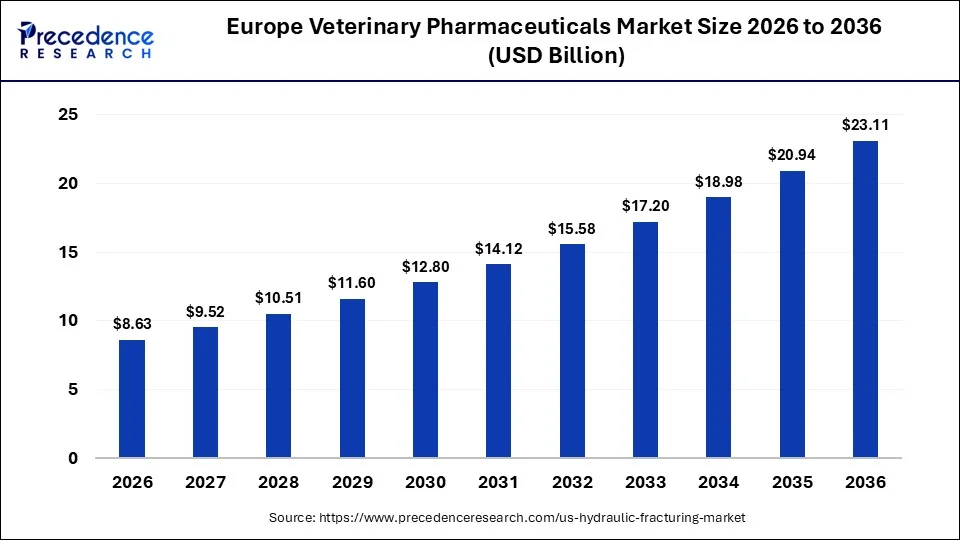
The Europe veterinary pharmaceuticals market reached USD 9.52 billion in 2027. Market growth is driven by expanding pharmaceutical manufacturing capacity across Europe and increasing pet ownership. Senior Researcher Deepa Pandey analyzed these trends to develop this report, which provides valuable insights for various stakeholders, including veterinary pharmaceutical manufacturers, animal health companies, private equity firms, distributors, and regulatory and market access teams.
Source: https://www.precedenceresearch.com/europe-veterinary-pharmaceuticals-market
 Get a Sample
 Table Of Content


Europe Veterinary Pharmaceuticals Market Trends, Share, and Growth Analysis 2036
The Europe veterinary pharmaceuticals market is forecasted to expand from USD 9.52 billion in 2027 to USD 23.11 billion by 2036, growing at a CAGR of 10.35% from 2027 to 2036. Veterinary pharmaceutical products are used in companion animals, livestock, poultry, equine animals, and other treated animal populations across Europe. Whenever possible, the analysis differentiates between medicines, vaccines, and wider categories of animal health products.
Key Takeaways
- Europe has a substantial animal medicines industrial base with over 130 countries, and the region spends approximately 8% on R&D.
- The value chain spans R&D, formulation development, manufacturing, quality assurance, regulatory authorization, and distribution to end-users.
- Veterinary medicinal products are regulated in Europe through the Regulation (EU) 2019/6 framework.
- Boehringer Ingelheim generated global animal health net sales of €4.875, while Vetoquinol generated sales of USD 525.7 million in 2026.
What is the Significance of Veterinary Pharmaceuticals in Europe?
Europe can be regarded as an important international animal health market due to the presence of strong veterinary systems, significant spending on pet health care, intensive farming practices, and developed pharmaceutical manufacturing industry. Sales of animal medicines in Europe were approximately €9.6 billion for the year 2025 in the wider regional market. Over 130 firms operate in the European animal medicines sector, where more than 100 small and medium-sized enterprises operate, while the R&D investment of the industry is about 8% of the total turnover.
One of the most notable ones is that there are two different models for demand. Companion animals would have benefits from prevention, chronic illnesses treatment, parasites prevention, and willingness to invest in pets' healthy and long life. Livestock drugs would remain significant in treating diseases, reproductive needs, managing livestock, and producing food; but the issue of antimicrobial stewardship and the prohibition of routine use of antibiotics would affect the choice of the product and its usage.
The most attractive opportunities are likely to be concentrated in differentiated parasiticides, chronic care medicines, vaccines and other preventive products, species-specific therapies, and products that address unmet veterinary needs. A volume-based strategy is faced with a difficult future as regulation, the responsible use of antibiotics, and alternative non-antibiotic options have become more significant in determining demand.
Coverage Highlights
- European veterinary pharmaceuticals market size, historical performance, and forecast scenarios.
- Companion animal versus livestock revenue pools and their respective growth drivers.
- Prescription medicines, parasiticides, anti-infectives, vaccines, and other treatment categories.
- Country-level demand across Germany, France, the United Kingdom, Italy, Spain, and other European markets.
- Regulatory effects on antimicrobial sales, product availability, and pharmaceutical innovation.
- Competitive positioning across multinational animal-health companies and regional specialists.
How is the Europe Veterinary Pharmaceuticals Market Evolving Through 2036?
The forecasting framework, on the other hand, divides the underlying trend of treatment demand and the impact of product mix changes, price increases, veterinary access, and policy regulations. It is essential since any increase in revenue does not mean that the same magnitude of growth happens in prescriptions, since an increase in the higher value of pet care medicines and other treatments can make the total value grow regardless of unit growth.
As for the planning, there are three scenarios included: base scenario based on the existing pet health expenditures and livestock treatments, upside scenario associated with higher demand for preventive and specialty medicines, and downside scenario with price pressures, slow product approvals, low household expenditure, and reduced usage of selected antimicrobials.
Coverage Highlights
- Incremental revenue opportunity and alternative growth scenarios.
- Revenue contribution by animal species, product category, distribution channel, and country.
- Separation of pharmaceutical sales from broader animal-health and vaccine-market measurements.
- Product mix, treatments, pricing, and market access sensitivity analysis.
Europe Veterinary Pharmaceuticals Market Segments Analysis
Europe Veterinary Pharmaceuticals Market by Animal Type 2026 Share & Size
| Segments | 2026 Share | 2026 Market Value (USD Billion) |
| Companion Animals | 39.20% | 3.381 |
| Livestock | 43.50% | 3.753 |
| Equine | 6.80% | 0.587 |
| Aquaculture | 5.20% | 0.448 |
| Other Animals | 5.30% | 0.457 |
Livestock is estimated to hold the largest share, supported by demand for disease treatment, herd health management, and productivity improvement. Companion animals represent another major segment due to increasing veterinary care and preventive medicine use.
Europe Veterinary Pharmaceuticals Market by Product 2026 Share & Size
| Segments | 2026 Share | 2026 Market Value (USD Billion) |
| Parasiticides | 24.80% | 2.14 |
| Anti-Infectives | 22.60% | 1.949 |
| Anti-Inflammatory Drugs | 13.10% | 1.13 |
| Analgesics | 8.70% | 0.751 |
| Endocrine and Metabolic Medicines | 7.40% | 0.639 |
| Dermatological Products | 8.90% | 0.768 |
| Other Products | 14.50% | 1.251 |
Parasiticides are estimated to lead the product category due to parasite prevention and control needs in companion animals and livestock. Anti-infectives represent another significant category because of their role in treating susceptible infections.
Europe Veterinary Pharmaceuticals Market by Therapeutic Use 2026 Share & Size
| Segments | 2026 Share | 2026 Market Value (USD Billion) |
| Treatment | 47.80% | 4.125 |
| Prevention | 32.40% | 2.795 |
| Chronic Disease Management | 13.10% | 1.13 |
| Reproductive Health | 6.70% | 0.578 |
Treatment is estimated to account for the largest share, reflecting demand for medicines addressing diagnosed diseases and infections. Prevention remains important through parasite control and proactive animal-health management.
Europe Veterinary Pharmaceuticals Market by Formulation 2026 Share & Size
| Segments | 2026 Share | 2026 Market Value (USD Billion) |
| Oral | 35.60% | 3.069 |
| Injectable | 38.40% | 3.313 |
| Topical | 17.20% | 1.484 |
| Ophthalmic/Otic | 4.10% | 0.354 |
| Other Formulations | 4.70% | 0.406 |
Injectable formulations are estimated to lead due to their use in clinical treatment and livestock healthcare. Oral products remain widely used because of their convenience and suitability for different animal types.
Europe Veterinary Pharmaceuticals Market by Distribution 2026 Share & Size
| Segments | 2026 Share | 2026 Market Value (USD Billion) |
| Veterinary Hospitals and Clinics | 35.80% | 3.089 |
| Pharmacies | 16.20% | 1.397 |
| Specialist Distributors | 20.40% | 1.76 |
| Farm Channels | 20.10% | 1.734 |
| Permitted Online Channels | 7.50% | 0.647 |
Veterinary hospitals and clinics are estimated to represent the largest distribution channel because they connect diagnosis, prescribing and medicine administration. Specialist distributors and farm channels also play important roles in supplying livestock medicines.
Will Preventive Medicine Eventually Replace Demand for Treatments?
Three trends are changing the veterinary medicines market in Europe.
First, the humanization of companion animals is increasing demand for reliable, convenient, and clinically differentiated medicines. People will continue to prefer professional assistance in cases where they have some diseases or want to prevent them.
Secondly, livestock farmers will need medicines that promote animal welfare and economic profitability. Disease prevention, timely diagnosis, herd management, and veterinary supervision remain important purchasing considerations.
Third, antimicrobial stewardship is changing the commercial outlook for anti-infectives. Regulation (EU) 2019/6 limits improper use of antimicrobials, tightens prescription rules, and restricts prophylactic and metaphylactic use to specific situations. This regulation also forbids the use of antimicrobial medicines to boost growth or production output.
These constraints do not negate the need for antibiotics since appropriate treatment is necessary. Rather, they promote responsible use, diagnostic testing, vaccination, biosecurity, and other prevention approaches.
Such companies that will integrate proven medicine with preventive products and species-specific knowledge and veterinarian training are in a better position to respond to these constraints compared to those whose business model relies on unlimited antimicrobial use.
Coverage Highlights
- Companion animal healthcare expenditure and chronic treatment demand.
- Livestock disease burden, biosecurity, and productivity-related medicine demand.
- Antimicrobial stewardship and substitution opportunities.
- Adoption of new products, veterinary care practices, and consumer preferences.
- Price pressure, generic competition, and disruptions in the supply chain.
- Risks in regulations, medicine, and business that may affect future expansion.
Where Do Premium Medicines Outperform Volume-Led Products?
The prices for veterinary drugs differ depending on the active ingredient, strength of dosage, packaging, duration of use, animal species, whether there is a prescription, and distribution. A comparable price assessment therefore requires more than comparing retail pack prices. Relevant metrics include manufacturer net sales, price per treatment course, price per dose, price per kilogram of treated animal where meaningful, wholesale price, veterinary dispensing price, and realized revenue per treated animal.
High-end products will yield high income per service delivery, while livestock medications may require bulk purchases and competitive bidding.
Manufacturing costs include active drug substances, formulation aids, quality control testing, packaging, licensing, and distribution. Some medications may have extra cold chain logistics or production needs.
No single Europe-wide average selling price or gross-margin benchmark is sufficiently established here to justify a precise numerical range. This full analysis makes the distinction between profitability of the firm in terms of disclosures and product economics on an estimated basis. Pricing power can be defended in cases where there is clinical differentiation, ease of administration, availability, or no substitute at the therapeutic level. Generic medicines and high-volume livestock treatments are more exposed to procurement pressure and price competition.
Coverage Highlights
- Price per dose, treatment course, and animal category.
- Premium-versus-generic price positioning.
- Manufacturer, distributor, and veterinary-channel economics.
- Active ingredient, formulation, packaging, and logistics cost drivers.
- Gross-margin and operating-margin comparisons where disclosed.
- Price elasticity, reimbursement differences, and regional price variation.
Can Manufacturing Scale Meet Increasingly Specialized Demand?
Europe is home to a major industrial sector that makes animal medicines with more than 130 firms and over 50,000 workers involved. The reported R&D spend by the industry at about 8% of revenue shows how important research and development and compliance are.
The value chain extends from active pharmaceutical ingredient and biological input suppliers through formulation development, manufacturing, quality assurance, regulatory authorization, wholesalers, veterinary distributors, pharmacies, clinics, and farm customers. The ability to capture value relies upon intellectual property rights, differentiation, manufacturing efficiencies, regulatory knowledge, and access to prescribers.
Different products will face different levels of supply risk; tablets and topicals differ in their manufacturing requirements from sterile injectable drugs, biologics, and temperature-sensitive products. Depending on ingredient suppliers, validated manufacturing processes, and specific product approvals, substituting products in case of a shortage can be problematic.
Trade analysis should take into account the difference between veterinary drugs, raw materials, vaccines, and other animal health products. Trade values alone do not determine either domestic manufacturing capabilities or actual consumption as products can move across borders as part of their production/distribution process.
Supply chain reliability provides an important competitive edge in the market where a shortage of products could interfere with treatment and destroy business relationship with veterinarians.
Coverage Highlights
- Production footprint, manufacturing investment, and supply chain dependencies.
- Active pharmaceutical ingredient sourcing and supplier concentration.
- Capacity utilization and product-specific manufacturing constraints where disclosed.
- Import-export values, trade balances, and major European trade corridors.
- Margins for distribution, inventory control, and cold-chain logistics.
- Supply shortage exposure and opportunities for manufacturing localization.
Will Preventive Medicines and Faster Product Development Redefine Competition?
Innovation in veterinary pharmaceuticals involves improved formulation, long-term delivery, targeted parasite treatment, species-specific medicine, and treatments for unmet clinical needs. Pharmaceutical product development should take into consideration efficacy, safety, animal welfare, administration, and economic aspects of treatment of varied animal populations.
The regulatory environment is a defining competitive factor. Regulation (EU) 2019/6 has provided a harmonized framework for veterinary medicines, such as marketing authorizations, pharmacovigilance, prescription, and antimicrobial stewardship. Since January 2024, there has been an obligation in EU and EEA states to provide data on antimicrobial sales and usage through the relevant framework. Surveillance reporting on an annual basis is now making it possible to examine antimicrobial use and responsible use policies.
This concept acknowledges limited markets in the veterinary world, where the authorization of products in small markets is facilitated. This is relevant to species or diseases where commercial returns may otherwise be insufficient to support conventional development programs.
Innovation leadership will be as much about the number of launches as about securing approvals, creating clinical differentiation, ensuring availability, and commercializing therapies in several jurisdictions within Europe. Opportunities may arise for specialists through smaller market approval processes whereas well-established companies still hold an edge in regulatory capability and logistics.
Coverage Highlights
- Product development pipelines and therapeutic innovation.
- New approvals, launches, and expansion of existing product indications.
- Formulation technologies and improved administration convenience.
- R&D expenditure, licensing agreements, and technology partnerships.
- Regulation (EU) 2019/6 and country-level implementation considerations.
- Antimicrobial surveillance, pharmacovigilance, and veterinary limited-market opportunities.
- Sustainability, responsible medicine use, and animal welfare implications.
How Do Veterinary Doctors, Pet Owners, and Livestock Producers Affect the Choice of Product?
Demand comes from different consumer segments with different purchasing criteria. Veterinary clinics and hospitals affect the selection of drugs for companion animals in terms of diagnosis, prescriptions, treatment regimes, and follow-up. The decision regarding treatment compliance and affordability rests with the pet owners.
Livestock producers and farm managers put a high priority on disease prevention, animal welfare, productivity, treatment costs, withdrawal times and consistent product availability. Veterinarians and distributors have an impact on procurement, especially in situations where direct substitution is limited by clinical judgment and legal restrictions.
Therefore, the market functions through professional recommendations, prescriptions regulations, distribution ties, and customer buying capacity. Although there are attempts to make products more available through Internet and direct marketing, they do not substitute prescriptions and distribution.
Veterinary engagement and distribution reliability are critical competitive assets. For companion animal products, brand familiarity, and ease of administration can support repeat demand. In respect of livestock drugs, availability, cost of treatments, technical support, and on-farm effectiveness will likely be more important.
Coverage Highlights
- Veterinary hospitals, independent clinics, pharmacies, distributors, and livestock farms.
- Prescription behavior, treatment adherence, and customer price sensitivity.
- Distribution reach, channel costs, and buying relationships.
- Switching costs and product qualification requirements.
- E-commerce and digital ordering for legally eligible medicines.
- Unmet needs within smaller practices, in rural settings, and in specific animals.
Can Global Scale Leaders Maintain Their Dominance Over Targeted European Experts?
More than 130 animal medicine companies, including more than 100 small and medium-sized businesses (SMEs), make up the diversified supplier ecosystem that supports the Europe veterinary pharmaceuticals market. This structure demonstrates that, in addition to major worldwide producers, there are regional markets and specialized companies that serve more specialized therapeutic needs.
However, pharmaceutical-only market concentration, individual market shares, and the degree of competitive dominance cannot be determined only by the number of enterprises. In-depth R&D, a wide range of products, and the geographical distribution of development expenses are all advantages for multinational corporations. On the other hand, European specialists are competing due to their expertise in certain therapeutics, understanding of local markets, distribution contacts, and response to particular clinical needs.
Competitive advantage is based not only on the size but also on the interplay between the scales, portfolio diversification, regulatory capabilities, and market access. Large-scale manufacturers can easily provide broad development pipelines, large portfolios, and serve different national markets. Specialist firms, in turn, can focus their efforts on particular therapeutic areas, satisfy veterinarians' needs, and develop good relationships with veterinarians and distributors.
The existence of an important SME sector creates a unique competitive situation when international scale and specialist flexibility can exist at the same time; however, the commercial power of each player should be analyzed at the level of product performance, geographic reach, and portfolio relevance.
The first major strategic implication is that continued growth depends on being able to show substantial benefits either from scale or specialization. Portfolios, innovation, dependable production and distribution, and regulation enable multinationals to capitalize on their advantages, while specialists can capitalize on their competitive advantage through specialized products and geographical distribution of those products that do not have therapeutic applications.
Companies lacking both broad commercial reach and therapeutic edge would find differentiation or collaboration more necessary. The study additionally considers the competitive positioning of pharmaceutical companies based on company portfolios, product range, R&D capabilities, manufacturing and distribution reliability, geographical coverage, distribution channels, and potential for expansion. Company-specific data is distinguished from industry structure indicators.
The competitive intelligence can also be organized into a structured company and product database, tracking manufacturer, product or brand, therapeutic category, target animal segment, country presence, regulatory status, manufacturing footprint, and available company performance indicators by year. Filtering companies based on geographic location, therapeutic area, and portfolio can aid in the strategic assessment process. Market share and concentration comparisons can be incorporated where sufficiently reliable, comparable data are available.
Tentative Leading Company Universe
| Company | Headquarters | Market position and core strength |
| Boehringer Ingelheim | Ingelheim, Germany | Global animal-health leader; companion animals and livestock |
| MSD Animal Health | Rahway, United States | Broad pharmaceutical and preventive-care portfolio |
| Zoetis | Parsippany, United States | Broad species coverage and specialty treatments |
| Elanco Animal Health | Greenfield, United States | Companion-animal and livestock medicines |
| Ceva Santé Animale | Libourne, France | Veterinary pharmaceuticals and preventive animal health |
| Virbac | Carros, France | Specialist veterinary medicines and dermatology |
| Vetoquinol | Lure, France | Independent animal-health portfolio |
| Dechra Pharmaceuticals | Northwich, United Kingdom | Specialty veterinary pharmaceuticals |
| Huvepharma | Sofia, Bulgaria | Livestock pharmaceuticals and animal-health products |
| Bimeda | Dublin, Ireland | Veterinary medicines and livestock treatments |
| Norbrook Laboratories | Newry, United Kingdom | Veterinary pharmaceuticals and generics |
| KRKA | Novo Mesto, Slovenia | Generics and veterinary medicines |
| Laboratorios Calier | Barcelona, Spain | Veterinary pharmaceuticals and biological products |
| Phibro Animal Health | Teaneck, United States | Livestock health and production-related products |
| Orion Corporation | Espoo, Finland | Veterinary pharmaceuticals and specialty treatments |
| Alfasan | Woerden, Netherlands | Veterinary pharmaceutical products |
| Chanelle Pharma | Loughrea, Ireland | Veterinary generics and pharmaceutical manufacturing |
| VetPlus | Lytham, United Kingdom | Companion-animal health and veterinary-focused products |
| Prodivet Pharmaceuticals | Eynatten, Belgium | Veterinary pharmaceutical specialties |
| Bioveta | Ivanovice na Hané, Czech Republic | Veterinary medicines and biological products |
| Dopharma | Raamsdonksveer, Netherlands | Veterinary medicines, particularly livestock |
| Kela | Hoogstraten, Belgium | Veterinary pharmaceuticals |
| Vet-Agro | Lublin, Poland | Veterinary medicines and regional distribution |
| Laboratorios Syva | León, Spain | Veterinary pharmaceuticals and animal-health products |
Which Companies Capture the Largest Revenue Pools?
A dependable ranking should be based on European revenue generated by pharmaceuticals for veterinary use and not the total revenue from all products and services that might include revenues from outside Europe.
Two disclosed company benchmarks illustrate the importance of separating corporate scale from European market exposure:
- Boehringer Ingelheim: Reported global Animal Health net sales of €4.875 billion in 2025, alongside more than €500 million in Animal Health R&D investment. These are global business figures, not Europe-specific veterinary pharmaceutical revenue.
- Vetoquinol: Reported 2025 sales of €525.7 million, including €259.4 million in Europe. Companion-animal products generated approximately €377 million, while farm-animal products contributed €149 million. These figures represent the company's broader animal-health business, rather than a Europe-only pharmaceutical total.
These measures explain why the calculation of market share needs to control for geographic scope and product scope. In the complete report, revenue from companies, Europe's veterinary pharmaceutical industry, and the animal health industry are clearly separated before calculating market share.
Where are the Gaps Between Breadth and Specialization?
Portfolio analysis allows one to compare the companies that have a wide portfolio related to companion animals and livestock with the ones that specialize in parasiticides, dermatology, reproductive medicine, anti-infectives, and others. Portfolio gaps are recognized by species, indication, form, and country.
The takeaway for strategy is that while specialization may allow for distinctiveness in certain specialized therapy areas, portfolio breadth can help with cross-selling and access to veterinarians. Both strategies do not ensure commercial success; outcomes rely on the products' accessibility and therapeutic applicability.
Which Companies Can Convert R&D into Commercially Relevant Medicines?
Innovation benchmarking measures the diversity of pipelines, product launches, additional indications, formulations, collaborations, and research and development spending. It separates the work done in the discovery phase from products already approved.
The evaluation process also examines the market focus for investment in development efforts to see if it is on large established markets or smaller unmet niches.
Which Markets Have the Greatest Potential for Growth?
Product registration, distribution, manufacturing presence, veterinary facilities, species representation, and market access are all components of competitive positioning at the national level. Germany, France, the United Kingdom, Italy, and Spain are assessed alongside Poland, the Nordics, Benelux, and other European markets.
The study is divided into already proven sources of revenue and nations that offer promise due to improvements in veterinary access, pet costs, or livestock needs.
Coverage Highlights
- Tentative 24-company universe spanning global leaders and European specialists.
- Estimates of the company's revenue, exposure to Europe, and market share when comparable data are available.
- Portfolio breadth, product differentiation, and therapeutic-category positioning.
- R&D investment, product launches, manufacturing, and regulatory capabilities.
- Geographic reach, distributor networks, and customer relationships.
- Recent partnerships, acquisitions, and strategic expansion.
- Market concentration and potential opportunities for specialist challengers.
Which Companies are Optimally Positioned to Capture Future Growth?
Company profiles combine financial performance data with pharmaceutical exposure for veterinarians, as opposed to using total company revenues as an indicator of leadership in Europe. Profiles encompass analysis of headquarters location, company ownership, number of employees, business units, products offered, European operations, manufacturing plants, research & development, and strategic efforts.
Classification of companies is made qualitatively as market leaders, growth leaders, technology leaders, regional specialists, scale leaders or emerging challengers. This classification is based on the actual characteristics of the business and does not imply any proprietary ranking.
The full report provides detailed profiles for the identified company universe, with particular attention to the following strategic indicators:
- European veterinary pharmaceutical revenue and growth, where disclosed or reasonably estimable.
- Companion animal versus livestock exposure.
- Portfolio concentration in parasiticides, anti-infectives, specialty medicines, and preventive products.
- R&D investment, new approvals, and pipeline development.
- Manufacturing capabilities, sourcing resilience, and geographic coverage.
- Profitability, capital investment, and strategic acquisitions where comparable information exists.
Those companies having unique products, distribution channels in Europe and strong network among the veterinarians enjoy the benefit of being franchise protected. In case their products fill the gap, specialized firms may perform better than multinational firms despite being less in income.
Where Can Manufacturers Find the Next Sustainable Revenue Pools?
Opportunities are likely to present themselves where the clinical need, differentiation of the product, and access combine.
- Companion-animal specialty medicines: Chronic disease management, dermatology, pain management, and improved treatment convenience offer opportunities for differentiated products and recurring demand.
- Preventive healthcare and responsible antimicrobial use: Immunizations, parasite management, biosecurity, and other methods of disease management could be helpful in meeting clinical demands as well as reducing the use of unnecessary antimicrobials.
- Underserved veterinary indications: Smaller numbers of animals, along with smaller commercial markets, might present opportunities for specialists who can produce appropriate products and go through appropriate regulatory procedures.
- Supply resilience and regional market access: Competitiveness could be enhanced by effective production, high-quality ingredient procurement, distribution networks, and market penetration into unexplored markets.
Through revenue pools from specific goods, growth forecasts, demand locations, competitive gaps, and share gains, this research quantifies these prospects. Where no defensible number-based opportunity exists, demand drivers are identified without attaching any monetary figure to them.
What Effects Do Product Differentiation, Switching Barriers, and Regulation Have on Competition?
| Competitive Force | Indicative Assessment | Market-Specific Rationale |
| Supplier power | Medium | Qualified active ingredients, specialized manufacturing inputs, and quality requirements can constrain substitution |
| Buyer power | Medium to high | Distributors, large livestock customers, and procurement groups can negotiate on price, while clinical needs constrain substitution |
| Threat of new entrants | Medium to low | Regulatory approval, development costs, manufacturing compliance, and veterinary access create barriers |
| Threat of substitutes | Medium | Generic medicines, alternative formulations, prevention, and non-drug interventions vary in their ability to replace specific therapies |
| Competitive rivalry | High | Multinational portfolios, regional specialists, generic suppliers, and product-level competition overlap across major categories |
These ratings are qualitative analytical assessments, not measured market statistics. The degree of competitiveness is category-dependent. For example, an innovative specialty drug can be significantly more difficult to enter than a well-established generic drug.
Regulatory expertise and veterinary access are as important as manufacturing scale. Businesses must manage the risk of substitution and procurement pressure while defending product differentiation.
Which External Forces Will Most Influence European Veterinary Pharmaceutical Economics?
Political: Food security, agricultural policy, animal welfare, and public-health priorities influence veterinary medicine use.
- Economic: Economic conditions at home and on farms impact the amount of money spent on companion animals and livestock.
- Social: Pet anthropomorphism helps promote veterinary professionalism, whereas worries about food safety and animal welfare help to shape livestock practice.
- Technological: Improvements in formulation, diagnosis, prevention, and treatment play a key role in the development and adoption of products.
- Legal: Marketing approval, pharmacovigilance, prescribing, and antibiotic stewardship programs have an impact on products and commercial strategy.
- Environmental: Safe use of medicines, the management of pharmaceutical residues, and antimicrobial resistance are further factors.
The entire analysis converts these external influences into implications with regard to market growth, product mix, development investments, geographic diversification, and competition risk.
What are the Market Attractiveness Parameters of the Europe Veterinary Pharmaceuticals Market?
| Opportunity Area | Indicative Attractiveness | Principal Consideration |
| Differentiated companion animal medicines | High | Recurring demand and potential premium positioning |
| Parasiticides and preventive care | High | Established treatment needs and opportunities for differentiated formulations |
| Specialist and limited market therapies | Medium to high | Unmet clinical needs balanced against smaller addressable populations |
| Livestock pharmaceuticals | Medium to high | Significant treatment requirements, tempered by farm economics and stewardship |
| Mature generic medicines | Medium | Established demand but greater price competition |
| Products dependent on unrestricted antimicrobial use | Challenging | Regulatory restrictions and changing treatment practices |
Will Differentiated Treatment and Preventive Care Outpace Traditional Volume Growth?
The demand for pet health care services, the current structure of the veterinary industry, the necessity of managing livestock disease conditions, and the development in the pharmaceutical industry provide many chances for the Europe veterinary pharmaceutical market to increase in a consistent manner.
The scenarios considered are the following:
- Base case: Continuation of companion animal spending, constant demand for livestock treatments, and phased introduction of differentiating products.
- Upside case: Fast uptake of specialty drugs, preventive care, and product development to address the unmet veterinary needs.
- Downside case: Price pressures, delays, disruption in supply, decrease in discretionary spending, and rapid decline in restricted product categories.
Differentiated product development, regulatory compliance, diversified supply, veterinarian channel access, and the identification of underserved clinical markets are the primary strategic priorities.
Key Strategic Questions Addressed
- What is the current size of Europe's veterinary pharmaceuticals market, and how does it differ from the broader animal-medicines industry?
- Which treatment areas, animal types, and formulations provide the highest profits?
- Which product segments can be successfully marketed at premium prices?
- How is antimicrobial stewardship going to impact livestock pharmaceuticals demand?
- What effects do agricultural economics, pet owner spending, and veterinary prescriptions have on purchases?
- Which European countries have the most favorable expansion prospects?
- What differences exist between product segments in terms of manufacturers' prices, distribution margins, and treatment costs?
- Where are the principal manufacturing, ingredient-sourcing, and distribution vulnerabilities?
- Which are the leading companies in Europe, and which product lines do they offer?
- How concentrated is the pharmaceutical-only market, and what evidence supports the leading-company rankings?
- Which rivals combine innovation, regional reach, and portfolio breadth the best?
- Which are the leading competitors by the combination of portfolio diversity, innovation, and geographic reach?
- Which underserved indications, species, and specialist product categories offer the greatest white-space potential?
Europe Veterinary Pharmaceuticals Market Segments
By Animal Type
- Companion Animals
- Livestock
- Equine
- Aquaculture
- Other Animals
By Product
- Parasiticides
- Anti-Infectives
- Anti-Inflammatory Drugs
- Analgesics
- Endocrine and Metabolic Medicines
- Dermatological Products
- Other Products
By Therapeutic Use
- Treatment
- Prevention
- Chronic Disease Management
- Reproductive Health
- By Formulation
- Oral
- Injectable
- Topical
- Ophthalmic/Otic
- Other Formulations
By Distribution
- Veterinary Hospitals and Clinics
- Pharmacies
- Specialist Distributors
- Farm Channels
- Permitted Online Channels
By Region
- North America
- Europe
- Asia Pacific
- Latin America
- Middle East and Africa
For inquiries regarding discounts, bulk purchases, or customization requests, please contact us at sales@precedenceresearch.com
Frequently Asked Questions





Ask For Sample
No cookie-cutter, only authentic analysis – take the 1st step to become a Precedence Research client
 Get a Sample
.webp)



 sales@precedenceresearch.com
 Schedule a Meeting