



Facial Palsy Market Size, Companies, Share, Patient Volume, Treatment Adoption Rates, Pricing Analysis, Regulatory Landscape, Competitive Positioning, and Demand Forecast
Facial Palsy Market (By Application: Rehabilitation, Surgical Intervention, Pharmacological Treatment, Physical Therapy; By End Use: Hospitals, Clinics, Home Care, Rehabilitation Centers; By Type of Facial Paralysis: Bell's Palsy, Acoustic Neuroma, Trauma-Induced Paralysis, Congenital Facial Paralysis) - Global Industry Analysis, Size, Trends, Leading Companies, Regional Outlook, and Forecast 2026 to 2035
Source: https://www.precedenceresearch.com/facial-palsy-market
 Get a Sample
 Table Of Content


What is the Facial Palsy Market Size in 2026?
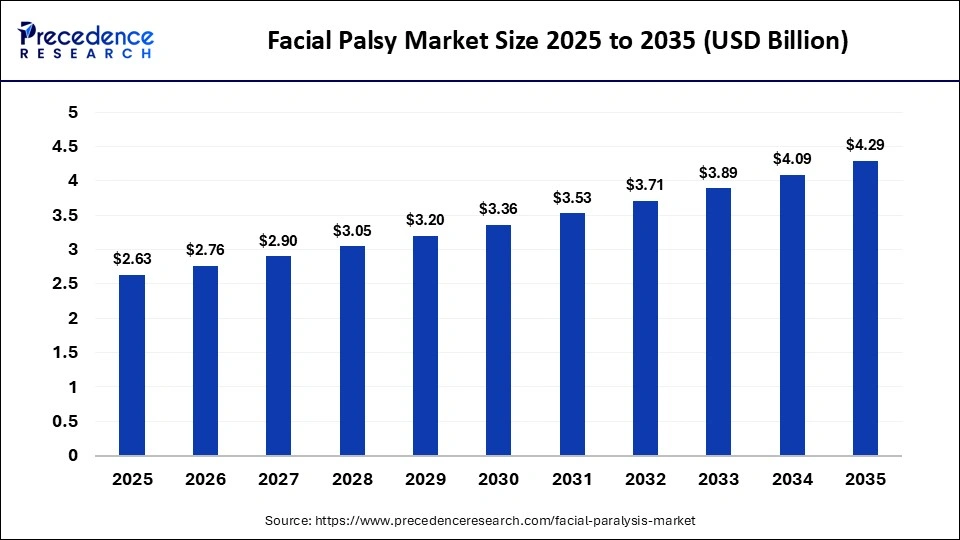
The global facial palsy market size was calculated at USD 2.63 billion in 2025 and is predicted to increase from USD 2.76 billion in 2026 to approximately USD 4.29 billion by 2035, expanding at a CAGR of 5.02% from 2026 to 2035. The facial palsy market has been observed to grow recently due to rising cases of neurological disorders and viral infections globally. Technological advancements to cure the neurological disorders, along with AI-integration for quicker and more effective results, coupled with AI-driven rehabilitation, are also the major market drivers.
Key Takeaways
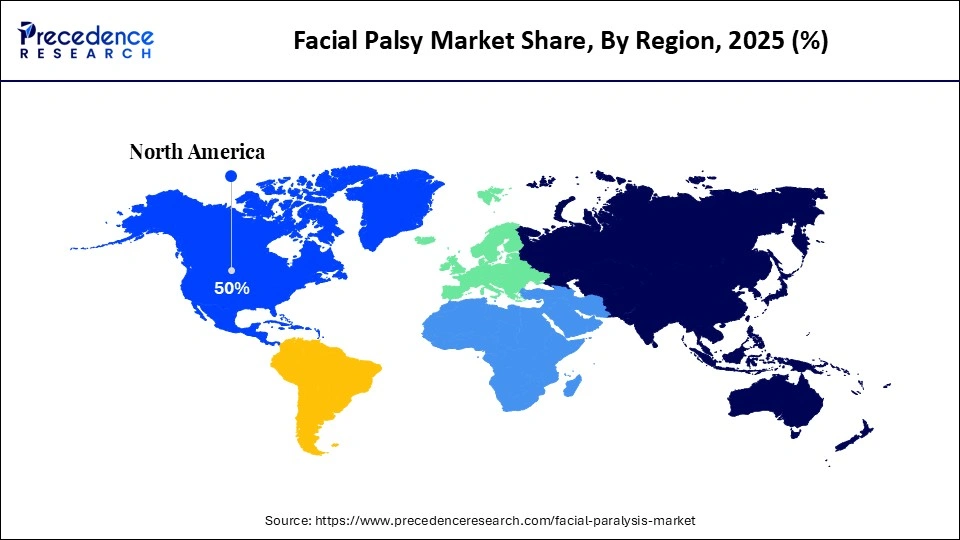
- North America led the global facial palsy market with the major share of 50% in 2025.
- Asia Pacific is expected to be the fastest-growing region in the foreseeable future.
- By application, the rehabilitation segment had a major dominance over the global market in 2025.
- By application, the surgical intervention segment is expected to expand rapidly in the foreseen period.
- By end use, the hospitals segment dominated the global market in 2025.
- By end use, the clinics segment is expected to gain the highest share of the market in the foreseeable period.
- By type of facial palsy, the Bell's palsy segment accounted for a considerable share of revenue in 2025.
- By type of facial palsy, the trauma-induced paralysis segment is expected to grow with the fastest CAGR in the foreseeable period.
What is Facial Palsy Market?
The facial palsy market majorly focuses on the diagnosis, management, and treatment of facial nerve paralysis or weakness. It is defined as the weakness or paralysis of muscles of one or both sides of the face caused by issues in the seventh cranial nerve. The symptoms of the facial disorder involve drooping, inability to close the eye, drooling, and temporary impairment. Pain behind the ear is also considered one of the symptoms of the facial disorder. The growing viral infections, trauma-related injuries, stroke, and tumors are some of the major causes of the disorder. The market also encompasses the revenues generated from the sale of diagnostic tools, medications, medical devices, and specialized therapeutic services to manage the facial disorder.
Role of Technology in the Growth of the Facial Palsy Market
- AI-Driven Monitoring: Tools such as Emotrics and RFAA help to understand facial symmetry with high precision. The market also involves the use of technologically advanced platforms, which are helpful to analyze ‘action units' for quicker recovery. Microcomputer-based systems are helpful to identify facial palsy in real-time, also propelling the market's growth.
- Advanced Therapeutic Technologies: Use of miniaturized implantable devices to deliver targeted electrical stimulation fuels the industry's growth. Various online platforms and mobile applications help in real-time biofeedback for at-home facial exercises for patients' convenience. Use of smart wearables, such as FRAME smart glasses, uses sensors to monitor facial expressions along with feedback on daily movement.
- Surgical and Imaging Innovations: Various online platforms today help surgeons to assist them in delicate nerve repairs, which is helpful to improve the accuracy of the surgery and reduce the operational time as well. Advanced 3D high-resolution ultrasound and magnetic resonance microscopy help in the detailed mapping of nerves before surgery.
Facial Palsy Market Trends
- Technological Advancements: Technological advancements available in the form of online platforms and mobile applications are helpful to keep track of the patient's facial movement to note the progress, along with the availability of smart wearables for keen observation of movements, which are helpful for the patient's recovery and the industry's growth.
- Growing Demand for Minimally Invasive Procedures: Growing preference for minimally invasive procedures, such as botulinum toxin injections for synkinesis or nerve transfer in case of serious conditions, is a helpful method for a patient's recovery.
- Improved Diagnostic Capabilities: Earlier diagnosis is possible with the help of advanced electrotherapy and high-resolution electromyography.
Market Scope
| Report Coverage | Details |
| Market Size in 2025 | USD 2.63 Billion |
| Market Size in 2026 | USD 2.76 Billion |
| Market Size by 2035 | USD 4.29 Billion |
| Market Growth Rate from 2026 to 2035 | CAGR of 5.02% |
| Dominating Region | North America |
| Fastest Growing Region | Asia Pacific |
| Base Year | 2025 |
| Forecast Period | 2026 to 2035 |
| Segments Covered | Application, End Use, Type of Facial Paralysis ,and region |
| Regions Covered | North America, Europe, Asia-Pacific, Latin America, and Middle East & Africa |
Segmental Insights
Application Insights
Why did the Rehabilitation Segment of the Facial Palsy Market Lead in 2025?
The rehabilitation segment had a major dominance over the global market in 2025. The growing awareness of non-invasive treatment options and the growing demand for long-term therapeutic care options are major drivers of the market. It leads to higher demand for popular rehabilitation methods with effective results, such as neuromuscular retraining, electrical stimulation, and biofeedback. The main aim of such therapies involves restoring facial functionality and symmetry to maintain facial aesthetics. The segment also focuses on specialized physical therapy, facial muscle retraining programs, and biofeedback. The segment is also observed to grow with the help of technical advancements in rehabilitation, such as specialized exercises and neurofeedback for enhanced recovery.
The surgical intervention segment is expected to expand rapidly in the coming years of the market. The segment's growth is mainly driven by dynamic nerve repairs, muscle transfers, and static procedures to treat the facial disorder effectively. The segment involves the use of microsurgical techniques for nerve reconstruction in serious cases. Procedures such as nerve transfer in acute cases also fuel the growth of the facial palsy market in the foreseeable period. Procedures such as muscle transfer, also known as gracilis, are helpful to replace nonfunctioning muscles by using free functional muscle transfer, which helps propel the industry's growth. Such procedures are often performed to restore a smile. Temporalis Tendon Transfer (T3) is also a highly used method, as it is relatively quick and effective to lift the mouth and restore symmetry.
End Use Insights
Which Component of the End Use Segment Dominated the Global Market in 2025?
The hospitals segment had a major dominance over the global facial palsy market in 2025. The availability of multidisciplinary teams, such as neurologists, otolaryngologists, plastic surgeons, and advanced diagnostic imaging teams, helps to perform specialized and professional surgeries for quicker recovery. Hospitals also help to handle a high volume of cases with specialized teams, trained staff, and pharmaceutical management in the form of steroids and antivirals. The segment's growth is also driven by various forms of surgeries such as reanimation surgeries, nerve anastomosis, and gracilis muscle graft. Emergency outpatient hospital settings are always the primary care choice, further fueling the industry's growth.
The clinics segment is expected to expand rapidly in the facial palsy market in the forecast period. The segment's growth is mainly driven by factors such as hospitals, specialized centers, ENT specialists, and neurologists. Specialized clinics provide helpful, specialized, long-term care and rehabilitation services. Clinics are also termed as centers of excellence, integrating ENT, neurology, and plastic surgery for comprehensive care. Such clinics are also focused on neuromuscular retraining and physical therapy for improving the quality of life. The segment's growth is also driven by the growing prevalence of Bell's palsy and stroke-induced facial palsy, leading to higher demand for specialized clinics. The clinic mainly focuses on non-surgical remedies and surgical interventions, fueling the growth of the industry in the foreseeable period.
Type of Facial Paralysis Insights
Which Component of the Facial Paralysis Segment Dominated the Global Market in 2025?
The Bell's palsy segment registered major dominance over the facial palsy market in 2025. The rising prevalence of facial disorders due to viral infections, leading to higher demand for non-invasive treatment options and physical therapy, fuels the industry's growth. The first line of the treatment procedure involves reducing nerve inflammation with the help of corticosteroids and antivirals. The segment's growth is also driven by various forms of therapies such as physical therapy, facial exercises, and electrotherapy for functional recovery. Use of OTC products and eye care products helps to manage the symptoms of facial disorders in the early stages. Various other factors propelling the prevalence of facial disorders include stress, hypertension, or diabetes. Hence, such factors altogether propel the market's growth.
The trauma-induced paralysis segment is expected to have the highest CAGR in the facial palsy market in the forecast period. The segment's growth is majorly driven by temporal bone fractures, penetrating wounds, or iatrogenic injuries, requiring specialized surgical reanimation and high-resolution imaging diagnosis. The segment also involves facial nerve damage caused by motor vehicle accidents, falls, gunshot wounds, knife wounds, and surgical injury. Higher demand for specialized, high-intensity trauma care and advanced nerve reconstruction also fuels the industry's growth. The segment's major focus is on nerve grafts, nerve transfers, muscle transfers, along with supportive therapies such as physiography and electrotherapy. High-resolution imaging tools are helpful for pinpointing nerve damage and hence propel the segment's growth.
Regional Insights
North America Facial Palsy Market Size and Growth 2026 to 2035
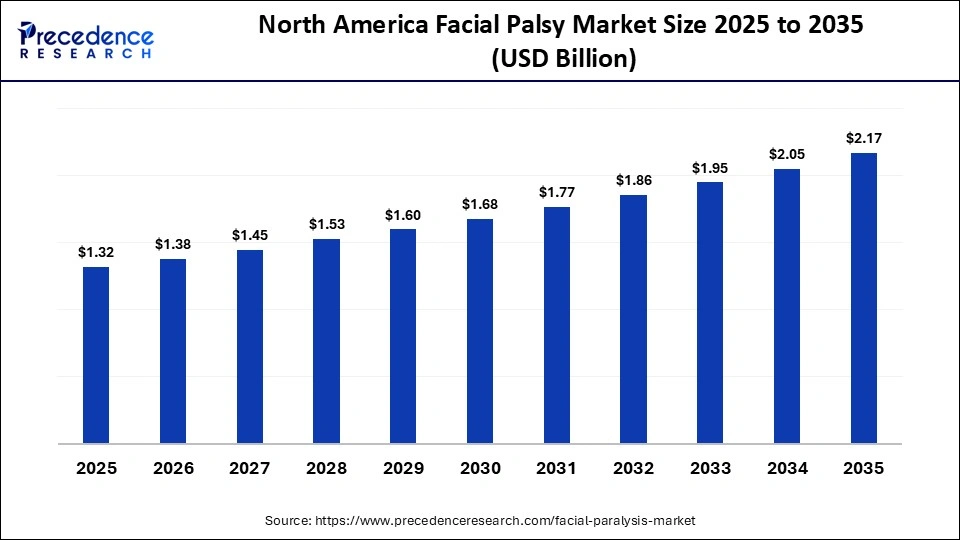
The North America facial palsy market size is estimated at USD 1.32 billion in 2025 and is projected to reach approximately USD 2.17 billion by 2035, with a 5.10% CAGR from 2026 to 2035.
Why did North America lead the Global Facial Palsy Market in 2025?
North America contributed the biggest market share of 50% in 2025. The growing prevalence of facial disorders due to various causes, growing healthcare infrastructure, growing investment in healthcare facilities, and rising demand for botulinum toxin and electrotherapy help to fuel the market's growth in the foreseen period. Growing adoption of injections such as botulinum toxin for managing symptoms like synkinesis is also a major market driver. Advanced therapy options, such as electrotherapy for rehabilitation, also fuel the industry's growth. The market's growth is also propelled by FDA-approved technologies, such as NeuroMend MiniStim, which is a minimally invasive treatment option.
U.S. Facial Palsy Market Size and Growth 2026 to 2035
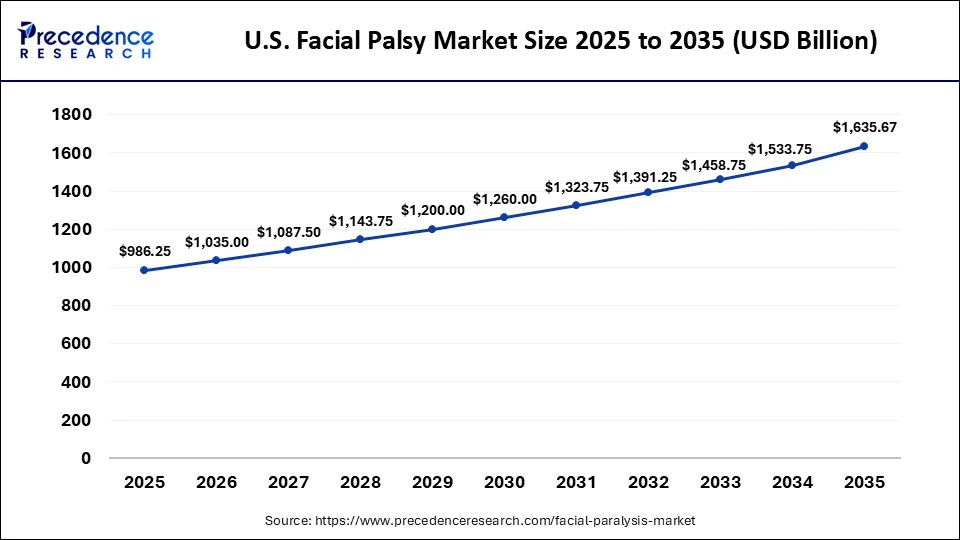
The U.S. facial palsy market size is calculated at USD 986.25 million in 2025 and is expected to reach nearly USD 1635.67 million in 2035, accelerating at a strong CAGR of 5.19% between 2026 and 2035.
The U.S. Facial Palsy Market Trends
The U.S. has a major contribution to the growth of the market due to the growing prevalence of facial disorders, such as Bell's palsy, due to various causes. The market in the region also observes growth due to the rise of neurodiagnostics, surgical facial reanimation, and non-surgical options such as Botox. Rising cases of viral infections leading to facial disorders and the rising prevalence of strokes are also some of the major market drivers.
Why is the Asia Pacific Observed to be the Fastest-Growing Region in the Foreseen Period?
Asia Pacific is expected to expand rapidly with the highest CAGR. Factors such as the growing prevalence of facial disorders, the growing healthcare infrastructure, and the growing domestic income, which are helpful for advanced healthcare options, are some of the major factors for the industry's growth. The industry also observes growth due to rising awareness of facial rehabilitation in the region. The market is also observing growth due to higher investment in hospitals and specialized clinics, especially in urban areas. Growing demand for non-invasive and effective treatment options for traumatic injuries and Bell's palsy is also a major market growth driver. Local production of treatment options required for effective results is also helpful for the industry's growth in the foreseeable period. Technological investments in the form of MRI are also helpful to elevate the market.
China Facial Palsy Market Trends
China will make a major contribution to the growth of the industry in the foreseeable period, mainly due to factors such as improving healthcare infrastructure, rising disposable income, rising investment in healthcare facilities, and growing demand for improvement in facial aesthetics with the help of traditional and modern methods. The market is also observing demand in the region due to growing demand for cost-effective and minimally invasive treatment options. The growing use of traditional remedies, such as acupuncture, also helps in the market's growth.
What Propels the European Facial Palsy Market?
The rising interest of patients to visit rehab centers for treating facial palsy in several nations, including Germany, France, Italy, and Switzerland, has boosted the market expansion. Additionally, the increasing focus of governments on establishing new healthcare centers is playing a prominent role in shaping the industrial landscape.
UK Facial Palsy Market Trends
The increasing cases of acoustic neuroma among the middle-aged population, as well as the growing preference of doctors to prescribe surgical intervention for treating facial palsy, are driving the market growth.
What is Driving the Facial Palsy Market in Latin America?
The rising investments by the governments of various nations, such as Brazil, Argentina, Peru, and others for strengthening the healthcare sector have boosted the market expansion. Also, the surging prevalence of congenital facial paralysis, coupled with technological advancements in the neurological units, is positively contributing to the industry.
Brazil Facial Palsy Market Analysis
The surging focus of healthcare providers on opening new rehab centers, along with the increasing popularity of pharmacological treatment for paralysis, has fostered the market expansion.
What is the Trend of the Facial Palsy Market in Middle and East Africa?
The growing investments by foreign companies in establishing new paralysis therapy centers, as well as the increase in the number of public hospitals, have boosted the market expansion. In addition, numerous government policies aimed at strengthening the neurological treatment sector are boosting the market growth.
UAE Facial Palsy Market Trends
The increasing use of advanced technologies such as AI and IoT in the healthcare sector, as well as collaborations among pharma brands and tech companies to develop advanced therapies for treating paralysis, has accelerated the industrial expansion.
Facial Palsy Market Companies
- AbbVie (US)
- Allergan (US)
- Ipsen (FR)
- Medytox (KR)
- Revance Therapeutics (US)
- Hugel (KR)
- Galderma (CH)
- Medytox (KR)
- Sientra (US)
- Novartis AG
- Pfizer Inc.
Recent Developments
- In May 2026, the University of Virginia's Health System launched a new initiative. This initiative was launched to expand research on facial paralysis. (Source: https://www.29news.com)
- In April 2026, ReYu opened a new paralysis recovery center in Canada. This paralysis center was inaugurated to deliver superior paralysis treatment across this nation. (Source: https://globalnews.ca)
- In December 2025, the government of the UK made an investment of 1 million euros. This investment was made to develop advanced treatments for paralysis in this nation. (Source: https://www.spinalsurgerynews.com)
- In November 2025, Life Analytics announced the launch of Facial Dynamics, a digital platform designed to transform facial rehabilitation through AR and remote monitoring. (Source- https://www.htworld.co.uk)
- In May 2025, Facial Palsy UK launched a new campaign demanding urgent action to improve care for people living with facial paralysis in Northern Ireland. (Source- https://www.newsletter.co.uk)
Segments Covered in the Report
By Application
- Rehabilitation
- Surgical Intervention
- Pharmacological Treatment
- Physical Therapy
By End Use
- Hospitals
- Clinics
- Home Care
- Rehabilitation Centers
By Type of Facial Paralysis
- Bell's Palsy
- Acoustic Neuroma
- Trauma-Induced Paralysis
- Congenital Facial Paralysis
By Region
- North America
- Latin America
- Europe
- Asia-pacific
- Middle and East Africa
For inquiries regarding discounts, bulk purchases, or customization requests, please contact us at sales@precedenceresearch.com
Frequently Asked Questions
Tags





Ask For Sample
No cookie-cutter, only authentic analysis – take the 1st step to become a Precedence Research client
 Get a Sample
.webp)



 sales@precedenceresearch.com
 Schedule a Meeting
