



Fertility Supplements Market Trends, Leading Companies, Company Revenue / Sales Performance, Food Production, Processing Capacity, Sales Volume, Distribution Performance, Competitive Landscape, and Industry Outlook
Fertility Supplements Market (By Ingredient Type: Natural, Synthetic/ Blend of Natural and Synthetic; By Product: Capsules, Tablets, Soft Gels, Powders, Liquids; By End-User: Men, Women; By Distribution Channel: OTC, Prescribed) - Global Industry Analysis, Size, Trends, Leading Companies, Regional Outlook, and Forecast 2026 to 2035
Source: https://www.precedenceresearch.com/fertility-supplements-market
 Get a Sample
 Table Of Content


What is the Fertility Supplements Market Size?
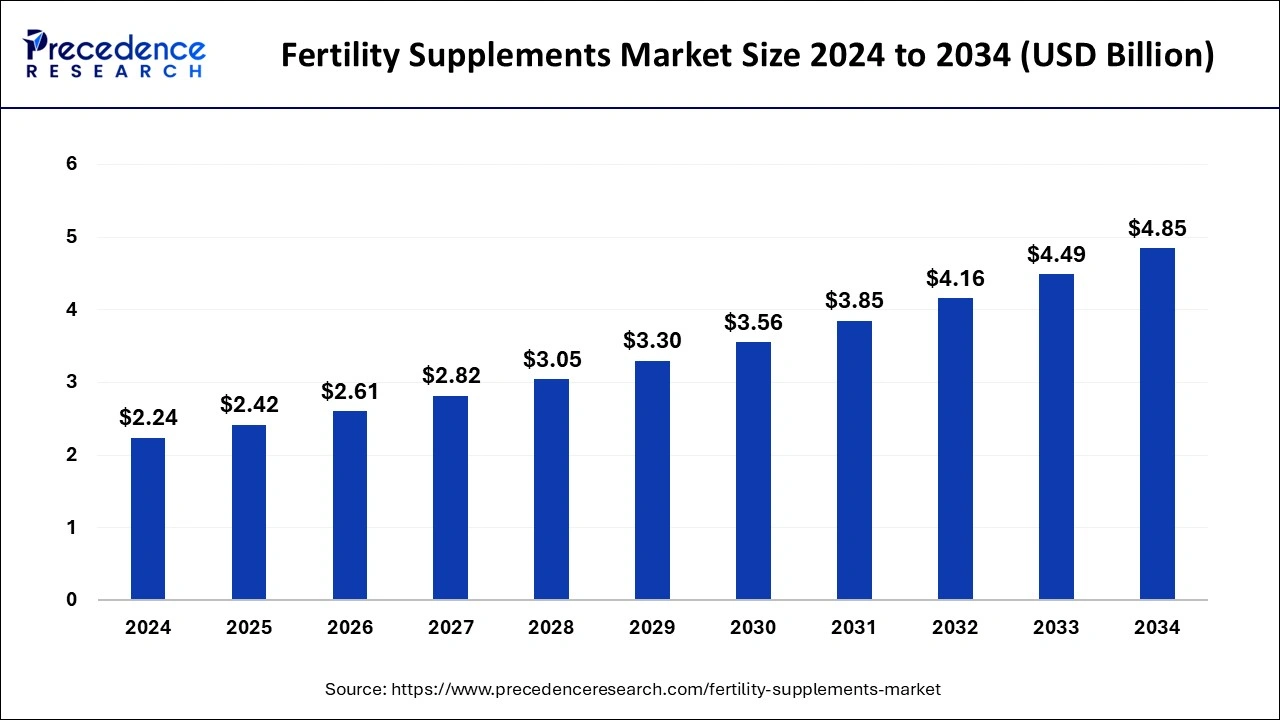
The global fertility supplements market size accounted for USD 2.61 billion in 2026 and is expected to exceed around USD 5.19 billion by 2035, growing at a CAGR of 7.93% from 2026 to 2035. The growing trend of women delaying pregnancies is the key factor driving the fertility supplements market growth. Also, increasing healthcare costs coupled with advancements in the medical industry can fuel market growth soon.
Fertility Supplements Market Key Takeaways
- North America dominated the fertility supplements market and contributed the largest market share of 36% in 2025.
- Asia Pacific is expected to grow at the fastest CAGR of 11.13% over the studied period.
- By ingredient type, the synthetic/ blend of natural and synthetic segment has held the biggest market share of 90% in 2025.
- By ingredient type, the natural segment is expected to grow at the fastest rate over the forecast period.
- By product, the capsule segment generated the highest market share of 41% in 2025.
- By product, the liquid segment is anticipated to grow at the fastest rate over the forecast period.
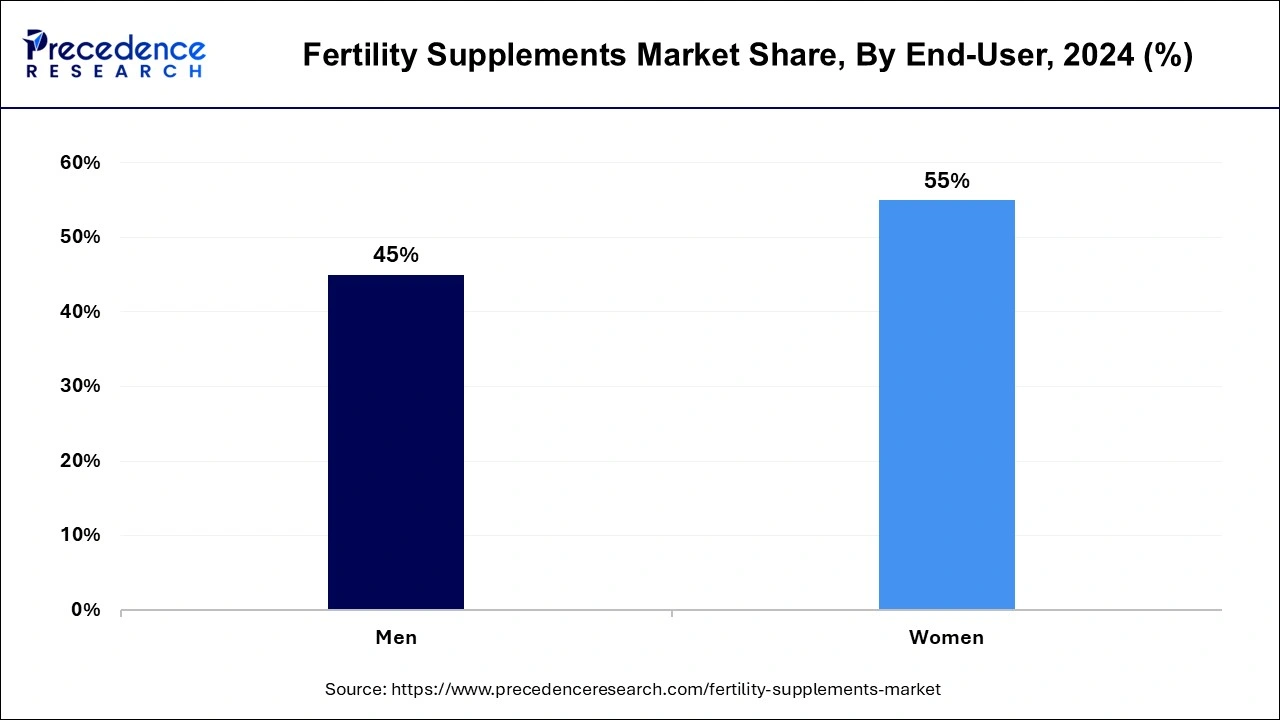
- By end-user, the women segment recorded a major market share of 55% in 2025.
- By end-user, the men's segment is expected to grow at the fastest during the projected period.
- By distribution channel, the OTC segment accounted for the highest market share of 78% in 2025.
- By distribution channel, the prescribed segment is projected to show the fastest growth during the forecast period.
Market Overview
Fertility supplements help to enhance hormonal profiles and increase delivery and pregnancy rates for women and men. Male infertility is mainly associated with the decreased motility of sperm and low sperm count, which can occur due to hormonal imbalance. Growing infertility has occurred because of factors like a rise in the consumption of drugs and alcohol, frequent smoking, increased stress levels, and environmental factors. Many individuals are emphasizing enhancing sexual well-being.
Role of Artificial Intelligence (AI) in IVF Laboratories
In the fertility supplements market, Artificial Intelligence tools like deep learning and machine learning improve quality control, enhance precision, and increase efficiency in processes such as sperm and embryo selection. It also decreases variability and human error, hence supporting greater success rates for in-vitro fertilization treatments. Furthermore, AI has the ability to transform IVF by streamlining the outcomes, but it requires keen management to ensure moral standards that can fulfill patients' trust.
- In October 2024, Alife Health (Alife) announced a groundbreaking partnership with Inception Fertility™ (Inception), the largest provider of comprehensive fertility services across North America, to expand access to AI technology for in vitro fertilization (IVF).
Top five countries by total fertility rate 2024
| Country | Total fertility rate in 2024 (births/woman) |
| Niger | 6.6 |
| Chad | 6 |
| DR Congo | 6 |
| Somalia | 6 |
| Central African Republic | 5.7 |
Fertility Supplements Market Growth Factors
- The surge in fertility rates due to the rising consumption of alcoholic beverages is expected to fuel market growth soon.
- Growth in the number of fertility clinics can propel market growth shortly.
- The ongoing fertility rate decline among women will likely contribute to the fertility supplements market expansion over the forecast period.
Market Scope
| Report Coverage | Details |
| Market Size by 2025 | USD 2.42 Billion |
| Market Size in 2026 | USD 2.61 Billion |
| Market Size in 2035 | USD 5.19 Billion |
| Market Growth Rate from 2026 to 2035 | CAGR of 7.93% |
| Dominating Region | North America |
| Fastest Growing Region | Asia Pacific |
| Base Year | 2025 |
| Forecast Period | 2026 to 2035 |
| Segments Covered | Ingredient, Product, End-User, Distribution Channel, and Regions. |
| Regions Covered | North America, Europe, Asia-Pacific, Latin America, and Middle East & Africa. |
Market Dynamics
Drivers
Increasing demand for natural fertility treatments
Many individuals who are trying for a baby are considering natural alternatives over traditional medical treatments like IVF. The fertility supplements market can be seen as a more secure way to increase the chances of conception naturally. In addition, fertility supplements are considered an essential segment of preconception care, because they offer the body with necessary nutrients that are required for good fertility.
- In October 2024, Premom announced the launch of its latest innovation: a premium, female doctor-formulated supplement line. Developed to meet the specific needs of women who are trying to conceive, pregnant, or postpartum, this new line underscores ongoing commitment to offering the highest quality products that support women's health at every stage.
Restraint
Low success rates
Effectivity concerns are a key constraint for the fertility supplements market. Patients may be in a state of dissonance regarding the efficiency of these products because of fluctuating results and less evidence supporting their effectiveness. Moreover, fertility supplements confront significant regulatory hurdles due to changing requirements and standards across different regions.
Opportunity
E-commerce development
Availability of online in recent years, fertility supplements have earned substantial attention in the men's and women's health markets because of their part in supporting reproductive health. Fertility supplements emphasize improving the functionality of the uterus, fallopian tubes, and ovaries in the female reproductive system. Furthermore, players in the fertility supplements market are strengthening their online presence to make this product accessible to all customers.
- In April 2024, Perelel built upon its bestselling Conception Support Pack with the launch of Fertility+ Support, an antioxidant boost for those in the early stages of their fertility journey. The new product was launched on the brand's e-commerce site.
Segment Insights
Ingredient Type Insights
The synthetic/ blend of natural and synthetic segments dominated the fertility supplements market in 2025. The dominance of the segment can be attributed to the increasing demand for these supplements by consumers as they provide benefits of both natural and synthetic nutrients. These supplements possess a blend of natural ingredients and vitamins to assist in strengthening fertility. Additionally, vitamin C, vitamin B6, Selenium, zinc, and Myo-Inositol are the primary synthetic ingredients that are easily accessible.
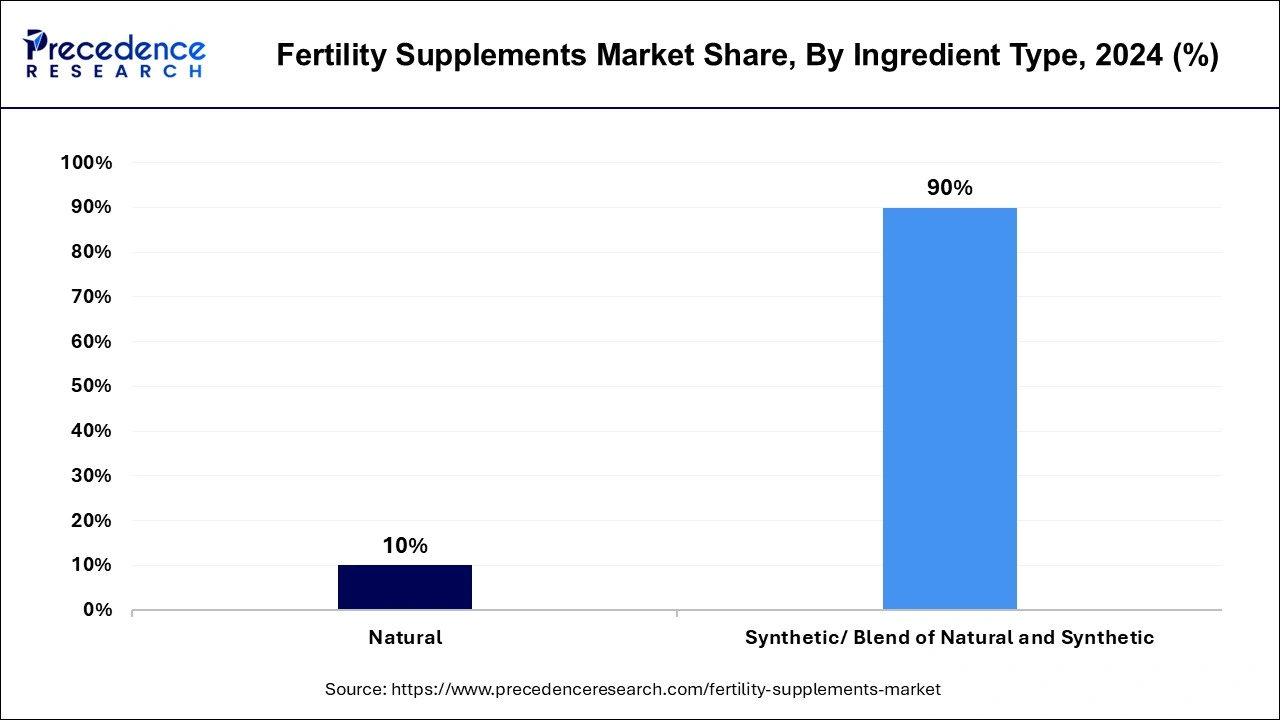
The natural segment is expected to grow at the fastest rate in the fertility supplements market over the forecast period. The growth of the segment can be linked to the ongoing technological advancements and launches of innovative products in the wellness and health industry. Also, these supplements have minimum side effects because they are direct extracts of plant-based products.
Product Type Insights
The capsule segment led the global fertility supplements market in 2025. The dominance of the segment can be credited to the increasing importance of microencapsulation in the fitness industry to monitor the color properties and ensure the fixed release of products. However, the high cost that comes with the packaging method is preventing market players from utilizing capsule formulation during the projected period.
The liquid segment is anticipated to grow at the fastest rate in the fertility supplements market over the forecast period. The growth of the segment can be driven by the increasing use of this product-type supplement in the form of smoothies or water. These supplements have a shorter shelf life than other types and also need to be refrigerated. In addition, for patients suffering from oesophageal challenges or pill ingestion, liquid supplements can be the best choice.
In September 2024, Ritual will launch the Fertility Support drink mix in a new window. The company said, "When Katerina Schneider was pregnant for the first time, she could not find a prenatal vitamin that checked all the boxes: clean, science-backed and vegan-certified.
End-user Insights
In 2025, the women's segment dominated the global fertility supplements market. The dominance of the segment is due to the increasing infertility in women due to various external factors such as obesity, excessive drinking and smoking, etc. Hence, women who are looking to have a child can use these supplements to enhance egg quality and menstrual cycle, improving overall reproductive health.
- In April 2024, Fertility Family, a leading provider of fertility supplements in the UK, announced the launch of their new product, Inofolic AlphaPlus.This innovative new supplement is designed specifically to address the unique challenges faced by women with PCOS who have a Body Mass Index of over 25.
The men's segment is expected to grow at the fastest rate in the fertility supplements market during the projected period. The growth of the segment is due to the low or no sperm counts in males along with the abnormal motility and sperm shape. Moreover, the unhealthy lifestyle among much of the male population is increasing the risk associated with reproductive health.
Distribution Channel Insights
The OTC segment accounted for the majority of the fertility supplements market share in 2025. The segment's dominance can be attributed to increasing consumer awareness about the health benefits and nutritional value of these products. Also, sales of these supplements are expected to experience steady growth in developing countries such as India and China.
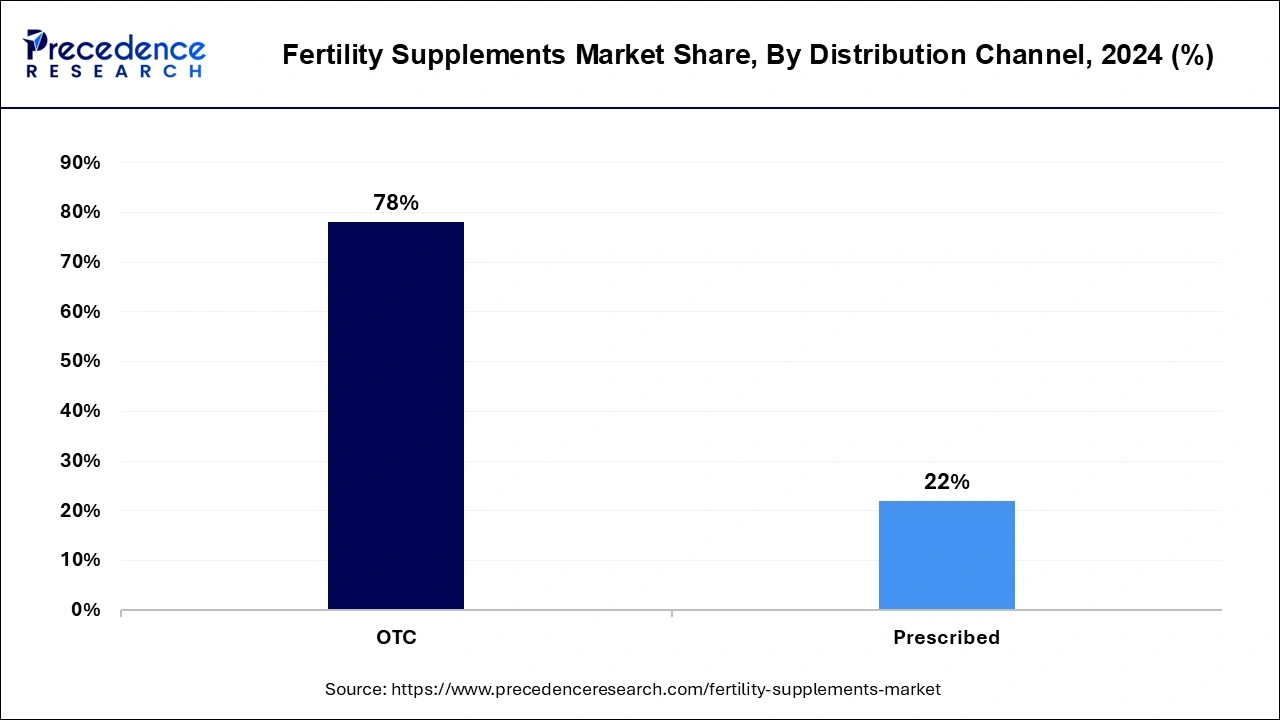
The prescribed segment is projected to show the fastest growth in the fertility supplements market during the forecast period. The growth of the segment can be driven by limited awareness among most people regarding fertility supplements. Furthermore, stringent government regulations imposed by governing authorities across the globe can impact segment growth positively.
Regional Insights
U.S. Fertility Supplements Market Size and Growth 2026 to 2035
The U.S. fertility supplements market size was evaluated at USD 740 million in 2026 and is projected to be worth around USD 1,520 Million by 2035, growing at a CAGR of 8.22% from 2026 to 2035.
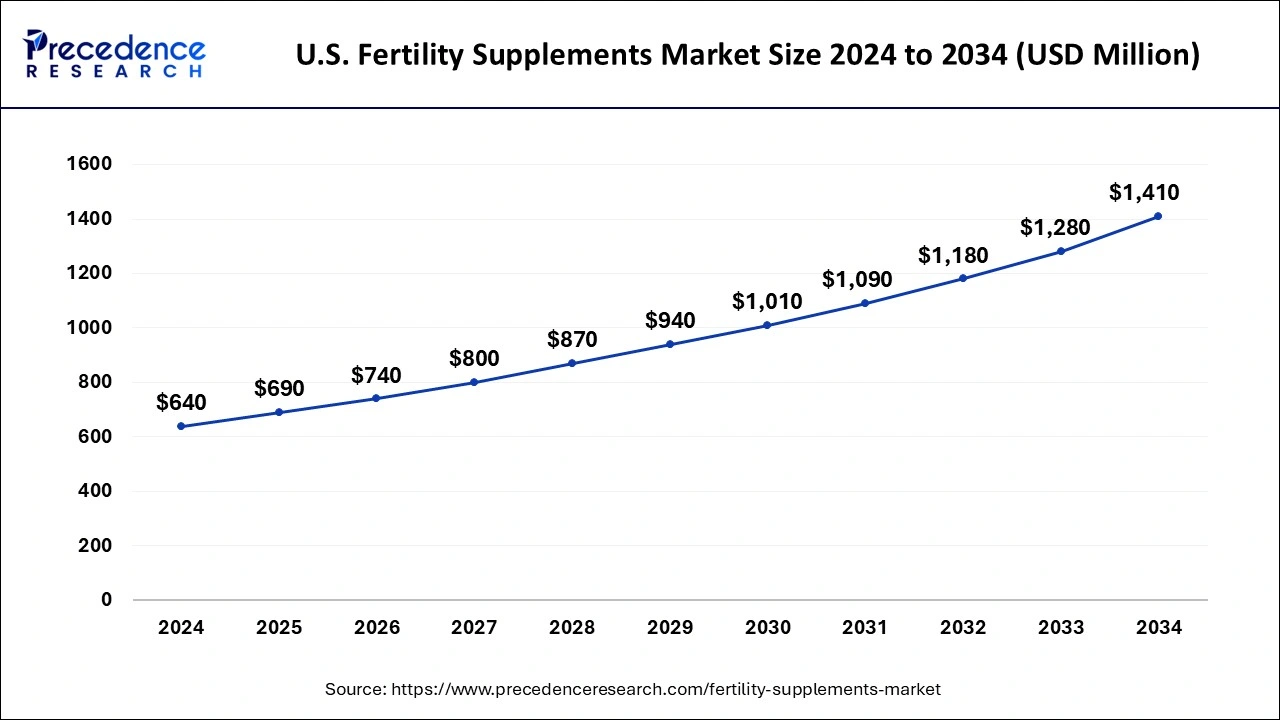
North America dominated the fertility supplements market in 2025. The dominance of the region can be attributed to the increasing infertility rate along with the growing public awareness regarding health in general. However, in North America, the U.S. led the market owing to the rising demand for organic and natural products, with the presence of a strong regulatory environment that promotes a healthy lifestyle.
U.S. Market Trends
The U.S. leads the market due to its strong fertility supplement demand, as reproductive wellness awareness has been rising recently. Male fertility wellness products received increased attention via online fertility education initiatives, further facilitating market growth.
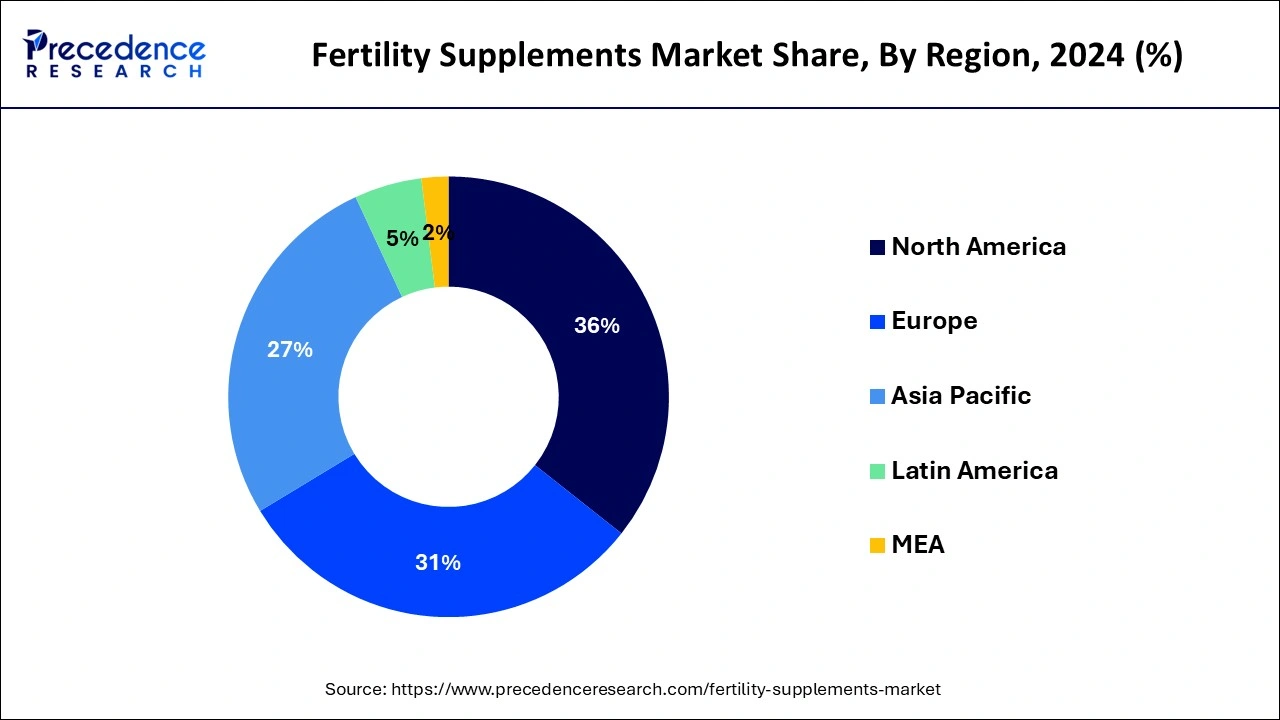
Asia Pacific is expected to show the fastest growth in the fertility supplements market over the studied period. The growth of the region can be linked to the enhanced availability and accessibility of healthcare facilities coupled with the growing investments in research and healthcare infrastructure. Furthermore, governments in developing countries are taking various initiatives to increase awareness about infertility.
- In April 2023, Indian pharma company Mankind Pharma set up a dedicated factory in Udaipur, Rajasthan, for the comprehensive manufacturing of Duphaston (dydrogesterone), a synthetic hormone widely utilized for preventing miscarriage and treating infertility.
China Market Trends
China is leading the charge in the Asia-Pacific market, driven by a large push in reproductive health modernization programs. Nutritional preparation before the initiation of assisted reproductive treatment (ART) became a growing trend in major cities, promoted by fertility clinics.
How is Europe Growing in the Fertility Supplements Market?
Europe is expected to grow at a significant CAGR between 2026 and 2035, due to the increasing trend of delayed pregnancy. Fertility nutritional products with a microbiome connection, such as those that help to balance hormones and improve egg health.
Recent reports showed that over 52,500 treatment cycles of IVF had been carried out in patients in the UK. This highlights the need for supportive fertility nutrition products. (Source: https://www.hfea.gov)
Germany Market Trends
Germany is a major contributor to the European market due to the increasing trend of delayed motherhood in Germany. Ovarian support supplements with the ingredients CoQ10 and folate were more commonly used by women over the age of 35.
Why Is the Middle East & Africa Advancing in the Fertility Supplements Market?
The Middle East and Africa are expected to register significant growth during 2026 and 2035, driven by a surge in investments in the field of fertility treatment. ICMART reported an increase in these assisted reproductive technologies across the Gulf countries during 2025, pointing to increases in complementary fertility supplement demand.
Saudi Arabia Market Trends
Saudi Arabia is a major player in the Middle East and Africa market, owing to the accessibility of fertility treatments, which were enhanced in the advanced setups of the country's women's health and treatment centres. Ferring Pharmaceuticals continued its programs of supporting fertility care services among reproductive clinics throughout Saudi Arabia.
Why Is Latin America Creating Growth Opportunities in the Fertility Supplements Market?
Latin America is expected to grow at a notable CAGR over the projected period, owing to the increasing reproductive wellness awareness. These increases in the number of people consulting about fertility problems signal larger fertility nutrition demand in both Brazil and Mexico.
Brazil Market Trends
Brazil leads the regional Latin American market, propelled by the increased availability of assisted reproductive treatments. Wellness platforms for e-commerce led to an increase in access to imported fertility supplements among the middle-income consumer population.
Competitive Landscape
The global reproductive wellness and nutraceutical companies hold partial control over the fertility supplements market as a semi-consolidated ecosystem. Competitors include brand names for clinically proven formulations that promote reproductive/endocrine health. Therealogix, Fairhaven Health, and LENUS Pharma are among the companies that have really excellent physician-guided fertility nutrition portfolios internationally.
Businesses tirelessly formulate egg quality and hormone-balancing products with antioxidants. Merck KGaA continued to grow partnerships in the field of fertility care to enable seamless fertility care within integrated reproductive health care programs. Personalized fertility supplementation strategies are expected to be supported by technologies for precision nutrition during the forecast years.
Fertility Supplements Market Companies
- Fairhaven Health
- Coast Science
- Lenus Pharma GesmbH
- Active Bio Life Science GmbH
- Orthomol
- Exeltis USA, Inc.
- Bionova
- Fertility Nutraceuticals LLC
- Vitabiotics Ltd.
- extreme V, Inc.
- Xena Bio Herbals Pvt. Ltd.
- Gonadosan Distribution GmbH (Fertilovit)
- InnovaMed Ltd. (Amino Expert)
- Babystart Ltd
- Crown Nutraceuticals
- Sal Nature LLC
- Yadtech
- Prega News
- PlusPlus Lifesciences LLP
- Eu Natural
Latest Announcement by Market Leaders
- In June 2024, Bionova Scientific, an Asahi Kasei Group company and full-service biologics CDMO, announced plans to expand into plasmid DNA (pDNA) production. The centerpiece of the project is a new development and manufacturing facility in the Woodlands, Texas (near Houston).
- In November 2024, General Mills, Inc. announced it has entered into a definitive agreement to acquire Whitebridge Pet Brands' North American premium Cat feeding and Pet treating business from NXMH in a transaction valued at USD 1.45 billion. The business includes the Tiki Pets and Cloud Star portfolio of brands.
Recent Developments
- In August 2023, Sexual wellness brand HANX unveiled two new natural supplements – Menopause Support and Pregnancy Support. These offerings, developed in-house by HANX Co-Founder Dr. Sarah Welsh, a former NHS gynecology and obstetrics doctor, promise to provide much-needed assistance to women during crucial life stages.
- In November 2023, Los Angeles-based perinatal supplement startup Needed raised USD 14 million to study pregnant people's nutritional needs.
Segments Covered in the Report
By Ingredient Type
- Natural
- Synthetic/ Blend of Natural and Synthetic
By Product
- Capsules
- Tablets
- Soft Gels
- Powders
- Liquids
By End-User
- Men
- Women
By Distribution Channel
- OTC
- Prescribed
By Geography
- North America
- Asia Pacific
- Europe
- Latin America
- Middle East and Africa
For inquiries regarding discounts, bulk purchases, or customization requests, please contact us at sales@precedenceresearch.com
Frequently Asked Questions





Ask For Sample
No cookie-cutter, only authentic analysis – take the 1st step to become a Precedence Research client
 Get a Sample




 sales@precedenceresearch.com
 Schedule a Meeting
