



Gas Mixtures Market Size, Companies, Share, Production Capacity, Raw Material Pricing, Export & Import Analysis, Manufacturing Cost, Competitive Positioning, and Demand Forecast
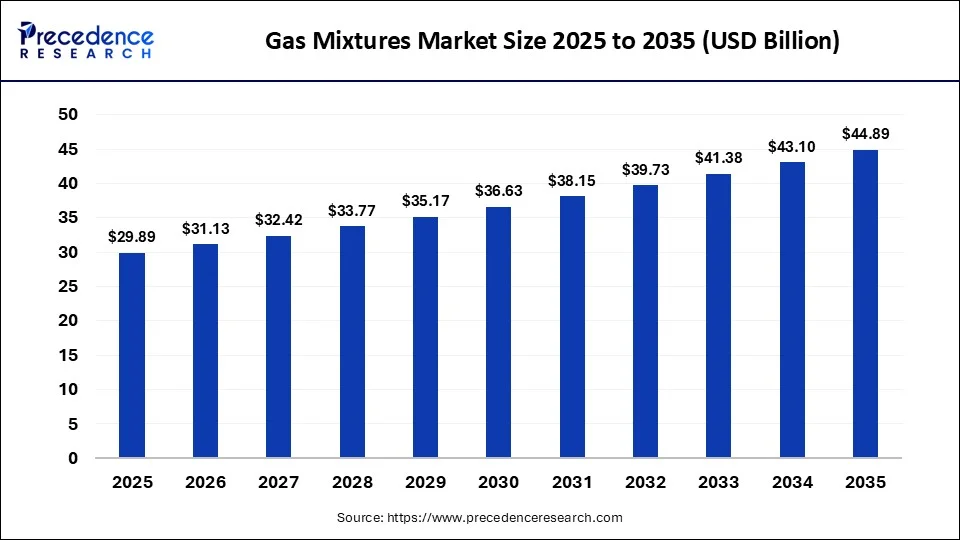
Vidyesh Swar, a Chemical and Materials Industry Expert, estimates the gas mixtures market at USD 31.13 billion in 2026, with the market projected to reach USD 44.89 billion by 2035 at a CAGR of 4.15%. Major gas mixtures market companies such as Linde plc, Air Liquide, Air Products and Chemicals, Inc are competing across key material and application segments, including gas type, component gas, pressure level, purity level, application, storage & delivery mode, end user, distribution channel, region.
Source: https://www.precedenceresearch.com/gas-mixtures-market
 Get a Sample
 Table Of Content


Gas Mixtures Market Size and Forecast 2026 to 2035
The global gas mixtures market size accounted for USD 31.13 billion in 2026 and is predicted to increase from USD 31.13 billion in 2026 to approximately USD 44.89 billion by 2035, expanding at a CAGR of 4.15% from 2026 to 2035.
Key Takeaways
- By end user, the semiconductor & electronics companies segment held 24% of market share in 2025 and is expected to grow at the highest CAGR of 6.3% between 2026 and 2035.
- By application, the industrial manufacturing segment held a major market share of 26% in 2025
- By application, the electronics & semiconductor manufacturing segment held 22% of market share in 2025 and is expected to register the fastest growth of 6.1% CAGR during 2026 and 2035.
- The helium plant of Ras Laffan in Qatar took out one-third of the world's supply of helium, thus constricting the market for helium mixtures.
- Subscription prices in the semiconductor specialty gas market were put under pressure by Japan's halting of WF6 production in July 2026.
- Food for thought for the electronics gas supply industry, as Taiwan's Air Products' four-ASU Taiwan deal indicates capital is beginning to move quickly, new to the market.
- Switching to sustainable formulations is driving them throughout the industrial refrigerant gas market, as the EU's 2026 SF6 switchgear ban kicks in.
- Volatility in the rare gas trade is linked to the price of xenon in the wake of shipping disruptions in the Middle East.
Market Size Description
Global gas mixtures market is structured by precisely configured oxygen, nitrogen, argon, hydrogen, and specialty gases. These combinations to meet the needs of manufacturing, healthcare, and research. These trends turn to high-purity blends suitable for semiconductor production and for emissions control. This increase in manufacturing costs covers investment in cryogenic separation, blending precision, and purification equipment. Electronics demand, converting to clean energy, and stricter, worldwide environmental regulations are key drivers of growth to 2035.
Semiconductor production ramps up, and emissions regulations become more stringent in key markets. Custom gas blends are essential to the industrial manufacturing process for high quality cutting, welding, and metalworking on production lines worldwide. In April 2026, Air Liquide confirmed its plan to invest 200 million euros in Hiroshima, Japan. The construction of two units for the production of industrial gases to support the production of next-generation AI chips. In March 2026, the company also opened its first large-scale Advanced Materials plant in Taiwan's city of Taichung. Bolstering its deposition and etching materials supply to semiconductor chip makers. The above semiconductor and healthcare advances naturally evolve into the concepts of environmental monitoring, food processing, and research related gas mixture demand.
Calibration gas mixtures are the basis for environmental monitoring and maintaining emissions instruments and air quality sensors. In 2026, calibration gas mixtures will become even more important. Especially with the rise of smart monitoring systems and the tightening of safety regulations in various industries. Thereby assuring optimal operation of systems used in manufacturing, energy production, and the care of the environment. Research laboratories are adding several more demands for ultra-high purity mixtures for instrumentation and next-generation material testing applications. These applications illustrate the pivotal role that gas mixtures. Currently play in the fields of industrial precision and technological innovation on a global scale.
Market Snapshot
Gas mixtures are used as key components in electronics, in healthcare, in welding, and in environmental compliance processes. The volume is continually rising as more regulatory requirements for higher purity are enforced. They are enforced by semiconductor manufacturers, and the welding environment adds more demands to the operation. There are multiple factors that lead to the increase in costs associated with average manufacturing prices.
Including, the costs of cryogenic separation, the accuracy of blending, and the costs of purification technologies. The selling prices range from one grade of purity to another, and electronic grade mixtures are available at a much higher premium. Than the regular industrial blends. Metal manufacturing and fabrication are the dominant application area as welding and cutting gases. They are used throughout the world and so are in constant demand.
The electronics/semiconductor manufacturing sector has been projected to be the fastest growing area for the coming years in 2026. Beyond being particularly predicted to be a key acceleration period for growth. Confined to one site, the data from thousands of gas installations will now be monetized through Linde's PLANTSERV platform and Air Liquide's ALMS digital ecosystem. The Asia Pacific region retained its dominance in the region, with Japan, Taiwan, and South Korea. Being the dominant countries for chip manufacturing. Such regional and technological changes influenced strategic understandings, influencing supplier action up to 2026.
Strategic Insights from the Market
The future of gas mixture strategy for most of the major producers today is being driven singlehandedly by semiconductor demands. Air Liquide announced in April 2026 that it would be investing in silicon in Hiroshima to install two industrial gas production units. Helping the manufacture of next-generation AI chips across Japan by a major global semiconductor company.
The firm trailed closely behind with investment commitments of more than USD 3.87 billion in its facilities in the U.S. This aligns with the expansion of SK hynix and other chipmakers' U.S. fab capacities associated with the July 2026 shipment. This buildout is ongoing for specialty gas expansion, with a focus on laser welding, food preservation, and calibration. On the other hand, the market for helium delivery models is undergoing unprecedented change due to the unprecedented helium supply crisis through 2026.
Growth Opportunities at a Glance
Clearly, the growth avenue is ultra-high purity gases, which are all dictated by semiconductor manufacturing. Immediately behind the semiconductor process gases are rare gas combinations such as krypton, xenon, and neon, which are desperately in need of fabrication. The potential for helium-based mixtures is rather different. Due to their lack of abundance.
Responding to a need for flexibility in delivery to smaller portfolios of industrial and medical customers is the development of microbulk systems by suppliers. With all of its gas moving on the back of a growing demand in North America. CHARBONE increased its helium delivery fleet by five times. Digital gas procurement platforms complete the opportunity map by providing knowledge of how gas is used and scheduling replenishment ahead of time. In 2035, the gas mixtures market is a growing mix of ultra-high purity and limited helium supply and digital procurement innovation.
Market Overview
Introduction to Gas Mixtures Market
Gas mixtures are mixtures of gases that are specially formulated according to a specific technical requirement. They are manufactured by processes of gravimetric or volumetric control. To obtain a certain correct composition, purity, and stability over time. THey used in various applications ranging from metal production and food packaging to chemical processing. They are dependent on consistent production and compliance with regulations. This fundamental blending science is leading a chain reaction movement toward precision and specialty formulations throughout the industry.
Evolution of Gas Mixtures Industry
The industry has progressed gradually from the relatively mundane industrial gas supply. Thereby evolving to increasingly specialized and application-specific product formulations. Manual and pressure-based precision mixing have been replaced by automated gravimetric systems that consistently produce precision mixes. The rationalization is part of the broader market shift from discrete gas platforms. Integrated, high purity gas platforms for punitive customers in the electronics sector. This has changed the attitude of manufacturers towards the concepts of safety and regulatory requirements.
Importance of Gas Mixtures in Modern Industries
No matter the precision required for sensitive processes. Controlled gas compositions ensure manufacturers achieve the necessary precision. Documented uncertainties of below 0.25 percent for standard mixtures made under ISO 6142 standards. This enables demanding calibration and monitoring. This accuracy directly helps protect the workers. Resulting the fact, even minute concentration errors can lead to false readings of gas concentrations. In addition, the quality of the product is dependent on the mixture's consistency. That is important for applications like welding, food packaging, or semiconductor etching.
Market Scope and Coverage
This market covers types of gases such as oxygen, nitrogen, and argon, hydrogen, carbon dioxide, and specialty rare gas blends. Metal fabrication, electronics, and a variety of work in healthcare and food processing, environmental monitoring, and lab research are among the applications. The world's 4th largest industrial gas company, Nippon Sanso Holdings. Continues its mission of becoming a global acquisition powerhouse in Australia, Asia, and Europe. The geographic scope covers North America, Europe, and Asia Pacific, and distribution is made through pipelines. This will pave the way for analysing the geographic level of the segments in greater depth.
Market Trends
Rising Demand for Specialty Gas Mixtures in Semiconductor Manufacturing
By 2028, ultra-pure nitrogen, oxygen, and argon will be delivered to the factory in Hiroshima. By Air Liquide's investment of 200 million euros, to be used for the production of next-generation AI chips. In February 2026, on the other hand, Taiyo Nippon Sanso raised its capacity of ultra-high purity gas. Separately, in response to the requirements from the precision electronics and display manufacturing industries.
Increasing Adoption of High-Purity and Ultra-High-Purity Gas Mixtures
As semiconductors begin to ramp up. Emission restrictions continue to become more stringent in key markets. Linde is preparing its product line for 2026 to position it for higher precision blends. The same push is now being made for diagnostics used in health care or research. The difference is improved tolerances in the concentration limits than ever before, and traceable, certified mixtures are needed.
Growth of Low-Emission and Sustainable Gas Mixtures
EPA mandates require all individual industrial process cooling systems to use refrigerants 22°F and warmer. They use refrigerants with a GWP of 700 or below as of 1/1/26. Today, A2L formulations such as R-454B and R-32, natural refrigerants such as CO2, ammonia, and hydrocarbons, are included in compliant formulations.
Expansion of On-Site Gas Generation Technologies
Modular and cost-effective designs make Linde's SPECTRA N on-site nitrogen generators suitable for electronics industry ultra-high-purity demands. According to industry analysts, 2026 is a turning point in hydrogen and nitrogen generation systems growth. This trend is moving away from bulk gas delivery.
Digitalization of Gas Procurement and Supply Management
Distributors save money and avoid disruptions in shipments by installing telemetry-based monitoring and automatic replenishment scheduling. Contract management platforms and usage analytics can now help businesses optimise gas use across plants. Further reducing over-provisioning while providing visibility and bridging the gap in semiconductor purity. This needs more efficient supply management that helps to support sustainability.
Market Report Coverage and Key Metrics
| Report Coverage | Details |
| Market Size in 2025 | USD 29.89 Billion |
| Market Size in 2026 | USD 31.13 Billion |
| Market Size by 2035 | USD 44.89 Billion |
| Market Growth Rate from 2026 to 2035 | CAGR of 4.15% |
| Dominating Region | North America |
| Fastest Growing Region | Asia Paicfic |
| Base Year | 2025 |
| Forecast Period | 2026 to 2035 |
| Segments Covered | Gas Type, Component Gas, Pressure Level, Purity Level, Application, Storage & Delivery Mode, End User, Distribution Channel, and Region |
| Regions Covered | North America, Europe, Asia-Pacific, Latin America, and Middle East & Africa |
Market Segmentation Analysis
Gas Type Insights
What Made Industrial Gas Mixtures Lead the Global Gas Mixtures Market?
The industrial gas mixtures segment dominated the market with a share of 38% in 2025, due to growing adoption of automated production systems and increasing demand for consistent process quality.
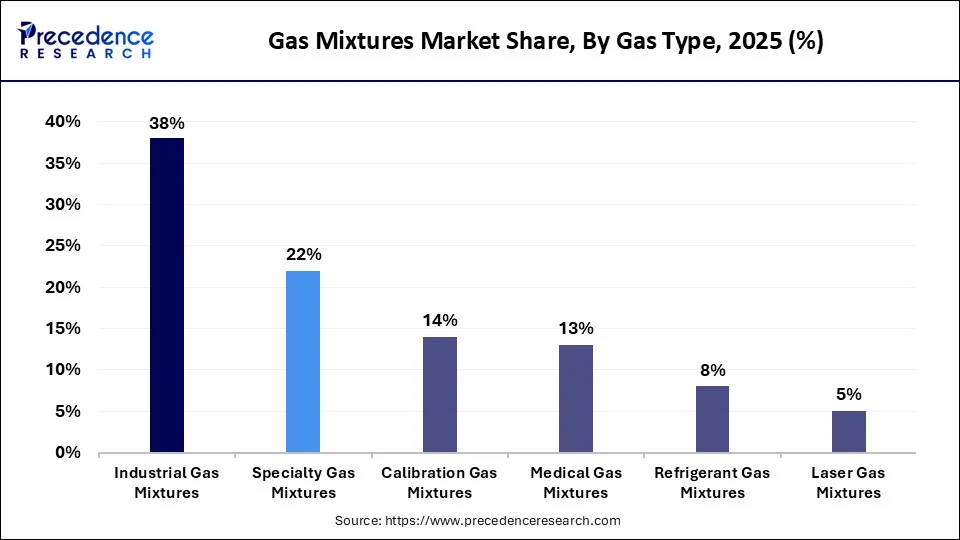
Specialty gas mixtures held 22% of the market share in 2025 and is expected to grow at the fastest CAGR of 5.8% between 2026 and 2035, driven by high-precision industries increasingly requiring certified gas blends with exceptional purity and composition accuracy.
Component Gas Insights
Why Did Nitrogen (N2)-Based Mixtures Secure the Largest Share of the Global Gas Mixtures Market?
The nitrogen-based mixtures segment dominated the market with a share of 28% in 2025, due to broad industrial compatibility and lower production costs than several specialty gases.
Gas Mixtures Market Share, By Component Gas, 2025 (%)
| Component Gas, | Market Share (%) | CAGR (%) |
| Nitrogen-Based Mixtures | 28.00% | 4% |
| Argon-Based Mixtures | 21.00% | 4.3% |
| Oxygen-Based Mixtures | 15.00% | 4.1% |
| Carbon Dioxide-Based Mixtures | 12.00% | 3.8% |
| Helium-Based Mixtures | 9.00% | 5.5% |
| Hydrogen-Based Mixtures | 8.00% | 5.1% |
| Methane-Based Mixtures | 4.00% | 3.9% |
| Other Specialty Gas Components | 3.00% | 4.8% |
The helium-based mixtures segment held a 9% share of the market in 2025 and is expected to grow at the fastest CAGR of 5.5% between 2026 and 2035, driven by advanced industries increasingly requiring high-performance gases for precision manufacturing and testing applications.
Pressure Level Insights
How Did Medium Pressure Gas Mixtures Dominate the Global Gas Mixtures Market?
The medium pressure gas mixtures dominated the market with a share of 42% in 2025, due to the extensive use across manufacturing, healthcare, laboratories, and food processing.
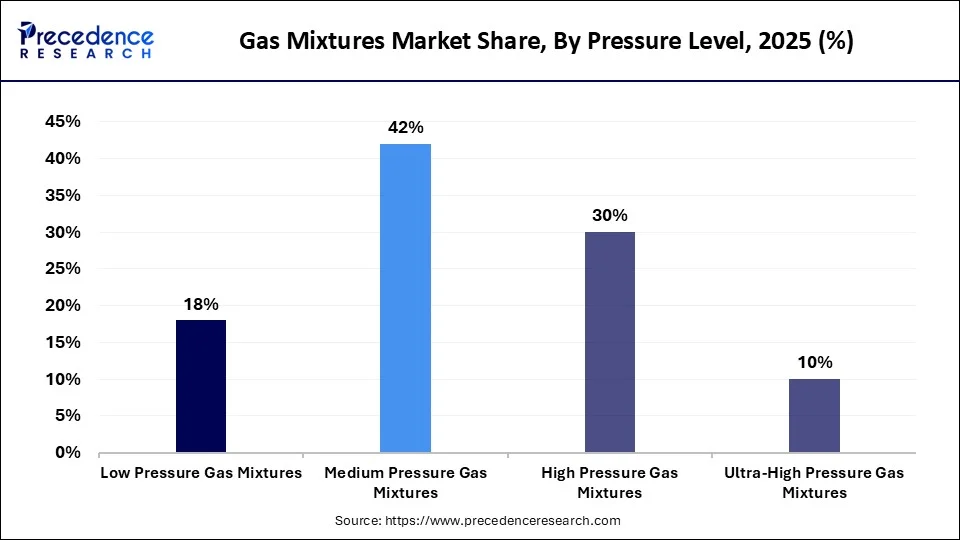
The ultra-high pressure gas mixtures segment held 10% of market share and is expected to grow at the highest CAGR of 5.7% between 2026 and 2035, owing to the advanced industries increasingly requiring greater gas storage capacity and uninterrupted high-volume supply.
Purity Level Insights
Why Had Standard Purity Gas Mixtures Emerged as the Leading Segment in the Global Gas Mixtures Market?
The standard purity segment dominated the market with a share of 45% in 2025, due to dependable performance for routine industrial applications.
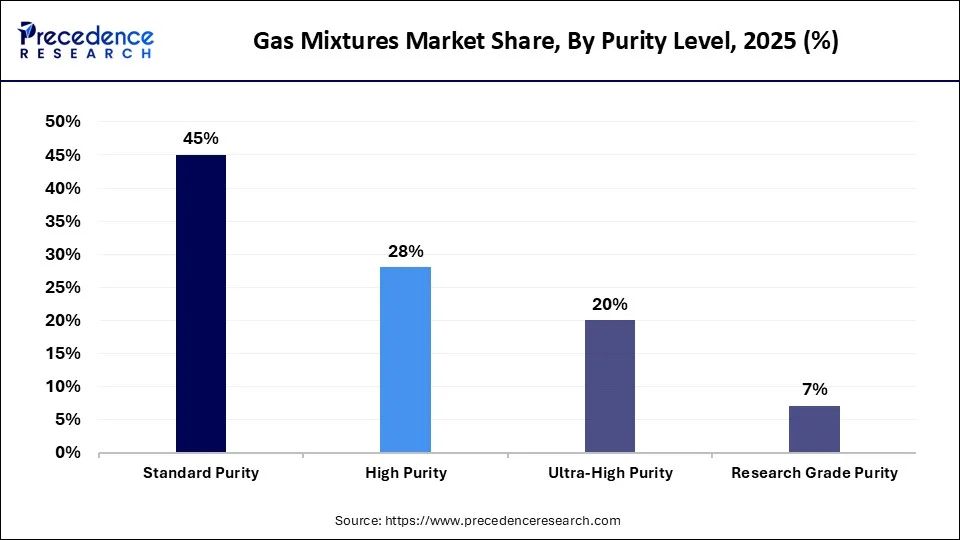
The ultra-high purity segment held a 20% share of the market in 2025 and is expected to grow at the fastest CAGR of 5.8% between 2026 and 2035, driven by precision industries increasingly requiring contaminant-free gases for critical manufacturing and research applications.
Application Insights
What Drove Industrial Manufacturing to Dominate the Global Gas Mixtures Market?
The industrial manufacturing segment dominated the market with a share of 26% in 2025, owing to the rising adoption of automated production technologies.
Gas Mixtures Market Share, By Application, 2025 (%)
| Application | Market Share (%) | CAGR (%) |
| Industrial Manufacturing | 26.00% | 3.9% |
| Electronics & Semiconductor Manufacturing | 22.00% | 6.1% |
| Healthcare & Medical | 16.00% | 4.6% |
| Chemical & Petrochemical | 12.00% | 3.8% |
| Environmental Monitoring | 8.00% | 4.7% |
| Food & Beverage | 7.00% | 4% |
| Research & Laboratory | 6.00% | 5.4% |
| Energy | 3.00% | 5.6% |
The electronics & semiconductor manufacturing segment held a 22% share of the market in 2025 and is expected to grow at the fastest CAGR of 6.1% between 2026 and 2035, driven by the fact that advanced chip production increasingly depends on high-precision gas mixtures for deposition, etching, and cleaning processes.
Storage & Delivery Mode Insights
How Did Cylinders Become the Leading Storage Mode in the Global Gas Mixtures Market?
The cylinders segment dominated the market with a share of 68% in 2025, due to the established distribution infrastructure.
Gas Mixtures Market Share, By Storage and Delivery Mode, 2025 (%)
| Delivery Mode | Market Share (%) | CAGR (%) |
| Cylinders | 68.00% | 3.8% |
| Bulk Supply Systems | 18.00% | 4.6% |
| Microbulk Systems | 9.00% | 6.0% |
| On-Site Gas Generation Systems | 5.00% | 5.5% |
The microbulk systems segment held a 9% share of the market in 2025 and is expected to grow at the fastest CAGR of 6% between 2026 and 2035, driven by industries increasingly requiring uninterrupted gas supply with lower operating and logistics costs.
End User Insights
Why Did Semiconductor & Electronics Companies Account for the Largest Share of the Global Gas Mixtures Market?
The semiconductor & electronics companies segment dominated the market with a share of 24% in 2025 and is expected to grow at the fastest CAGR of 6.2% between 2026 and 2035, driven by rapid expansion of semiconductor production.
Gas Mixtures Market Share, By End User, 2025 (%)
| End User | Market Share (%) | CAGR (%) |
| Semiconductor & Electronics Companies | 24.00% | 6.2% |
| Healthcare Providers | 18.00% | 4.5% |
| Chemical Manufacturers | 15.00% | 4% |
| Metal Fabrication Companies | 14.00% | 3.8% |
| Food Processing Companies | 10.00% | 4.1% |
| Research Institutes | 8.00% | 5.2% |
| Energy Companies | 6.00% | 5.4% |
| Environmental Agencies | 5.00% | 4.8% |
Distribution Channel Insights
What Enabled Direct Supply Contracts to Dominate the Global Gas Mixtures Market?
The direct supply contracts segment dominated the market with a share of 62% in 2025, due to the rising demand from semiconductor manufacturing, chemicals, healthcare, and metal processing industries and stronger supply chain reliability offered through direct agreements.
Gas Mixtures Market Share, By Distribution Channel, 2025 (%)
The specialty gas suppliers segment held 10% of market share in 2025 and is expected to grow at the fastest CAGR of 5.7% between 2026 and 2035, supported by high-precision industries increasingly requiring certified gas mixtures tailored to specific applications.
| Distribution Channel | Market Share (%) | CAGR (%) |
| Direct Supply Contracts | 62.00% | 3.9% |
| Industrial Gas Distributors | 24.00% | 4.2% |
| Specialty Gas Suppliers | 10.00% | 5.7% |
| Online Gas Procurement Platforms | 4.00% | 6.1% |
Market Dynamics
Market Drivers
Expansion of Semiconductor and Electronics Manufacturing
The global spending on 300mm fab equipment is expected to increase by 18% to $133 billion in 2026, according to SEMIS. This further exacerbates pressures from PV production. Phosphine and boron trichloride are now used as important doping agents for the p-type and n-type layers within solar cells. Sharing a common purity requirement, the TOPCon and HJT cell technologies continue to meet increasingly stringent gas specification requirements. Together, chips, panels, and displays now anchor the strongest single growth driver across the entire specialty gas mixture market.
Growth of Industrial Manufacturing Activities
Welding, cutting, and metal fabrication are a broad-based, very strong demand engine in global manufacturing. In 2025, Messer introduced new Lasline shielding gas blends for hand-held laser welding and its Ferroline C6 X1 mixture. This can reduce welding fume emissions. Large industrial core provides suppliers with a solid base of income on which to build, even when healthcare and semiconductor markets rise and fall.
Increasing Healthcare Infrastructure and Medical Gas Demand
Medical gas consumption continues to be enhanced as hospitals globally invest in increasing their respiratory care services, anaesthetic services, as well as diagnostic services. Nitrous oxide is still the mainstay of anesthesia today. Each year in the U.S. alone, around 45 million anesthesia procedures are administered. Long-term O2 therapy demand continues to increase. Due to aging populations and increasing rates of chronic respiratory disease. This is also the case in Japan, where hospitals are installing centralized medical gas systems for intensive care and anesthesia applications throughout 2026.
Growing Environmental Monitoring Regulations
Industries have increasingly developed elaborate emissions monitoring systems. Strict security regulations during the year, and calibration gas mixtures have become more imperative during 2026. Regulators around the globe now demand continuous accurate reporting and non-accuracy of an instrument. This will lead to compliance failure and financial penalties. Food and beverage industries are experiencing the same pressure for strict compliance with gas purity and traceability, in addition to the regulatory pressure.
Expansion of Food Packaging Applications
Stable supply of carbon dioxide and nitrogen is essential for both modified atmosphere packaging and beverage carbonation. The supply of CO2 was squeezed in Europe's beer and beverage industry in 2026. Given the fall in ammonia output and fertiliser production stemming from the high natural gas prices.
The pressure could impact carbonation, packaging, and distribution prior to stress periods in the summer. Similar blends of nitrogen and carbon dioxide are used to slow spoilage and extend shelf life for bagged salads, fresh meat, and bakery products. Throughout all the applications addressed in this market, these intermittent CO2 supply interruptions have pushed food and beverage manufacturers to diversify and find more resilient CO2 sourcing options.
Market Restraints
High Production Complexity of Specialty Gas Mixtures
To reach the level of precision required in parts per billion, special weighing equipment and stringent ongoing quality control procedures must be employed. The standard mixtures are in accordance with ISO 6142. The standard uncertainty of each mixture must be less than 0.25 percent to meet the high standards of ISO 2026. Additionally, contamination control is a major challenge in semiconductor manufacturing. Also, for certified reference gases, contaminants as low as parts per billion can impact the yield of the semiconductor or affect certified reference gases.
Supply Constraints of Rare Gas Components
The supply of krypton and xenon remains closely related to the production of oxygen. Thus, the gases are essential and only occur as minor by-products of the large air separation units. In early 2026, prices for the Northwest European market continued to be higher than 2,700 euros per cubic meter. Freight and energy expenses have risen due to shipping disruptions in the Middle East. But geopolitical risk continues to serve as a further aggravating factor. That has driven chip makers and gas producers to diversify their sourcing and stocking policies.
High Storage and Transportation Requirements
In April 2026, PHMSA explained that DOT- and UN- certificated cylinders using dual markings remain subject to the separate and distinct requalification criteria for each respective standard. However, cylinder management still requires significant man-hours of testing the cylinders. Using hydrostatic testing, labelling, and record keeping for compliance and safe hazmat movement. The extra layers of compliance and logistics expenses exacerbate the same precision, purity, and rare gases. Sourcing pressures affecting specialty gas mixtures suppliers as a whole.
Market Opportunities
Semiconductor Industry Expansion Creating Specialty Gas Demand
Rare gases such as neon, krypton, and xenon are in demand technologically. But in low volumes, they are paying high prices due to this demand. Global electrolyzer capacity grows from less than 1 GW in 2022 to 134 GW by 2030. Hydrogen's use in the chip industry is set to change. The significant volume of investments in ultra-high purity capacity that has occurred in recent years. This will go to those that invested early and will secure the best share of this fast-growing volume of fabrication.
Growth of Hydrogen-Based Gas Mixtures
In 2026, Air Products secured a $140 million contract to provide liquid hydrogen for several NASA facilities. Along with another contract with the ESA (European Space Agency). The firm has also finished 90 percent of the work on its NEOM Green Hydrogen Project (NGHP) in Saudi Arabia with plans to start production by 2027. Hydrogen-blended gas mixtures continue to grow its potential market, from fuel cells to clean mobility to industrial decarbonization.
Expansion of Microbulk and On-Site Delivery Systems
MicroBulk supply is marketed to facilities which consume over 20 cylinders of air a month, or less than 150,000 SCF. This permits direct on-site filling of liquid argon, carbon dioxide, nitrogen and oxygen, minimizing deliveries. Therefore, contamination due to repeated cylinder changes. Medium scale industrial users, it is a better alternative to renting the cylinder, as it will reduce labour as well as inventory costs.
Increasing Demand for Customized Gas Mixtures
To suit the different levels of blend tolerance, analytical tolerance, and traceability needs. Airgas, now a part of Air Liquide, company provide six specialty gas grades. Now suppliers are providing multi-component specialty gases in custom concentrations down to parts-per-billion (ppb) in cylinders of all sizes. This transformation to tailor-made, application specific formulation completes the circle in each of the opportunity areas. Ranging from semiconductor purity to hydrogen infrastructure to flexible on-site delivery.
Market Challenges
Managing Gas Purity and Quality Standards
To comply with the requirements in 2026, laboratory standard calibration mixtures must be certified in accordance with ISO 6142. These shall have an uncertainty within 0.25 percent. This uniformity must be achieved on each production batch. Requiring constant instrument calibration and careful documentation and quality control. Being electronics companies, manufacturers now directly link demand for ultra-high-purity argon to semiconductor fab expansion and technology nodes. It doesn't take much deviation in purity to mean trouble for costly rejected batches in pharmaceutical applications, electronics applications, or calibration applications.
Regulatory Compliance Across Different Regions
Twenty-three other fluorinated gases are now strictly controlled across the EU's Regulation 2024/573 for their production, import, and market placement. Multinational suppliers are navigating fault lines in separate CGA and EIGA safety rules in North America and Europe. Respectively, in addition to these European rules. Any companies dealing with transactions in multiple countries need. This creates local compliance units to prevent the shipments from being delayed or access being blocked based on region.
Price Volatility of Specialty Gas Components
Europe's steel volume helped to support Argonne prices in 1Q26, lowering supply during the initial quarter. In 1Q26, prices for Argonne strengthened in Europe as steel recovery lifted air separation supply, reducing prices. Rare gases such as xenon and krypton are even more volatile. Their production is only possible in the steel- and oxygenproduction cycles. This price pressure increases as specialty gas mixture suppliers struggle with the purity and regulatory issues that plague all suppliers in the specialty gas mixture business.
Gas Mixtures Market Ecosystem Analysis
Gas Mixtures Value Chain Analysis
Gas for processing begins at air separation equipment, which separates O2, N2, and Ar from the air. These gases are then mixed gravimetrically using weights. Further achieving the correct gas composition. This is required for repeatability and accuracy. Gases then flow directly through cylinders, bulk tankers, or MicroBulk to enter semiconductor fabs, hospitals, and manufacturing plants.
Role of Gas Producers and Specialty Gas Suppliers
In May 2026, Air Products also inked a separate contract for a long-term supply of specialty gases to Samsung at a new semiconductor facility in South Korea. Topped with precision physical infrastructure. Technology providers add precision digital monitoring and blending, linking raw production to certified end use quality.
Industry Collaboration and Supply Partnerships
The Taiwan deal covers both the front-end fabrication and back-end packaging side. Demonstrating that Taiwan's gas suppliers are now deeply involved in the complete semiconductor production lines. The parallel partnership between Hiroshima and Air Liquide is associated directly with gas supply. But with a solid AI forecast as part of the time frame to 2028 for Air Liquide's growth. Such multi-decade mutually beneficial collaborations between gas producers, chip manufacturers, health care providers, and industrial manufacturers now set the reliability of the whole ecosystem for scaling through 2035.
Raw Material and Component Gas Analysis
Nitrogen-Based Gas Mixtures
At the global scale, nitrogen is the predominant component gas. Both in industrial processes and in food and electronics production. Electronics manufacturers use nitrogen for semiconductor and printed circuit board processing. Gas quality, purity, and safety are paramount. On the other hand, the fastest growing nitrogen application is now electronics, representing the growth of AI and advanced computing infrastructure.
Argon-Based Gas Mixtures
Argon and its inert nature are important properties for welding, metallurgy, and semiconductor fabrication. The use of ultra-high purity argon in electronics continues to be closely tied to the semiconductor fab expansion and advanced technological nodes.
Oxygen-Based Gas Mixtures
In metalworking and metal fabrication, that same oxygen is consumed in oxy-fuel cutting, welding, and laser processing applications that demand large combustion. Supporting dual use applications in this industry and healthcare applications. This ensures oxygen remains firmly positioned throughout the value chain of specialty gas mixtures.
Helium-Based Gas Mixtures
Semiconductor helium demand has been increasing by 15-20 percent per year. Due to 42 new plants opening worldwide under CHIPS Act-equivalent programs in 2026. Excluding the additional uses, the international share of helium in the MRI is about 30 to 32 percent. The fragility of the supply is hampering this combined medical, research, and sensor component pull, but helium remains the fastest growing component business.
Hydrogen-Based Gas Mixtures
Messer has entered into a ten-year purchase contract with Lhyfe, with the volumes of green hydrogen from three sites in France and one in Germany starting from 2026. The parallel moves underscore six ways hydrogen is rapidly growing into the leading component gas of the energy transition in industry.
Technology and Innovation Landscape
Advanced Gas Blending Technologies
The gravimetric methods according to ISO 6142 have a documented uncertainty of less than 0.25 percent for stability-tested reference mixtures. Dynamic blending systems go into real-time mass measurement. Circumventing precision limitations of gravimetric systems at very low levels. These automated systems continue to improve tolerances to micro parts per billion, as semiconductor and calibration customers demand ever tighter tolerances.
AI-Based Gas Quality Monitoring
In January 2026, in a petrochemical plant, an AI maintenance system diagnosed a developing compressor bearing fault 47 days prior by correlating vibration, temperature, and current data. Analysts forecast digital twins and cloud-native analytics to grow. This is essential operational best practice throughout gas plants by 2026. CPUs are increasingly being used to replace a reactive quality check as the industry moves toward monitoring based on predictive data.
Semiconductor Specialty Gas Innovation
In April 2025, Rapidus was the first company in Japan to install a production-ready EUV scanner, marking the necessary step on the way to 2nm logic chip production. Specialty gas innovation is directly linked to next-generation chip scaling. Special concerns related to debris in the cycle of tin-plasma EUV sources, and gas flows of hydrogen being a critical aspect.
Sustainable Gas Development
Businesses are gearing up for stricter regulations on cooling in 2026. Natural refrigerants are providing high efficiency and long-term reliability. R-744 refrigerant COâ‚‚ is exempted from F-Gas Regulation quotas with both a global warming potential of only 1 and an ozone depletion potential of zero. From precision blending to AI monitoring to sustainability. Low-impact gas production, these cleaner formulations complete the circle on the technology landscape.
Pricing Analysis
Gas Mixtures Manufacturing Cost Structure
The first costs associated with raw materials are the cost of the oxygen and the nitrogen purity. They are determined by the electricity required for the cryogenic separation of air. By March 2026, European prices reached $0.14/kg, due to the reduction in natural gas and electricity costs. Besides the production cost, there are several additional steps involved in the entire process. This contributes to the overall delivered value, including purification, precision blending, cylinder packaging, and cold-chain logistics.
Average Manufacturing Price Analysis
The 2025 average manufacturing price per metric ton reflects energy, purification, and blending expenses combined. Increased production cost uncertainties due to escalating US-Iran tensions. They are evident at steam methane reforming hydrogen facilities throughout the Middle East and Asia in 2025 and 2026. Large air separation units are very capital intensive. Exacerbate the pressure since they go offline before any gas gets to a customer.
Average Selling Price Analysis
Ultra-high purity and traceability require heavy processing costs. The highest markups are expected to be for electronics and healthcare applications. The industry with the highest air separation end-use interest is the iron and steel industry in 2026. Food and industrial welding applications fall somewhere between the extremes, and require moderate purity, but with a steady volume of product required in bulk.
Pricing Trends Forecast (2025-2035)
In June 2025, Linde will spend approximately $400 million for the construction, ownership. Operation of an air separation unit (ASU) supporting the Blue Point low-carbon ammonia project on the U.S. Gulf Coast. Demand for specialty and ultra-high purity gases will continue to experience strong premium pricing. Semiconductor and healthcare demand is expected to grow into and remain steady by 2035.
It is important that pricing margins for bulk industrial gases, such as nitrogen and oxygen gas, be smaller for them and more competitive. Supported by the close link with regional electric costs. These two trends will contribute to a large divergence of commodity and specialty grade gas mixture prices well into the next decade.
Supply Chain Analysis
Upstream Gas Production and Purification
The sources for nitrogen, oxygen, and argon are exclusively via low temperature separation from the air. Thus, the source of helium is only natural gas fields. Helium is unique among industrial gases. It can only be extracted in natural gas where it is commercially viable. A new pathway for diversifying supplies is now available through production projects in Saskatchewan, Tanzania, South Africa, Montana, and Colorado.
Gas Mixture Manufacturing Process
On January 01, 2026, ILAC and International Accreditation Forum amalgamated. Bringing laboratory and accreditation of certificates together under one roof in one organisation. Accreditation was achieved with a perfect score of 100% in May 2016. Extending the merit awarded certification in 2007. This structured certification program provides the basis for suppliers' new blending, testing and quality assurance protocols.
Storage and Delivery Infrastructure
For customers that use over 20 cylinders per month, or less than 150,000 scf per month, Airgas markets MicroBulk delivery for the facility that delivers the gas directly on site. As an electronics customer requiring high-purity N2 supply at low total cost of ownership (TCO), Linde's SPECTRA N on-site N2 generators are your ideal choice. With a delivery mix that ranges from bulk to microbulk to on-site, cylinders will continue to help fill the need of smaller or remote users.
Supply Chain Risks and Mitigation Strategies
Tanzania and Helium One Global (H1) signed an historic helium extraction deal on May 2, 2026 on Rukwa Basin as its new strategic helium field. Procurement teams are putting a greater focus on qualifying suppliers who have multiple helium origins, and not distributors based on a single origin. Also, cylinder stockpiling and long and secure contracts are suppliers have their best line of defense from the geopolitical shockwaves. That are transforming the supply chain for specialty gas mixtures with this diversification tactic.
Customer Buying Behavior Analysis
Purchasing Criteria for Industrial Customers
Purity quality, delivery reliability, supply continuity, price, certification, and technical support are all taken into consideration by industrial buyers. Requirements for semiconductor fabs for supplier qualification cycles are lengthened to 12 to 18 months. Because of the more stringent requirements in the sub-3nm process nodes category. The supplier has to obtain purity certification from NIST-traceable standards before being selected for long-term purchase. This ensure the batch to batch consistency to gain such a contract.
Semiconductor Customer Requirements
South Korea's high purity CO2 stores are said to have been unable to last through mid-2026, as Samsung and SK Hynix production timelines were impacted. To meet Samsung's high-end NAND and foundry production requirements. PKC promptly started to increase the capacity of high-purity chlorine by 50% in May 2026. Such periodic breakthroughs say much about how procurement requirements in semiconductors are more stringent now, in nearly all respects. Than they have ever been in the past, and that the high purity of semiconductors and various custom mixtures and airtightness standards are becoming the norm rather than the exception.
Healthcare Customer Requirements
On December 18, 2025, the FDA instituted the new regulation 21 CFR Part 213 under drug-specific manufacturing regulations for medical gases instead of general pharmaceutical regulations. Convenience of workers, these two regulations are combined in this post, as it is now the facility manager's responsibility to comply with both the rule and the newly evolving NFPA-99 requirements. Otherwise, they may result in patient harm or shutdown of the facility. Medical gas systems have been one of the top areas of non-compliance in recent Joint Commission surveys.
Food Industry Gas Selection Criteria
In late 2025, Carbon Centric was awarded the FSSC 22000 certificate for food grade CO2. That was independently tested to over 99.99 percent purity by DNV. For high value carbonation, beverage manufacturers are now looking for a comprehensive certificate of conformity for FSSC 22000, iso 9001 and ISBT. The end-of-the-purchase focus on traceable certified purity from semiconductor, healthcare, and food buyers alike provides a testament to the extent to which quality assurance permeates customer purchasing practices now.
Regulatory and Compliance Landscape
Industrial Gas Safety Regulations
Compressed Gas Association (CGA) standards are integrated into the Hazard Communication Standard (HCS) regulation by OSHA. Taking three major areas of transportation, storage, and workplace safety, all of which contribute to industrial gas compliance throughout the country. These have all been delayed four months by OSHA's final rule issued on January 15, 2026.
Healthcare Gas Standards
On December 18, 2025, FDA adopted a new regulation, 21 CFR Part 213. This applies to oxygen, nitrogen, nitrous oxide, helium, and medical air, which are now classified as drug regulated products. The companies are required to implement existing current good manufacturing practice (cGMP) guidelines for each gas type. Instead of the previous general pharmaceutical cGMP. In this toughened certification process, hospitals and transfillers remain more obliged. This ensures document and traceability compliance requirements to ensure that at any time.
Environmental Regulations Impacting Refrigerant Gas Mixtures
On January 1, 2026, the EPA announced that it will mandate use of refrigerants with a GWP of 700 or below for all industrial process cooling systems operating at greater than minus 22 °F. The EU has also imposed restrictions on the use of SF6 in switchgear up to 24 kilovolts (kV). That will take effect from January 1, 2026, with later restrictions to gradually become in force through 2032. The two standards are helping to move regulated industries around the globe toward using A2L blends and natural refrigerants.
Semiconductor Gas Quality Standards
Helium purchased for semiconductors is required to be very pure. Generally 6N (99.9999 percent) to be certified to the NIST-traceable purity standard. The local expansion of chloroplasts by PKC aligns directly with the evolution of Samsung's Gate-All-Around and FinFET manufacturing requirements. Bringing the technology's capital needs closer. Building on workplace, healthcare, and refrigerant regulations, these escalating purity certifications now constitute compliance for the entire specialty gas mixtures industry.
Investment and Funding Analysis
Capacity Expansion Investments
Through 2026, Air Liquide, Air Products, and Messer will continue to be the largest investors in hydrogen generation infrastructure in the U.S. market. Purification units and specialty gas plants are seeing capital as well. Both electronics and healthcare customers raise their purity expectations from year-to-year. The momentum for even hotter capital investment was being created across both bulk gases and specialty facilities. Leading into the capital increase area, including semiconductor supply chain facilities.
Semiconductor Supply Chain Investments
In July 2026, Air Products San Fu pledged to construct four relatively large air separation units (ASUs) for Taiwan's various new semiconductor plants and packaging facilities. The Orders of Any Type signal that investment in new gas infrastructure is centered on semiconductor fabrication investments. This, in recent times, dominates the deployments across the industry, not just concentrated in a few high-profile cases.
Strategic Partnerships and Acquisitions
In May 2026, CM2 Supply was incorporated to join Toll Gas & Welding, further to build out the company's industrial gas and welding distribution footprint in the U.S. Midwest. In 2026, Messer entered into a ten-year Hydrogen offtake agreement with Lhyfe, in addition to the stakes it had acquired on three sites in France and one in Germany. This roll-up has happened in the distribution, in the hydrogen supply, and in the regional market leadership. Exemplifies a new era of mergers and acquisitions that goes hand in hand with capacity expansion across the specialty gas mixtures industry.
Patent and Innovation Analysis
Patent Trends in Gas Mixture Technologies
Air Liquide is the holder of active patents for a multi-stage purification process of helium. By separating helium from various feed streams, such as nitrogen and methane. Using membrane separation followed by hydrogen PSA processing. Simultaneously, delivery system innovation is progressing, as gravimetric blending and microbulk infrastructure systems each attract constant filing, internationally.
Emerging Gas Technologies
Fundamental hydrogen storage with solid materials has increased between 2020 and 2025. As innovations taking place in metal hydrides in the US, Europe, and China. On June 10, 2026, China marked another milestone in its pursuit of a sustainable transportation future. By launching its first ship powered by a hydrogen combustion engine and organic liquid hydrogen storage system. The innovation pipeline is a fast diversifying path to innovation. These parallel developments in hydrogen mixtures, chemical carriers, and sustainable specialty gas formulations converge, leading to the development of 2035 in sustainable gas developments.
Market Regional Analysis: North America, Europe, Asia-Pacific
Why Did Asia Pacific Remain the Leading Region in the Global Gas Mixtures Market?
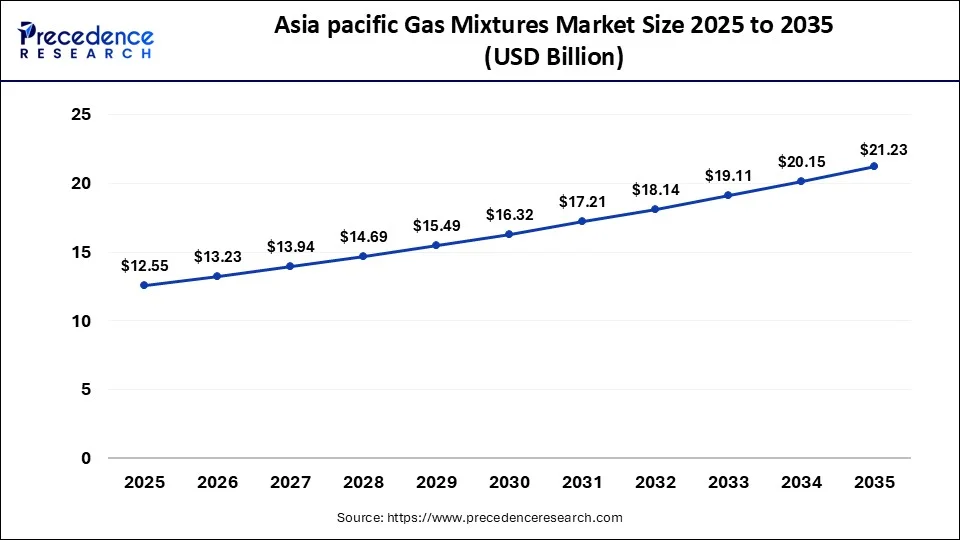
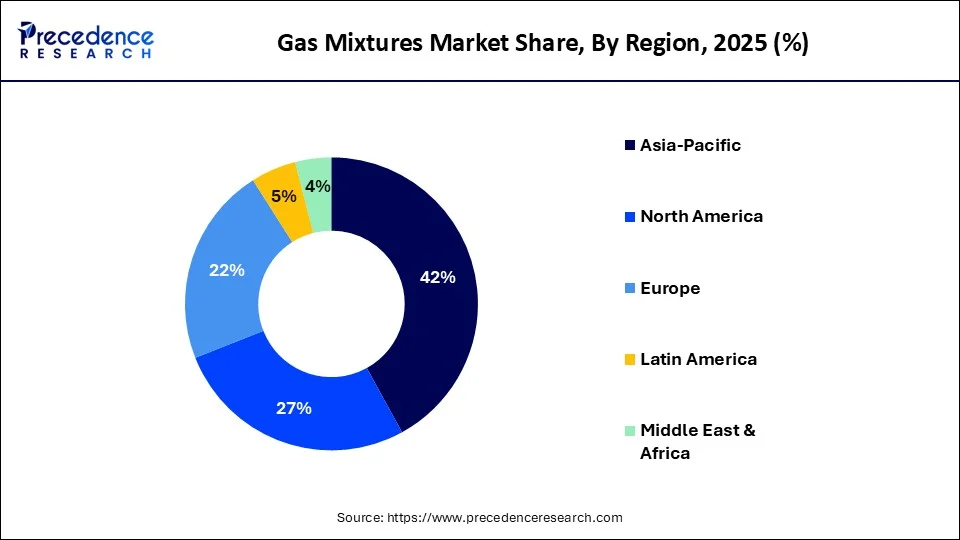
Asia Pacific led the market, capturing the largest revenue share in 2025, accounting for an estimated 42%, and is estimated to grow at a strong CAGR of 5.4% over the projected period, due to rapid expansion of electronics manufacturing and semiconductor fabrication investments across major economies.
Asia Pacific Gas Mixtures Market Size and Growth 2026 to 2035
The Asia Pacific gas mixtures market size was evaluated at USD 12.55 billion in 2025 and is projected to reach around USD 21.23 billion by 2035, growing at a CAGR of 5.40% from 2026 to 2035.
China Market Analysis
Advanced manufacturing and domestic semiconductor silicon capacity utilization will drive increased demand for specialty and ultra-high purity gas formulations, as currently forecast by government support.
Japan Market Analysis
It is expected that the market will keep on growing with continuous innovation in the field of semiconductor materials, healthcare technologies, and analytical equipment.
India Market Analysis
India has been estimated to have the fastest growth, prompted by a combination of surging industrial investments in pharmaceutical production facilities, industrial corridor development, and rapid manufacturing growth.
South Korea, Taiwan & Singapore Market Analysis
Significant demand came from South Korea and Taiwan in the field of world-leading semiconductor fabrication using ultra-high purity process gases and calibration gases.
North America Held Significant Market Share of 27% in 2025
The North America region held a 27% share of the market in 2025 and is expected to grow at a 3.9% CAGR between 2026 and 2035, driven by strong concentration of semiconductor fabrication plants and advanced industrial gas production capabilities.
U.S. Market Analysis
Expanding investments in artificial intelligence chip manufacturing, pharmaceutical research, and aerospace engineering are expected to sustain demand for specialised gas mixtures supporting precision manufacturing and laboratory applications.
Canada Market Analysis
Canada's energy sector continued adopting certified gas mixtures for emissions monitoring, pipeline inspection, and environmental compliance across oil, natural gas, and hydrogen projects.
Mexico Market Analysis
Mexico strengthened demand through expanding automotive production, electronics assembly, and metal fabrication industries requiring shielding, process, and calibration gas mixtures.
Europe Expected to Held Market Share of 22%
Europe is expected to hold 22% of the market in 2025 and is estimated to grow at a considerable CAGR of 3.8% over the projected period, supported by widespread adoption of advanced manufacturing technologies and stringent industrial quality standards.
Germany Market Analysis
There is growing demand for hydrogen as well as battery production and industrial automation in production facilities, which will lead to further use of the gases.
United Kingdom Market Analysis
Growth in future demand is expected to be boosted by an increase in investments in biotechnology, life sciences, and emissions testing buildings.
France (FR), Italy (IT), Netherlands & Switzerland (SW) Market Analysis.
To meet premium gas demand, some opportunities have been reduced in Italy, the Netherlands, and Switzerland for specialty chemicals, food processing, semiconductor processing and equipment manufacturing, as well as scientific research activities.
Latin America Held Notable Market Share with 5% in 2025
The Latin America region is expected to grow at a notable CAGR of 4.1% between 2026 and 2035, due to the increasing modernisation of manufacturing facilities and expanding industrial production across key economies.
Brazil Market Analysis
Brazil expanded gas mixture consumption through food processing, mining, steel manufacturing, and chemical production requiring reliable industrial gas supplies.
Argentina, Chile & Mexico Market Analysis
Argentina, Chile and Mexico supported regional growth through mining operations, electronics assembly, and export-oriented manufacturing requiring specialised industrial gas solutions.
Middle East & Africa Held a Considerable Market Share of 4% in 2025
The Middle East & Africa region is expected to grow at a strong CAGR of 4.5% between 2026 and 2035, driven by accelerating industrial diversification and expanding petrochemical production across the region.
Saudi Arabia & UAE Market Analysis
Saudi Arabia and the UAE accelerated demand through industrial diversification, petrochemical expansion, and hydrogen development projects requiring advanced gas mixture technologies.
South Africa, Israel & Egypt Market Analysis
South Africa, Israel and Egypt strengthened regional opportunities through healthcare innovation, scientific research, electronics manufacturing, and growing pharmaceutical production facilities.
Competitive Landscape
Market Competition Overview
Global leaders Linde, Air Liquide, Air Products and Messer provide the leadership, followed by entrants determined to establish protected share sectors. Linde India ranks second in that market segment with a healthy chemicals, electronics, and healthcare presence, while Inox Air Products has the second highest presence in that segment. Regional suppliers, such as Ellenbarrie, can secure niche areas where they compete not on scale but on turnkey and proximity to the job. The competition is split between the countries that are heavy on capital. Those that are light on capital are split between those that are global integrated and those that are specialized in their region.
Competitive Benchmarking Analysis
INOX Air Products has a network of almost 50 plants in the country catering to more than 1800 customers in 18 industries. Ellenbarrie has nine manufacturing units in four states in India, and yet another air separation unit is being set up in Uluberia-II, West Bengal, of 220 TPD capacity. The company has its company's one of the world's largest single oxygen plants with a capacity of 1250 tonnes per day, directly supporting the space and defense programs of India. Global suppliers measure themselves in different ways, relying on cross-border pipeline connections, semiconducting purity ability, and a decades-long reliance on anchor customer contracts.
Strategic Developments
Motilal Oswal started holding the stocks of Ellenbarrie in December 2025, on sustained capacity growth and diversified growth across sectors. The firm's capacity growth over the last three years from FY23 to FY25 matched its EBITDA growth at a compound annual rate of 81 percent. INOX Air Products also had a separate booth at Bharat Steel 2026, sharing its expertise and solutions on industrial gas products. Specifically for the steel making industry. Such capacity hikes and plans to go public and steel majors' product launches indicate that competition is heating up not only among local Indian suppliers, but also among the majors.
Market Companies
The worldwide industrial gas market ranges from multinational majors and specialty gas producers to regional gas suppliers and new technology providers. In October 2025, Air Water bought a gas plant at Tata Steel's Jamshedpur plant. The plant was upgraded to a large-scale facility. Strengthening LNG supplies in eastern and northern India. The specialty gas supply base is India's quickly expanding supply base for the region. Also includes regional players such as Ellenbarrie's planned 220 TPD air separation unit at Uluberia-II.
Gas Mixtures Market Companies
- Linde plc
- Air Liquide
- Air Products and Chemicals, Inc.
- Messer SE & Co. KGaA
- Taiyo Nippon Sanso Corporation
- SOL Group
- Matheson Tri-Gas, Inc.
- MESA Specialty Gases & Equipment
- Praxair Technology, Inc. (part of Linde plc)
- Gulf Cryo
Future Outlook and Market Forecast (2025-2035)
Short-Term Market Outlook
Industrial manufacturing, healthcare, and electronics demand are vital components for immediate demand through 2026. Although this month's Taiwan deal to construct four air separation units for Taiwan Semiconductor Manufacturing is by Air Products San Fu. It's clear the L.A.C. still preeminently fuels growth in the near term. The high growth areas of electronics and healthcare products come underpinned by a core of steady growth in industrial welding and metal fabrication.
Medium-Term Market Outlook
These will continue to determine specialty gas use into the late 2020s. But semiconductor expansion will be the game-changer. The programme to establish Chinese hydrogen cities is funded to the tune of USD 1.1 billion for the time being. Additionally, the intention is to see a total of 100,000 FCVs and a hydrogen cost of $2.20 per kilogram by 2030.
Long-Term Market Outlook
Only about 7 percent have secured the final investment decision. But underground hydrogen storage projects have the potential to someday generate 11 TWh. As fabrication nodes shrink, semiconductor gases will continue to become purer, pushing towards sub-2nm levels. This decade-long evolution towards a leaner, more resilient market for specialty gas mixtures will be completed with automated gas supply systems. Such as robotic handling in a warehouse and a gas supply system managed by an AI-driven platform.
Strategic Recommendations
Recommendations for Gas Manufacturers
Although margins and switching costs are elevated, manufacturers should seek to build out their specialty gas businesses toward semiconductor and healthcare grades. By 2026, digital twins and cloud based applications for real-time process optimization are part of the standard operating toolbox within gas plant producers. Companies with a blend of specialties, digital presence and regional operations will stack the odds in their favor for the long haul.
Recommendations for Investors
From the giants to the smaller niche suppliers, high purity suppliers for the electronics industry provide some of the longest term contracts imaginable. New delivery technology such as microbulk and automated monitoring technologies offers promising growth areas for invested capital. Semiconductor investors need to think carefully about semiconductor exposure. They are concerned about the constraints to volume growth that can stem from supply chain tightness, which can create greater pricing power.
Recommendations for End Users
End users must develop multiple supplier relationships for a variety of gas product types and helium usage conditions. Multi-year contracts have been becoming popular in advance of capacity tightening in 2026. That also helps to safeguard budgets. Small buffer inventories, if available, offer additional protections from delivery disruptions and geopolitical events. Providers that rely on diversification, extended contracts, and buffer stock will be able to find the most certain, lowest price gas supply until 2035.
Complete Market Segmentation
By Gas Type
- Inert Gas Mixtures
- Argon-Based Mixtures
- Helium-Based Mixtures
- Nitrogen-Based Mixtures
- Calibration Gas Mixtures
- Single Component Calibration Mixtures
- Multi-Component Calibration Mixtures
- Specialty Gas Mixtures
- Electronic Specialty Gas Mixtures
- Medical Gas Mixtures
- Research Gas Mixtures
- Industrial Gas Mixtures
- Welding Gas Mixtures
- Cutting Gas Mixtures
- Heat Treatment Gas Mixtures
- Refrigerant Gas Mixtures
- HFC Mixtures
- HFO Mixtures
- Natural Refrigerant Mixtures
- Laser Gas Mixtures
- Semiconductor Process Gas Mixtures
By Component Gas
- Nitrogen (Nâ‚‚)-Based Mixtures
- Oxygen (Oâ‚‚)-Based Mixtures
- Carbon Dioxide (COâ‚‚)-Based Mixtures
- Argon (Ar)-Based Mixtures
- Helium (He)-Based Mixtures
- Hydrogen (Hâ‚‚)-Based Mixtures
- Methane (CHâ‚„)-Based Mixtures
- Other Specialty Gas Components
By Pressure Level
- Low Pressure Gas Mixtures
- Medium Pressure Gas Mixtures
- High Pressure Gas Mixtures
- Ultra-High Pressure Gas Mixtures
By Purity Level
- Standard Purity
- High Purity
- Ultra-High Purity
- Research Grade Purity
By Application
- Healthcare & Medical
- Respiratory Therapy
- Anesthesia Applications
- Diagnostic Applications
- Electronics & Semiconductor Manufacturing
- Semiconductor Fabrication
- Display Manufacturing
- Photovoltaic Manufacturing
- Industrial Manufacturing
- Welding & Metal Fabrication
- Heat Treatment
- Metal Processing
- Chemical & Petrochemical
- Process Control
- Chemical Synthesis
- Environmental Monitoring
- Air Quality Analysis
- Emission Monitoring
- Food & Beverage
- Modified Atmosphere Packaging
- Beverage Carbonation
- Research & Laboratory
- Analytical Testing
- Scientific Research
- Energy
- Hydrogen Applications
- Battery Manufacturing
By Storage & Delivery Mode
- Cylinders
- Bulk Supply Systems
- Microbulk Systems
- On-Site Gas Generation Systems
By End User
- Semiconductor & Electronics Companies
- Healthcare Providers
- Chemical Manufacturers
- Metal Fabrication Companies
- Food Processing Companies
- Research Institutes
- Energy Companies
- Environmental Agencies
By Distribution Channel
- Direct Supply Contracts
- Industrial Gas Distributors
- Specialty Gas Suppliers
- Online Gas Procurement Platforms
By Region
- North America
- Latin America
- Europe
- Asia-pacific
- Middle and East Africa
For inquiries regarding discounts, bulk purchases, or customization requests, please contact us at sales@precedenceresearch.com
Frequently Asked Questions
Tags





Ask For Sample
No cookie-cutter, only authentic analysis – take the 1st step to become a Precedence Research client
 Get a Sample




 sales@precedenceresearch.com
 Schedule a Meeting
