



Heat Stress Monitor Market Size, Share and Trends 2026 to 2035
Heat Stress Monitor Market (By Product Type: Wearable Devices, Fixed Monitors, Software Solutions; By Technology: Infrared Sensor, Thermal Imaging, Wearable Technology; By Application: Agriculture, Construction, Sports, Transportation, Healthcare; By End-use: Individual Users, Commercial Enterprises, Government Agencies) - Global Industry Analysis, Size, Trends, Leading Companies, Regional Outlook, and Forecast 2026 to 2035
Source: https://www.precedenceresearch.com/heat-stress-monitor-market
 Get a Sample
 Table Of Content


What is the Heat Stress Monitor Market Size?
The global heat stress monitor market size is calculated at USD 744.08 million in 2025 and is predicted to increase from USD 796.09 million in 2026 to approximately USD 1,452.22 million by 2035, expanding at a CAGR of 6.92% from 2026 to 2035.
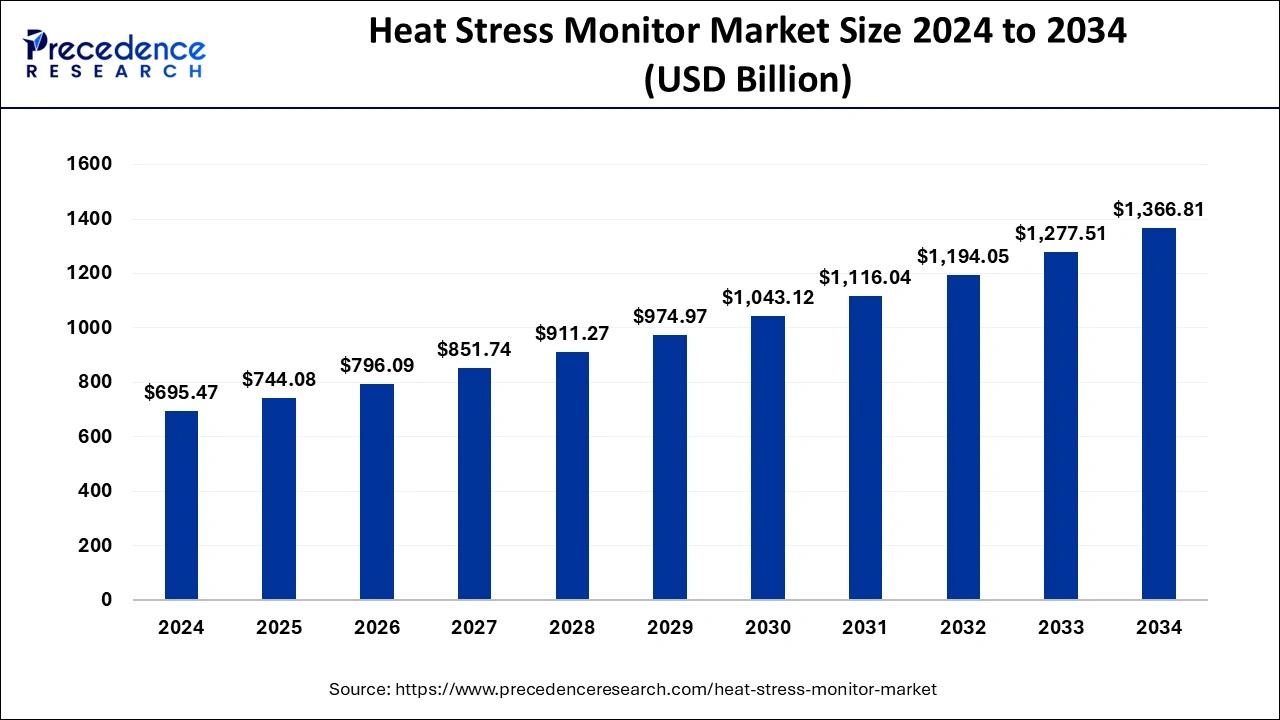
Heat Stress Monitor Market Key Takeaways
- North America dominated the global market with the largest market share of 39% in 2025.
- Europe is anticipated to witness significant growth during the forecasted period.
- By product type, the wearable devices segment captured the biggest market share in 2025.
- By product type, the fixed monitors segment will show notable growth during the forecast period.
- By technology, the infrared sensor segment contributed the largest market share in 2025.
- By technology, the wearable technology segment will witness significant growth during the forecast period.
- By application, the agriculture segment accounted for a significant market share in 2025.
- By application, the construction segment is anticipated to grow at the fastest CAGR during the forecast period.
- By end-use, the individual user segment generated the major market share in 2025.
- By end-use, the commercial enterprises segment is anticipated to witness the fastest growth during the forecasted years.
Market Overview
The application of heat stress monitors is commonly witnessed in the military, foundries, food industry, agriculture, offshore drilling operations, sports, engineering, and industry. They are portable and rugged crucial components for occupational and environment health and safety (OEHS) experts to measure radiant temperature, dry, bulb ambient temperature, wind speed, humidity, and air pressure. The tool monitors the temperature, then estimates the possible heat stroke conditions, and alerts the indoor and outdoor workers so they can immediately stop, cool down, and drink water. The primary factor driving the growth of this market is that heat stress reduces productivity and can lead to accidents, illness, and even death; with the help of monitoring devices, these problems can be mitigated.
- According to the World Economic Forum, more than 2.4 billion workers are at risk of excessive heat at work. Researchers predict that heatwaves will claim 1.6 million lives by 2050.
How is Artificial Intelligence (AI) Changing the Heat Stress Monitor Market?
The integration of artificial intelligence in heat stress monitoring has the potential to revolutionize the heat stress monitoring framework, where the predominant focus is on working in heat-vulnerable industries such as agriculture, construction, and firefighting. Biosensors are designed to be non-invasive, wireless, and highly sensitive to physiological changes, providing real-time results on workers' health. This fusion of two great innovative sectors brings out an advance in flexible wearable sensors. The root of this project lies in the ability to predict heat-stress exposure through a combination of machine-learning algorithms and state-of-the-art flexible biosensors.
Heat Stress Monitor Market Growth Factors
- Enhance occupational health and safety: A heat stress monitor allows employers to identify and eliminate heat-related hazards and reduce the risk of heat exhaustion, heat stroke, and heat-related illnesses and injuries.
- Boost performance output: When employees work in a comfortable and safe thermal atmosphere, they will provide efficient and productive results.
- Rule-based alignment: employers must follow guidelines with occupational health and safety regulations related to thermal comfort and heat stress monitors to ensure compliance.
- Enhances decision-making: The heat stokes monitor device offers real-time data that can be used to make well-informed decisions about workplace thermal comfort and safety.
- Economic efficiency: The utilization of heat stress monitoring to prevent heat-related illnesses and injuries helps in workers' compensation costs and medical expenses and maintains productivity.
Market Scope
| Report Coverage | Details |
| Market Size by 2035 | USD 1,452.22 Billion |
| Market Size in 2026 | USD 796.09 Billion |
| Market Size in 2025 | USD 744.08 Billion |
| Market Growth Rate from 2026 to 2035 | CAGR of 6.92% |
| Largest Market | North America |
| Base Year | 2025 |
| Forecast Period | 2026 to 2035 |
| Segments Covered | Product Type, Technology, Application, End-use, and Regions |
| Regions Covered | North America, Europe, Asia-Pacific, Latin America, and Middle East & Africa |
Market Dynamics
Driver
Broad utility
The heat stress monitor market has applications in various industries and work environments where workers are facing prolonged exposure to high temperature and heat-relation stress. The application of heat stress monitors is witnessed in construction sites, manufacturing, agriculture, mining, and outdoor work atmospheres. However, it is widely noticed in research studies, military operations, and athletic events that monitor and evaluate heat stress and its impact on performance and health. This device offers real-time information on body temperature, vital signs, and heat stress, which helps the employer and organization to manage and prevent problems. Additionally, it improves productivity and ensures a safer environment for the workers.
Restraint
Sensor placement
The incorrect places of heat stress monitor market devices can result in inaccurate readings. If the device is placed in machine-inducing heat, the reading can be deflected. This issue can be resolved by reviewing the placement of the device, and keeping the device away from heat sources such as electronic components and motors.
Opportunity
Sensors and IoT Integration
In the heat stress monitor market, advancements are expected to be witnessed in the integration of sensors and Internet of Things. Along with this, the IoT integration will facilitate early warning and alert, providing spontaneous responses to dangerous heat conditions. A wearable sensor can be personalized to the customer's preference, enabling individuals to understand their heat stress responses and take responsible actions. Moreover, it benefits the organization to use aggregate data to identify heat stress developments, evaluate risk levels, and implement preventative measures.
Segment Insights
Product Type Insights
The wearable devices segment captured the biggest share of the heat stress monitor market in 2024. The dominance of this segment is experienced due to its ability to measure body temperature, heart rate, and other physiological indicators such as a wristband, patches, or smart clothing. Some devices also have a feature to monitor environmental conditions such as humidity, ambient temperature, and heat radiation. Some widely available wearable heat stress monitoring devices in the market are Bodytrak, ARMOR heat monitor, SlateSafety BAND V2, and Kestrel Heat Stress monitoring system. These devices provide real-time monitored results, helping to identify heat stress. They are usually compact and lightweight devices, so they do not hinder work activity.
- In August 2025, Researchers from Emory University and Georgia Tech are experimenting with biosensors to help monitor a worker's vital signs to indicate the signs of heat stroke.
The fixed monitors segment will show notable growth in the heat stress monitor market during the forecast period. This device senses the heat in the atmosphere and triggers the fire alarm when the temperature in the surroundings rises above a particular level. A fixed monitoring system requires no external power source or batteries if there is a mechanical operator. Other advantages of fixed monitoring devices are that they are easy to maintain, have a lower cost, and minimize false alarms. Moreover, the fixed monitoring device is convenient to use where there needs to be constant observation, such as in construction sites and factories.
Technology Insights
The infrared sensor segment contributed the largest share of the heat stress monitor market in 2024. This segment holds the largest share in technology insight due to the accurate temperature measurement it offers. It also enhances the heat stress monitoring capabilities. This technology utilizes radiation-sensitive elements to detect infrared radiation in the surrounding environment. Infrared sensors work with radar technology, and this combination emits and receives infrared radiation.
The wearable technology segment will witness significant growth in the heat stress monitor market during the forecast period. The expansion of this segment is noticed as it helps monitor heat stress by measuring physiological indicators such as body temperature, heat rates, and hydration. This device can be modified as per the user's preferences, which would help the user understand their body responses to heat stress.
Application Insights
The agriculture segment accounted for a significant share of the heat stress monitor market in 2024. The dominance of this segment is observed as the data collected by the device helps provide valuable resources in tailoring the best strategies to mitigate heat stress on the farm. The agriculture setting where dairy production is carried out can have an impact on heat stress as it will decrease milk production and quality. The temperature humidity index (THI) is to be maintained on a farm all the time for the comfort of cows. The THI offers a fusion of temperature and humidity into a single value. The ideal THI value should not be higher than 72; otherwise, it could lead to heat stress and reduce feed intake in a cow. Additionally, several heat illness prevention campaigns are raising awareness to educate and provide resources for farmers.
- In June 2025, an Intense heatwave in Karnataka resulted in a deadly impact on farmers, industry, and construction workers. Labors are complaining of long bouts of exhaustion, dehydration, blurring of vision, brain malfunction, and similar illnesses.
The construction segment is anticipated to grow at the fastest CAGR in the heat stress monitor market during the forecast period. The growth of this segment is noticed due to the combination of exposure to heat and physical activity witnessed at the construction sites. The clothing a construction worker wears stores heat, which increases the net heat load. Heat strain is a physiologic response when a body tries to increase heat loss to the environment to maintain the body temperature. Construction work is labor-intensive work that generates excessive heat within the body. Construction workers are at risk of death, injury, illness, and lower productivity due to heat exposure, which impacts industrial growth.
- In May 2024, 35 and 25 ages labor at a construction site died of a suspected heat stroke in Chennai
End-use Insights
The individual user segment contributed the highest share of the heat stress monitor market in 2024. The dominance of this segment is credited to the utilization of heat stress monitor devices for personal safety and well-being. It is widely used in the sports industry by athletes to monitor the environmental conditions while exercising. This also helps to evaluate the risk level, hydration, and a work/ activity-rest timer. Furthermore, with the help of biometric data in real-time data, one can identify heat stress, providing insights into core body temperature.
The commercial enterprises segment is anticipated to witness the fastest growth in the heat stress monitor market during the forecasted years. The growth of this segment is observed due to portable monitoring, handheld tracking, and software solutions. The portable monitoring system helps in the measurement of temperature, humidity, airflow, and many more in a wide variety of industries such as mining and agriculture. The handheld tracker feature uses Wet Bulb Globe Temperature (WBGT), which consists of a loud buzzer, LED beacon, and on-screen warning, which alerts the workers and employers of dangerous conditions.
Regional Insights
What is the U.S. Heat Stress Monitor Market Size?
The U.S. heat stress monitor market size was evaluated at USD 203.13 million in 2025 and is projected to be worth around USD 396.45 million by 2035, growing at a CAGR of 6.92% from 2026 to 2035.
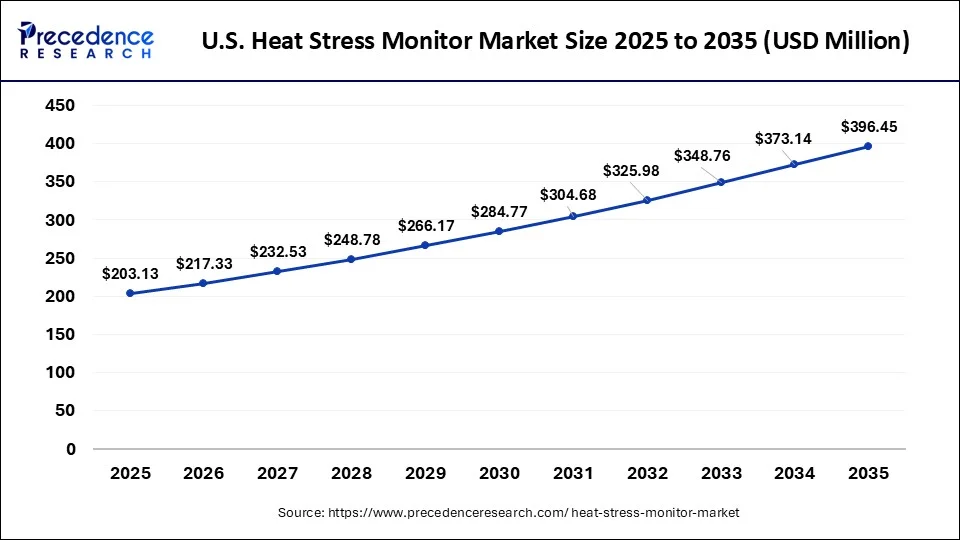
North America dominated the global heat stress monitor market in 2025. The dominance of this segment is attributed to the region being the powerhouse of diverse industries and technological advancement. According to a study, the most diverse existing industries are transportation and logistics, along with a diverse demographic. The United States has seen a significant increase in the number of deaths related to heat waves.
- According to the U.S. Environment Protection Agency, it is estimated that more than 1300 deaths per year due to extreme heat in the United States.
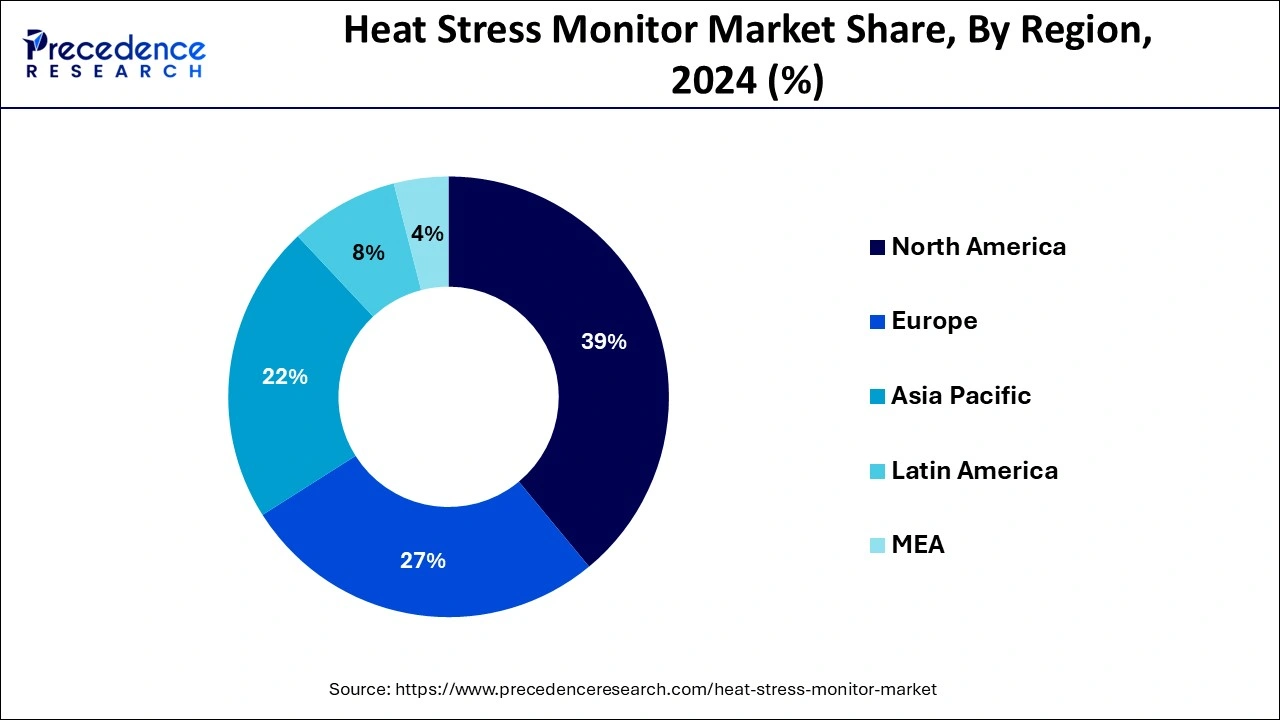
Europe is anticipated to witness significant growth in the heat stress monitor market during the forecasted period. The expansion of this region in the heat stress market is observed due to the regulations followed regarding heat stress. Europe holds the highest number of deaths related to heatwave. Italy is observed to have the greatest heat-attributable deaths, followed by Greece, Spain, and Portugal. The strict rules and guidelines established by the European Union and its EU-OSHA mention the heat safety laws in the workplace.
What are the Advancements in Asia-Pacific in the Heat Stress Monitor Market?
Asia-Pacific is expected to grow significantly throughout the forecast period. This growth is driven by various factors such as rapid industrialization, increasing outdoor labor, and rising temperatures due to climate change. Governments in this region are actively implementing various regulations, propelling the demand for effective heat stress monitoring solutions across various sectors. Countries like China and India are leading players in the region.
China Heat Stress Monitor Market Trends: China offers scale and rapid adoption, and also has local partnerships, IP protection strategies, and navigation of complex regulatory approvals. This presents cost-sensitive, volume-led opportunities with rising urban demand.
What are the Key Trends in the Heat Stress Monitor Market in Latin America?
Latin America is expected to witness substantial growth in the market. This is due to escalating occupational health and safety regulations, the increasing awareness of heat-related productivity losses, and the region's rapidly expanding industrial and agricultural sectors. The region also benefits from numerous technological advancements, real-time data analytics, and IoT integration, which help to enhance product differentiation and boost market adoption.
Brazil Heat Stress Monitor Market Trends: Regulatory regimes in the country seem to vary. Distribution relies on local distributors, national retail chains, and growing e-commerce penetration. Technological trends include the integration of wearable devices and mobile applications that provide real-time alerts and predictive data to help prevent heat-related illnesses.
How is the Middle East and Africa region growing in the Heat Stress Monitor Market?
The Middle East and Africa's growth is mainly driven by extreme climate conditions and the increasing awareness of occupational health risks. Governments in the region are beginning to recognize the importance of worker safety, thus leading to the implementation of regulations that are aimed at mitigating heat stress in various industries. Countries like South Africa and the UAE are leading players, with a growing number of local and international players.
Saudi Arabia Heat Stress Monitor Market Trends: Regulatory frameworks are still undergoing changes in the region. Distribution channels include government procurement, regional distributors, and expanding digital ecosystems in major cities. Technological advancements are driving the adoption of connected and wearable heat stress monitors with real-time data transmission, cloud analytics, and predictive insights, enhancing preventive safety measures.
Value Chain Analysis of the Heat Stress Monitor Market
- Raw Material Sourcing: Core inputs for this market include temperature sensors, humidity sensors, wearable electronics, accelerometers, and medical-grade materials. Semiconductor components like microcontrollers, Bluetooth modules, and memory chips are also used.
Key Players: Bosch, NXP, Analog - Manufacturing Process: Manufacturing involves sensor integration, PCB assembly, firmware installation, and enclosure molding. System design focuses on real-time monitoring, data accuracy, wireless connectivity, and good battery life.
Key Players: Quest, Kenzen, Emerson - Distribution Process: The distribution process occurs through direct sales, industrial safety distributors, and occupational health service providers. End users include construction, mining, oil, agriculture, manufacturing, as well as sports.
Key Players: Grainger, Honeywell, Ansell
Heat Stress Monitor Market Companies
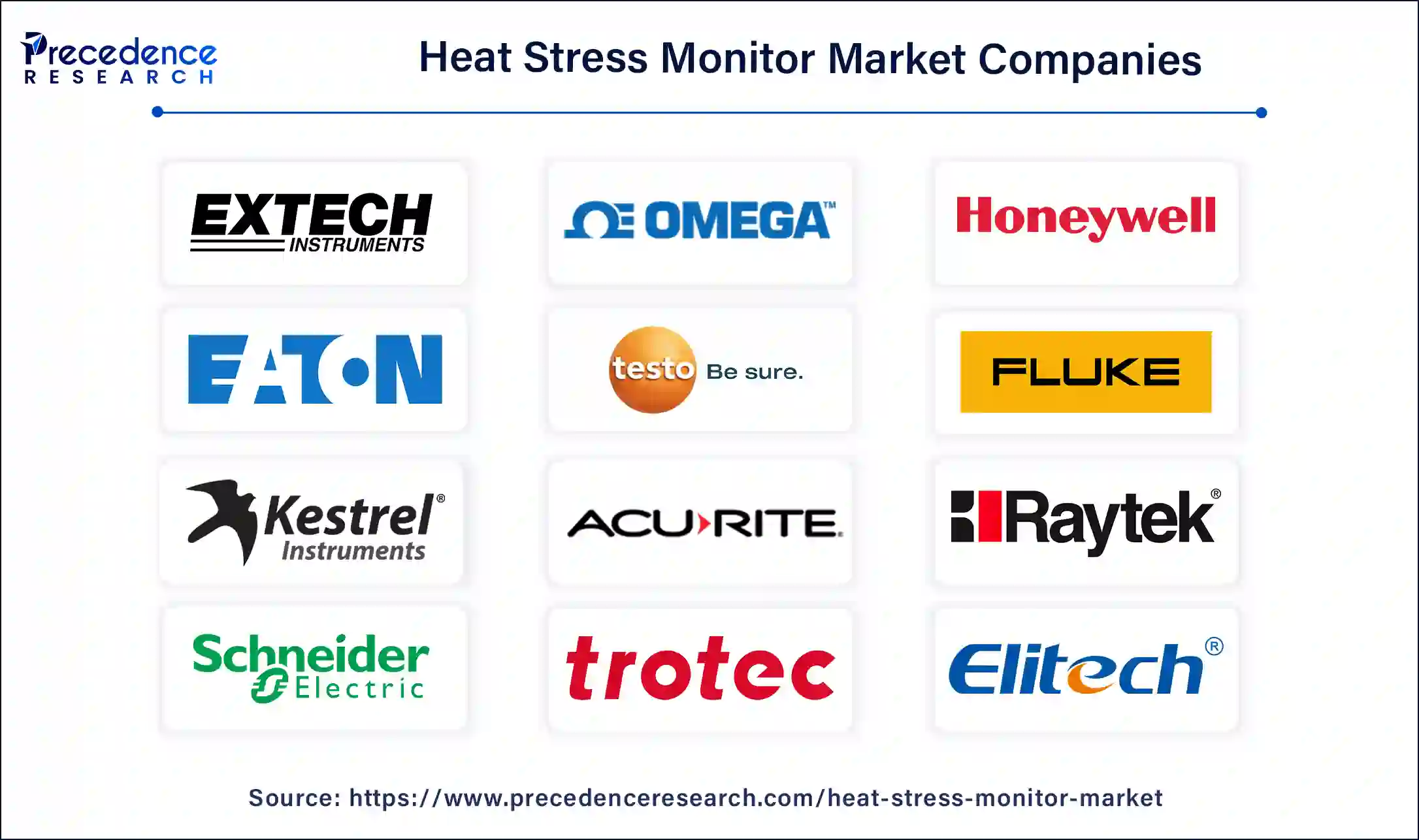
- Extech Instruments
- Omega Engineering
- Honeywell International
- Onset Computer Corporation
- Eaton
- Testo
- Fluke
- Kestrel Weather
- AcuRite
- Raytek
- Schneider Electric
- Trotec
- Siemens
- Elitech
- Dickson
- MX3 Diagnostics
Latest Announcements by Industry Leaders
- In September 2024, Stan Skafidas, Chief Technology Officer at MX3 Diagnostics, said, “We saw a need for a solution that not only monitors environmental conditions but also predicts and mitigates heat stress risks in real-time,” he further adds, “By integrating advanced data analysis with personalized risk factors, we believe our technology will help organizations protect their teams, increasing efficiency with timely intervention.”
Recent Developments
- In September 2024, AIHA, an association for scientists and professionals, committed to preserving and ensuring occupational and environmental health and safety in the workplace and community. The OEHS experts from AIHA developed an AIHA Heat Stress Mobile App to help outdoor workers and employers assess and manage occupational heat hazards. This project aims to encourage outdoor workers and employers to use the app to safeguard workers from heat-related illnesses associated with heat stress.
- In August 2024, AXA Hong Kong and Macau unveiled a first-in-the-market heatwave parametric insurance, which offers enhanced protection for outdoor practitioners who work outdoors in the summer. The insurance has a modest premium of 19.9 Hong Kong Dollars per person. An insured individual is eligible to receive a payout of HKD100 or an ‘anti-heatwave kit' at an equivalent price.
Segments Covered in the Report
By Product Type
- Wearable Devices
- Fixed Monitors
- Software Solutions
By Technology
- Infrared Sensor
- Thermal Imaging
- Wearable Technology
By Application
- Agriculture
- Construction
- Sports
- Transportation
- Healthcare
By End-use
- Individual Users
- Commercial Enterprises
- Government Agencies
By Geography
- North America
- Asia Pacific
- Europe
- Latin America
- Middle East and Africa
For inquiries regarding discounts, bulk purchases, or customization requests, please contact us at sales@precedenceresearch.com
Frequently Asked Questions





Ask For Sample
No cookie-cutter, only authentic analysis – take the 1st step to become a Precedence Research client
 Get a Sample




 sales@precedenceresearch.com
 Schedule a Meeting
