



High-End Greenhouse Market Size, Key Companies, Company Market Share, Crop Production Volume, Yield Analysis, Export & Import Trends, Pricing Metrics, Competitive Positioning, and Demand Forecast
High-End Greenhouse Market (By Crop Type: Fruits, Vegetables, Floriculture, Others; By Vegetable: Cucumbers, Peppers, Tomatoes, Others; By Application: Residential, Commercial) - Global Industry Analysis, Size, Trends, Leading Companies, Regional Outlook, and Forecast 2026 to 2035
Source: https://www.precedenceresearch.com/high-end-greenhouse-market
 Get a Sample
 Table Of Content


What is the High-End Greenhouse Market Size?
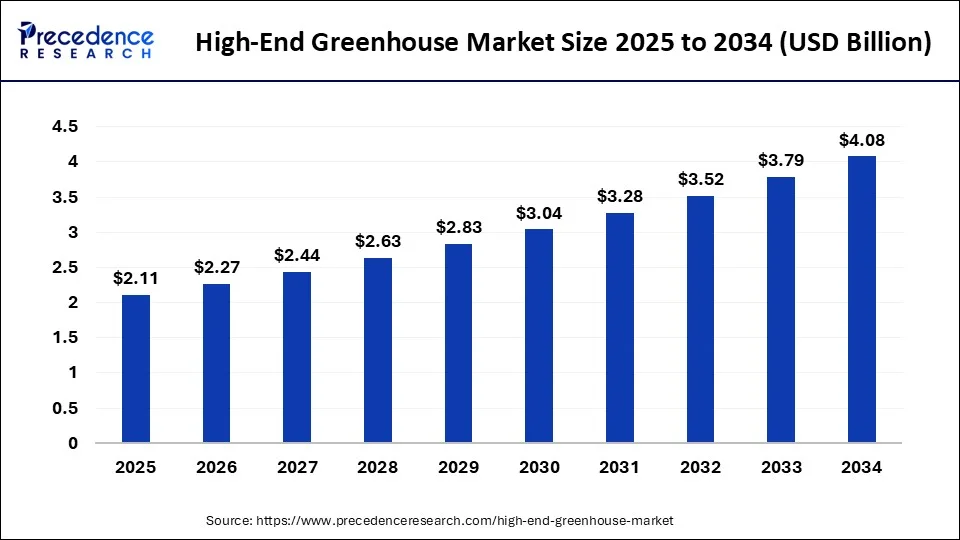
The global high-end greenhouse market size is calculated at USD 2.11 billion in 2025 and is predicted to increase from USD 2.27 billion in 2026 to approximately USD 4.36 billion by 2035, expanding at a CAGR of 7.53% from 2026 to 2035. The demand for ornamental crops, vegetables, and fruits for improving growth conditions. There is increasing demand for ornamental horticulture and floriculture applications driving the growth of the market.
High-End Greenhouse Market Key Takeaways
- The global high-end greenhouse market was valued at USD 2.11 billion in 2025.
- It is projected to reach USD 4.36 billion by 2035.
- The high-end greenhouse market is expected to grow at a CAGR of 7.53% from 2026 to 2035.
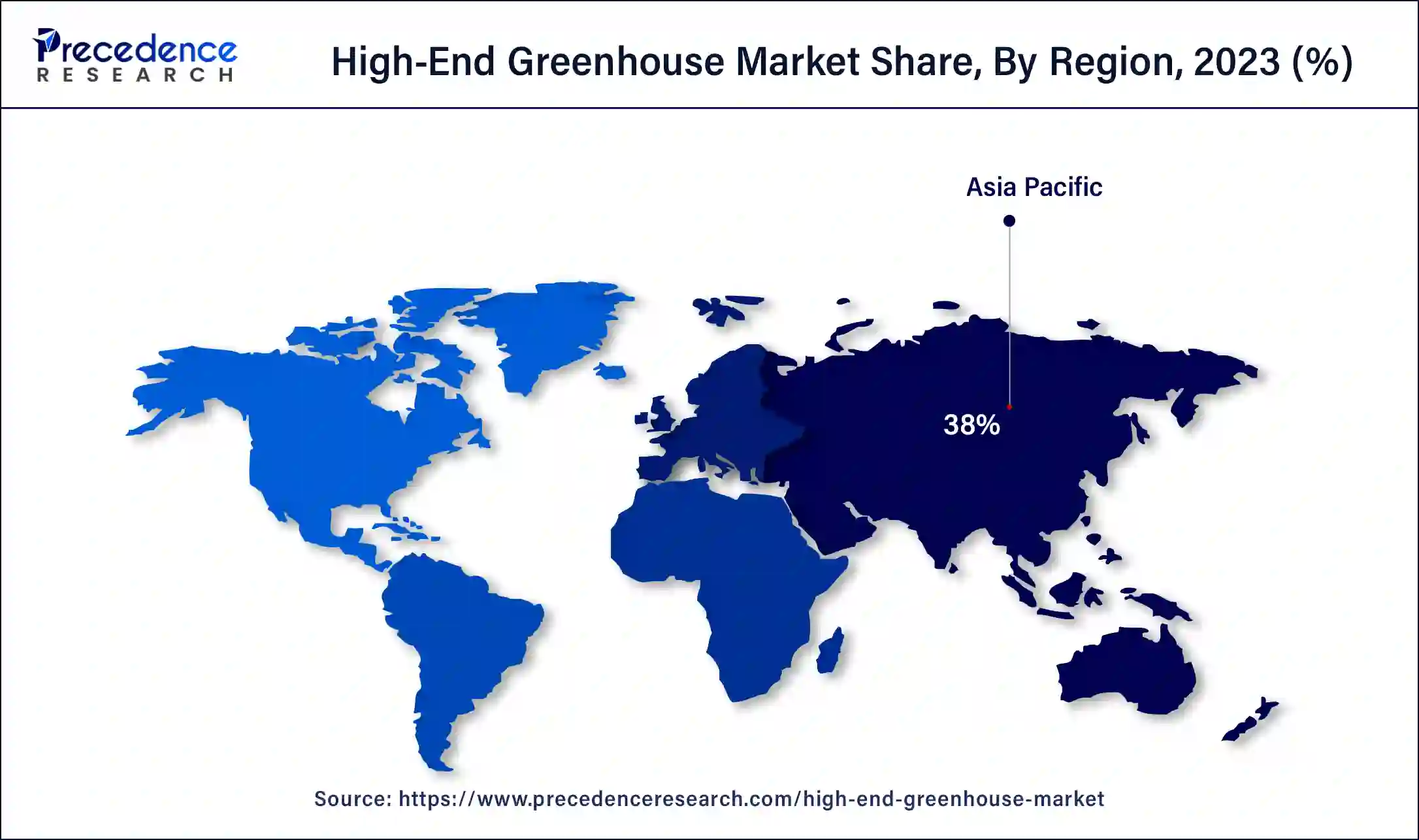
- Asia Pacific dominated the high-end greenhouse market with the largest market share of 38% in 2025.
- North America is estimated to be the fastest-growing during the forecast period of 2026-2035.
- By crop type, the vegetable segment dominated the market in 2025.
- By crop type, the fruits segment is anticipated to grow significantly during the forecast period.
- By vegetable, the tomatoes segment dominated the market in 2025.
- By vegetable, the cucumbers segment is expected to grow significantly during the forecast period.
- By application, the commercial segment dominated the high-end greenhouse market in 2025.
- By application, the residential segment is anticipated to grow significantly during the forecast period.
Market Overview
The high-end greenhouse market refers to buyers and sellers of the high-end greenhouse, a special structure designed to regulate the humidity and temperature of the environment inside. These high-end greenhouses are installed with devices to control humidity, moisture, temperature, and other environmental parameters. The benefits of the high-end greenhouse include eco-friendly gardening, fewer problems with pests, growing pesticide-free crops, increasing production, growing one's own food, no worries about the weather, etc., contributing to the growth of the market.
How Can AI Help the High-end Greenhouse?
As sensor systems, AI-based advanced techniques, and automation technologies used in high-end greenhouses help in decision support, control, and monitoring. AI-based greenhouse promises to modify high-end greenhouse management by improving sustainability, quality, and efficiency which helps to the growth of the high-end greenhouse market. In smart greenhouses, artificial intelligence (AI) and the Internet of Things (IoT) include temperature control subsystems, moisture control, humidity control, plant nutrition, nutrition and water pumps, air ventilation, artificial lighting using LEDs, etc.
- In September 2024, a new trial collaboration with Koidra, active in AI-powered automation for greenhouse or controlled environment agriculture, was launched by Nature Fresh Farms, which is one of the largest greenhouse growers in North America. This partnership aims to improve greenhouse operations and increase productivity by integration of advanced technologies.
High-End Greenhouse Market Growth Factors
- The rising adoption of high-end greenhouses, which can offer a higher yield than traditional methods.
- The benefits of eco-friendly gardening are fewer problems with pests, growing pesticide-free crops, increasing production, growing own food, etc.
- It also includes the benefits of broadening horizons and no worries about the weather.
- The longer growing seasons won't affect the plants in the greenhouse, and it helps to grow more plants, which helps the growth of the high-end greenhouse market.
Market Scope
| Report Coverage | Details |
| Market Size by 2035 | USD 4.36 Billion |
| Market Size in 2025 | USD 2.11 Billion |
| Market Size in 2026 | USD 2.27 Billion |
| Market Growth Rate from 2026 to 2035 | CAGR of 7.53% |
| Largest Market | Asia Pacific |
| Base Year | 2025 |
| Forecast Period | 2026 to 2035 |
| Segments Covered | Crop Type, Vegetable, Application, and Regions |
| Regions Covered | North America, Europe, Asia-Pacific, Latin America and Middle East & Africa |
Market Dynamics
Driver
Rising demand for agricultural products
The rising demand for agricultural products helps the growth of the high-end greenhouse market. The high-end greenhouse offers many benefits for agricultural products, including larger and more consistent yields than traditional agriculture, less waste than traditional agriculture, growth of a high range of crops, minimum use of land, reduced chemical dependency, effective water use, increased crop yields, maximized efficiency, etc.
Restraint
High operating cost and skilled management requirement
The high operating cost and skilled management requirement can hamper the growth of the high-end greenhouse market. Regular upkeep and high maintenance are necessary, risk of disease or infection growth, an enclosed environment can lead to problems, regular watering is essential, greenhouses need experienced gardeners, dependency on accurate designs for optimal performance, maintaining a greenhouse can be expensive, sizeable initial investment, etc. can be a barrier for the market flow.
Opportunity
Smart Technology
The new future economy of the region can lie in the high-end greenhouse. These are eco-friendly, economically efficient facilities and can bring life support to an overburdened agriculture sector. There is an opportunity to develop smart and solar greenhouse covers, which is important for commercial agriculture. Additionally, for intelligent energy harvesting, smart IoT-powered materials are embedded with water, thermal, and humidity sensors to improve thermal regulation, frost prevention and mitigation, and management of disease and pests. These factors help to the growth of the high-end greenhouse market in the future.
- In July 2024, a new research high-tech greenhouse at Brightlands Campus Greenport Venlo for scientific research and development was built by Maastricht University. The research on the horticulture and agriculture of the future was conducted in this high-tech greenhouse, from novel cultivation techniques and the development of plants to the improvement of healthy nutrients in crops.
Segment Insights
Crop Type Insights
The vegetable segment dominated the high-end greenhouse market in 2025. The high-end greenhouse helps to control the environment inside the greenhouse so rare plants can be grown. It helps to allow the yearly growth of the plant that grows only in a particular season or climate. It also helps to provide a protected place for seedlings and other tender plants. It also helps to protect the plants and seedlings from pests. It promotes the plant's growth, which leads to increased production. Popular greenhouse vegetables include spinach, cucumbers, beans, eggplants, peppers, herbs, lettuce, and tomatoes. It plays an important role in the growth of vegetables, including light exposure, temperature, and humidity.
- In March 2024, a large-format, greenhouse-grown Romaine Lettuce under its Backyard Farms lettuce line was launched by Mastronardi.
The fruits segment is anticipated to grow significantly during the forecast period. High-end greenhouses offer a suitable environment for growing many varieties of fruits. Popular greenhouse fruits include avocadoes, pomegranates, papayas, guava, passion fruit, kiwi, pineapples, blackberries, raspberries, dwarf fruit trees, blueberries, melons, grapes, figs, citrus fruits, strawberries, peppers, cucumbers, tomatoes, etc. helps to the growth of the high-end greenhouse market. These types of fruits are a popular choice for greenhouse cultivation. The benefits of a high-end greenhouse for fruits include year-round harvesting, enhanced fruit quality, optimal growing conditions, disease and pest controls, protection from harsh weather, etc.
- In September 2024, a new greenhouse vegetable product at the 2024 CPMA Convention and Trade Show was introduced by Windset Farms. Following significant expansion at its Delta, BC, location, the company shows an array of products, including Yum Yum's Cherry Tomatoes, Sweeties Seedless Mini Peppers, and Amore's Sweet Tomatoes on the Vine.
Vegetable Insights
The tomatoes segment dominated the high-end greenhouse market in 2025. The benefits of growing tomatoes in a greenhouse include pest reduction and season extension that can allow for the growth of tomatoes throughout the changing seasons and even through the winter. Keeping leaves dry and constant temperatures helps to keep tomato plants out of the rain and prevent temperatures from dropping too low at night; controlled temperature helps to make sure tomatoes get the perfect amount of moisture and warmth; greenhouse makes pest control more effective and manageable, etc. It also helps to protect against weather elements like temperature fluctuations, wind, and rain. Extending the growing season helps to start earlier sowing in the season and keep going even when it is cold outside.
- In September 2024, a new crop of high-tech hydroponic greenhouse of Roma tomatoes in Central Mexico was launched by Globalmex International Inc. marketing under the Magic Sun Brand. The Magic Sun offers USFDA-approved and conventional organic greenhouse tomatoes, said Globalmex International Inc.
The cucumbers segment is expected to grow significantly during the forecast period. The greenhouse growing cucumbers has many benefits, including pest control by introducing insects in the greenhouse, constant quality & year-round production. These are primary drivers of greenhouse cucumber cultivation: high yields due to the controlled environment promote optimal growth and enable space-saving vertical cultivation, extended growing season because of earlier planting and protection against external weather conditions, etc. These factors help to the growth of the high-end greenhouse market.
- In February 2022, according to an EastFruit project analyst report, in Ukraine, a new production cycle of cucumbers was started at the usual time.
Application Insights
The commercial segment dominated the high-end greenhouse market in 2025. Other than their environmental advantages, commercial greenhouses offer a compelling case for market access and economic viability by providing a reliable and constant supply of crops throughout the year. Farmers can tap into off-season markets to secure higher prices for their produce. The benefits of commercial high-end greenhouses include boosted profits, improved crop quality/yield, better economy, saving land by high-end greenhouse use of hydroponics and vertical planting, quality produce, improved farming efficiency, sustainable growth, fewer diseases and pests, automated care, spot on fertilizer and water use, season issues and less weather, steady growing environment, etc. It uses innovative and automated systems to make sure plants are growing well. In this high-end greenhouse, sensors can track things such as plant nutrients, soil moisture, CO2 levels, light, humidity, temperature, etc.
- In March 2024, the launch of the CEAg World, the innovative and new multi-media global business, “Advancing Food Under Cover” was announced by Meister Media Worldwide, publisher of Greenhouse Grower. This global brand represents and unifies all the emerging industry segments of crops grown in controlled conditions, including container farms, vertical farms, operations using netting or shading, high tunnels, hoop houses, greenhouses, and more.
The residential segment is anticipated to grow significantly during the forecast period. Residential high-end greenhouses provide a controlled environment for growing plants. The residential greenhouse is a structure made of plastic or gas used to grow plants. They help to provide a controlled and sheltered environment for growing plants year-round. The benefits of the residential high-end greenhouse market include weather protection, customized and portable, protecting plants from pests, extended growing seasons, eco-friendly gardening, fewer problems with pests, increased production, growing own food, broadened horizons, no worries about the weather, growing more plants, etc.
Regional Insights
What is the Asia Pacific High-End Greenhouse Market Size?
The Asia Pacific high-end greenhouse market size was exhibited at USD 800 million in 2025 and is expected to attain around USD 1,680 million by 2035, growing at a CAGR of 7.70% from 2026 to 2035.
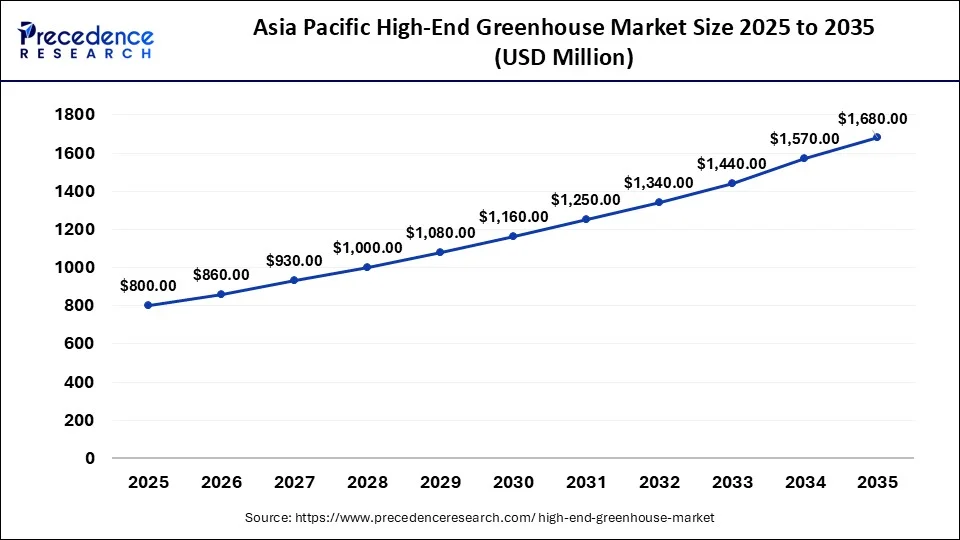
Asia Pacific dominated the high-end greenhouse market in 2025. Asia Pacific is now at the top for the larger number of high-tech greenhouses that support the expansion of the market. An increasing number of advanced technologies, including climate control, automation, and LED lighting systems, are used to enhance crop yield and quality across Asia Pacific. The region's increasing emphasis on green agricultural methods and ideal climate leads to an increase in the high-end greenhouse industry because of advances in horticulture technology and annual growth in high-quality crop yield demand.
- In August 2024, a greenhouse gas reduction labeling system for 23 domestically produced farm products was launched by Japan. According to a summary from the USFDA Foreign Agriculture Service, this system aims to create a consumer understanding of environmentally friendly agriculture production that helps to eliminate greenhouse gas emissions.
North America is estimated to be the fastest-growing during the forecast period of 2025-2034. The development of greenhouse agriculture is a result of many significant aspects. Technological capabilities and superior agricultural infrastructure in North America led to the growth of the high-end greenhouse market. Their strong industrial expansion through innovations in sustainable farming methods, climate control systems, and greenhouse design. Across North American greenhouses, it shows advanced features like energy-saving lighting options, digitized climate management, and sophisticated irrigation systems.
- In March 2024, Cox Farms, one of the largest greenhouse growers in North America was launched by Cox Enterprises. Cox Farms includes Bright Farms and Mucci Farms and was planned to continue to pursue additional ventures and investments in the indoor agriculture space for sustainable businesses and technologies.
Latin American Growing High-End Greenhouse Industry
Latin America shows strong growth due to rising demand for protected agriculture and export-oriented horticulture. Countries like Brazil, Mexico, and Chile are adopting high-end greenhouses to improve yield, reduce climate risks, and ensure year-round production. Expansion is supported by increasing investments in agri-tech and irrigation solutions. Investments in modern greenhouse infrastructure are being supported by government programs and private initiatives aimed at enhancing food security and export competitiveness.
Middle East & Africa's Advanced High-End Greenhouse Industry
The Middle East & Africa region is driven by water scarcity and food security concerns. Countries such as the UAE, Saudi Arabia, and South Africa are investing in high-tech greenhouses with advanced irrigation and climate control systems to enable sustainable farming in arid environments. Adoption of automation, precision climate control, and energy efficient systems is increasing, driven by food security initiatives and investments in sustainable agriculture technology.
Supply Chain Analysis of the High-End Greenhouse Market
- Harvesting and Post-Harvest Handling: Luxury greenhouses allow for the design of specific harvesting cycles. This ensures the quality of the products. The use of automated systems helps in reducing the dependency on human resources.
- Storage and Cold Chain Logistics: Luxury greenhouses use advanced technologies in the storage of the products. This ensures the quality of the products even after the harvest. The use of advanced technologies in logistics helps in the transportation of products.
- Processing and Packaging: Processing includes cleaning, grading, and preparing crops for market standards. Automated packaging systems ensure efficiency and hygiene.
- Distribution to Wholesalers/Retailers: The distribution network links greenhouse producers with supermarkets, wholesalers, and export markets. This facilitates the reduction of delivery time and maintenance of quality.
- Export and Trade Compliance: The export process for greenhouse products involves adherence to quality standards, certifications, and phytosanitary requirements. This enables access to global markets.
High-End Greenhouse Market Companies
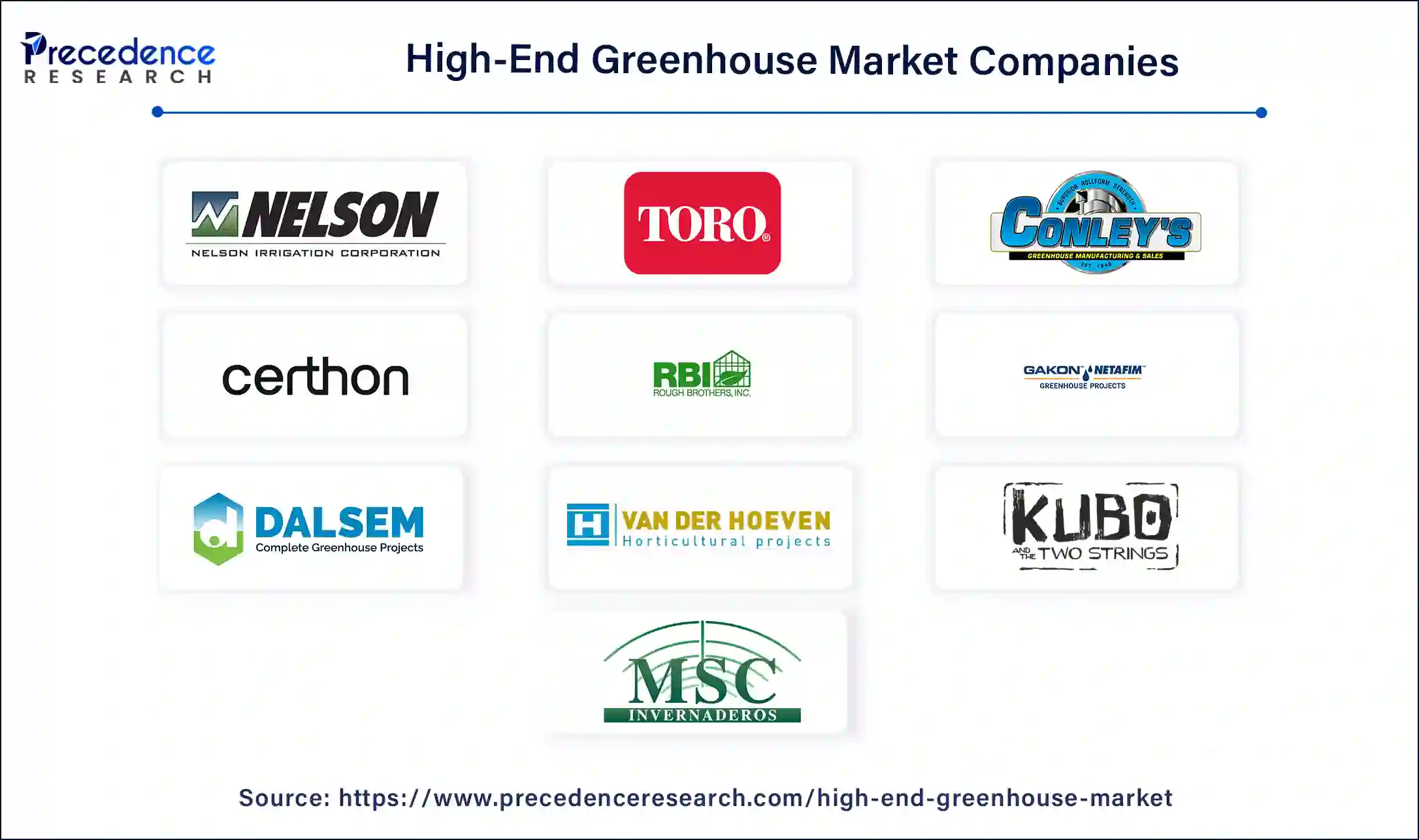
- Nelson Irrigation – Provides precision irrigation systems, including sprinklers, valves, and regulators for efficient greenhouse water management.
- The Toro Company – Offers advanced irrigation, climate control, and water-efficient solutions for commercial greenhouse operations.
- Conley's Manufacturing and Sales (Netafim) – Delivers customized greenhouse structures and integrates drip irrigation systems for optimized crop yield.
- Dutch Greenhouse – Specializes in turnkey greenhouse construction with climate automation and energy-efficient designs.
Other Major Key Players
- Certhon
- Nexus Corporation
- Texas Greenhouse Company
- Rough Brothers
- Gakon Netafim
- Dalsem
- Van Der Hoeven
- Kubo
- MSC Invernaderos
- Idroterm Serre Srl
- Rimol Greenhouse Systems
- GGS Structures Inc.
- Sunmax Greenhouse
- Haygrove Limited
- Illuminum Greenhouse
- Grekkon Limited
- Greenhouse Kenya Company
- Ammerlan Construction
- Asthor Greenhouse Manufacturer
- The BARRE Company
- Stuppy Greenhouse
- Ludy Greenhouse Manufacturing Corporation
- Ammerlaan Construction
Recent Developments
- In February 2024, Hazera announced the acquisition of a new high-tech greenhouse next to their headquarters in the Netherlands. This group is looking to establish itself further in the market, elevating its research capabilities and enhancing tomato resistance, quality, yield, and commercial appeal.
- In September 2024, about 4000 to 5000 greenhouse tomato varieties were reviewed yearly, and with a bit of luck, it resulted in bringing one variety to market at Mastronardi Produce.
Segments Covered in the Report
By Crop Type
- Fruits
- Vegetables
- Floriculture
- Others
By Vegetable
- Cucumbers
- Peppers
- Tomatoes
- Others
By Application
- Residential
- Commercial
By Geography
- North America
- Asia Pacific
- Europe
- Latin America
- Middle East & Africa
For inquiries regarding discounts, bulk purchases, or customization requests, please contact us at sales@precedenceresearch.com
Frequently Asked Questions
Tags





Ask For Sample
No cookie-cutter, only authentic analysis – take the 1st step to become a Precedence Research client
 Get a Sample




 sales@precedenceresearch.com
 Schedule a Meeting
