



Hospital Acquired Infection Control Market Size, Companies, Share, Patient Volume, Treatment Adoption Rates, Pricing Analysis, Regulatory Landscape, Competitive Positioning, and Demand Forecast
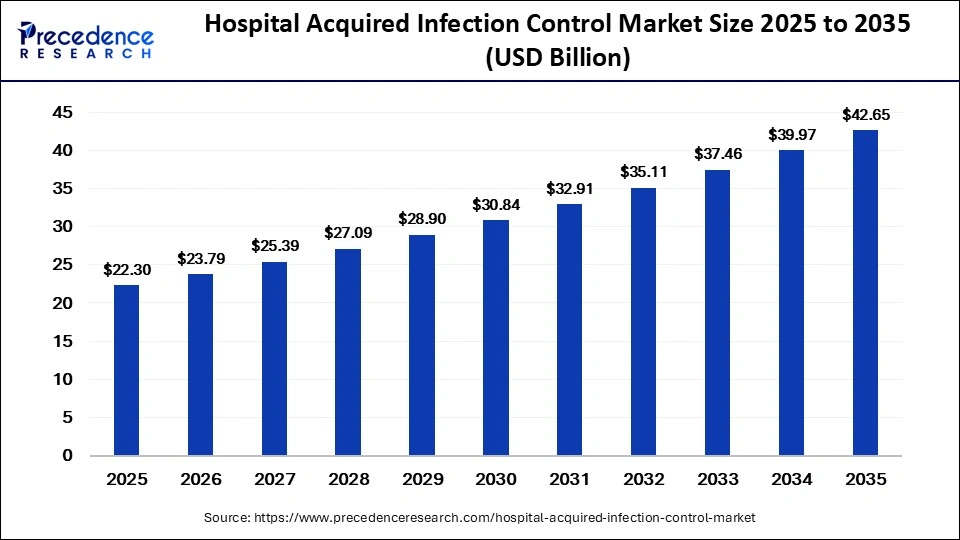
Rohan Patil, a Healthcare Industry Expert, highlights that the hospital acquired infection control market has reached USD 23.79 billion in 2026 and is on track to reach USD 42.65 billion by 2035, advancing at a CAGR of 6.70%. Key hospital acquired infection control market companies shaping the market include 3M, STERIS, Ecolab, Getinge, while major growth segments span By Component, By End-Use, By Infection Type, By Technology, By Distribution Channel.
Source: https://www.precedenceresearch.com/hospital-acquired-infection-control-market
 Get a Sample
 Table Of Content


What is the Hospital Acquired Infection Control Market Size in 2026?
The global hospital acquired infection control market size accounted for USD 22.30 billion in 2025 and is predicted to increase from USD 23.79 billion in 2026 to approximately USD 42.65 billion by 2035, expanding at a CAGR of 6.70% from 2026 to 2035. The market is driven by rising incidences of hospital-acquired infections and demand for advanced infection prevention solutions.
Key Takeaways
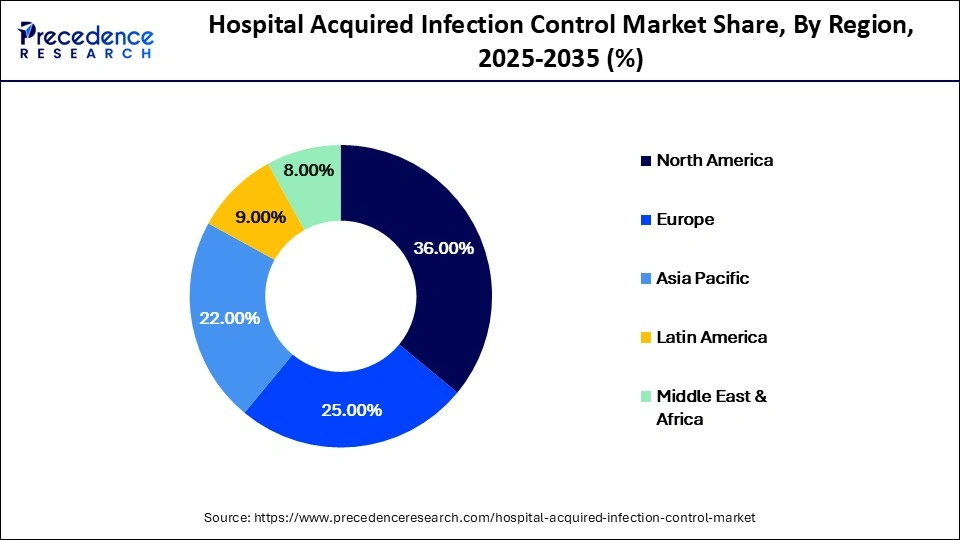
- North America dominated the global hospital acquired infection control market with a share of around 36% in 2025.
- Asia Pacific is expected to grow at the fastest CAGR of 7% during the forecast period.
- By component, the consumables segment held a dominant position in the market with a share of 50% in 2025.
- By component, the equipment segment is the second-largest shareholder and is expected to grow at a significant rate between 2026 and 2035.
- By end-use, the hospitals & ICUs segment accounted for a revenue share of 60% in the market in 2025.
- By end-use, the ambulatory surgical centers segment is the second-largest shareholder and is expected to grow at a significant rate between 2026 and 2035.
- By infection type, the surgical site infections segment led the global market with a share of 28.7% in 2025.
- By infection type, the urinary tract infections segment is the second-largest shareholder and is expected to grow at a significant rate between 2026 and 2035.
- By technology, the sterilization technology segment registered its dominance over the global market with a share of 55% in 2025.
- By technology, the disinfection technology segment is the second-largest shareholder and is expected to grow at a significant rate between 2026 and 2035.
- By distribution channel, the direct sales segment dominated the global market with a share of 60% in 2025.
- By distribution channel, the distributors segment is the second-largest shareholder and is expected to grow at a significant rate between 2026 and 2035.
Market Overview
The hospital acquired infection control market deals with numerous products and services that contribute to the prevention of infections that patients contract during treatment in health centers. This market comprises sterilization equipment, disinfectants, personal protective solutions, and advanced monitoring systems so that it can reduce the risk of infection across all hospitals, clinics, and other care settings. Such solutions play an essential role in enhancing patient safety, boosting clinical outcomes, and adherence to the high healthcare standards in all parts of the world. The rising prevalence of hospital-acquired infections (HAIs), growing awareness about infection prevention, and increasing concerns regarding antimicrobial resistance are driving the growth of the hospital-acquired infection control market.
How is AI Impacting the Hospital Acquired Infection Control Market?
AI is significantly influencing the market. AI-based systems can analyze vast amounts of patient data, clinical records, and environmental data to identify risks of infection early and contribute to early interventions. The machine learning algorithms can be used to detect patterns that are related to hospital-acquired infections and help healthcare professionals predict an outbreak to optimize the measures that can prevent infections. The operations are further streamlined by disinfection technologies based on robotics or artificial intelligence, such as autonomous UV sterilization units, which ensure that the operations further minimize human contact with infectious pathogens.
Hospital Acquired Infection Control Market Trends
- Hospitals are increasingly adopting automated and smart sterilization technologies to enable real-time infection tracking, improve disinfection efficiency, and reduce the risk of human error in infection control practices.
- The growing demand for non-toxic and biodegradable disinfectants is influencing the market, as healthcare facilities increasingly prefer environmentally friendly solutions that minimize toxic residue and support sustainability goals.
- Rising concerns about antimicrobial resistance are encouraging innovation in infection prevention technologies, including antimicrobial coatings, UV-based disinfection systems, and advanced sterilization solutions aimed at improving patient outcomes.
- The increasing use of single-use and disposable medical products is transforming infection control practices by reducing the risk of cross-contamination through disposable gloves, gowns, and medical equipment, thereby enhancing hygiene and operational efficiency.
Market Scope
| Report Coverage | Details |
| Market Size in 2025 | USD 22.30 Billion |
| Market Size in 2026 | USD 23.79 Billion |
| Market Size by 2035 | USD 42.65 Billion |
| Market Growth Rate from 2026 to 2035 | CAGR of 6.70% |
| Dominating Region | North America |
| Fastest Growing Region | Asia Pacific |
| Base Year | 2025 |
| Forecast Period | 2026 to 2035 |
| Segments Covered | Component, End-Use, Infection Type, Technology, Distribution Channel, and Region |
| Regions Covered | North America, Europe, Asia-Pacific, Latin America, and Middle East & Africa |
Market Dynamics
Drivers
Increasing Surgical Procedures Driving Demand for Infection Control Solutions
The increasing rate of surgical operations across the world is a major factor driving the growth of the hospital acquired infection control market. The growing prevalence of lifestyle-related diseases, an aging population, and the rising incidence of spinal and sports-related injuries are increasing the demand for surgical interventions. As surgical volumes continue to rise, the need for sterilization equipment, disinfectants, and infection prevention solutions is also growing to ensure patient safety and reduce the risk of hospital-acquired infections.
Restraint
Concerns Over Reusable Medical Equipment
Despite advancements in infection control technologies, the continued use of reusable medical equipment remains a key challenge for market growth. Many healthcare facilities prefer reusable instruments such as endoscopes and stethoscopes due to their cost-effectiveness and reduced medical waste generation. However, inadequate sterilization of these devices can increase the risk of microbial contamination and hospital-acquired infections, raising concerns regarding patient safety and infection transmission.
Opportunity
Rising Demand for Single-Use Equipment
The rising demand for single-use medical devices and advancements in sterilization technologies, including ethylene oxide sterilization, are creating significant growth opportunities in the hospital-acquired infection control market. Healthcare providers are increasingly recognizing the benefits of disposable medical instruments in minimizing cross-contamination risks and improving patient safety. Additionally, ethylene oxide sterilization is gaining popularity because of its effectiveness in sterilizing heat- and moisture-sensitive medical equipment.
Segment Insights
Component Insights
The Consumables Segment Held a 50% Market Share in 2025
The consumables segment held a dominant position in the hospital acquired infection control market with a share of 50% in 2025, due to the high and continuous usage of consumables such as disinfectants, sterilization wraps, gloves, masks, and wipes. The growing focus on patient safety, stringent rules and regulations, and the growing awareness of the importance of infection prevention have increased demand for consumables significantly.
Hospital Acquired Infection Control Market Share, By Component, 2025-2035 (%)
| Component | 2025 |
| Consumables | 50.00% |
| Equipment | 30.00% |
| Services | 20.00% |
The equipment segment held a 30% of the market share in 2025, driven by the increasing adoption of sterilization and disinfection devices such as autoclaves, UV sterilizers, and automated cleaning systems. Hospitals are investing in advanced equipment to improve operational efficiency and ensure consistent infection control practices. The rising number of surgical procedures and the need for effective sterilization of complex medical instruments are further supporting segment growth.
The services segment held a 20% share of the market in 2025, driven by the growing need to outsource infection control management, training, and compliance services in healthcare facilities. To comply with stringent regulatory requirements, hospitals are increasingly outsourcing sterilization validation, equipment maintenance, and infection surveillance programs.
End-Use Insights
Hospital Acquired Infection Control Market Share, By End-Use, 2025-2035 (%)
| End-Use | 2025 |
| Hospitals & ICUs | 60.00% |
| Ambulatory Surgical Centers | 25.00% |
| Clinics & Others | 15.00% |
The Hospitals & ICUs Segment Held a 60% Share Market in 2025
The hospitals & ICUs segment dominated the hospital acquired infection control market with the largest share of 60% in 2025, driven by the high number of critically ill patients, frequent invasive procedures, and increased risk of infection transmission in these environments. These facilities require continuous sterilization, advanced disinfection systems, and strict hygiene protocols to prevent hospital-acquired infections. Rising pressure on healthcare systems to expand ICU capacity further increases the demand for infection control solutions.
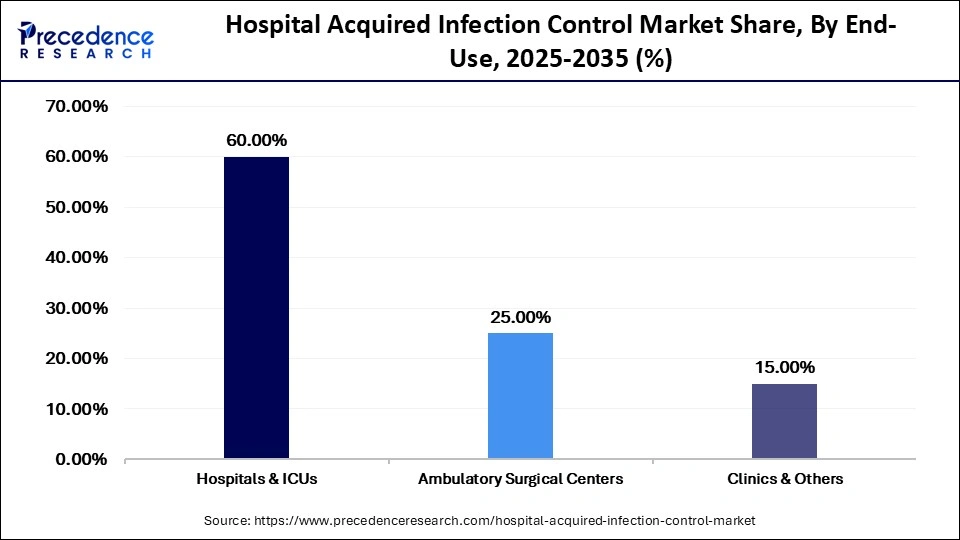
The ambulatory surgical centers segment held a 25% share of the market in 2025, driven by the growing shift toward outpatient and minimally invasive procedures. These centers emphasize high patient turnover while maintaining strict hygiene standards. Increasing cost-efficiency, shorter hospital stays, and the rising popularity of day-care surgeries are boosting the adoption of infection prevention solutions.
The clinics & others segment held a 15% share of the market in 2025, driven by increasing awareness of infection prevention practices among smaller healthcare facilities. Clinics are adopting basic disinfectants, sterilization tools, and protective equipment to reduce cross-contamination risks. Expanding clinics and stricter regulatory guidelines are also contributing to market growth.
Infection Type Insights
Why Did the Surgical Site Infections Segment Led the Hospital Acquired Infection Control Market?
The surgical site infections segment led the global market with a share of 28.7% in 2025, supported by the increase in surgical operations and the risk of post-operative infection. The most widespread SSIs can be controlled with the use of Strict sterilization protocols, advanced wound care solutions, and preventive measures. Increasing focus on patient safety and improved surgical techniques further supports this segment.
The urinary tract infections segment held a 22% share of the market in 2025 because of the high number of urinary catheters used by hospitalized patients. The growing demand for catheter care solutions, preventive infection bundles, and improved sterilization practices is driving segment growth.
The bloodstream infections segment held a 20% share of the market in 2025, driven by the growing use of central venous catheters and other invasive interventions in critical care. Such infections pose a threat on a scale that needs prompt treatment, which creates the need to enhance sterilization, disinfection, and monitoring systems. The increasing number of ICU admissions and emphasis on minimizing the occurrence of sepsis-related complications.
Technology Insights
Hospital Acquired Infection Control Market Share, By Technology, 2025-2035 (%)
| Technology | 2025 |
| Sterilization Technology | 55% |
| Disinfection Technology | 45% |
The Sterilization Technology Segment Held a 55% Share of the Market in 2025
The sterilization technology segment registered its dominance in the hospital acquired infection control market with a share of 35% in 2025. This is mainly due to its vital role in decontaminating surgical instruments, medical equipment, and hospital environments. Autoclaves, ethylene oxide sterilizers, and advanced systems based on microwaves is widely used to ensure total elimination of all microbes. The growing surgical volumes and strict regulations regarding infection control are also contributing to the usage of sterilization technologies in healthcare facilities.
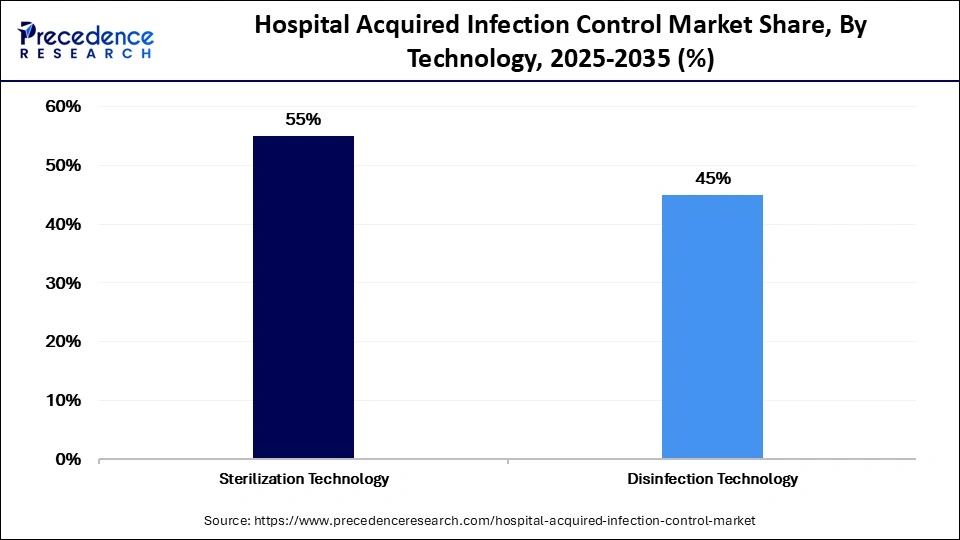
The disinfection technology segment held a 45% share of the market in 2025. This is because of the increased need for disinfection solutions for surfaces, air, and equipment in hospitals. UV disinfection systems, chemical disinfectants, and automated cleaning solutions are increasingly being used to reduce contamination risks and improve hospital hygiene standards.
Distribution Channel Insights
Hospital Acquired Infection Control Market Share, By Distribution Channel, 2025-2035 (%)
| Distribution Channel | 2925 |
| Direct Sales | 60.00% |
| Distributors | 40.00% |
The Direct Sales Segment Held a 60% Share of the Market in 2025
The direct sales segment dominated the hospital acquired infection control market with a share of 60% in 2025. This is mainly due to strong relationships between manufacturers and large healthcare institutions. Hospitals prefer direct procurement for customized solutions, bulk purchasing, and efficient after-sales support. This channel ensures faster delivery, technical assistance, and cost efficiency.
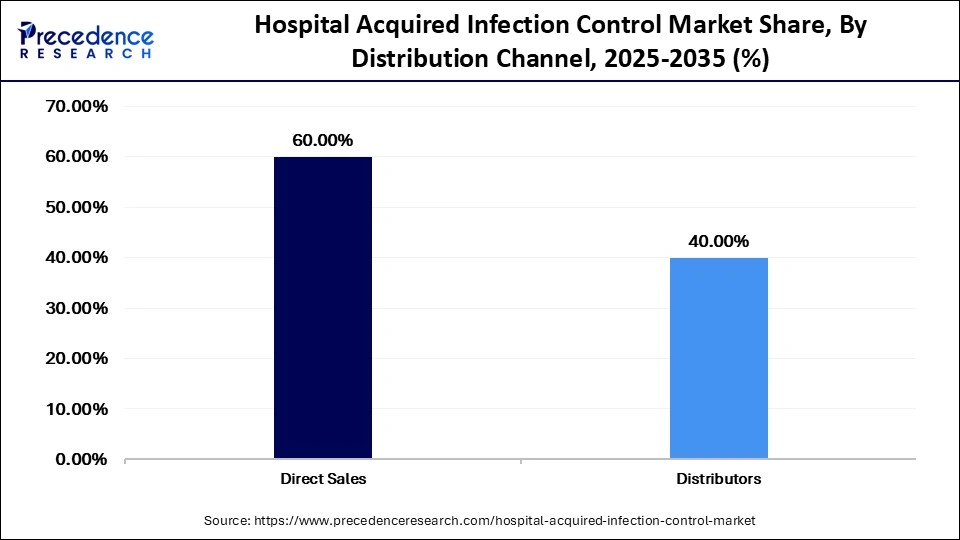
The distributors segment held a 40% share of the market in 2025 due to their extensive reach across smaller hospitals, clinics, and healthcare facilities. Distributors help bridge supply gaps, provide local support, and improve product availability in remote regions, making them essential for market expansion in developing areas.
Region Insights
North America Hospital Acquired Infection Control Market Size and Growth 2026 to 2035
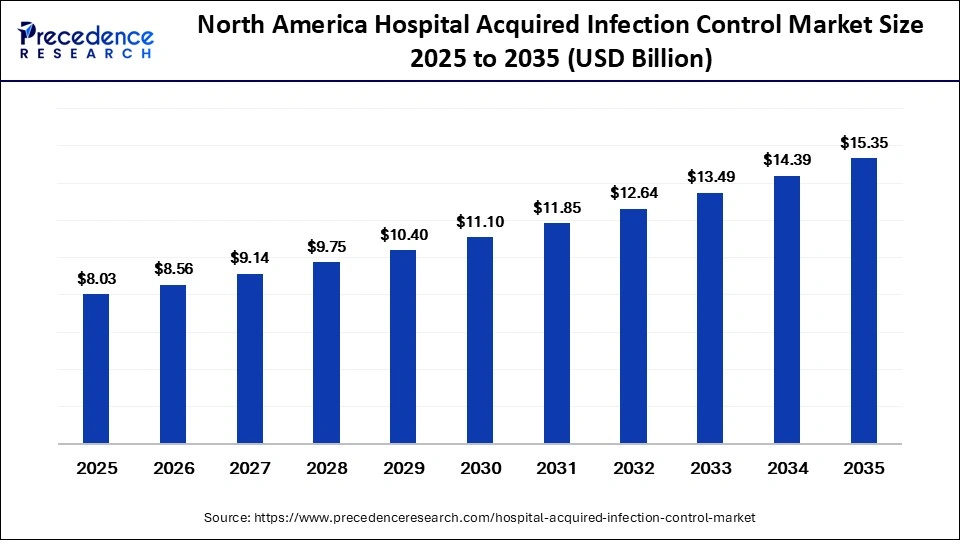
The North America hospital acquired infection control market size is estimated at USD 8.03 billion in 2025 and is projected to reach approximately USD 15.35 billion by 2035, with a 6.69% CAGR from 2026 to 2035.
North America Lead the Hospital Acquired Infection Control Market in 2025
North America led the global hospital acquired infection control market with a share of 36% in 2025, due to the existence of advanced healthcare systems, high healthcare expenditure, and stringent regulatory frameworks focused on infection prevention and patient safety. The region also benefits from widespread adoption of advanced sterilization equipment, disinfectants, and computer-based infection surveillance systems in hospitals and intensive care units. In addition, rising hospital admissions, increasing surgical procedures, and a growing prevalence of chronic diseases are further driving demand for infection control solutions.
U.S. Hospital Acquired Infection Control Market Size and Growth 2026 to 2035
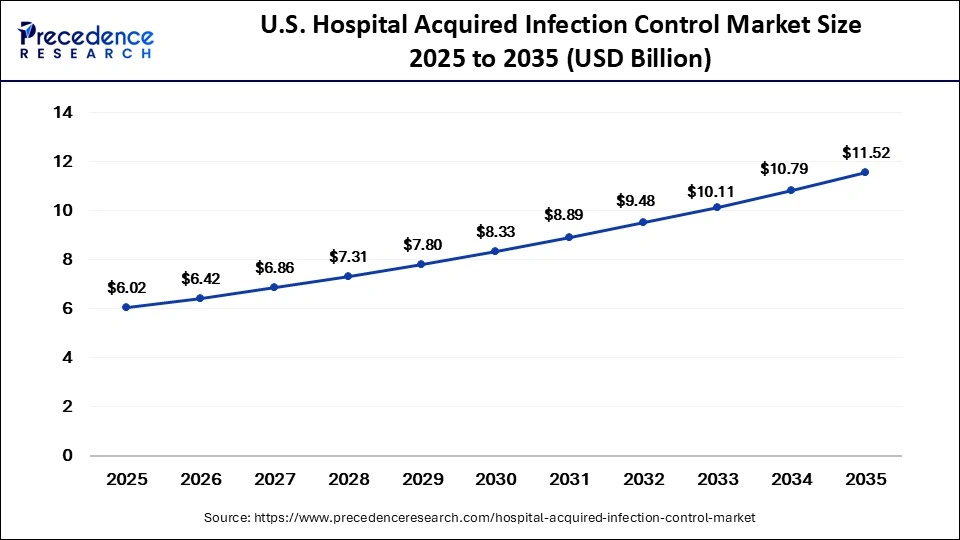
The U.S. hospital acquired infection control market size is calculated at USD 6.02 billion in 2025 and is expected to reach nearly USD 11.52 billion in 2035, accelerating at a strong CAGR of 6.71% between 2026 and 2035.
U.S. Market Trends
The U.S. is a major contributor to the hospital acquired infection control market in North America. This is mainly due to its well-established healthcare infrastructure, strong regulatory environment, and early adoption of advanced medical technologies. Hospital-acquired infections (HAIs) represent a significant burden in the country, prompting healthcare institutions to invest heavily in sterilization equipment, disinfectants, protective gear, and infection monitoring systems. Government initiatives aimed at reducing HAIs and improving healthcare quality standards are further supporting market growth.
Europe: The Second-Largest Shareholder in 2025
Europe held the second-largest market share of 25% in 2025 and is expected to grow at a notable CAGR during the projection period. The regional market growth is driven by strong emphasis on healthcare quality and safety, along with strict regulatory standards for infection control. The increasing incidence of hospital-acquired infections, rising healthcare costs associated with prolonged hospital stays, an aging population, and a higher number of surgical procedures are all contributing to increased demand for infection control solutions.
UK Market Trends
The UK leads the European market due to its well-developed healthcare system and strong focus on infection prevention. The National Health Service (NHS) continues to implement stricter hygiene protocols and promote the adoption of advanced sterilization and disinfection technologies. Rising HAI cases and increasing surgical volumes are further driving the demand for effective infection control solutions in the country.
What Makes Asia Pacific the Fastest-Growing Region in the Market?
Asia Pacific segment held a 22% share of the market in 2025 and is expected to grow at the fastest CAGR of 7% during the projection period. The region's growth is driven by rapid expansion of healthcare infrastructure, rising government healthcare expenditure, and increasing awareness of infection prevention practices. Growing population, urbanization, and improved access to healthcare services are leading to higher hospitalization and surgical rates. Additionally, the rising burden of infectious and chronic diseases, including diabetes and cardiovascular conditions, is further accelerating market demand.
China Market Trends
The hospital acquired infection control market in China is driven by increasing hospital admissions, a rising number of surgical procedures, and a growing prevalence of chronic diseases. Hospitals are increasingly focusing on improving hygiene standards and adopting advanced sterilization and disinfection technologies to enhance patient care and reduce HAIs. Government initiatives aimed at modernizing healthcare infrastructure and expanding hospital capacity are also supporting market growth.
Hospital Acquired Infection Control Market Companies
- 3M
- STERIS
- Ecolab
- Getinge
- Cantel Medical
- Advanced Sterilization Products
- Sterigenics
- Belimed
- MMM Group
- Midmark Corporation
- Cardinal Health
- Halyard Health
- Metrex Research
- Diversey
- Becton, Dickinson and Company
Recent Developments
- In December 2024, the American Hospital Association released its 2025 Environmental Scan, which defines the overall main demographic and climatic trends that are likely to influence further possibilities of infection control in healthcare systems. The report indicates the increasing significance of preparedness and adaptive measures of infection prevention in response to new healthcare needs.(Source: https://www.aha.org)
- In March 2024, Getinge introduced the Aaudis Index washer-disinfector, which the company claims will lead to improved throughput, efficiency, and traceability in central sterile services departments (CSSDs). Not only does the system enhance the performance of cleaning, but it also helps to achieve better documentation and compliance in the infection control process in hospitals.(Source: https://www.getinge.com)
- In July 2024, Midmark Corporation rolled out the next generation of its M11 and M9 steam sterilizers to help increase durability, usability, and the efficiency of workflow in healthcare facilities. These sterilizers have embedded in them other functionality that enhances the processing of instruments and facilitates the process of complying with documentation to infection control standards.(Source: https://www.midmark.com)
Segments Covered in the Report
By Component
- Consumables
- Equipment
- Services
By End-Use
- Hospitals & ICUs
- Ambulatory Surgical Centers
- Clinics & Others
By Infection Type
- Surgical Site Infections
- Urinary Tract Infections
- Bloodstream Infections
- Others
By Technology
- Sterilization Technology
- Disinfection Technology
By Distribution Channel
- Direct Sales
- Distributors
By Region
- North America
- Latin America
- Europe
- Asia-pacific
- Middle and East Africa
For inquiries regarding discounts, bulk purchases, or customization requests, please contact us at sales@precedenceresearch.com
Frequently Asked Questions





Ask For Sample
No cookie-cutter, only authentic analysis – take the 1st step to become a Precedence Research client
 Get a Sample




 sales@precedenceresearch.com
 Schedule a Meeting
