



In Vivo CAR-T Therapy Market Size, Companies, Share, Patient Volume, Treatment Adoption Rates, Pricing Analysis, Regulatory Landscape, Competitive Positioning, and Demand Forecast
In Vivo CAR-T Therapy Market (By Vector Type: Viral Vector-based In Vivo CAR-T (AAV, Lentiviral), Non-Viral Vector-based In Vivo CAR-T (LNPs, Electroporation, Nanoparticles); By Target Antigen: CD19, BCMA, CD20, Solid Tumor Targets (HER2, EGFR, Mesothelin, etc.); By Application: Hematologic Malignancies (Leukemia, Lymphoma, Myeloma), Solid Tumors, Autoimmune Diseases; By Delivery Method: Systemic Delivery (Intravenous), Localized Delivery (Intratumoral, Targeted Delivery); By End-Use: Hospitals, Specialized Cancer Treatment Centers, Academic & Research Institutes; By Development Stage: Preclinical Stage, Clinical Stage (Phase I/II/III), Commercialized Therapies) - Global Industry Analysis, Size, Trends, Leading Companies, Regional Outlook, and Forecast 2026 to 2035
Source: https://www.precedenceresearch.com/in-vivo-car-t-therapy-market
 Get a Sample
 Table Of Content


What is the In Vivo CAR-T Therapy Market Size in 2026?
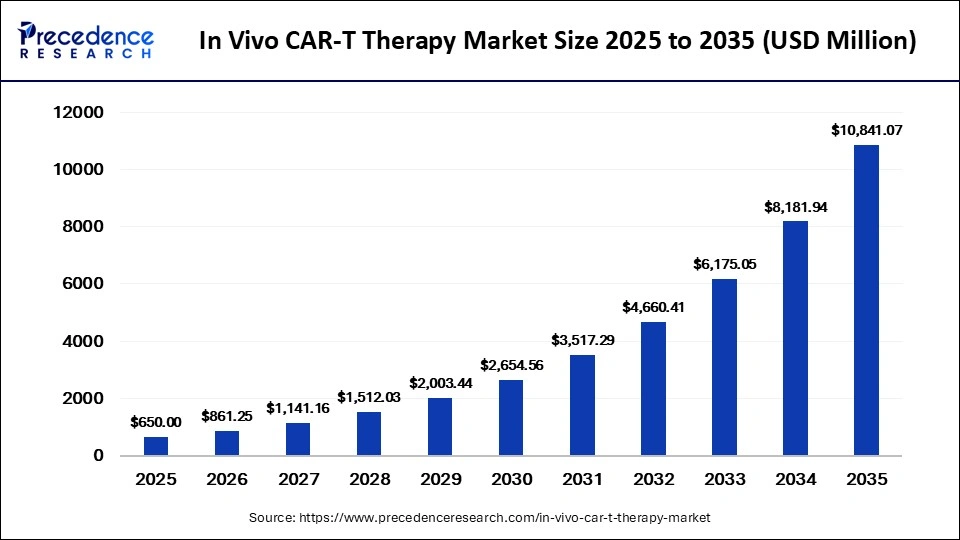
The global in vivo CAR-T therapy market size accounted for USD 650.00 million in 2025 and is predicted to increase from USD 861.25 million in 2026 to approximately USD 10,841.07 million by 2035, expanding at a CAGR of 32.50% from 2026 to 2035. The market growth is driven by the rising prevalence of cancer, ongoing advancements in healthcare, and the increasing number of clinical trials focused on in vivo CAR-T therapy.
Key Takeaways
- North America led the in vivo CAR-T therapy market in 2025 with a 50% share.
- Asia Pacific is observed to be the fastest-growing region in the forecasted duration.
- By vector type, the viral vector-based segment led the market with a 65% share in 2025.
- By vector type, the non-viral vector-based segment is expected to grow at the fastest rate in the coming years.
- By target antigen, the CD19 segment led the global market in 2025 with a 35% share.
- By target antigen, the solid tumor targets segment is expected to expand at the fastest CAGR over the studied period.
- By application, the hematologic malignancies segment led the global market in 2025 with a 60% share.
- By application, the solid tumors segment is observed to grow at the fastest rate in the foreseeable period.
- By delivery method, the systemic delivery segment led the global market in 2025 with a 70% share.
- By delivery method, the localized delivery segment is observed to grow at the fastest CAGR in the upcoming period.
- By end-use, the hospitals segment led the global market in 2025 with a 45% share.
- By end-use, the specialized cancer centers segment is observed to expand at the fastest CAGR in the upcoming period.
In Vivo CAR-T Therapy Market Overview
In vivo CAR-T therapy represents a significant advancement in medical innovation, as it administers treatment directly within the patient, reprogramming their own T cells internally. Utilizing nanoparticle, viral, and non-viral gene delivery systems, this method eliminates the need for apheresis and ex vivo Good Manufacturing Practice (GMP) cell production. Chimeric antigen receptor T-cell (CAR-T) therapy has shown impressive clinical effectiveness in patients with relapsed or refractory hematological malignancies. Furthermore, this pioneering in vivo CAR-T therapy holds potential for treating multiple myeloma, which could transform cancer care by offering quicker and safer treatment alternatives.
Impact of Artificial Intelligence on the In Vivo CAR-T Therapy Market
Artificial intelligence is increasingly vital in the healthcare sector, particularly in the advancement of in vivo CAR-T therapy. AI acts as a transformative catalyst by expediting the rational design of in vivo CAR constructs, enhancing the precision of targeted delivery systems, and facilitating predictive safety modeling. Additionally, it aids in the assessment of risk factors and forecasting treatment outcomes, thereby supporting more effective therapy management.
Furthermore, AI-driven strategies are being employed to improve CAR design and manufacturing processes, identify novel CAR-target genes, and predict the cellular heterogeneity of solid tumors. These advancements are enabling researchers to create more sophisticated genetic delivery vehicles with enhanced accuracy, allowing for more effective targeting of specific tissues while minimizing off-target effects.
Major Market Trends
- Advanced Gene Delivery Platforms: Innovations in technology, such as antiviral vectors, mRNA lipid nanoparticles (LNPs), circular RNA (circRNA), polymeric nanoparticles, and CRISPR-based integration systems, are paving the way for safer, more precise, and highly scalable in vivo gene delivery solutions in the development of CAR T therapies.
- Next-Generation CAR T-Cell Engineering: The development of third-generation CAR T cells, which integrate multiple signaling domains, is enhancing T-cell functionality, persistence, and therapeutic efficacy, while also increasing the potential to effectively target complex and resistant tumor microenvironments.
- Emerging Experimental Pipeline Expansion: New experimental therapies like GT-801 are advancing the in vivo CAR T landscape through lipid nanoparticle-mediated mRNA delivery, which facilitates direct T-cell programming for targeted anti-CD19 therapy and offers streamlined manufacturing capabilities.
Market Scope
| Report Coverage | Details |
| Market Size in 2025 | USD 650.00 Million |
| Market Size in 2026 | USD 861.25 Million |
| Market Size by 2035 | USD 10,841.07 Million |
| Market Growth Rate from 2026 to 2035 | CAGR of 32.50% |
| Dominating Region | North America |
| Fastest Growing Region | Asia Pacific |
| Base Year | 2025 |
| Forecast Period | 2026 to 2035 |
| Segments Covered | Vector Type, Target Antigen, Application, Delivery Method, End-Use, Development Stage, and Region |
| Regions Covered | North America, Europe, Asia-Pacific, Latin America, and Middle East & Africa |
Market Dynamics
Drivers
Rising disease burden and clinical trials
The rising prevalence of cancer, coupled with the limitations of ex vivo procedures, an increase in research initiatives, and the expansion of clinical trials, is driving the in vivo CAR-T therapy market. Additionally, the growing confidence in treatment outcomes and the enhancement of healthcare infrastructure are further improving patient care and post-treatment support.
Restraint
Immunogenicity and vector stability challenges
Immunogenicity continues to pose a significant challenge for viral vector-based in vivo gene therapy, hindering wider adoption. This issue can diminish transduction efficiency, result in the elimination of transduced cells, and adversely affect vector stability, thereby creating obstacles to achieving consistent therapeutic outcomes and long-term application.
Opportunity
Cost efficiency and digital support potential
In vivo CAR-T therapy holds significant promise for lowering manufacturing costs, decreasing turnaround times, and enhancing patient convenience. Furthermore, AI-powered digital support for patient inquiries and assistance can enhance engagement, enrich the patient experience, and foster greater trust in the treatment process.
Segment Insights
Vector Type Insights
In Vivo CAR-T Therapy Market Share, By Vector Type, 2025-2035 (%)
| Vector Type | 2025 | 2035 | CAGR (%) |
| Viral Vector-based | 65.00% | 55.00% | 28.0% |
| Non-Viral Vector-based | 35.00% | 45.00% | 38.5% |
The Viral Vector-Based Segment Dominated the Market in 2025
The viral vector-based in vivo CAR-T segment dominated the in vivo CAR-T therapy market in 2025 by holding a 65% share. This leadership is attributed to the established gene delivery efficiency and early clinical applications of viral vector-based CAR-T, including AAV and Lentiviral vectors. Viral-based in vivo CAR-T generation involves the direct delivery of CAR-encoding genetic constructs into living patients. Furthermore, viral-based in vivo CAR-T cells have shown potential beyond oncology, as they can reduce fibrosis and restore cardiac function, thus expanding the platform's range of possible indications.
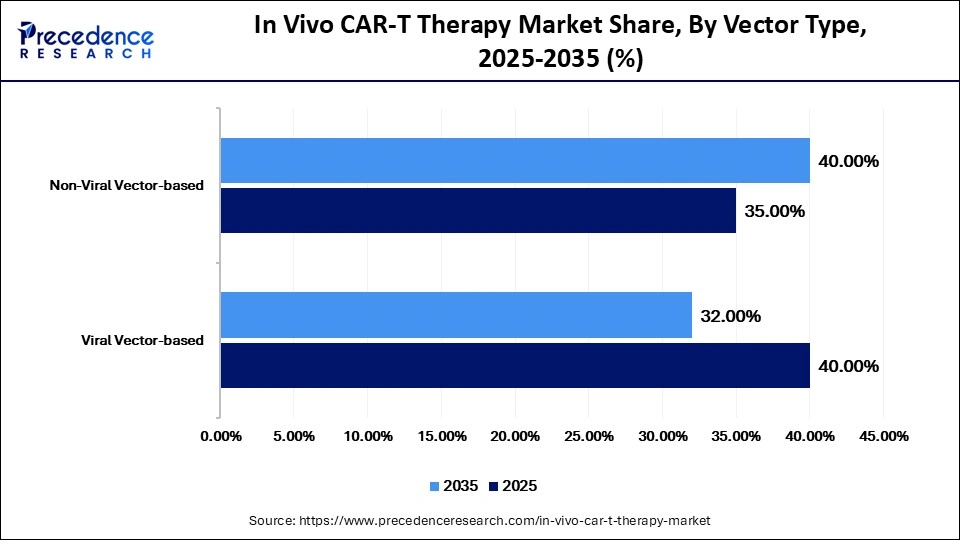
The non-viral vector-based in vivo CAR-T segment captured around 35% market share in 2025 and is anticipated to grow at the fastest rate in the coming years. This growth is fueled by advancements in safety, scalability, and reduced immunogenicity. Non-viral strategies have led to decreased manufacturing costs, increased cargo capacity, enhanced design flexibility, and lower immunogenic profiles. Additionally, these methods facilitate stable genomic integration of CAR transgenes in primary T cells.
Target Antigen Insights
In Vivo CAR-T Therapy Market Share, By Target Antigen, 2025-2035 (%)
| Target Antigen | 2025 | 2035 | CAGR (%) |
| CD19 | 35.00% | 30.00% | 26.5% |
| BCMA | 25.00% | 28.00% | 32.5% |
| Solid Tumor Targets | 25.00% | 30.00% | 40.0% |
| CD20 | 15.00% | 12.00% | 25.0% |
The CD19 segment Led the Market in 2025 with a 35% Share
The CD19 segment led the in vivo CAR-T therapy market in 2025, holding approximately 35% share. This is primarily due to its significant success in treating B-cell malignancies. CD19 serves as a pan-B-cell marker and is recognized as a promising target for immunotherapy in B-cell disorders, including hematological malignancies and autoimmune diseases. Its broad expression profile also positions it as an appealing target for antibody-drug conjugates.
The BCMA segment held around 25% market share in 2025 and is projected to grow at a significant rate during the forecast period, fueled by substantial growth in applications related to multiple myeloma. B-cell maturation antigen (BCMA), a transmembrane receptor selectively expressed on plasma cells and malignant multiple myeloma cells, has become a pivotal therapeutic target in the management of multiple myeloma. The adoption of BCMA-targeted immunotherapy is on the rise, as it enables the immune system to focus on myeloma cells by targeting a protein present on nearly all such cells.
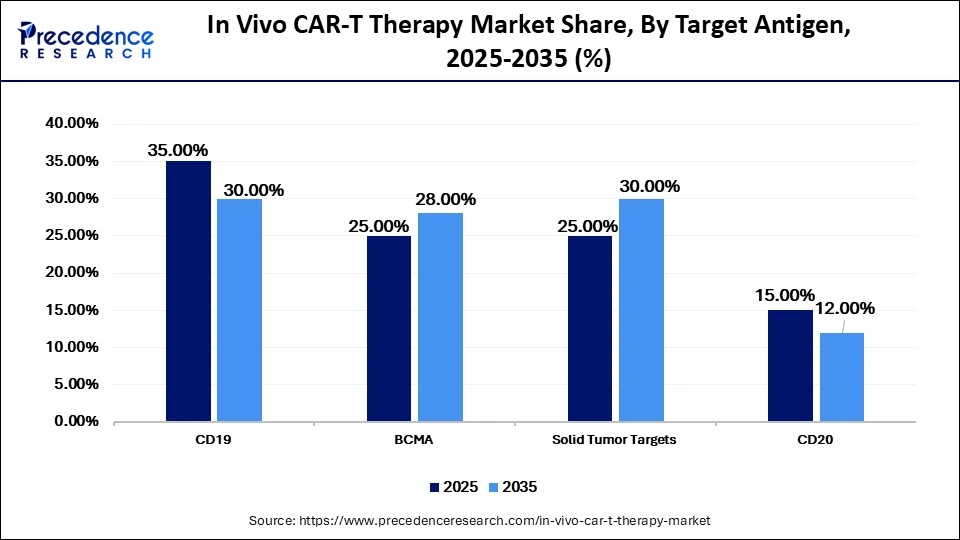
The CD20 segment held a 15% share of the market in 2025, driven by its emergence as a target of ongoing clinical research. CD20 is a surface protein predominantly expressed on B cells, with minimal presence in other tissues, making it an ideal candidate for immunotherapy against B-cell-derived malignancies. CD20 expression commences at the pre-B cell stage and persists until B cells fully differentiate into plasma cells.
The solid tumor targets segment held about 25% share of the market in 2025 and is expected to grow at the fastest CAGR throughout the forecast period, driven by advancements beyond hematologic cancers, supported by increased research activity in solid tumor targets. Scientists have developed highly sensitive receptors capable of detecting trace amounts of proteins on solid tumors, addressing a significant biological barrier to the application of CAR T-cell therapy in these cancers.
Application Insights
Why Did the Hematologic Malignancies Segment Dominate the Market in 2025?
The hematologic malignancies segment dominated the in vivo CAR-T therapy market, accounting for approximately 60% of the total revenue share in 2025. This is mainly due to the proven effectiveness of CAR-T therapy in treating blood cancers. CAR T-cell therapy has exhibited significant clinical success in this area. Historically, these malignancies have led to advancements in genetic analysis, and recent progress in understanding their molecular and genetic foundations has facilitated the creation of targeted therapies that specifically target abnormal cells while preserving healthy tissue.
In Vivo CAR-T Therapy Market Share, By Application, 2025-2035 (%)
| Application | 2025 | 2035 | CAGR (%) |
| Hematologic Malignancies | 60.00% | 50.00% | 28.0% |
| Solid Tumors | 25.00% | 35.00% | 40.5% |
| Autoimmune Diseases | 15.00% | 15.00% | 30.0% |
The solid tumors segment held around 25% share of the market in 2025 and is anticipated to grow at the fastest CAGR in the coming years, driven by increased research efforts and a notable unmet clinical need. Although the effectiveness of CAR-T therapy in solid tumors has been constrained by some challenges, recent studies have introduced innovative CAR-T strategies that have shown promising results in reducing and potentially eliminating solid tumors.
The autoimmune diseases segment held a 15% share of the market in 2025, as it emerges as a promising new application area. While CAR-T therapy has been tested in only a limited number of autoimmune disease patients, the results have been highly encouraging, suggesting a potential paradigm shift in the management of these complex conditions.
Delivery Method Insights
The Systemic Delivery Segment Led the Market in 2025 With 70% Share
The systemic delivery (intravenous) segment led the in vivo CAR-T therapy market with a 70% share in 2025. The segment's dominance is attributed to its ease of administration and extensive applicability. Intravenous delivery is essential in contemporary medical practice, especially in critical care environments. This method involves direct administration of medications or fluids into a vein via a needle or tube, facilitating rapid absorption into the bloodstream.
In Vivo CAR-T Therapy Market Share, By Delivery Method, 2025-2035 (%)
| Delivery Method | 2025 | 2035 | CAGR (%) |
| Systemic Delivery | 70.00% | 65.00% | 30.0% |
| Localized Delivery | 30.00% | 35.00% | 36.5% |
The localized delivery segment accounted for nearly 30% share of the market in 2025 and is anticipated to grow at the fastest CAGR from 2026 to 2035. This growth is fueled by its targeted therapeutic approach and decreased systemic toxicity. In contrast to systemic administration, intratumoral therapy directly delivers therapeutic agents to tumor sites, thereby increasing local concentrations and retention of antitumor drugs, which enhances their efficacy while minimizing systemic exposure.
End-Use Insights
Hospitals Dominated the Market With a 45% Share in 2025
The hospitals segment held a dominant share of 45% in the in vivo CAR-T therapy market, owing to their status as leading centers for advanced therapy administration. Their well-established infrastructure facilitates multidisciplinary care, encompassing physician consultations, diagnostic services, dietary support, oncology treatments, and various immunology-related services. These comprehensive capabilities position hospitals as the preferred option for patients seeking thorough treatment.
In Vivo CAR-T Therapy Market Share, By End-Use, 2025-2035 (%)
| End-Use | 2025 | 2035 | CAGR (%) |
| Hospitals | 45.00% | 42.00% | 29.0% |
| Specialized Cancer Centers | 40.00% | 43.00% | 34.0% |
| Academic & Research Institutes | 15.00% | 15.00% | 28.0% |
The specialized cancer treatment centers segment held approximately 40% market share in 2025 and is anticipated to grow at the fastest CAGR in the upcoming period, driven by their specialized expertise and dedicated infrastructure for advanced therapies. Increased funding and ongoing infrastructure development are further enhancing this segment. These centers offer supportive care that caters to both physical and emotional well-being. Additionally, they are connected to highly qualified oncologists, cancer specialists, and extensive medical networks, ensuring access to expert consultations and multidisciplinary treatment approaches.
The academic & research institutes segment held about 15% market share in 2025, driven by their essential role in early-stage clinical trials and innovation. In vivo CAR-T therapy has emerged as a significant area of research, garnering substantial scientific interest. Patients at academic and research institutes often benefit from early access to advanced and innovative therapies through clinical trials and research programs. Furthermore, treatments at this stage may also prove to be more cost-effective for certain patient demographics.
Regional Insights
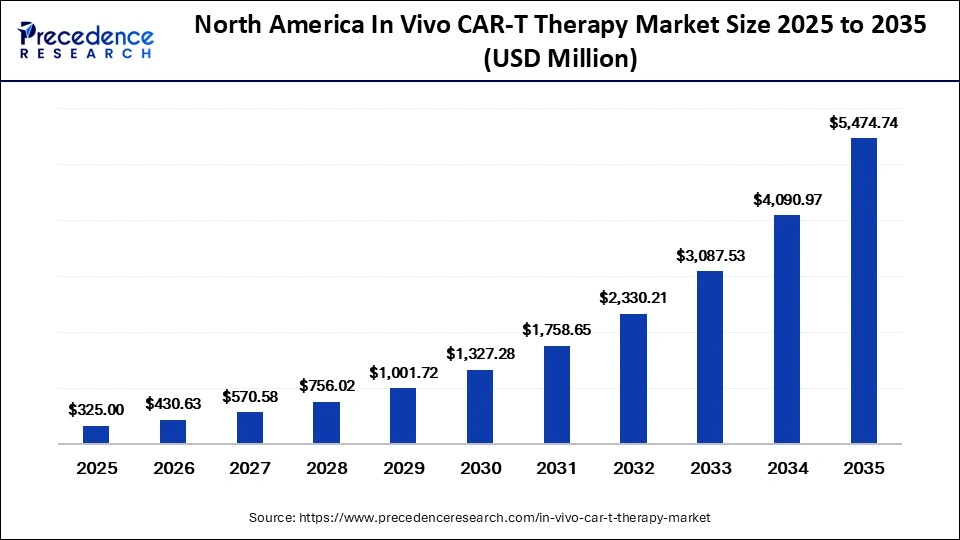
North America In Vivo CAR-T Therapy Market Size and Growth 2026 to 2035
The North America in vivo CAR-T therapy market size is estimated at USD 325.00 million in 2025 and is projected to reach approximately USD 5,474.74 million by 2035, with a 32.63% CAGR from 2026 to 2035.
What Made North America the Leading Region in the Market in 2025?
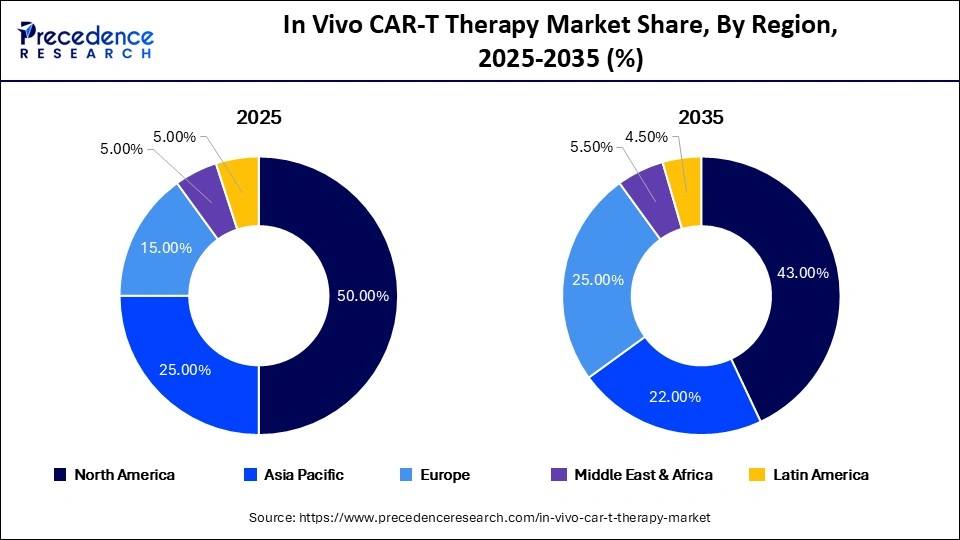
North America led the in vivo CAR-T therapy market while holding the largest share of 50% in 2025. The region's dominance is mainly attributed to its robust clinical pipeline, innovations in biotechnology, and a strong funding ecosystem. The region's advanced research and development infrastructure positions it as a leader in the number of active clinical trials for in vivo CAR T-cell platforms. Additionally, North America's established healthcare system features specialized cancer treatment facilities that are well-equipped to implement advanced immunotherapies.
U.S. In Vivo CAR-T Therapy Market Size and Growth 2026 to 2035
The U.S. in vivo CAR-T therapy market size is calculated at USD 243.75 million in 2025 and is expected to reach nearly USD 4,133.43 million in 2035, accelerating at a strong CAGR of 32.72% between 2026 and 2035.
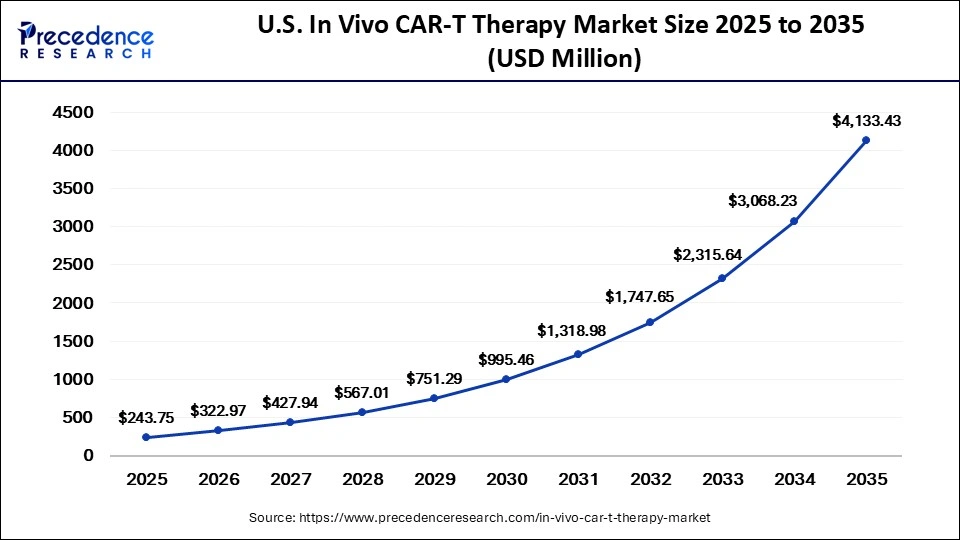
The U.S. plays a major role in the North American in vivo CAR-T therapy market, propelled by its comprehensive healthcare infrastructure, swift adoption of new therapies, extensive insurance coverage, and active participation in the development of in vivo CAR-T therapies. Furthermore, the U.S. benefits from regulatory support from the FDA and boasts a high concentration of research institutions, biotechnology companies, and clinical trial sites dedicated to CAR T-cell research.
Europe: The Second-Largest Market
Europe held about 25% share of the in vivo CAR-T therapy market in 2025 and is expected to grow at a notable rate in the forthcoming years. This growth is bolstered by academic research, advancements in regulations, and strategic collaborations. Organizations are facilitating quicker market access by linking clients to essential clinical trial locations and diverse patient populations, thereby enhancing market support.
The market in Germany is driven by increasing healthcare investments, a rise in partnerships and collaborations, reputable medical facilities, supportive regulatory frameworks, and a surge in medical tourism. These elements collectively reinforce Germany's standing in the in vivo CAR-T therapy market across Europe.
Asia Pacific: The Fastest-Growing Region
In 2025, Asia Pacific held approximately 15% share of the in vivo CAR-T therapy market and is anticipated to grow at the fastest rate in the coming years. This growth is attributed to an increase in clinical trials, heightened investments in biotechnology, and ongoing advancements in gene-editing technologies that improve the precision and efficiency of CAR-T cell production. Additionally, research into in vivo CAR-T therapy is expanding rapidly, while factors such as the rising prevalence of cancer, increased healthcare awareness, supportive regulatory frameworks, and enhanced research funding are further propelling market growth.
China is leading the market within Asia Pacific, benefiting from a sophisticated healthcare infrastructure and robust biotech research capabilities. The countries within this region have developed established clinical trial ecosystems and expedited approval processes, facilitating the quicker commercialization of CAR T-cell therapies.
In Vivo CAR-T Therapy Market Companies
- Capstan Therapeutics
- Interius BioTherapeutics
- Umoja Biopharma
- Sana Biotechnology, Inc.
- Cellectis S.A.
- Beam Therapeutics Inc.
- Precision BioSciences, Inc.
- Poseida Therapeutics, Inc.
- CRISPR Therapeutics AG
- Intellia Therapeutics, Inc.
- Novartis AG
- Gilead Sciences, Inc. (Kite Pharma)
- Bristol Myers Squibb Company
- Legend Biotech Corporation
- Caribou Biosciences, Inc.
Recent Developments
- In April 2026, Gilead Sciences' Kite Pharma is preparing to hit the ground running with the potential approval of a next-generation multiple myeloma cell therapy later this year. And looking further afield, Kite is eyeing the potential of in vivo CAR-Ts to simplify the manufacturing and logistical constraints of the class even more, potentially bringing the medicines to a greater swath of patients(Source: https://www.fiercepharma.com)
- In April 2026, Eli Lilly and Company and Kelonia Therapeutics, Inc. ("Kelonia"), a clinical-stage biotechnology company pioneering in vivo gene delivery, announced a definitive agreement for Lilly to acquire Kelonia. Kelonia has developed a proprietary in vivo gene placement system (iGPS ) that uses specially engineered lentiviral-based particles designed to efficiently and selectively enter T-cells inside the body, allowing the patient's own body to generate chimeric antigen receptor T-cell (CAR-T) therapies that can treat underlying disease. (Source: https://investor.lilly.com)
Segments Covered in the Report
By Vector Type
- Viral Vector-based In Vivo CAR-T (AAV, Lentiviral)
- Non-Viral Vector-based In Vivo CAR-T (LNPs, Electroporation, Nanoparticles)
By Target Antigen
- CD19
- BCMA
- CD20
- Solid Tumor Targets (HER2, EGFR, Mesothelin, etc.)
By Application
- Hematologic Malignancies (Leukemia, Lymphoma, Myeloma)
- Solid Tumors
- Autoimmune Diseases
By Delivery Method
- Systemic Delivery (Intravenous)
- Localized Delivery (Intratumoral, Targeted Delivery)
By End-Use
- Hospitals
- Specialized Cancer Treatment Centers
- Academic & Research Institutes
By Development Stage
- Preclinical Stage
- Clinical Stage (Phase I/II/III)
- Commercialized Therapies
By Region
- North America
- Latin America
- Europe
- Asia-pacific
- Middle and East Africa
For inquiries regarding discounts, bulk purchases, or customization requests, please contact us at sales@precedenceresearch.com
Frequently Asked Questions





Ask For Sample
No cookie-cutter, only authentic analysis – take the 1st step to become a Precedence Research client
 Get a Sample




 sales@precedenceresearch.com
 Schedule a Meeting
