



Industrial Hemp Market Size, Share and Trends 2026 to 2035
Industrial Hemp Market (By Product: Seeds, Fiber, Shivs; By Source: Conventional, Organic; By Application: Animal Care, Textiles, Automotive, Furniture, Food & Beverages, Paper, Construction Materials, Personal Care) - Global Industry Analysis, Size, Trends, Leading Companies, Regional Outlook, and Forecast 2026 to 2035
Source: https://www.precedenceresearch.com/industrial-hemp-market
 Get a Sample
 Table Of Content


What is the Industrial Hemp Market Size?
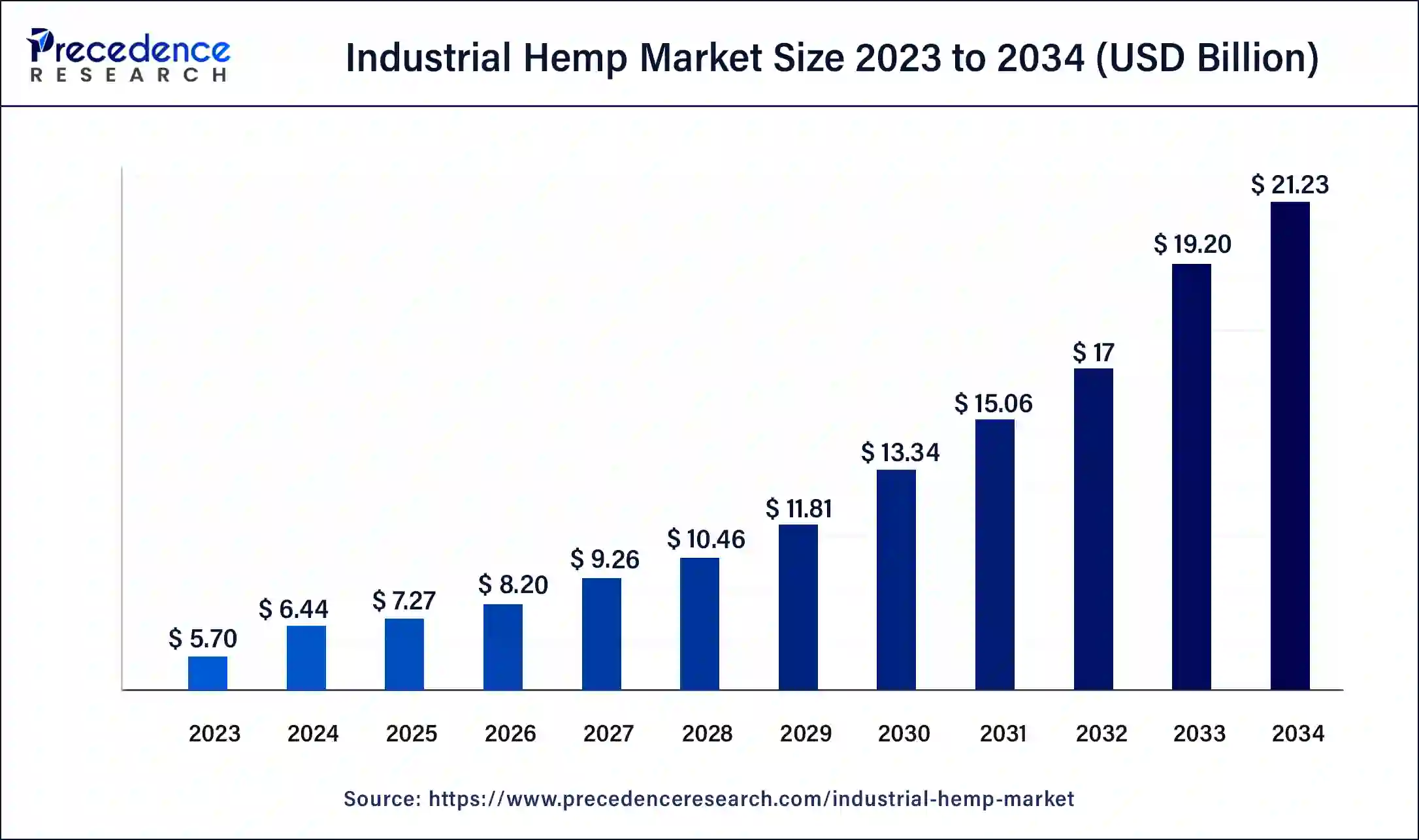
The global industrial hemp market size was calculated at USD 7.27 billion in 2025 and is expected to reach around USD 23.37 billion by 2035, expanding at a CAGR of 12.39% from 2026 to 2035.
Industrial Hemp Market Key Takeaways
- In terms of revenue, the industrial hemp market is valued at USD 7.27 billion in 2025.
- It is projected to reach USD 23.37 billion by 2035.
- The industrial hemp market is expected to grow at a CAGR of 12.39% from 2026 to 2035.
- Asia Pacific led the industrial hemp market with the largest share of 34% in 2025.
- By product, the hemp seeds segment dominated the market with the largest share of 30% in 2025.
- By product, the hemp fiber segment is expected to witness a significant growth in the market during the forecast period.
- By application, the textile application segment led the market in 2023 and accounted 28% revenue share.
- By application, the food and beverage segment is observed to witness a significant growth rate during the forecast period.
Market Overview
Hemp is a plant of the genus Cannabis that contains a delta-9 tetrahydrocannabinol (THC) concentration of 0.3% on a dry basis. The industrial hemp market offers hemp-associated materials for various applications or categories of industrial applications which include health and supplements, textiles, paper products, building materials, and others. Hemp contains CBD oil in a suitable proportion that is useful for its various medicinal properties and helps in treating diseases like diabetes, and tumors, and reducing pain which fuels the demand for the market. Industrial hemp is eco-friendly, faster in production, and has many other beneficial properties that are driving the expansion of the industrial hemp market.
How AI is Assisting the Industrial Hemp Industry to Grow?
AI is accelerating the industrial hemp industry by improving precision agriculture, automating labor-intensive processes, and optimizing supply chains. AI-powered drones determine images to identify male plants for removal, count plants, and measure plant diameter to check for health, with data integrated into GPS mapping for targeted field management. AI determines large genomic datasets to identify markers linked with desirable traits, speeding up the breeding of specific hemp strains for superior fiber, and even higher CBD content, or increased disease resistance.
Industrial Hemp Market Growth Factors
- The rising demand for nutrition-based food and beverages is due to the rising consumer awareness about the health and supplement intakes that drive the growth of the industrial hemp market.
- The rising demand for dietary supplements and the availability of nutritional and environmental benefits in industrial hemp are driving the demand for the market.
- The increasing infusion of industrial hemp to consumer applications such as food and beverages, animal care, and personal care is driving the demand for industrial hemp.
- The increasing competition in the national and international market players in the operations of industrial hemp that fueling the growth of the market.
- The rising demand for consumer applications such as personal care, hemp CBD, food and beverages, consumer textiles, etc. is driving the growth of the market.
- The increasing investments in the research and development program in the development and the innovative use cases of industrial hemp also contribute to the expansion of the industrial hemp market.
Market Scope
| Report Coverage | Details |
| Growth Rate from 2026 to 2035 | CAGR of 12.39% |
| Market Size in 2025 | USD 7.27 Billion |
| Market Size in 2026 | USD 8.20 Billion |
| Market Size by 2035 | USD 23.37 Billion |
| Largest Market | Asia Pacific |
| Base Year | 2025 |
| Forecast Period | 2026 to 2035 |
| Segments Covered | Product, Source, Application, and Region |
| Regions Covered | North America, Europe, Asia-Pacific, Latin America, and Middle East & Africa |
Market Dynamics
Driver:
Increasing demand for industrial hemp-based products
The increasing demand for industrial hemp-infused consumer products such as food, cosmetics, textiles, pharmaceuticals, and other consumer goods due to their nutritional value drives the demand for the market. The growing adoption of the healthy alternative to the diet and the increasing concern towards a healthy lifestyle in the population are contributing to the higher adoption of the industrial hemp market.
The rising demand for sustainable products by consumers is driving the growth of the market. Additionally, the rising government support for the production and distribution of industrial hemp across various countries is driving the growth of the industrial hemp market.
Restraint:
Government regulations
There are different government policies and norms for the production and distribution of hemp in the market in which several countries banned the use of hemp as a consumer product. Thus, the strict government regulation of the cultivation, production, and distribution limits the growth of the industrial hemp market. Due to the legal complexities surrounding hemp and cannabis, many financial institutions are hesitant to provide banking services to businesses operating in the hemp industry. This lack of access to banking services can create significant challenges for hemp businesses, including difficulties in obtaining loans, processing payments, and managing finances.
Opportunity:
Increasing demand from the construction industry
The growing demand for industrial hemp from the construction industry is driving the expansion of the industrial hemp market. Industrial hemp is an eco-friendly, sustainable, and low-carbon material which makes it ideal for construction and architectural use. Industrial hemp is considered a sustainable and modern alternative to the traditional approach in the construction and architectural industry with several advantages and revolutionizing the construction industry. The expanding construction industry owing to the increasing population worldwide and the rising global warming due to pollution has led to a higher demand for sustainable and eco-friendly alternatives to the construction industry which drives the demand for the industrial hemp market.
Technological Advancement
Technological advancements in the industrial hemp market feature automation, cultivation techniques, and extraction methods. AI and automation, a popular technology, control quality and optimize processing parameters. The cultivation techniques enhance the areas of precision farming and breeding. This enhances quality and crop yields. The extraction method approach extraction of advanced techniques and CO2, which provides quality cannabinoids in production, such as CBD and other compounds. The technology innovation expands the market to larger platforms connecting to various product applications. The CBD hemp-based product, industrial materials, and plant-based protein broaden market opportunity and increase consumer demand.
The advanced sustainable materials impact the industrial hemp market. The growth factor is highly dependent on the technology and new innovative efforts. These technologies lead to developmental projects that reshape the future of existing and new businesses from a competitive perspective.
Segment Insights
Product Insights
The hemp seeds segment dominated the industrial hemp market in 2025. Hemp seeds are made from Cannabis Sativa plants, widely used for their intoxication properties. These tiny, brown seeds are packed full of fiber, protein, and other healthy fats including omega-3 and omega-6. Their antioxidant qualities may help to reduce the symptoms of numerous ailments, and they also strengthen the heart, skin, and joints. Hemp seeds have almost the same amount of protein as soybeans. Protein counts range from 9.46 grams (g) to almost 3 teaspoons per 30 grams (g) of seeds.
These seeds are regarded as a complete protein source since they provide each of the nine necessary amino acids. Significant amounts of omega-3 fatty acids and a beneficial ratio of omega-3 to omega-6 fatty acids are found in hemp seeds. Hemp seed oil is widely used in various applications such as personal care, animal feed, food and beverages, nutritional supplements, medicinal and therapeutic products, and others. Thus, the rising demand for hemp seed oil in consumer care products is driving the growth of the segment.
The hemp fiber segment is observed to witness a significant rate of growth in the industrial hemp market during the forecast period. Hemp fiber is a highly insulated material, lightweight, biodegradable, with superior strength, and thermodynamic properties. Hemp fiber is widely used in applications such as carpeting, paper, construction materials, home furnishing, auto parts, insulation materials, and others.
Application Insights
The textile application segment held the largest share of the industrial hemp market in 2025. The growth of the segment is attributed to its hypo-allergic, strong, and natural resistance to UV lights. Hemp fiber is the strongest fiber that is used in the manufacturing of textiles. Compared to other fabrics made of natural fibers, it offers superior ultraviolet (UV) protection and is noticeably tougher and more resilient than cotton. Additionally, hemp satisfies almost every requirement needed to be categorized as sustainable.
Farmers can benefit from its naturally occurring hypoallergenic, antiviral, antibacterial, and antimicrobial properties since they allow for a more environmentally friendly growing environment with a far lower demand for pesticides and fertilizers. It is widely accepted that soil is more regenerative than cotton growth, using less water to grow than cotton while also leaving the land in better shape.
The food and beverage segment is observed to witness growth at a significant rate during the forecast period in the industrial hemp market. The growth of the segment is attributed to the rising consumption of hemp due to its high nutritional value fatty acids, proteins, omega-3, and others. The rising consumer awareness among the population for the health and nutrition added to their food is driving the demand for industrial hemp in the food and beverages segment. The rising consumption of hemp in various other industries such as construction, pharmaceutical, and others is driving the growth of the market.
Regional Insights
What is the Asia Pacific Industrial Hemp Market Size?
The Asia Pacific industrial hemp market size was estimated at USD 2.47 billion in 2025 and is projected to surpass around USD 7.95 billion by 2035 at a CAGR of 12.40% from 2026 to 2035.
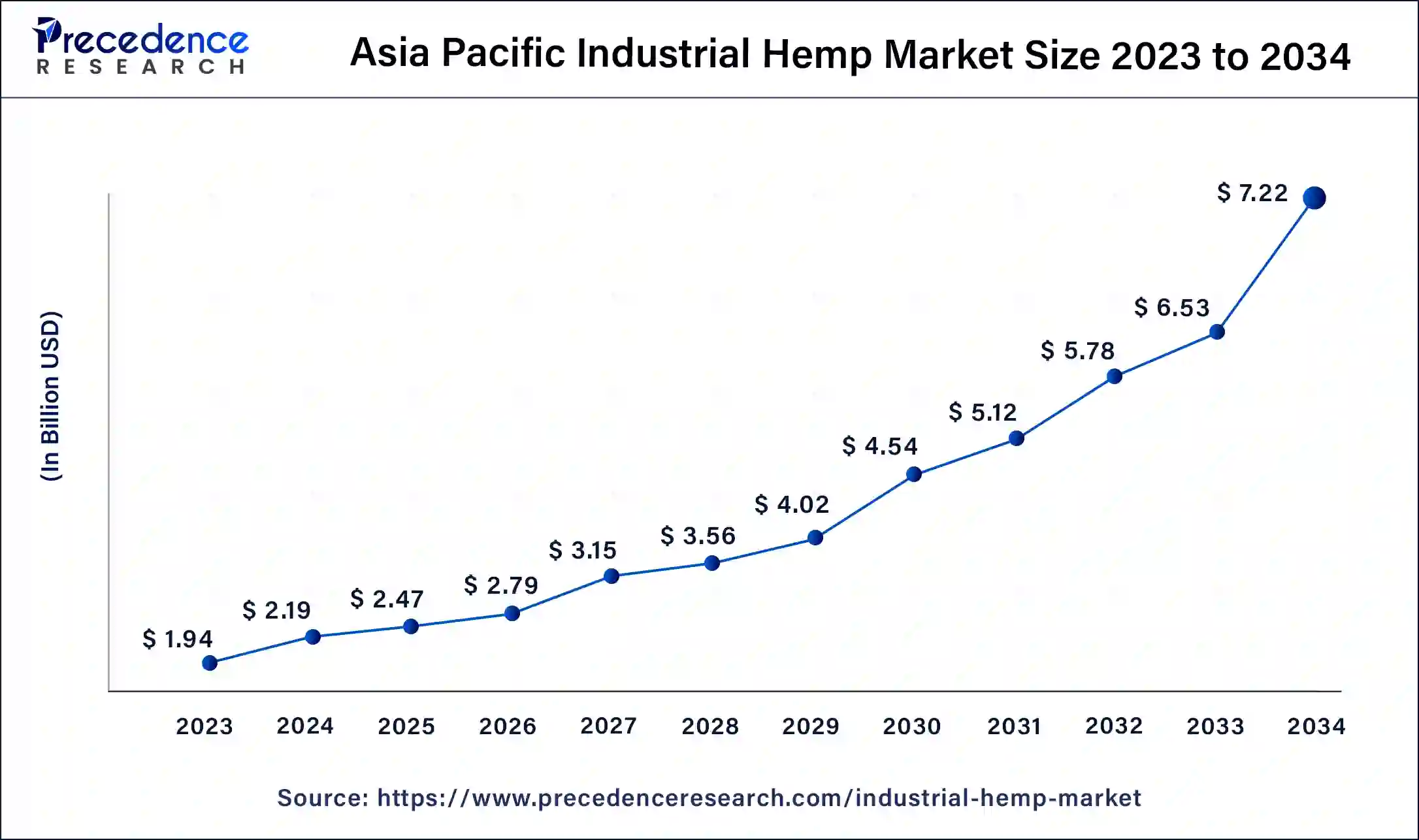
Asia Pacific led the industrial hemp market with the largest size in 2025. The growth of the market is increasing due to the rising consumption and production of industrial hemp by the major regional countries for use in different applications which drives the demand for the market. The countries like China, Japan, India and Thailand are highly investing in the production, consumption, and distribution of hemp in different applications. The rising investments in technological advancements and innovations in the use of industrial hemp and making the harvesting of industrial hemp easier drive the growth of the market.
Additionally, the rising consumption of industrial hemp-based supplements, foods, and medicines in developing economies is further propelling the growth of the industrial hemp market in the region. Industrial hemp has a wide range of applications, including textiles, construction materials, food and beverages, personal care products, and pharmaceuticals.
The Asia-Pacific region has diverse industries that can benefit from hemp-derived products, driving demand across multiple sectors. There is a growing awareness and acceptance of the potential benefits of hemp-derived products in the Asia-Pacific region. This includes products such as hemp fiber, hemp seeds, hemp oil, and CBD-based products. As attitudes toward hemp and cannabis shift, there is a rising demand for these products in the region.
Currently, Asia Pacific is dominating the industrial hemp market. The contribution of the government is a major growth factor. The region's supportive climate conditions boost the developmental progress of this market in the region. The increasing demand for sustainable products is mainly driving the industrial hemp business.
Japan Industrial Hemp Market
It is driven by evolving regulatory landscapes, rising consumer knowledge, and advancements in processing technologies. These developments underscore a worldwide commitment to leveraging hemp's versatile applications across numerous industries, from sustainable materials to health and wellness products. Moreover, the global supply chain for industrial hemp is thus becoming increasingly sophisticated, with greater impact on traceability, quality control, and even sustainable sourcing practices.
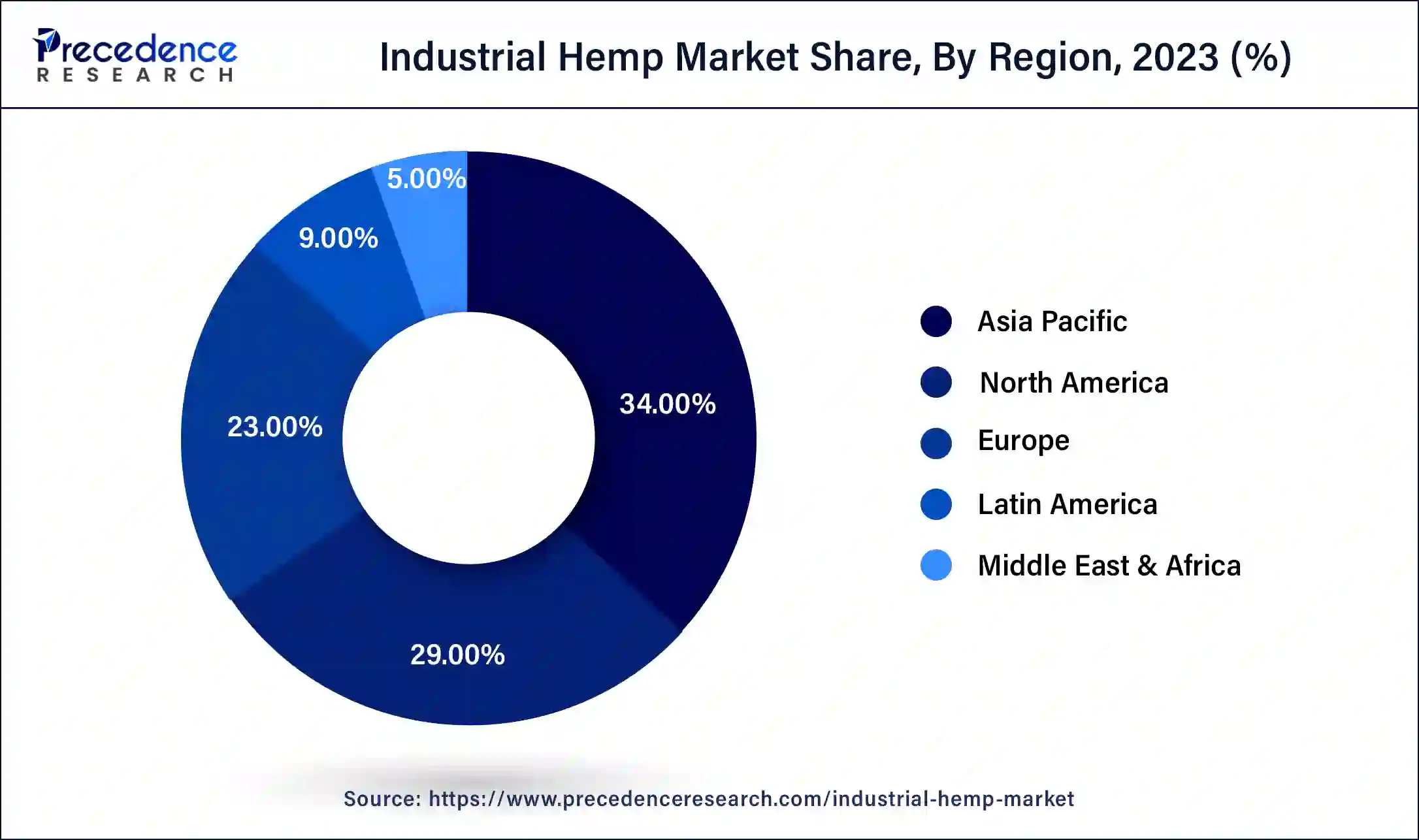
North America is expected to witness the fastest growth in the industrial hemp market during the forecast period. The growth of the market in the region is increasing due to the rising use of industrial hemp in applications like personal care, construction activities, pharmaceuticals, etc., which is driving the demand for the market.
The rising production and distribution activities in the region and the increasing investments in research and development activities in the development of industrial hemp are accelerating the growth of the industrial hemp market in the region. The availability of capital and investment opportunities in the United States attracts investors and entrepreneurs to the hemp industry. This enables companies to expand operations, invest in research and development, and scale up production. The United States has a culture that fosters entrepreneurship and innovation. This has led to the emergence of numerous startups and small businesses in the hemp industry, driving growth and competition.
U.S. Industrial Hemp Market
The U.S. market is driven by its versatility as a sustainable and eco-friendly option in textiles, food, construction, and even the plastic industries. Hemp is highly sustainable, demanding minimal water and few pesticides, thus making it an ideal eco-friendly material. It is utilized in biodegradable packaging, textiles, and also bioplastics, decreasing reliance on petroleum-based products.
Rising Demand for Sustainable and Eco-Friendly Materials Boosting the Industrial Hemp Market in Europe
Europe shows a significant growth during the forecast period. It is driven by the demand for low-carbon options in construction, textiles, along with automotive industries. Hemp is highly favored because it is a rapidly renewable resource which sequesters carbon, requires few chemical inputs, and offers durable, biodegradable, and even versatile materials. The European Commission has identified hemp, thus, a strategic crop for achieving Green Deal objectives, along with policy changes have relaxed regulations, for example, raising THC limits, making cultivation more attractive.
Germany Industrial Hemp Market
Germany's industrial hemp market is driven by an urgent change toward sustainability, with the European Commission determining it as a strategic crop. Companies, along with consumers, are pivoting to biodegradable and renewable raw materials to meet environmental goals, driving the need in textile production, bioplastics, and even construction materials.
Innovations in Hemp-Based Materials Driving the Industrial Hemp Market in Latin America
Latin America shows a notable growth during the forecast period. It is driven by innovations in hempcrete, sustainable construction materials, along with eco-friendly textiles. Improved, high-precision decorticator technologies and even carding systems are being deployed to produce high-quality bast fibers for textiles as well as industrial applications.
Brazil Industrial Hemp Market
It is driven by judicial decisions along with regulatory shifts, and the market is poised to leverage Brazil's vast, year-round rising capacity to supply fibers, bioplastics, and oils. The Brazilian industry seeks sustainable, bio-driven materials. Hemp fiber is finding applications in construction materials, automotive components, and textiles, driven by the need for renewable alternatives.
Sustainability Trends Accelerating Growth in the Industrial Hemp Market in MEA
MEA shows a rapid growth during the forecast period. This is because the plant acts as a versatile, low-carbon solution to urgent regional difficulties, including water scarcity, soil degradation, and the demand for economic diversification. The growing need for carbon-negative building materials in regional net-zero projects is thus, driving interest in hempcrete. Hempcrete offers natural insulation, is energy-efficient, along with captures more COâ‚‚ than it emits during production, providing a sustainable solution for housing along with insulation in hot climates.
Saudi Arabia Industrial Hemp Market
Saudi Arabia's industrial hemp market is driven by need for eco-friendly textiles, construction materials, and plant-driven nutrition. Hemp is a drought-resistant crop which supports the Saudi Green Initiative, decreasing water usage compared to traditional crops while assisting carbon sequestration.
Industrial Hemp Market Companies
- HempFlax B.V.: HempFlax B.V. is a major European industrial hemp grower along with processor that provides a vertically integrated "seed-to-shelf" portfolio of products, which includes raw materials, semi-finished goods, along with specialized equipment. The firm focuses on creating sustainable, high-quality hemp products for construction, horticulture, automotive, and consumer markets.
- American Hemp: American Hemp likely provides comprehensive solutions for the industrial hemp market, aiming on cultivating, processing, along with distributing high-quality hemp fiber, hurd, along with oil for diverse applications.
- Hemp, Inc.: Hemp, Inc. is a prominent player in the industrial hemp market, aiming on cultivating, processing, along with manufacturing products using industrial hemp and kenaf. They provide CBD-CBG products, hemp-driven building materials, and kenaf-based substrates for agricultural or medicinal mushroom cultivation.
- Boring Hemp Company: Boring Hemp Company provides vertically integrated industrial hemp operations, aiming on the cultivation, processing, along with distribution of high-quality hemp products. They fund the industrial market with traceable, sustainable materials, mainly targeting the food, fiber, along with construction material industries.
Other Major Key Players
- Parkland Industrial Hemp Growers Cooperative Ltd.
- CBD Biotechnology Co.
- Botanical Genetics, LLC
- Marijuana Company of America Inc.
- HempMeds Brasil
- Terra Tech Corp.
- American Cannabis Company, Inc.
- Industrial Hemp Manufacturing, LLC
- Plains Industrial Hemp Processing Ltd.
- Ecofiber Industries Operations
- Valley Bio Limited
Recent Developments
- In May 2025, Ukraine's largest enterprise for the primary processing of industrial hemp launched the Ma'Rijany industrial park in the Zhytomyr region. The development has elevated the industrial hemp market. (Source: ubn.news )
- In May 2025, the International Congress on Industrial Hemp and Medicinal Cannabis gathered over 1,500 participants from diverse sectors in Argentina. The event highlighted science-based policy and industrial development of cannabis and hemp globally. (Source: born2invest.com )
- In October 2024, Rare Earth Global, a UK-based startup on a mission to simplify access to industrial hemp products for feed, construction, and energy, raised USD 1.3 million pre-seed round to expand its platform. (Source: agfundernews.com )
- In March 2024, LiveWire the division of Harley-Davidson's electric motorcycle introduced the S2 Mulholland, in which some bits are made from hemp. The S2 Mulholland contains some sustainable materials in some components which are available in the United States and Canada.
- In March 2024, Coast Smokes partnered with Willie's Remedy, Willie Nelson's legendary hemp brand, to launch the new hemp smokeables. The launch contributed to Willie's historic transition from cigarettes to cannabis. The organic hemp smoke is made with biodegradable filters with the combination of trios of CBD vapes — Elevate, Chill, and Slumber.
- In November 2023, HempStreet, a Cannabis-focused health tech raised $1 million in its pre-series funding round initiated by Carl Waahlin of Waahlin Holdings an existing investor.
Segments Covered in the Report
By Product
- Seeds
- Fiber
- Shivs
By Source
- Conventional
- Organic
By Application
- Animal Care
- Textiles
- Automotive
- Furniture
- Food & Beverages
- Paper
- Construction Materials
- Personal Care
By Geography
- North America
- Europe
- Asia-Pacific
- Latin America
- Middle East and Africa
For inquiries regarding discounts, bulk purchases, or customization requests, please contact us at sales@precedenceresearch.com
Frequently Asked Questions
Tags





Ask For Sample
No cookie-cutter, only authentic analysis – take the 1st step to become a Precedence Research client
 Get a Sample




 sales@precedenceresearch.com
 Schedule a Meeting
