






 Request Consultation
Robotic refueling systems are transforming fuel management through automation, precision, and enhanced safety. This blog highlights key technologies, applications, and industry trends driving adoption. Learn how these systems improve efficiency while supporting modern industrial operations.
Fueling operations are undergoing a transformative shift with the rise of robotic refueling systems, combining precision, speed, and safety like never before. These systems minimize human error, reduce downtime, and streamline the refueling process across industrial, aerospace, and automotive sectors. By automating tasks traditionally performed manually, companies can achieve higher efficiency and consistency while enhancing workplace safety.
The growing demand for clean energy solutions, electric vehicles, and hydrogen-powered technologies is driving innovation in robotic refueling. Advanced systems are now capable of handling complex fuels and multiple vehicle types with minimal supervision, integrating seamlessly with smart infrastructure and IoT-enabled platforms. As automation becomes the standard, robotic refueling is set to redefine how industries approach fuel management, reducing costs while supporting sustainability goals.
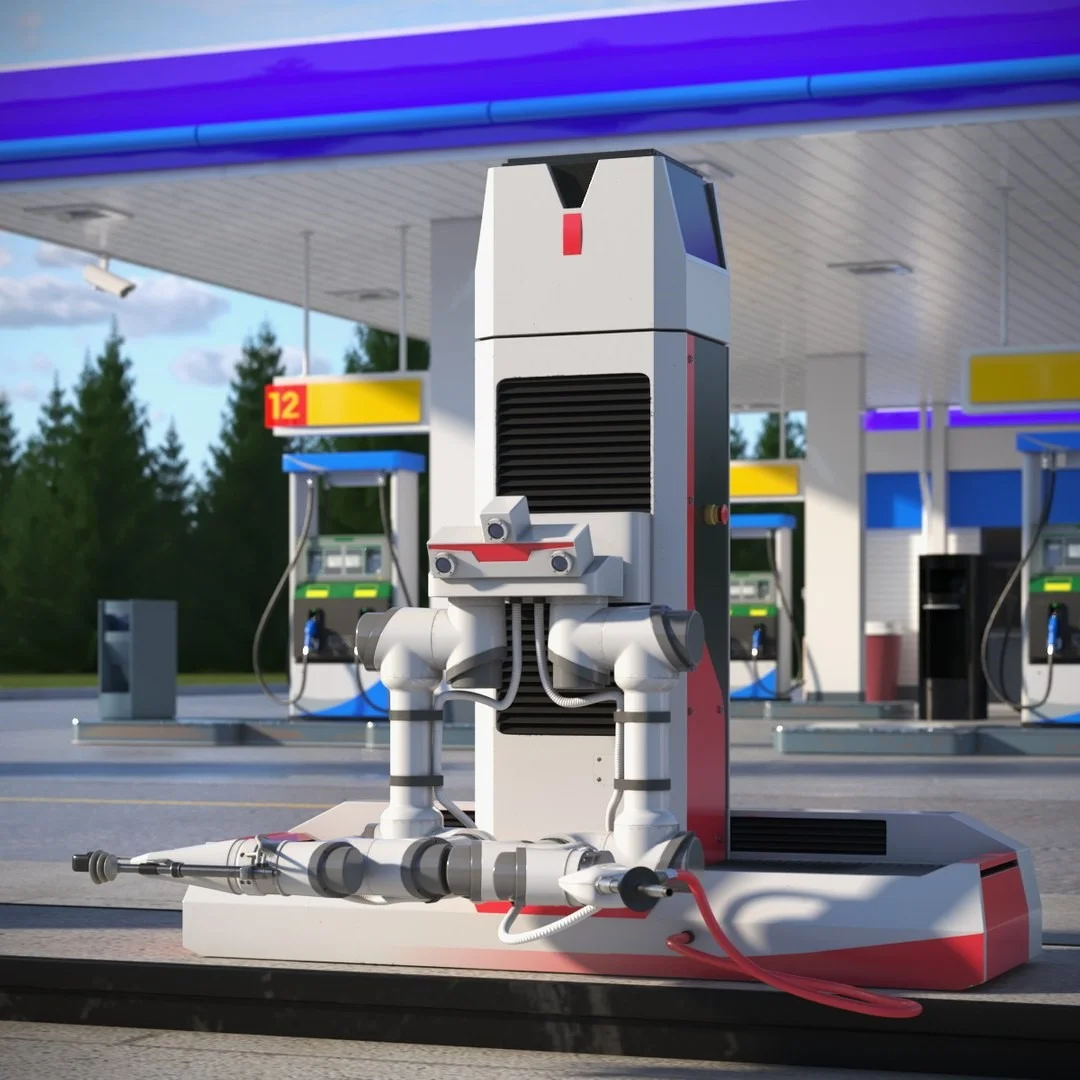
Why is the Popularity of the Robotic Refueling System Increasing?
Robotic refueling systems are gaining immense popularity in the industrial sector due to their ability to enhance operational efficiency, improve safety, and lower the dependency on the manual workforce. Robotic systems are capable of reducing refueling time by 60% to 70% and eliminating human exposure to toxic substances. These systems help in minimizing spillage and waste materials by offering long-term cost benefits to charging operators. They can be operated in adverse weather conditions and lower the risk of human error. The constant efforts by the prominent companies to integrate advanced monitoring solutions in robotic refueling systems have attracted the end-users significantly in recent times.
What are the Different Types of Robotic Refueling Systems?
Numerous types of robotic refueling systems consist of fully automated systems, semi-automated systems, and manual systems.
- Fully Automated Systems: A fully automated robotic refueling solution uses robotic arms, sensors, and computer vision to refuel vehicles or ships without human interference. The robotic arm handles the nozzles. Sensors are used to detect the vehicle’s location, fuel port position, and motion to align the nozzle accurately in harsh weather conditions. Computer vision systems help in the identification of any vehicle and locate the fuel filler cap area.
- Semi-Automated Systems: A semi-automated robotic refueling system is equipped with AI-enabled vision sensors and industrial robotic arms used to detect vehicle fuel ports, open caps, and fill fuel without any human intervention. These systems are mainly deployed in the mining sector and electric fleet operators for enhancing efficiency and improving safety. The key manufacturers of semi-automated refueling robots include Scott Technology, Rotec Engineering, KUKA AG, and ABB.
- Manual Systems: A manual robotic refueling system uses manually-operated or supervised robotic arms to connect a fuel nozzle to a vehicle or ship. These systems are designed to enhance the refueling of traditional fuels, including petrol and diesel, and new energy sources such as hydrogen and electricity.
What is the Robotic Refueling System Market Size in 2026?
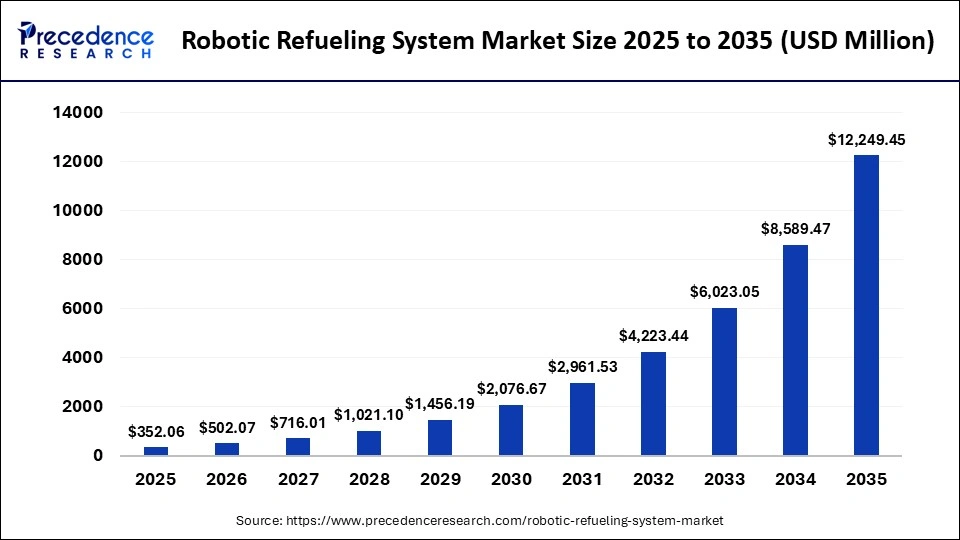
The global robotic refueling system market was valued at USD 352.06 million in 2025 and is projected to grow from USD 502.07 million in 2026 to approximately USD 12,249.45 million by 2035, registering a CAGR of 42.61% during the forecast period from 2026 to 2035. The market is expanding rapidly due to increasing demand for automation in fueling operations, enhanced safety requirements, reduced labor costs, and growing adoption across airports, military applications, and commercial fuel stations.
Get a Free Sample Report with Key Market Trends: https://www.precedenceresearch.com/sample/8230
Robotic Refueling in Action: Real-World Applications
The applications of robotic refueling systems include aerospace, marine, automotive, military, and industrial.
- Aerospace: Robotic refueling systems are widely adopted in the aerospace sector to connect fueling equipment to aircraft and spacecraft without human intervention. These systems are equipped with computer vision, artificial intelligence (AI), and robotic arms to enhance precision, improve safety, and increase efficiency in ground-based aviation and in-orbit satellite servicing.
- Marine: Robotic refueling systems are rapidly deployed in the marine sector to transfer various types of fuel, including ammonia, hydrogen, LNG, and traditional marine fuels, without human interference. It includes autonomous bunkering of unmanned surface vehicles (USVs) at sea, accelerating port refueling operations, and lowering safety risks to crew members during hazardous transfers in marine conditions.
- Automotive: Robotic refueling systems in the automotive sector are based on automated, robotic arms to open fuel flaps, insert nozzles, unscrew caps, and complete the refueling process without any workforce. These systems are widely adopted by automakers to increase convenience, enhance safety, and improve efficiency in the refueling process.
- Military: In the military sector, robotic refueling systems are designed to automate the transfer of fuel to defense vehicles, military aircraft, and unmanned systems in hazardous environments. The rapid deployment of advanced systems, such as the autonomous & robotic remote refueling point (AR3P) and the autonomous ground vehicle refueling (AGVR) system, in the defense sector enhances safety by removing soldiers from high-risk locations to improve operational efficiency.
- Industrial: Robotic refueling systems are widely used in the industrial sector to automate the refueling of various equipment such as heavy machinery, autonomous vehicles, and mining trucks. These systems enhance safety in tough environments, lower fuel spills, reduce operational downtime, and enhance 24/7 autonomous operations.
Top Companies Innovating in Robotic Refueling Technology
The top companies in the robotic refueling system, along with their product portfolio, are mentioned below in the table.
| Brands | Product Range |
 |
|
 |
|
 |
|
 |
|
 |
|
 |
|
Industry Updates: What’s New in Robotic Refueling
- In December 2025, Hyundai launched a new series of refueling robots. These robots are designed to enhance the refueling of hydrogen in fuel-cell vehicles.
- In September 2025, Astroscale launched REFLEX-J. REFLEX-J is a refueling spacecraft that integrates computer vision, robotics, and fuel transfer capabilities to perform a chemical refueling demonstration in low Earth orbit.
- In August 2025, Integrated Solutions for Systems (IS4S) partnered with Kleos Technology. This partnership aims to develop a robot for enabling automated refueling of aircraft.
Growth Drivers Shaping the Robotic Refueling Industry
- Collaborations among companies: Several robotic brands have collaborated with refueling companies to design automated refueling systems to reduce dependency on manual labor, which acts as a prominent factor that propels industrial expansion.
- Rapid Expansion of the Aerospace Sector: The surging growth of the aerospace sector in advanced countries, such as Singapore and the U.S., has fostered the growth of this industry.
- Establishment of Automated Refueling Centers: The gasoline providers are engaged in opening robotic refueling stations in China and South Korea due to a shortage of manual workforce. This, in turn, drives the growth of this industry. For instance, in June 2024, the China National Petroleum Corporation (CNPC) installed a fueling robot in the Guzong Road Integrated Transportation Energy Station. This robot is deployed to enhance the refueling capabilities in this area.
- Innovations: The prominent companies are investing rapidly in the research and development of automated refueling systems with advanced features to minimize human errors, thereby boosting industrial expansion.
- Surging Adoption of Autonomous Vehicles: The increasing adoption of autonomous vehicles by ride-hailing companies has increased the application for automated refueling systems, which shapes the industry in a positive direction. For instance, in March 2026, Pony.Ai collaborated with Chenqi Mobility. This collaboration aims at deploying 100+ robotaxis in China.
- Government Investments: The governments of numerous countries are rapidly investing to establish EV charging networks in different regions, which increases the demand for semi-automated refueling systems, thereby propelling industrial development. For instance, in November 2025, the government of the UK announced to invest £10 million. This investment is made to develop the EV charging infrastructure in England.
What are the Pain Points in this Industry?
The robotic refueling industry encounters numerous problems, such as a complex implementation process, expensive maintenance, and cybersecurity threats.
- Complex Implementation Process: The process of integrating robotic systems into the existing refueling system is highly complex and takes a long period of time for proper implementation, which acts as a restraint to the industry.
- Expensive Maintenance: The maintenance cost of the robotic refueling system is relatively higher compared to traditional systems due to increasing component prices and the heavy charges of service engineers. This, in turn, hampers the industry.
- Cybersecurity Threats: The hacking activities performed by the group of terrorists on the military refueling systems can disrupt safety, thereby negatively impacting the industry.
What are the Opportunities in this Industry?
The robotic refueling industry presents significant growth opportunities as the global push for automation, efficiency, and safety intensifies across aerospace, automotive, and industrial sectors. Increasing adoption of hydrogen and electric vehicles creates demand for advanced, precise, and multi-fuel refueling systems, while innovations in dual-arm robots and autonomous refueling platforms allow companies to expand into complex applications. Additionally, emerging markets with rapid industrialization and infrastructure development offer a fertile ground for deploying robotic refueling solutions, particularly where labor shortages and safety concerns drive automation adoption. Integration with IoT, predictive maintenance, and smart fueling infrastructure further positions the industry for long-term growth and operational optimization.
Wrapping Up
In conclusion, the robotic refueling industry is poised for significant growth in the coming years as organizations increasingly adopt automation to enhance efficiency and reduce reliance on manual labor. Technological innovations, such as dual-arm robots, autonomous refueling platforms, and IoT-enabled systems, are driving rapid deployment across industrial, automotive, and aerospace applications. While the industry benefits from strong growth drivers, it also faces challenges such as high costs and system integration complexities. Ongoing research and development in unmanned refueling solutions promise to further transform the sector, creating smarter, safer, and more efficient fuel management systems for the future.
About the Authors

Aditi Shivarkar
Aditi, Vice President at Precedence Research, brings over 15 years of expertise at the intersection of technology, innovation, and strategic market intelligence. A visionary leader, she excels in transforming complex data into actionable insights that empower businesses to thrive in dynamic markets. Her leadership combines analytical precision with forward-thinking strategy, driving measurable growth, competitive advantage, and lasting impact across industries.



Aman Singh
Aman Singh with over 13 years of progressive expertise at the intersection of technology, innovation, and strategic market intelligence, Aman Singh stands as a leading authority in global research and consulting. Renowned for his ability to decode complex technological transformations, he provides forward-looking insights that drive strategic decision-making. At Precedence Research, Aman leads a global team of analysts, fostering a culture of research excellence, analytical precision, and visionary thinking.

Piyush Pawar
Piyush Pawar brings over a decade of experience as Senior Manager, Sales & Business Growth, acting as the essential liaison between clients and our research authors. He translates sophisticated insights into practical strategies, ensuring client objectives are met with precision. Piyush’s expertise in market dynamics, relationship management, and strategic execution enables organizations to leverage intelligence effectively, achieving operational excellence, innovation, and sustained growth.