



Intensity Modulated Radiotherapy Market Size, Companies, Share, Patient Volume, Treatment Adoption Rates, Pricing Analysis, Regulatory Landscape, Competitive Positioning, and Demand Forecast
Intensity Modulated Radiotherapy Market (By IMRT Delivery Technique: Step and shoot IMRT, Sliding window IMRT, Volumetric modulated arc therapy, Helical IMRT; By System Component: Linear accelerator system, Multileaf collimator, Treatment planning system, Imaging and image guidance system, Oncology information system; By Cancer Site: Prostate cancer, Breast cancer, Head and neck cancer, Lung cancer, Gynecological cancers, Brain and CNS tumors; By End User: Hospitals, Specialty cancer centers, Ambulatory radiotherapy centers; By Service Model: New system installation, Upgrade and replacement, Maintenance and service contracts) - Global Industry Analysis, Size, Trends, Leading Companies, Regional Outlook, and Forecast 2026 to 2035
Source: https://www.precedenceresearch.com/intensity-modulated-radiotherapy-market
 Get a Sample
 Table Of Content


What is Intensity Modulated Radiotherapy Market Size in 2026?
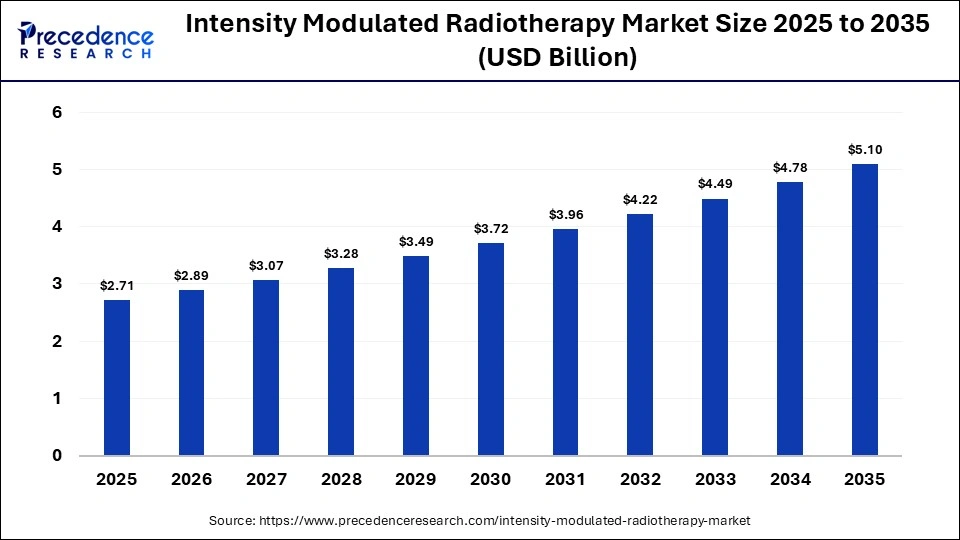
The global intensity modulated radiotherapy market size was calculated at USD 2.71 billion in 2025 and is predicted to increase from USD 2.89 billion in 2026 to approximately USD 5.10 billion by 2035, expanding at a CAGR of 6.52% from 2026 to 2035. The intensity modulated radiotherapy market is driven by increasing cancer cases and demand for precise, targeted radiation therapy.
Key Takeaways
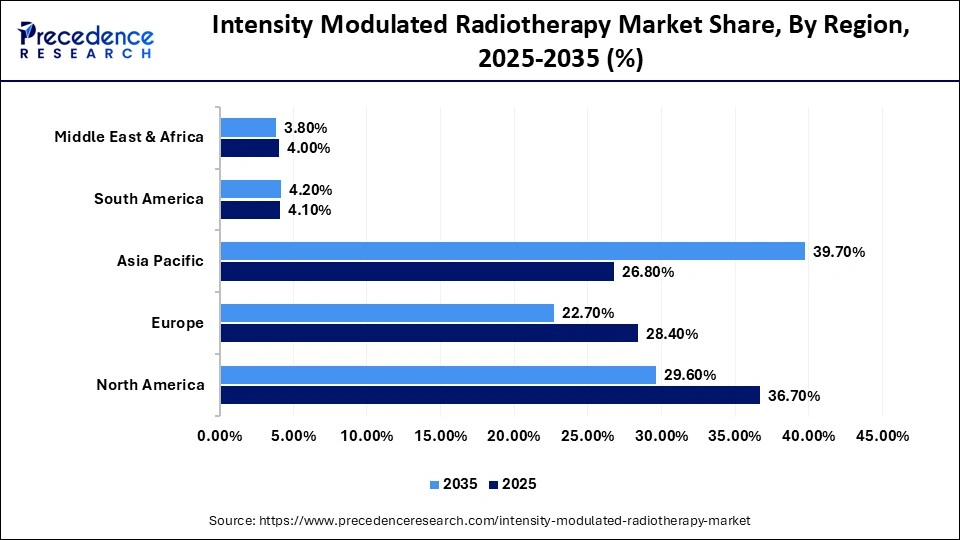
- North America dominated the intensity modulated radiotherapy market with a major share of 36.70% in 2025.
- Asia Pacific is expected to grow at the fastest CAGR in the market during the forecast period.
- By IMRT delivery technique, the volumetric modulated arc therapy segment led the global market with a share of 34.60% in 2025.
- By IMRT delivery technique, the step and shoot IMRT segment is expected to expand at a significant CAGR of 3.90% in the coming years.
- By system component, the linear accelerator system segment held a dominant position in the market, holding a share of 46.70% in 2025.
- By system component, the imaging and image guidance system segment is expected to grow at the fastest CAGR of 9.30% in the market between 2026 and 2035.
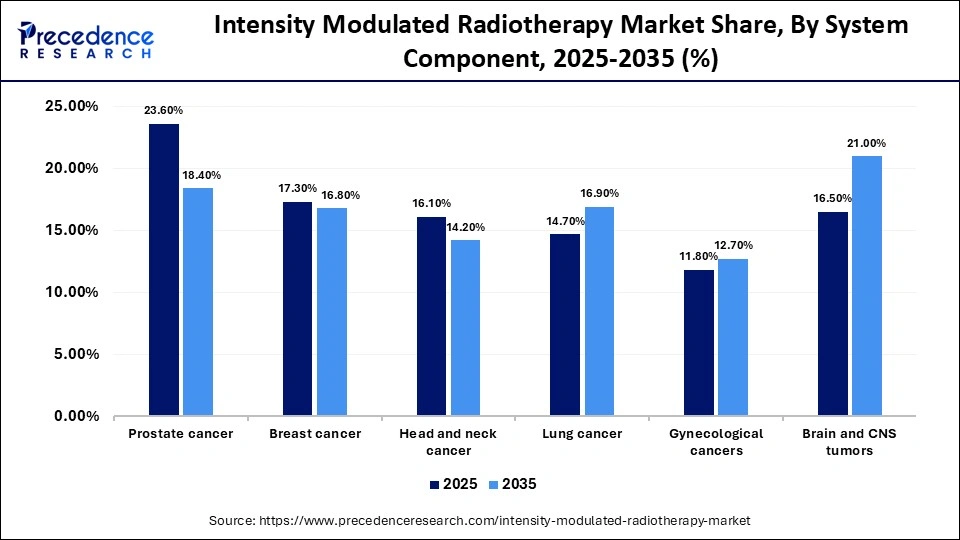
- By cancer site, the prostate cancer segment accounted for a considerable revenue share of 23.60% in the market in 2025.
- By cancer site, the brain and CNS tumors segment is expected to grow at the highest CAGR of 8.60% in the market during the studied years.
- By end user, the hospitals segment led the global market with a share of 62.80% in 2025.
- By end user, the specialty cancer centers segment is expected to expand at a CAGR of 8.10% in the coming years.
- By service model, the new system installation segment registered its dominance in the global market with a share of 48.60% in 2025.
- By service model, the upgrade and replacement segment is expected to grow at the fastest CAGR of 7.80% over the forecast period.
Market Overview
Is an advanced external-beam radiation technique that uses computer-controlled linear accelerators and multileaf collimators to modulate beam intensity across multiple fields so the dose conforms closely to the tumor shape while reducing exposure to nearby healthy tissue. The market includes IMRT-capable treatment delivery systems, planning software, imaging and information systems, and associated installation and service support deployed in hospitals and cancer centers for major solid tumors across global regions.
With the help of this technology, radiation levels can be delivered in 3D and close to tumors with minimum exposure to healthy tissues and sensitive organs. The market has been experiencing significant growth, driven by the increasing incidence of cancer all over the world, increased demand for precision and minimum invasiveness in treatment regimens, and ongoing technological advancements in radiation therapy apparatus. Furthermore, the combination of imaging, treatment planning with the assistance of artificial intelligence, and methods of adaptive radiotherapy also enhances the precision of the treatment and the clinical outcomes.
How is AI Influencing the Intensity Modulated Radiotherapy Market?
Artificial intelligence is significantly transforming the intensity modulated radiotherapy market by improving treatment planning, workflow optimization, and clinical accuracy. AI-based algorithms support radiation oncologists with some of the most monotonous tasks, including tumor contouring, the location of organs at risk, and the optimization of doses, making the process of developing an accurate treatment less time-consuming. Moreover, AI allows treating patients with adaptive radiotherapy, which involves constant examination of treatment results, and the radiation doses are changed during the therapy cycle. The AI integration assists in predictive analytics to assist clinicians in predicting possible side effects and reactions to treatments.
Intensity Modulated Radiotherapy Market Trends
- Shift Toward AI-Driven IMRT Planning: IMRT planning software leverages artificial intelligence to automate contouring, dose allocation, and overall treatment planning, enhancing accuracy and enabling clinicians to deliver more personalized and efficient radiation therapy.
- Need for Real-Time Tumor Monitoring: When integrated with IMRT, the software allows real-time monitoring of tumors, enabling precise delivery of tumor-specific doses while minimizing radiation exposure to surrounding healthy tissues.
- Advancements in Linear Accelerators: Innovations such as faster beam delivery, improved multileaf collimators, and increased automation have enhanced the efficiency and accuracy of IMRT workflows.
- Demand for Patient-Centric Therapy: The growing focus on individualized treatment is driving IMRT adoption, as it allows optimization of radiation dosage based on tumor shape, size, and location, improving patient outcomes and reducing side effects.
Market Scope
| Report Coverage | Details |
| Market Size in 2025 | USD 2.71 Billion |
| Market Size in 2026 | USD 2.89 Billion |
| Market Size by 2035 | USD 5.10 Billion |
| Market Growth Rate from 2026 to 2035 | CAGR of 6.52% |
| Dominating Region | North America |
| Fastest Growing Region | Asia Pacific |
| Base Year | 2025 |
| Forecast Period | 2026 to 2035 |
| Segments Covered | IMRT Delivery Technique, System Component, Cancer Site, End User, Service Model, and region |
| Regions Covered | North America, Europe, Asia-Pacific, Latin America, and Middle East & Africa |
Segment Insights
IMRT Delivery Technique Insights
Why Did the Volumetric Modulated Arc Therapy Segment Dominate the Market?
The volumetric modulated arc therapy segment dominated the intensity modulated radiotherapy market with a share of 34.60% in 2025. This is because of its ability to provide a more precise dose of radiation at a shorter time than traditional methods of IMRT. VMAT enables the radiation machine to rotate continuously around the patient and, at the same time, change the intensity of the beam, dose rate, and shape of the radiation field. Progress in treatment planning software and its integration with image-guided radiotherapy systems has further empowered the use of VMAT in hospitals and cancer treatment centers. The dominance of VMAT is also reinforced due to its capability to treat a wide range of cancers, including prostate, head and neck, and brain tumors.
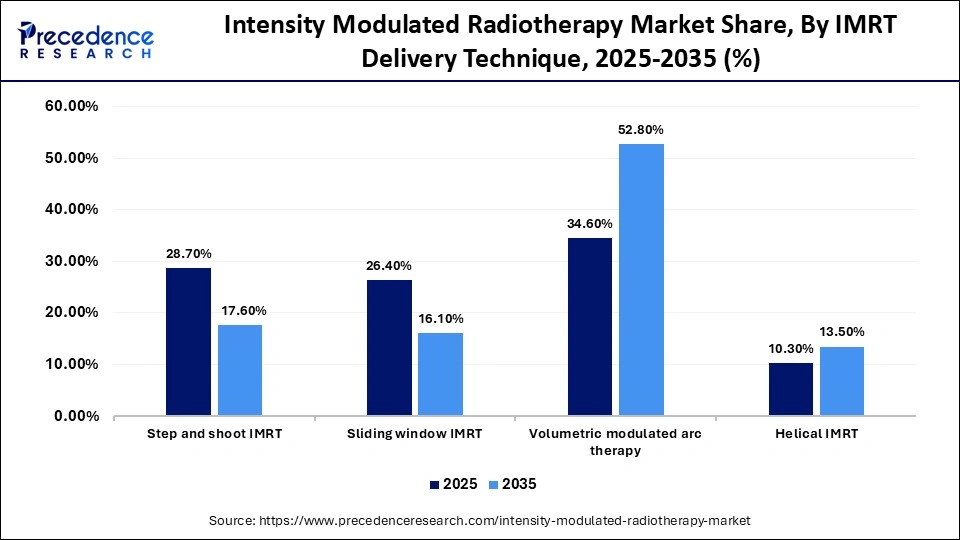
The step and shoot IMRT segment is expected to grow at a significant CAGR of 3.90% in the upcoming period because it is reliable and cost-effective, and it is highly compatible with the existing radiotherapy infrastructure. Due to its less complex operation specifications, it is especially appealing to the hospitals and cancer centers of emerging markets that are seeking to extend their radiotherapy facilities. The technique has an ideal dose modulation and relative simplicity in the treatment planning and quality assurance steps. Additionally, healthcare providers with limited budgets often choose to upgrade existing linear accelerator systems with Step-and-Shoot capabilities rather than investing in more complex and costly technologies.
System Component Insights
What Made Linear Accelerator System the Dominant Segment in the Market?
The linear accelerator system segment dominated the intensity modulated radiotherapy market with a major share of 46.70% in 2025, as it serves as the primary component for delivering high-energy radiation beams in IMRT treatments. These systems generate X-rays or high-energy electrons that can be precisely shaped for patient-specific tumor targeting, minimizing exposure to surrounding healthy tissues. Key capabilities include high-precision multileaf collimators, advanced beam control systems, and integrated treatment planning software. Rising global cancer incidence and increased funding for oncology facilities have further driven the adoption of sophisticated linear accelerator platforms.
The imaging and image guidance system segment is expected to grow at the highest CAGR of 9.30% between 2026 and 2035. The growth of the segment is majorly driven by the rising demand for precise tumor localization and real-time treatment monitoring. These systems integrate cone-beam CT, MRI, and advanced imaging software to provide clinicians with detailed views of tumors and surrounding organs before and during therapy. The expanding use of image-guided radiotherapy (IGRT) and adaptive radiotherapy is further fueling demand, as practitioners adopt these systems to enhance therapeutic outcomes while minimizing radiation-related complications.
Cancer Site Insights
Why Did the Prostate Cancer Segment Lead the Intensity Modulated Radiotherapy Market?
The prostate cancer segment registered dominance in the market while holding a share of 23.60% in 2025 because of the high prevalence of prostate cancer around the world. The prostate tumors lie near the sensitive organs like the bladder and the rectum, and to limit the complications, it is important to ensure that the radiation is delivered accurately. IMRT enables radiation oncologists to deliver high-precision radiation beams, allowing higher doses to tumors while minimizing exposure to surrounding healthy tissues. An aging population, expanded prostate cancer screening guidelines, and increasing awareness of advanced radiotherapy technologies also strengthen the segment's dominance.
The brain and CNS tumors segment is expected to grow at the fastest CAGR of 8.60% over the forecast period because of the complexity and sensitivity of the brain structure. High-precision IMRT assists in minimizing possible neurotoxicity, as well as enhancing the overall safety of treatment. Advances in imaging technologies, treatment planning, and image-guided radiotherapy have further made IMRT more effective in the management of brain tumors. Also, the rising diagnosis of brain tumors, the availability of superior technologies in treating cancer, and the growing investment in specialized neuro-oncology care are providing impetus to the need for precision radiotherapy methods.
End User Insights
How Do Hospitals Contribute the Most Revenue in the Intensity Modulated Radiotherapy Market?
The hospitals segment held the largest market share of 62.80% in 2025 because of the existence of advanced infrastructure, oncology special departments, and the availability of skilled medical practitioners. Complex cancer therapies like IMRT are mainly carried out in hospitals since they are the primary healthcare centers that can accommodate the implementation as well as the running of complex radiotherapy systems. These facilities also deal with a high number of cancer patients, which is also contributing to the increased use of radiotherapy technologies. Oncologists, radiologists, physicists, and technicians also contribute to the multidisciplinary planning of treatment in hospitals comprised of multidisciplinary care teams.
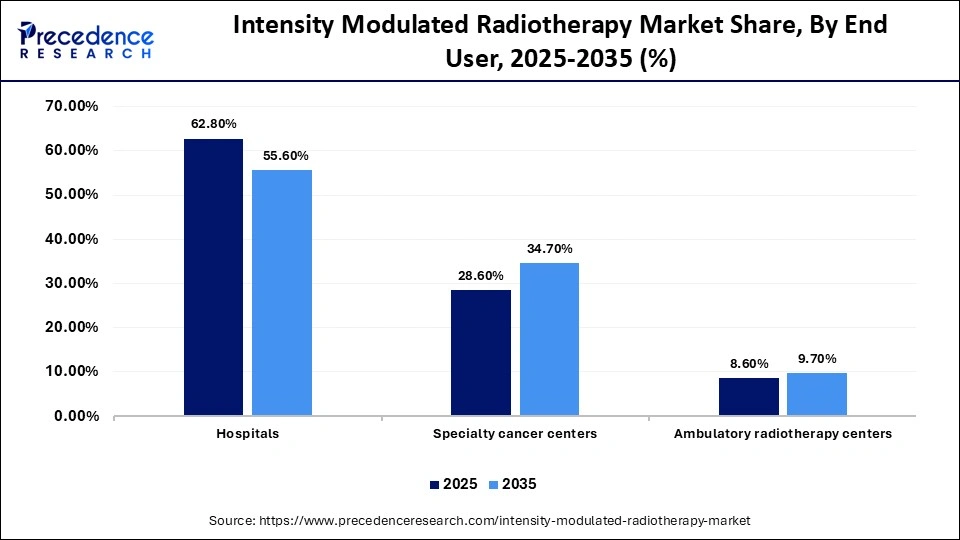
The specialty cancer centers segment is expected to expand at a robust CAGR of 8.10% in the coming years, driven by growing interest in advanced, specialized cancer treatment facilities. These centers focus exclusively on cancer diagnosis, treatment, and research, enabling significant investments in cutting-edge radiotherapy equipment such as IMRT, image-guided radiotherapy, and adaptive radiation therapy. With expertise in specific cancer types, highly customized treatment protocols, multidisciplinary oncology teams, and advanced diagnostic services, specialty cancer centers can rapidly adopt and implement the latest practices in patient care and management.
Service Model Insights
Why Did the New System Installation Segment Lead the Intensity Modulated Radiotherapy Market?
The new system installation segment led the market, holding a major revenue share of 48.60% in 2025. This is because healthcare providers increasingly prefer acquiring advanced, state-of-the-art radiotherapy systems to enhance treatment precision and workflow efficiency. Installing new systems allows integration of the latest technologies, such as high-precision linear accelerators, AI-driven treatment planning, and image-guided radiotherapy, ensuring optimal patient outcomes. Additionally, rising investments in cancer care infrastructure and expanding oncology facilities support the demand for brand-new IMRT installations over retrofitting older equipment.
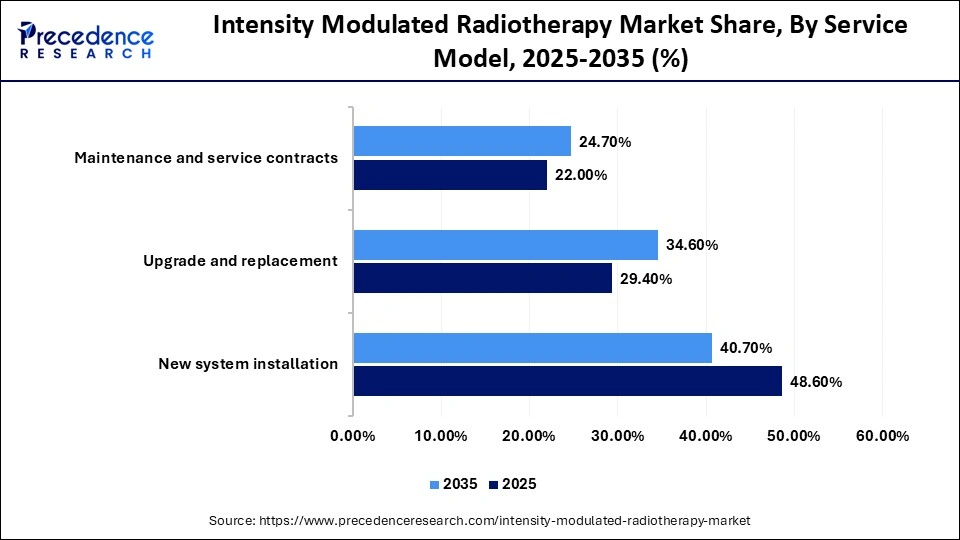
The upgrade and replacement segment is expected to grow at a CAGR of 7.80% over the forecast period, as healthcare providers modernize existing radiotherapy systems with advanced features like improved imaging integration. A large number of hospitals and oncology centers are modifying old radiation therapy equipment as a form of upgrading, so that they include more advanced features like better imaging integration. Upgrading old equipment is a cost-effective alternative to full system replacement, making it attractive for institutions with limited budgets. Increased focus on precision oncology, patient safety, and improved clinical outcomes is further driving the adoption of upgrade and replacement services in the market.
Regional Insights
How Big is the North America Intensity Modulated Radiotherapy Market Size?
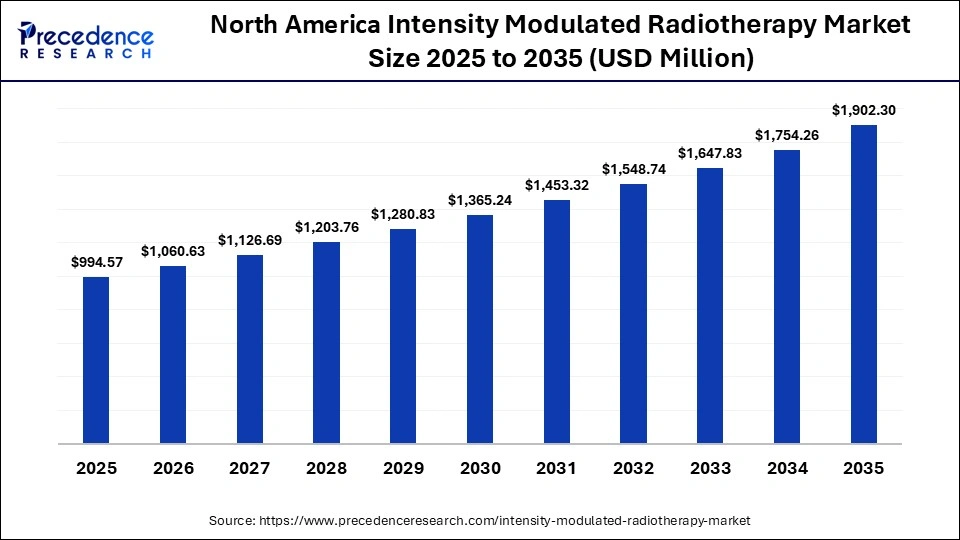
The North America intensity modulated radiotherapy market size is estimated at USD 994.57 million in 2025 and is projected to reach approximately USD 1,902.30 million by 2035, with a 6.70% CAGR from 2026 to 2035
Why Did North America Lead the Intensity Modulated Radiotherapy Market?
North America dominated the intensity modulated radiotherapy market by holding a major share of 36.70% in 2025. This is mainly due to ongoing advances in imaging technology, high healthcare expenditure, and the rapid adoption of new cancer treatment solutions. The region has a well-structured healthcare system comprising modern oncology centers, research centers, and advanced radiotherapy centers that are extensively engaged in the development of novel radiation therapy. Continuous advancements in treatment planning software, imaging, and linear accelerator systems are enabling providers to deliver more precise and personalized radiation treatments. Additionally, the rising incidence of cancers, particularly prostate, breast, and brain tumors, requires complex radiotherapy techniques like IMRT, further fueling market growth.
What is the Size of the Asia Pacific Intensity Modulated Radiotherapy Market?
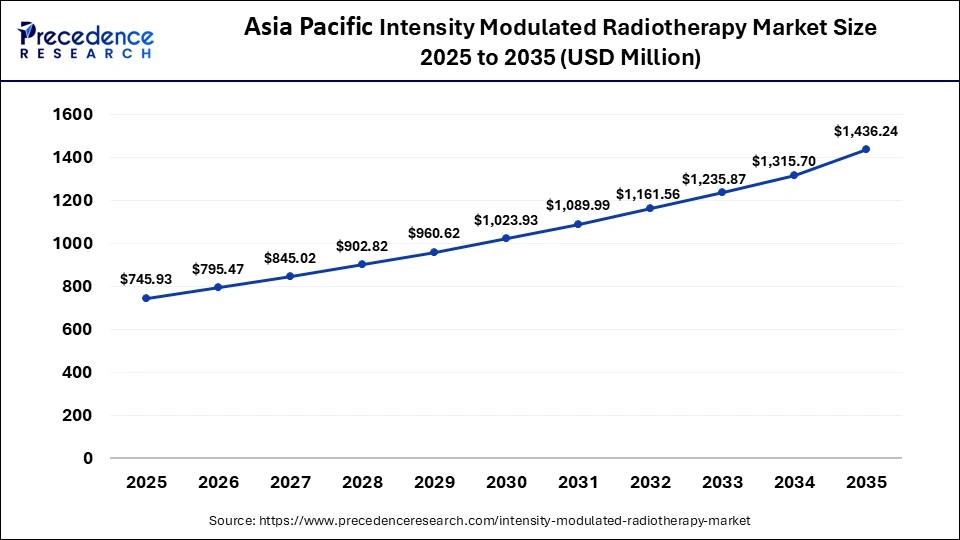
The Asia Pacific intensity modulated radiotherapy market size is calculated at USD 745.93 million in 2025 and is expected to reach nearly USD 1,436.24 billion in 2035, accelerating at a strong CAGR of 6.77% between 2026 to 2035.
Why is Asia Pacific Experiencing the Fastest Growth in the Intensity Modulated Radiotherapy Market?
Asia Pacific is expected to grow at the fastest CAGR in the market during the forecast period because of the rising patient population, increasing incidence of cancer, and expanding healthcare infrastructure. Rapidly growing cancer cases in countries like China, India, Japan, and South Korea are fueling demand for advanced radiotherapy solutions, including IMRT. The adoption of digital treatment planning systems, linear accelerators, and image-guided radiotherapy is facilitating broader use of IMRT in regional cancer centers. Additionally, growing healthcare awareness, improved insurance coverage, and the expansion of specialized oncology facilities are encouraging patients to seek advanced, precision-based treatment options.
Intensity Modulated Radiotherapy Value Chain Analysis
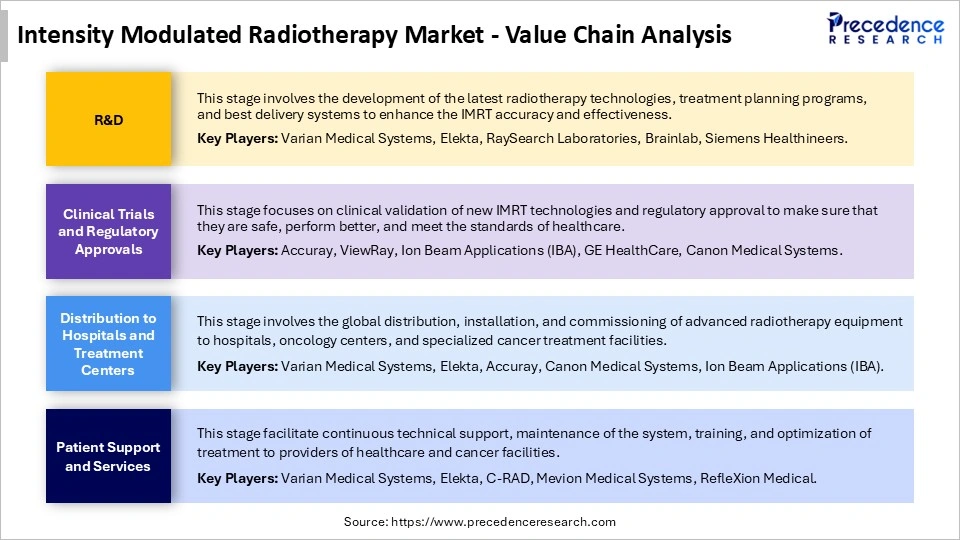
Intensity Modulated Radiotherapy Market Companies
- Varian Medical Systems
- Elekta
- Accuray
- Hitachi
- RaySearch Laboratories
- Brainlab
- Ion Beam Applications (IBA)
- ViewRay
- Siemens Healthineers
- GE HealthCare
- Canon Medical Systems
- Mitsubishi Electric
- C-RAD
- Mevion Medical Systems
- RefleXion Medical
Recent Developments
- In September 2025, Siemens Healthineers' Varian showcased upgrades to its Halcyon treatment platform at ASTRO 2025, offering image-guided radiotherapy in under 10 minutes with integrated cone-beam CT, enhanced real-time motion management, and improved patient positioning. (Source: https://finance.yahoo.com)
- In September 2024, Accuray signed a strategic partnership with major cancer centers in India to install its enhanced IMRT-enabled TomoTherapy systems. The partnership is to increase the availability of high-technology radiotherapy solutions and reinforce the company in its position in the market of South India, which is closely aligned with the emerging oncology treatment market. (Source: https://www.thehindu.com)
Segments Covered in the Report
By IMRT Delivery Technique
- Step and shoot IMRT
- Sliding window IMRT
- Volumetric modulated arc therapy
- Helical IMRT
By System Component
- Linear accelerator system
- Multileaf collimator
- Treatment planning system
- Imaging and image guidance system
- Oncology information system
By Cancer Site
- Prostate cancer
- Breast cancer
- Head and neck cancer
- Lung cancer
- Gynecological cancers
- Brain and CNS tumors
By End User
- Hospitals
- Specialty cancer centers
- Ambulatory radiotherapy centers
By Service Model
- New system installation
- Upgrade and replacement
- Maintenance and service contracts
By Region
- North America
- Latin America
- Europe
- Asia-pacific
- Middle and East Africa
For inquiries regarding discounts, bulk purchases, or customization requests, please contact us at sales@precedenceresearch.com
Frequently Asked Questions





Ask For Sample
No cookie-cutter, only authentic analysis – take the 1st step to become a Precedence Research client
 Get a Sample
.webp)



 sales@precedenceresearch.com
 Schedule a Meeting
