



IVF Services Market Size, Companies, Share, Patient Volume, Treatment Adoption Rates, Pricing Analysis, Regulatory Landscape, Competitive Positioning, and Demand Forecast
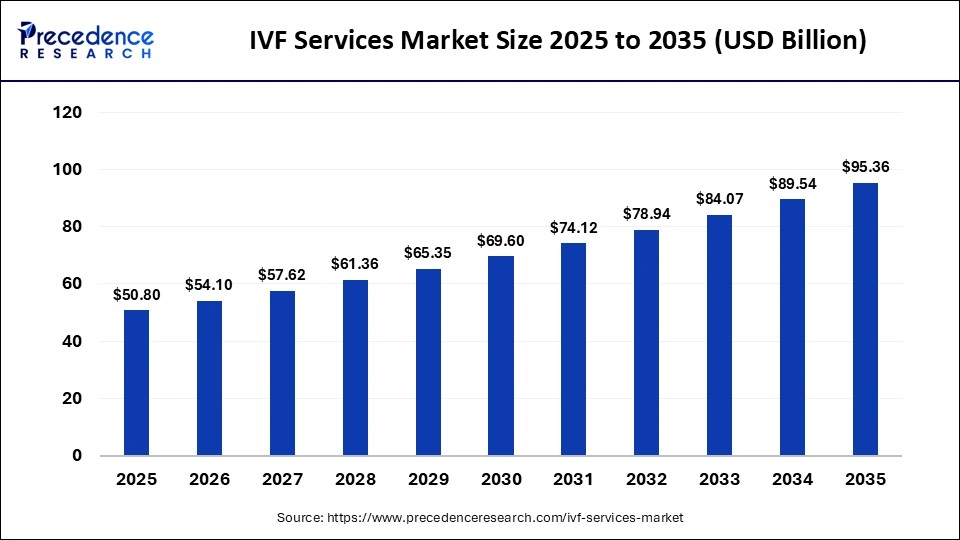
Rohan Patil, a Healthcare Industry Expert, highlights that the ivf services market has reached USD 54.10 billion in 2026 and is on track to reach USD 95.36 billion by 2035, advancing at a CAGR of 6.50%. Key ivf services market companies shaping the market include Cook Medical, Esco Medical, Ferring Pharmaceuticals, FUJIFILM Irvine Scientific, Inc., Genea Limited, while major growth segments span By Cycle Type, By Procedure, By End-User.
Source: https://www.precedenceresearch.com/ivf-services-market
 Get a Sample
 Table Of Content


What is the IVF Services Market Size in 2026?
The global IVF services market size was estimated at USD 50.80 billion in 2025 and is predicted to increase from USD 54.10 billion in 2026 to approximately USD 95.36 billion by 2035, expanding at a CAGR of 6.50% from 2026 to 2035. The market growth is attributed to rising infertility rates, delayed parenthood trends, and continuous advancements in assisted reproductive technologies.
Key Takeaways
- Europe dominated the IVF services market with a 39% share in 2025.
- Asia Pacific is expected to grow at the fastest CAGR of 11% between 2026 and 2035.
- By cycle type, the fresh IVF cycles segment contributed the highest market share of 49% in 2025.
- By cycle type, the thawed IVF cycles segment is the second-largest shareholder and is expected to grow at the fastest rate during the forecast period.
- By procedure, the IVF with ICSI segment dominated the market in 2025.
- By procedure, the IVF with donor eggs segment is expected to grow at a rapid pace in the coming years.
- By end-user, the fertility clinics segment held a major market share of 65% in 2025.
- By end-user, the hospitals segment is expected to grow at the fastest rate between 2026 and 2035.
Market Overview
The rising global infertility rate is a major factor accelerating the growth of the IVF services market across developed and emerging regions. The World Health Organization suggests that one in six adults all over the world experiences infertility, which indicates that there is a gap in medical care provision. In vitro fertilization (IVF) is a modern assisted reproductive technology, which involves the collection of eggs, fertilization in a laboratory, and their implantation in the uterus.
Innovations in this process, including intracytoplasmic sperm injection and embryo freezing, have enhanced the overall clinic success rate. The trends of delayed parenthood, particularly among the urban population, are making IVF increasingly dependent as natural fertility wanes with age. Furthermore, the increase in the number of fertility clinic networks and the enhancement of awareness on matters related to reproductive health are also boosting market growth.
Impact of Artificial Intelligence on the IVF Services Market
Artificial intelligence is significantly transforming the IVF services market by improving success rates and optimizing operational efficiency across fertility clinics globally. Complex AI algorithms compare the morphology, genetics, and previous medical history of the embryo. This determines the best viable embryos with greater precision than traditional assessment tools. Moreover, the predictive analytics models can be used to predict the likelihood of cycle success and enable patients to make more informed and data-driven decisions.
Major Market Trends
- Global Collaborations: IVF providers are forming international partnerships to expand access, share expertise, and enable cross-border fertility care, improving treatment availability and standardization worldwide.
- Emergence of Next-Generation Reproductive Technologies: Innovations such as in vitro gametogenesis, egg rejuvenation, and AI-based embryo selection are gaining traction, with some already entering clinical use and further driving adoption and technological advancement in fertility care.
- Expansion of Fertility Clinic Networks: Rapid establishment of specialized fertility centers across emerging regions is boosting access to assisted reproductive treatments.
- Growing Adoption of Advanced Embryology Technologies: Increasing use of time-lapse imaging and lab automation is boosting clinical efficiency and treatment success consistency.
- Rising Demand for Fertility Preservation Services: Increasing preference for egg and sperm freezing is fueling long-term demand for assisted reproductive solutions.
- Increasing Male Infertility Diagnosis Rates: Improved awareness and diagnostic capabilities are driving higher treatment uptake among male infertility cases.
Market Scope
| Report Coverage | Details |
| Market Size in 2025 | USD 50.80 Billion |
| Market Size in 2026 | USD 54.10 Billion |
| Market Size by 2035 | USD 95.36 Billion |
| Market Growth Rate from 2026 to 2035 | CAGR of 6.50% |
| Dominating Region | Europe |
| Fastest Growing Region | Asia Pacific |
| Base Year | 2025 |
| Forecast Period | 2026 to 2035 |
| Segments Covered | Cycle Type, Procedure, End-User, and Region |
| Regions Covered | North America, Europe, Asia-Pacific, Latin America, and Middle East & Africa |
Market Dynamics
Drivers
Rising Demand for Fertility Preservation Services
Rising demand for fertility preservation services is expected to expand long-term treatment volumes globally, further driving market growth. Increasing influence of career priorities, delayed marriages, and lifestyle changes is encouraging individuals to opt for egg and sperm freezing. Pregnancy success rates have improved, with European data showing around 33% success per embryo transfer in 2023, supported by advancements in embryo selection and cryopreservation techniques. This progress is creating a future pipeline of IVF cycles linked to stored reproductive material.
Restraint
High Treatment Costs and Financial Burden
High treatment costs and out-of-pocket expenses are expected to hinder the growth of the IVF services market. Expensive medications, particularly hormonal stimulation drugs, significantly increase overall treatment costs. Differences in pricing between public and private clinics also create unequal access to quality care. As a result, financial constraints often discourage patients from starting or continuing IVF treatment cycles.
Opportunity
Expansion of Fertility Clinics
The expanding network of fertility clinics is expected to create immense opportunities across both developed and emerging regions. The rapid establishment of specialized fertility centers in Asia-Pacific, Latin America, and the Middle East is improving service availability and reducing geographical barriers. This expansion enhances patient access and increases overall procedure volumes across the fertility care ecosystem.
Segment Insights
Cycle Type Insights
IVF Services Market Share, By Cycle Type, 2025-2035 (%)
| Cycle Type | 2025 | 2035 |
| Fresh IVF Cycles | 49.00% | 41.50% |
| Thawed IVF Cycles | 35.00% | 43.50% |
| Donor Egg Cycles | 16.00% | 15.00% |
The Fresh IVF Cycles Segment Dominated the Market in 2025
The fresh IVF cycles segment dominated the IVF services market with a major share of 49% in 2025. This is mainly due to a strong clinical preference for immediate embryo transfer following ovarian stimulation. Improved efficiency in egg retrieval and reduced dependence on cryopreservation infrastructure also support its leading position. Immediate transfer helps accelerate both emotional and clinical recovery for patients during treatment. It is commonly preferred in cases with good ovarian reserve and stable hormone levels, while high patient inflow and strong clinical confidence continue to reinforce its dominance.
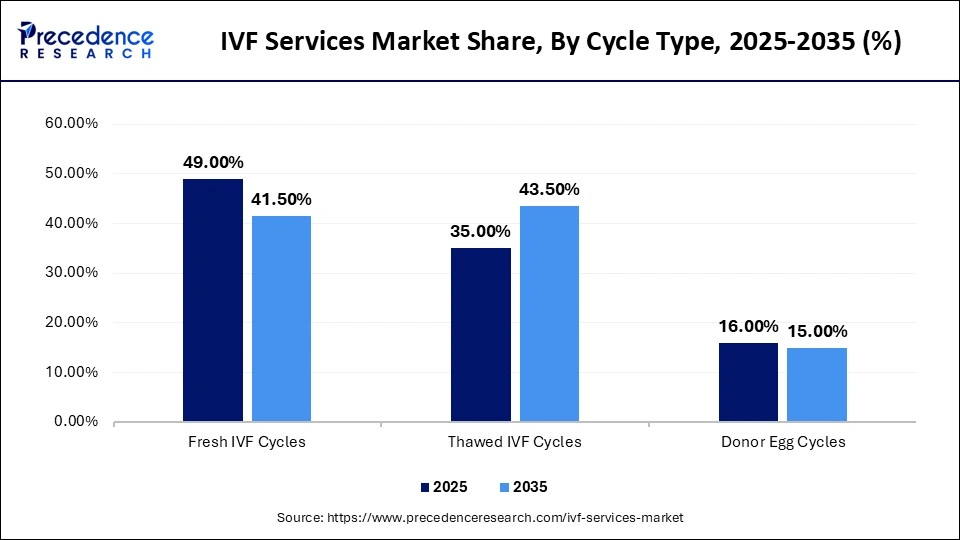
The thawed IVF cycles segment held the second-largest market share of 35% in 2025 and is expected to grow at the fastest CAGR during the forecast period. This growth is driven by its increasing use in cases of diminished ovarian reserve and genetic concerns. Fertility clinics are increasingly adopting frozen embryo transfer to optimize uterine conditions and reduce complications associated with ovarian stimulation. In addition, ongoing advancements in cryopreservation techniques and improved clinical protocols are further supporting the strong growth of this segment.
The donor egg cycles segment held a 16% share of the market in 2025 and is expected to grow at a significant rate in the upcoming period. This growth is driven by increasing reliance on frozen donor egg banks, particularly among older couples and the LGBTQ+ community, for family building. Rising global demand for donor-assisted reproductive treatments is further strengthening the long-term growth of this segment.
Procedure Insights
Why Did the IVF with ICSI Segment Dominated the Market in 2025?
The IVF with ICSI (Intracytoplasmic Sperm Injection) segment dominated the IVF services market in 2025 due to its high effectiveness in treating male infertility, which is a growing contributor to overall infertility cases. It significantly improves fertilization success rates by directly injecting a single sperm into the egg, making it a preferred choice over conventional IVF in complex cases. Additionally, its widespread clinical adoption, strong success outcomes, and ability to support advanced reproductive treatments have reinforced its leading market position.
The IVF with donor eggs segment is expected to grow at a rapid pace throughout the forecast period. This is mainly due to increasing cases of age-related infertility, as more women are delaying pregnancy for career and lifestyle reasons. It is also widely used by couples with poor egg quality, premature ovarian failure, or genetic risks, as donor eggs offer higher success rates compared to self-egg IVF cycles. Additionally, rising acceptance among single parents and LGBTQ+ families, along with expanding donor egg banks globally, is further driving the segment's growth.
End User Insights
IVF Services Market Share, By End-User, 2025-2035 (%)
| End-User | 2025 | 2035 |
| Fertility Clinics | 65.00% | 68.00% |
| Hospitals | 22.00% | 18.50% |
| Surgical Centers | 13.00% | 13.50% |
The Fertility Clinics Segment Held a 65% Share of the Market in 2025
The fertility clinics segment dominated the IVF services market with the largest share of 65% in 2025 due to their specialized infrastructure and strong focus on assisted reproductive technologies. These clinics are equipped with advanced embryology laboratories, including time-lapse imaging systems and controlled incubation environments.
Fertility clinics handle a high patient volume due to shorter waiting times and streamlined treatment protocols. With specialists dedicated entirely to reproductive medicine, they deliver greater precision and consistent clinical outcomes. Additionally, the rapid expansion of private fertility clinic chains in urban areas is expected to further drive segment growth in the coming years.
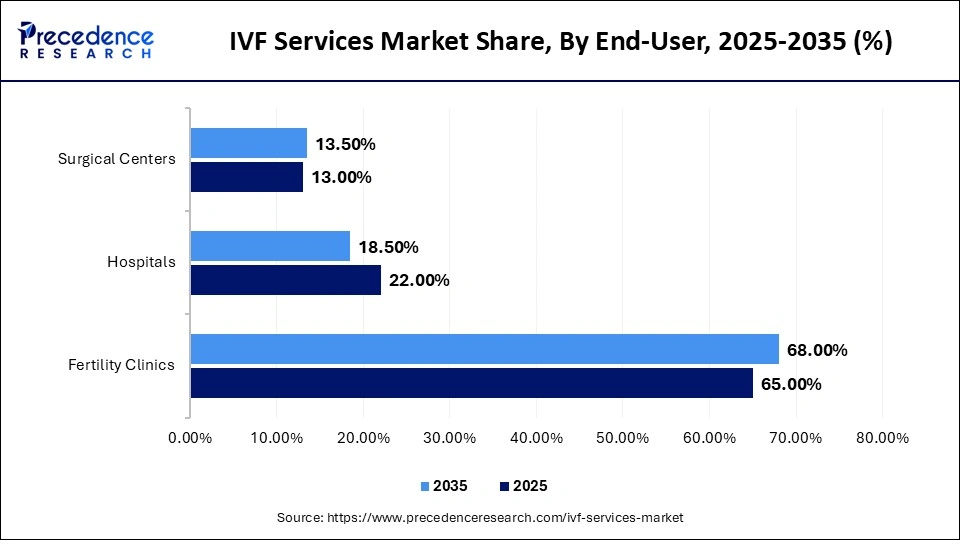
The hospitals segment held the second-largest market share of 22% in 2025 and is expected to expand at the fastest rate over the projection period. This is mainly due to their capability to manage complex infertility cases that require multidisciplinary medical support. Hospitals provide integrated services such as imaging, surgery, and critical care within a single facility, making them preferred for patients with underlying medical conditions. In addition, large healthcare systems are increasingly adding IVF units to expand service offerings and meet rising demand, supported by improved infrastructure and the adoption of advanced reproductive technologies.
The surgical centers segment held a 13% share of the market in 2025, driven by their role in performing minimally invasive fertility-related procedures. These facilities specialize in laparoscopic and hysteroscopic surgeries to address the underlying causes of infertility. Patients often rely on surgical centers for preparatory procedures due to their cost-effectiveness and clinical efficiency. The segment is expected to grow steadily, supported by rising demand for pre-IVF corrective treatments and diagnostic interventions.
Regional Insights
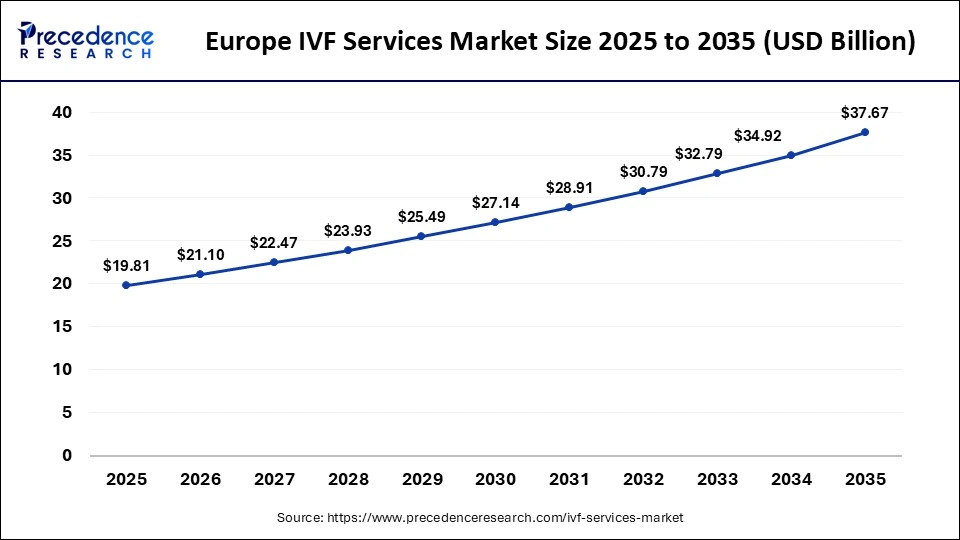
Europe IVF Services Market Size and Growth 2026 to 2035
The Europe IVF services market size has grown strongly in recent years. It will grow from USD 19.81 billion in 2025 to USD 37.67 billion in 2035, expanding at a compound annual growth rate (CAGR) of 6.64% between 2026 and 2035.
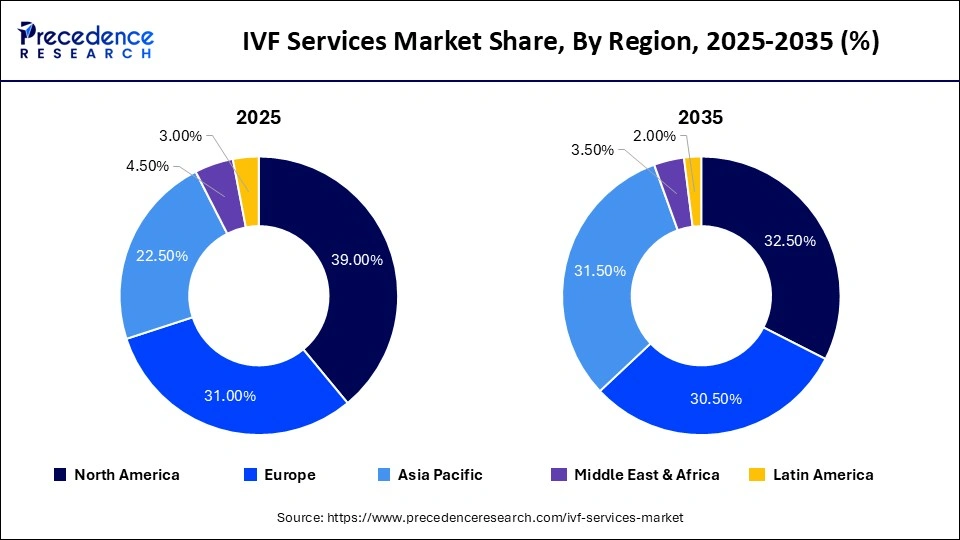
Europe Dominated the Market With a 39% Share in 2025
Europe dominated the IVF services market with a major share of 39% in 2025, due to the strong presence of publicly funded fertility programs and favorable regulatory frameworks. Several countries, including France, Denmark, and Spain, are vigorously encouraging various IVF cycles with reimbursement policies, which have enhanced access for patients. Data published in 2025 by the ESHRE reported over 1.1 million ART cycles annually across Europe, reflecting one of the highest treatment volumes globally.
Clinics in the region have standard treatment/protocols that are backed by well-established regulatory authorities. The access to IVF is organized by such public services as the National Health Service, based on specific clinical principles. The utilization rates and patient access are higher in countries where reimbursement policies are favorable than in systems controlled by the private sector.
Germany IVF Services Market Analysis
Germany leads the market in Europe due to its well-structured healthcare system and rising demand for assisted reproductive treatments. Fertility centers in the country are expanding with advanced laboratory infrastructure and strong clinical quality standards.
Growing awareness of fertility preservation and reproductive health is increasing patient inflow, particularly in urban areas. Clinics are also integrating genetic testing and advanced embryo selection technologies into routine practice, improving success rates. Strong clinical standards and a robust regulatory framework position Germany as a key contributor to fertility treatment growth in Europe.
North America: The Second-Largest Market
North America held the second-largest market share of 31% in 2025, driven by rapid adoption of advanced reproductive technologies. According to 2026 data from the American Society for Reproductive Medicine, the U.S. recorded over 100,000 IVF births, highlighting strong procedural uptake and clinical capacity. A dense network of private fertility clinics enables faster technology adoption and service expansion. Additionally, strong collaboration between healthcare providers and technology companies continues to accelerate innovation across the region.
U.S. IVF Services Market Analysis
The U.S. is leading the charge in the North American market, owing to the strong adoption of advanced reproductive technologies and high investment in fertility care. Artificial intelligence, genetic testing, and time-lapse imaging are being incorporated into clinical workflows in fertility clinics throughout the nation. The Society for Assisted Reproductive Technology reveals that the U.S. is one of the countries with the largest number of IVF cycles in the year 2025. Continuous innovation and strong clinical infrastructure are reinforcing the country's leadership in advancing fertility care.
Asia Pacific: The Fastest-Growing Region
Asia Pacific is expected to grow at the fastest rate in the coming years due to rising infertility rates, increasing awareness of assisted reproductive technologies, and growing acceptance of fertility treatments. Expanding healthcare infrastructure and the rapid growth of fertility clinics in countries like China, India, Japan, and Southeast Asia are improving access to IVF services. In addition, rising disposable incomes and supportive government initiatives for healthcare modernization are making treatments more affordable and widely available, further driving market growth.
IVF Services Market Companies
- Cook Medical
- Esco Medical
- Ferring Pharmaceuticals
- FUJIFILM Irvine Scientific, Inc.
- Genea Limited
- Hamilton Thorne Ltd.
- Indira IVF Hospital Pvt. Ltd.
- IVI RMA Global
- Merck KGaA
- Nidacon International AB
- Progyny, Inc.
- The Cooper Companies, Inc. (CooperSurgical)
- Thermo Fisher Scientific Inc.
- Virtus Health Ltd.
- Vitrolife Group
Recent Developments
- In March 2026, IVF Academy USA launched a new OBGYN Clinic-Ready Fertility Services Accelerator Program, a 30-hour hybrid training designed to help board-certified OBGYNs integrate fertility services directly into their practices, expanding point-of-care IVF capabilities.(Source: https://uk.finance.yahoo.com)
- In September 2025, Conceivable Life Sciences raised USD 50 million to accelerate the development of its automated IVF laboratory platform AURA, aiming to commercially launch the AI-powered system in the United States by early 2026 while scaling its global deployment.(Source: https://www.healthprofessionalacademy.co.uk)
- In March 2026, Aksigen IVF inaugurated an Advanced Embryology Laboratory in Andheri East under its ROOTS 360 framework, integrating digital systems, laboratory precision, and clinical expertise to enhance treatment consistency and transparency, with the facility inaugurated by Dr. Rupin Shah.(Source: https://www.bwhealthcareworld.com)
Segments Covered in the Report
By Cycle Type
- Fresh IVF Cycles (Non-Donor)
- Thawed IVF Cycles (Non-Donor)
- Fresh Donor IVF Cycles
- Thawed Donor IVF Cycles
By Procedure
- Conventional IVF
- IVF with ICSI (Intracytoplasmic Sperm Injection)
- IVF with Donor Eggs
- Others (PGT, Assisted Hatching)
By End-User
- Fertility Clinics
- Hospitals
- Surgical Centers
- Clinical Research Institutes
By Region
- North America
- Latin America
- Europe
- Asia-pacific
- Middle and East Africa
For inquiries regarding discounts, bulk purchases, or customization requests, please contact us at sales@precedenceresearch.com
Frequently Asked Questions
Tags





Ask For Sample
No cookie-cutter, only authentic analysis – take the 1st step to become a Precedence Research client
 Get a Sample




 sales@precedenceresearch.com
 Schedule a Meeting
