



Life Science Reagents Market Trends, Leading Companies, Company Revenue / Sales Performance, Procedure Volume, Healthcare Spending, Technology Adoption, Reimbursement Analysis, Competitive Landscape, and Growth Outlook
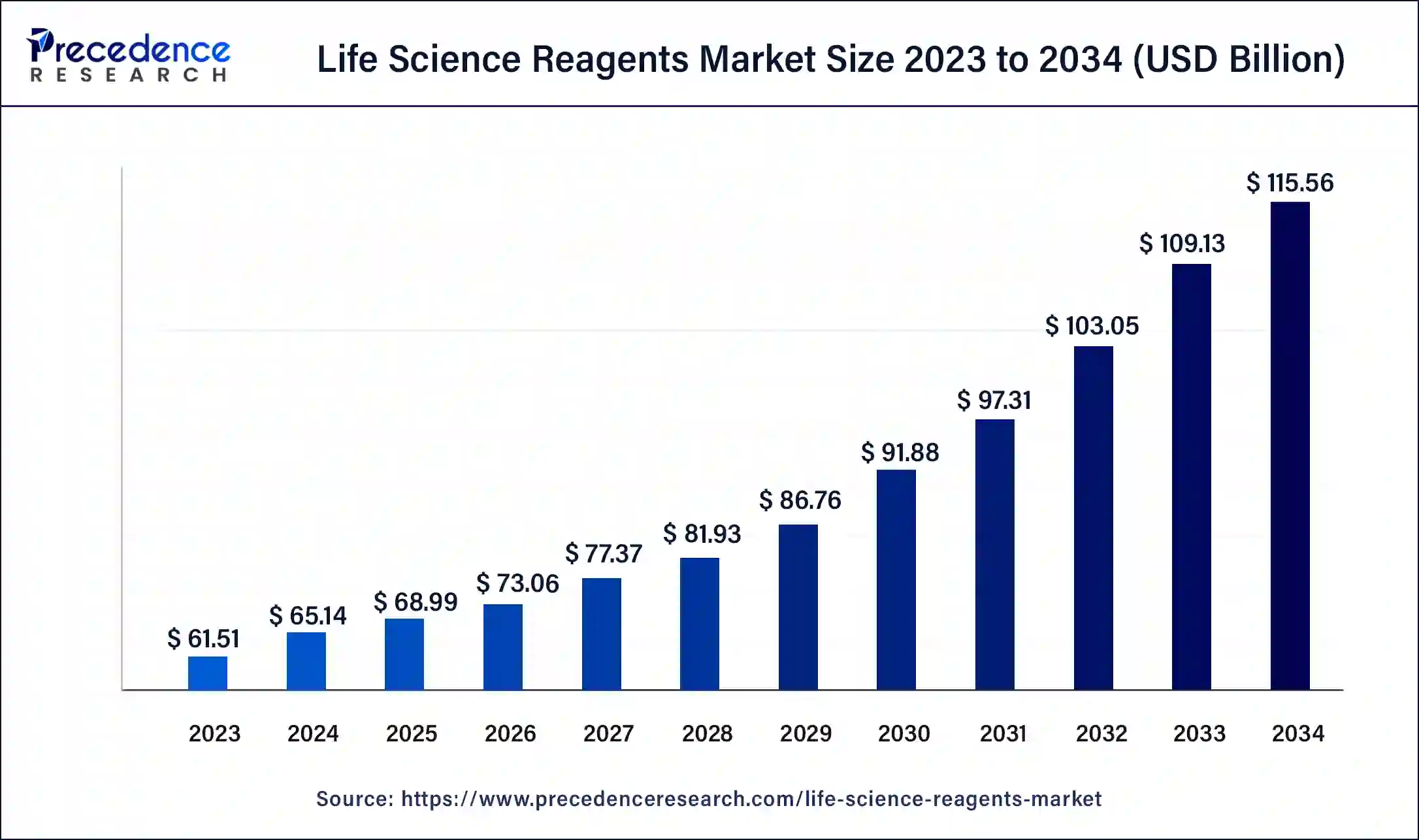
The global life science reagents market is projected to grow from USD 73.06 billion in 2026 to USD 121.76 billion by 2035, registering a CAGR of 5.85%. Growth is driven by the rising prevalence of infectious diseases, increasing biotechnology and biopharmaceutical R&D, expanding clinical research, and growing demand for advanced diagnostics. North America dominated the market in 2025 with a 35% share, supported by strong biopharmaceutical activity, CRO expansion, government research support, and advanced healthcare infrastructure, while Asia Pacific is expected to witness the fastest growth due to expanding biotechnology companies, diagnostic laboratories, CROs, and pharmaceutical manufacturing.
Source: https://www.precedenceresearch.com/life-science-reagents-market
 Get a Sample
 Table Of Content


What is the Life Science Reagents Market Size?
The global life science reagents market size accounted for USD 68.99 billion in 2025 and is predicted to increase from USD 73.06 billion in 2026 to approximately USD 121.76 billion by 2035, at a CAGR of 5.85% from 2026 to 2035. The North America life science reagents market size reached USD 21.53 billion in 2025. The smart intervention of technologies at the laboratories settings is accelerating the market performance for healthcare betterment. The growing demand for precision tools is a core strength for drug research and development for the confirmed approval of drugs.
Life Science Reagents Market Key Takeaways
- North America led the global market with the highest market share of 35% in 2025.
- By product, the immunoassay segment has held the largest market share in 2025.
- By application, the hospitals & diagnostic labs segment captured the biggest revenue share in 2025.
Market Overview
Life science reagents are promising biological or chemical properties essential for the right studies of RNA, cells, DNA or other solutions, which unlock the potential or bring clarity to the drug preparation. The reagents are of various types used according to the testing. The massive experimentation is beneficial for advanced validation. The vast drug discovery constantly requires chemical compounds for checking the viability of the drug in the particular condition requirement. The range of proteins is tailored specifically for the continuation of modern therapies, and so protein research is transitioning medication management. This highlights the effective performance of the ELISA and Western blot tests. The sequencing is meeting the modern demands for the assessment of genomic solutions. The compatible kits are a fundamental asset to the isolation process. The trusted funding of private and public enterprises is contributing highly to drug discoveries.
Life Science Reagents Market Growth Factors
The global life science reagents market is primarily driven by various factors such as rising prevalence of infectious diseases, rising investments in the research & development by the biotechnology company, rapidly growing biotechnology industry, technological upgradations in the life science filed, and rapidly growing biopharmaceutical industry across the globe. Micro-organisms such as bacteria, virus, and parasites may result in the infectious diseases. This type of diseases can be easily transmitted to others. The rising prevalence of various infectious diseases such as Hepatitis A virus, HIV, Zika, and Dengue has resulted in the increased demand for the life science reagents. According to the Journal of Infectious Diseases and Therapy 2019, around 1.5 million clinical cases of Hepatitis A Virus is reported across the globe each year. Zika Virus was declared an endemic in Africa. According to the World Health Organization, more than 31,000 confirmed cases of Zika Virus had been reported in Americas in 2018. Further, dengue is the most critical mosquito-borne disease, which is spreading rapidly across the globe. As per the WHO, the cases of dengue fever increased rapidly from 505,430 cases in 2000 to 4.2 million in 2019, all over the globe. Therefore, the rapidly rising prevalence of various infectious diseases among the global population is the most important driver of the life science reagents market.
The outbreak of the COVID-19 pandemic had a positive effect on the market and it spiked the demand for the life science reagents across the globe. The demand for the life science among the diagnostic centers and hospital rapidly surged for the growing need for testing the patients. Furthermore, all the research organizations became active and demanded the life science reagents to conduct their study on the new COVID-19 virus that became a pandemic all over the globe. Thus, the COVID-19 positively impacted the market growth in 2020.
Market Scope
| Report Highlights | Details |
| Market Size in 2025 | USD 68.99 Billion |
| Market Size in 2026 | USD 73.06 Billion |
| Market Size by 2035 | USD 121.76 Billion |
| Growth Rate from 2026 to 2035 | CAGR of 5.85% |
| Largest Market | North America |
| Fastest Growing Market | Asia Pacific |
| Base Year | 2025 |
| Forecast Period | 2026 to 2035 |
| Segments Covered | Product, Application, Region |
| Regions Covered | North America, Asia Pacific, Europe, Latin America, Middle East and Africa |
Market Tactics
Driver
Demand for Personalization
The growing demand for the personalization solution are fueling the potential expansion of generic-centric chemicals smartly designed for specialized needs in medical settings. The popular NGS kits and customized PCR reagents are gaining traction in market development. Following this, drug developers are spending heavily to win personalization preferences. This builds a range of exclusive drug portfolios. This highlights the healthcare leaders' willingness to trust and spend on these customized needs.
Restraint
Unexpected Delays
The availability of the raw materials is the starting point of the lab's progression. The specialized content is sometimes hard to receive due to any of the logistics or other reasons. The regional collaborations often meet hurdles regarding this kind of delays that postpones the drug approval as well.
Opportunity
Modern Infrastructure
The modern built-up laboratory space is a plus point for market expansion, which is constantly experiencing dynamic and advanced needs by the drug developers and medical professionals. The investment opportunities are a profit to the modern solutions and tech reach with the growing activities in the lab setting. The deployment of digitization and automation is bringing momentum and value to the technical needs. The end-to-end operations of the market involving smart logistics are a trust for the drug developers in the modern infrastructure.
Segments Insights
Product Insights
Based on product, the immunoassay segment accounted largest revenue share in 2025 and is projected to sustain its dominance during the forecast period. This can be attributed to the increased demand for the immunoassay reagents among the diagnostic labs and the hospitals. Moreover, the biotechnology and the pharmaceutical industries are the major consumers of the immunoassay reagents owing to the increased research activities like new drug development and novel test assay development.
On the other hand, the in-vitro diagnostic is estimated to be the most opportunistic segment. The shift in the paradigm from traditional to advanced diagnostics, which analyzes the gene due to the inclusion of various technologies like gene testing, next generation sequencing, and molecular diagnostic is fostering the segment growth. Moreover, the rising prevalence of various chronic diseases like coronary heart disease among the population is expected to drive the demand for the in-vitro diagnostics. According to the World Heart Federation, around 3.4 million women and 3.8 million men dies each year due to the coronary heart diseases.
Application Insights
Based on application, the hospitals & diagnostic labs segment dominated the global market in 2025, in terms of revenue. In 2023, the demand for the life science reagents suddenly spiked due to the rapid spread of the COVID-19 virus. Diagnostic labs and hospitals were increasingly using the life science reagents to test their patients. Moreover, the life science reagents in the molecular diagnostics are extensively used for extracting nucleic acid, human leukocyte antigens typing, and detection of mutations. Further, the growing prevalence of various chronic diseases among the global population is boosting the consumption of life science reagents for the diagnostic purposes, which boosts the growth of this segment significantly.
On the other hand, the contract research organizations are expected to be the fastest-growing segment during the forecast period. This is attributed to the increased investment by various biotechnology and pharmaceutical companies in the research activities. The rising penetration of various contract research organizations in the developed and developing nations and their activities related to new drug development and new diagnostic tests is expected to foster the demand for the life science reagents across the globe.
Regional Insights
Why Does North America Dominate the Global Life Science Reagents Market?
North America accounted for the largest revenue share in 2023. North America is witnessing a rapid growth of the biopharmaceutical industry and rising penetration and growth of contract research organizations, which is a major cause of the increased consumption of the life science reagents. Furthermore, rising government support to develop the biopharmaceutical industry is a major factor that is expected boost the demand for the life science reagents. The rising prevalence of chronic diseases and increased demand for the latest diagnostics and medicines in US has huge contributions in the growth of the North America market.
What is the U.S. Life Science Reagents Market Size?
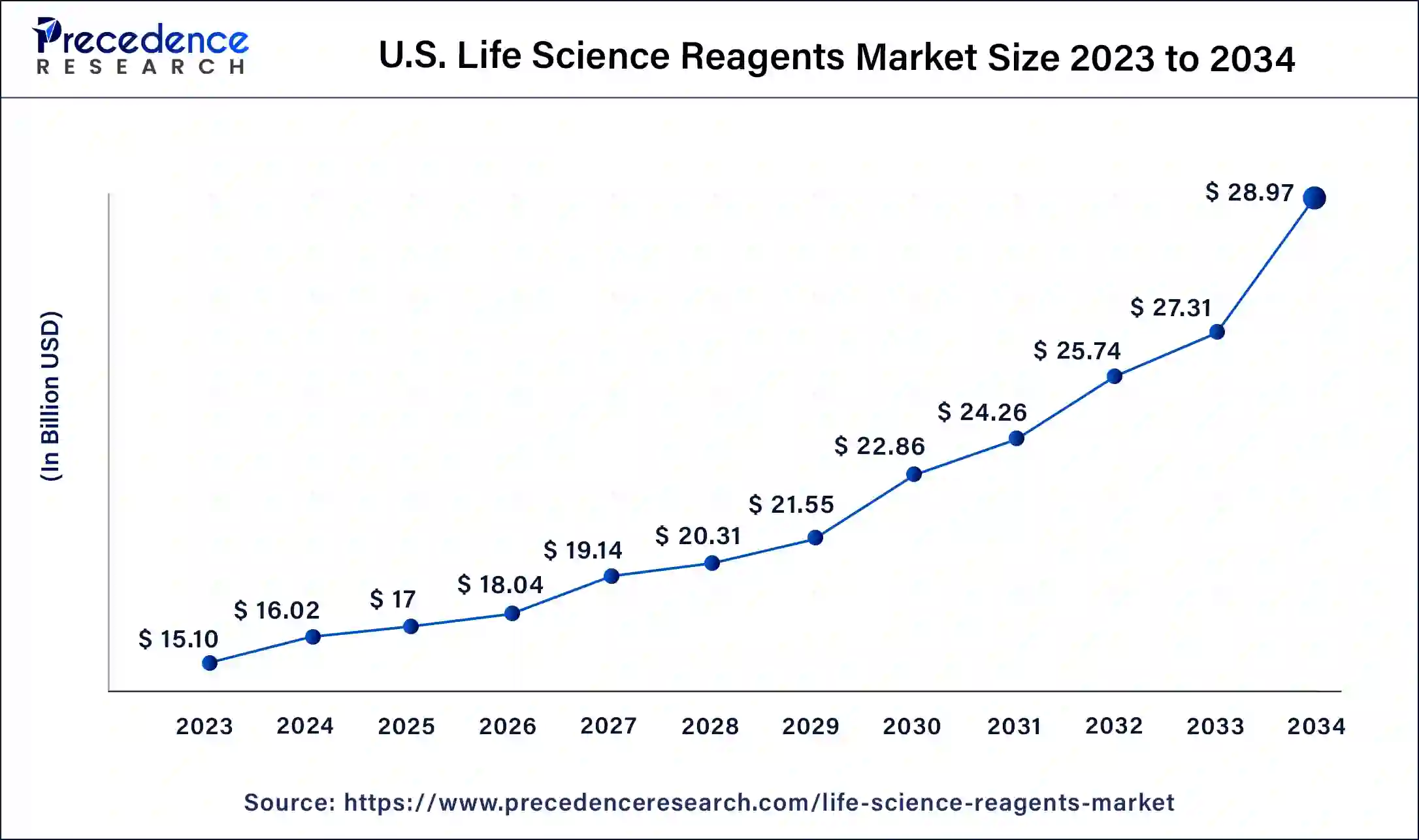
The U.S. life science reagents market size was estimated at USD 17 billion in 2025 and is predicted to be worth around USD 30.57 billion by 2035, at a CAGR of 6.04% from 2026 to 2035.
U.S.
The U.S. dominates North America's due to the federal government's extensive support for research and funding for the life sciences sector, including the activities and development of leading life sciences companies. In addition reagents are used in drug discovery and diagnostics; as a result, the consumption of reagents is increasing and will continue to be a trend for many years to come. Due to the continuing collaboration between functional and industry-based research institutions to create new types of reagents, particularly those developed for high-throughput research and precision research applications.
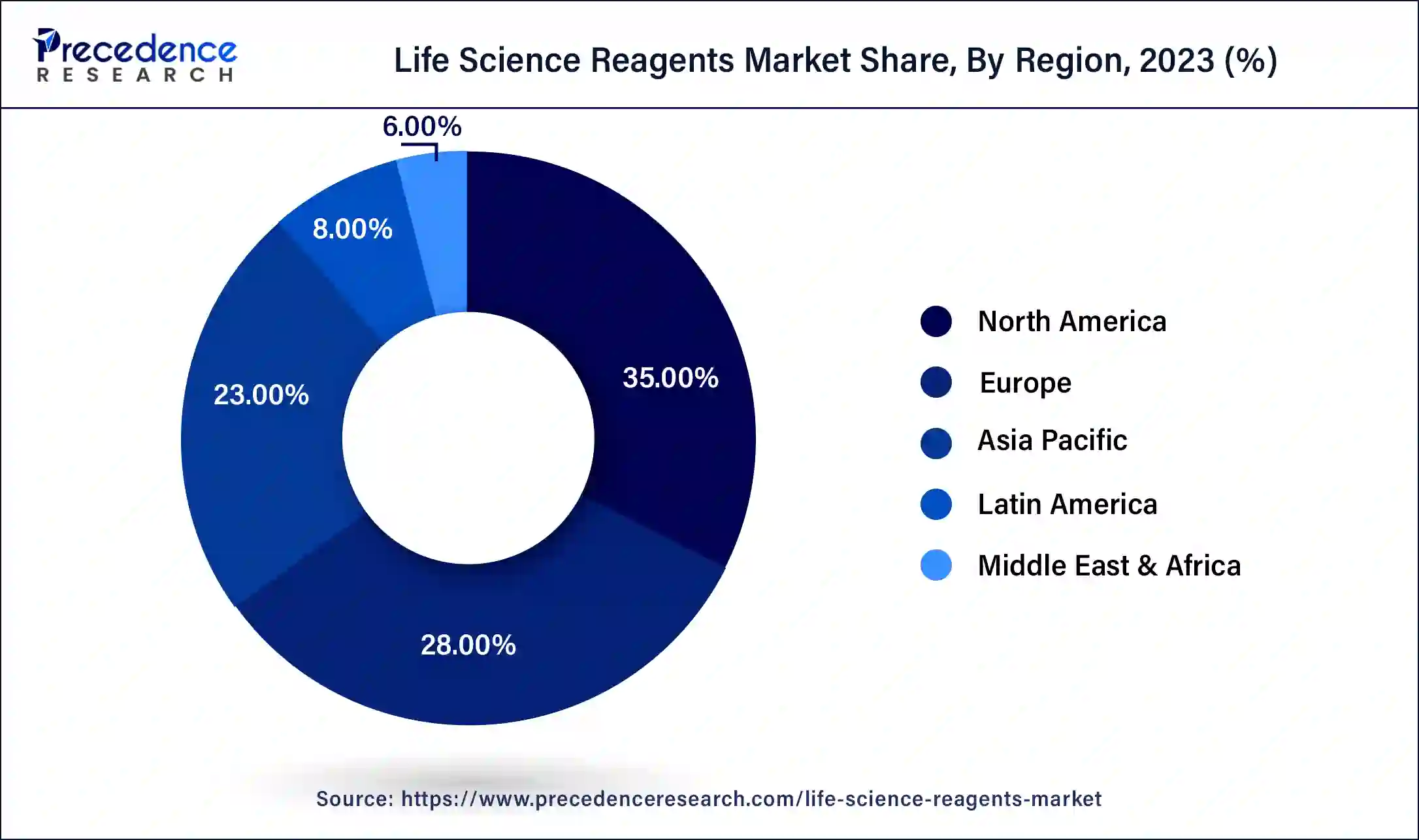
On the other hand, Asia Pacific is estimated to be the most opportunistic market during the forecast period. Asia Pacific is characterized by the presence of numerous big CROs and CMOs. The rapidly growing biotechnology companies and growing number of diagnostic laboratories in the region is expected to boost the consumption of the life science reagents. The rising government initiatives to attract FDIs is propelling the pharmaceutical companies to expand their production facilities in the region, which will drive the life science reagents market during the forecast period.
China
China has emerged as a leader in Asia Pacific for biotech research, with a vibrant private and public sector, and increasing regional capabilities for local manufacture of reagents. Increasing academic research, the growth of the CRO business, and the expansion of biopharmaceutical development represent a significant factor in the rapid increase in demand for reagents and the market size in China.
What Makes Europe Notably growing Region in Life Science Reagents Market?
Europe notably growing region in life science reagents market because of the heavily funded research institutions; strong regulatory environments; and extensive bio phosphate work activity. Western Europe's mature health care system and innovative collaborative networks are also key reasons supporting Europe's continued demand for a full range of life sciences reagents.
Germany:
An important part of Europe's life-sciences reagent marketplace and supporting Europe's rapid growth is Germany. Germany has the largest biotechnology industry base in Europe, along with one of the most developed biotechnology research infrastructures. Germany continues to lead the European life-sciences reagent marketplace due to its extensive investment in research and development, ongoing investment in molecular biology-related research and initiatives to develop precision medicine
Is Latin America Emerging Gradually?
The life science reagent marketplace in Latin America is showing continual, moderate growth based primarily on increased investment into clinical research, advancing healthcare infrastructure, together with, increased research focus on infectious disease; cancer therapeutics; and acceptance of biotechnology, is creating increased demand for reagents. However, slower rate of increase in funding and differences in regulatory environment are restraining the growth of the life sciences reagent market in Latin America compared to the other advanced regions.
Brazil
Brazil also has one of the most rapidly growing biotech sectors, along with an increasing number of public and private sector research programs. Academic collaborations to produce new biologic drugs or diagnostic products will likely drive the increasing use of reagents within molecular biology and diagnostic applications. With continued improvement to research capabilities, Brazil will likely become a very important marketplace for reagents within the overall slowly growing life sciences marketplace in the region.
MEA's Development in the Market
MEA market is considered to be a significantly growing area, due to the regional labs' developmental phase. The supportive programs and massive financial backing for the medical sector are empowering the interconnected healthcare space to develop accordingly. The sincere development has emerged due to the growing precision patient care needs and compatible infrastructure. Though the technologies are meeting the medical needs, clinical research seeks to deliver quality at the first stage of drug discovery and development. Collectively, the programs and technologies are the backbone of the regional market.
Life Science Reagents Market Companies
- Hoffmann-La Roche
- Thermo Fisher Scientific Inc.
- Becton
- Dickinson and Company
- Abbott
- BioMerieux SA
- Merck KGaA
- Danaher Corporation
- Siemens Healthineers
- DiaSorinSpA
- Sysmex Corporation
Key Companies Share Insights
The market is moderately fragmented with the presence of several local companies. These market players are striving to gain higher market share by adopting strategies, such as investments, partnerships, and acquisitions & mergers. Companies are also spending on the development of improved products. Moreover, they are also focusing on maintaining competitive pricing.
In May 2020, Meridian Bioscience, Inc. one of the leading life science reagents raw material provider and diagnostic test solutions, acquired the FDA approval of SARS-CoV-2 antigens.
The various developmental strategies like acquisition, partnerships, mergers, and government policies fosters market growth and offers lucrative growth opportunities to the market players.
Recent Developments
- In September 2025, Beckman Coulter Life Sciences introduces the industry's first IR820 and IR870 infrared dye antibody conjugates for flow cytometry, offering minimal spectral overlap and enhanced human phenotyping in high-parameter research. (Source: https://www.news-medical.net )
- In January 2026 – PacBio plans collaboration with the n-Lorem Foundation and EspeRare to use long-read whole-genome sequencing for advancing precision antisense oligonucleotide therapies for rare genetic diseases. (Source: https://www.pacb.com )
- In May 2025, HP and Tecan expand their partnership to launch the Duo Digital Dispenser, combining single-cell and reagent dispensing to speed research workflows and boost lab efficiency. (Source: https://www.hp.com )
Segments Covered in the Report
By Product
- Molecular
- Cell Culture
- Chromatography
- Immunoassay
- Clinical Chemistry
- Microbiology
- Flow Cytometry
- Others
By Application
- Hospitals & Diagnostic Labs
- Academic Research & Institutes
- Contract Research Organizations
- Others
By Geography
- North America
- Europe
- Asia Pacific
- Rest of the World
For inquiries regarding discounts, bulk purchases, or customization requests, please contact us at sales@precedenceresearch.com
Frequently Asked Questions





Ask For Sample
No cookie-cutter, only authentic analysis – take the 1st step to become a Precedence Research client
 Get a Sample
.webp)



 sales@precedenceresearch.com
 Schedule a Meeting
