



Machine Vision Market Size, Key Companies, Company Market Share, Chip Production Volume, Wafer Capacity, Technology Adoption, Pricing Trends, Competitive Positioning, and Demand Analysis
Machine Vision Market (By Offering: Hardware, Camera, 2D, 3D, Frame Grabber, Optics/Lenses, LED Lighting, Processor, Software, Barcode Reading, Standard Algorithm, Deep Learning Software, Services, Integration, Solution Management; By Product: PC Based, Smart Camera Based; By Application: Quality Assurance and Inspection, Positioning and Guidance, Measurement, Identification, Predictive Maintenance; By End-use: Automotive, Pharmaceuticals and Chemicals, Electronics and Semiconductor, Pulp and Paper, Printing and Labeling, Food and Beverage (Packaging and Bottling), Glass and Metal, Postal and Logistics, Others) - Global Industry Analysis, Size, Trends, Leading Companies, Regional Outlook, and Forecast 2026 to 2035
Source: https://www.precedenceresearch.com/machine-vision-market
 Get a Sample
 Table Of Content


What is the Machine Vision Market Size?
The global machine vision market size accounted for USD 23.06 billion in 2025 and is predicted to increase from USD 26.07 billion in 2026 to approximately USD 76.89 billion by 2035, expanding at a CAGR of 12.80% from 2026 to 2035. The growing need for productivity and quality inspection is the key factor driving market growth. Also, the rise in implementation of innovative technologies by major players, coupled with the rising need for machine vision systems, can fuel market growth further.
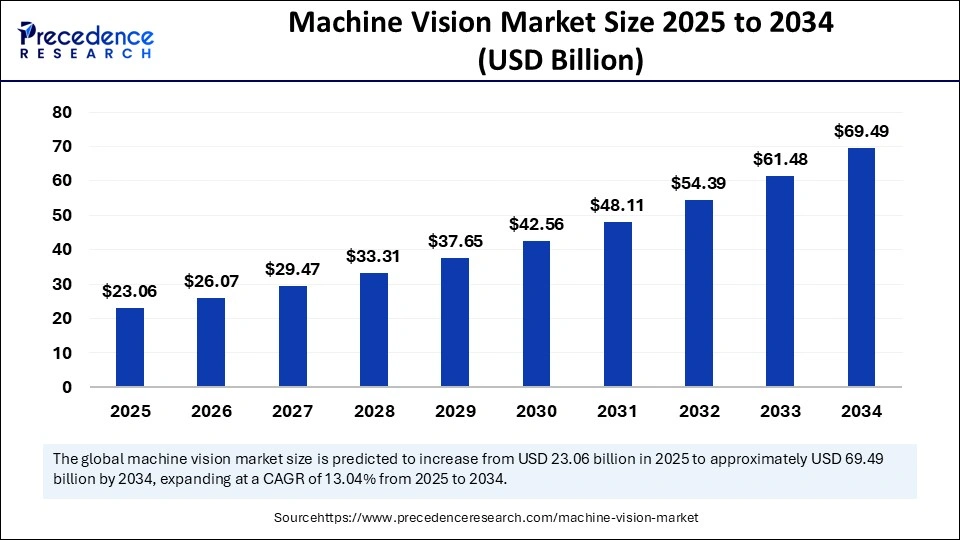
Machine Vision Market Key Takeaways
- Asia Pacific dominated the global market with largest market share of 44% in 2025.
- North America is expected to grow at the fastest CAGR over the forecast period.
- By offering, the hardware segment dominated the market in 2025.
- By offering, the software segment is expected to grow at the fastest CAGR over the forecast period.
- By product, the PC-based segment led the market in 2025.
- By product, the smart camera-based segment is projected to grow at the fastest CAGR over the forecast period.
- By application, the quality assurance and inspection segment dominated the market in 2025.
- By application, the identification segment is estimated to show the fastest growth during the forecast period.
- By end use, in 2024, the automotive segment contributed the highest market share in 2025.
- By end use, the pharmaceuticals and chemicals segment is expected to grow at the fastest CAGR over the period studied.
Market Overview
Machine vision systems are built to automate direct manufacturing and production, such as go/no-go assessments and quality control, by analyzing and examining digital images. This system integrates hardware (cameras, sensors) with software algorithms, allowing machines to make decisions based on visual data. The machine vision market is utilized in different sectors such as electronics, food and beverage, automotive, electronics, and more.
Impact of Artificial Intelligence (AI) on Machine Vision Systems
Artificial intelligence is extensively revolutionizing the machine vision system market by improving its abilities in pattern recognition, adaptive learning, and image processing. AI-powered machine systems can perform tasks such as object recognition, defect detection, and visual inspection with higher efficiency and accuracy.
Furthermore, AI algorithms can adapt to changes in object shape, lighting, and surface texture, which makes them more robust and flexible in various environments.
In February 2025, Focoos AI, an Italian spin-off of Politecnico di Torino, incubated by I3P and part of the ESA BIC Turin incubation program, announced the closing of a seed investment round of € 2.65 million. The funding is led by Galaxia, the Italian National Technology Transfer Hub of CDP Venture Capital dedicated to aerospace, which participates with a follow-on compared to the previous pre-seed investment, as well as PiemonteNext.
Machine Vision Market Growth Factors
- The increasing adoption of robotics in the production sector is expected to boost the machine vision market growth soon.
- The surge in the trend toward Internet of Things and AI will create significant opportunities in the market shortly.
- Government standards and regulations associated with safety and quality control will likely contribute to the market expansion further.
Market Scope
| Report Coverage | Details |
| Market Size by 2035 | USD 76.89 Billion |
| Market Size in 2025 | USD 23.06 Billion |
| Market Size in 2026 | USD 26.07 Billion |
| Market Growth Rate from 2026 to 2035 | CAGR of 12.80% |
| Dominated Region | Asia Pacific |
| Fastest Growing Market | North America |
| Base Year | 2025 |
| Forecast Period | 2026 to 2035 |
| Segments Covered | Offering, Product, Application, End-use, and Regions |
| Regions Covered | North America, Europe, Asia-Pacific, Latin America and Middle East & Africa |
Market Dynamics
Drivers
Expansion of industry verticals
Machine vision's diversity has facilitated its extensive adoption in emerging industry verticals and other applications. Beyond its conventional use in manufacturing, this system now has applications in various sectors like healthcare, retail, agriculture, and entertainment. In addition, machine vision is rapidly being deployed in gaming and entertainment for augmented reality experiences and gesture recognition.
- In January 2025, Lynred of Grenoble launched Eyesential SW, its latest VGA-format shortwave infrared (SWIR) sensor for machine vision. Designed to offer the ideal cost-performance ratio for visible-like imaging to address specific performance needs in machine vision, Eyesential SW is said to have the performance and features sought by the industry but at half the price of comparable IR sensors on the market.
Restraint
Lack of experienced professionals
Companies in the machine vision market are increasingly developing and deploying new applications; hence, the demand for professionals has risen substantially with the democratization of deep learning and artificial intelligence applications. This is the major challenge, affecting market growth negatively. In addition, to tackle this problem, companies such as Google and Amazon are investing internationally to grow their talent pool.
Opportunity
Growing demand for automation and quality inspection
The machine vision market is going to be propelled by the growing demand for automation and quality inspection across different industrial sectors. Vision system in the sector enables inspection and robotics devices to capture real-time images at stringent and complete places, which enhances overall productivity. Furthermore, the automation system, such as a logic computer, processes this data after it is collected and produces the desired output.
- In January 2025, Zebra Technologies will integrate acquisitions into the machine vision product line. Zebra Technologies' machine vision products include intelligent scanners, smart cameras, frame grabbers, and software. Zebra has been investing in its acquisitions. For example, the company has been adding staff and other resources to the former Matrox Imaging operation in Montreal.
Segment Insights
Offering Insights
The hardware segment dominated the machine vision market in 2025. The dominance of the segment can be attributed to the ongoing launches of cutting-edge and innovative hardware systems. The segment includes hardware components such as image sensors, lighting systems, cameras, lenses, frame grabbers, processing units, and communication interfaces. Additionally, these components form the base of machine vision systems, optimizing the acquisition of visual data from the environment.
The software segment is anticipated to grow at the fastest rate over the forecast period. The growth of the segment can be credited to the growing demand for consistent and precise quality inspection, process automation, and defect detection in different industries. Also, the integration of ML and AI into vision software solutions is a key driver, allowing more simplistic image analysis and processing.
Product Insights
The PC-based segment led the machine vision market in 2025. The dominance of the segment can be linked to the high speed, processing power, and adaptability of PC-based systems in handling complicated machine vision tasks. PC-based systems can analyze vast amounts of data and control complex algorithms, making sophisticated analysis and inspection tasks possible. These systems are versatile and can be easily customized and upgraded to fulfill specific application requirements.
- In April 2025, Huawei launched a new PC model that no longer uses Windows as its default operating system. According to domestic sources cited by MyDrivers, the Guangdong-based company may soon lose the ability to sell Windows PCs to Chinese customers.
The smart camera-based segment is projected to grow at the fastest rate over the forecast period. The growth of the segment can be driven by its automation efficiency, built-in processing abilities, and better design. The capabilities of smart cameras allow them to optimize inspection processes and enhance accuracy. Also, the growing adoption of AI-driven vision inspection systems and technological advancements in camera technology can impact positive segment growth further.
Application Insights
The quality assurance and inspection segment dominated the machine vision market in 2025. The dominance of the segment can be attributed to the increasing adoption of machine vision for strict quality control. Machine vision systems, using sensors, cameras, and algorithms, allow businesses to efficiently analyze products, maintain high-quality grades, and ensure compliance, which then leads to improving customer satisfaction. Machine vision helps identify contamination, defects, and production flaws for improved product quality and minimal waste.
The identification segment is estimated to show the fastest growth during the forecast period. The growth of the segment is due to the growing use of machine vision for pattern recognition, barcode scanning, and object identification. However, automation is increasingly becoming part of the business to enhance efficiency and overall machine vision-driven identification, which is changing operational workflows and supply chains across industries.
End-Use Insights
In 2025, the automotive segment led the machine vision market 2025 by holding the largest market share. The dominance of the segment is linked to the increasing need for machine vision and automated inspection in the automotive industry. The automotive sector uses machine vision to improve driver assistance systems, vehicle perception, and safety. Furthermore, the integration of machine vision algorithms for lane tracking and object detection boosts the development of autonomous vehicles.
The pharmaceuticals and chemicals segment is expected to grow at the fastest rate over the period studied. The growth of the segment can be driven by growing quality control requirements and stringent regulatory compliance. This industry is anticipated to witness a significant rise in machine vision adoption, fueled by the need for precision, automation, and efficiency in processes including label verification, defect detection, and packaging integrity.
Regional Insights
What is the Asia pacific Machine Vision Market Size?
The Asia pacific machine vision market size was exhibited at USD 10.15 billion in 2025 and is projected to be worth around USD 34.29 billion by 2035, growing at a CAGR of 12.95% from 2026 to 2035.
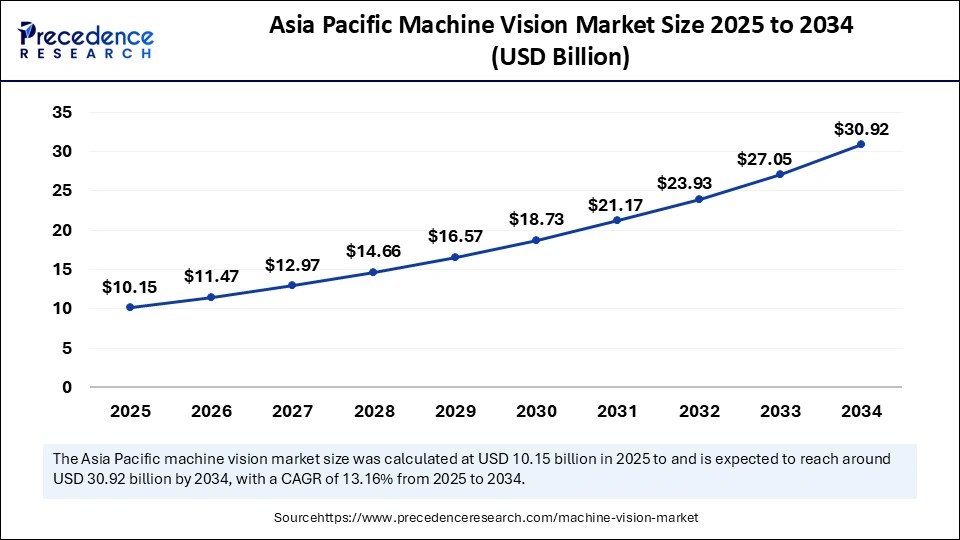
Asia Pacific dominated the machine vision market in 2025. The dominance of the region can be attributed to the ongoing industrialization and production expansion, especially in emerging economies like China, Japan, India, and Taiwan. Moreover, the market will likely experience growth opportunities in pharmaceutical, packaging, automotive, and other industrial applications. The growing emphasis on smart manufacturing practices and industry 4.0 initiatives is impacting positive regional growth soon.
In Asia Pacific, Japan led the machine vision market owing to the increasing elderly population and labor shortage, which creates hurdles for conventional manufacturing processes. Also, the growing adoption of machine vision technology is fueled by the need to keep high product standards and decrease costs.
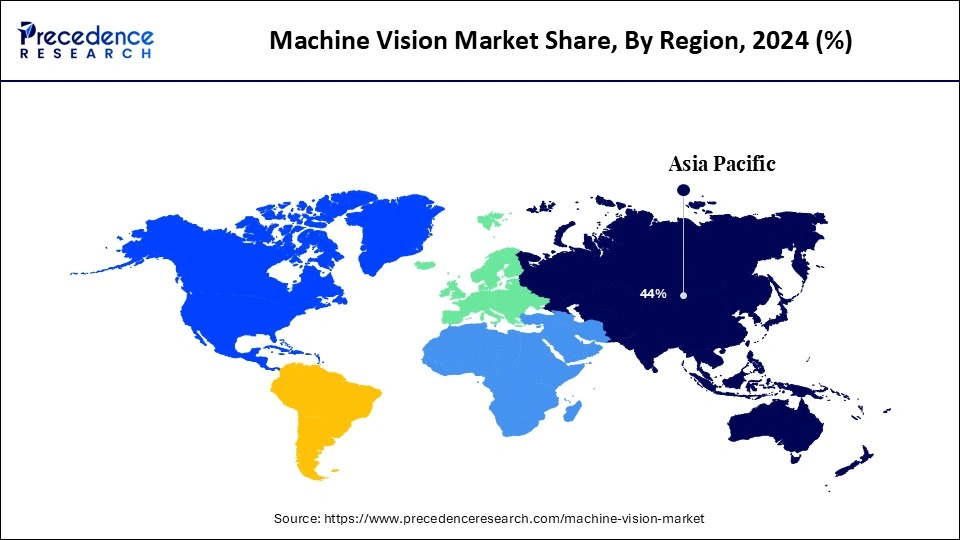
North America is expected to grow at the fastest rate in the machine vision market over the forecast period. The growth of the region can be credited to the strong presence of major manufacturers in the region. The growth of the semiconductor industry for innovative semiconductor chipsets in MV systems is impacting positive regional growth. Furthermore, ongoing advancements in 3D technology-based systems are creating lucrative opportunities in the market shortly.
- In October 2023, Emerson announced the acquisition of NI. NI increases Emerson's end-market exposure in discrete markets, which will be Emerson's second-largest industry segment. With approximately 20% of its sales in software, NI also increases Emerson's exposure to high-growth industrial software markets.
In North America, the U.S. dominated the market. The dominance of the country can be linked to the ongoing evolution of CMOS image sensors coupled with the growth in demand for automation. The key vendors are also working towards creating a 3D technology-based system, which will likely contribute to the market expansion further.
How is Europe Growing in the Machine Vision Market?
Europe is expected to grow at a considerable CAGR in the upcoming period, due to advanced manufacturing abilities and high-quality standards. The main contributor was Germany due to its well-established automotive and industrial industries. The widespread adoption of Industry 4.0 technologies and the integration of robotics into the manufacturing process greatly facilitated regional expansion. Automation and quality control systems facilitated growth in the market.
Germany Market Trends
The German market is driven by significant growth owing to the strength in the manufacturing sector, the automobile industry, and the electronics industry in the country. There was an increase in the use of technologies such as Industry 4.0, artificial intelligence, and robotics. Labor costs led to the adoption of automation, with many companies adopting machine vision. There was also the need for inspection, hence the increase in demand for machine vision technology.
What Drives the Machine Vision Market in Latin America?
Latin America is considered to be a significantly growing area, due to account of improvements in industrial infrastructure and automation systems. The increasing investments in manufacturing and packaging processes also contribute to market growth.
Brazil Market Trends
Brazil is driven by the increasing use of automation in industries such as manufacturing, packaging, and automotive. The rising demand for quality inspection systems and the use of AI, deep learning, and inexpensive machine vision solutions contributed to the market's growth.
How is the Middle East and Africa Growing in the Machine Vision Market?
The Middle East and Africa region is expected to grow at a notable CAGR in the foreseeable future, due to growth fueled by rising levels of digitization and industrial diversification. The regional market is also driven by its investments in smart manufacturing and logistics automation. Government-driven projects aimed at fostering Industry 4.0 and technology innovations played an important role in market development.
UAE Market Trends
The UAE is driven by the investment that was put into smart manufacturing, automatic logistics, and other digitization initiatives. AI-based machine vision systems saw greater adoption across several sectors and infrastructures in the country. The industry witnessed rapid growth because Industry 4.0 and smart cities became the key focus areas for the government.
Machine Vision Market Companies
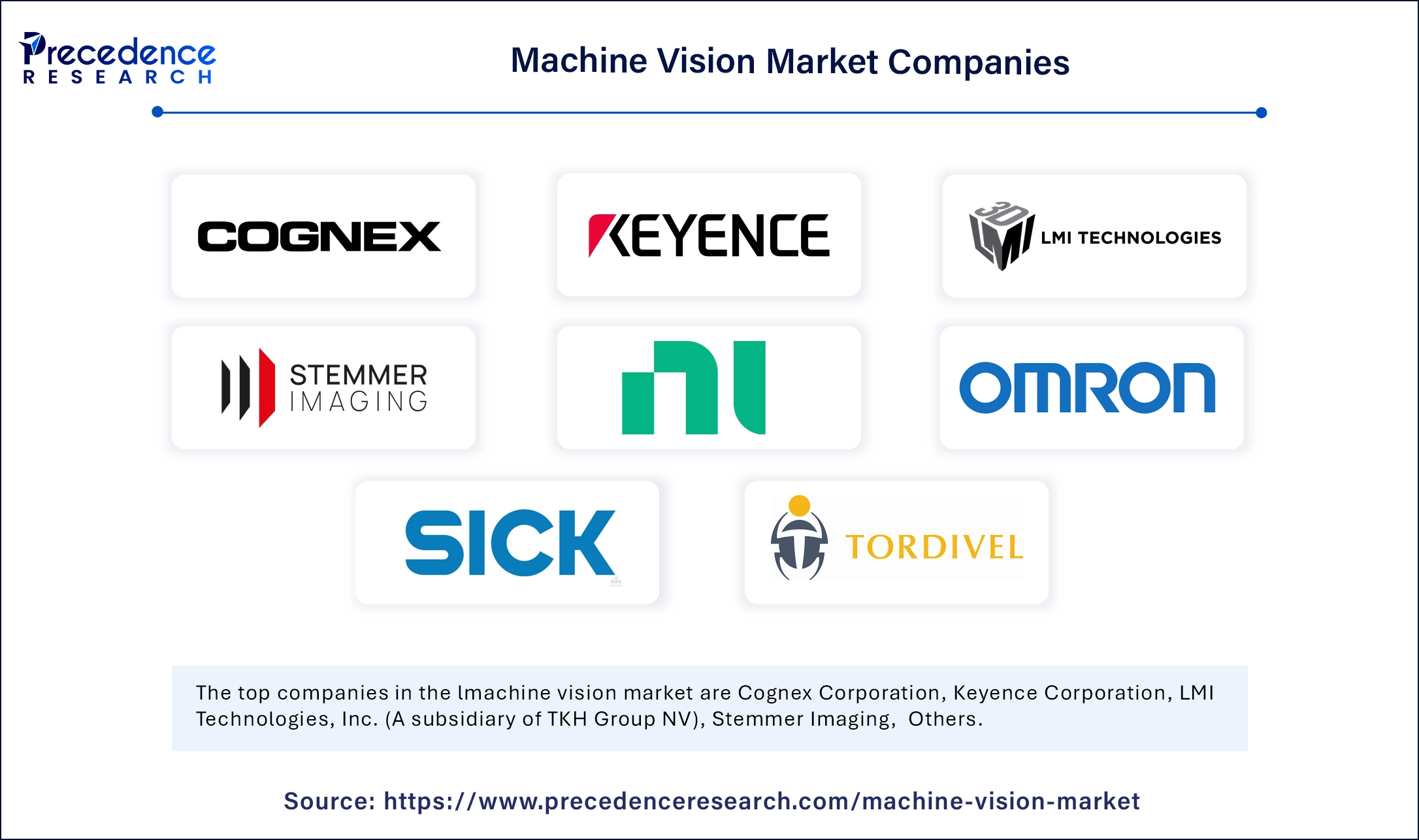
- Cognex Corporation
- Keyence Corporation
- LMI Technologies, Inc. (A subsidiary of TKH Group NV)
- Stemmer Imaging
- National Instruments Corporation
- OMRON Corporation
- Sick AG
- Tordivel AS
Latest Announcement
- In January 2025, Cognex Corporation, the leader in industrial machine vision, announced the launch of the DataMan 290 and 390 barcode readers. Thanks to innovative AI technology, these readers deliver reliable decoding performance across a broad range of manufacturing applications.
- In December 2024, OMRON Electronic Components, a global leader in electronic components and products, announced the latest edition of its G5Q global standard compact power relay, G5Q-HR. Originally launched in 2001, the G5Q series has become a trusted standard in compact power relays, with more than 500 million units sold globally.
Recent Developments
- In June 2024, SICK AG launched the Inspector83x 2D vision sensor, a standalone solution for automated inspection tasks like defect detection, sorting, and OCR/OCV, processing up to 15 inspections per second. The system combines AI-enabled and rules-based algorithms, allowing AI training with just a few images directly on the device.
- In July 2024, OMRON Corporation released a software update for its FH Vision System and FHV7 Smart Camera, integrating Digimarc decoding technology. This enhancement enables advanced digital product identification using digital watermarks, ensuring accurate packaging verification at high speeds of over 2,000 parts per minute.
- In July 2024, Kayence, a leading machine system and component manufacturer, launched its all-in-one 3D inspection system, the 3D laser snapshot sensor LJ-S8000 series, with a building scanning mechanism. It has versatile applications in 3D dimensional measurement, 3D appearance inspection, and 3D identification and differentiation.
Segments Covered in the Report
By Offering
- Hardware
- Camera
- 2D
- 3D
- Frame Grabber
- Optics/Lenses
- LED Lighting
- Processor
- Software
- Barcode Reading
- Standard Algorithm
- Deep Learning Software
- Services
- Integration
- Solution Management
By Product
- PC Based
- Smart Camera Based
By Application
- Quality Assurance and Inspection
- Positioning and Guidance
- Measurement
- Identification
- Predictive Maintenance
By End-use
- Automotive
- Pharmaceuticals and Chemicals
- Electronics and Semiconductor
- Pulp and Paper
- Printing and Labeling
- Food and Beverage (Packaging and Bottling)
- Glass and Metal
- Postal and Logistics
- Others
By Region
- North America
- Europe
- Asia Pacific
- Latin America
- Middle East and Africa
For inquiries regarding discounts, bulk purchases, or customization requests, please contact us at sales@precedenceresearch.com
Frequently Asked Questions
Tags





Ask For Sample
No cookie-cutter, only authentic analysis – take the 1st step to become a Precedence Research client
 Get a Sample




 sales@precedenceresearch.com
 Schedule a Meeting
