



Malaria Diagnostic Market Size, Companies, Share, Patient Volume, Treatment Adoption Rates, Pricing Analysis, Regulatory Landscape, Competitive Positioning, and Demand Forecast
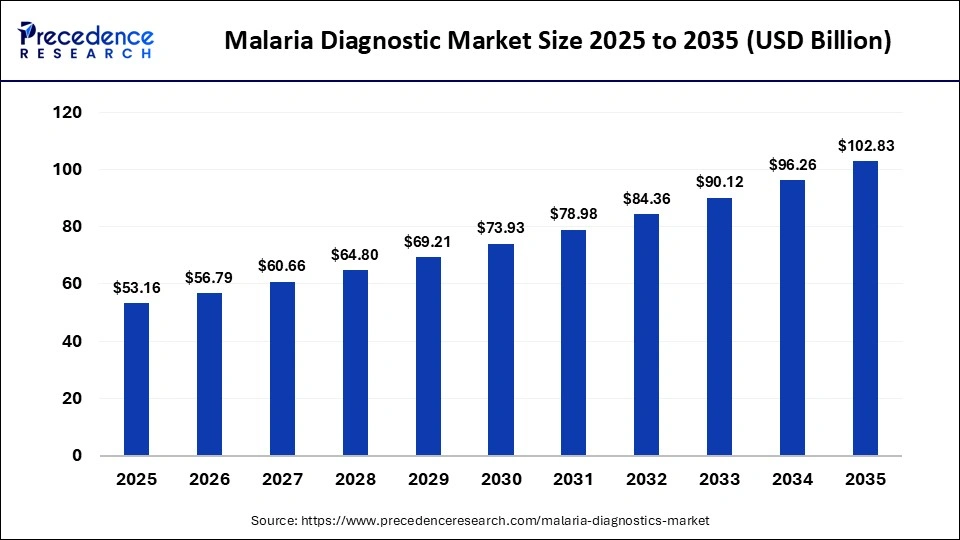
Deepa Pandey, a Healthcare Industry Expert, highlights that the malaria diagnostic market has reached USD 56.79 billion in 2026 and is on track to reach USD 102.83 billion by 2035, advancing at a CAGR of 6.82%. Key malaria diagnostic market companies shaping the market include Roche Diagnostics, Abbott Laboratories, Siemens Healthineers, Cepheid, Hologic, Thermo Fisher Scientific, while major growth segments span By Product Type, By Technology, By Application, By End User.
Source: https://www.precedenceresearch.com/malaria-diagnostic-market
 Get a Sample
 Table Of Content


What is the Malaria Diagnostic Market Size in 2026?
The global malaria diagnostic market size was calculated at USD 53.16 billion in 2025 and is predicted to increase from USD 56.79 billion in 2026 to approximately USD 102.83 billion by 2035, expanding at a CAGR of 6.82% from 2026 to 2035. The growth of the market is primarily driven by the increasing number of cases of malaria, rising demand for rapid diagnostic tests, and growing government initiatives for early detection and malaria control programs.
Key Takeaways
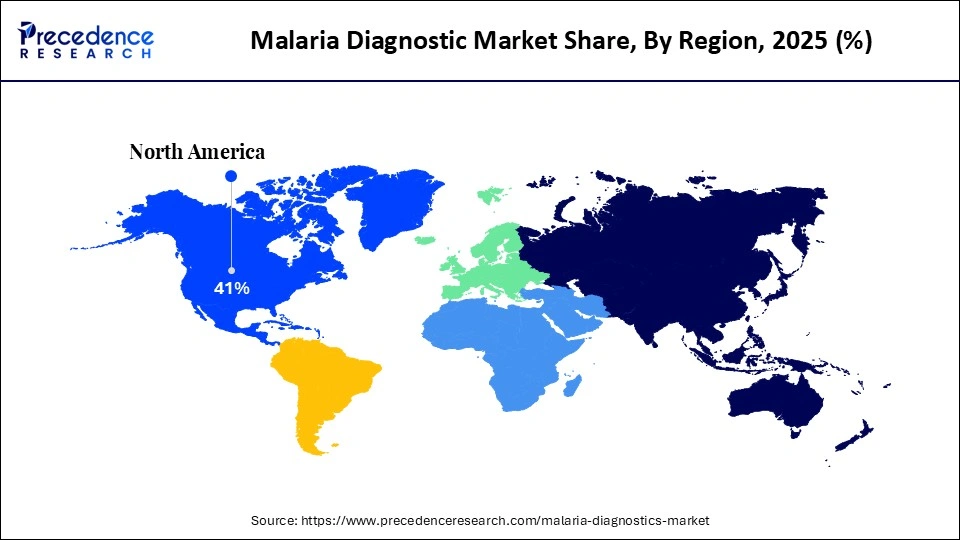
- North America dominated the global malaria diagnostic market with the biggest market share of 41% in 2025.
- Asia Pacific is expected to grow at the fastest CAGR between 2026 and 2035.
- By product type, the test kits segment held the biggest market share in 2025.
- By product type, the reagent segment is expected to expand at the fastest CAGR between 2026 and 2035.
- By technology, the rapid diagnostic tests segment contributed to the highest market share in 2025.
- By technology, the polymerase chain reaction segment is expected to grow at a strong CAGR between 2026 and 2035.
- By application, the clinical diagnosis segment held a major market share in 2025.
- By application, the drug efficacy studies segment is expected to expand at the fastest CAGR from 2026 to 2035.
- By end user, the hospitals segment held the biggest market share in 2025.
- By end user, the diagnostic laboratories segment is expected to expand at the fastest CAGR between 2026 and 2035.
Why is the Malaria Diagnostic Market Gaining Momentum?
The malaria diagnostic market is experiencing steady growth because malaria is becoming more common in tropical and subtropical areas. People are becoming more aware of the importance of early detection of disease, boosting the demand for rapid diagnostic tests. Government and international health initiatives to eradicate malaria are also driving the market. Rapid diagnostic tests (RDTs) and molecular diagnostic techniques enhance microscopy methods that yield quicker and more accurate results and are all contributing factors to the market's growth. Additionally, technological developments like AI-based diagnostic tools and portable testing devices, as well as investments in healthcare infrastructure in developing nations, are driving the global market for malaria diagnostics.
How is Artificial Intelligence Transforming the Malaria Diagnostic Market?
By increasing the speed and accuracy of diagnostic methods, artificial intelligence is significantly transforming the malaria diagnostic market. AI-powered image analysis systems reduce human error associated with traditional microscopy by automatically analyzing blood smear images and accurately identifying malaria parasites. Additionally, AI technologies aid in disease surveillance, management, and early detection, particularly in low-resource and remote areas with a shortage of qualified laboratory personnel. Furthermore, point-of-care testing is being supported by AI-integrated portable diagnostic devices and smartphone based diagnostic apps, which greatly enhance malaria detection and treatment.
Government Initiatives Supporting the Malaria Diagnostics Market
| Initiatives | Country | Description |
| National Framework for Malaria Elimination (NFME) | India | Government programs focused on eliminating malaria by improving early diagnosis, surveillance, and access to rapid diagnostic testing across rural and urban areas. |
| High Burden to High Impact (HBHI) Initiative | World Health Organization | Global initiative to reduce malaria cases through improved diagnosis, treatment access, and malaria surveillance programs in high-burden countries. |
| President's Malaria Initiative (PMI) | United States | Initiative supporting malaria prevention, rapid diagnostic testing, and treatment programs in malaria affected countries. |
| National Malaria Elimination Program | India | Government programs focused on malaria surveillance, diagnostic testing, and distribution of rapid diagnostic kits in high-risk regions. |
| Global Fund Malaria Program | The Global Fund to Fight AIDS, Tuberculosis, and Malaria | Provides funding for malaria diagnosis, treatment programs, and healthcare infrastructure development in malaria-endemic countries. |
Major Market Trends
- Increasing Adoption of Rapid Diagnostic Tests (RDTs): Rapid diagnostic tests are becoming widely used due to their quick results, ease of use, and suitability for remote and low-resource settings where laboratory facilities are limited.
- Growing Use of Molecular Diagnostic Techniques: Advanced diagnostic methods such as PCR and nucleic acid amplification tests are gaining popularity due to their high accuracy and ability to detect malaria at early stages.
- Integration of Artificial Intelligence in Diagnostics: AI-based image analysis systems are being used to detect malaria parasites in blood samples, improving diagnostic accuracy and reducing human error in microscopy.
- Rising Government Malaria Control Programs: Governments and global health organizations are increasing funding in R&D to develop novel diagnostic methods and eliminate malaria, which is boosting the market.
- Development of Portable Diagnostic Devices: Portable and handheld diagnostic devices are emerging as a major trend, especially for rural and remote areas where access to laboratories is limited.
- Increasing Demand for Point-of-Care Testing: Point of care malaria testing is growing as it allows diagnostics at the patient location, reducing diagnostic time and improving treatment outcomes.
- Public-Private Partnerships in Malaria Diagnostics: Collaborations between diagnostic companies, governments, and global health organizations are increasing to develop affordable and accessible malaria diagnostic solutions.
- Focus on Early and Accurate Disease Detection: Healthcare systems are increasingly focusing on early diagnostics to reduce malaria mortality rates and prevent disease transmission, which is driving innovation in diagnostic technologies.
Market Scope
| Report Coverage | Details |
| Market Size in 2025 | USD 53.16 Billion |
| Market Size in 2026 | USD 56.79 Billion |
| Market Size by 2035 | USD 102.83 Billion |
| Market Growth Rate from 2026 to 2035 | CAGR of 6.82% |
| Dominating Region | North America |
| Fastest Growing Region | Asia-Pacific |
| Base Year | 2025 |
| Forecast Period | 2026 to 2035 |
| Segments Covered | Product Type, Technology, Application, End User, and Region |
| Regions Covered | North America, Europe, Asia-Pacific, Latin America, and Middle East & Africa |
Market Dynamics
Drivers
Rising Malaria Prevalence and Government Initiatives
The market for malaria diagnostics is largely driven by the rising number of malaria cases in tropical and developing areas. The demand for early and accurate diagnostic testing is rising due to the implementation of malaria control and elimination programs by governments and international health organizations, which is fueling market expansion.
Restraint
Limited Healthcare Infrastructure in Rural Areas
The growth of the malaria diagnostic market is restrained by limited healthcare infrastructure, inadequate laboratory facilities, and a shortage of skilled professionals in remote and rural areas. Advanced diagnostic methods are often inaccessible in high-burden regions, limiting timely detection and treatment.
Opportunity
Growing Demand for Rapid and Point-of-Care Testing
The increasing demand for rapid diagnostic tests and portable point of care diagnostic devices presents immense opportunities in the malaria diagnosis market by enabling faster detection and treatment, especially in remote or resource-limited areas. These tests reduce dependency on centralized laboratories and skilled personnel, allowing healthcare providers to make immediate clinical decisions.
Segment Insights
Product Type Insights
Why Did the Test Kits Segment Dominate the Malaria Diagnostic Market?
The test kits segment dominated the market with the largest share in 2025. This is because of the widespread adoption of rapid diagnostic test kits in clinics and hospitals. These kits are very appropriate for areas where malaria is endemic because they are simple to use, reasonably priced, and yield fast results. The demand for malaria test kits is also rising due to government malaria screening programs and international health initiatives.
The reagents segment is expected to grow at the fastest CAGR in the coming year due to the increasing use of molecular diagnostic tests, PCR testing, and laboratory-based malaria diagnosis. Increasing malaria screening programs, rising demand for high-quality diagnostics, and the expansion of laboratory and point of care testing facilities are driving the consumption of reagents. Additionally, advancements in reagent formulations that improve sensitivity, specificity, and stability further boost their adoption in both endemic and non endemic regions.
Technology Insights
What Made Rapid Diagnostic Tests the Dominant Segment in the Malaria Diagnostic Market?
The rapid diagnostic tests segment dominated the market in 2025 because they are quick, inexpensive, simple to use, and appropriate for remote and low resource environments. In areas where malaria is endemic, these tests are frequently used for early disease detection and treatment because they don't require complicated laboratory infrastructure. The government and international health organizations are also encouraging the use of quick diagnostic tests, which contribute to this segment's dominance.
The polymerase chain reaction segment is expected to grow at the fastest CAGR in the coming year because it identifies malaria parasites at very early stages and has high accuracy. For accurate malaria detection and species identification, PCR technology is being utilized more in research labs and cutting edge diagnostic facilities. Additionally, increasing investments in advanced molecular diagnostic infrastructure and rising awareness about the advantages of PCR-based testing in clinical and research settings are driving its adoption.
Application Insights
Why Did the Clinical Diagnostic Segment Dominate the Malaria Diagnostic Market?
The clinical diagnosis segment dominated the market in 2025 because it serves as the primary method for detecting and confirming malaria infections in patients. Hospitals, clinics, and diagnostic centers rely on clinical diagnostics for accurate, timely detection to guide effective treatment and reduce disease complications. Additionally, the widespread availability of clinical diagnostic tools, coupled with rising malaria prevalence in endemic regions, has strengthened this segment's leading position in the market.
The drug efficacy studies segment is expected to grow at the fastest CAGR during the forecast period because accurate diagnostics are essential for evaluating the effectiveness of antimalarial treatments and developing new therapies. Reliable detection of infection levels and parasite clearance helps researchers monitor treatment outcomes and resistance patterns. Increasing investment in malaria drug development and clinical trials, along with the need for precise monitoring in endemic regions, is driving the demand for diagnostics in drug efficacy studies.
End User Insights
What Made Hospitals the Leading Segment in the Malaria Diagnostic Market?
The hospitals segment led the market with a major share in 2025 due to the large number of patient visits for testing and treatment of malaria, particularly in areas where the disease is endemic. Accurate malaria diagnosis is supported by hospitals' superior diagnostic infrastructure, highly qualified medical staff, and access to cutting-edge diagnostic tools like molecular testing and microscopy. Furthermore, hospital-based screening programs and government malaria control programs add to this segment's dominance.
The diagnostic laboratories segment is expected to grow at the fastest CAGR in the coming year because of the growing demand for precise laboratory-based malaria testing and the growing outsourcing of diagnostic testing. Advanced testing techniques like PCR and molecular diagnostics, which yield extremely accurate results, are available in diagnostic laboratories. The expansion of laboratory networks and the number of private diagnostic facilities in developing nations are also contributing to this segment's growth.
Regional Insights
North America Malaria Diagnostic Market Size and Growth 2026 to 2035
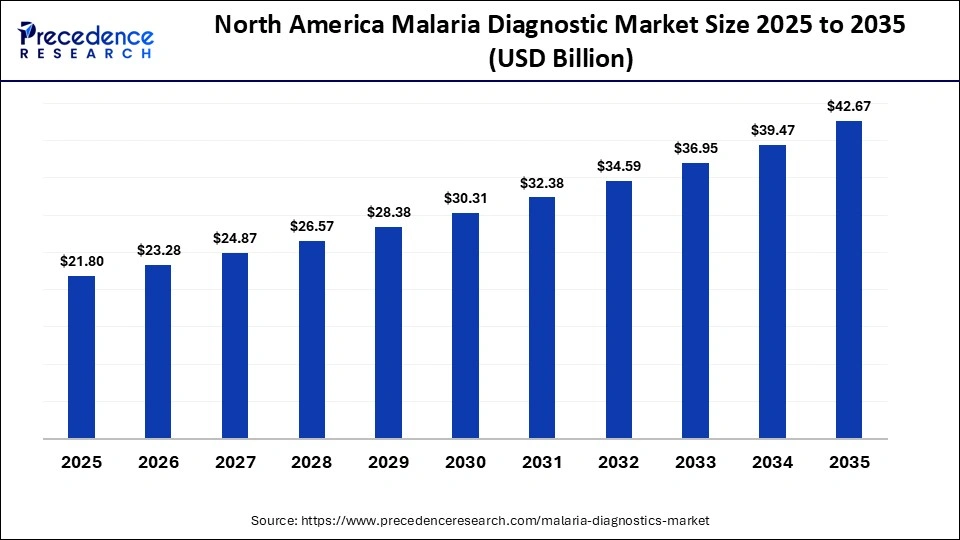
The North America malaria diagnostic market size is estimated at USD 21.80 billion in 2025 and is projected to reach approximately USD 42.67 billion by 2035, with a 6.95% CAGR from 2026 to 2035.
Why Did North America Dominate the Malaria Diagnostic Market?
North America dominated the malaria diagnostic market with the largest share in 2025. This is because of its sophisticated healthcare systems, robust diagnostic industry, and widespread use of cutting edge diagnostic technologies like automated testing systems and molecular diagnostics. The region benefits from substantial research funding, government support for infectious disease surveillance, and the existence of significant diagnostic firms committed to creating cutting edge diagnostic solutions. The regional market growth is also aided by rising travel related malaria cases as well as research initiatives pertaining to the development of malaria vaccines and medications.
U.S. Malaria Diagnostic Market Size and Growth 2026 to 2035
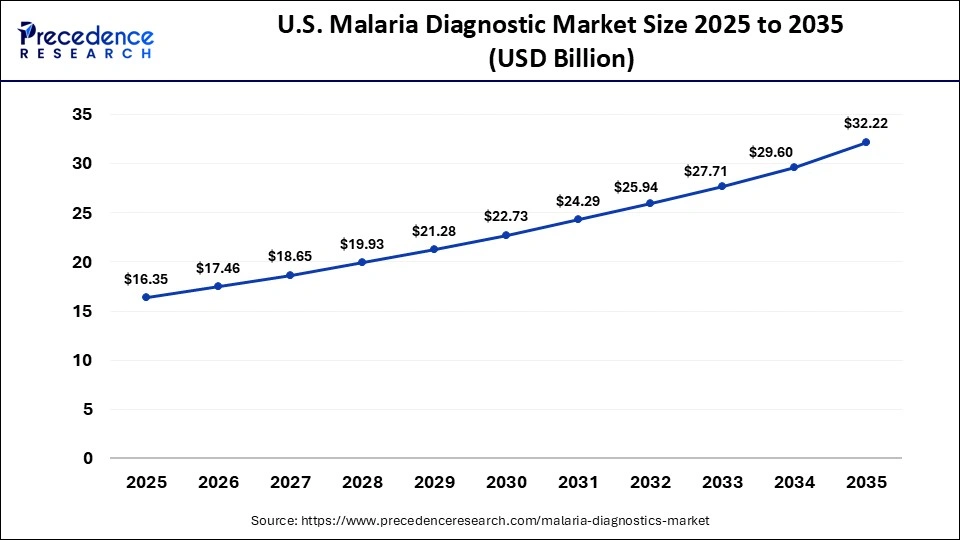
The U.S. malaria diagnostic market size is calculated at USD 16.35 billion in 2025 and is expected to reach nearly USD 32.22 billion in 2035, accelerating at a strong CAGR of 7.66% between 2026 and 2035.
U.S. Malaria Diagnostic Market Analysis
The U.S. leads the market within North America, driven by the existence of significant diagnostic companies, growing research activities, and sophisticated laboratory infrastructure. The nation places a strong emphasis on malaria research surveillance initiatives and the identification of imported malaria cases, which raises the need for sophisticated diagnostic tools like PCR and molecular testing. Government agencies and academic institutions are also making investments in infectious disease monitoring and innovative diagnostics, supporting market growth.
How is the Opportunistic Rise of Asia Pacific in the Malaria Diagnostic Market?
Asia Pacific is expected to grow at the fastest CAGR in the coming year because malaria is more common in developing nations. Government efforts to control and eradicate the disease are growing, and healthcare infrastructure is getting better. The market is growing in this region due to factors including increased use of rapid diagnostic tests, growing awareness of early disease diagnosis, and increased access to healthcare in rural areas.
India Malaria Diagnostic Market Analysis
The market in India is growing rapidly due to the high prevalence of malaria, growing government initiatives to eradicate the disease, and the growing use of quick diagnostic tests in both urban and rural medical facilities. Increased healthcare spending and government programs like the National Framework for Malaria Elimination are helping to expand malaria diagnostic services throughout the nation. Additionally, expanding networks of diagnostic laboratories and increased awareness of early diagnosis are driving market expansion.
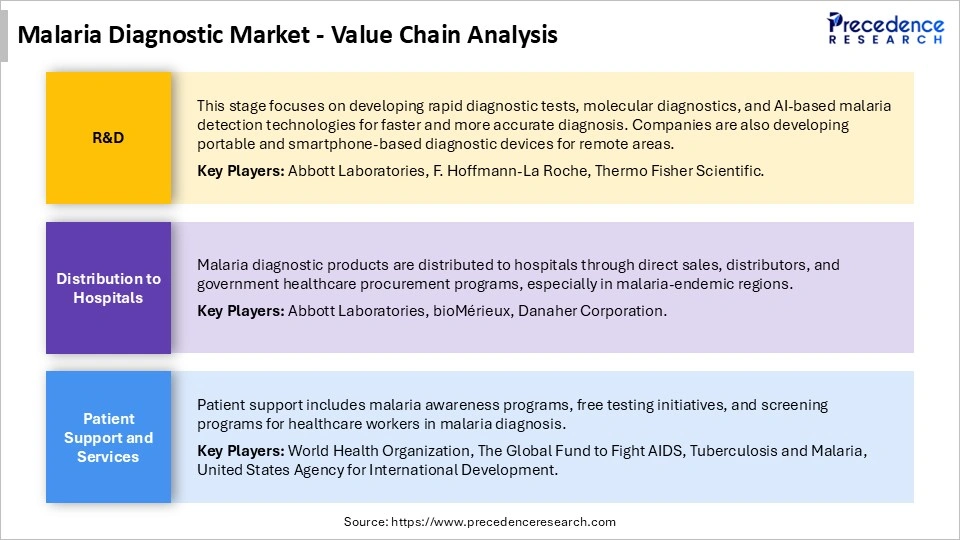
Malaria Diagnostic Market Supply Chain Analysis
Malaria Diagnostic Market Companies
- Roche diagnostics
- Abbott Laboratories
- Siemens Healthineers
- Cepheid
- Hologic
- Thermo Fisher Scientific
- Dako
- Bio-Rad Laboratories
Recent Developments
- In June 2025, Codix Bio Ltd announced the production and launch of malaria rapid diagnostic test kits in partnership with SD Biosensor to expand the supply of malaria and HIV diagnostic kits across Africa.(Source: https://www.reuters.com)
- In October 2025, Abbott announced a collaboration with global health organizations and governments to expand access to malaria rapid diagnostic testing and support malaria elimination programs in endemic countries.(Source: https://www.abbott.com)
- In January 2026, ISGlobal announced the development of a mobile phone-based rapid malaria diagnostic test that can detect severe malaria cases using biomarker detection technology.(Source: https://www.eurekalert.org)
Segments Covered in the Report
By Product Type
- Test Kits
- Reagents
- Instruments
By Technology
- Rapid Diagnostic Tests
- Microscopy
- Polymerase Chain Reaction
- Serology Tests
- Loop-Mediated Isothermal Amplification
By Application
- Clinical Diagnosis
- Epidemiological Studies
- Drug Efficacy Studies
By End User
- Hospitals
- Diagnostic Laboratories
- Research Institutes
- Home Care Settings
By Region
- North America
- Latin America
- Europe
- Asia-pacific
- Middle and East Africa
For inquiries regarding discounts, bulk purchases, or customization requests, please contact us at sales@precedenceresearch.com
Frequently Asked Questions
Tags





Ask For Sample
No cookie-cutter, only authentic analysis – take the 1st step to become a Precedence Research client
 Get a Sample
.webp)



 sales@precedenceresearch.com
 Schedule a Meeting
