



Mother and Child Healthcare Market Size, Companies, Share, Patient Volume, Treatment Adoption Rates, Pricing Analysis, Regulatory Landscape, Competitive Positioning, and Demand Forecast
Mother and Child Healthcare Market (By Product: Maternal Healthcare Products, Maternal Health Monitoring Devices, Baby Foods & Snacks, Others; By Application: Prenatal Care, Postnatal Care, Neonatal Care, Family Planning & Reproductive Health; By Distribution Channel: Hospitals & Clinics, Retail, Others; By End User: Hospitals, Private Clinics, Retailers & Pharmacies, Online Platforms) - Global Industry Analysis, Size, Trends, Leading Companies, Regional Outlook, and Forecast 2026 to 2035
Source: https://www.precedenceresearch.com/mother-and-child-healthcare-market
 Get a Sample
 Table Of Content


What is the Mother and Child Healthcare Market Size in 2026?
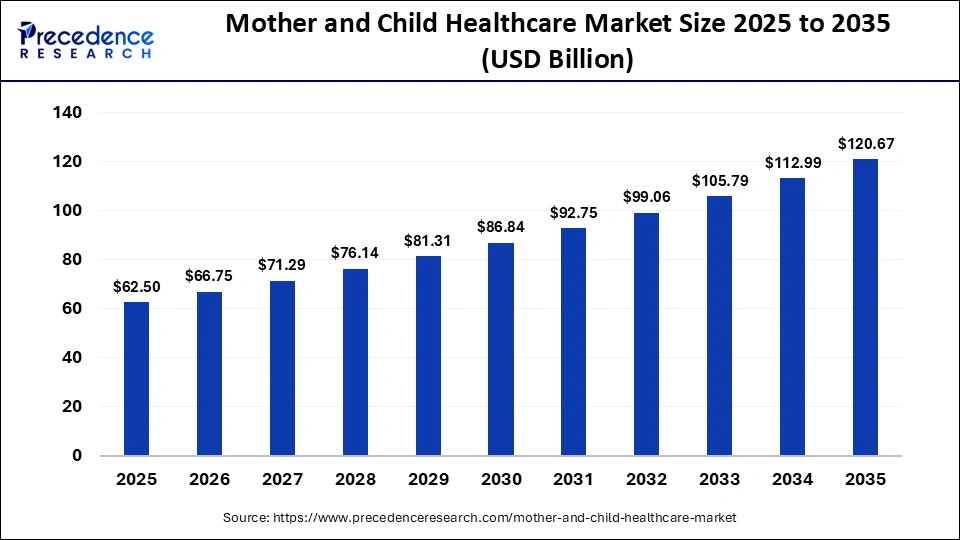
The global mother and child healthcare market size accounted for USD 62.50 billion in 2025 and is predicted to increase from USD 66.75 billion in 2026 to approximately USD 120.67 billion by 2035, expanding at a CAGR of 6.80% from 2026 to 2035. The market is rapidly expanding due to the growing awareness of mother and child healthcare and increasing government initiatives aimed at reducing mortality rates and enhancing child safety. Specialized healthcare services presented by key players also drive the market.
Key Takeaways
- North America held the largest market share of 38% in 2025.
- The Europe is expected to grow at the fastest rate during the forecast period of 2026 to 2035.
- By product, the child healthcare products segment held the largest market share of 47% in 2025.
- By product, the maternal healthcare products segment is the second-largest shareholder and is expected to grow at a significant rate from 2026 to 2035.
- By application, the neonatal care segment held the largest market share of 30% in 2025.
- By application, the prenatal care segment is the second-largest shareholder and is expected to grow at a significant rate during the forecast period.
- By distribution channel, the retail segment held the largest market share of 55% in 2025.
- By distribution channel, the hospitals & clinics segment is the second-largest shareholder and is expected to grow at a significant rate during 2026-2035.
- By end user, the hospitals segment held the largest market share of 40% in 2025.
- By end user, the retailers & pharmacies segment is the second-largest shareholder and is expected to grow at a significant rate during 2026-2035.
Market Overview
The mother and child healthcare market encompasses medical, diagnostic, and support services that help women during pregnancy, the childbirth period, and postpartum days. The market further offers support and care for newborns and children up to five years old. It largely focuses on mortality and managing health, which includes prenatal services, birthing, and treatments for fertility with immunizations.
The market targets women of reproductive age and children, along with infants and adolescents. The market expansion is propelled mainly by increased adoption of prenatal and child health services, growing demand for super-specialty consultations, and technological advancements in fertility treatments like IVF. Services are offered via hospitals, specialized nursing homes/clinics, in-home settings, and expanding digital platforms.
Mother and Child Healthcare Market Trends
- There is a rapid shift toward postnatal and specialized care, emphasizing newborn support, breastfeeding, and maternal mental health.
- Parents are increasingly seeking high-quality, specialized hospitals and personalized birthing center services.
- Government programs, such as India's PMMVY, aimed at reducing maternal and infant mortality, are driving demand for care services.
- Rising disposable incomes, particularly in urban areas, are boosting demand for childcare services, specialized baby products, and smart, tech-enabled baby care solutions.
- Growing focus on nutritional supplements for mothers and infants, including prenatal vitamins and micronutrients, is further supporting market expansion.
Market Scope
| Report Coverage | Details |
| Market Size in 2025 | USD 62.50 Billion |
| Market Size in 2026 | USD 66.75 Billion |
| Market Size by 2035 | USD 120.67 Billion |
| Market Growth Rate from 2026 to 2035 | CAGR of 6.80% |
| Dominating Region | North America |
| Fastest Growing Region | Asia-Pacific |
| Base Year | 2025 |
| Forecast Period | 2026 to 2035 |
| Segments Covered | Product, Application, Distribution Channel, End User, and Region |
| Regions Covered | North America, Europe, Asia-Pacific, Latin America, and Middle East & Africa |
Market Dynamics
Drivers
Adoption of Digital Healthcare
The market is largely driven by digitalization, which provides broader access to maternal and child care regardless of location. Technologies such as health apps, telemedicine, and AI-enabled tools allow for remote monitoring and timely interventions. Wearable devices enable pregnant women to track fetal health and other vital parameters, helping to reduce complications in high-risk pregnancies. Additionally, digital platforms like electronic health records improve the tracking of maternal and child health, enabling faster and more effective responses during emergencies.
Restraint
Governance Failures
Despite strong growth, the market faces challenges due to potential gaps in governance and policy implementation. Decentralized maternal and childcare services without adequate infrastructure can result in delayed treatments and adverse outcomes. Additionally, cultural stigma around pregnancy and childbirth continues to discourage women from fully utilizing healthcare facilities.
Opportunity
Rise of AI Model for Maternal Health Predictions
The rising adoption of AI models to predict risks associated with maternal health in low-resource settings creates immense opportunities in the mother and child healthcare market. Machine learning can leverage complete blood count data and patients' medical history to tackle pregnancy-related health conditions even in low-resource environments. Many public and private firms are funding significantly to improve the mother and child healthcare status globally.
For example, Siemens Healthineers, backed by massive funding from the Gates Foundation, is collaboratively developing an AI ecosystem to enable early prediction of health conditions during pregnancies that kill over half a million women and children every year, further supporting the market's growth.
Segment Insights
Product Insights
Mother and Child Healthcare Market Share, By Product, 2025-2035 (%)
| Product | 2025 | 2035 |
| Maternal Healthcare Products | 45.00% | 42.00% |
| Child Healthcare Products | 47.00% | 50.00% |
| Others | 8.00% | 8.00% |
The Child Healthcare Products Segment Held the Highest Market Share of 47% in 2025
The child healthcare products segment dominated the mother and child healthcare market with a 47% share in 2025. This is mainly due to the increased consumer spending on specialized nutrition, toxin-free baby products, and increasing awareness of preventive approaches for infants. The increasing disposable income and higher spending per child for their overall health and wellness have boosted the segment's growth. The growing emphasis on early detection and vaccinations with routine screenings is another driving factor of the segment.
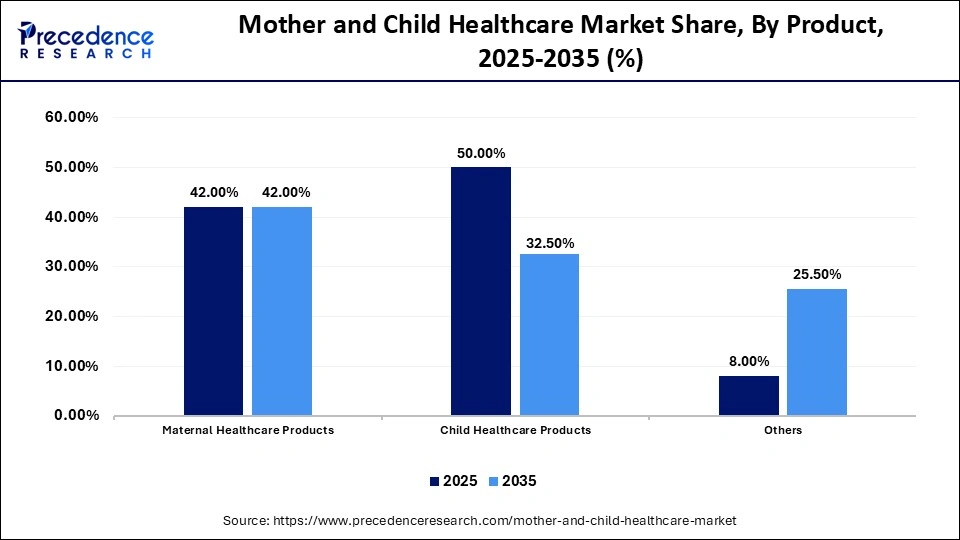
The maternal healthcare products segment is the second-largest shareholder, holding a 45% share in 2025, and is expected to grow at a significant rate during the forecast period. The segment's growth is attributed to the increasing maternal health awareness, growing disposable income that results in demand for premium maternity care products, and government initiatives and programs to reduce maternal mortality. Government efforts, like maternity benefits and public health initiatives, are highly focused on prenatal and postnatal care, supporting the segment's growth.
Application Insights
Mother and Child Healthcare Market Share, By Application, 2025-2035 (%)
| Application | 2025 | 2035 |
| Prenatal Care | 28.00% | 25.00% |
| Postnatal Care | 22.00% | 20.00% |
| Neonatal Care | 30.00% | 35.00% |
| Family Planning & Reproductive Health | 20.00% | 20.00% |
The Neonatal Care Segment Held a 30% Share of the Market in 2025
The neonatal care segment dominated the mother and child healthcare market with a 30% share in 2025, owing to the increasing demand for specialized newborn care services, increasing preterm birth rates, and huge investment by governments in neonatal intensive care units. Advanced technologies like thermoregulation devices and ventilators have enhanced neonatal care. Many governments and private entities are heavily investing in developing special newborn care units and NICUs to boost survival rates. This significantly increases the demand for specialized equipment like ventilators, incubators, and monitoring systems.
The prenatal care segment was the second-largest shareholder, holding a share of 28% in 2025, and is expected to grow at a significant rate during the projection period. The segment's growth is attributed to the increasing demand for diagnostic & screenings services, regular checkups to prevent complications, and the growing need for nutritional supplements with high-quality care. Prenatal care is highly crucial for monitoring high-risk pregnancies to reduce mortality rates and manage chronic health conditions like diabetes or CVDs and other complex diseases.
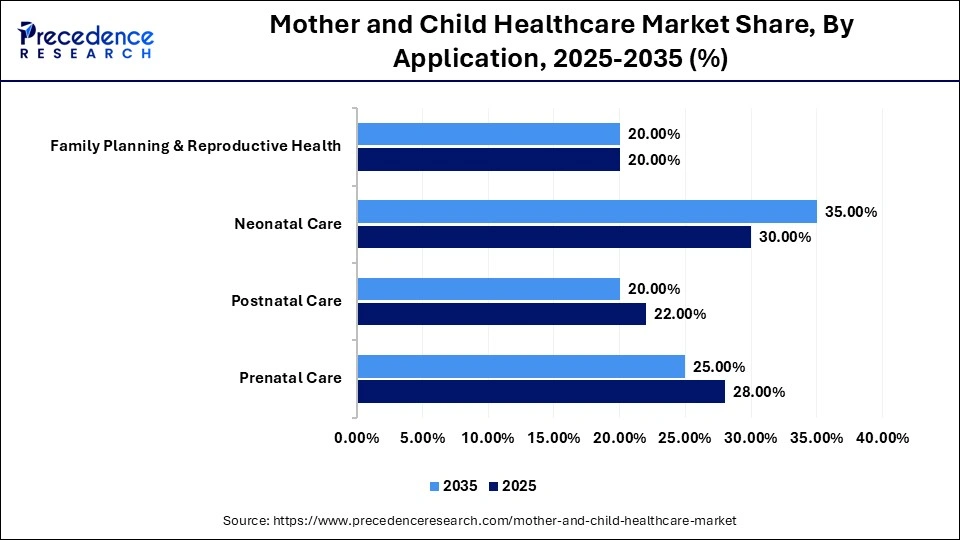
The postnatal care segment held a market share of 22% in 2025. The segment is growing due to the increasing awareness about lactation or nutrition counseling, critical recovery needs, and increasing C-section birth rates. The first six weeks after childbirth are highly crucial for both mothers and infants, with high chances of mortality that need specialized care and monitoring. Thus, increased focus on managing emotional health and physical recovery has led to an increased demand for holistic postnatal programs.
The family planning & reproductive health segment held a market share of 20% in 2025. The segment is rapidly growing due to the high demand for birth spacing and contraception, which reduces maternal mortality rates. Family planning is a key factor in preventing high-risk pregnancies that directly affect a mother's health. Nearly 874 million women are using modern contraceptives due to the increasing awareness regarding safe pregnancy planning to better manage their health.
Distribution Channel Insights
Mother and Child Healthcare Market Share, By Distribution Channel, 2025-2035 (%)
| Distribution Channel | 2025 | 2035 |
| Hospitals & Clinics | 35.00% | 30.00% |
| Retail | 55.00% | 60.00% |
| Others | 10.00% | 10.00% |
Why Did the Retail Segment Held a 55% Share of the Market in 2025?
The retail segment dominated the mother and child healthcare market in 2025, holding the largest share of 55%. This is primarily due to the increasing demand for immediate access, physical inspection of premium products, and expert-in-person advice for maternity and baby products' usage. Parents are highly concerned about the hygiene and safety of maternal or infant care products while purchasing essential goods like skincare products, diapers, and formula drinks. It fosters tangible results and trust through brand presence.
The hospitals & clinics segment is the second-largest shareholder, holding a 35% share in 2025, and is expected to grow at a significant rate during 2026–2035. The segment is expanding due to the requirement for specialized, high-quality care during the pregnancy period, childbirth, and early childhood. They provide comprehensive, trusted, and management of high-risk pregnancies. Also, supportive government initiatives include health insurance coverage and enhanced infrastructure in urban and rural areas, especially prenatal and neonatal health areas.
End User Insights
The Hospitals Segment Held the Largest Market Share of 40% in 2025
The hospitals segment dominated the mother and child healthcare market while holding a 40% share in 2025 due to the specialized and comprehensive services they offer, such as neonatal intensive care labor units and expert care from skilled professionals offered by hospitals. Hospitals offer full service for prenatal care, specialized diagnostic technology, and pediatric care in one location. Hospitals are the safest place to handle complications that may arise during childbirth due to the presence of skilled professionals and well-equipped infrastructure with the necessary tools and kits to support a healthy delivery and aftercare.
The retailers & pharmacies segment is the second-largest shareholder, holding a 25% share in 2025, and is expected to grow at a significant rate during 2026–2035. This growth is driven by their high accessibility, extended operating hours, and role as a first point of care for mothers and children. Pharmacies provide immediate needs such as medicines, wellness products, and supplements, often preferred over other sources. They are also trusted for expert advice and supplement recommendations, strengthening their position in the healthcare ecosystem.
Mother and Child Healthcare Market Share, By End User, 2025-2035 (%)
| End User | 2025 | 2035 |
| Hospitals | 40.00% | 35.00% |
| Private Clinics | 20.00% | 18.00% |
| Retailers & Pharmacies | 25.00% | 30.00% |
| Online Platforms | 15.00% | 17.00% |
The private clinics segment held a significant market share of 20% in 2025. The segment growth is attributed to superior infrastructure, patient-oriented care, and advanced medical equipment, including neonatal intensive care units that often outperform public facilities. Parents prefer private clinics for shorter waiting times, cleaner environments that reduce hospital-acquired infections, and the ability to choose their own specialists.
The online platforms segment held a market share of 15% in 2025. This segment is growing due to the integration of AI tools, 24/7 access to information, and the growing shift toward virtual care for emergencies and routine checkups. Online platforms reduce the need to visit crowded hospitals while providing expert guidance regardless of location. Combined with AI-driven tools and wearable devices, these platforms enable proactive, holistic care for both mother and child.
Regional Insights
North America Mother and Child Healthcare Market Size and Growth 2026 to 2035
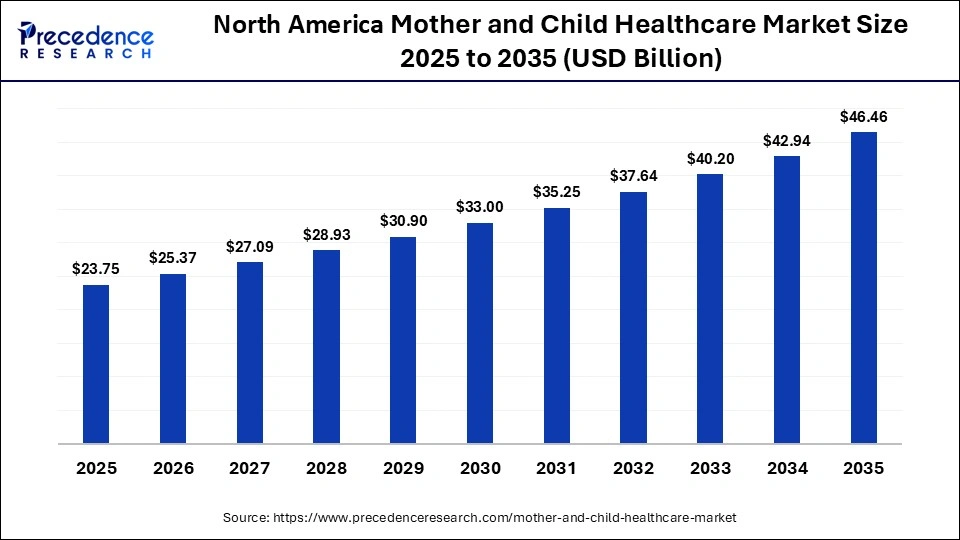
The North America mother and child healthcare market size is estimated at USD 23.75 billion in 2025 and is projected to reach approximately USD 46.46 billion by 2035, with a 6.94% CAGR from 2026 to 2035.
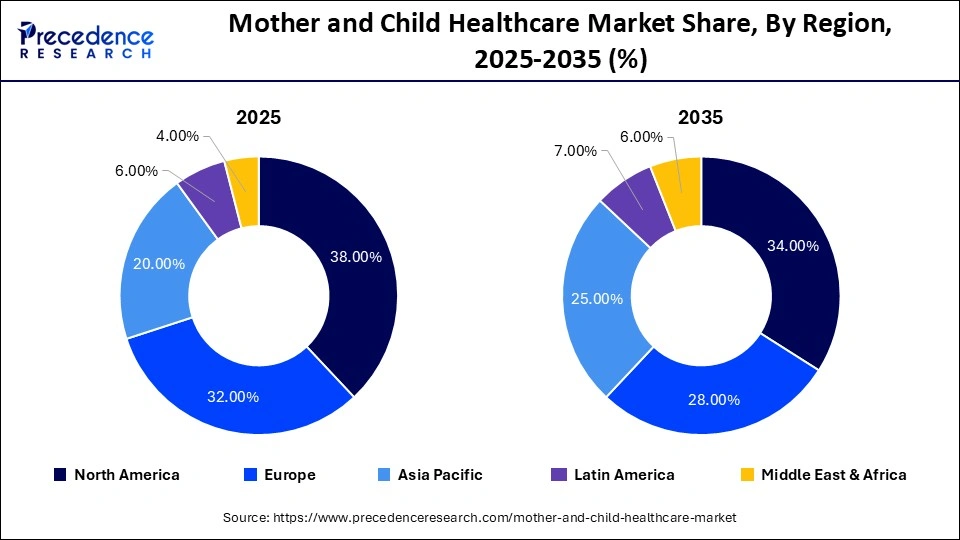
North America Held the Largest Market Share of 38% in 2025
North America dominated the mother and child healthcare market with a 38% share in 2025. This leadership is driven by advanced healthcare infrastructure, high disposable incomes, and substantial government funding aimed at reducing maternal and infant mortality rates. The region features superior facilities for maternal and child care, with rapid adoption of technological advancements such as AI-driven diagnostics for prenatal and postnatal care. Additionally, robust insurance systems and government programs promoting the development of maternity and infant care units, along with high IVF utilization, further support the region's market dominance.
U.S. Mother and Child Healthcare Market Size and Growth 2026 to 2035
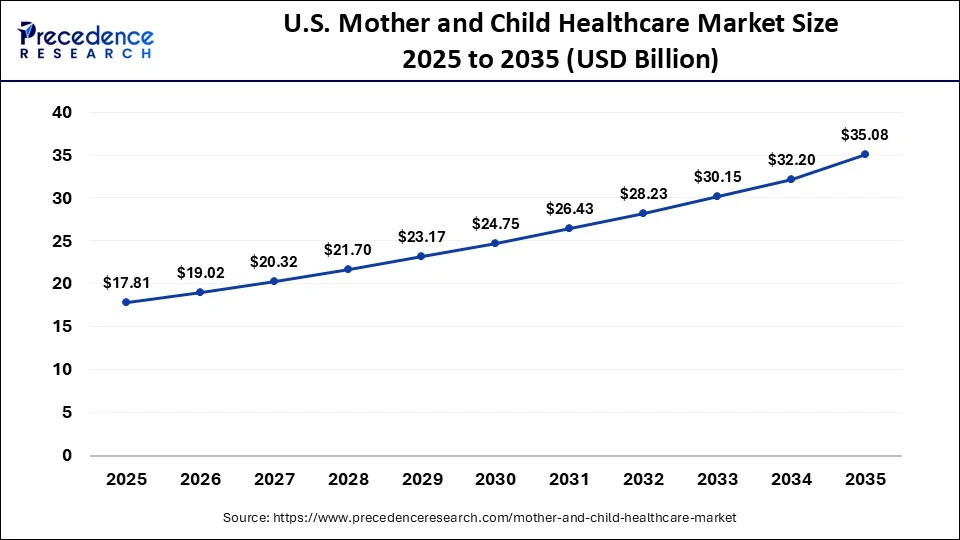
The U.S. mother and child healthcare market size is calculated at USD 17.81 billion in 2025 and is expected to reach nearly USD 35.08 billion in 2035, accelerating at a strong CAGR of 7.01% between 2026 and 2035.
U.S. Mother and Child Healthcare Market Analysis
The U.S. is a major contributor to the market within North America, driven by substantial healthcare investments, supportive reimbursement policies, and government initiatives for maternity care. Technological advancements in neonatal and infant care units further strengthen the country's position. Additionally, there is strong adoption of assisted reproductive technologies, such as IVF, with patients seeking guidance from specialized healthcare professionals for comprehensive prenatal, perinatal, and postnatal care. According to the American Society for Reproductive Medicine, nearly 100,000 babies are born through IVF in the U.S., with 95% of national IVF cycles performed at clinics.
What Makes Europe the Fastest-Growing Region in the Market?
Europe is considered the second-largest market, holding a 32% share in 2025, and is expected to grow at the fastest rate in the coming years, owing to its strong policy frameworks, massive research funding to develop robust healthcare centers, rapid adoption of advanced technologies like IVF to increase fertility rates, and increasing awareness about mother and childcare. Europe is at the forefront of adopting telemedicine, mobile applications, and wearable devices for smart fetal monitoring.
In Europe, the trend of women having pregnancies at older ages has increased the risk of complications such as gestational diabetes and preeclampsia. This drives demand for specialized maternity care, premium products tailored for high-risk conditions, and advanced monitoring systems or wearable devices for daily use. Additionally, strict government regulations on product safety compel manufacturers to adopt high-quality formulations, further strengthening the market.
Germany Mother and Child Healthcare Market Analysis
Germany is a frontrunner in implementing stringent regulations for maternity and child healthcare, ensuring high-quality and accessible services. EU Regulation No. 609/2013 mandates the use of high-quality products, fostering consumer trust and supporting market growth. Germany's healthcare system, with universal coverage, provides comprehensive maternal and pediatric care, supported by government funding for specialized hospitals and pediatric research centers equipped with advanced medical technologies.
Since Germany is a leading exporter of pharmaceuticals and medical technology, key players in the region are actively launching innovative baby care and healthy maternity supportive premium products with precise formulations, further supporting the market expansion in Europe.
Asia Pacific: A Significantly Growing Area
Asia Pacific held a 20% share of the mother and child healthcare market in 2025 and is significantly expanding, mainly driven by rapid urbanization, rising disposable incomes, and increasing awareness of maternal and child wellness. The market growth is supported by the rising demand for premium baby care products and healthcare services, particularly in high-density population centers. Additionally, the trend of delayed childbirth for personal or career reasons has increased the need for specialized maternity care, advanced diagnostic facilities, and comprehensive prenatal care centers.
Additionally, ongoing cultural shifts and product innovations are driving market growth in Asia Pacific. The region's “patient 2.0” profile, highly informed and demanding, prioritizes convenience and high-quality maternal and child care products. Growing awareness of infant sensitivities has fueled strong demand for organic and clean-label baby foods, skincare products, precisely formulated supplements, and breastfeeding solutions, further supporting market expansion.
India Mother and Child Healthcare Market Analysis
India is a key contributor to the mother and child healthcare market in Asia Pacific, driven by strong government support through funding, increased healthcare spending, insurance coverage, and the expansion of private healthcare infrastructure. Government-backed programs such as Janani Suraksha Yojana and Janani Shishu Suraksha Karyakram have significantly increased institutional deliveries by providing free, high-quality care to economically underserved populations, further boosting market growth.
Mother and Child Healthcare Market Companies
- Johnson & Johnson
- Abbott Laboratories
- Procter & Gamble Co.
- Philips Healthcare
- Danone S.A.
- Nestlé Health Science
- Medela AG
- Kimberly-Clark Corporation
- Huggies (Kimberly-Clark)
- Gerber Products Company (Nestle)
- GE Healthcare
- Ferring Pharmaceuticals
- Bayer AG
- Mylan Pharmaceuticals
- Tetra Pak
Recent Developments
- In December 2025, India's leading pediatric and multi-specialty hospital chain, Rainbow Children's Hospital, announced the launch of holistic services for mother and child healthcare in Rajamahendravaram, aiming to offer quality care services to the nearby cities and Godavari districts.(Source: https://www.expresshealthcare.in)
- In December 2025, U.S. health regulators notified executives at Merck, Sanofi, and AstraZeneca that their approved infant RSV preventive treatments, Beyfortus and Enflonsia, would undergo renewed safety scrutiny. The review comes under Health Secretary Robert F. Kennedy Jr., known for his anti-vaccine views, who is reexamining routine childhood immunizations.(Source: https://www.reuters.com)
Segments Covered in the Report
By Product
- Maternal Healthcare Products
- Prenatal Vitamins
- Fertility Products
- Maternal Health Monitoring Devices
- Child Healthcare Products
- Infant Formula
- Baby Foods & Snacks
- Pediatric Healthcare Devices
- Diapers & Wipes
- Others
- Health Supplements
- Baby Skin Care Products
By Application
- Prenatal Care
- Nutritional Products
- Health Monitoring Systems
- Postnatal Care
- Baby Food & Nutrition
- Pediatric Healthcare Solutions
- Neonatal Care
- Infant Healthcare Products
- Neonatal Intensive Care Units (NICU) Equipment
- Family Planning & Reproductive Health
- Fertility Treatments
- Contraceptives
By Distribution Channel
- Hospitals & Clinics
- Maternity Hospitals
- Pediatric Clinics
- Retail
- Supermarkets
- Online Retailers
- Pharmacies & Drugstores
- Others
- Direct Sales
- Institutional Sales
By End User
- Hospitals
- Private Clinics
- Retailers & Pharmacies
- Online Platforms
By Region
- North America
- Latin America
- Europe
- Asia-pacific
- Middle and East Africa
For inquiries regarding discounts, bulk purchases, or customization requests, please contact us at sales@precedenceresearch.com
Frequently Asked Questions





Ask For Sample
No cookie-cutter, only authentic analysis – take the 1st step to become a Precedence Research client
 Get a Sample




 sales@precedenceresearch.com
 Schedule a Meeting
