



Multimodal Imaging Market Size, Companies, Share, Patient Volume, Treatment Adoption Rates, Pricing Analysis, Regulatory Landscape, Competitive Positioning, and Demand Forecast
Multimodal Imaging Market (By Modality: PET/CT, SPECT/CT, PET/MRI, Optical/CT, Others; By Application: Oncology, Neurology, Cardiology, Orthopedics, Others; By End User: Hospitals, Diagnostic Imaging Centers, Research Institutes, Others) - Global Industry Analysis, Size, Trends, Leading Companies, Regional Outlook, and Forecast 2026 to 2035
Source: https://www.precedenceresearch.com/multimodal-imaging-market
 Get a Sample
 Table Of Content


What is the Multimodal Imaging Market Size in 2026?
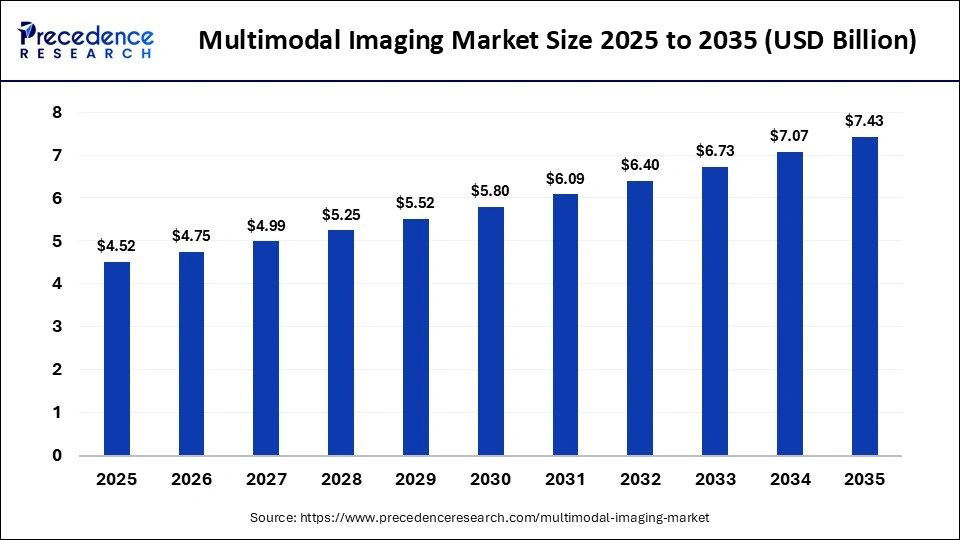
The global multimodal imaging market size was calculated at USD 4.52 billion in 2025 and is predicted to increase from USD 4.75 billion in 2026 to approximately USD 7.43 billion by 2035, expanding at a CAGR of 5.10% from 2026 to 2035. The market is driven by rising cancer prevalence, increasing adoption of hybrid imaging systems, technological advancements, and growing demand for precise, non-invasive diagnostics in hospitals, clinics, and research centers.
Key Takeaways
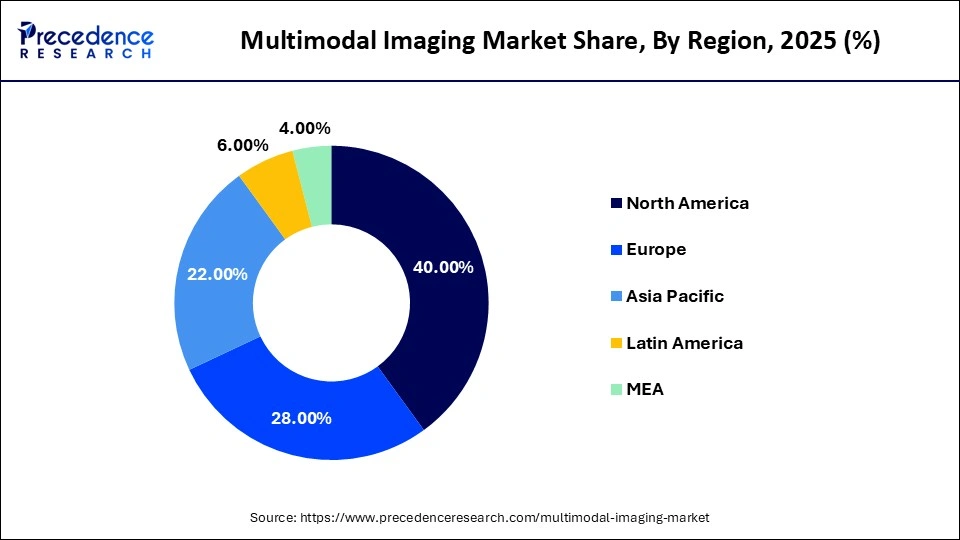
- North America held a dominant position in the multimodal imaging market with a share of approximately 40% in 2025.
- Asia-Pacific is expected to grow at the fastest CAGR of approximately 5.5% in the market between 2026 and 2035.
- By modality, the PET/CT segment held a major revenue share of approximately 42% in the market in 2025.
- By modality, the PET/MRI segment is expected to grow at the fastest CAGR of approximately 4.3% in the market between 2026 and 2035.
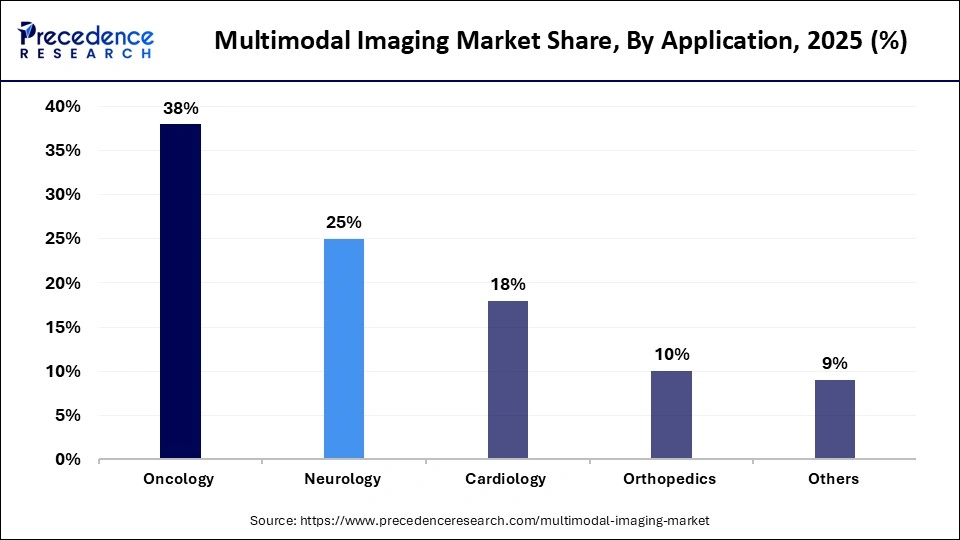
- By application, the oncology segment registered its dominance over the global market with a share of approximately 38% in 2025.
- By application, the cardiology segment is expected to witness the fastest growth in the market with a CAGR of approximately 4.5% over the forecast period.
- By end user, the hospitals segment accounted for the highest revenue share of approximately 55% in the market in 2025.
- By end user, the diagnostic imaging centers segment is expected to expand rapidly in the market with a CAGR of approximately 4.7% in the coming years.
What is the Multimodal Imaging Market?
Molecular imaging offers a non-invasive way to visualize and understand biological functions at the molecular level in living organisms. Recent improvements in imaging tools and techniques have enhanced image clarity and reliability, leading to better diagnostic accuracy. Multimodal imaging combines multiple techniques into a single system, providing superior clinical diagnostic details compared to traditional methods. This approach delivers high spatial resolution, improved soft tissue contrast, and sensitive molecular-level information.
Common imaging options in clinical research include CT, MRI, PET, SPECT, ultrasound, and optical imaging, each with unique strengths and limitations that can complicate precise disease site assessment. Multimodal molecular imaging is essential for disease management, helping clinicians with screening, monitoring, staging, prognosis, therapy planning, treatment evaluation, and recurrence detection. Rapid technological advances enable early detection, targeted treatment, and personalized medicine through this imaging approach, which has proven effective for cardiovascular diseases, neuropsychiatric disorders, and tumor identification, ultimately improving surgical outcomes. Ongoing progress in this field is expected to lead to significant breakthroughs in medical imaging and molecular biology.
What is the Role of AI in the Multimodal Imaging Market?
Recent developments in artificial intelligence (AI) have transformed biomedical imaging by combining different imaging methods for better diagnostics and precision medicine. AI methods are effective in automating complex image analysis, extracting detailed information, and handling large datasets. New generative AI models effectively address the lack of data in some areas by creating synthetic data or providing accurate predictions even with limited information available. Using AI in clinical bioimaging can enhance diagnostic accuracy and efficiency, allowing for earlier and more precise disease detection, which is particularly important for conditions that require quick treatment.
By combining imaging data with specific patient information, AI helps develop personalized treatment plans and improve prognostic evaluations. Additionally, AI systems support real-time decision-making, providing quick insights during procedures and assessments, and through predictive modelling, they aid in long-term care planning. The application of large-scale multimodal AI in clinical environments tackles issues related to data variety and creates a standard approach for analysing biomedical imaging.
What are the Trends in the Multimodal Imaging Market?
- Technological Advancements in Imaging Modalities: Advancements in imaging technology are crucial in clinical practice as this integration enhances diagnostic accuracy, treatment planning, and patient care. AI is set to revolutionize PET-CT imaging with new algorithms for better image reconstruction and analysis. Combining PET-CT with MRI and molecular imaging offers a comprehensive view of anatomical and functional aspects, improving diagnostic precision and insights into disease progression. Augmented reality (AR) enhances visualization by providing interactive 3D models during image analysis for a more intuitive grasp of anatomical and functional information, potentially transforming healthcare professionals' interactions with data.
- Personalized Medicine: Personalized medicine relies on image-based screening programs. It is crucial for planning therapies tailored to patients, monitoring treatments, and tracking disease progression. It also facilitates targeting of non-invasive or minimally invasive treatments. Progress in molecular biology, cancer biomarkers, and radio-genomics enhances understanding of cancer, fostering advancements in personalized medicine and molecular imaging through interdisciplinary collaboration.
- Applications in Neuroscience: Multimodal neuroimaging is increasingly used in neuroscience as it addresses the limitations of single methods. It provides essential diagnostic insights for neuropsychiatric disorders and enhances the visualization and assessment of brain structure and function. This approach significantly aids in early detection, monitoring progression, and tailoring treatments, offering both qualitative and quantitative insights. Furthermore, it improves the accuracy of differential diagnoses, supporting a transdiagnostic approach for trauma-related psychiatric issues.
Market Scope
| Report Coverage | Details |
| Market Size in 2025 | USD 4.52 Billion |
| Market Size in 2026 | USD 4.75 Billion |
| Market Size by 2035 | USD 7.43 Billion |
| Market Growth Rate from 2026 to 2035 | CAGR of 5.10% |
| Dominating Region | North America |
| Fastest Growing Region | Asia Pacific |
| Base Year | 2025 |
| Forecast Period | 2026 to 2035 |
| Segments Covered | Modality, Application, End User, and region |
| Regions Covered | North America, Europe, Asia-Pacific, Latin America, and Middle East & Africa |
Segmental Insights
Modality Insights
Multimodal Imaging Market Share, By Modality, 2025 (%)
| Modality | Market Share 2025 (%) |
| PET/CT | 42% |
| SPECT/CT | 22% |
| PET/MRI | 18% |
| Optical/CT | 10% |
| Others | 8% |
Which Modality Segment Dominated the Multimodal Imaging Market?
The PET/CT segment held a dominant position in the market with a share of approximately 42% in 2025, as it combines functional and anatomical data, enhancing understanding of physiological processes and disease mechanisms. This integration improves diagnostic accuracy, treatment planning, and patient care. The technology is evolving, with research aimed at enhancing methods and image quality. PET-CT is widely utilized across medical specialties, including oncology, neurology, cardiology, and infectious diseases. In oncology, it is crucial for cancer staging, assessing treatment responses, and detecting recurrences, facilitating early tumor detection and personalized treatment strategies.
The PET/MRI segment is expected to show the fastest growth with a CAGR of approximately 4.3% over the forecast period, as it enables precise timing alignment of both imaging techniques, crucial for brain imaging, cardiology, and oncology. This integration provides MRI insights into structure and function, linked to PET's quantitative pathology data.
PET/MRI enhances diagnostic accuracy by correlating radiopharmaceutical levels with metabolic changes in tumors, showing promise in neuroscience for studying complex neural networks. PET/MRI marks a significant advancement in precision medicine, facilitating tailored treatment plans and improving patient outcomes through a comprehensive understanding of biological and structural factors.
Application Insights
Multimodal Imaging Market Share, By Application, 2025 (%)
| Application | Market Share 2025 (%) |
| Oncology | 38% |
| Neurology | 25% |
| Cardiology | 18% |
| Orthopedics | 10% |
| Others | 9% |
What Made the Oncology Segment Dominate in the Multimodal Imaging Market?
The oncology segment contributed the biggest revenue share of approximately 38% in the market in 2025, as noninvasive image-guided therapies and early detection through screening programs reduce death rates and lessen side effects from treatments. Early detection and increased sensitivity help identify potentially cancerous lesions sooner.
Treatment responses are evaluated by monitoring changes in tumor size, metabolism, and other important factors. It plays a crucial role in clinical oncology, assisting in lesion detection, tumor staging, treatment response evaluation, and image-guided procedures, all of which together improve diagnostic precision and treatment outcomes.
The cardiology segment is expected to grow with the highest CAGR of approximately 4.5% in the market during the studied years, as multimodality imaging is crucial for the early assessment, diagnosis, and treatment of potential cardiomyopathy patients. Echocardiography is the primary imaging test used to detect structural and functional abnormalities indicative of cardiomyopathy. Cardiac MRI provides detailed information about myocardial tissue, aiding in identifying the cause of the condition. Multimodality imaging is also essential for risk stratification, prognosis assessment, and treatment monitoring in confirmed cardiomyopathy cases.
End User Insights
Multimodal Imaging Market Share, By End User, 2025 (%)
| End User | Market Share 2025 (%) |
| Hospitals | 55% |
| Diagnostic Imaging Centers | 28% |
| Research Institutes | 12% |
| Others | 5% |
Which End User Segment Led the Multimodal Imaging Market?
The hospitals segment led the market with a share of approximately 55% in 2025, due to high patient volumes, substantial funding for advanced equipment, and the need for sophisticated diagnostic tools for complex health issues. Hospitals handle many patients with chronic conditions, necessitating advanced multimodal imaging for precise diagnosis and staging. With the necessary financial resources, infrastructure, and skilled personnel, hospitals effectively implement and maintain high-end imaging technologies. Furthermore, comprehensive diagnostic solutions can improve care processes, as patients often turn to hospitals, positioning them as key players in advanced diagnostic, treatment, and monitoring methods.
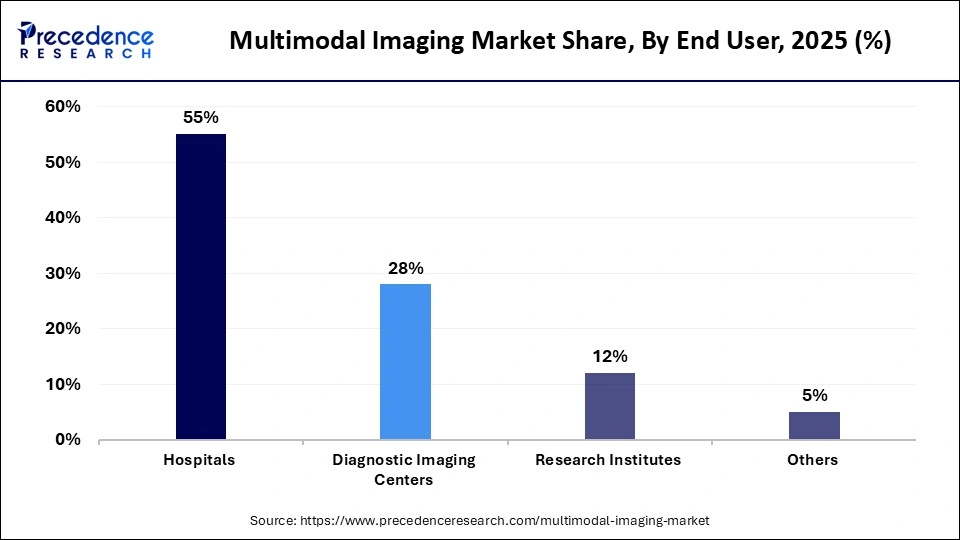
The diagnostic imaging centers segment is expected to grow at the fastest CAGR of 4.7% in the market between 2026 and 2035 as diagnostic centers adopt advanced hybrid technologies like PET-CT and PET-MR to handle high patient volumes outside hospitals. Compared to larger, busier hospital facilities, diagnostic centers often provide faster turnaround times and more convenient locations for patients. Hospitals and healthcare systems are increasingly outsourcing imaging services to specialized, independent facilities to reduce overhead costs, leading to the segment's growth. The industry is investing heavily in state-of-the-art imaging technologies to offer better resolution and more affordable options than hospital-based care.
Regional Insights
North America Multimodal Imaging Market Size and Growth 2026 to 2035
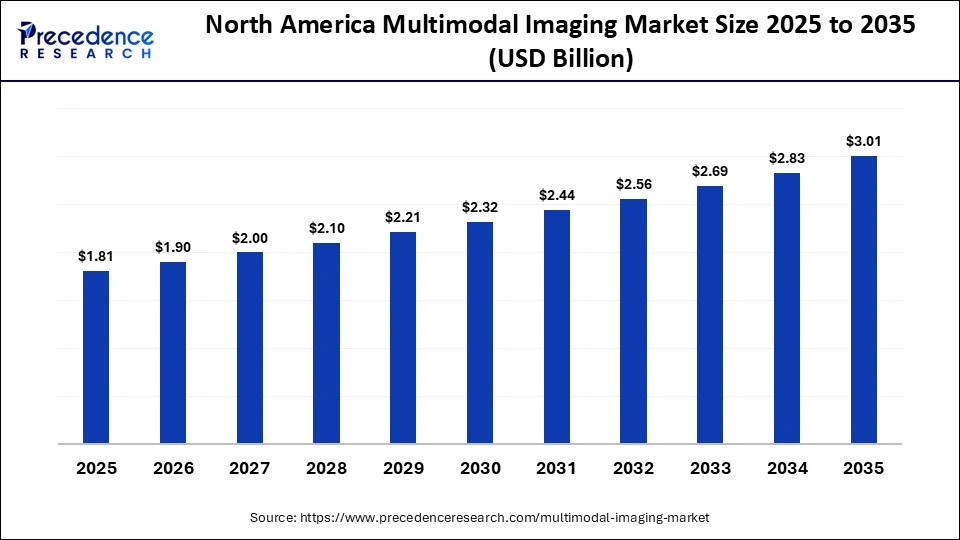
The North America multimodal imaging market size is estimated at USD 1.81 billion in 2025 and is projected to reach approximately USD 3.01 billion by 2035, with a 5.22% CAGR from 2026 to 2035.
Which Factors Drive the Multimodal Imaging Market in North America?
North America held a major market share of approximately 40% in 2025, driven by rising chronic diseases, an aging population, and the swift adoption of advanced imaging technologies. The increasing rates of cancer, heart disease, and neurological disorders heighten the demand for improved diagnostic tools. As the older demographic grows, so does the need for advanced, non-invasive imaging techniques. Significant healthcare investments and strong insurance support for advanced diagnostics facilitate the use of expensive, high-quality equipment. There is also a growing focus on early disease detection and personalized treatment, especially in oncology and neurology, which further enhances the demand for precise imaging methods.
U.S. Multimodal Imaging Market Size and Growth 2026 to 2035
The U.S. multimodal imaging market size is calculated at USD 1.36 billion in 2025 and is expected to reach nearly USD 2.27 billion in 2035, accelerating at a strong CAGR of 5.26% between 2026 and 2035.
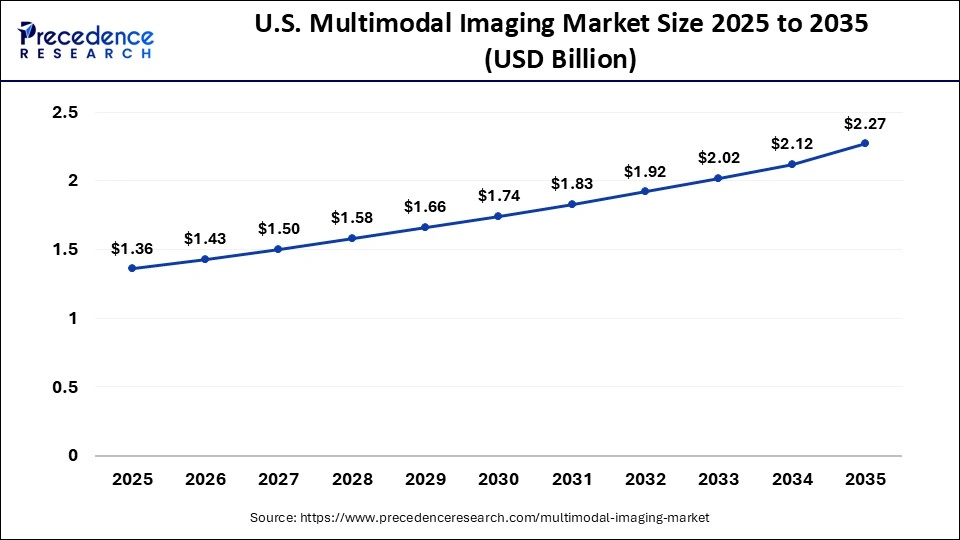
U.S. Market Trends
The U.S. market is primarily fueled by rising chronic disease rates such as cancer, cardiovascular, and neurological disorders, an aging population needing diagnostics, and rapid advancements in technology like AI-driven hybrid systems (PET/CT, PET/MRI). Key drivers include favorable reimbursement policies and increased healthcare facility investments. Supportive government policies and funding for R&D promote these technologies. Additionally, major players like Siemens Healthineers, GE Healthcare, and Philips Healthcare are leading innovation through strategic mergers and acquisitions.
How Will Asia-Pacific Grow in the Multimodal Imaging Market?
Asia-Pacific is expected to experience the fastest growth with a CAGR of approximately 5.5% during the predicted timeframe, driven by quick AI integration, a rise in chronic diseases, and major healthcare investments. The rising adoption of AI technologies, along with improvements in 3D and 4D imaging and the use of hybrid, high-speed scanners like PET/MRI and PET/CT, propels market growth.
Significant funding from both government and private sectors is improving diagnostic facilities. The increasing purchasing power and better access to healthcare in developing countries are expanding the market's reach. It is a key hub for the use and production of imaging devices, further supported by the growth of pharmaceutical research and development in the region.
India Market Trends
India is rapidly emerging as a key player in multimodal imaging, fueled by local production of affordable advanced scanners, the rise in chronic diseases, and AI-driven diagnostic tools. Government initiatives like 'Make in India' and increased healthcare investments are enhancing infrastructure for early diagnosis, making advanced technology more accessible in urban and public healthcare. The rising rates of cancer and heart disease in the aging population underscore the need for precise and timely diagnostics. The government is strengthening the healthcare system through initiatives like the Ayushman Bharat Health Infrastructure Mission.
Multimodal Imaging Market Value Chain Analysis
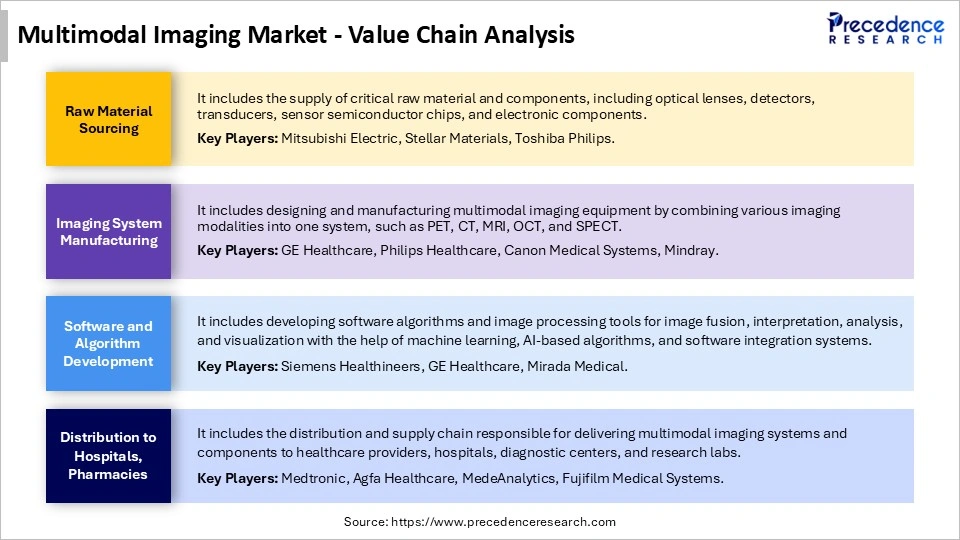
Multimodal Imaging Market Companies
- Siemens Healthineers
- GE Healthcare
- Canon Medical Systems
- Philips Healthcare
- Bruker Corporation
- Shimadzu Corporation
- Mediso Medical Imaging
- Carestream Health
- PerkinElmer
- FUJIFILM Holdings Corporation
- Spectrum Dynamics Medical
- NeuroLogica Corporation
- MOBILAB Imaging
- MR Solutions
- Life Molecular Imaging
Recent Developments
- In February 2026, Merck and the Mayo Clinic formed a partnership to leverage multimodal clinical data and AI for faster drug discovery and target identification, focusing on virtual cell technologies for autoimmune and neurological diseases. The collaboration was made to access Mayo Clinic Platform Orchestrate, a secure environment containing de-identified, multimodal clinical data.(Source - https://www.2minutemedicine.com)
- In May 2025, Google launched MedGemma, featuring advanced open models to assist developers in creating AI healthcare applications. These applications can analyze medical images, generate reports, prioritize patient cases, and answer related questions. The multimodal version serves as a foundational framework for categorizing medical images in fields such as radiology, digital pathology, dermatology, and fundus imaging.(Source - https://www.mobihealthnews.com)
Segments Covered in the Report
By Modality
- PET/CT
- SPECT/CT
- PET/MRI
- Optical/CT
- Others
By Application
- Oncology
- Neurology
- Cardiology
- Orthopedics
- Others
By End User
- Hospitals
- Diagnostic Imaging Centers
- Research Institutes
- Others
By Region
- North America
- Latin America
- Europe
- Asia-pacific
- Middle and East Africa
For inquiries regarding discounts, bulk purchases, or customization requests, please contact us at sales@precedenceresearch.com
Frequently Asked Questions
Tags





Ask For Sample
No cookie-cutter, only authentic analysis – take the 1st step to become a Precedence Research client
 Get a Sample
.webp)



 sales@precedenceresearch.com
 Schedule a Meeting
