



Dupixent (dupilumab) Approved in the United States as the First and Only Medicine for Allergic Fungal Rhinosinusitis (AFRS)
Published: 13 Mar 2026
Author: Precedence Research



Approval in adults and children aged 6 years and older was supported by a Phase 3 trial demonstrating that Dupixent significantly reduced nasal signs and symptoms, systemic corticosteroid use, and surgery compared to placebo.
Allergic Fungal Rhinosinusitis (AFRS) is a chronic type 2 inflammatory disease of the sinuses characterized by an allergic hypersensitivity to fungi, often requiring surgery with high rates of post-operative recurrence. Allergic fungal rhinosinusitis (AFRS) is a disease that can leave both children and adults with inflamed nasal passages, nasal polyps, and thick mucus, causing constant nasal congestion.
"Some patients may experience serious complications, such as the deterioration of bone around the sinuses and facial deformities," stated Kenneth Mendez, President and CEO of the Asthma and Allergy Foundation of America (AAFA).
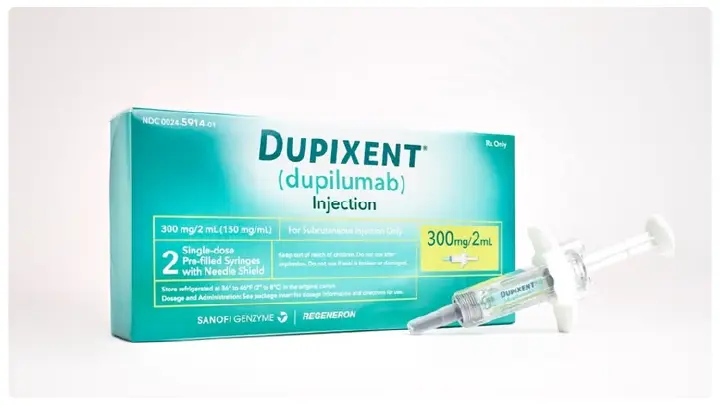
Dupixent is the first treatment specifically approved for Allergic Fungal Rhinosinusitis (AFRS) and offers the potential for relief to adults and children aged six years and older who are dealing with potentially debilitating symptoms.
Dupixent is now approved in the U.S. to treat nine distinct diseases driven in part by type 2 inflammation, including sino-nasal, skin, gut, and respiratory system diseases that affect a broad range of patients, from infants to elderly adults.
According to Precedence Research, the allergic rhinitis drugs market size was USD 14.58 billion in 2025 and is projected to increase from USD 15.17 billion in 2026 to approximately USD 21.61 billion by 2035, expanding at a CAGR of 4.01% from 2026 to 2035, driven by
Regeneron Pharmaceuticals, Inc. and Sanofi announced that the U.S. Food and Drug Administration (FDA) has approved Dupixent (dupilumab) for the treatment of adult and pediatric patients aged 6 years and older with allergic fungal rhinosinusitis (AFRS) who have a history of sino-nasal surgery. The FDA evaluated Dupixent under Priority Review for the treatment of AFRS, which is reserved for medicines that have the potential to provide significant improvements in the treatment, diagnosis, or prevention of serious conditions. This approval expands our approved indications in sino-nasal diseases to now include AFRS, alongside chronic rhinosinusitis with nasal polyps.
“With this approval, Dupixent once again demonstrates its value in advancing the treatment landscape for a chronic type 2 inflammatory disease with high unmet need,” said George D. Yancopoulos, M.D., Ph.D., Board co-Chair, President and Chief Scientific Officer at Regeneron, and a principal inventor of Dupixent.
The FDA approval is supported by the LIBERTY-AFRS-AIMS Phase 3 trial, in which 62 adults and children aged 6 years and older with AFRS were randomized to receive an age- and weight-based dose of Dupixent (200 mg or 300 mg) every two or four weeks (n=33) or placebo (n=29).