



Newly Built LPG Carrier Named “Lucent Pathfinder”
Published: 13 Mar 2026
Author: Precedence Research



On January 9, a naming ceremony was held at Kawasaki Heavy Industries Ltd.'s Sakaide Works for a newly constructed very large gas carrier (VLGC). This vessel marks the seventh dual-fuel liquefied petroleum gas (LPG) carrier using LPG that has been ordered by NYK. Once completed, the ship will be chartered by BGN INT DMCC ("BGN"), a leading global trader of LPG based in the United Arab Emirates, for the global transportation of LPG.
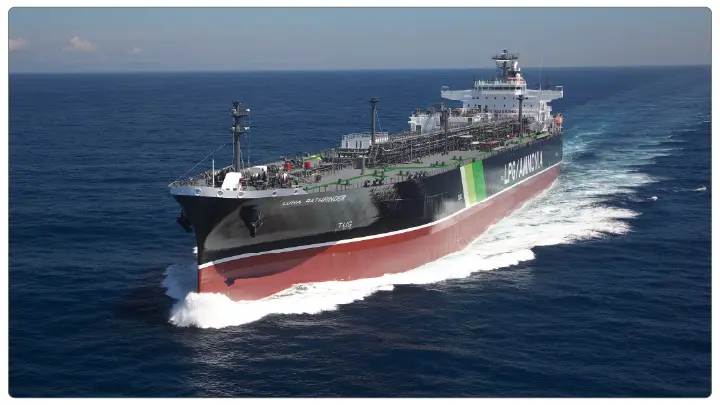
Approximately 30 stakeholders attended the naming ceremony. Takayuki Koike, BGN’s LPG director, officially named the vessel “Lucent Pathfinder,” after which Wendy Jungsuk Kwon, an LPG trader at BGN, performed the ceremonial rope cutting.
The vessel is designed not only to transport LPG but also to accommodate ammonia, a next-generation clean energy source that emits no COâ‚‚ during combustion. The name “Pathfinder” reflects our commitment to a future path toward decarbonization.
According to Precedence Research, the Liquified Petroleum Gas (LPG) Tanker market size was USD 227.14 million in 2025 and is projected to increase from USD 238.18 million in 2026 to approximately USD 365.08 million by 2035, expanding at a CAGR of 4.86% from 2026 to 2035, driven by stringent global emissions standards, increasing demand for LPG as a cleaner alternative to traditional fuels for cooking, heating, and industrial applications, and surging investment in terminal infrastructure and storage facilities.
Maximizing LPG Efficiency Through Shaft Power Recovery
Lucent Pathfinder is equipped with a dual-fuel engine capable of operating on both heavy fuel oil and LPG. By utilizing the rotational energy of the shaft connecting the main engine to the propeller for power generation, the vessel significantly reduces the need for diesel fuel typically consumed by generators, enabling near-complete operation on LPG alone.
When LPG is used as fuel, emissions of sulfur oxides (SOx) in exhaust gases are reduced by more than 95%, and greenhouse gas (GHG) emissions are cut by over 20% compared to conventional heavy fuel oil. Additionally, the vessel is designed to accommodate the transport of ammonia, a clean energy source expected to see growing demand in the near future.