



Samsung Display Showcases Next-Generation RGB OLEDoS Technology to Accelerate the Future of XR Display Modules
Published: 10 Jul 2026
Author: Laxminarayan



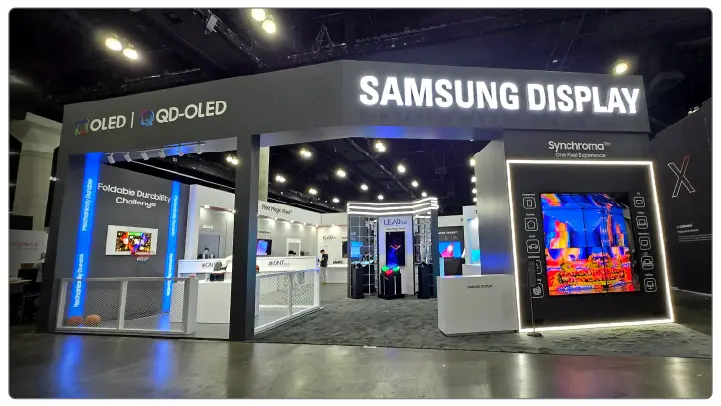
Samsung Display's unveiling of its advanced RGB OLED-on-Silicon (OLEDoS) technology thus marks a significant development for the worldwide display module market. The company introduced its latest microdisplay innovations designed specifically for extended reality (XR) applications, including augmented reality (AR), virtual reality (VR), and mixed reality (MR) devices. By demonstrating RGB OLEDoS panels capable of delivering ultra-high brightness, exceptional pixel density, vivid color reproduction, and improved energy efficiency, Samsung Display is addressing the growing demand for compact, high-performance display modules that enhance immersive user experiences.
According to Precedence Research, the global display module market size was estimated at USD 138.00 billion in 2025 and is predicted to increase from USD 141.73 billion in 2026 to approximately USD 180.13 billion by 2035, expanding at a CAGR of 2.70% from 2026 to 2035. The rising consumer and industrial need for high-resolution visual experiences across televisions, smartphones, and smart devices drives the market.
The announcement is mainly important because XR devices need display modules that combine superior image quality with lightweight, space-efficient designs. RGB OLEDoS technology now integrates OLED materials directly onto silicon wafers, allowing significantly higher resolution and brightness compared to conventional display technologies. These advancements assist in overcoming key challenges in wearable display devices, like limited visual clarity, power consumption, and form factor constraints.
From a market viewpoint, Samsung Display's continued investment in OLEDoS technology reflects the industry's shift toward next-generation display modules for emerging applications beyond smartphones and televisions. As global technology firms expand their XR product portfolios, the need for advanced display modules is anticipated to increase substantially. This creates new opportunities for display producers, semiconductor suppliers, optical component providers, and device producers across the display value chain.
Furthermore, Samsung Display's focus on enhancing manufacturability and commercial readiness demonstrates confidence in the long-term expansion potential of the XR ecosystem. The firm's technological leadership is likely to accelerate innovation, intensify competition, and even encourage broader acceptance of high-resolution OLED microdisplays in consumer electronics, healthcare, industrial visualization, education, and enterprise applications.
Overall, this announcement is highly relevant to the display module market as it highlights a vast technological advancement that is anticipated to shape the future of OLED display modules and support the rapid evolution of immersive XR devices.