



Schneider Introduces UPS That Is Compatible With Lead-Acid and Lithium-Ion Batteries
Published: 13 Aug 2026
Author: Vidyesh Swar



In August 2026, Schneider Electric introduced a UPS that can run on valve-regulated lead-acid (VRLA) as well as lithium-ion batteries. The company reported this advanced APC Smart-UPS as the first monolithic multi-chemistry UPS for decentralized IT and edge computing settings. This UPS enables customers to use VRLA and then replace it with lithium-ion batteries, which have a longer lifespan.
The Smart-UPS platform can support up to 10 external battery packs for long-duration applications. It has a rack-and-tower convertible configuration that uses common interfaces, batteries, and spare parts across various power ratings. According to Manish Kumar, executive vice-president for secure power and data centers at Schneider Electric, customers should not have to choose between investing in power backup in the present and being prepared for future circumstances. He said that customers can utilize the multi-chemistry Smart-UPS to adapt to future battery innovations by swapping the battery, which gives their clients a new way of delivering value.
This UPS will be offered in Schneider’s SRTD On-Line series in 2.2kVA and 3kVA frameworks in the initial stages. It will prove to be extremely useful for server and networking equipment in medical, industrial, and IT sectors. Schneider Electric claims that this UPS has 3 times the runtime of its previous versions, 40 percent higher power density, and 57 percent more outlets. The company also said that it can decrease power loss by 40 percent.
It has Schneider’s EcoStruxure IT software to monitor the condition of the battery, system performance, and energy usage. The EcoStruxure IT network management card offers cybersecurity certified to IEC 62443 Security Level 2. It is also equipped with Parachute Software that can shut down the connected equipment automatically during an outage.
Impact on the Chemicals Industry
According to Precedence Research, the launch of the APC Smart-UPS is expected to positively impact the chemicals industry. This is due to the fact that it facilitates the use of multiple battery chemistries to power the UPS, which will propel the development of new innovative battery configurations. This UPS is expected to be widely adopted, as it has a broad range of applications due to its flexibility in battery chemistry.
Impact on the Uninterruptible Power Supply (UPS) Market
The global uninterruptible power supply (UPS) market size is estimated at USD 9.92 billion in 2025 and predicted to increase from USD 10.33 billion in 2026 to approximately USD 14.84 billion by 2035, representing a CAGR of 4.11% from 2026 to 2035.
According to Precedence Research, the introduction of APC Smart-UPS is expected to benefit the uninterruptible power supply (UPS) market. This is owing to the fact that it is compatible with multiple battery chemistries and has a broad range of applications. It has many advantages over traditional UPS systems compatible with a single battery chemistry. Such developments represent a significant leap in technology in the market. It will promote other companies to invest in their research and development projects to develop such technologies, which will help them to stay competitive in the market.
Impact on the Data Center UPS Market
The global data center UPS market size accounted for USD 4.43 billion in 2025 and is predicted to increase from USD 4.79 billion in 2026 to approximately USD 8.90 billion by 2034, expanding at a CAGR of 8.06% from 2025 to 2035.
According to Precedence Research, the launch of the APC Smart-UPS is expected to positively impact the data center UPS market. This is because data centers need different amounts of power supply for various operations. The deviation in load with respect to time is also quite high, and flexible UPS can be immensely beneficial for such applications. Data centers can save power by using low-power battery chemistry in their UPS if it is sufficient for their needs and thus optimize their power usage. This will help them meet their sustainability goals.
About Schneider Electric
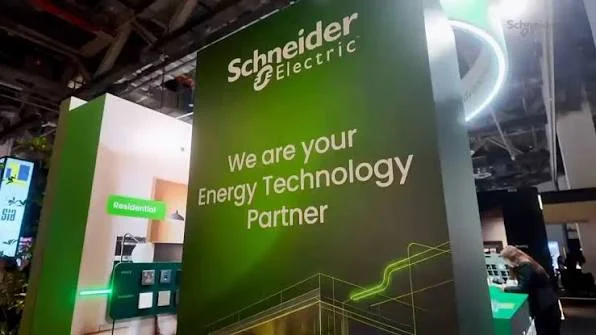
Schneider Electric is a prominent global energy technology company that focuses on efficiency and sustainability by boosting the adoption of automatic, electric, and digital technologies in industries, enterprises, and homes. The company enables homes, data centers, industries, and grids to function as interconnected ecosystems, improving performance, resilience, and sustainability. Schneider Electric provides smart devices, software-based architectures, AI-based systems, digital services, and expert consultations. The company has a workforce of around 160,000 employees and has 1 million partners in more than 100 countries. Schneider Electric places significant emphasis on diversity and inclusion and strives to make all its employees feel safe enough to contribute to the best of their ability.