



The US Starts Manufacturing Ukrainian Magura Naval Drones to Expand Proven Combat Technology
Published: 24 Jul 2026
Author: Gautam mahajan



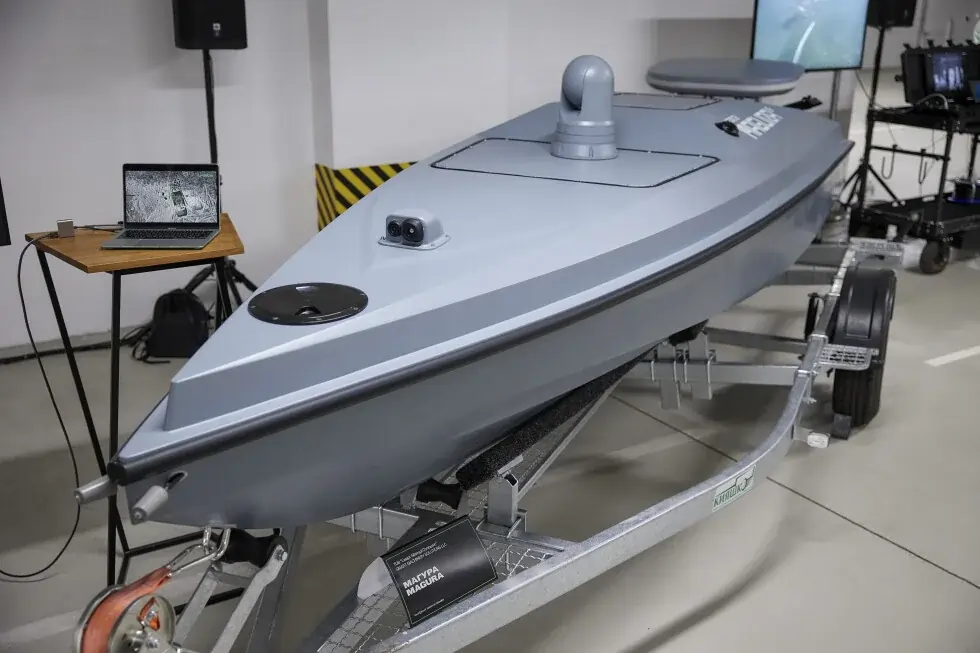
On July 22, 2026, the United States commenced the production of Ukrainian Magura naval drones to improve combat-proven autonomous maritime defense systems. This initiative targets to strengthen allied naval capabilities, improve security cooperation, and expedite defense manufacturing processes across the Indo-Pacific and European regions to advance maritime warfare.
The U.S. began domestic production of Ukraine's Magura naval drones, advancing unmanned maritime capabilities and strengthening the defense agreement with Ukraine. These drones, which are advanced during the Black Sea conflict, are recognized for surveillance, digital strikes, and intelligence. This reflects the transition toward autonomous systems, reducing personnel risks and improving interoperability among NATO associates. U.S. production focuses on increasing manufacturing, enhancing allied readiness, and integrating battlefield-tested autonomous technology into maritime security infrastructure.
Manufacturing Magura drones in the U.S. marks a major step in modern naval warfare, highlighting the increasing importance of unmanned maritime technology and international cooperation. The initiative underscores the procurement of proven technologies, deepening Ukraine’s defense alliances, and accelerating innovation in AI, secure communications, sensors, and maritime robotics. Additionally, this combat technology encourages global investment in autonomous maritime systems to boost naval deterrence and protect waterways.
Impact on the Delivery Drone Industry
The global delivery drone market size accounted for USD 2.70 billion in 2025 and is predicted to increase from USD 3.28 billion in 2026 to approximately USD 18.93 billion by 2035, expanding at a CAGR of 21.50% from 2026 to 2035.
According to Precedence Research, naval procurement has traditionally relied on costly, long-developed combat ships with high maintenance costs. The launch of U.S. production of Magura naval drones will significantly impact the global defense and maritime sectors by accelerating the transition to autonomous platforms. The Ukraine collaboration shows how battlefield innovations can quickly evolve into industrial manufacturing, shortening advancement times and applying real-world monitoring practices. Unmanned surface vessels offer a higher adaptability, cost-effective alternative with a scalable solution and faster deployment. American defense businesses are expected to invest more in autonomous systems, modular designs in autonomous underwater vehicles, propulsion systems, composites, and digital manufacturing for large-scale production.
This program highlights the industry's move toward flexible, technology-driven defense manufacturing, where speed, adaptability, and operational effectiveness are vital for meeting evolving military requirements. The growing supply chains for unmanned maritime ecosystems and delivery drones are creating new opportunities for component manufacturers and engineering firms. This fuels long-haul defense cooperation among the U.S., Ukraine, and allied suppliers in communications, cybersecurity, navigation, and electronic warfare. Companies that quickly integrate AI, secure software, and advanced manufacturing could gain a competitive edge in underwater operations. The increasing demand for autonomous naval technology may prompt governments worldwide to prioritize unmanned systems over traditional fleet expansion.
Impact on the Autonomous Underwater Vehicle Industry
The global autonomous underwater vehicle market size is calculated at USD 3.48 billion in 2025 and is predicted to increase from USD 3.78 billion in 2026 to approximately USD 7.88 billion by 2035, expanding at a CAGR of 8.52% from 2026 to 2035.
According to Precedence Research, Manufacturing Magura naval drones in the U.S. marks a major leap in autonomous maritime tech. Proven in combat, these vessels excel in surveillance, reconnaissance, logistics, electronic warfare, and strikes, boosting confidence and attracting investment from military and commercial sectors. Developers working on navigation, obstacle avoidance, sensors, satellite comms, and AI will see higher demand as governments pursue advanced unmanned systems. The program also promotes integrating machine learning to enhance mission planning, threat detection, and autonomous decisions, with human oversight.
This strategy focuses on producing Magura drones in the U.S., drives innovation, and emphasizes the rising importance of intelligent, remotely operated vessels in future maritime operations. Military innovations often influence civilian maritime technology towards automation, advancing vessel control, remote management, collision avoidance, and communications, benefiting shipping, environmental, energy, and scientific fields. It fosters partnership among defense, robotics, and maritime engineers, with increased research funding speeding progress in energy efficiency and underwater vehicle drone coordination by maintaining safety, interoperability, and security.
Expert Opinion
As per the expert's point of view, the U.S. production of Ukraine's Magura naval drones marks a strategic move in defense, highlighting operationally proven combat technologies. Domestic manufacturing practices accelerate resilience, lessen reliance on imports, and foster long-term Ukraine partnerships, accelerating technology transfer and interoperability. This approach reduces deployment time, reduces risk, and maximizes spending in maritime and defense operations.
The initiative signifies a transition toward battlefield-proven innovation, industrial scaling, and enhanced connected cooperation, shaping the future of maritime warfare and defense modernization. Autonomous naval systems are transforming maritime security with cost-effective surveillance and reconnaissance, especially in challenging waters. Additionally, as deployment raises cybersecurity, command, export, and governance concerns, requiring oversight and worldwide cooperation.