



Next Generation Surgical Robotics Market Size, Share and Trends 2026 to 2035
Next Generation Surgical Robotics Market (By Component: Systems, Accessories, Services; By Technology: Miniaturized Surgical Robotics, Autonomous Surgical Robotics, Teleoperated Surgical Robotics, By Surgery Type, Gynecology Surgery, Urology Surgery, Neurosurgery, Orthopedic Surgery, General Surgery, Other Surgeries; By End User: Hospitals, Ambulatory Surgical Centers, Others) - Global Industry Analysis, Size, Trends, Leading Companies, Regional Outlook, and Forecast 2026 to 2035
Source: https://www.precedenceresearch.com/next-generation-surgical-robotics-market
 Get a Sample
 Table Of Content


What is the Next Generation Surgical Robotics Market Size?
The global next generation surgical robotics market is accounted at USD 6.12 billion in 2025 and predicted to increase from USD 8.25 billion in 2026 to approximately USD 113.24 billion by 2035, representing a CAGR of 33.88% from 2026 to 2035.
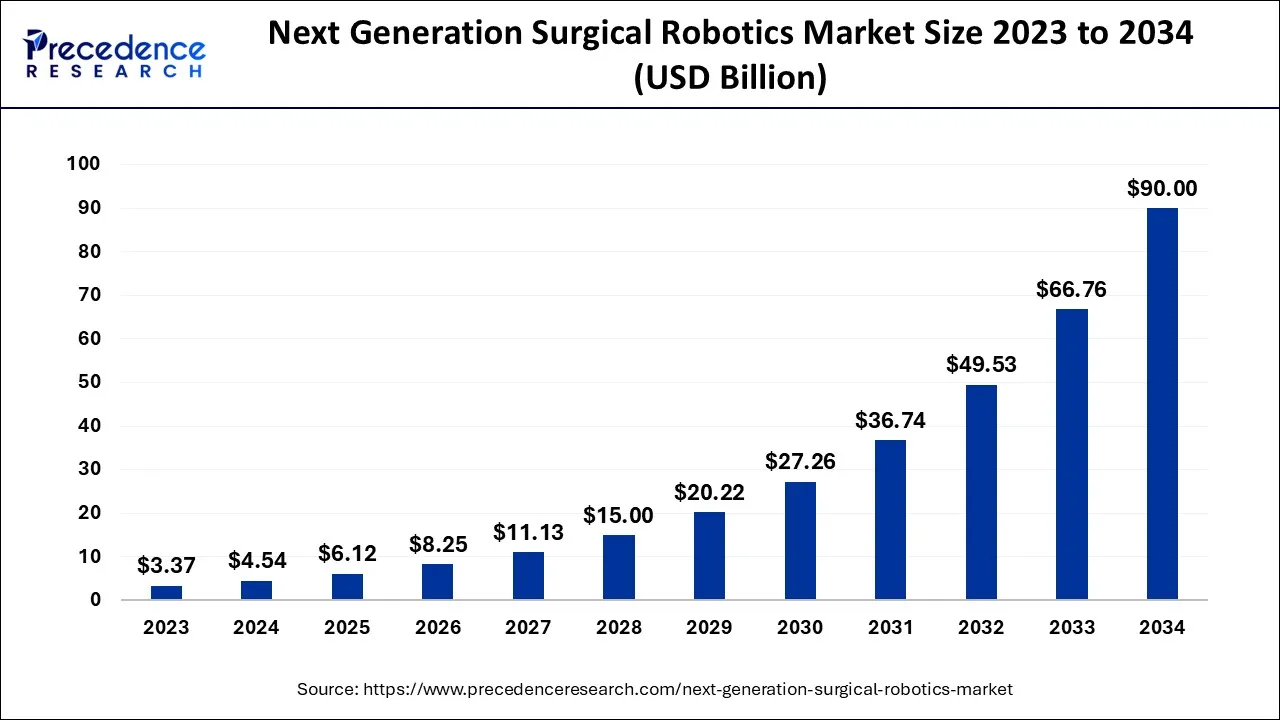
Next Generation Surgical Robotics Market Key Takeaways
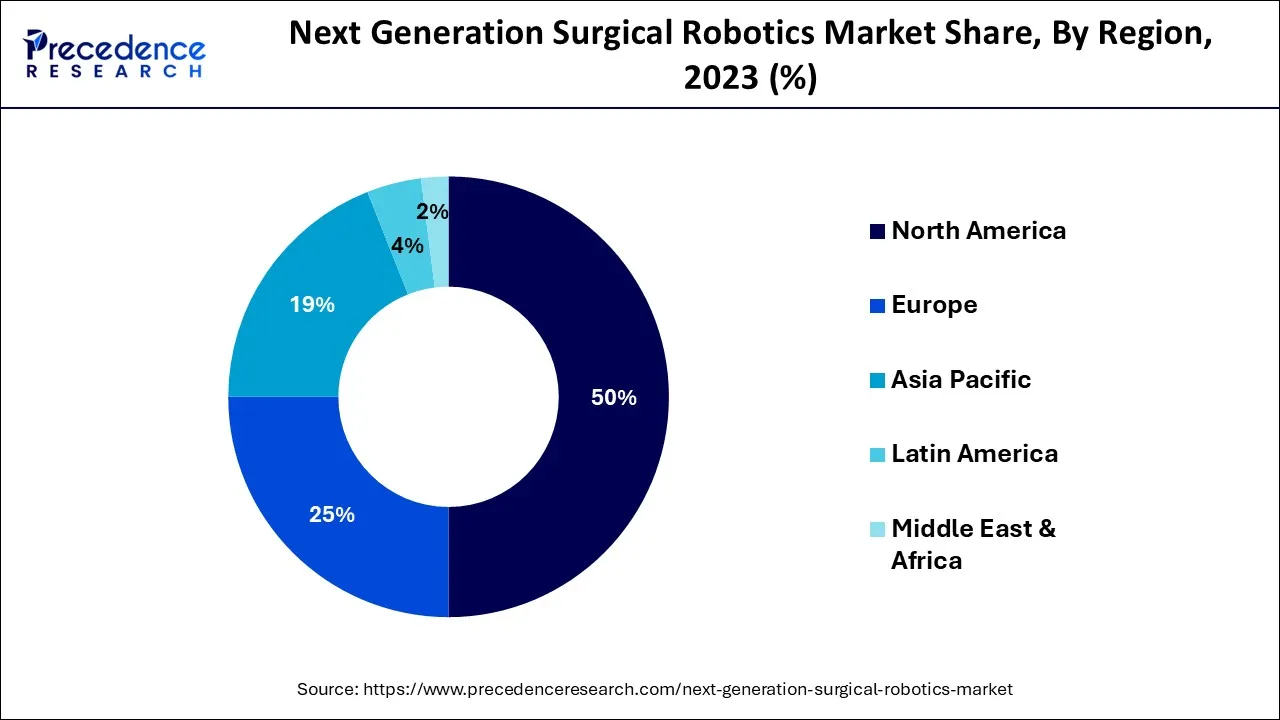
- North America led the global market with the highest market share of 50% in 2025.
- By surgery type, the neurosurgery segment held the biggest market share in 2025.
- By component, the accessory segment has held the highest market share in 2025.
- By end user, the hospital segment registered the maximum market share in 2025.
Strategic Overview of the Global Next Generation Surgical Robotics Industry
The availability of various surgeons and physicians across the globe is leading to an increase in adoption of automated instruments for surgery. The surgeries have evolved. Surgery has now involved the use of robotics that are able to do the work with extreme precision compared to the humans. The surgeries with the use of next generation surgical robotics are able to provide precision in anatomical areas that are very difficult for human surgeons to perform. Next generation surgical robotics are made to solve the limitations in the invasive surgeries and next generation surgical robotics are adopted in order to improve the outcome of the open surgical procedures.
Next generation surgical robotics are used in various areas including cardiovascular, orthopedics, neurosurgery, general surgery, gynecology and obstetrics. The robotics used in surgical market are extraordinarily structured in order to have access to various surgeries without making a large incision which normal specialist would do. The medical centers will be able to deliver high quality operations due to the use of robot assisted surgery procedures. Ever since the product has been introduced in the market, that has been a rapid growth.
Artificial Intelligence: The Next Growth Catalyst in Next Generation Surgical Robotics
AI is fundamentally transforming the next-generation surgical robotics market by enhancing precision, autonomy, and data-driven decision-making. AI algorithms integrate pre-operative data, real-time imaging, and sensor feedback to provide surgeons with hyper-accurate navigation and risk assessments during procedures, effectively augmenting human capabilities.
This technology enables the development of increasingly autonomous robotic functions for repetitive tasks, reducing surgeon fatigue and improving operational efficiency in the operating room. Furthermore, AI facilitates personalized surgical planning through the creation of digital twins and predictive models, leading to better patient outcomes and faster recovery times.
Next Generation Surgical Robotics Market Growth Factors
The surgical robotic market is expected to grow due to the increasing geriatric population, technological improvements, and the increased focus on the robotics training provided to the doctors. There shall be great innovation in the robotics space due to adoption of technologies like artificial intelligence and cloud computing, which will help in improving the output and reducing the workload for the humans. As there is an increase in the demand and acceptance of the laparoscopic or the minimally invasive surgeries. The market for next generation surgical robotics is expected to grow. Since the patients are aware of the benefits of such surgeries. They opt for this kind of a surgery. It provides great precision, better screening, shorter hospitalization time, reduced risk of infection, reduced pain and discomfort and reduced blood flow.
Owing to an increase in demand for advanced robotic surgeries and automation in the healthcare industry, the next generation surgical robotics market is expected to grow during the forecast period. With the ongoing research and development, there will be an introduction of new sophisticated robotics which will help in meeting the growing needs of the end users. Increased accidents and the injuries caused by these accidents shall impede the growth of the surgical robot's market.
The developing nations like Brazil, China and India shall also provide good growth opportunities for the next generation surgical robotics market. Several industrial strategic initiatives which are taken by the international players will help in the market growth over the years. It will help in the adoption of robotics during the forecast. Integration of cameras or high-definition 3D imaging sensors, remote navigation systems or computing technologies in the robotics will help in increasing the adoption of robotics in the Surgeries.
- Huge number of people belonging to the geriatric population
- Assistance of artificial intelligence for surgical procedures
- Increasing number of surgical procedures carried out all over the world
- Increasing number of high velocity accidents which demand surgical procedures
- Increasing demand for minimally invasive surgeries
Market Outlook
- Market Growth Overview: The next-generation surgical robotics market is expected to grow significantly between 2025 and 2034, driven by rising demand for minimally invasive surgery, continuous innovation, including better 3D visualization, haptic feedback, improved instrument articulation, and the integration of artificial intelligence and machine learning is enhancing surgical accuracy and efficiency.
- Sustainability Trends: Sustainability trends involve design for sustainability, reprocessing programs, and lifecycle assessment.
- Major Investors: Major investors in the market include Johnson & Johnson, Medtronic plc., Stryker Corporation, Zimmer Biomet Holding Inc., and Becton.
- Startup Economy: The startup economy is focused on disruptive innovation, targeting unmet needs, high funding activity, and acquisition as a primary exit.
Market Scope
| Report Coverage | Details |
| Market Size in 2026 | USD 8.25 Billion |
| Market Size by 2035 | USD 113.24 Billion |
| Growth Rate from 2026 to 2035 | CAGR of 33.88% |
| Base Year | 2025 |
| Forecast Period | 2026 to 2035 |
| Segments Covered | Component, Technology, Surgery Type, End User, and Region |
| Regions Covered | North America, Europe, Asia-Pacific, Latin America and Middle East & Africa |
Market Dynamics
Key Market Drivers
- Minimally invasive surgeries- Increasing demand for surgeries which involve minimum invasive procedures has boosted the size of this market to a great extent. The increasing demand for fewer cuts and with a view to avoid scarring the market for next generation surgical robotics has gained momentum.
- High visualization capabilities- The next generation surgical robotics provide high visualization capabilities which assists the physician to have a better supervision over the procedure with the help of advanced technologies that are utilized by the robotics.
- Growing success rate- With the use of advanced systems and technologies the success rate of surgical procedures has increased to a great extent. As the healthcare sectors have adopted the use of next generation surgical robotics for carrying out the surgical procedures, the chances of human error have reduced to a great extent which emerges as a major factor for the boost in success rate.
- Faster healing of wounds- Surgical wounds prove to be the next biggest complication after a surgical procedure which needs to be taken care of especially when the patient is diabetic. With the introduction of next generation surgical robotics into the system the surgical procedures are carried out with minimum number of wounds created on the body of the individual which requires a very short period of time for healing.
Key Market Challenges
- High cost associated with the use of robotics- The total cost of the treatment increase is considerably with the use of next generation robotics. The use of advanced technologies imposes an additional cost of equipment which also includes the factors of maintenance.
- Lack of awareness among the people- People belonging to the rural areas are not aware of the available facilities in the healthcare sector which hampers the growth of the market to a great extent. The introduction of advanced technologies into the surgical field has not penetrated the society and hence the growth of the market is hampered.
- Insufficient disposable income- The disposable income available with the people is not sufficient for opting for advanced technological equipment to carry out surgical procedures. The outbreak of the pandemic had already imposed an additional cost of sanitization on the people which hampered the growth of the market to a great extent.
Key Market Opportunities
- Growing penetration of advanced technologies- The increasing awareness among the people regarding the available advanced procedures and technologies that are used by the health care system to provide better results has attracted the potential consumers for operative procedures. The huge number of people who are opting for surgical procedures as a result of minimally invasive surgeries has helped the market with great opportunities.
- Lucrative reimbursement facilities- Previous reimbursement policies that have been made available to the people by the insurance companies support the growth of the next generation robotics market to a great extent. People are demanding for advanced health care facilities as the expense is taken care of by the insurance companies and the government which has emerged as a major growth factor for the market.
Surgery Type Insights
On the basis of the surgery type, the neurosurgery segment is expected to grow at the fastest rate during the forecast. There is great amount of adoption of robotics in neuro surgeries. Over the traditional techniques. Technological advancements and the use of robotics in neuro Surgeries have successful outcomes. The use of automated robotic instruments in brain surgeries will help in the growth of the market.
The orthopedic surgery segment has the good position in the market as there are many injuries caused due to bike and road accidents or any other accidents that need surgeries. Arthritis, joint pains and other reasons for correcting the bones are expected to help in the growth of the market. There's an increased use of robotics for treatment of cancer. For minimally invasive laparoscopic surgeries the demand for robotics has increased in the recent years.
Component Insights
The component, the accessory segment has dominated the global next generation surgical robotics market. Due to an extensive use of accessories for the surgical procedures. The Services segment is also expected to grow well due to a rise in the robot assisted surgeries across the nations. Increase in the geriatric population and chronic diseases like diabetes, arthritis and HIV AIDS leads to the growing use of robotics.
End User Insights
On the basis of the end user, the next generation surgical robotics market is expected to grow in the hospital segment. In the coming years, there shall be an increase in the demand for surgical reports at various hospitals settings and it will offer a lucrative market growth. Next generation surgical robotics at the hospital settings will be able to help with effective patient care. The high number of inpatient visits and increasing surgical procedures at the hospital will lead to the growth in the market. Larger and better hospital infrastructure along with the skilled healthcare personnel available at this infrastructure will help in changing the scenario in various emerging economies.
Regional Insights
U.S. Next Generation Surgical Robotics Market Size and Growth 2026 to 2035
The U.S. next generation surgical robotics market size is accounted for USD 2.89 billion in 2026 and is projected to be worth around USD 40.71 billion by 2035, poised to grow at a CAGR of 34.25% from 2026 to 2035.

In the previous year, the North American market had the largest revenue share of about 50%. The adoption of automated surgical instruments in the health care industry and the increasing health care facilities in the United States will drive the market in this region. The smaller number of healthcare professionals and surgeons in the US depending upon the patient population will also drive the regional market for next generation surgical robotics. Chronic illnesses like diabetes, cancer and the cardiovascular diseases have led to an acceleration growth of the market.
Growing population and increasing adoption of advanced automated surgical devices in the Asia Pacific region will help in the growth of the market. The adoption of advanced medical technology and availability of modern health care infrastructure has led to a growth in the Asia Pacific region. Investors are investing in automated instruments and this is expected to help in the growth of the market. Growing awareness of robotics in surgery and the higher acceptance rate of the next generation surgical robotics in this region, the market is expected to grow.
U.S. Next Generation Surgical Robotics Market Trends
The U.S. demand for minimally invasive surgeries and the rapid integration of AI for enhanced precision and automation. The market is diversifying its hardware platforms and applications beyond the dominant da Vinci system. There is a notable shift toward cost-effective ambulatory surgical centers and supportive regulatory guidance that accelerates technological deployment.
China Next Generation Surgical Robotics Market Trends
The Chinese market is experiencing high growth, driven by aggressive government support for domestic innovation and a push to reduce reliance on imported systems. Domestic manufacturers are increasingly competitive, offering cost-effective and technologically advanced solutions.
Germany Next Generation Surgical Robotics Market Trends
Germany's increasing patient and surgeon preference for minimally invasive procedures due to reduced recovery times, less pain, and lower infection rates. The leveraging of technological expertise to integrate artificial intelligence and machine learning into robotic platforms. Significant R&D investment and collaboration, and addressing reimbursement and cost barriers.
Value Chain Analysis of the Next Generation Surgical Robotics Market
- Research & Product Development (R&D)
This foundational stage involves significant investment in creating new surgical techniques, advanced software (including AI/ML), and hardware designs.
Key Players: Intuitive Surgical, Medtronic, Johnson & Johnson, and Edge Medical Robotics - Core Components Manufacturing
This stage involves the production of high-precision, technical components such as servo systems, gear reducers, sensors, and visualization systems.
Key Players: Stryker (Mako components) and Zimmer Biomet - System Integration & Assembly
In this midstream stage, all the diverse components (hardware, software, robotic arms, consoles) are assembled into a functional, reliable surgical robotic system.
Key Players: Intuitive Surgical, Medtronic, Stryker, CMR Surgical, and Asensus Surgical. - Distribution & Sales
This stage involves the logistics of getting the expensive, complex robotic systems from the manufacturer to the end-user, primarily hospitals and ambulatory surgical centers (ASCs).
Key Players: Intuitive Surgical, Smith+Nephew, and Zimmer Biomet
Top Companies in the Next Generation Surgical Robotics Market & Their Offerings:
- Medrobotics: This company developed the Flex system, a unique, highly articulated robot designed to provide flexible, steerable endoscopic visualization and access to hard-to-reach anatomy within the body.
- Renishaw plc: Leveraging its expertise in precision engineering and measurement systems, Renishaw developed the Neuroinspire surgical robot for neurological applications. They contribute specialized systems focused on accuracy for brain surgery and precise stereotactic procedures.
- TransEnterix Surgical, Inc.: Known for the Senhance system, this company was a key player in developing multi-port laparoscopic robotic platforms featuring haptic feedback and eye-tracking camera control.
- Intuitive Surgical: As the pioneer and market leader with the da Vinci system, Intuitive Surgical fundamentally created and defined the soft-tissue surgical robotics market.
- Medtronic plc: A major global medical device company, Medtronic entered the space with its Hugo RAS system and the acquisition of Mazor Robotics for spine applications.
- THINK Surgical Inc.: This company specializes in robot-assisted orthopedic surgery, specifically with their TCAT solutions for total knee arthroplasty. Their robot uses a haptic, surgeon-controlled robot for highly accurate bone preparation based on pre-operative plans.
- Zimmer Biomet Holdings Inc.: Zimmer Biomet contributes to the market with its ROSA (Robotic Surgical Assistant) platform, which is used for both knee and spine procedures. Their technology integrates seamlessly into their existing orthopedic product ecosystem, enhancing surgical planning and execution accuracy.
- Smith & Nephew Plc. (Blue Belt Technologies, Inc.): Through the acquisition of Blue Belt, Smith & Nephew developed the CORI Surgical System, a handheld robotic solution for orthopedic joint replacement surgery.
- Auris Next Generation Surgical Robotics, Inc. (Hansen Medical Inc.): Now a part of Johnson & Johnson via Auris Health, Hansen Medical initially focused on vascular and cardiac robotics. The Auris Monarch platform specifically drives innovation in robotic-assisted bronchoscopy for early lung cancer detection and intervention.
- KUKA AG: As a leading global automation and robotics company, KUKA provides the foundational robotic arms and engineering expertise that power several third-party medical and surgical systems.
- Stryker Corporation (MAKO Surgical Corp.): Stryker revolutionized orthopedic robotics by acquiring MAKO and integrating the Mako SmartRobotics system into their joint replacement portfolio.
- Mazor Robotics: Acquired by Medtronic, Mazor was a trailblazer in robotic guidance systems specifically for spinal surgery applications.
Next Generation Surgical Robotics Market Companies
- Medrobotics
- Renishaw plc.
- TransEnterix Surgical, Inc.
- Intuitive Surgical
- Medtronic plc
- THINK Surgical Inc.
- Zimmer Biomet Holdings Inc.
- Smith & Nephew Plc. (Blue Belt Technologies, Inc.)
- Auris Next generation surgical robotics, Inc. (Hansen Medical Inc.)
- Intuitive Surgical, Inc.
- KUKA AG
- Stryker Corporation (MAKO Surgical Corp.)
- Mazor Robotics
Recent Developments
- In March 2025, Stryker launched the Mako 4, the fourth generation of its Mako SmartRobotics platform for orthopedic procedures. This system integrates advanced 3D CT-based planning and the Q Guidance System for expanded applications across hips, knees, spine, and shoulders.
(Stryker showcases next generation of Mako SmartRobotics™ at AAOS 2025 Annual Meeting | Stryker)
- In March 2025, SS Innovations unveiled a mobile telesurgical unit that integrates the SSI Mantra system for remote surgical guidance and performance via high-speed connectivity. This system is designed to enhance remote surgical access and healthcare delivery.
Segments Covered in the Report
By Component
- Systems
- Accessories
- Services
By Technology
- Miniaturized Surgical Robotics
- Autonomous Surgical Robotics
- Teleoperated Surgical Robotics
By Surgery Type
- Gynecology Surgery
- Urology Surgery
- Neurosurgery
- Orthopedic Surgery
- General Surgery
- Other Surgeries
By End User
- Hospitals
- Ambulatory Surgical Centers
- Others
By Geography
- North America
- U.S.
- Canada
- Europe
- U.K.
- Germany
- France
- Asia-Pacific
- China
- India
- Japan
- South Korea
- Malaysia
- Philippines
- Latin America
- Brazil
- Rest of Latin America
- Middle East & Africa (MEA)
For inquiries regarding discounts, bulk purchases, or customization requests, please contact us at sales@precedenceresearch.com
Frequently Asked Questions





Ask For Sample
No cookie-cutter, only authentic analysis – take the 1st step to become a Precedence Research client
 Get a Sample
.webp)



 sales@precedenceresearch.com
 Schedule a Meeting
