



North America Automotive Interior Materials Market Size, Share and Trends 2026 to 2035
North America Automotive Interior Materials Market (By Material: Plastics, Leather, Fabrics, Composites, and Others; By Vehicle: Passenger Cars, Light Commercial Vehicle (LCV), and Heavy Commercial Vehicle (HCV); By End-users: OEMs and Aftermarket) Industry Size, Share, Growth, Trends 2025-2035
 Get a Sample
 Table Of Content


The North America automotive interior materials market size surpassed USD 10.33 billion in 2025 and is predicted to reach around USD 14.71 billion by 2035, registering a CAGR of 3.6% from 2026 to 2035. The North American market is mainly driven by the growth in electric vehicle production, a rising need for lightweight and eco-friendly materials, and a strong consumer desire for improved cabin comfort and luxury design.
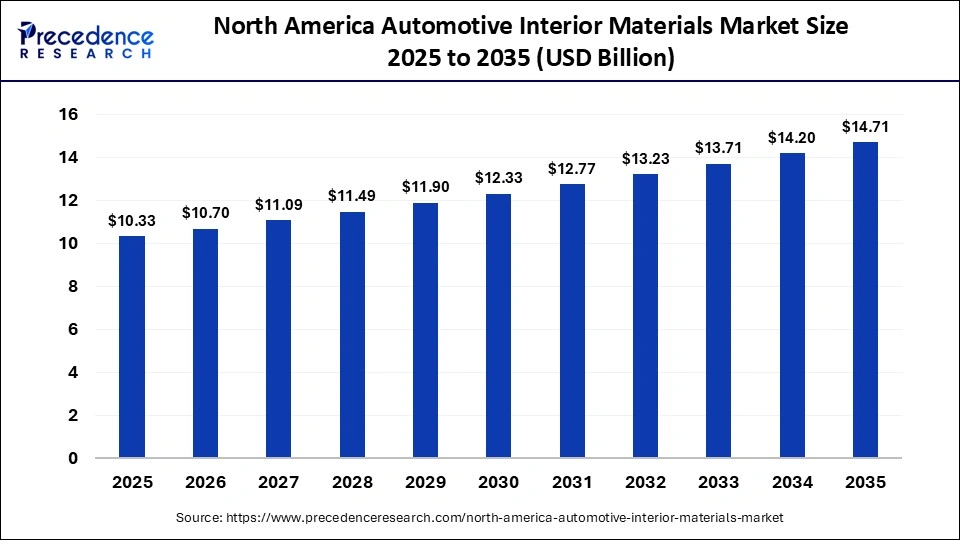
North America Automotive Interior Materials Market Statical Scope
| Reports Attributes | Statistics |
| Market Size in 2025 | USD 10.33 Billion |
| Market Size in 2026 | USD 10.7 Billion |
| Market Size by 2035 | USD 14.71 Billion |
| CAGR 2026 to 2035 | 3.6% |
| Base Year | 2025 |
| Forecast Period | 2026 to 2035 |
The market is crucial as it improves vehicle electrification efficiency, meets the high demand for premium trucks and SUVs, and promotes sustainable, eco-friendly manufacturing. The transition to advanced composites and high-performance plastics helps reduce cabin weight, which in turn maximizes the driving range of electric vehicles.
The rapid adoption of digital displays, touch controls, and infotainment systems increases the need for advanced materials in dashboards and consoles. Additionally, growing consumer and regulatory demands push for the use of recycled polymers, natural fibers, and animal-free bio-based textiles.
North America Automotive Interior Materials Market, By Material, 2025 (%)
| Segments | Shares (%) |
| Plastics | 36.90% |
| Leather | 21.60% |
| Fabrics | 18.70% |
| Composites | 14.80% |
| Others | 8.00% |
- Composites - The composites segment, with a share of 14.80% in 2025, plays a crucial role in the North American automotive interior materials market as it contributes to reducing vehicle weight, offers design flexibility, and enhances the range of electric vehicles (EVs).
- Plastics - The plastics segment, with a share of 36.90% in 2025, leads the North American automotive interior materials market as it provides important lightweight characteristics, manufacturing adaptability, and cost-effectiveness.
- Leather - The leather segment, with a share of 21.60% in 2025, is essential in the North American automotive interior materials market due to strong consumer interest in luxury looks, significant production of trucks and SUVs, and the rise of eco-friendly synthetic alternatives.
North America Automotive Interior Materials Market, By Vehicle, 2025 (%)
| Segments | Shares (%) |
| Passenger Cars | 74.30% |
| Light Commercial Vehicle (LCV) | 16.80% |
| Heavy Commercial Vehicle (HCV) | 8.90% |
- Passenger Cars - The passenger cars segment, with a share of 74.30% in 2025, is the largest in the North American automotive interior materials market, accounting for the highest revenue share, driven by substantial production numbers, a regional preference for larger SUVs and crossovers, and a strong consumer desire for luxury, comfort, and advanced technology.
- Light Commercial Vehicle (LCV) - The Light Commercial Vehicle (LCV) segment, with a share of 16.80% in 2025, is important in the North American automotive interior materials market due to the growth of e-commerce logistics, high demand for versatile pickup trucks and cargo vans, and the need for durable, lightweight materials.
North America Automotive Interior Materials Market, By End-users, 2025 (%)
| Segments | Shares (%) |
| OEMs | 82.70% |
| Aftermarket | 17.30% |
- OEMs - The OEM (Original Equipment Manufacturer) segment, with a share of 82.70% in 2025, is leading the North American automotive interior materials market, driven by high-volume material usage, sets regulatory compliance standards, and leads trends in vehicle customization.
- Aftermarket - The aftermarket segment, with a share of 17.30% in 2025, is crucial in the North American automotive interior materials market as it promotes personalization, cabin upgrades, and value addition. It helps vehicle owners to enhance or replace worn soft trims, seat covers, and dashboards long after the initial purchase.
Competitive Landscape
The North American market for automotive interior materials is somewhat fragmented, primarily led by key Tier-1 systems integrators and specialized chemical manufacturers that emphasize lightweight designs, premium comfort, and sustainability. Major players in this market include Adient, Lear Corporation, and Magna International.
- Adient plc specializes in complete automotive seating systems, mechanisms, and foam-to-cover interior configurations, prioritizing comfort, safety, and weight reduction.
- Lear Corporation offers a wide range of seating and electrical distribution systems, featuring smart surface fabrics, eco-friendly leather alternatives, and advanced acoustic management solutions.
- Magna International provides a variety of interior trim products, instrument panels, door panels, cargo management systems, and functional hard plastics.
- FORVIA Faurecia supplies cockpit modules, sustainable instrument panels, decorative surfaces, and ambient lighting solutions that align with contemporary EV cabin designs.
- BASF SE produces raw material inputs such as specialty polyurethane foams, engineering plastics, and lightweight composites for seating and acoustic insulation.
- Sage Automotive Interiors focuses on technical textiles, synthetic fabrics, and bio-based yarn structures for seating and door inserts.
Segments Covered in the Report
By Material
- Plastics
- Leather
- Fabrics
- Composites
- Others
By Vehicle
- Passenger Cars
- Light Commercial Vehicle (LCV)
- Heavy Commercial Vehicle (HCV)
- By End-users
- OEMs
- Aftermarket
For inquiries regarding discounts, bulk purchases, or customization requests, please contact us at sales@precedenceresearch.com
Frequently Asked Questions





Ask For Sample
No cookie-cutter, only authentic analysis – take the 1st step to become a Precedence Research client




 sales@precedenceresearch.com
 Schedule a Meeting



