



North America Hereditary Testing Market, Global Market Size, Segmentation, Country Analysis, U.S. Hereditary Testing Demand Indicators, Canada Genomic Infrastructure, Company Intelligence, Hereditary Cancer Testing Intelligence
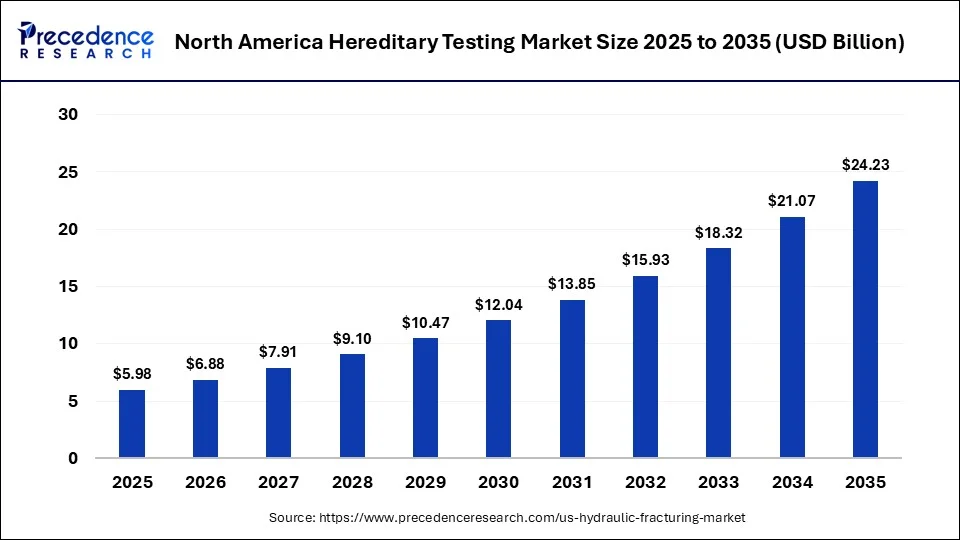
The North America hereditary testing market accounted for USD 5.98 billion in 2025. The market growth is being driven by advancements in precision medicine, expansion of the rare disease diagnosis ecosystem, significant prevalence of hereditary and rare diseases, and expansion of relevant infrastructure. These trends were evaluated by our Senior Research Analyst, Deepa Pandey, to curate this well-researched report. Her analysis benefits pharmaceutical producers, distributors, medical professionals, and stakeholders in performing competitive analysis and informed decision-making.
Source: https://www.precedenceresearch.com/north-america-hereditary-testing-market
 Get a Sample
 Table Of Content


North America Hereditary Testing Market Trends, Share and Growth Analysis
The North America hereditary testing market is expected to grow at a CAGR of 15.02% during the forecast period, reaching USD 24.23 billion in 2035. The development of whole-genome sequencing and whole-exome sequencing approaches, growing awareness about the influence of genes, rapid advancement in infrastructure in developing markets, and the modernizing distribution environment are benefiting the market. Deepa Pandey, our Senior Research Analyst, has over 5 years of experience in the healthcare and medicine industry. According to her, the development of novel non-invasive sample collection approaches and the transition from target panels to whole-genome analysis are improving patient convenience and facilitating comprehensive genomic analysis, respectively.
Key Takeaways
- By test type, the hereditary cancer testing segment led the market with a 32.85% share in 2025.
- By technology, the next-generation sequencing (NGS) segment dominated the market with a 46.85% share in 2025.
- By disease, the hereditary cancer syndromes segment accounted for the largest share of 31.45% in 2025.
- By end user, the hospitals and health systems segment dominated the market with a 38.65% share in 2025.
- By country, the U.S. dominated the market with an 88.45% share in 2025.
- According to the NIH, approximately 25 to 30 million Americans suffered from rare diseases in 2025, and around 5% to 10% of all cancers can be linked to inherited harmful variants.
- Myriad Genetics generated around USD 372.4 million in revenue from Hereditary Cancer, representing a 2% growth from USD 364.5 million in 2024.
- Labcorp completed the acquisition of certain Invitae assets in August 2024 to enhance its genetic testing capabilities in oncology and specific rare diseases.
- Quest Diagnostics reported revenue of USD 10.785 billion from Diagnostic Information Services and a 12.3% growth in requisition volumes.
- In Canada, Care4Rare EXPAND intends to develop 13,000 short-read genomes, 2,000 long-read genomes, 650 transcriptomes and 2,000 methylomes across its 17,650-dataset program.
What was the Size of the North America Hereditary Testing Market in 2025?
The North America hereditary testing market accounted for USD 5.98 billion in 2025 and is expected to expand at a CAGR of 15.02% during the forecast period. The market involves genetic tests for the identification of inherited variants related to hereditary diseases, cancer predisposition, rare disorders, reproductive conditions, pharmacogenetic traits, and other gene-based diseases. It includes lab-based testing, advanced sequencing, targeted panels, whole-exome sequencing, whole-genome sequencing, PCR-based testing, cytogenetic methodologies, and testing done in various settings such as hospitals, diagnostic laboratories, specialty clinics, reproductive centers, and direct-to-consumer channels.
The market is being influenced by the boost in precision medicine, better acknowledgement of inherited cancer risks, an expanding rare disease diagnostic ecosystem, improved availability of NGS, larger genomic datasets, and the increasing integration of genetic data into clinical decision-making. NIH said that around 25 to 30 million people in the U.S. are affected by rare diseases, many of which have some connection to genetics.
Expert Analyst Insights
According to our Senior Researcher Aman Singh, the market is expected to grow from USD 5.98 billion in 2025 to USD 24.23 billion in 2035, which represents around fourfold growth. The underlying growth potential is in 3 vital demand areas, which include:
- Inherited cancer risk evaluation
- Rare and undiagnosed genetic condition diagnosis
- Reproductive and carrier testing
The market is shifting towards the use of broader sequencing, and the market share of the NGS segment is expected to increase from 46.85% in 2025 to 54.2% in 2035.
Which Test Type Led the Market in 2025?
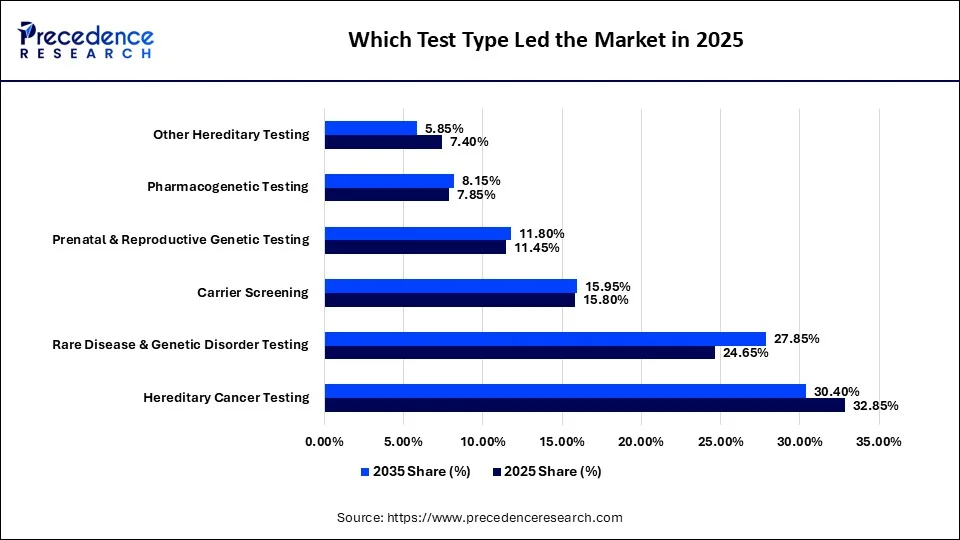
The hereditary cancer testing segment dominated the market with a 32.85% share in 2025 and is expected to expand at a CAGR of 14.16% during the forecast period. This segment benefits from the expanding genetic conditions risk evaluation ecosystem. The rare disease and genetic disorder testing segment is expected to grow at the highest CAGR of 16.46% from 2026 to 2035. This growth can be attributed to the increasing awareness of the diagnosis and treatment of rare and gene-based diseases.
Test Type Analysis by Expert Analysts
The numeric data shows a gradual transition from hereditary cancer testing to wider rare disease and genetic condition testing. Hereditary cancer testing is still commercially vital due to the fact that genetic insights can influence advanced surveillance, preventive care, and treatment decisions. According to the NCI, around 5% to 10% of all cancers are caused by inherited harmful genetic changes. Rare disease testing is shifting from targeted diagnostic testing to increasingly extensive genomic analysis. NIH said that around 25 to 30 million Americans suffer from rare diseases, creating a large population base that can benefit from genetic diagnosis.
Why Did Next-Generation Sequencing Segment Lead the Market in 2025?
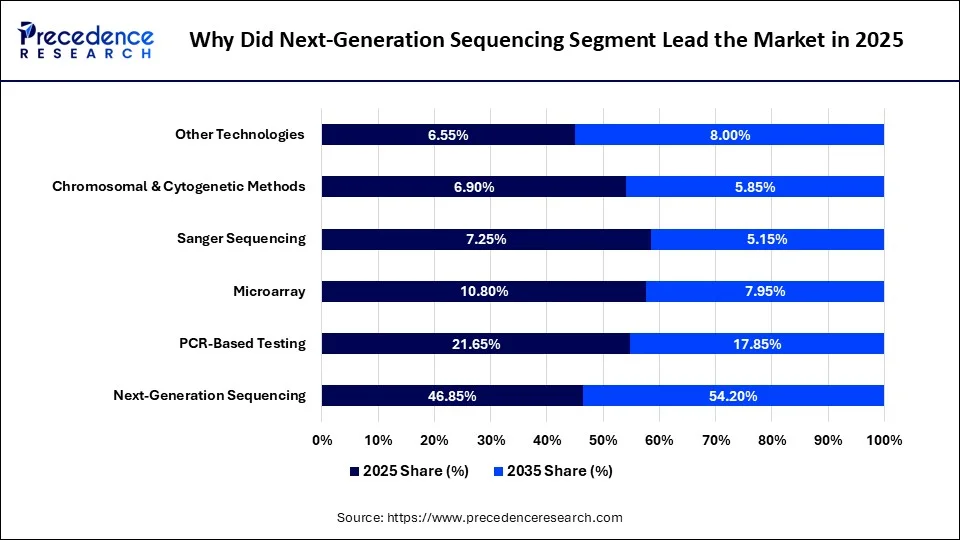
The next-generation sequencing segment accounted for the major revenue share of 46.85% in 2025 and is expected to expand at the highest CAGR of 16.71% from 2026 to 2035. This technology enables detection of various genes and variants by analyzing a large number of small fragments simultaneously. The PCR-based testing held a significant market share of 21.65% in 2025, but is expected to lose 3.8 percentage points because its CAGR is 12.75% during the forecast period, which is significantly lesser than that of the next-generation sequencing segment. PCR-based testing has a well-established ecosystem and can detect very small quantities of genetic material in a sample.
Expert Analyst Insights
The next-generation sequencing segment is expected to gain 7.35 percentage points, reaching a market share of 54.2% by 2035. The main benefit of this technique is that it can analyze multiple genes and variant types in a single workflow. This is especially important when the phenotype is genetically heterogeneous or when a healthcare professional wants wider variant identification rather than testing an already known gene. This shift is already visible in clinical operations and regulations. CMS allows coverage of specific NGS-based diagnostic laboratory tests for inherited cancer in defined circumstances, along with needs related to clinical indication, risk factors, laboratory status, and test specifications.
Which Disease Area Held the Largest Market Share in 2025?
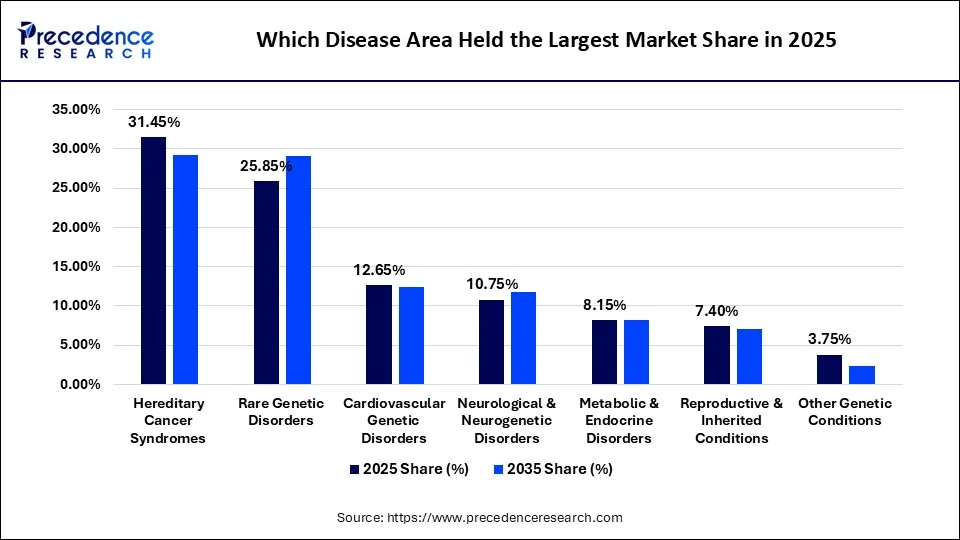
The hereditary cancer syndromes segment led the market with a 31.45% share in 2025 and is expected to expand at a CAGR of 14.17% from 2026 to 2035. This can be attributed to the growing emphasis being placed on categorization according to risk and timely diagnosis of a disease. The rare genetic disorders segment is expected to grow at the fastest CAGR of 16.39% during the forecast period, because of enhancements in molecular diagnosis technologies.
Disease Area Insights by Expert Analysts
According to our Senior Researcher Aditi Shivarkar, the hereditary cancer syndrome segment still holds the largest share, but the rare genetic disorders segment is expected to increase its share by 3.3% by 2035. This is aligned with the growing adoption of genome-wide methodologies for patients whose clinical description does not properly point towards a single gene or condition. Care4Rare EXPAND project, which is a project by Genome Canada, will generate 17,650 datasets from 7,150 families and potentially offer novel diagnoses for around 2,200 families across 4 years.
Which Biological Samples Have Found the Most Adoption?
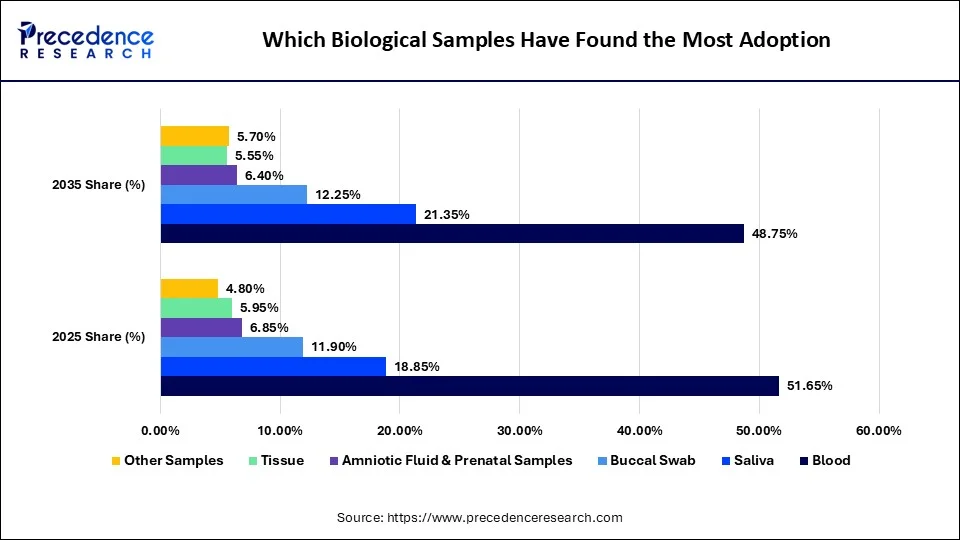
The blood segment dominated the market in 2025 and is expected to expand at a CAGR of 14.39% from 2026 to 2035. This segment has a mature clinical ecosystem, and blood facilitates the analysis of DNA, chromosomes, and proteins. The saliva segment is expanding at a healthy CAGR of 16.41% because it facilitates non-invasive sample collection. Its market share is expected to leap from 18.85% in 2025 to 21.35% in 2035 at the expense of the blood segment, whose market share is expected to decrease from 51.65% in 2025 to 48.75% in 2035.
Sample Type Insights by Expert Analysts
Blood is still the most prominent sample type due to the fact that it has been well integrated into mature clinical laboratory workflows, but the share of the saliva segment is expected to increase during the forecast period. NCI reported that inherited BRCA1/BRCA2 testing can utilize either blood or saliva, which shows the growing compatibility of saliva samples for hereditary testing. Saliva and buccal collection are also compatible with decentralized and direct-access testing approaches where sample collection beyond conventional hospital environments is commercially beneficial.
How is Hereditary Testing Transitioning From Targeted Panels to Whole-Genome Analysis?
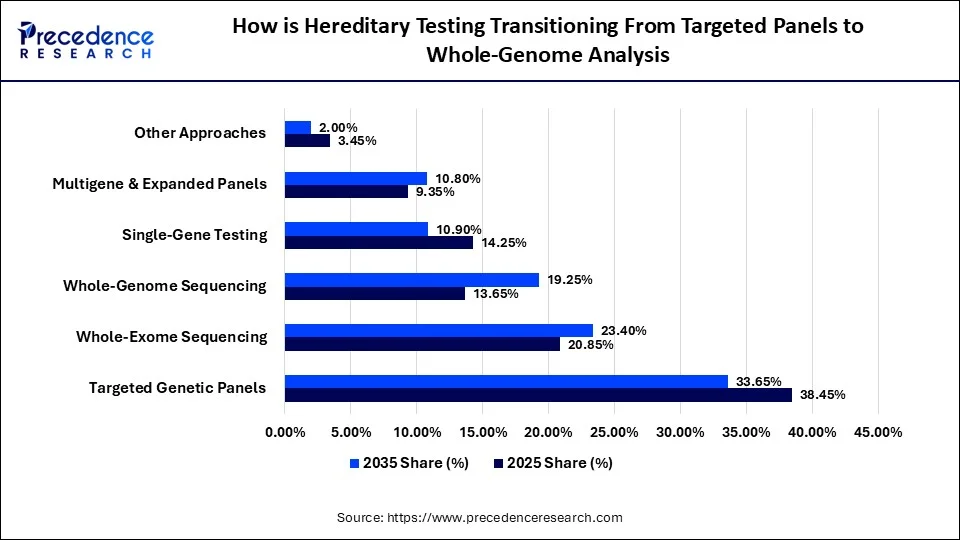
The targeted genetic panels segment accounted for the major revenue share of 38.45% in 2025 and is expected to grow at a CAGR of 13.58% during the forecast period. This segment has been well integrated into clinical settings; however, its share is expected to decrease by 4.8% from 2025 to 2035 because the whole-genome sequencing and whole-exome sequencing segments are expected to grow at CAGRs of 19.28% and 16.36%, respectively, gaining market share of 5.6% and 2.55%, respectively. Whole-exome sequencing facilitates broader variant discovery, and whole-genome sequencing enables extensive genomic analysis.
Expert Analyst Insights
The whole-genome sequencing segment is expected to grow at the highest CAGR of 19.28% during the forecast period, and targeted panels were still the most prominent segment in 2025. The market is not just transitioning from targeted panels to whole-genome sequencing, but various testing methodologies are being increasingly matched to clinical intricacy:
- familiar familial variant → targeted testing;
- defined disease group → multigene panel;
- genetically heterogeneous condition → exome;
- unresolved or complex phenotype → genome-wide sequencing.
Canada offers an important example of this shift, as Genome Canada is assisting in the execution of clinical whole-genome sequencing projects in British Columbia, Alberta, and Ontario, along with various other provinces in Canada.
Which End User Dominated the Market in 2025?
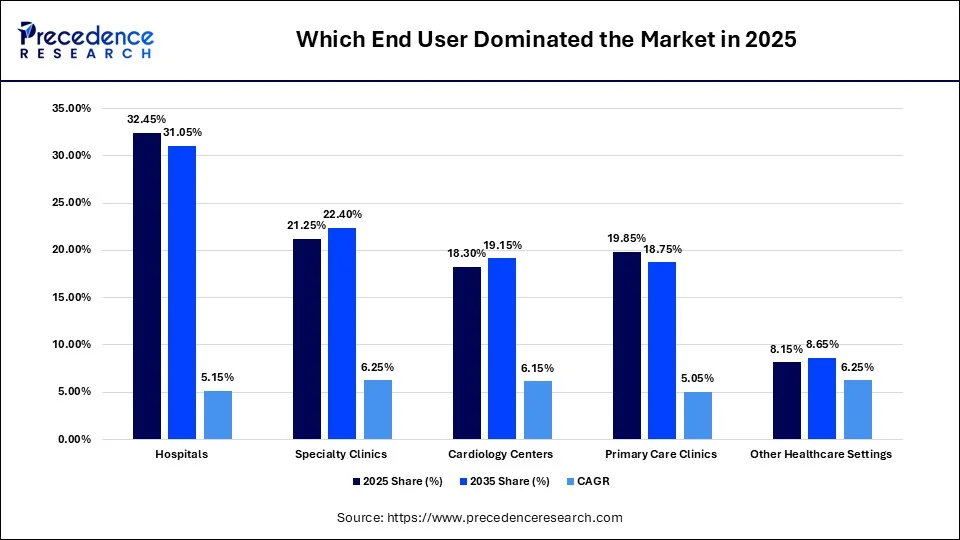
The hospitals and health systems segment led the market with a 38.65% share in 2025 and is expected to expand at a CAGR of 14.16% from 2026 to 2035. The market share of this segment is expected to decrease to 35.85% by 2025, as the diagnostics laboratories segment is expected to grow at a higher CAGR of 16.03% during the forecast period. Its market share is expected to increase from 25.40% in 2025 to 27.65% in 2035. The growing trend of outsourcing molecular testing operations is benefiting this segment.
End User Insights by Expert Analysts
According to our Senior Researcher, Aditi Shivarkar, the growth of centralized testing is assisted by the technical intricacies of NGS, bioinformatics, variant analysis, and quality control. It also lets hospitals and smaller clinical organizations access advanced testing without building comprehensive in-house genomic laboratories.
Which Distribution Channel Was Most Used to Deliver Hereditary Testing to Patients in 2025?
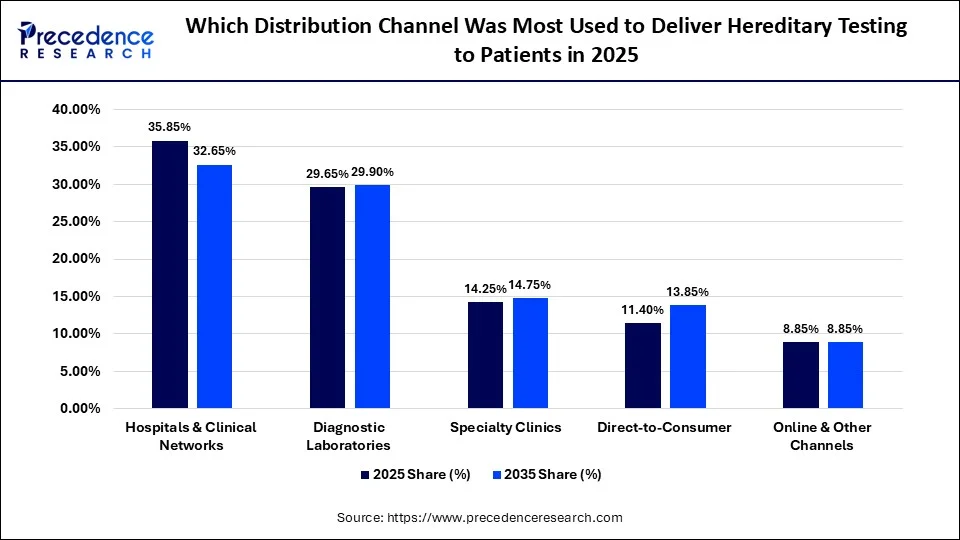
The hospitals and clinical networks segment dominated the market with a 35.85% share in 2025 and is expected to grow at a CAGR of 13.99% during the forecast period. This segment is expected to lose 3.2 percentage points as the direct-to-consumer segment is expanding at the highest CAGR of 17.43% from 2026 to 2035, taking its share from 11.4% in 2025 to 13.85% in 2035. The growth of this segment is propelled by the increasing awareness of genetic influence among consumers.
Expert Analyst Insights
According to our Senior Researcher, Aditi Shivarkar, Direct-to-Consumer (DTC) testing has a unique regulatory and clinical profile. According to the FDA, DTC genetic tests enable consumers to obtain and offer specimens without any intervention of healthcare professionals. The FDA also differentiates lower-risk genetic health data from higher-risk applications, which include cancer predisposition testing and pharmacogenetic claims. This creates 2 pathways in the market: consumer-accessible testing for specific uses and clinically supervised testing for applications that need genetic counseling, analysis, or treatment consequences.
How is the North American Hereditary Testing Market Divided Between the U.S. and Canada?
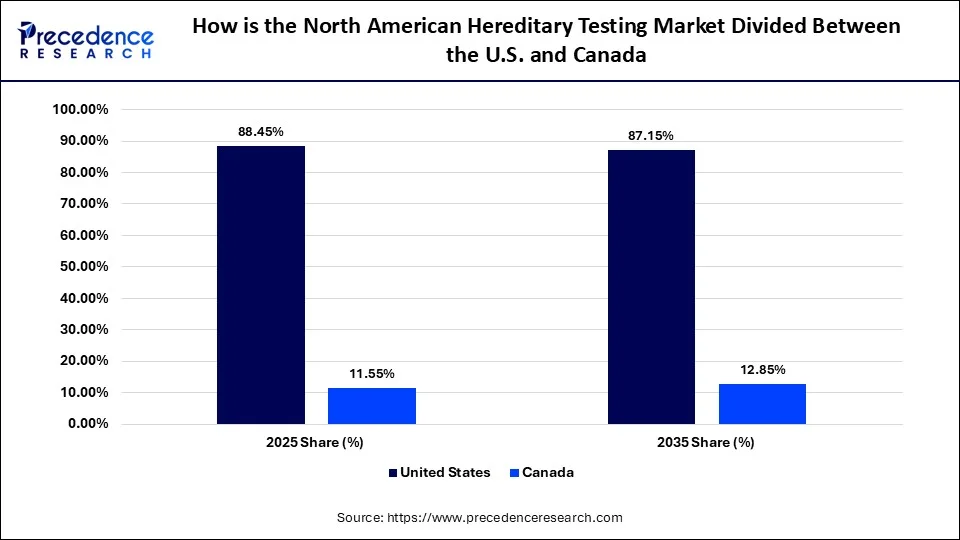
The U.S. dominated the North American hereditary testing market with an 88.45% share in 2025 and is expected to expand at a CAGR of 14.85% during the forecast period. This country has a massive clinical and genomic testing base. Canada holds an 11.55% share in 2025 and is expected to grow at a CAGR of 16.15% from 2026 to 2035, driving its share to 12.85% by 2035 owing to growing adoption of genomic medicine.
Regional Insights by Expert Analysts
The U.S. holds a dominant share in the market, but Canada is expected to grow at a faster CAGR to gain 1.30 percentage points. The U.S. benefits from a mature clinical laboratory ecosystem, well-established specialist testing infrastructure, private diagnostic providers, oncology testing, reproductive testing, and a well-developed reimbursement environment. Canada's growth is being propelled by significant public investment in genomic infrastructure.
Genome Canada unveiled the Canadian Precision Health Initiative in 2025, which involves federal investment of CSD 81 million and expected net investment of CSD 200 million, targeting over 100,000 human genomes.
What Clinical Factors Drive the Demand for Hereditary Testing in the U.S.?
| Indicator | Data Point | Market Relevance |
| Americans affected by rare diseases | 25–30 million | Large potential genetic-diagnosis population |
| Estimated share of cancers linked to inherited harmful variants | 5–10% | Hereditary cancer testing demand |
| Approximate known rare diseases | ~7,000–10,000 | Broad diagnostic testing requirement |
| CMS inherited-cancer NGS coverage | Defined eligibility framework | Supports clinically indicated testing |
| BRCA hereditary testing | Blood and saliva collection | Supports laboratory and decentralized workflows |
| DTC genetic testing | FDA-regulated categories | Expands consumer access to selected genetic information |
NIH reported that around 25 to 30 million Americans are affected by rare diseases, while NCI said that approximately 5 to 10% of all cancer cases involved inheritance of harmful genetic changes. CMS has developed countrywide coverage for certain NGS-based germline testing in inherited cancer under specified circumstances, while Medicare Administrative Contractors can set up additional coverage under relevant policies.
U.S. Demand Drivers Insights by Expert Analysts
According to our Senior Researcher, Aman Singh, the market growth in the U.S. is driven by high disease-testing intensity, advanced laboratory infrastructure, and increasing use of genomic data by clinical systems. Reimbursement is still indication-oriented, rather than being universal. Coverage needs can affect which hereditary tests are widely adopted in clinical settings.
What are the Changes in the Hereditary and Rare Disease Testing Environment in Canada?
| Canadian Initiative | Scale/Data Point | Market Relevance |
| Canadian Precision Health Initiative | More than 100,000 genomes | National genomic infrastructure |
| CPHI expected investment | USD/CAD-equivalent funding reported as C$200M total investment | Infrastructure and sequencing expansion |
| Federal Genome Canada contribution | C$81M | Public-sector support |
| Care4Rare EXPAND | 17,650 datasets/7,150 families | Rare-disease diagnosis |
| Care4Rare EXPAND expected diagnoses | ~2,200 families | Clinical diagnostic demand |
| Ontario GWS pilot | 650 families/325 ES trios + 325 GS trios | Clinical implementation |
| NeuRo Genomics Initiative | 8,700 individuals | Neurogenetic research and diagnosis |
CPHI by Genome Canada intends to develop a population-wide genomic resource of over 100,000 genomes, and Care4Rare EXPAND plans to create 17,650 datasets across 7,150 families and approximates a 30% to 35% diagnostic output. The NeuRo genomics initiative involves the participation of 8,700 individuals and aims to enhance neurogenetic research and diagnosis.
Expert Analyst Insights
Canada has a smaller market environment but has a significant growth opportunity propelled by infrastructure development. The key commercial insight is that public genomic projects can create clinical sequencing capability, reference datasets, and diagnostic procedures that eventually transition from research projects to clinical care.
Which Companies Have a Well-Developed Environment for Hereditary Genetic Testing?
| Company | Relevant Activity | 2025 Operational Data |
| Myriad Genetics | Hereditary cancer, prenatal and pharmacogenomic testing | $372.4M hereditary cancer revenue |
| Labcorp | Genetic testing including oncology and rare diseases; acquired selected Invitae assets | Expected acquired Invitae assets to generate $275–300M annual revenue at transaction announcement |
| Tempus AI / Ambry Genetics | Hereditary cancer, rare-disease WES/WGS and inherited screening | Hereditary testing is a dedicated Diagnostics revenue category |
| Quest Diagnostics | Large U.S. diagnostic laboratory network including genetic testing | $11.035B total 2025 revenue |
| Natera | Prenatal and other genomic testing | $2.306B total 2025 revenue |
Myriad Genetics
Myriad Genetics disclosed that it generated USD 824.5 million in net revenue in 2025, which included USD 327.4 million from Hereditary Cancer, representing a 2% growth from USD 364.5 million in 2024. Hereditary Cancer provided around 45% of the company's total revenue. Myriad Genetics reported that it had performed 315,000 hereditary cancer tests in 2025, a 7% rise from 294,000 in 2024. This is one of the most explicit publicly disclosed datasets that has a direct connection with the hereditary testing market.
Labcorp and Invitae
Labcorp finished its acquisition of specific Invitae assets in August 2024, boosting its genetic testing capabilities in oncology and certain rare diseases. During the announcement of this transaction, Labcorp estimated that the acquired assets would generate around USD 275 to 300 million in revenue in a year, with a major chunk expected from specialty testing segments such as oncology and rare diseases.
Tempus/Ambry Genetics
The 2025 SEC filing of Tempus explicitly recognizes Hereditary Testing as one of its Diagnostics product lines. It also involves inherited cancer risk testing, whole-exome and whole-genome analysis for rare conditions, and other inherited screening testing to cater to the needs of genetic counselors.
Quest Diagnostics
Quest Diagnostics reported total revenue of USD 11.035 billion in 2025, Diagnostic Information Services revenue of USD 10.785 billion, and a 12.3% growth in requisition volumes.
Natera
Natera achieved USD 2.306 billion in revenue in 2025, up from USD 1.697 billion in 2024. It processed around 3.53 million tests in 2025. The overall lineup of the company involves reproductive testing and various other molecular diagnostics.
Company Intelligence Insights by Expert Analysts
The competition is increasingly shifting towards specialty genetic-testing companies, prominent diagnostic laboratories, and comprehensive precision medicine platforms. A standout structural trend is consolidation. The acquisition of certain Invitae assets by Labcorp and the reporting of hereditary testing by Tempus as a different Diagnostics segment show that inherited disease testing is being strategically adopted in prominent diagnostic platforms.
Why is Hereditary Cancer an Important Testing Segment?
NCI recognizes inherited harmful variants as a vital cause of familial cancer risk. Genetic testing can be useful, especially for BRCA1/BRCA2 in case of people with a personal or family history, which causes higher inherited risk. Testing can also offer data relevant to relatives due to the fact that inherited variants can be shared across generations. CMS regulations provide another indication of the clinical adoption of hereditary cancer testing. Medicare coverage for specific inherited cancer NGS tests requires a cancer diagnosis, a clinical indication for germline testing, a related risk factor, and no prior testing of the same germline content.
Hereditary Cancer Testing Insights by Expert Analysts
Hereditary Cancer Testing is shifting from a single-gene ecosystem to multigene panels and broader genomic assessment. The market growth potential is not just reliant on test volumes, but also involves:
- expanded gene content;
- variant inference;
- reanalysis of existing genomic information;
- cascade testing of relatives;
- genetic counseling;
- integration with oncology operations; and
- linkage between germline findings and treatment decisions.
Why Does Rare Disease Testing Have One of the Highest Growth Rates?
The total patient base for rare diseases is large even if individual diseases are not very common. NIH reported that approximately 25 to 30 million Americans suffer from rare diseases, and many genetic diseases have genetic links. The diagnostic issue is increasingly being resolved through exome and genome sequencing. In Canada, Care4Rare EXPAND intends to develop 13,000 short-read genomes, 2,000 long-read genomes, 650 transcriptomes, and 2,000 methylomes across its 17,650-dataset program.
Expert Analyst Insights
Rare-disease testing creates an especially robust use case for WES, WGS, and multi-omics owing to the fact that many patients are not compatible with a single-gene diagnostic workflow. The commercial potential goes beyond the sequencing test to include:
- bioinformatics;
- variant analysis;
- phenotype-genotype matching;
- long-read sequencing;
- reanalysis;
- data-sharing infrastructure;
- genetic counseling; and
- clinical decision assistance.
What Do Hospitals, Laboratories, and Genetic Clinics Assess When Buying Hereditary Tests?
| Buyer Criterion | Importance | Procurement Consideration |
| Analytical validity | Very High | Accuracy and reproducibility |
| Clinical validity | Very High | Strength of genotype-disease association |
| Clinical utility | Very High | Ability to influence diagnosis or management |
| Gene/variant coverage | Very High | Breadth of relevant genomic content |
| Variant interpretation | Very High | Quality of classification and reporting |
| Turnaround time | High | Impact on clinical decision-making |
| Reimbursement | Very High | Coverage and payer acceptance |
| Laboratory accreditation | Very High | Quality and regulatory compliance |
| Genetic counseling | High | Pre- and post-test interpretation |
| Data security | Very High | Protection of genomic and health information |
| EHR integration | High | Workflow efficiency |
| Reanalysis capability | Increasing | Ability to reinterpret variants as knowledge changes |
| Sample logistics | High | Blood, saliva, and other collection options |
| Cost per test | High | Budget and reimbursement economics |
Analytical and clinical validation are categorized as very important, as buyers value accuracy, reproducibility, and strength of genotype-disease association. Clinical utility, gene/variant coverage, and variant inference also fall in the very important category. EHR integration has high importance as it helps to enhance the efficiency of routine workflows, which is beneficial for hospitals, laboratories, and genetic clinics. The strategic importance of reanalysis capability is increasing as it provides the ability to reinterpret variants as knowledge updates.
Buyer Intelligence Insights by Expert Analysts
Hereditary testing procurement is not similar to traditional laboratory test purchasing due to the fact that buyers assess not only analytical performance but also inference, clinical utility, reimbursement, and influence on future care. Integration into clinical operations and genetic counseling capability is as crucial as sequencing performance for hospitals and health systems. The important competitive differentiators for diagnostic laboratories are shifting towards test menu breadth, throughput, turnaround time, bioinformatics, and buyer coverage.
What Factors Are Driving the Growth of North America Hereditary Testing Market?
Expansion of Precision Medicine
Genetic data is being increasingly integrated into disease risk evaluation, diagnosis, and treatment selection.
Hereditary Cancer Screening
Inherited cancer risk evaluation is still an important clinical application. NICE said that 5% to 10% of all cancers are caused by inherited harmful variants.
Rare Disease Diagnosis
The large rare disease patient base drives demand for molecular diagnosis.
NGS Adoption
NGS assists in the detection of multigene and broader variants, and its market share is expected to increase from 46.85% in 2025 to 54.2% in 2035.
WGS Adoption
Whole-genome sequencing is expected to grow at the fastest CAGR of 19.28% among all testing approaches.
Reproductive Genetic Testing
Carrier screening and prenatal testing still hold significant importance among hereditary testing applications.
Consumer Access
Direct-to-Consumer boosts access to specific formats of genetic data, although FDA requirements vary in accordance with risk and intended use.
Genomic Infrastructure Investment
CPHI in Canada intends to develop more than 100,000 genomes and a net investment of CSD 200 million.
Expert Analyst Insights
The development of advanced hereditary testing technologies and the expansion of modern infrastructure will be important differentiators, besides boosting diagnostic accessibility to the addressable population. Whole-genome sequencing and whole-exome sequencing are being positioned as next-generation testing approaches; hence, it becomes important for competitors to build a robust and reliable ecosystem around these technologies, focusing on reimbursement, convenience, affordability, and supply chains.
What are some of the Restraints that Limit the Growth of the Market?
| Challenge | Potential Market Effect |
| Variant interpretation complexity | Raises clinical and laboratory requirements |
| Variants of uncertain significance | Can complicate patient management |
| Reimbursement restrictions | Limits testing for indications without established coverage |
| Genetic counseling capacity | Creates bottlenecks as testing volumes increase |
| Data privacy | Increases compliance and infrastructure requirements |
| Population representation | Can affect interpretation across ancestries |
| Incidental findings | Requires robust reporting and counseling protocols |
| DTC interpretation | Risk of misunderstanding without clinical context |
| Test commoditization | Can increase pricing pressure for established panels |
| Regulatory oversight | Adds requirements for test validation and claims |
NCI explicitly reported that genetic testing can generate variants of varying significance and emphasizes the role of genetic counseling to analyze results. CMS has also shed light on the issue of medically unnecessary genetic testing and the intricacies involving interpretation of genetic findings, acknowledging the importance of proper clinical indication and qualified analysis.
Market Restraints Insights by Expert Analysts
The main problem is shifting from more testing to better, clinically feasible testing. Sequencing is getting cheaper and more comprehensive, which is shifting competitive differentiators towards variant analysis, evidence quality, clinical integration, and patient management rather than just sequencing.
Experts Insights
There is a significant base of addressable population, and the direct-to-consumer segment is growing because of increasing awareness regarding genetic influence. Seamless clinical integration and clinical counseling capability are important to generate revenue, along with the pace and efficacy of the sequencing approaches. The U.S. holds a dominant market share because of its mature hereditary testing environment, but Canada is rapidly growing owing to the expansion of relevant infrastructure.
Our Experts
The primary market research process was carried out by Deepa Pandey, Senior Research Associate, who also designed the methodology and did market segmentation, regional trend analysis, buyer intelligence, competitive analysis, and forecasts, laying the foundation for the analytical part of the report.
Aman Singh, Head of Research, has gathered and checked regulatory policies, company financial information, genome sequencing information, production information, commodity price information, and various other quantitative information sources, which were obtained independently, thereby increasing the quality of evidence supporting the calculations of the market values.
Aditi Shivarkar, VP Research, has validated and refined the research material, verified facts, corrected inconsistencies, and completed the research document, making it accurate and to the point.
North America Hereditary Testing Market Segments Covered in This Report
By Test Type
- Hereditary Cancer Testing
- Rare Disease & Genetic Disorder Testing
- Carrier Screening
- Prenatal & Reproductive Genetic Testing
- Pharmacogenetic Testing
- Other Hereditary Testing
By Technology
- Next-Generation Sequencing
- PCR-Based Testing
- Microarray
- Sanger Sequencing
- Chromosomal & Cytogenetic Methods
- Other Technologies
By Disease Area
- Hereditary Cancer Syndromes
- Rare Genetic Disorders
- Cardiovascular Genetic Disorders
- Neurological & Neurogenetic Disorders
- Metabolic & Endocrine Disorders
- Reproductive & Inherited Conditions
- Other Genetic Conditions
By Sample Type
- Blood
- Saliva
- Buccal Swab
- Amniotic Fluid & Prenatal Samples
- Tissue
- Other Samples
By Testing Approach
- Targeted Genetic Panels
- Whole-Exome Sequencing
- Whole-Genome Sequencing
- Single-Gene Testing
- Multigene & Expanded Panels
- Other Approaches
By End User
- Hospitals & Health Systems
- Diagnostic Laboratories
- Specialty & Genetic Clinics
- Academic & Research Institutions
- Reproductive Health Centers
- Other Healthcare Providers
By Distribution Channel
- Hospitals & Clinical Networks
- Diagnostic Laboratories
- Specialty Clinics
- Direct-to-Consumer
- Online & Other Channels
By Country
- United States
- Canada
For inquiries regarding discounts, bulk purchases, or customization requests, please contact us at sales@precedenceresearch.com
Frequently Asked Questions
Tags





Ask For Sample
No cookie-cutter, only authentic analysis – take the 1st step to become a Precedence Research client
 Get a Sample
.webp)



 sales@precedenceresearch.com
 Schedule a Meeting
