


North America Veterinary Care Market Size, Key Companies, Company Market Share, Patient Volume, Treatment Adoption Rates, Pricing Analysis, Regulatory Landscape, Competitive Positioning, and Demand Forecast
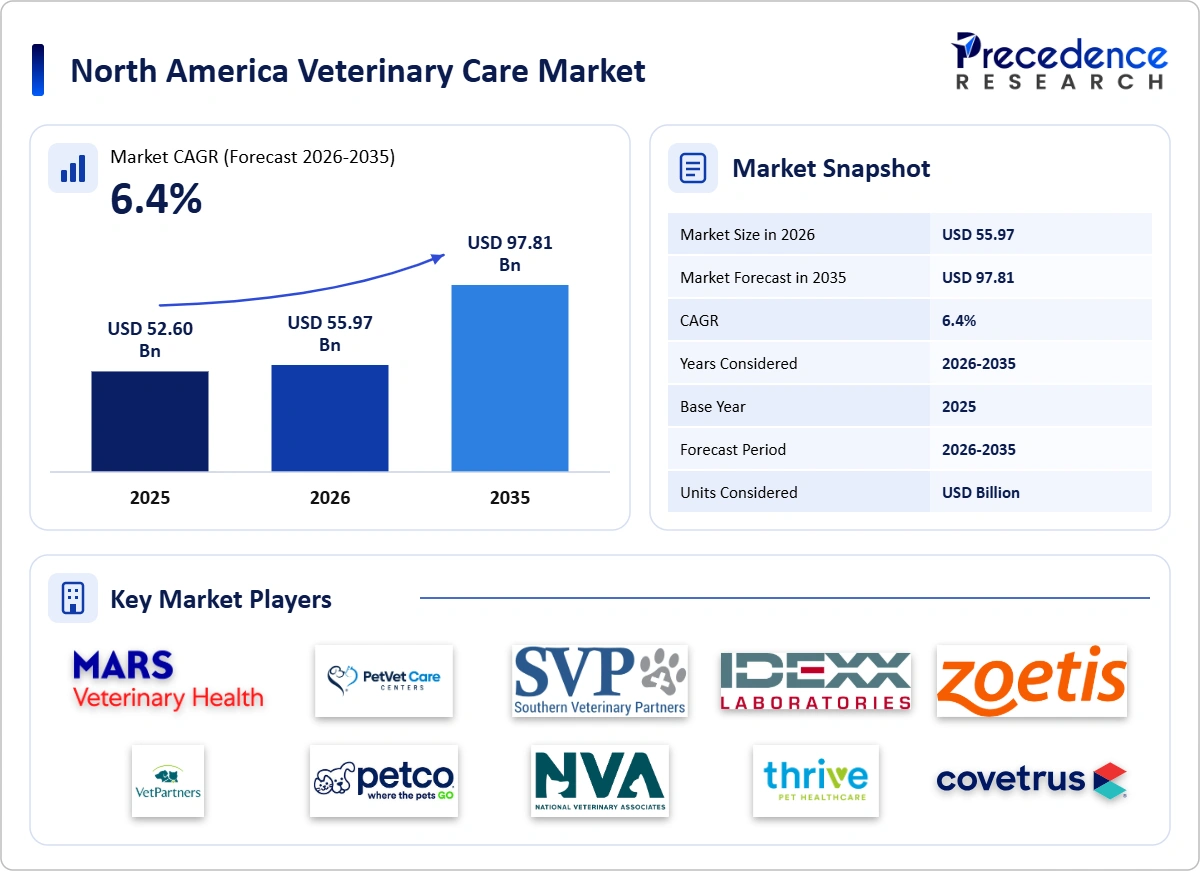
Payal Rabde, a Healthcare Industry Expert, highlights that the North America veterinary care market has reached USD 55.97 billion in 2026 and is on track to reach USD 97.81 billion by 2035, advancing at a CAGR of 6.4%. Key North America veterinary care market companies shaping the market include IDEXX Laboratories, National Veterinary Associates, Zoetis while major growth segments span animal type, service, provider.
Source: https://www.precedenceresearch.com/north-america-veterinary-care-market
 Get a Sample
 Table Of Content


Key Takeaways
Market Size & Growth Outlook
- Market size in 2025: USD 52.60 billion
- Estimated market size in 2026: USD 55.97 billion
- Projected market size by 2035: USD 97.81 billion
- CAGR (2026-2035): 6.4%
Regional Market Spotlight
- In 2025, the U.S. led the market with an 88% revenue share.
- Canada accounted for 8% of the market in 2025.
- Mexico accounted for 4% of the market in 2025 and is projected to be the fastest-growing country, at a CAGR of 7.9%, according to the country forecast.
Segmental Spotlight
- By animal type, companion animals captured 82% of the market in 2025.
- By service, preventive and wellness care accounted for 31% of the market in 2025.
- By provider, independent practices accounted for 48% of the market in 2025.
North America Veterinary Care Market Size and Forecast, 2025-2035 (USD Billion)
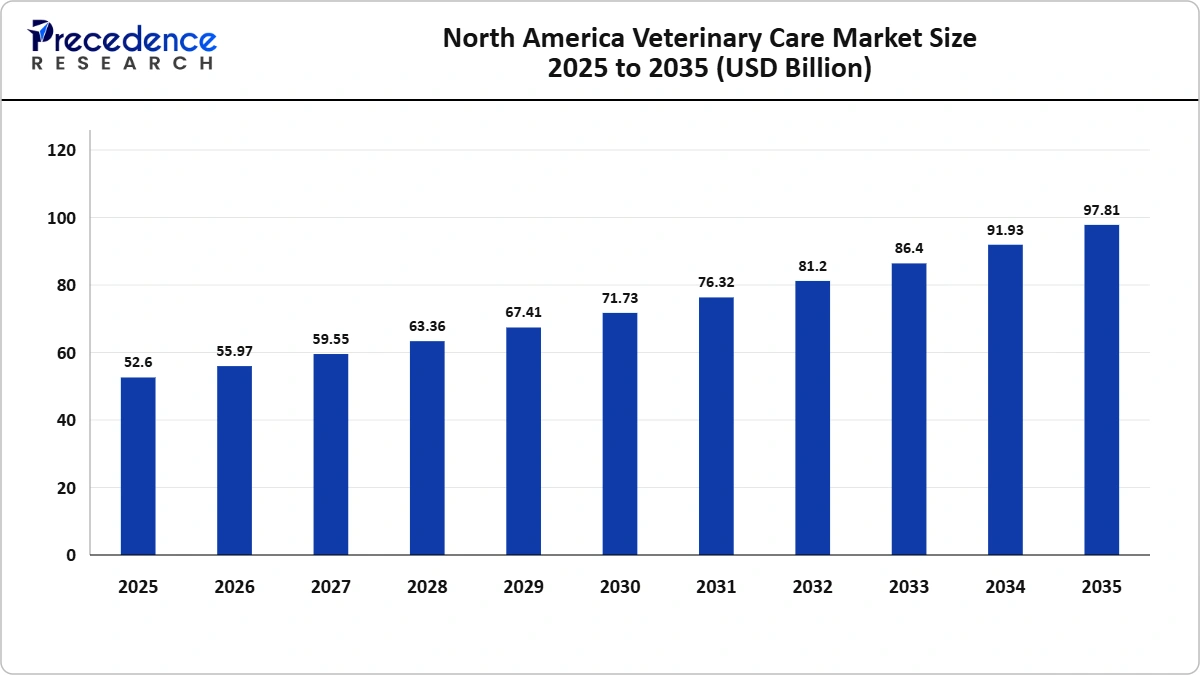
Note: 2025 is the base year; 2026-2035 values are forecasts.
Sources: Expert interviews, secondary sources, Precedence Research database, and Precedence Research analysts.
The North America veterinary care market is projected to grow from USD 52.60 billion in 2025 to USD 97.81 billion by 2035, driven by rising pet ownership, pet humanisation, ageing companion animals, and increased spending on animal healthcare. Growing awareness of preventive healthcare and early disease detection is prompting pet owners to seek regular veterinary consultations.
The market is supported by the expansion of specialty and emergency veterinary hospitals, increased pet insurance adoption, and improved access to advanced diagnostic and surgical procedures, alongside the consolidation of veterinary practices and the growth of corporate veterinary groups. These factors are expected to increase market revenue to USD 71.73 billion by 2030 and sustain a CAGR of 6.4% from 2026 to 2035. Veterinary providers are adopting digital booking platforms, telehealth consultations, and technology-assisted diagnostic systems to improve operational efficiency and patient management.
Analyst View: We estimated the market using veterinary visit volumes, average spending per animal, companion animal healthcare expenditure, and livestock veterinary service demand across individual countries. The assessment was cross-validated against pet spending data, industry information, and revenues of leading veterinary service providers. Our market definition includes companion animal and livestock veterinary services, specialty treatments, diagnostics, and related care activities.
Market Trends
- Corporate groups acquire independent veterinary practices, reshaping the competitive landscape and expanding multi-location veterinary networks.
- Growing demand for advanced treatments oncology, cardiology, orthopaedics, and emergency procedures encourages investment in specialized veterinary facilities.
- Growing awareness of veterinary treatment costs and the availability of pet insurance influence demand for veterinary services.
- Veterinary providers adopt online appointment systems, remote consultations, digital medical records, and virtual triage services.
- The adoption of in-clinic diagnostic equipment, imaging technologies, laboratory testing, and AI-assisted diagnostic tools improves veterinary care capabilities.
- Veterinary organizations adopt centralized administrative systems, technician-led workflows, and digital management platforms to address staffing shortages and improve productivity.
North America Veterinary Care Market Drivers, Restraints, and Opportunities
Driver
The North America veterinary care market is supported by high companion animal ownership and increasing household expenditure on pet healthcare. The growing tendency to consider pets as family members is encouraging owners to invest in routine examinations, vaccinations, dental treatments, diagnostics, and specialized medical procedures. Ageing companion animals are generating demand for chronic disease management, advanced imaging, surgical treatments, and long-term veterinary supervision.
Increasing pet insurance penetration is improving access to expensive veterinary procedures by reducing the financial burden on pet owners. Furthermore, expanding veterinary hospital networks, growing awareness of preventive healthcare, and increasing availability of advanced animal treatments are supporting market expansion across North America.
Restraint
The market faces challenges from veterinarian shortages, increasing veterinary treatment costs, affordability concerns, and uneven access to animal healthcare services. Veterinary professionals are experiencing workload pressures, particularly in emergency and specialty care facilities, which can limit appointment availability and service capacity. Rising diagnostic, surgical, medication, and hospitalization costs can discourage owners from pursuing recommended treatments.
Additionally, rural and underserved communities may experience limited access to veterinary hospitals, specialized practitioners, and advanced diagnostic infrastructure. These challenges can restrict service utilization and create disparities in veterinary healthcare availability across North America.
Opportunity
The demand for preventive healthcare plans, telehealth consultations, and specialized veterinary services represents opportunities for market participants. Subscription-based wellness plans and recurring veterinary care packages can improve customer retention and generate predictable revenue for veterinary providers.
The expansion of specialty referral hospitals, mobile veterinary services, and digital consultation platforms can improve access to animal healthcare, particularly in underserved locations. Mexico also presents growth opportunities through rising pet ownership and expanding veterinary clinic infrastructure. In the livestock segment, investments in disease prevention, herd health management, vaccination, and veterinary monitoring are expected to generate additional demand throughout the forecast period.
Market Drivers - Impact & CAGR Contribution (2026-2035)
| Driver | Impact | ≈ CAGR Contribution | Time Horizon | Key Regions |
| Pet ownership is high | High | +2.50 pp | Short to long term | North America-wide, strongest in U.S. |
| Pets are treated as family | Medium | +2.11 pp | Medium to long term | North America-wide, fastest uptake in Mexico |
| Ageing pets need more care | Medium | +1.80 pp | Short to medium term | North America-wide |
| Insurance grows | Low | +1.41 pp | Long term | U.S. and Mexico |
Note: Contributions are indicative estimates of each factor's effect on annual growth.
Sources: Expert interviews, secondary sources, Precedence Research database and Precedence Research analysts.
High companion animal ownership, pet humanisation, ageing pet populations, and rising insurance penetration are estimated to contribute approximately 7.82 percentage points to annual market growth before the impact of restraints. The foremost contributor is high pet ownership, fostering demand for veterinary services. Pet humanisation encourages higher spending on advanced medical care, while ageing pets heighten the need for chronic disease management. Increased insurance penetration further facilitates access to costly veterinary procedures, ensuring sustained demand in the U.S., Canada, and Mexico during the forecast period.
Market Restraints - Impact & Negative CAGR Contribution (2026-2035)
| Restraint | Impact | ≈ Negative CAGR Contribution | Time Horizon | Key Regions |
| Veterinarian shortages | High | -0.63 pp | Short to medium term | North America-wide |
| Rising visit prices | High | -0.46 pp | Medium term | Smaller and price-sensitive markets |
| Owner affordability | Medium | -0.31 pp | Short term | U.S. and other mature markets |
Note: Contributions are indicative estimates of each factor's effect on annual growth.
Sources: Expert interviews, secondary sources, Precedence Research database and Precedence Research analysts.
Veterinarian shortages, rising treatment prices, and affordability constraints are estimated to reduce annual market growth by approximately 1.40 percentage points, due to limited practitioner availability affecting appointment capacity and access to specialized care. Rising expenses affect treatment choices, especially for uninsured pet owners. Nevertheless, initiatives to expand the veterinary workforce, increased utilization of veterinary technicians, and advancements in digital consultations are expected to enhance service accessibility, supporting a projected CAGR of 6.4% from 2026 to 2035.
North America Veterinary Care Market Segmentation: 2025 Share and Value
North America Veterinary Care Market By Animal Type 2025 Share
Note: 2025 is the base year; 2035 shares and CAGRs are forecasts.
Sources: Expert interviews, secondary sources, Precedence Research database and Precedence Research analysts.
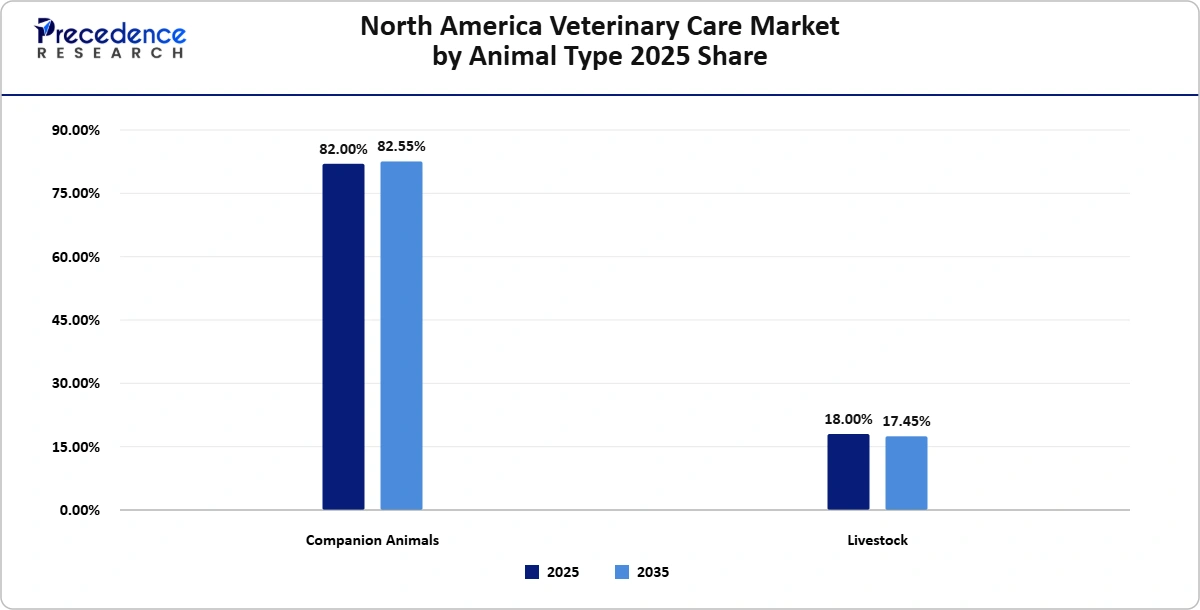
In 2025, companion animals accounted for 82% of the North America veterinary care market, while livestock represented the remaining 18%. Companion animals represent the dominant animal-type segment because of substantial household spending on dogs and cats, increasing pet humanisation, and growing demand for preventive and advanced veterinary treatments. Companion animals are also projected to record the fastest growth through 2035.
Companion animals accounted for 82% of the market, equivalent to USD 43.132 billion in 2025, and are projected to expand at a CAGR of 6.47% from 2026 to 2035. The segment for veterinary services encompasses dogs, cats, and household pets, driven by increasing pet ownership, awareness of animal wellness, and spending on advanced procedures. Demand is fueled by ageing companion animals needing diagnostic imaging, dental treatments, orthopaedic procedures, oncology, and chronic disease management. This segment is projected to grow faster than the overall market during the forecast period.
Livestock captured 18% of the market, valued at USD 9.468 billion in 2025, and is projected to expand at a CAGR of 6.07% during the forecast period. The segment focuses on veterinary care for farm animals such as cattle, swine and poultry, driven by needs such as herd health management and disease prevention. Veterinary services are vital for livestock productivity and food safety. However, segment growth is anticipated to be slower than the overall market.
Segment Outlook: Companion animals are expected to retain their leading position through 2035, increasing their market share from 82% in 2025 to approximately 82.55% in 2035. The segment is also projected to record the highest animal-type CAGR of 6.47%. Increasing pet humanisation, ageing companion animals, and demand for advanced veterinary procedures will continue to strengthen its position within the North America veterinary care market.
North America Veterinary Care Market By Service 2025 Share
| Segments | 2025 Share | 2035 Share | CAGR 2026-2035 |
| Preventive & Wellness Care | 31.00% | 29.48% | 5.87% |
| Diagnostics & Imaging | 18.00% | 17.78% | 6.27% |
| Surgery | 17.00% | 16.79% | 6.27% |
| Emergency & Specialty Care | 16.00% | 18.18% | 7.77% |
| Dental Care | 7.00% | 6.91% | 6.27% |
| Medication Dispensing & Others | 11.00% | 10.87% | 6.27% |
Note: 2025 is the base year; 2035 shares and CAGRs are forecasts.
Sources: Expert interviews, secondary sources, Precedence Research database, and Precedence Research analysts.
In 2025, preventive and wellness care accounted for 31% of the market, followed by diagnostics and imaging at 18%, surgery at 17%, emergency and specialty care at 16%, medication dispensing and others at 11%, and dental care at 7%. Preventive and wellness care leads veterinary services due to ongoing requirements such as routine examinations and vaccinations, while emergency and specialty care is expected to grow the fastest throughout the forecast period.
Preventive and wellness care accounted for 31% of the market, equivalent to USD 16.306 billion in 2025, and is projected to expand at a CAGR of 5.87% from 2026 to 2035. The segment encompasses routine veterinary exams, vaccinations, parasite prevention, and wellness consultations. While awareness of preventive healthcare boosts regular veterinary visits, its growth is anticipated to be slower than the overall market, as advanced specialty treatments capture a larger portion of veterinary spending.
Diagnostics and imaging represented 18% of the market, valued at USD 9.468 billion in 2025, and are projected to grow at a CAGR of 6.27% through 2035. This segment covers various diagnostic procedures, including laboratory testing, radiography, ultrasound, MRI, and CT imaging. The growth in demand for early disease detection and advanced diagnostic capabilities is driving market expansion, anticipated to align with overall market trends.
Surgery held 17% of the market, equivalent to USD 8.942 billion in 2025, and is projected to expand at a CAGR of 6.27% during the forecast period. Veterinary surgical services encompass spaying, neutering, orthopaedic procedures, and soft-tissue surgeries, among other interventions. Increased pet healthcare spending and advanced surgical facility availability are driving market expansion, which is anticipated to grow in alignment with overall market trends.
Emergency and specialty care represented 16% of the market, worth USD 8.416 billion in 2025, and is projected to expand at the fastest CAGR of 7.77% from 2026 to 2035. The segment includes emergency consultations, intensive care, oncology, cardiology, neurology, orthopaedics, and other specialized veterinary services. Growing demand for advanced treatments, increasing referral networks, and the expansion of specialty veterinary hospitals are supporting rapid growth. The segment is expected to grow faster than the overall market.
Dental care accounted for 7% of the market, worth USD 3.682 billion in 2025, and is projected to register a CAGR of 6.27% by 2035. Veterinary dental services encompass oral examinations, professional cleaning, periodontal treatments, and dental surgeries. Increased awareness of oral health's influence on overall animal health is driving pet owners to pursue regular dental care, supporting further demand for veterinary dental services.
Medication dispensing and other services captured 11% of the market, valued at USD 5.786 billion in 2025, and are projected to record a CAGR of 6.27% from 2026 to 2035. This segment focuses on veterinary medication dispensing and prescription fulfillment. The growth is driven by rising demand for long-term medications, chronic disease management, and convenient access to animal healthcare products, aligning with overall market expansion.
Segment Outlook: During the forecast period, preventive and wellness care is expected to retain its position as the largest service segment, although its share is projected to decline from 31.00% in 2025 to around 29.48% in 2035. Emergency and specialty care is expected to increase its share to 18.18%, recording the highest service-level CAGR of 7.77%. Growing demand for advanced veterinary procedures, specialty referrals, and emergency treatment will support this shift in service demand.
North America Veterinary Care Market By Provider 2025 Share
Note: 2025 is the base year; 2035 shares and CAGRs are forecasts.
Sources: Expert interviews, secondary sources, Precedence Research database, and Precedence Research analysts.
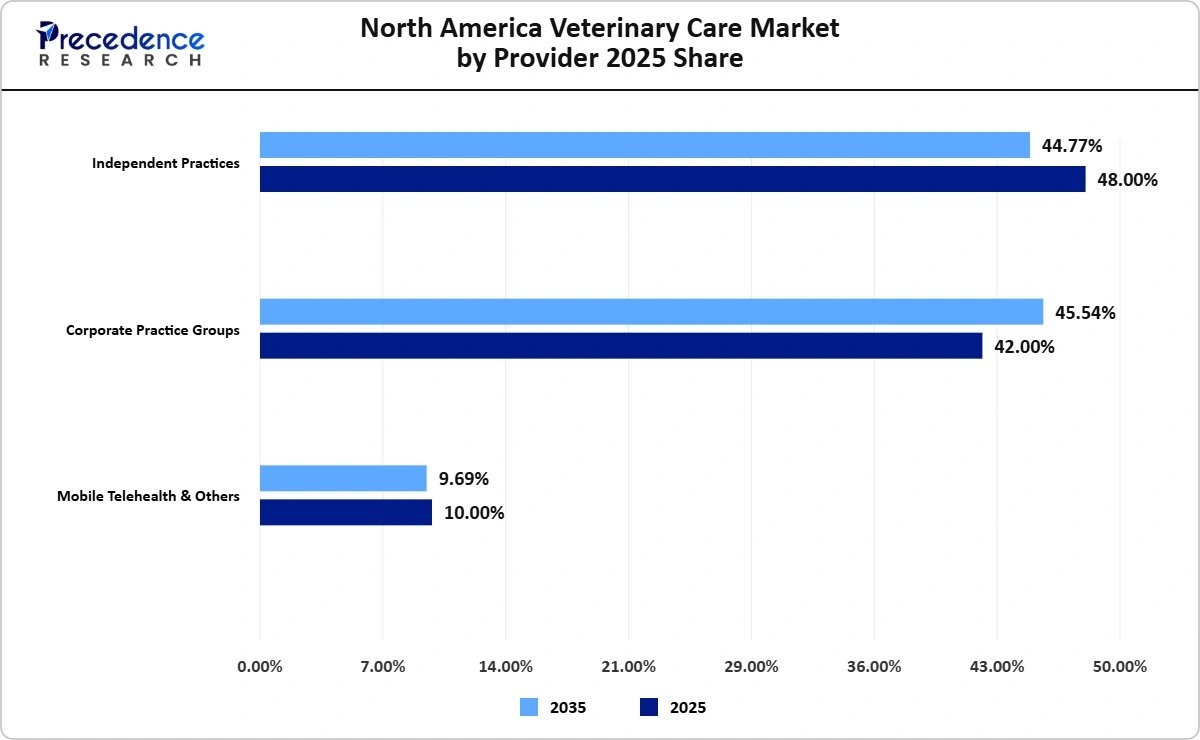
In 2025, independent practices accounted for 48% of the market, followed by corporate practice groups at 42% and mobile, telehealth, and other providers at 10%. Independent practices lead the provider category, supported by their established local presence and broad network of veterinary clinics. However, corporate practice groups are expected to record the fastest growth by 2035.
Independent practices held 48% of the market, equivalent to USD 25.248 billion in 2025, and are projected to expand at a CAGR of 5.66% from 2026 to 2035. Independent veterinary clinics provide various services such as consultations, preventive care, diagnostics, and surgical procedures, leveraging their local presence and customer relationships. However, they encounter challenges from corporate competition and increasing operational costs, which may hinder growth in the segment.
Corporate practice groups represented 42% of the market, valued at USD 22.092 billion in 2025, and are expected to register a CAGR of 7.26% through 2035. These organizations operate multi-location veterinary networks and offer general, emergency, and specialty services. Corporate consolidation, acquisitions of independent clinics, centralized procurement, and investment in advanced veterinary infrastructure are supporting segment expansion. The segment is expected to grow faster than the overall market.
Mobile, telehealth, and other providers accounted for 10% of the market, worth USD 5.260 billion in 2025, and are anticipated to register a CAGR of 6.06% from 2026 to 2035. This category encompasses mobile veterinary clinics, virtual consultations, remote triage, and alternative service delivery models, driven by the rising use of digital booking and telehealth. Despite this growth, its expansion is anticipated to be slightly slower than the overall market.
Segment Outlook: Through 2035, independent practices are expected to remain the largest provider segment, although their market share is projected to decline from 48.00% in 2025 to roughly 44.77% in 2035. Corporate practice groups are expected to increase their share to 45.54%, recording the highest provider-level CAGR of 7.26%. Continued acquisitions, network expansion, and investment in specialty veterinary services will support this shift in market structure.
Analyst View: In our analysis, segment estimates were developed by allocating market demand according to animal healthcare requirements, service utilization, provider networks, pricing patterns, and country-level veterinary expenditure. Companion animals, preventive and wellness care, and independent practices represent the leading segments because they address the core requirements of veterinary healthcare. However, emergency and specialty care and corporate practice groups are expected to gain share as advanced treatments, specialty facilities, and veterinary practice consolidation expand.
Country Analysis of the North America Veterinary Care Market
North America Veterinary Care Market By Country 2025 Share
| Country | 2025 Share | 2035 Share | CAGR 2026-2035 |
| U.S. | 88.00% | 87.17% | 6.30% |
| Canada | 8.00% | 8.23% | 6.70% |
| Mexico | 4.00% | 4.60% | 7.90% |
Note: 2025 is the base year; 2035 shares and CAGRs are forecasts.
Sources: Expert interviews, secondary sources, Precedence Research database and Precedence Research analysts.
The U.S. dominated the North America veterinary care market with an 88% revenue share in 2025, followed by Canada at 8% and Mexico at 4%. The U.S. maintains its leading position because of its large companion animal population, high veterinary expenditure per pet, established veterinary hospital networks, and advanced animal healthcare infrastructure. Mexico is projected to record the fastest growth over the forecast period.
The United States accounted for 88% of the market, equivalent to USD 46.288 billion in 2025, and is projected to register a CAGR of 6.3% from 2026 to 2035. The country dominates the regional market due to high pet ownership and spending on animal healthcare, supported by a broad network of veterinary hospitals. Key groups and advanced technologies contribute to growth, while rising pet insurance adoption and demand for preventive care are projected to sustain this growth in the forecast period.
Canada represented 8% of the market, valued at USD 4.208 billion in 2025, and is expected to record a CAGR of 6.7% through 2035. The market benefits from high companion animal ownership, established veterinary infrastructure, and demand for preventive and specialty veterinary services. Corporate consolidation and investment in veterinary hospital networks are supporting market development. Growing awareness of animal wellness and expenditure on veterinary treatment are expected to support steady expansion.
Mexico held 4% of the market, worth USD 2.104 billion in 2025, and is projected to register the fastest CAGR of 7.9% from 2026 to 2035. The companion animal veterinary care market is supported by increasing pet ownership, urbanization, healthcare awareness, and better veterinary infrastructure. The demand for diagnostics and specialized treatments is growing, with Mexico expected to achieve a 4.60% regional market share by 2035.
Analyst View: Our country-level market estimates were developed using veterinary service demand, companion animal ownership, livestock healthcare requirements, average expenditure per animal, installed veterinary infrastructure, and supplier presence across the U.S., Canada, and Mexico. The United States maintains its leadership through its mature veterinary healthcare ecosystem, high spending per pet, and established corporate hospital networks. Mexico receives the highest growth premium because of increasing pet ownership, expanding urban veterinary infrastructure, and rising adoption of professional animal healthcare services.
Competitive Landscape
Top 10 Companies in the North America Veterinary Care Market, 2025
| Rank | Company Name | 2025 Share (%) | Key Products / Business | Headquarters |
| 1 | Mars Veterinary Health | 30.42% | Banfield, VCA and BluePearl hospitals | United States |
| 2 | IDEXX Laboratories | 9.51% | Diagnostics, reference labs and practice software | United States |
| 3 | National Veterinary Associates | 7.60% | General, specialty and equine practices | United States |
| 4 | Zoetis | 7.60% | Animal medicines, vaccines and diagnostics | United States |
| 5 | Thrive Pet Healthcare | 5.70% | General and specialty hospitals | United States |
| 6 | Covetrus | 5.70% | Practice software, pharmacy and supply | United States |
| 7 | PetVet Care Centers | 3.80% | General and specialty practices | United States |
| 8 | Southern Veterinary Partners | 3.80% | General practices in the U.S. South | United States |
| 9 | Petco (Vetco) | 1.90% | In-store clinics and vaccination | United States |
| 10 | VetPartners / VetStrategy | 1.90% | Canadian veterinary hospitals | Canada |
Note: Company shares are 2025 estimates.
Sources: Company press releases, expert interviews, secondary sources, Precedence Research database and Precedence Research analysts.
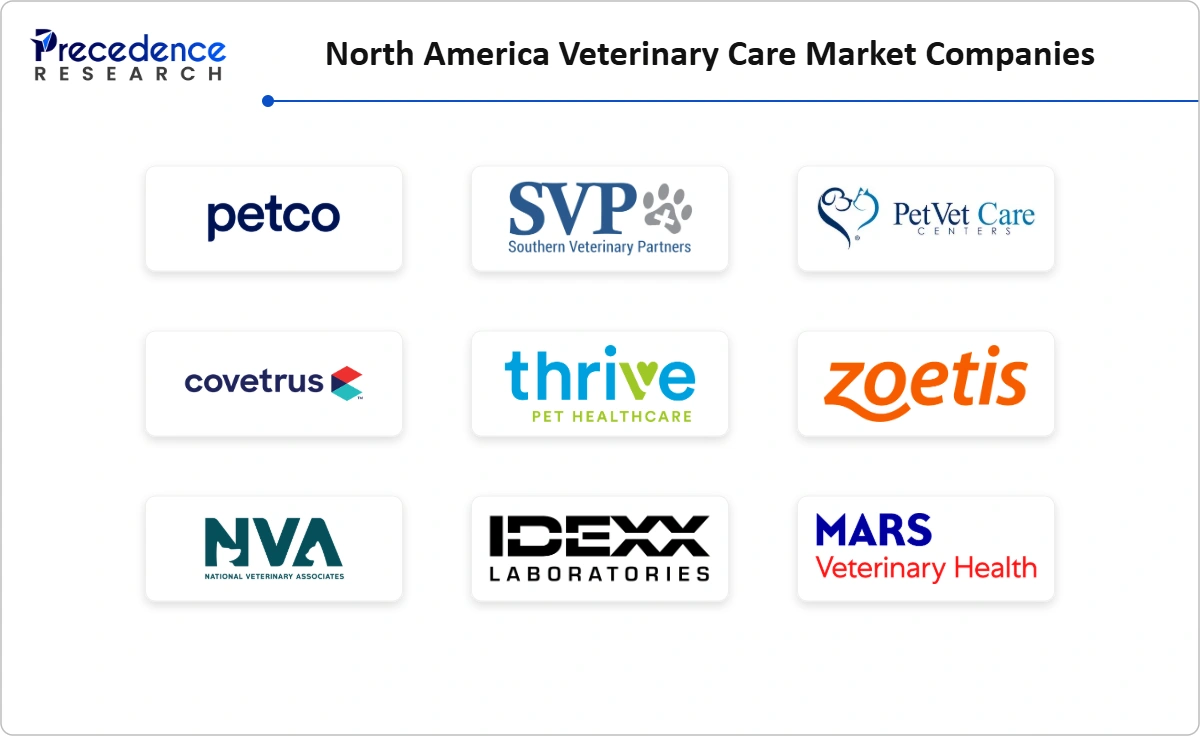
In 2025, the leading companies in the North America veterinary care market included Mars Veterinary Health, IDEXX Laboratories, National Veterinary Associates, Zoetis, Thrive Pet Healthcare, Covetrus, PetVet Care Centers, Southern Veterinary Partners, Petco, and VetPartners / VetStrategy.
Mars Veterinary Health led the market with an estimated 30.42% share of 2025 revenue, followed by IDEXX Laboratories at 9.51% and National Veterinary Associates at 7.60%. Mars Veterinary Health operates veterinary care networks through businesses including Banfield, VCA and BluePearl. IDEXX Laboratories focuses on veterinary diagnostics, reference labs, and practice management software, while National Veterinary Associates operates general and specialty veterinary practices.
Other prominent participants include Zoetis, Thrive Pet Healthcare, Covetrus, PetVet Care Centers, Southern Veterinary Partners, Petco (Vetco), and VetPartners / VetStrategy. These companies compete through animal medicines, vaccines, diagnostics, veterinary hospital networks, practice software, pharmacy services, and general and specialty veterinary care.
The market features large corporate veterinary groups, established suppliers, and independent practices. Key competitive factors include clinic accessibility, veterinarian recruitment, diagnostic capabilities, specialty treatments, preventive care, digital booking, customer retention, and pricing.
Company Snapshots
Mars Veterinary Health: Mars Veterinary Health, headquartered in the United States, is projected to have a 30.42% share of the North America veterinary care market in 2025, offering services through its hospitals such as Banfield, VCA, and BluePearl, which provide general care, preventive services, emergency treatment, and specialty procedures. Based on the Precedence Research Companies Quadrant assessment, the company is positioned as a Leader.
IDEXX Laboratories: IDEXX Laboratories is a U.S.-based company with an estimated 9.51% market share in 2025, offering veterinary diagnostics, reference laboratory services, and practice management software to support veterinary clinical operations. The company is positioned as a Leader.
National Veterinary Associates: National Veterinary Associates is headquartered in the United States. The company held an estimated 7.60% market share in 2025. Its portfolio includes general veterinary practices, specialty hospitals, and equine healthcare services. The company is classified as a Leader.
Zoetis: Zoetis, based in the United States, accounted for an estimated 7.60% share of the market in 2025. Its animal health portfolio includes veterinary medicines, vaccines, diagnostics, and other animal healthcare products. The company is positioned as a Leader.
Thrive Pet Healthcare: Thrive Pet Healthcare, headquartered in the United States, held an estimated 5.70% market share in 2025. Its offerings include general veterinary hospitals and specialized healthcare facilities providing advanced veterinary treatments. The company is categorized as a Leader.
Covetrus: Covetrus, based in the United States, is projected to hold approximately 5.70% market share by 2025, offering veterinary practice software, pharmacy solutions, and animal healthcare distribution services. The company is positioned as a Leader.
PetVet Care Centers: PetVet Care Centers, based in the United States, held an estimated 3.80% market share in 2025. Its portfolio includes general veterinary practices and specialty animal hospitals serving companion animal healthcare requirements. The company is classified as an Innovator.
Southern Veterinary Partners: Southern Veterinary Partners, headquartered in the United States, accounted for an estimated 3.80% share of the market in 2025. Its veterinary network includes general veterinary practices across the southern United States. The company is positioned as an Innovator.
Petco (Vetco): Petco (Vetco), based in the United States, accounted for an estimated 1.90% share of the market in 2025, offering veterinary-related services such as in-store clinics, vaccinations, and preventive healthcare. The company is classified as an Innovator.
VetPartners / VetStrategy: VetPartners / VetStrategy, headquartered in Canada, held an estimated 1.90% market share in 2025. Its relevant market offering includes veterinary hospitals and clinical services across Canada. The company is classified as an Innovator.
Companies Ecosystem
The North America veterinary care ecosystem links product & diagnostic suppliers, distributors & software, care providers, pet insurers & payers, and pet owners & farmers, with each stage contributing to the delivery of veterinary services and animal healthcare products.
| Ecosystem Stage | Role in the Market | Key Companies |
| Product & Diagnostic Suppliers | Supply drugs, vaccines and diagnostics | Zoetis, IDEXX, Elanco, Merck Animal Health |
| Distributors & Software | Supply clinics and run systems | Covetrus, MWI Animal Health, Patterson |
| Care Providers | Deliver veterinary services | Mars Veterinary Health, NVA, Thrive, independent practices |
| Pet Insurers & Payers | Fund care | Trupanion, Nationwide, Healthy Paws |
| Pet Owners & Farmers | Use services | Households, livestock producers |
Sources: Company press releases, expert interviews, secondary sources, Precedence Research database and Precedence Research analysts.
Product & Diagnostic Suppliers: Companies like Zoetis, IDEXX, Elanco, and Merck Animal Health provide essential animal healthcare products, including veterinary medicines, vaccines, diagnostic equipment, and laboratory testing solutions, significantly influencing veterinary treatment standards through quality, research capabilities, and distribution.
Distributors & Software: Distributors and technology providers supply veterinary clinics with medicines, diagnostic products, medical equipment, and operational software. They facilitate inventory management, pharmacy operations, purchasing, and practice administration. Key participants include Covetrus, MWI Animal Health, and Patterson.
Care Providers: Veterinary service providers deliver general consultations, preventive healthcare, diagnostics, surgery, emergency treatment, and specialized animal healthcare. These organizations form the core service-delivery component of the market. Key participants include Mars Veterinary Health, National Veterinary Associates, Thrive Pet Healthcare, and independent veterinary practices.
Pet Insurers & Payers: Insurance providers assist pet owners with veterinary costs through coverage of eligible services, enhancing access to advanced care and increasing treatment utilization. Notable companies in this stage include Trupanion, Nationwide, and Healthy Paws.
Pet Owners & Farmers: Pet owners and livestock producers are the primary customers of veterinary care services of veterinary services, with their healthcare spending, productivity needs, disease prevention, and animal welfare awareness affecting market demand.
Value in the North America veterinary care market flows from upstream animal health product manufacturers and diagnostic suppliers to distributors, software providers, and veterinary service organizations, followed by pet owners and livestock producers. Companies that integrate product supply, diagnostics, veterinary practice networks, pharmacy services, and long-term customer relationships can strengthen their competitive positions and capture a larger share of market value.
Precedence Research Companies Quadrant
The Precedence Research Companies Quadrant positions key participants in the North America veterinary care market by market strength, reflecting revenue scale, market share, and geographic reach, and by innovation and growth strategy, reflecting product portfolio breadth, R&D intensity, and partnerships. Positions reflect each company's estimated 2025 share of the North America veterinary care market and our assessment of its product innovation, portfolio breadth, and partnerships.
Sources: Company press releases, expert interviews, secondary sources, Precedence Research database, and Precedence Research analysts.
Leaders: Mars Veterinary Health, IDEXX Laboratories, National Veterinary Associates, Zoetis, Thrive Pet Healthcare, and Covetrus combine high market share with broad portfolios and strong innovation.
Innovators: PetVet Care Centers, Southern Veterinary Partners, Petco (Vetco), and VetPartners / VetStrategy bring newer technologies and specialised products.
Recent Developments
- February 2026: Cencora and Covetrus agreed to merge Cencora's MWI Animal Health into Covetrus in a deal valuing MWI at USD 3.5 billion, creating a combined animal health distribution, pharmacy and software platform.
North America Veterinary Care Market Segments
By Animal Type
- Companion Animals
- Livestock
By Service
- Preventive & Wellness Care
- Diagnostics & Imaging
- Surgery
- Emergency & Specialty Care
- Dental Care
- Medication Dispensing & Others
By Provider
- Independent Practices
- Corporate Practice Groups
- Mobile, Telehealth & Others
By Country
- U.S.
- Canada
- Mexico
Research Methodology: The North America veterinary care market was estimated using a bottom-up assessment of veterinary service demand across the United States, Canada, and Mexico. The analysis considered companion animal and livestock populations, veterinary clinic and hospital networks, visit volumes, service utilization, average treatment expenditure, and country-level veterinary spending patterns. Companion animal and livestock markets were assessed separately to reflect differences in purchasing behaviour, service requirements and expenditure measurement. Revenue was allocated across preventive and wellness care, diagnostics and imaging, surgery, emergency and specialty care, dental care, and medication dispensing using defined service-level classification rules. Overlapping services were allocated based on the primary billed service or an appropriate revenue-allocation methodology. Veterinary care provider revenues were assessed separately from the revenues of pharmaceutical manufacturers, diagnostic suppliers, distributors and practice software companies. Independent practice revenue was estimated using clinic counts, average practice revenue and service utilization assumptions, while corporate group estimates considered relevant veterinary service operations in the region. The 2026-2035 forecast incorporates changes in companion animal ownership, ageing animal populations, livestock healthcare requirements, veterinary expenditure, insurance penetration, treatment pricing, workforce availability, clinic capacity, corporate consolidation and technology adoption. Country-level estimates account for differences in veterinary infrastructure, service access, purchasing power, and the maturity of veterinary healthcare systems.
Analyst View: The North America veterinary care market is expected to grow steadily until 2035, driven by increased companion animal ownership, pet humanization, and higher spending on veterinary healthcare. Key factors include ageing pets, demand for preventive services, and advanced diagnostics and surgical procedures. Growth opportunities are anticipated in emergency and specialty care, corporate veterinary groups, wellness programs, and digital services, with Mexico showing additional potential due to rising pet ownership. Providers focusing on workforce optimization and advanced care will likely enhance their competitive edge.
Sources and References
- dvm360. "Covetrus and MWI Animal Health agree to merge in $3.5 billion deal". February 2026. News. (Source: dvm360.com)
- 1. Covetrus. "Covetrus and MWI Animal Health to Merge". February 2026. Press Release. (Source: covetrus.com)
For inquiries regarding discounts, bulk purchases, or customization requests, please contact us at sales@precedenceresearch.com
Frequently Asked Questions





Ask For Sample
No cookie-cutter, only authentic analysis – take the 1st step to become a Precedence Research client
 Get a Sample




 sales@precedenceresearch.com
 Schedule a Meeting