



Pelvic Organ Prolapse Market Size, Share and Trends 2026 to 2035
Pelvic Organ Prolapse Market (By Product Type: Synthetic Mesh Implants, Biological Grafts, Suture Kits, Pessaries, Others; By Treatment Type: Surgical Treatment, Non-surgical Treatment; By Prolapse Type: Anterior Compartment Prolapse, Posterior Compartment Prolapse, Others; By End-user: Hospitals, Specialty Clinics, Others) - Global Industry Analysis, Size, Trends, Leading Companies, Regional Outlook, and Forecast 2026 to 2035
Source: https://www.precedenceresearch.com/pelvic-organ-prolapse-market
 Get a Sample
 Table Of Content


What is the Pelvic Organ Prolapse Market Size?
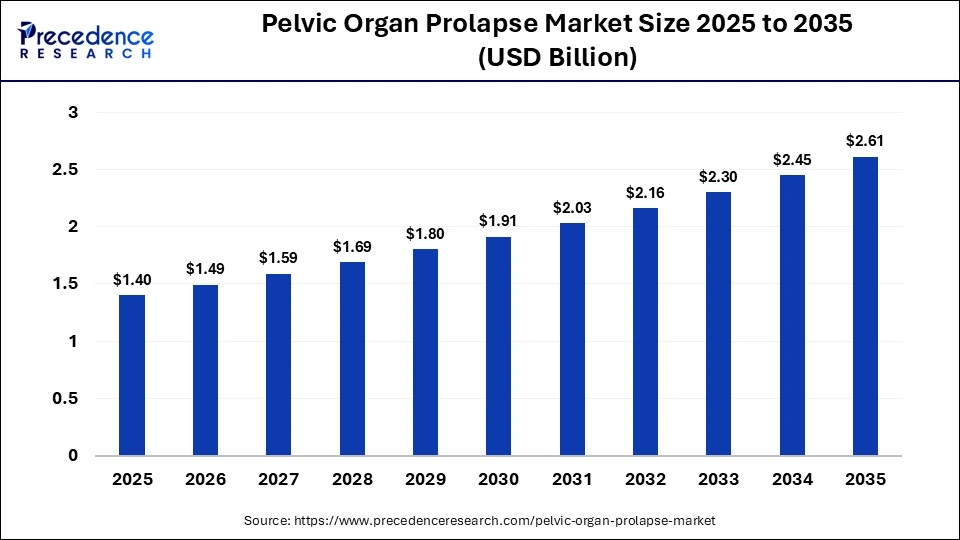
The global pelvic organ prolapse market size accounted for USD 1.40 billion in 2025 and is predicted to increase from USD 1.49 billion in 2026 to approximately USD 2.61 billion by 2035, expanding at a CAGR of 6.42% from 2026 to 2035. The market is growing steadily, driven by the rising prevalence of pelvic organ prolapse (POP) due to aging female populations, technological advancements, the rising adoption of inorganic growth strategies, and the increased awareness of women's health.
Market Highlights
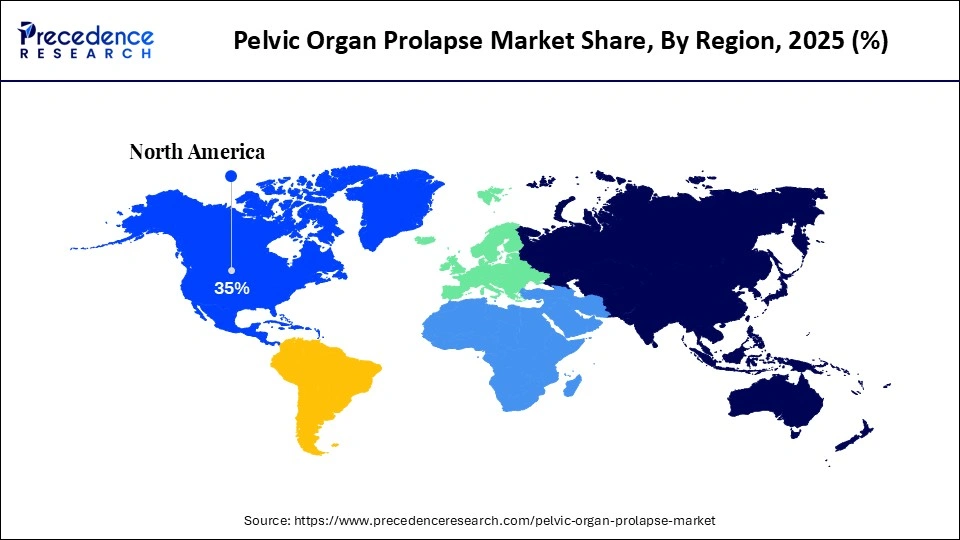
- North America led the pelvic organ prolapse market with the largest share of 35% in 2025.
- Asia-Pacific is expected to expand at the highest CAGR in the market between 2026 and 2035.
- By product type, the synthetic mesh implants segment held a dominant share in the market in 2025.
- By product type, the pessaries segment is expected to grow at the highest CAGR between 2026 and 2035.
- By treatment type, the surgical treatment segment led the market in 2025.
- By treatment type, the non-surgical treatment segment is expected to expand at the fastest CAGR from 2026 to 2035.
- By prolapse type, the anterior compartment prolapse segment held a dominant pelvic organ prolapse market share in 2025.
- By prolapse type, the posterior compartment prolapse segment is expected to grow at a solid CAGR between 2026 and 2035.
- By end-user, the hospitals segment held a dominant share in market in 2025.
- By end-user, the specialty clinics segment is growing at the highest CAGR between 2026 and 2035.
Why is Pelvic Organ Prolapse Emerging as a Critical Health Priority?
The pelvic organ prolapse market encompasses the prevention, diagnosis, treatment, and management of a medical condition in which one or more pelvic organs, such as the bladder, uterus, or rectum, drop from their normal position and press into or protrude through the vaginal canal. It occurs when pelvic floor muscles and supporting tissues weaken, often due to childbirth, aging, or hormonal changes.
The market is driven by a rising aging female population, increasing awareness of pelvic organ disorders, and the growing preference for minimally invasive treatment options. Advancements in surgical mesh alternatives, pessary designs, and non-mesh repair techniques are improving patient outcomes, while better diagnosis and access to gynecological care continue to support market expansion globally.
How Can AI Integration Transform the Pelvic Organ Prolapse Market?
AI integration is transforming the pelvic organ prolapse industry by enhancing accuracy, consistency, and personalization in diagnosis and care. In 2025, research demonstrated that AI-assisted 3D transperineal ultrasound can automate real-time imaging segmentation and precise measurement of pelvic floor structures, lowering operator dependency and improving severity assessments.
AI models using deep learning and hybrid algorithms have shown high diagnostic accuracy in differentiating prolapse types from dynamic ultrasound, aiding early detection and tailored treatment planning. By standardizing imaging interpretation and supporting individualized management strategies, AI improves clinical decision-making and could reduce variability in patient outcomes.
Primary Trends Influencing the Pelvic Organ Prolapse Market
- Personalized and 3D-Printed Pessaries: One major trend is the development of personalized pessary devices tailored to a patient's unique anatomy rather than relying on standard shapes and sizes. Traditional pessaries can be uncomfortable and poorly fitted for many women, leading to improper support, irritation, and discontinuation of use. Advances in 3D-printing technology allow clinicians to fabricate custom pessaries based on precise anatomical measurements, improving comfort, fit, and overall effectiveness.
- Minimally Invasive and Robotic-Assisted Surgical Techniques: Surgical innovation is increasingly focused on minimally invasive approaches, including laparoscopic and robotic-assisted procedures for POP repair. These advanced techniques provide surgeons with enhanced precision and greater visualization during surgery, resulting in less tissue trauma, reduced postoperative pain, fewer complications, and quicker recovery for patients compared with traditional open surgeries. The trend reflects broader adoption of technologies that improve outcomes and patient experience while reducing hospital stays and surgical risks.
- Integrating Regenerative Medicine: Regenerative medicine is emerging as a forward-looking trend in the pelvic organ prolapse market. Scientists are exploring stem cell therapies and tissue engineering to repair and strengthen weakened pelvic floor muscles and connective tissues. By utilizing the body's own healing mechanisms or biomimetic materials, these approaches aim to regenerate damaged tissue rather than merely providing mechanical support. Although still largely experimental, regenerative strategies may eventually reduce the need for synthetic implants and offer more durable, biologically integrated solutions.
- Advanced Diagnostic Tools and Technology Integration: Recent developments also include the use of advanced imaging and artificial intelligence (AI) in diagnosing and planning treatment for pelvic floor disorders. AI-assisted segmentation and 3D reconstruction of pelvic anatomy enhance clinicians' ability to visualize organ displacement and tailor interventions accordingly. These technologies improve diagnostic accuracy and help predict surgical outcomes, which supports personalized treatment planning and could reduce errors or unnecessary procedures.
- Innovative Pessary Designs and Self-Management Devices: Beyond personalization, innovations in pessary design are addressing long-standing challenges with comfort, fit, and usability. New designs include self-removable pessaries and hormone-releasing versions that aim to improve adherence and reduce common complications like vaginal discharge or erosion. Encouraging self-management techniques and patient autonomy is part of this trend, potentially lowering clinic visit frequency and cost while empowering women in their own care.
Market Scope
| Report Coverage | Details |
| Market Size in 2025 | USD 1.40 Billion |
| Market Size in 2026 | USD 1.49 Billion |
| Market Size by 2035 | USD 2.61 Billion |
| Market Growth Rate from 2026 to 2035 | CAGR of 6.42% |
| Dominating Region | North America |
| Fastest Growing Region | Asia Pacific |
| Base Year | 2025 |
| Forecast Period | 2026 to 2035 |
| Segments Covered | Product Type, Treatment Type, Prolapse Type, End-user, and Region |
| Regions Covered | North America, Europe, Asia-Pacific, Latin America, and Middle East & Africa |
Segmental Insights
Product Type Insights
Why the Synthetic Mesh Implants Segment Dominated the Pelvic Organ Prolapse Market?
By product type, the synthetic mesh implants segment dominated the market in 2025, because they provide durable structural support, reduce recurrence rates compared with traditional tissue repairs, and are widely adopted in surgical practice. Their versatility for different prolapse types, surgeon familiarity, and continuous material and design improvements enhance outcomes. Additionally, strong clinical evidence and preferences for long-lasting solutions drive their continued prominence in treatment protocols.
By product type, the pessaries segment is expected to grow at the fastest CAGR in the market between 2026 and 2035, because many women increasingly prefer non-surgical, reversible treatment options that avoid the risks and recovery time of surgery. Pessaries offer immediate symptom relief, are customizable to individual anatomical needs, and come in improved, biocompatible materials that enhance comfort and compliance.
The rising awareness of pelvic health, greater acceptance among clinicians, and broader access through outpatient care and education further boost their adoption. Additionally, demographic shifts like an aging female population with higher POP prevalence drive demand for these conservative management solutions.
Treatment Type Insights
How the Surgical Treatment Segment Dominated the Pelvic Organ Prolapse Market?
By treatment type, the surgical treatment segment held a major revenue share in the market in 2025, because it offers a definitive, long-term correction of advanced prolapse cases, especially when conservative measures fail. Surgeons widely adopt established procedures with proven clinical outcomes. Patients and clinicians often prefer surgery for significant symptom relief and improved quality of life, reinforcing its central role in comprehensive POP management.
By treatment type, the non-surgical treatment segment is expected to grow with the highest CAGR in the market during the studied years, because women increasingly seek less invasive, low-risk options that avoid surgery and long recovery. Greater awareness of pelvic floor health, improvements in pessary design and pelvic therapy techniques, and wider availability of outpatient and home-based care drive its adoption. Emphasis on comfort, quality of life, and conservative management further fuels rapid uptake in diverse patient groups.
Prolapse Type Insights
Which Prolapse Type Segment Dominated the Pelvic Organ Prolapse Market?
By prolapse type, the anterior compartment prolapse segment contributed the biggest revenue share in the market in 2025, because cystocele (bladder descent) is the most common form of POP. Its high prevalence, frequent symptoms like urinary issues, and strong demand for effective management make it a primary focus for clinicians, driving treatment procedures, device use, and clinical attention.
By prolapse, the posterior compartment prolapse segment is expected to witness the fastest growth in the market over the forecast period, because the increasing clinical recognition of rectocele and enterocele prolapses of the rectum and adjacent tissues, driven by risk factors like childbirth, hysterectomy, obesity, and chronic straining, is expanding diagnosis and treatment demand.
Growing awareness of posterior symptoms such as bowel dysfunction and tailored therapies boosts focus on this segment. As clinicians prioritize comprehensive pelvic floor care, including posterior support defects, more women seek effective management, widening its market share.
End-user Insights
Which End-User Segment Led the Pelvic Organ Prolapse Market?
By end-user, the hospitals segment led the global market in 2025, because hospitals offer comprehensive diagnostic services, surgical facilities, and multidisciplinary care under one roof. They handle complex and advanced prolapse cases requiring operative intervention, advanced imaging, and post-operative support. High patient throughput, skilled specialists, and established clinical pathways make hospitals the preferred setting for both surgical and conservative management.
By end-user, the specialty clinics segment is expected to grow with the highest CAGR in the market during the studied years, because dedicated pelvic floor and women's health centers provide focused, expert care with personalized treatment plans. Increased outpatient procedures, improved access to conservative therapies like pessaries and physiotherapy, and rising patient preference for convenient, specialized services drive demand. Enhanced awareness and referral networks further boost specialty clinics' role in managing POP.
Regional Insights
How Big is the North America Pelvic Organ Prolapse Market Size?
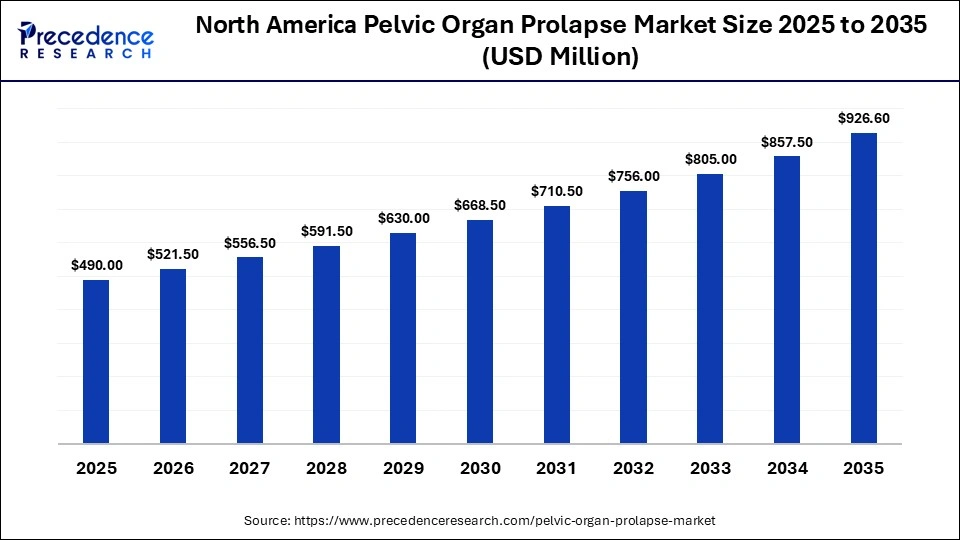
The North America pelvic organ prolapse market size is estimated at USD 490.00 million in 2025 and is projected to reach approximately USD 926.60 million by 2035, with a 6.58% CAGR from 2026 to 2035.
Why North America Dominated in the Pelvic Organ Prolapse Market?
North America dominated the global market with in 2025, due to high awareness of pelvic floor disorders, early diagnosis, and widespread access to advanced healthcare facilities. Strong adoption of surgical and non-surgical treatments, availability of skilled specialists, favorable reimbursement practices, and rapid integration of innovative medical technologies further support higher treatment rates and sustained regional leadership.
What is the Size of the U.S. Pelvic Organ Prolapse Market?
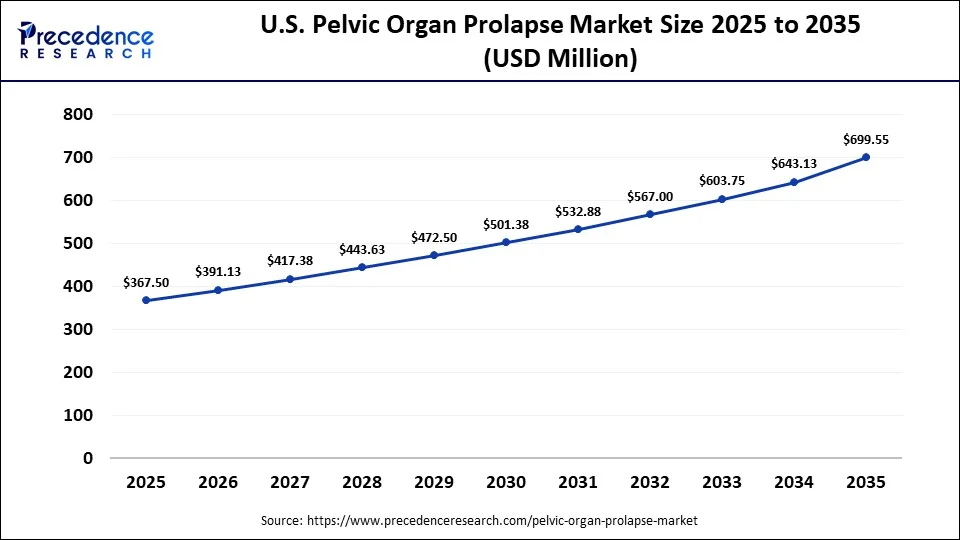
The U.S. pelvic organ prolapse market size is calculated at USD 367.50 million in 2025 and is expected to reach nearly USD 699.55 million in 2035, accelerating at a strong CAGR of 6.65% between 2026 and 2035.
U.S. Pelvic Organ Prolapse Market Trends
In the U.S., the aging female population and lifestyle trends like increased obesity and delayed childbirth are boosting the demand for prevalence and care, as POP incidence rises markedly with age. Surgical interventions remain key, with a substantial lifetime risk of surgery among American women, and continued adoption of both traditional and minimally invasive procedures to improve the quality of life. These demographic and treatment patterns together are shaping strong market growth.
How is Asia-Pacific Growing in the Pelvic Organ Prolapse Market?
Asia-Pacific is expected to grow at the fastest CAGR in the market during the forecast period. In this region, lifestyle factors such as high rates of childbirth, limited postpartum pelvic care, rising obesity, and physically demanding daily activities contribute to an increased POP prevalence.
Growing awareness of women's health, improving healthcare infrastructure, expanding access to minimally invasive surgical options, and the rising adoption of pessaries and conservative therapies are driving rapid market growth. Cultural shifts toward proactive health management further accelerate demand across the region.
China Pelvic Organ Prolapse Market Trends
In China, technological advances are enhancing non‑surgical POP care through improved pelvic floor muscle training, biofeedback, electrical and magnetic stimulation therapies, and tailored pessary use, offering personalized conservative management options. Clinicians are increasingly adopting new treatment technologies and protocols that improve symptom relief and patient comfort. Growing awareness, innovative rehabilitation techniques, and integration of modern therapies support rapid growth in China's market.
Will the Middle East & Africa Grow in the Pelvic Organ Prolapse Market?
In the Middle East & Africa, opportunities for POP growth stem from the rising awareness of women's health issues, investments in healthcare infrastructure, and increasing adoption of advanced diagnostics and minimally invasive surgical technologies, especially in the UAE and other GCC countries. The UAE offers specialized pelvic floor care, multidisciplinary clinics, and robotic and laparoscopic procedures, while expanding public outreach and medical tourism for uro‑gynecological treatments, driving broader market uptake across the region.
Europe Pelvic Organ Prolapse Market
The Europe pelvic organ prolapse is steadily growing as awareness around women's pelvic health improves and healthcare systems increasingly focus on minimally invasive gynecological treatments. Rising life expectancy, increasing obesity rates, growing awareness of women's health issues and advancements in urogynecological care are driving demand across the region. Hospitals and specialty gynecology clinics in the region are increasingly adopting minimally invasive prolapse repair procedures, robotic-assisted surgeries and advanced pelvic floor reconstruction technologies. The region has a strong medical device manufacturing ecosystem supporting innovation in gynecological implants, biologic grafts and pelvic reconstruction systems. High healthcare accessibility and strong public health systems are helping improve diagnosis rates and patient willingness to seek treatment. European healthcare systems are increasingly integrating physiotherapy, rehabilitation, digital pelvic floor training tools and lifestyle-based management approaches into prolapse treatment pathways.
Germany Pelvic Organ Prolapse Market
The Germany pelvic organ prolapse market is growing rapidly and is one of the most advanced and clinically developed women's health markets in Europe. The country's strong healthcare infrastructure, aging female population, high awareness of urogynecological disorders and access to advanced surgical technologies are driving market growth. The country benefits from strong medical device innovation and research collaborations between hospitals and healthcare technology companies. The region is witnessing rising demand for non-surgical management approaches such as pessary devices, pelvic floor rehabilitation and physiotherapy-based treatments. The growing shift toward minimally invasive and mesh-free treatment approaches is reshaping Germany's pelvic organ prolapse market.
Latin America Pelvic Organ Prolapse Market
The Latin America pelvic organ prolapse market is gradually expanding as awareness of women's pelvic health improves across the region and healthcare systems invest more in gynecological care services. The region is witnessing growing demand for minimally invasive treatments, pelvic floor rehabilitation, pessary devices and advanced urogynecological procedures. The region's large population, expanding private healthcare sector and growing number of women's specialty hospitals are supporting strong market growth. International healthcare initiatives and women's health programs are helping improve education, screening and access to gynecological services.
Who are the Major Players in the Global Pelvic Organ Prolapse Market?
The major players in the pelvic organ prolapse market include Boston Scientific, Coloplast, F. Hoffmann-La Roche, Cook Medical, C.R. Bard, Becton Dickinson, Medtronic, Teleflex Incorporated, Olympus Corporation, CooperSurgical, B. Braun Melsungen AG, Johnson & Johnson, Laborie Medical Technologies, Smith & Nephew, Cook Urological, Neomedic, Astellas Pharma, Neotract, Boston Scientific Scitech, and Medline Industries.
Recent Developments in the Pelvic Organ Prolapse Market
- In June 2025, Escala Medical Ltd. raised US$4.5 million to accelerate the distribution of its minimally invasive Mendit POP device. This office-based, non-incision treatment helps lift prolapsed organs with minimal discomfort, and the funding will support device expansion in the U.S. and upcoming European approvals, making advanced POP management more widely accessible.(Source: https://www.prnewswire.com)
- In May 2025, Mediplus expands its POPY pessary line by introducing five new sizes, designed to fit a broader range of female anatomies. This development aims to improve comfort and effectiveness for women opting for non-surgical management of POP, encouraging better adherence and providing personalized support as an alternative to invasive treatments.(Source: https://mediplusuk.com)
Segments Covered in the Report
By Product Type
- Synthetic Mesh Implants
- Biological Grafts
- Suture Kits
- Pessaries
- Others
By Treatment Type
- Surgical Treatment
- Sacrocolpopexy
- Sacrohysteropexy
- Others
- Non-surgical Treatment
- Pessary Management
- Pelvic Floor Physical Therapy
- Others
By Prolapse Type
- Anterior Compartment Prolapse
- Posterior Compartment Prolapse
- Others
By End-user
- Hospitals
- Specialty Clinics
- Others
By Region
- North America
- Europe
- Asia-Pacific
- Latin America
- Middle East & Africa
For inquiries regarding discounts, bulk purchases, or customization requests, please contact us at sales@precedenceresearch.com
Frequently Asked Questions





Ask For Sample
No cookie-cutter, only authentic analysis – take the 1st step to become a Precedence Research client
 Get a Sample




 sales@precedenceresearch.com
 Schedule a Meeting
