



Organ Preservation Market Size, Key Companies, Company Production Capacity, Healthcare Infrastructure Growth, Product Utilization, Regulatory Compliance, Company Expansion Strategies, Company Investment Strategies, and Market Outlook
Organ Preservation Market (By Solution: University of Wisconsin (UW), Perfadex, Custodial HTK, Others; By Organ Type: Kidneys, Heart, Lung, Liver, Others; By Preservation Technique: Static Cold Storage, Normothermic Machine Perfusion, Hypothermic Machine Perfusion, Others) - Global Industry Analysis, Size, Trends, Leading Companies, Regional Outlook, and Forecast 2026 to 2035
Source: https://www.precedenceresearch.com/organ-preservation-market
 Get a Sample
 Table Of Content


What is the Organ Preservation Market Size?
The global organ preservation market size was estimated at USD 290.86 billion in 2025 and is predicted to increase from USD 309.85 billion in 2026 to approximately USD 544.18 billion by 2035, expanding at a CAGR of 6.46% from 2026 to 2035. Rising government initiatives to support organ donation programs and advancements in technology drive the organ preservation market.
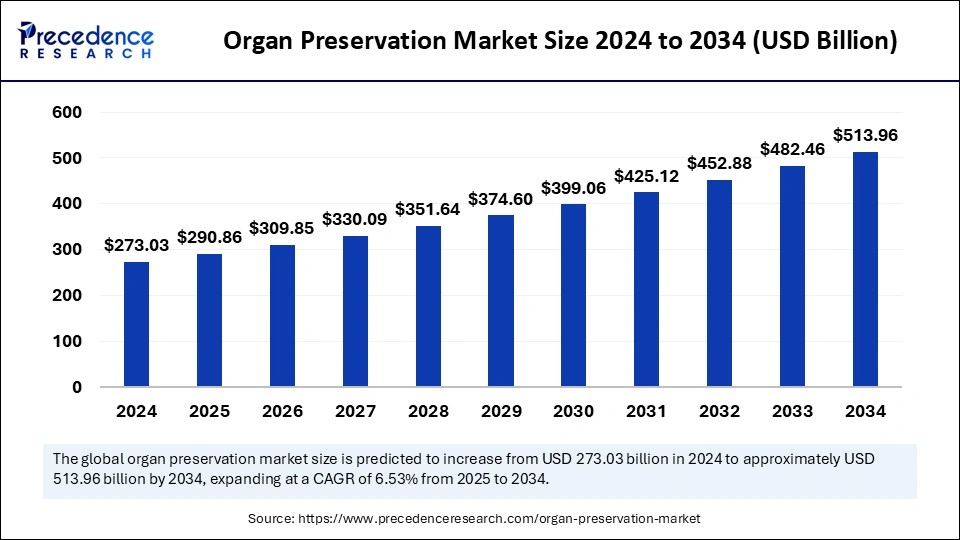
Organ Preservation Market Key Takeaways
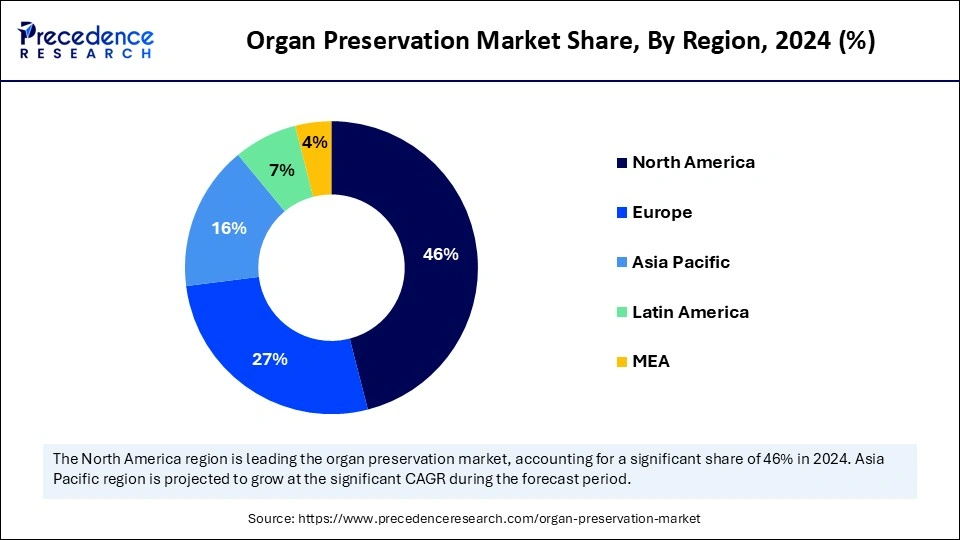
- North America dominated the global market with the largest market share of 46% in 2025.
- Asia Pacific is expected to grow at a notable CAGR of 6.14% during the forecast period.
- By solution, the University of Wisconsin (UW) segment held the largest share of 37% of the market in 2025.
- By solution, the paradox segment is projected to expand at the highest CAGR of 7.43% during the projection period.
- By organ type, the kidneys segment accounted for the largest market share of 35% in 2025.
- By organ type, the heart segment is anticipated to grow at the fastest CAGR of 6.84% during the forecast period.
- By preservation technique, the static cold storage segment captured the biggest market share of 46% in 2025.
- By preservation technique, the normothermic machine perfusion segment is expected to expand at the fastest CAGR of 7.24% between 2026 to 2035.
What is Organ Preservation?
The organ preservation market comprises products, technologies, and services used to preserve organs for extended period for transplantation. The market is experiencing rapid growth due to the rising demand for organ donation. People are becoming more aware of organ donation. Many health organizations are launching campaigns to spread awareness and acceptance of organ donation, leading to a large availability of donor organs.
The growing burden of chronic diseases worldwide is also contributing to market growth since some chronic diseases like diabetes, chronic kidney disease (CKD), and cancer lead to organ failure. As organ failure cases continue to increase due to chronic diseases, serious infectious diseases, and traumatic disorders, the demand for organ donation also increases, and so does the need for efficient preservation solutions. Moreover, governments worldwide are making efforts to improve organ preservation, supporting the market's growth.
Impact of Artificial Intelligence (AI) on the Organ Preservation Market
The integration of artificial intelligence and machine learning algorithms into organ preservation systems creates immense opportunities to manage organ rejection challenges and improve the efficiency and effectiveness of the transplant process. They analyze real-time data from organ preservation systems and optimize parameters like oxygen and temperature levels to enhance the viability of organs and reduce damage during transportation and preservation. AI algorithms can analyze patient data and increase organ compatibility during transplantation. They determine which organs benefit from the perfusion system and which may not be suitable for donation. Overall, AI optimizes organ preservation and transplantation processes by predicting the possibility of organ damage.
Organ Preservation Market Growth Factors
- The increasing use of normothermic machine perfusion (NMP) systems is boosting the growth of the market. NMP systems create physiological conditions by maintaining temperature and oxygen levels and assessing organ quality before transplantation. NMP is quickly gaining popularity, with many transplant centers developing their NMP protocols and kidney viability standards, leading to market expansion.
- Government support for organ preservation to increase access to organ transplantation and improve transplant results contributes to market growth. Governments around the world are implementing necessary protocols to improve the infrastructure to preserve or transport organs and train healthcare professionals for organ transplant surgery.
- The rising prevalence of chronic diseases worldwide fuels the growth of the organ preservation market.
- The growing geriatric population is likely to propel the market growth since older adults are more prone to chronic diseases.
Market Outlook
- Industry Growth Overview: Industry is expanding at a healthy rate because of increasing cases of organ failure, transplantation demand, and the development of preservation technology.
- Sustainability Trends: The industry moves to reusable systems and digital integration, which enhance efficiency and environmental impact.
- Global Expansion: North America has been the highest adopter, with Asia-Pacific being the fastest-growing region, with the enhancement of healthcare infrastructures.
- Major Investors: XVIVO Perfusion AB, TransMedics, Organ Recovery Systems, Bridge to Life, Paragonix Technologies make it a point of investment.
Market Scope
| Report Coverage | Details |
| Market Size by 2035 | USD 544.18 Billion |
| Market Size in 2025 | USD 290.86 Billion |
| Market Size in 2026 | USD 309.85 Billion |
| Market Growth Rate from 2026 to 2035 | CAGR of 6.46% |
| Dominating Region | North America |
| Fastest Growing Region | Asia Pacific |
| Base Year | 2025 |
| Forecast Period | 2026 to 2035 |
| Segments Covered | Solution, Organ Type, Preservation Technique and Regions. |
| Regions Covered | North America, Europe, Asia-Pacific, Latin America, and Middle East & Africa |
Market Dynamics
Drivers
Increasing Government Initiatives
The rise in government initiatives to promote organ donation and transplantation drives the growth of the organ preservation market. Governments worldwide are implementing policies and providing funding to improve infrastructure for organ preservation. Higher funding allocations improve organizational facilities, transportation systems, and maintenance techniques, while regulatory reform streamlines legal frameworks to increase donor registration, approval processes, and participation. Governments worldwide are also launching programs, such as the National Organ Transplant Programme, Ayushman Bharat, Rashtriya Arogya Nidhi, and other state-specific schemes, to promote organ donation so that a large number of organs are made available for the treatment of patients suffering from the last stage of organ failure.
Governments of various nations are also launching training programs for surgeons and other healthcare professionals on organ preservation techniques. By providing specialized training, governments contribute to the development of a skilled workforce capable of handling delicate organs to improve transplant outcomes and address critical supply gaps.
For instance, in 2023, the Department of Health and Social Care, a ministerial department of the Government of the U.K., established an Organ Utilisation Group to collect and analyze evidence regarding the organ transplantation care pathway, make recommendations on how to reduce inequity of access, and drive innovation in organ transplantation. The Organ Utilisation Group works together with colleagues from across the transplant community.
Restraint
High Cost
High costs associated with organ preservation technologies hamper the growth of the organ preservation market. Since organ preservation systems are expensive, not every facility can afford them, especially those with budget constraints. These techniques are complex and require a skilled workforce to handle them, as even a slight change in parameters can cause organ damage. Therefore, the shortage of skilled workforce also hinders market growth. In addition, the shortage of available donor organs affects the market growth.
Opportunity
Advances in Preservation Techniques
Advancements in cryopreservation technology create lucrative opportunities in the organ preservation market by improving long-term storage and transportation efficiency. Innovations in preservation technologies are extending the viability of organs, leading to an increase in the number of successful transplants. The development of cryoprotectants enhances the success of cells, tissue, and organ preservation and ensures the viability of transplantation. Cryopreservation supports banking cells for human leukocyte antigen typing for organ transplantation. Advances in preservation technologies, such as static cold storage, organ machine perfusion, and cryobiology, are optimizing preservation conditions.
Furthermore, robotic systems, such as the Da Vinci surgical system, reduce complications and allow for complex surgeries with faster recovery. The recent advancements in portable organ preservation oxygenated machine perfusion devices extend the allowable preservation time, improving organ viability and expanding donor organ utilization. These modern systems actively perfuse organs with a cold, oxygenated solution, permitting the preservation of donor organs and enabling longer-distance transportation without compromising the viability of the organs.
Segment Insights
Solution Insights
The University of Wisconsin (UW) segment dominated the organ preservation market with the largest share in 2024. This solution has gained immense popularity due to its improved physiological function for organs compared to other solutions, which is a key factor that supported the segment's dominance. UW provides excellent preservation solutions for kidneys and liver. UW preservation allows longer and safer storage of the kidneys (2 days) and liver (18 hours), with higher graft survival rates and a lower damage rate.
The perfadex segment is likely to expand at the highest CAGR during the projection period, as perfadex is the gold standard for lung preservation. This solution reduces the chances of organ damage. It has become a predominant maintenance solution for use in endothelium-rich organs.
Preservation Technique Insights
The static cold storage segment accounted for the largest market share in 2024. This is mainly due to the increased adoption of this technique due to its ability to induce hypothermia, which reduces the kinetics of metabolic activities in organs. This technique also provides a simple and effective way to preserve and transport organs. Static cold storage is a cheaper alternative to other methods.
The normothermic machine perfusion segment is projected to expand at the fastest rate in the coming years. Normothermic sanguineous oxygenated perfusion is a superior preservation method compared to simple cooling of UW solutions. Furthermore, perfusion assesses the graft's vitality before organ transplantation.
Organ Type Insights
The kidney segment dominated the organ preservation market by capturing the largest share in 2024. This is mainly due to the increased number of kidney transplants as a result of the increased number of cases of CKD. Kidney transplants extend and improve the lifespan of people with kidney disease in the final stages. Most patients enjoy a better quality of life, no longer need dialysis, and have higher energy levels and easier work and travel after the kidney transplantation.
The heart segment is expected to grow at the fastest rate during the forecast period. The growth of segment can be attributed to the rising prevalence of heart diseases. Some heart diseases like advanced heart failure, arrhythmia, and cardiomyopathy require heart transplants.
Regional Insights
What is the U.S. Organ Preservation Market Size?
The U.S. organ preservation market size was exhibited at USD 115.45 billion in 2026 and is projected to be worth around USD 207.13 billion by 2035, growing at a CAGR of 6.69% from 2026 to 2035.
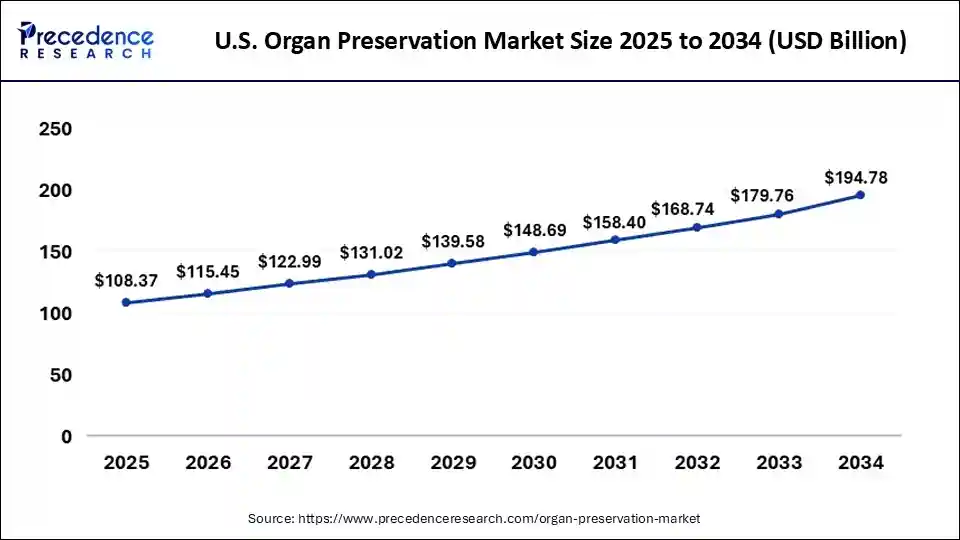
North America dominated the organ preservation market with the largest share in 2024. This is mainly due to the increased support from the federal government for organ preservation and transplantation. For instance, in August 2024, the Health Resources and Services Administration (HRSA) announced that for the first time in the 40-year history of the Organ Procurement and Transplantation Network (OPTN), the OPTN Board of Directors, the governing Board that develops national organ allocation policy, is now discretely incorporated and independent from the Board of long-time OPTN contractor, the United Network for Organ Sharing (UNOS). High organ donation and transplantation rates in North America are due to the increasing prevalence of chronic diseases, the aging population, and rising traumatic injury from motor vehicles.
In the U.S., there is a rapid development of novel preservation technologies for donor organs. In addition, the increased number of organ transplant procedures supported regional dominance. There were about 46,632 organ transplants performed by both living and deceased donors in 2023. This shows an 8.7% increase over 2022 and a 12.7% increase over 2021. This region is at the forefront of advanced healthcare facilities due to the strong presence of sophisticated healthcare technologies, contributing to regional market growth.
Asia Pacific is expected to witness the fastest growth in the coming years. The rising health awareness leads to increased demand for healthcare services, pressuring regional governments to increase funding to improve the healthcare system. The rising prevalence of chronic diseases and the growing aging population contribute to organ preservation market expansion. Governments of various Asian countries are launching programs to support organ donation and transplantation. For instance, India's Transplantation of Human Organs & Tissues Act (THOTA) regulates the storage and transplantation of human organs and tissues for therapeutic purposes and for the prevention of commercial dealings in human organs and tissues.
India Organ Preservation Market Trends
India is the fastest-growing state in the Asia-Pacific region due to the enhancement of its health care systems and organ transplantation. The government investments contribute to complicated processes and logistics. Education drives up acceptance of donations. Medical tourism also contributes to the desire to have good preservation solutions for organs and the development of modern technologies.
What Are the Driving Factors of The Organ Preservation Market in Europe?
Europe is expected to grow at a remarkable rate during the forecast period. Europe is displaying good growth with the existing transplant networks and standardized procedures. Supply is reinforced by the government-supported donation programs. The growth in the usage of normothermic and hypothermic machine perfusion opens possibilities of superior preservation technologies in large healthcare systems.
Germany Organ Preservation Market Trends
Germany is advantaged by a strong healthcare sector and the aging of its population, which creates more demand for transplants. Preservation innovation is supported by strong standardization and joint research. The University of Wisconsin solution is still highly adopted, leading to decreased tissue damage in kidney and liver preservation.
Value Chain Analysis of the Organ Preservation Market
- R&D: Process of discovery and enhancement of preservation formulas by way of targeted innovation and initial-stage era experimental experimentation actions.
Key players: XVIVO Perfusion, TransMedics, 21st Century Medicine, OrganOx - Clinical Trials and Regulatory Approvals: The safety and efficacy data are produced in human studies, and then official market approval is granted by the health authority.
Key players: Bridge to Life (VitaSmart), TransMedics (OCS), XVIVO - Distribution to Hospitals, Pharmacies of Organ Preservation: Storage and logistics: make sure that the manufacturers deliver their products to transplant centers on time.
Key Players: Organ Procurement Organizations (OPOs), TransMedics, XVIVO
Organ Preservation Market Top Companies
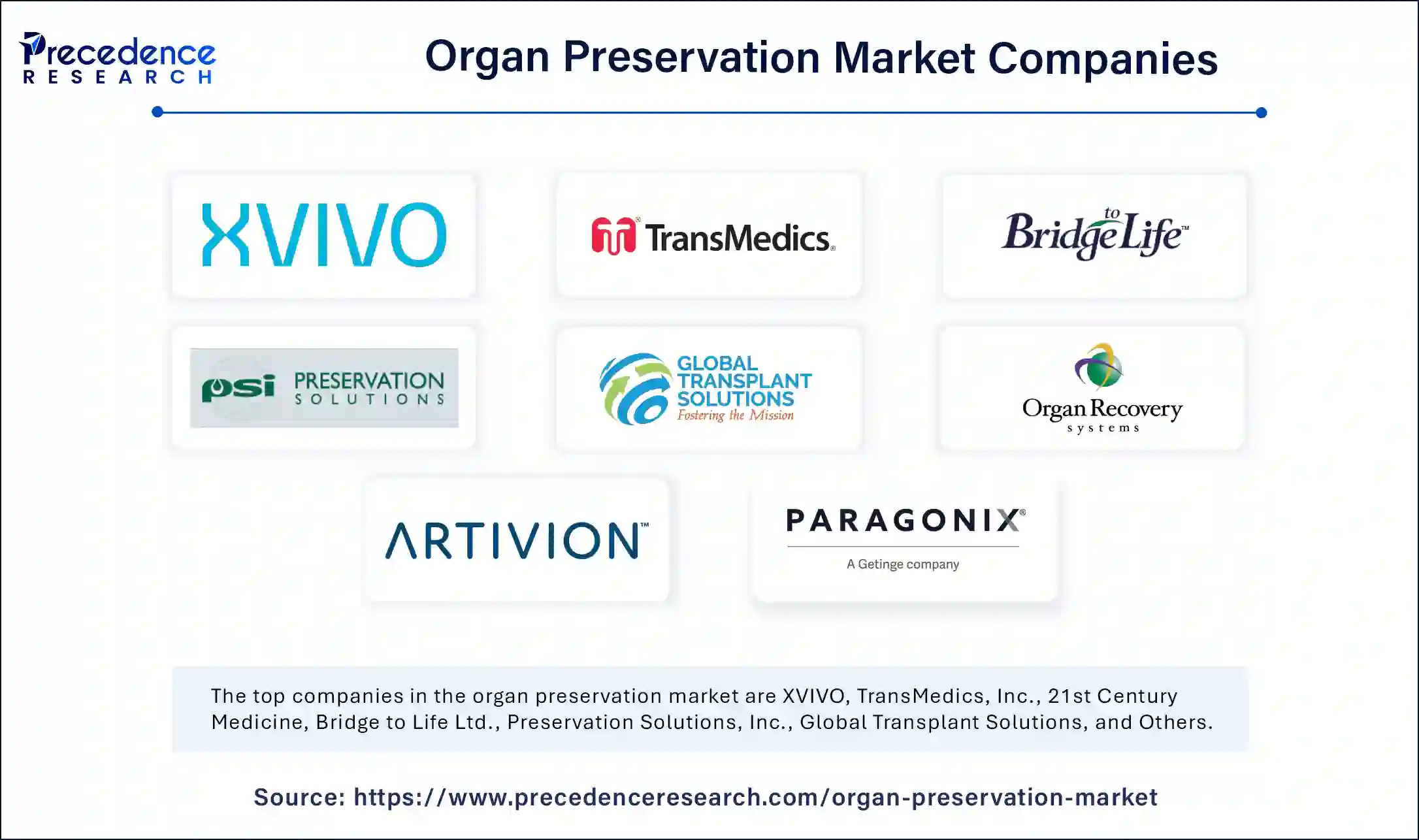
- XVIVO: XVIVO offers ex vivo machine perfusion, hypothermic and normothermic organ preservation, and solutions.
- TransMedics, Inc.: TransMedics, Inc. has the organ care system that facilitates the provision of normothermic perfusion and continuous organ monitoring during the transportation process.
- 21st Century Medicine: The 21st Century Medicine works on perfusates and protocols that could make it possible to vitrify organs, tissues, and cells in the long term.
Other Major Key Players
- Bridge to Life Ltd.
- Preservation Solutions, Inc.
- Global Transplant Solutions
- Organ Recovery Systems
- CryoLife, Inc. (Artivion, Inc)
- Paragonix Technologies, Inc (Getinge)
Recent Developments of the Market
- In December 2025, Science Corporation, founded by Max Hodak in 2021, is creating a new division focused on prolonging human organ life by enhancing current perfusion systems. The system is designed to maintain blood circulation in non-functional organs, based in Alameda, California. (Source: https://startupnews.fyi )
- In September 2025, Apollo Proton Cancer Centre introduced the Apollo Rectal Cancer Programme, focusing on rectal preservation using advanced technologies like chemoradiotherapy, proton therapy, and robotic surgery. The programme provides comprehensive care and improves outcomes for rectal cancer patients. (Source: https://www.apollohospitals.com )
- In October 2024, Bridge to Life Ltd, a global market leader in organ preservation solutions and machine perfusion technologies, and ULS Coimbra, one of the largest hospitals in Portugal with a legacy of novel service in organ transplantation, announced a partnership to improve the preservation of livers awaiting transplantation and improve the quality of life for transplant recipient patients.
- In September 2024, XVIVO Perfusion AB announced an agreement to acquire the transplant clinical workflow automation business, which comprises the development and distribution of the FlowHawkTM software platform from Healthtech Solutions Inc. dba OmniLife.
- In August 2024, Getinge announced an agreement to acquire Paragonix Technologies, Inc., a leading organ transport products and services company in the U.S.
Segments Covered in the Report
By Solution
- University of Wisconsin (UW)
- Perfadex
- Custodial HTK
- Others
By Organ Type
- Kidneys
- Heart
- Lung
- Liver
- Others
By Preservation Technique
- Static Cold Storage
- Normothermic Machine Perfusion
- Hypothermic Machine Perfusion
- Others
By Geography
- North America
- Europe
- Asia Pacific
- Latin America
- Middle East & Africa (MEA)
For inquiries regarding discounts, bulk purchases, or customization requests, please contact us at sales@precedenceresearch.com
Frequently Asked Questions
Tags





Ask For Sample
No cookie-cutter, only authentic analysis – take the 1st step to become a Precedence Research client
 Get a Sample
.webp)



 sales@precedenceresearch.com
 Schedule a Meeting
