



Pharmaceutical Drug Delivery Market Size, Key Companies, Company Market Share, Production Capacity, Healthcare Infrastructure Growth, Product Utilization, Regulatory Compliance, Sales Analysis, and Investment Trends
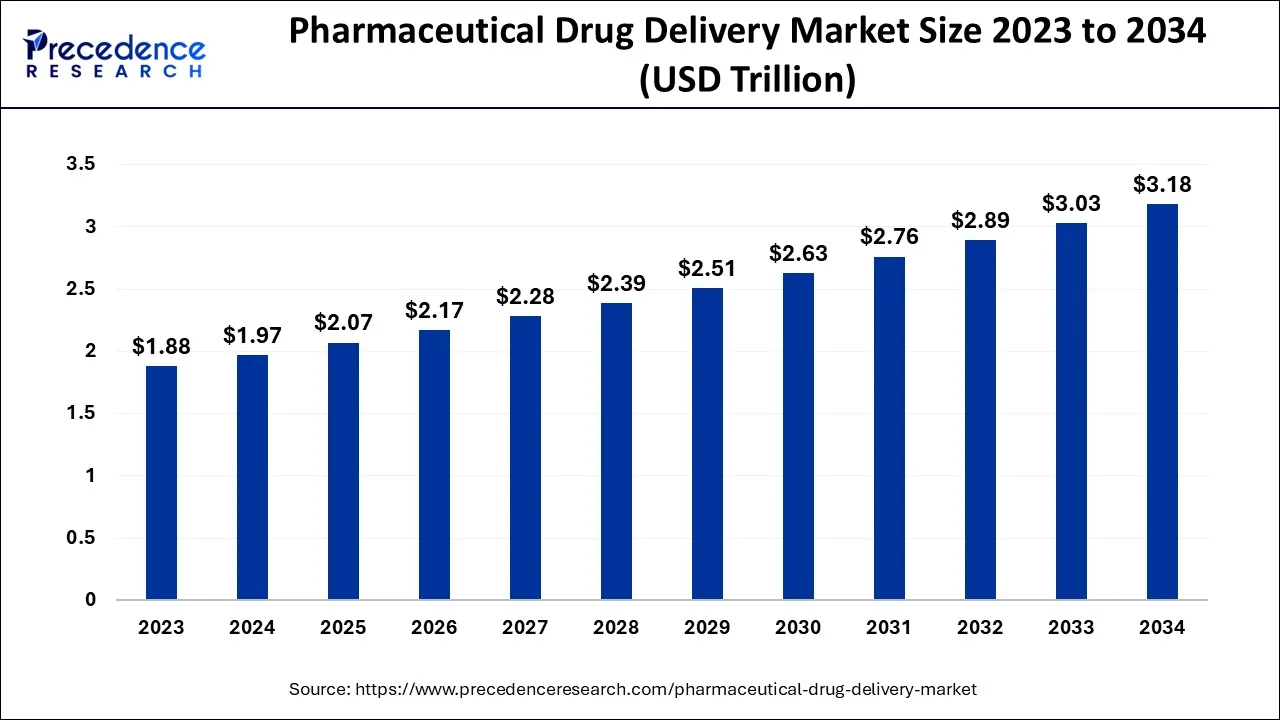
The global pharmaceutical drug delivery market is projected to grow from USD 2.17 trillion in 2026 to USD 3.32 trillion by 2035, registering a CAGR of 4.84%. Growth is driven by the rising prevalence of chronic diseases, increasing demand for biologics and personalized medicine, advancements in drug delivery technologies, expanding biopharmaceutical R&D, and AI-powered innovations that optimize formulation design, targeted drug delivery, predictive manufacturing, and patient-specific therapies. North America dominated the market in 2025 due to its advanced healthcare infrastructure, strong pharmaceutical R&D, and widespread adoption of innovative drug delivery systems, while Asia Pacific is expected to witness the fastest growth, supported by expanding healthcare access, rising biotechnology investments, increasing chronic disease burden, and growing adoption of advanced drug delivery solutions.
Source: https://www.precedenceresearch.com/pharmaceutical-drug-delivery-market
 Get a Sample
 Table Of Content


What is the Pharmaceutical Drug Delivery Market Size?
The global pharmaceutical drug delivery market size was calculated at USD 2.07 trillion in 2025 and is predicted to increase from USD 2.17 trillion in 2026 to approximately USD 3.32 trillion by 2035, expanding at a CAGR of 4.84% between 2026 and 2035. The growing demand for advanced drug delivery devices, increasing research investments, and advances in nanotechnology drive the market.
Market Highlights
- North America dominated the pharmaceutical drug delivery market in 2025.
- By route of administration, the oral segment dominated the market in 2025.
- By route of administration, the topical segment type is expected to witness a significant increase in its market revenue during the predicted timeframe.
- By application, the cancer companies segment led the market in 2025.
- By application, the cardiovascular segment is expected to increase its market share during the forecast period.
- By end user, the hospitals segment will gain a significant market share over the forecast period.
Market Size and Forecast
- Market Size in 2025: USD 2.07 Trillion
- Market Size in 2026: USD 2.17 Trillion
- Forecasted Market Size by 2035: USD 3.32 Trillion
- CAGR (2026-2035): 4.84%
- Largest Market in 2025: North America
- Fastest Growing Market: Asia Pacific
Market Overview
The pharmaceutical drug delivery market refers to research, manufacturing, and distribution of drug delivery systems to administer pharmaceutical compounds to achieve a therapeutic effect. Several drug delivery systems include liposomes, proliposomes, microspheres, gels, prodrugs, and cyclodextrins. These systems enable immediate release, non-immediate, site-specific, and sustained release. They enhance the performance of specific drugs by increasing the effectiveness, safety, and patient compliance.
Artificial Intelligence Reshaping the Future of Pharmaceutical Drug Delivery
Artificial Intelligence is the one to thank for the turning point in the drug delivery market of the pharmaceutical sector through its contribution in the areas of formulation design, process optimization, and patient-specific therapy creation. Drug behavior prediction, stability improvement, and guidance to modern delivery systems such as nanocarriers and 3D-printed pills are some of the applications that AI can use when analyzing enormous datasets. In the area of quality control, it will detect deviations, support through predictive maintenance, and thus, prevent production errors. AI will also be in charge of logistics and supply chains, as it will do demand forecasting and manage the inventory efficiently. AI in clinical applications means real-time monitoring and adaptive dosing, making it certain that the therapies are in line with the requirements of the individual patients. The technology behind AI gives companies the benefit of higher productivity, lower costs, faster development, and precision in pharmaceutical delivery.
Pharmaceutical Drug Delivery Market Growth Factors
- The rising occurrence of chronic diseases such as diabetes, heart problems, and cancer is the primary factor driving the demand for new-age drug delivery systems to be developed.
- Novel techniques in formulation and device design are making it possible to treat patients with greater accuracy, higher effectiveness, and better compliance.
- The biopharmaceutical innovators' increasing R&D activities and financial support are opening up new possibilities for delivery methods in the areas of different therapeutic drugs.
- The rising trend of self-administration and non-invasive drug delivery methods like inhalers and injectors is a favorable factor for the market growth.
- The industry is witnessing global growth and innovation due to strategic partnerships, acquisitions, and product launches among the leading pharmaceutical and medical device companies.
Pharmaceutical Drug Delivery Market Outlook
- Industry Growth Overview: The pharmaceutical drug delivery market is expected to grow steadily between 2026 and 2035 due to rising demand for biologics, personalized medicine, and innovative delivery technologies. The increase in chronic conditions like diabetes, cardiovascular disease, and cancer drives the need for patient-friendly and targeted delivery systems.
- Innovation and Sustainability Trends: Innovation remains central to the market, with companies emphasizing patient-centered, precise, and minimally invasive drug delivery solutions. Microneedle patches, 3D-printed drug devices, and nanocarrier-based formulations are increasingly gaining popularity. The increasing importance of sustainability trends is linked to biodegradable polymers, recyclable device components, and sustainable packaging, which now serve as differentiating factors. This adoption is happening worldwide through regulatory incentives and consumer pressure to develop greener and safer solutions.
- Global Expansion: Leading pharmaceutical companies are strategically expanding manufacturing, R&D, and distribution networks to meet regional demand and comply with regulations. Novartis, Roche, Sanofi, and AstraZeneca are investing heavily in Asia-Pacific, Latin America, and Eastern Europe to serve growing populations and improve access to better therapies. Supply chain innovations and digital health integration are also helping to reach the entire world and quickly deliver drug solutions.
- Major Investors: Investment in the pharmaceutical drug delivery market has increased as private equity firms, venture capitalists, and strategic corporate investors recognize its long-term potential. Financial players, including Blackstone, KKR, Carlyle Group, and others, are showing interest in CDMOs, specialized delivery device manufacturing, and biotech startups. The influx of capital is driving growth in research and development, expanding production capacities, and promoting the adoption of technology both in mature and emerging markets.
- Startup Ecosystem: The pharmaceutical drug delivery startup ecosystem is rapidly evolving, driven by venture capital and government-supported innovation programs. Next-generation drug delivery methods like microneedles, lipid nanoparticles, inhalable biologics, and wearable drug delivery devices are being developed by startups. The ecosystem is becoming a crucial source of innovation, providing disruptive solutions that complement traditional drug delivery methods and address unmet medical needs worldwide.
Market Scope
| Report Coverage | Details |
| Market Size in 2025 | USD 2.07 Trillion |
| Market Size in 2026 | USD 2.17 Trillion |
| Market Size in 2035 | USD 3.32 Trillion |
| Growth Rate from 2025 to 2035 | CAGR of 4.84% |
| Largest Market | North America |
| Base Year | 2025 |
| Forecast Period | 2026 to 2035 |
| Segments Covered | Route of Administration, Application, End User, and Region |
| Regions Covered | North America, Europe, Asia-Pacific, Latin America and Middle East & Africa |
Market Dynamics
Driver
Growing Research Activities
The market growth is driven by growing research activities, leading to the development of innovative drugs. The rising prevalence of chronic disorders and the increasing demand for targeted therapeutics enable researchers to develop novel drug delivery systems that are compatible with particular pharmaceutical compounds. Ongoing research activities focus on developing nano-based and surface-modified carriers for advanced delivery of pharmaceuticals.
Restraint
High Toxicity of Nanoparticles
One of the major challenges faced by the market is the toxicity of particles used in delivery systems. Some nanoparticles may be harmful to human health and to the environment. Several in vivo and in vitro experiments have proved the harmful effects of silver, gold, silica, and titanium used as nanoparticles. This ultimately reduces the widespread use of these nanoparticles in drug delivery systems.
Opportunity
Development of Extended-Release Drug Delivery Systems
The market future is promising, driven by the development of advanced controlled-release systems, from long-acting injectables to implantable drug depots. These systems maintain drug levels for an extended period in the blood, improving patient adherence and outcomes. They reduce dosing frequency for chronic conditions, ensuring consistent treatment and minimizing patient intervention.
Segments Insights
Route of Administration Insights
The oral segment dominated the market in 2025. The oral drug delivery is considered to be the most convenient and most common route of administration across the globe. It is non-invasive, cheap, pain-free, and self-administered type of delivery where no sterile precautions are involved. Furthermore, the introduction of different innovative drugs that can provide effective treatment of the various non-communicable diseases with low or no side-effects is significantly driving the growth of this segment. Moreover, the growing popularity of various biopharmaceutical drugs in the form of tablet and capsules is expected to have a positive impact on the growth of the oral route of administration segment.
The topical is estimated to be the fastest-growing segment during the forecast period. The benefits associated with the topical route of administration are non-invasiveness, ease of use, convenience, and painless delivery that may boost its adoption in the forthcoming years and drive the market growth. The introduction of time-controlled system in the topical route of administration is another factor that has potential to grab the attention of the consumers.
Application Insights
The cancer segment dominated the global pharmaceutical drug delivery devices market in 2025. This is attributable to the rising prevalence of cancer among the population. According to the International Agency for Research on Cancer, in 2020, around 19.3 million new cancer cases and 10 million cancer deaths were reported across the globe. The global cancer cases are estimated to grow by 47% from 2020 to 2040. It is expected that 28.4 million cases will be recorded in 2040, globally. Breast cancer, lungs cancer, bowel cancer, and womb cancer are the most prominent types of cancer that affects the people.
The cardiovascular segment is estimated to be the fastest-growing segment during the forecast period. This is attributed to the rising focus of the pharmaceutical companies towards the development of drugs for curing cardiovascular diseases. Moreover, the increasing prevalence of cardiovascular diseases owing to unhealthy food habits, rising obesity, and growing consumption of alcohol and physical inactivity is fueling the number of cardiovascular diseases related deaths. According to the World Health Organization, CVDs accounted for 32% of the global deaths in 2019.
End User Insights
The hospitals segment accounted largest revenue share in 2025. This is attributed to the higher penetration of the private and public hospitals across the global. The rising investments by the government and the corporate sector in the development of the advanced hospitals have propelled the growth of this segment. Moreover, the rising number of hospital admissions owing to the growing burden of diseases is fueling the growth of this segment across the globe.
The home healthcare segment is estimated to be the most opportunistic market during the forecast period. The growing geriatric population, rising personal disposable income, rising awareness regarding hospital acquired infections, and rising healthcare expenditure are the major factors that are expected to drive the growth of the home healthcare segment.
Regional Insights
How is North America leading in the Pharmaceutical Drug Delivery Market?
The pharmaceutical drug delivery market is mainly ruled by North America, which is backed by strong R&D infrastructure, advanced healthcare facilities, and a very good rate of adoption of innovative drug delivery systems. The region has the advantage of big pharmaceutical companies, good support from the government in terms of regulations, and the increasing need for devices for self-administration. The continuous technological innovations and the incorporation of smart delivery solutions have made the region continue to be the leader in market growth and innovation on a global scale.
United States Pharmaceutical Drug Delivery Market Trends:
The United States holds the first position in the global pharmaceutical drug delivery market due to its strong R&D infrastructure, high healthcare spending, and being the first to adopt innovative therapies. Market growth is mainly due to the increasing demand for home-based care, injectable drugs, and personalized delivery systems. Continuous advancements in biologics, nanotechnology, and the integration of digital health ensure that the U.S. will remain a major hub of pharmaceutical delivery innovation and commercialization for the foreseeable future.
How is the Opportunistic Rise of Latin America in the Pharmaceutical Drug Delivery Market?
The Latin American market is growing as pharmaceutical drug delivery solutions gain traction, particularly in the treatment of oncology, diabetes, and autoimmune diseases. Auto-injectors and prefilled syringes are becoming increasingly popular due to their safety and ease of use for patients. The subcutaneous injectable segment is expected to drive future growth, supported by rising home healthcare adoption, increasing patient awareness, and the expansion of private healthcare facilities in the region.
How is Asia-Pacific performing in the Pharmaceutical Drug Delivery Market?
Asia Pacific is estimated to be the most opportunistic, becoming the most rapidly growing region because of the expanding access to healthcare, government support initiatives, and increased R&D investments. The region's attention to making solutions affordable and its adoption of modern delivery systems in the major markets of China and India upgrade its competitiveness. The growing focus on the biopharmaceutical sector and the incorporation of technology make Asia Pacific's presence in the global pharmaceutical drug delivery market even stronger.
China Pharmaceutical Drug Delivery Market Trends:
China's pharmaceutical drug delivery market is surging fast due to massive government backing, a hike in healthcare investment, and several super biopharma R&D. The country's manufacturing capability and technology adoption in nanomedicine and controlled-release systems are bottling up the growth rate. Today's just-in-time policies and a large patient base pull out China as an important part of global innovation and delivery of pharmaceuticals.
What are the driving factors of the Pharmaceutical Drug Delivery Market in Europe?
Europe is a considerable market in view of its modern medical services, an increase in the number of elderly persons, and the strong focus on therapies that are centered on patients. The main driver of the regional development is the growing acceptance of autoinjectors, wearable injectors, and eco-friendly packaging devices. The alliances that are being made between drug manufacturers and academic organizations, together with the strict regulations, ensure that there will be constant technological progress, and at the same time, the safety of the products is being monitored across the pharmaceutical drug delivery industry.
United Kingdom Pharmaceutical Drug Delivery Market Trends:
The United Kingdom is a leader in the European market for pharmaceutical drug delivery, and its strong biologics sector and high investment in medical innovation have been its mainstay. By focusing on personalized medicine, advanced injectables, and smart drug delivery systems, the UK is ramping up its competitiveness. The collaboration of research institutions, pharma companies, and healthcare providers guarantees the UK's continued leadership in delivering efficient and patient-friendly drug delivery solutions.
Brazil Pharmaceutical Drug Delivery Market Trends
In the past year, injectable formulations were primarily used in Brazil for the treatment of oncology, diabetes, and autoimmune diseases. Auto-injectors and prefilled syringes have gained popularity due to improved patient compliance, ease of use, and higher adoption rates in hospitals. Collaborations between multinational pharmaceutical companies and local distributors are expected to enhance supply chains and ensure timely delivery of these therapies.
What Potentiates the Growth of the Middle East and Africa Pharmaceutical Drug Delivery Market?
The growth of the Middle East and Africa pharmaceutical drug delivery market is driven by increasing demand for diabetes, oncology, and vaccine treatments, along with widespread adoption of prefilled syringes and infusion systems in hospitals and specialized clinics. Collaborations between international drug delivery companies and local distributors are also accelerating market penetration and improving access to therapies across the region.
Saudi Arabia Pharmaceutical Drug Delivery Market Trends
Saudi Arabia lead the market in the MEA, driven by increasing usage of Injectable-based formulations in diabetes care. Infusion-based biologics and prefilled syringes were commonly used in hospitals and specialized clinics. Joint ventures between international pharmaceutical companies and local distributors are expected to accelerate market penetration and ensure timely product supply.
Investment Landscape of the Pharmaceutical Drug Delivery Market
- In May 2026, PCI Pharma Services announced a series of major infrastructure investments to expand its sterile fill-finish and advanced drug delivery capabilities. (Source: https://manufacturingchemist.com)
- In January 2026, Enable Injections announced that Sanofi committed for a $30 million investment to accelerate Enable's manufacturing build-out that develops the enFuse syringe transfer system for drug delivery. (Source: https://www.drugdeliverybusiness.com)
- In January 2026, BD invested $110 million to expand its prefillable syringe production, accelerating biologic and GLP-1 drug delivery and supporting pharmaceutical reshoring in the U.S. (Source: https://www.drugdeliverybusiness.com)
- In October 2025, Sharp announced an investment of $100 million across the U.S. and European facilities to expand its capacity for injectable and oral solid-dose medications. (Source: https://www.pharmtech.com)
Value Chain Analysis
- R&D: It assesses the entire process of drug discovery, lead optimization, and preclinical testing to pinpoint areas where cost can be reduced and, therefore, development timelines can be shortened.
Key Players: Merck & Co., Roche, Johnson & Johnson (Janssen), Pfizer - Clinical Trials and Regulatory Approvals: It innovates trial designs, enhances patient recruitment, and eases regulatory pathways, leading to quicker market access and lower costs.
Key Players: IQVIA, Labcorp, Parexel, The U.S. Food and Drug Administration (FDA) - Formulation and Final Dosage Preparation: It invests in production capabilities, wastes less, and applies quality control uniformly in the final drug formulation.
Key Players: Johnson & Johnson, Pfizer, Novartis, AbbVie - Packaging and Serialization: It applies serialization to products to safeguard them and trace their origin as a measure against fakes and assurance of regulatory compliance.
Key Players: West Pharmaceutical Services, AMCOR PLC, AptarGroup, Gerresheimer AG - Distribution to Hospitals, Pharmacies: It arranges logistics, storage, and transport in a more effective way to make sure there is always a supply and to lower the cost of distribution.
Key Players: Cardinal Health, McKesson Corporation, AmerisourceBergen - Patient Support and Services: It nurtures compliance and results with the help of education, aid programs, and post-market patient engagement initiatives.
Key Players: Novartis (GIPAP), Pfizer (PAP India), Sanofi (Saath 7), Roche (Blue Tree Program)
Top Companies in the Pharmaceutical Drug Delivery Market & Their Offerings
- Pfizer Inc.: As one of the world's largest pharmaceutical companies, Pfizer develops and manufactures innovative drug delivery systems including oral tablets, injectable formulations, mRNA-based delivery platforms, and sustained-release technologies.
- Novartis AG: Novartis focuses on advanced drug delivery solutions such as targeted therapies, inhalation systems, and injectable biologics, with a strong pipeline in oncology and ophthalmology.
- Johnson & Johnson: J&J provides a wide range of drug delivery technologies spanning transdermal patches, inhalation devices, oral solids, and combination products for chronic disease management.
- Sanofi: Sanofi is active in injectable and oral delivery platforms, including pen injectors, prefilled syringes, and specialty drug delivery solutions for diabetes, oncology, and vaccines.
- Bayer: Bayer develops oral, injectable, and transdermal delivery systems, with a focus on cardiovascular, oncology, and specialty care medications.
Other Pharmaceutical Drug Delivery Market Companies
- Becton, Dickinson And Company
- F. Hoffmann-La Roche AG
- GlaxoSmithKline Plc
- Merck & Co., Inc.
- 3M Company
Recent Developments
- In April 2025, DDL launched a GMP lab for drug-device combination product testing, bolstering its capabilities to offer regulatory-compliant testing services to the pharmaceutical and biotech industries. (Source: https://www.contractpharma.com)
- In April 2025, Qualthera Health Corporation launched Qualthera Pharmaceuticals Ltd. Co., a subsidiary focused on drug repurposing and innovative delivery systems, enhancing pharmaceutical innovation through real-world patient insights for new therapy development. (Source: https://www.businesswire.com)
Segments Covered in the Report
By Route of Administration
- Oral
- Ocular
- Pulmonary
- Nasal
- Injectable
- Topical
- Others
By Application
- Cardiovascular
- Diabetes
- Cancer
- Infectious Diseases
- Others
By End User
- Hospitals
- Ambulatory Services
- Home Healthcare
By Region
- North America
- Europe
- Asia-Pacific
- Latin America
- Middle East & Africa
For inquiries regarding discounts, bulk purchases, or customization requests, please contact us at sales@precedenceresearch.com
Frequently Asked Questions





Ask For Sample
No cookie-cutter, only authentic analysis – take the 1st step to become a Precedence Research client
 Get a Sample
.webp)



 sales@precedenceresearch.com
 Schedule a Meeting
