



Photoacoustic Tomography (PAT) Market Size, Share and Trends 2026 to 2035
Photoacoustic Tomography (PAT) Market (By Product Type: PAT Imaging Systems, PAT Components & Accessories; By Technology: Photoacoustic Microscopy (PAM), Photoacoustic Computed Tomography (PACT), Multispectral Optoacoustic Tomography (MSOT); By Application: Oncology, Cardiovascular Imaging, Neurology, Dermatology, Preclinical & Research Imaging; By End User: Hospitals, Diagnostic Imaging Centers, Academic & Research Institutes, Pharmaceutical & Biotechnology Companies; By Imaging Mode: Preclinical Imaging, Clinical Imaging) - Global Industry Analysis, Size, Trends, Leading Companies, Regional Outlook, and Forecast 2026 to 2035
Source: https://www.precedenceresearch.com/photoacoustic-tomography-market
 Get a Sample
 Table Of Content


What is the Photoacoustic Tomography (PAT) Market Size?
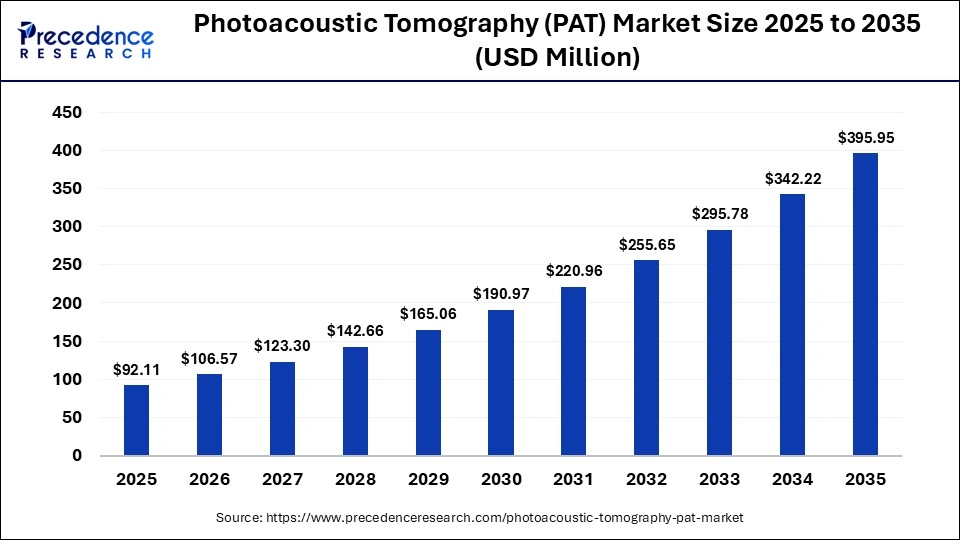
The global photoacoustic tomography (PAT) market size accounted for USD 92.11 million in 2025 and is predicted to increase from USD 106.57 million in 2026 to approximately USD 395.95 million by 2035, expanding at a CAGR of 15.70% from 2026 to 2035. The photoacoustic tomography (PAT) market is witnessing substantial growth driven by the increasing prevalence of chronic diseases, particularly cancer and cardiovascular disorders, and the increasing demand for advanced, non-invasive, and radiation-free imaging techniques. Demand is surging from applications in oncology, cardiology, and neurology, further supported by rapid advancements in laser and ultrasound technologies and the integration of AI for enhanced image processing and diagnostic accuracy.
Market Highlights
- North America dominated the market with 42.10% of the market share in 2025.
- The Asia Pacific is expected to grow at the fastest CAGR of 16.10% between 2026 and 2035.
- By product type, the photoacoustic tomography (PAT) imaging systems segment contributed the highest market share of 68.20% in 2025.
- By product type, the PAT components & accessories segment is growing at a strong CAGR of 14.60% between 2026 and 2035.
- By technology, the photoacoustic microscopy (PAM) segment held a major market share of 41.50% in 2025.
- By technology, the multispectral optoacoustic tomography (MSOT) segment is expected to expand at a notable CAGR of 15.80% from 2026 to 2035.
- By application, the preclinical & research imaging segment captured the highest share of 37.90% in the photoacoustic tomography (PAT) market during 2025.
- By application, the oncology segment is poised to grow at a healthy CAGR of 15.20% between 2026 and 2035.
- By end user, the academic & research institutes segment generated the biggest market share of 34.60% in 2025.
- By end user, the pharmaceutical & biotechnology companies segment is expanding at the fastest CAGR of 15.60% between 2026 and 2035.
- By imaging mode, the preclinical segment accounted for the largest share of 63.40% in the photoacoustic tomography (PAT) market during 2025.
- By imaging mode, the clinical segment is projected to grow at a solid CAGR of 14.90% between 2026 and 2035.
What is Photoacoustic Tomography (PAT)?
Photoacoustic tomography (PAT) is a hybrid imaging modality that combines optical absorption contrast with ultrasound's scalable depth, generating detailed images of tissues by converting pulsed laser light into ultrasonic waves and providing functional and molecular information without ionizing radiation. The market is growing due to rising chronic diseases, demand for functional imaging, and technological advancements, with oncology and preclinical research, especially in small animals, being major drivers, though clinical adoption in certain areas remains limited.
Advancements in laser sources, ultrasound transducer sensitivity, and image reconstruction algorithms are improving spatial resolution and penetration depth, expanding the scope of detectable biomarkers. In preclinical settings, PAT is increasingly used to study tumor angiogenesis, oxygen saturation, and drug response, supporting translational research workflows. However, broader clinical adoption continues to depend on system standardization, regulatory approvals, and integration into existing clinical imaging pathways.
How Did AI Influence the Photoacoustic Tomography (PAT) Market?
Artificial intelligence (AI) is revolutionizing the global market by enhancing image reconstruction, automating analysis, improving accuracy, and enabling real-time diagnostics, especially in oncology, leading to faster, more reliable disease detection. AI algorithms reconstruct clearer images from raw data, reducing noise, correcting aberrations, and improving the signal-to-noise ratio. Deep learning also helps distinguish between benign and malignant tissues, boosting diagnostic confidence. AI reduces operator dependency, standardizes results, and enables real-time processing, making PAT more accessible and faster for clinical use and enhancing functional and molecular imaging.
In addition, AI-driven feature extraction enables more precise quantification of physiological parameters such as blood oxygenation, hemoglobin concentration, and tissue perfusion. These capabilities support longitudinal monitoring in preclinical and translational studies, improving consistency across repeated scans. As a result, AI integration is strengthening the role of PAT in both research workflows and emerging clinical evaluation pathways.
Photoacoustic Tomography (PAT) Market Outlook
- Industry Growth Overview: The market is poised for explosive growth from 2026 to 2035. This expansion is mainly due to shifting from research to clinical application, along with the demand for non-invasive, high-resolution imaging of functional and molecular biomarkers, especially for oncology, vascular diseases, and neuroscience, offering better depth and better contrast than ultrasound.
- Miniaturization and Development of Portable PAT Systems: This is coupled with the use of advanced image processing, especially AI and ML. The market is seeing a shift towards developing compact, handheld, and even wearable PAT devices. This trend aims to make the technology more accessible for point-of-care diagnostics, outpatient clinics, and continuous monitoring of awake and moving subjects
- Global Expansion: The global market is expanding rapidly due to its unique non-ionizing, high-resolution imaging capabilities for early disease detection, increasing R&D investments, supportive government policies, and integration with other modalities like MRI/CT, with Asia-Pacific emerging as a fast-growing region alongside established North American and European markets.
- Major Investors: Many prominent companies like Fujifilm, PerkinElmer, iThera Medical, and CyberHeart with significant investments driving growth through advanced R&D and clinical adoption for oncology, vascular imaging, and other diagnostics.
- Startup Ecosystems: a vibrant ecosystem driven by strong academic research, significant government funding, and collaboration between established companies and innovative startups with innovations in contrast agents, portable systems, and deep learning for image analysis.
Market Scope
| Report Coverage | Details |
| Market Size in 2025 | USD 92.11 Million |
| Market Size in 2026 | USD 106.57 Million |
| Market Size by 2035 | USD 395.95 Million |
| Market Growth Rate from 2026 to 2035 | CAGR of 15.70% |
| Dominating Region | North America |
| Fastest Growing Region | Asia Pacific |
| Base Year | 2025 |
| Forecast Period | 2026 to 2035 |
| Segments Covered | Product Type, Technology, Application, End User, Imaging Mode, and Region |
| Regions Covered | North America, Europe, Asia-Pacific, Latin America, and Middle East & Africa |
Segment Insights
Product Type Insights
What Made the Photoacoustic Tomography (PAT) Imaging Systems Segment Lead the Photoacoustic Tomography (PAT) Market in 2025?
The photoacoustic tomography (PAT) imaging systems segment led with 68.20% market share in 2025. This dominance is primarily due to its superior deep-tissue visualization, high resolution, and versatility in clinical and preclinical settings, particularly in oncology and vascular imaging. It offers a unique blend of high optical absorption contrast and ultrasound's spatial resolution, providing detailed functional and molecular information. This growth is further fostered by its ability to combine optical contrast with ultrasound's depth penetration for non-invasive, real-time functional and molecular insights.
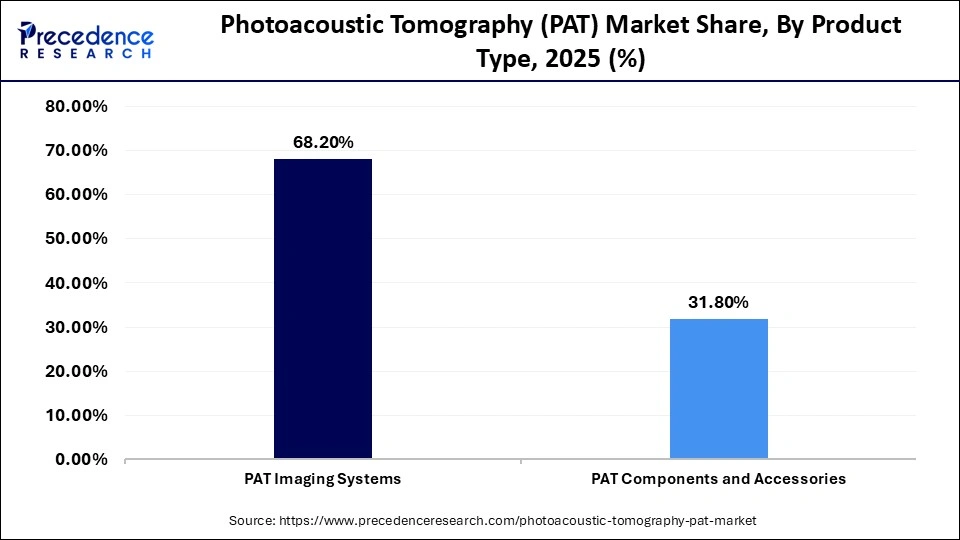
The PAT components & accessories segment is anticipated to have the fastest growth with a CAGR of 14.60%. This is primarily due to rapid and continuous technological advancements in its core components and the increasing demand for multimodal, non-invasive imaging solutions in both research and clinical settings. Continuous innovation in the core hardware components of PAT systems is leading to strong demand for newer, more advanced accessories. The increasing integration of AI and ML algorithms for enhanced image processing, automation, and data interpretation is a major factor.
Technology Insights
Why Did the Photoacoustic Microscopy (PAM) Segment Dominate the Photoacoustic Tomography (PAT) Market in 2025?
The photoacoustic microscopy (PAM) segment dominated with 41.50% market share in 2025. This is mainly because of its ultra-high resolution for visualizing microstructures, making it indispensable for preclinical research. PAM offers cellular and subcellular resolution, far exceeding traditional PAT, allowing visualization of capillary networks and microvascular changes. Scanning-based PAM systems are prevalent, providing excellent spatial resolution for precise anatomical and functional imaging, driving demand from universities and research institutions.
The multispectral optoacoustic tomography (MSOT) segment is anticipated to experience the fastest growth with a CAGR of 15.80%. This is because it uses multiple light wavelengths to differentiate between various absorbers (chromophores) in the tissue, enabling detailed mapping of blood oxygenation and specific molecular targets. This growth is further driven by advances in laser tech, software, and hardware that lower costs and improve speed. It also overcomes light scattering, offering high-resolution optical contrast deep within tissues, something traditional optical methods struggle with.
Application Insights
Why Did the Preclinical & Research Imaging Segment Lead the Photoacoustic Tomography (PAT) Market in 2025?
The preclinical & research imaging segment led with 37.90% market share in 2025. This is mainly because PAT offers non-invasive, high-resolution insights into small animal models, crucial for drug development, cancer, and neurological research, providing detailed vascular, oxygenation, and molecular data without radiation, leading to widespread adoption in labs and significant funding from institutions. This dominance is further driven by the demand for advanced tools to study disease mechanisms and track therapies, allowing repeated longitudinal studies on small animals to track disease progression and treatment efficacy.
The oncology segment is expected to have the fastest growth with a CAGR of 15.20%. This is because PAT excels at non-invasively visualizing tumor angiogenesis, hypoxia, and metabolism, which is crucial for early cancer detection, staging, and monitoring therapy response in real time. PAT combines light and sound to map blood vessels and oxygen levels within tumors, revealing crucial biological information about tumor growth and treatment response that X-rays or MRIs might miss, supported by substantial government funding for cancer research and imaging improvements.
End User Insights
How Did the Academic & Research Institutes Segment Dominate the Photoacoustic Tomography (PAT) Market in 2025?
The academic & research institutes segment dominated with 34.60% market share in 2025. This is mainly due to high demand for preclinical tools, strong funding for molecular imaging, and extensive use in drug development, propelling innovation and early-stage biomedical discovery. Universities and labs heavily utilize PAT to understand biological processes, model diseases, and support early-stage drug development, creating significant demand for systems. Academic settings foster advancements in PAT technology, improving resolution, algorithms, and portability, which then drive broader market adoption.
The pharmaceutical & biotechnology companies segment is experiencing the fastest growth with a CAGR of 15.60%. This is mainly because companies use PAT for noninvasive high-resolution preclinical research, drug discovery, and efficacy tracking in small animals, visualizing tumor growth, drug delivery, and molecular changes, which addresses the critical need for faster and better drug development by improving the efficiency of preclinical trials. Also, increasing interest in neurological disorders and prevalent cancers fuels demand for its unique capabilities.
Imaging Mode Insights
What Made the Preclinical Segment Dominate the Photoacoustic Tomography (PAT) Market in 2025?
The preclinical segment held a major share of 63.40% in 2025. This is mainly due to its extensive use in biomedical research and drug development. This dominance is further driven by pharmaceutical and biotechnology companies, along with academic and research institutes, which heavily utilize preclinical imaging to study disease mechanisms and monitor drug efficacy in vivo. PAT offers a unique ability to provide anatomical, functional, and molecular information. Significant government and private funding for biomedical and cancer research drives the adoption of advanced preclinical technologies.
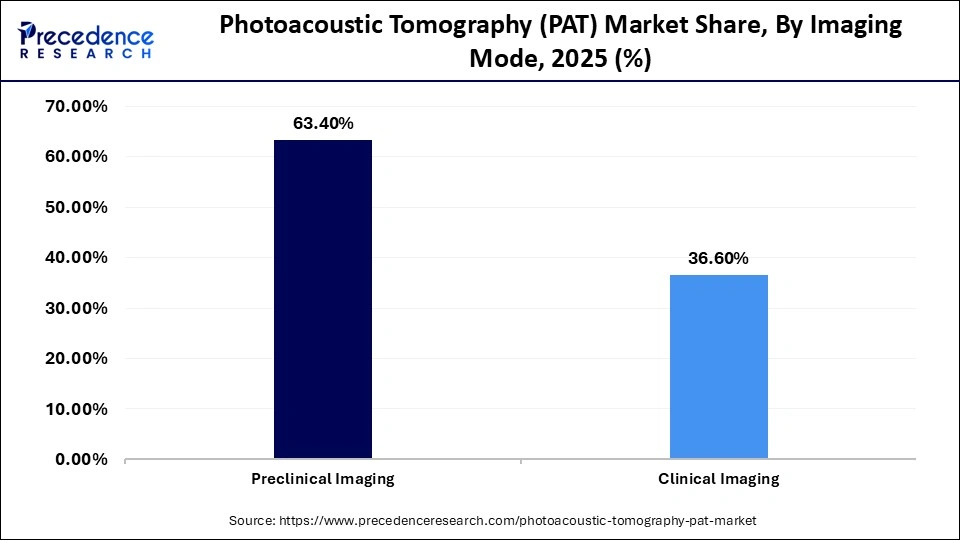
The clinical segment is expected to have the fastest growth, with a CAGR of 14.90%. This growth is due to its facilitation of the translation of the technology from research to practical hospital use. PAT can be easily integrated with widely available clinical ultrasound machines, which clinicians are already trained to use, enhancing diagnostic accuracy without requiring entirely new infrastructure. Also, PAT offers high-resolution images with rich optical contrast at depths unreachable by conventional optical imaging, allowing for detailed functional information.
Regional Insights
How Big is the North America Photoacoustic Tomography (PAT) Market Size?
The North America photoacoustic tomography (PAT) market size is estimated at USD 38.78 million in 2025 and is projected to reach approximately USD 168.67 million by 2035, with a 15.84% CAGR from 2026 to 2035.

How Did North America Dominate the Photoacoustic Tomography (PAT) Market in 2025?
North America held a dominant market share of 42.10% in 2025, primarily due to its advanced healthcare infrastructure, significant investments in research and development (R&D), government funding, and the presence of key industry players and academic institutions. The region is home to several pioneering developers of Photoacoustic Technology (PAT), such as FUJIFILM VisualSonics, Seno Medical Instruments, and TomoWave, along with leading research institutions like Stanford University, MIT, and Johns Hopkins University, which drive innovation and product development in this field.
Strong collaboration between academia, startups, and established imaging companies is accelerating prototype-to-product translation for PAT systems. Federal and state research grants are supporting longitudinal oncology and vascular studies that validate clinical utility. Early adoption within academic medical centers is also creating reference sites that support clinician training and broader technology diffusion. Continued investment in translational research infrastructure is expected to sustain North America's leadership in PAT development and deployment.
What is the Size of the U.S. Photoacoustic Tomography (PAT) Market?
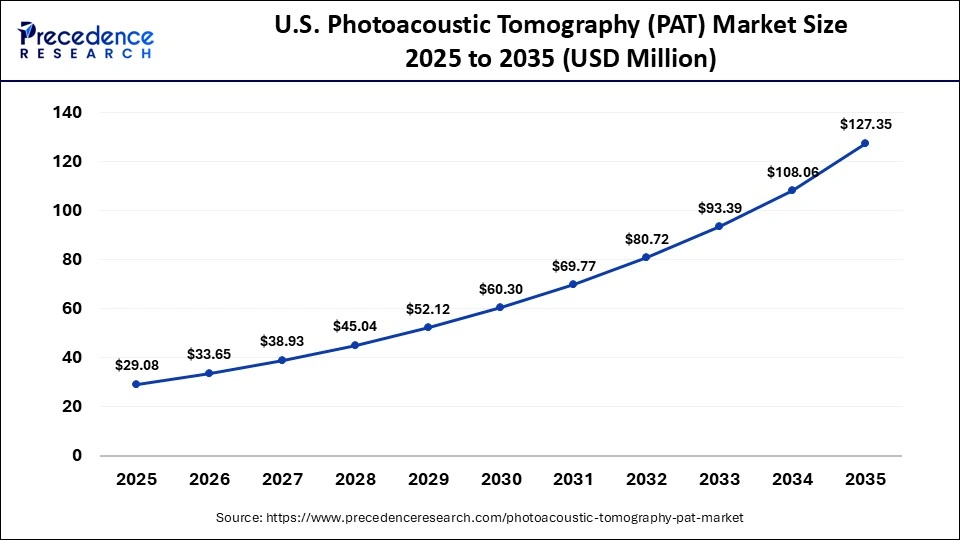
The U.S. photoacoustic tomography (PAT) market size is calculated at USD 29.08 million in 2025 and is expected to reach nearly USD 127.35 million in 2035, accelerating at a strong CAGR of 15.92% between 2026 and 2035.
U.S. Photoacoustic Tomography (PAT) Market Trends
The United States is a leading force in the global market, benefiting from top-tier academic and research institutions like Stanford University, MIT, and the National Institutes of Health, as well as a strong collaboration between academia and industry. Government agencies, including the National Institutes of Health and the Department of Defense, provide substantial grants for PAT research, thereby accelerating technological advancements. The Food and Drug Administration has granted approvals and breakthrough device designations for several PAT systems, enhancing clinical confidence among manufacturers.

These regulatory and funding mechanisms are supporting earlier clinical trials and faster validation of safety and performance benchmarks. Concentration of pilot deployments within academic medical centers is also strengthening clinician familiarity and evidence generation. Together, these factors are reinforcing sustained U.S. leadership in translational and early-stage clinical adoption of PAT systems.
What Made Asia Pacific the Fastest-Growing Region in the Photoacoustic Tomography (PAT) Market?
Asia Pacific is expected to experience the fastest growth, with a CAGR of 16.10%. This growth is driven by increasing healthcare investments, rising government support for R&D, a large patient population suffering from chronic diseases, and rapid technological advancements. Both public and private sectors in countries such as China, Japan, and India are investing heavily to modernize medical facilities and adopt advanced diagnostic technologies. Governments in the region actively support the development of local healthcare infrastructure and are increasing funding for medical research and innovation.
Expanding academic research programs and public hospital upgrades are improving access to advanced imaging platforms across urban and secondary care centers. Regional manufacturers and research institutes are also increasing collaboration to localize system development and reduce deployment costs. Growing oncology and cardiovascular case volumes are strengthening demand for functional and molecular imaging solutions. Together, these factors are accelerating the clinical and preclinical adoption of PAT systems across Asia Pacific.
India Photoacoustic Tomography (PAT) Market Trends
India is emerging as a significant market, bolstered by growing investments from the government and private sector in healthcare modernization and infrastructure, which expands the demand for advanced diagnostic solutions. The large patient population and rising incidence of chronic diseases further fuel the need for sophisticated, non-invasive diagnostic tools. Increasing funding for medical research institutions and public hospitals is supporting early-stage adoption of advanced imaging modalities. Expansion of oncology and cardiology departments in tertiary care centers is creating new use cases for functional imaging technologies. These developments are strengthening India's role in the regional growth trajectory of the market.
Emergence of Europe in the Photoacoustic Tomography (PAT) Market
Europe is also projected to grow at a noteworthy rate in the photoacoustic tomography (PAT) market in the coming years. This growth is attributable to its robust healthcare infrastructure, substantial government and private R&D funding, the presence of key industry players, and a high demand for non-invasive diagnostic solutions. The region hosts various major companies and leading academic and clinical research institutions involved in photoacoustic technology, such as iThera Medical GmbH, Kibero GmbH, and Litron Lasers, which foster local innovation through partnerships. Europe benefits from significant government and private investments in biomedical research and technological advancement.
In addition, strong translational research ecosystems are enabling faster validation of PAT systems in preclinical and early clinical studies. Public funding frameworks and cross-border research programs are supporting collaboration between universities, hospitals, and technology developers. These factors are strengthening Europe's position in advancing PAT applications from laboratory research toward broader clinical adoption.
Germany Photoacoustic Tomography (PAT) Market Trends
Germany plays a pivotal role within Europe in the market for photoacoustic tomography (PAT), being home to many prominent PAT companies like iThera Medical GmbH and Kibero GmbH, as well as leading research institutions such as the Fraunhofer Institutes, which collaborate closely with industry partners. Its well-developed healthcare system supports the adoption of advanced, non-invasive imaging technologies, particularly in oncology and neurology, providing a strong foundation for the laser and optical components critical to PAT systems. In Germany, strong public funding for applied research accelerates prototype development and system validation. Close integration between university hospitals and industrial partners supports early clinical studies and translational research. This ecosystem enables Germany to act as a regional hub for PAT innovation and manufacturing capability.
How Will Latin America Surge in the Photoacoustic Tomography (PAT) Market in 2025?
Latin America is a key contributor to the global market, driven by increasing healthcare investments, a rising prevalence of chronic diseases, and a growing focus on non-invasive diagnostic techniques. The region is witnessing a surge in cancer, cardiovascular diseases, and neurological disorders, which necessitate advanced and precise diagnostic tools like PAT for early detection and treatment monitoring. Furthermore, governments and private sectors in countries like Brazil, Mexico, and Argentina are investing in modernizing healthcare facilities and acquiring advanced diagnostic equipment.
Expansion of tertiary care hospitals and oncology centers is improving access to advanced imaging technologies across major urban areas. Growing collaboration with international research institutions is supporting technology transfer and clinical training. Public health initiatives aimed at early diagnosis are strengthening demand for functional imaging tools. Together, these factors are supporting gradual but steady adoption of PAT systems across the region.
Brazil Photoacoustic Tomography (PAT) Market Trends
Brazil is particularly significant in the global market due to rising investments in medical facilities and improved access to advanced diagnostic imaging technologies. The increasing prevalence of oncological and neurological disorders is prompting the demand for more precise diagnostic equipment. Brazil and other Latin American countries present promising opportunities for market players as industries expand and government initiatives enhance healthcare access. Expansion of public oncology centers and private diagnostic networks is accelerating procurement of advanced, non-invasive imaging systems. Increased funding for hospital modernization and clinician training is improving readiness for next-generation diagnostic modalities. These developments are positioning Brazil as a regional entry point for broader adoption of advanced imaging technologies.
How Will the Middle East and Africa Emerge in the Photoacoustic Tomography (PAT) Market in 2025?
The Middle East and Africa region is experiencing significant growth in the global market, characterized by increasing investments in healthcare infrastructure, a high prevalence of chronic diseases, and a growing demand for non-invasive, high-precision diagnostics. Countries in the Gulf Cooperation Council, such as Saudi Arabia and the United Arab Emirates, are making substantial investments to modernize their healthcare facilities. Increased awareness among healthcare professionals and the general population about preventive healthcare and advanced diagnostic options is driving the demand for sophisticated imaging solutions.
Large-scale hospital expansion projects and the development of specialized oncology and diagnostic centers are improving access to advanced imaging technologies. Government-backed healthcare transformation programs are accelerating procurement of next-generation diagnostic systems. Growing collaboration with international medical technology providers is supporting skills transfer and system deployment. Together, these factors are strengthening the region's capacity to adopt advanced, non-invasive imaging modalities.
Saudi Arabia Photoacoustic Tomography (PAT) Market Trends
Saudi Arabia is a key part of the developing Middle East & Africa, primarily driven by significant investments in healthcare infrastructure and technology as part of the country's economic diversification goals. Also, the increasing prevalence of chronic diseases and demand for non-invasive procedures are fueling the adoption of advanced imaging solutions in key cities like Riyadh and Jeddah, with a focus on improving healthcare access and quality. Large public hospital expansion programs and the development of specialized diagnostic centers are accelerating system procurement. Increased partnerships with international medical technology providers are supporting technology transfer and clinician training. These factors are strengthening readiness for advanced imaging deployment across major urban healthcare hubs.
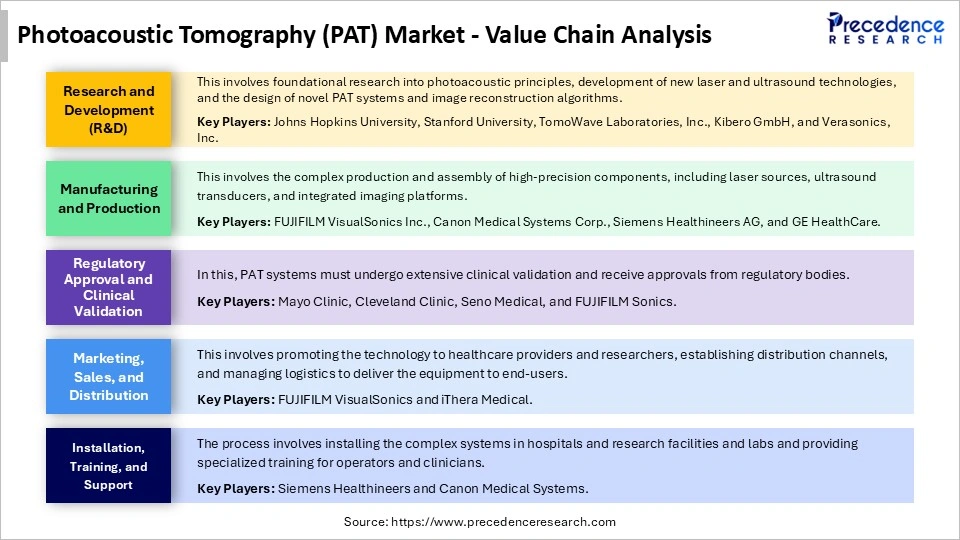
Photoacoustic Tomography (PAT) Market Value Chain Analysis
Who are the Major Players in the Global Photoacoustic Tomography (PAT) Market?
The major players in the photoacoustic tomography (PAT) market include FUJIFILM VisualSonics Inc., Seno Medical Instruments, Inc., iThera Medical GmbH, TomoWave Laboratories, Inc., Kibero GmbH, and InnoLas Laser GmbH.
Recent Developments
- In June 2025, FUJIFILM VisualSonics Inc. launched the Vevo F2 LAZR-X20 Photoacoustic Imaging Platform, featuring advanced laser technology for high anatomical accuracy in preclinical animal models. Greg Nesbitt, vice president at FUJIFILM VisualSonics, emphasized the company's innovation in expanding photoacoustic applications. The platform enhances imaging depth and resolution, allowing non-invasive detection of tissue chromophores, aiding in tumor microenvironment visualization, and quantifying therapeutic efficiency.(Source: https://www.fujifilm.com)
- In April 2025, Verasonics announced its Vantage NXT software release (ver. 2.0), introducing the Acquisition SDK Programming Model. This C-based API allows users to program the Vantage NXT Research Ultrasound System without MATLAB dependencies, simplifying the integration of legacy software and aiding commercialization efforts. The Acquisition SDK is available for purchase alongside the new software release.(Source: https://verasonics.com)
Segments Covered in the Report
By Product Type
- PAT Imaging Systems
- PAT Components & Accessories
By Technology
- Photoacoustic Microscopy (PAM)
- Photoacoustic Computed Tomography (PACT)
- Multispectral Optoacoustic Tomography (MSOT)
By Application
- Oncology
- Cardiovascular Imaging
- Neurology
- Dermatology
- Preclinical & Research Imaging
By End User
- Hospitals
- Diagnostic Imaging Centers
- Academic & Research Institutes
- Pharmaceutical & Biotechnology Companies
By Imaging Mode
- Preclinical Imaging
- Clinical Imaging
By Region
- North America
- Europe
- Asia-Pacific
- Latin America
- Middle East & Africa
For inquiries regarding discounts, bulk purchases, or customization requests, please contact us at sales@precedenceresearch.com
Frequently Asked Questions





Ask For Sample
No cookie-cutter, only authentic analysis – take the 1st step to become a Precedence Research client
 Get a Sample




 sales@precedenceresearch.com
 Schedule a Meeting
