



Micro Computed Tomography Market Size, Share and Trends 2026 to 2035
Micro Computed Tomography Market (By Application: Life science, Bone, Dentistry, Plant and Food, Material science, Geology/Oil and Gas Geology; By Product: In vivo micro-CT, Ex vivo micro-CT; By End-use: Industries, Research Institutes, Diagnostic Imaging Labs, Others) - Global Industry Analysis, Size, Trends, Leading Companies, Regional Outlook, and Forecast 2026 to 2035
Source: https://www.precedenceresearch.com/micro-computed-tomography-market
 Get a Sample
 Table Of Content


What is the Micro Computed Tomography Market Size?
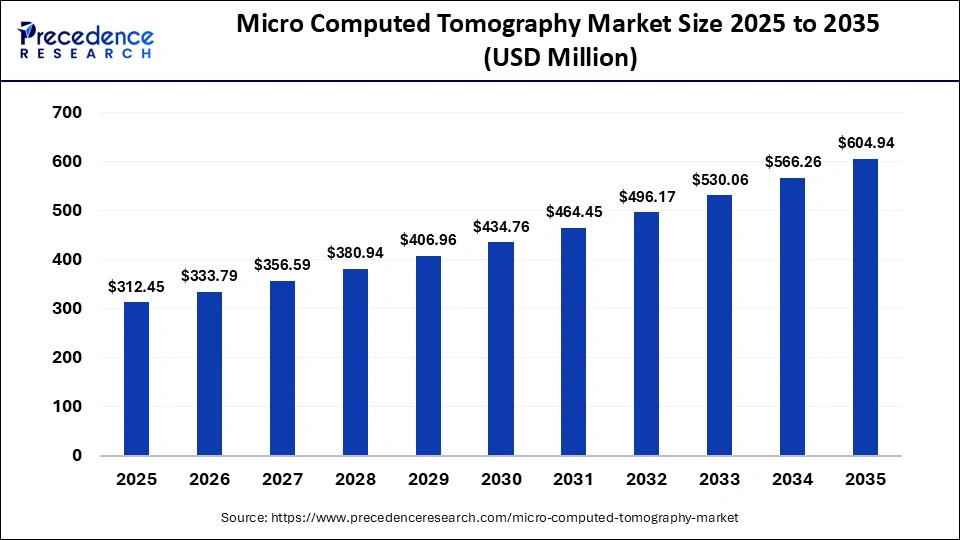
The global micro computed tomography market size accounted for USD 312.45 million in 2025 and is predicted to increase from USD 333.79 million in 2026 to approximately USD 604.94 million by 2035, expanding at a CAGR of 6.83% from 2026 to 2035. The market growth is fueled by the increasing demand for high-resolution, non-destructive 3D imaging in biomedical research and industrial quality inspection.
Market Highlights
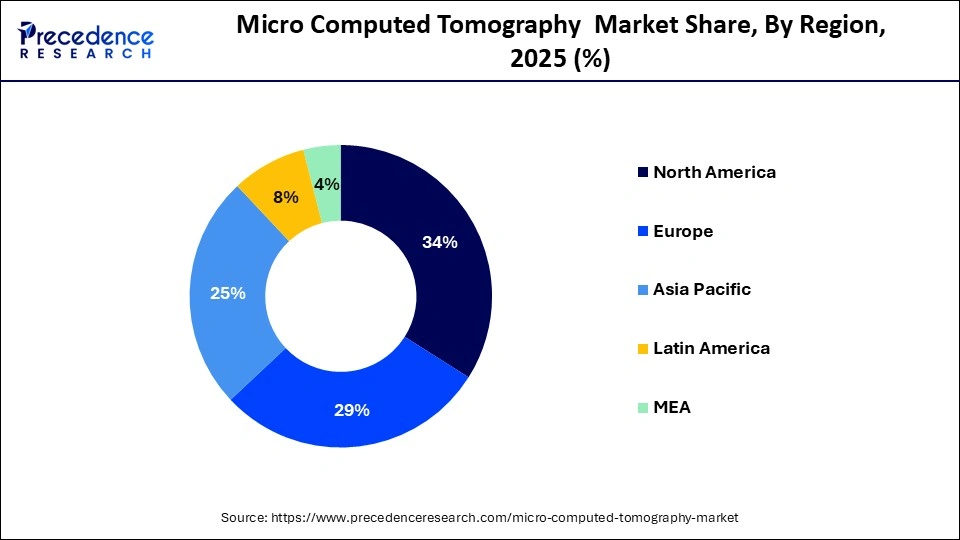
- North America accounted for the largest market share of 34% in 2025.
- Europe is expected to grow at a CAGR of 7.9% from 2026 to 2035.
- By product, the ex vivo micro-CT segment held the largest market share of 77% in 2025.
- By product, the in vivo micro-CT segment is poised to grow at a strong CAGR of 6.82% from 2026 to 2035.
- By application, the life science segment led the market in 2025.
- By application, the dentistry segment is growing at a significant CAGR of 7.5% from 2026 to 2035.
- By end use, the research institutes segment held a major market share in 2025.
- By end-use, the diagnostic imaging labs segment is projected to grow at the fastest CAGR from 2026 to 2035.
Shaping the Future of Imaging: Micro Computed Tomography Market Overview and Outlook
Micro computed tomography has become a key facilitator of non-destructive, high-resolution imaging across various fields, including biomedical research, life sciences, materials science, and industrial inspection. These systems provide three-dimensional views at the micrometer level, allowing researchers and manufacturers to study internal structures without altering or destroying samples. Micro-CT is particularly valuable in healthcare, preclinical trials, and studies on bone, tissue, dental health, and pathology.
The market's growth is fueled by ongoing technological advancements that improve image quality, scanning speed, and data analysis capabilities. The rising use of minimally invasive techniques and non-destructive testing has increased demand for micro-CT systems in both laboratories and industrial environments. Investments in preclinical research, drug discovery, and regenerative medicine are rapidly boosting adoption within the life sciences sector.
How is AI Influencing the Micro Computed Tomography Market?
Artificial intelligence is transforming the micro computed tomography market by enhancing image quality, increasing analysis speed, and improving diagnostic accuracy. AI-based reconstruction algorithms are less susceptible to noise, boost contrast, and enable shorter scan times without sacrificing image resolution, making micro-CT systems more efficient for research and industry. In industrial inspection, AI-driven defect recognition allows quick identification of internal defects in complex parts, batteries, and additively manufactured components. As AI continues to advance, its integration with micro-CT leads to greater scalability, accessibility, and value in healthcare, research, and advanced manufacturing.
Micro Computed Tomography Market Outlook
- Industry Growth Overview: The market is expanding rapidly due to the growing demand for high-resolution, non-destructive imaging in biomedical research, life sciences, and industrial applications. Market growth is further driven by advancements in 3D imaging technologies and rising adoption in preclinical studies, dental research, and materials testing worldwide.
- Global Expansion: The market is growing worldwide due to the increasing demand for non-destructive, high-resolution imaging in biomedical research, life sciences, materials testing, and industrial inspection, which enables precise analysis without damaging samples. Emerging regions, particularly in Asia Pacific and Latin America, offer opportunities driven by expanding healthcare and research infrastructure, rising investments in advanced imaging technologies, and growing adoption in preclinical studies, dental research, and industrial applications.
- Major Investors: Major investors in the market include leading imaging and medical device companies such as Bruker Corporation, Scanco Medical AG, Rigaku Corporation, and Thermo Fisher Scientific, who invest heavily in R&D and advanced imaging technologies. These companies contribute by developing high-resolution, reliable micro-CT systems for biomedical research, industrial inspection, and preclinical studies, thereby driving global market growth and adoption.
Market Scope
| Report Coverage | Details |
| Market Size in 2025 | USD 312.45 Million |
| Market Size in 2026 | USD 333.79 Million |
| Market Size by 2035 | USD 604.94 Million |
| Market Growth Rate from 2026 to 2035 | CAGR of 6.83% |
| Dominating Region | North America |
| Fastest Growing Region | Europe |
| Base Year | 2025 |
| Forecast Period | 2026 to 2035 |
| Segments Covered | Application, Product, End-use, and Region |
| Regions Covered | North America, Europe, Asia-Pacific, Latin America, and Middle East & Africa |
Segment Insights
Product Insights
Why Did the Ex Vivo Micro-CT Segment Lead the Micro Computed Tomography Market?
The ex vivo micro-CT segment led the market with the largest revenue share in 2025 due to its widespread use in biomedical research and materials analysis. Ex vivo systems offer ultra-high resolution and exceptional image clarity, enabling researchers to examine biological specimens without motion artifacts or concerns about radiation exposure. This makes them especially valuable in cancer research, orthopedics, and regenerative medicine, where precise analysis of tissues, tumors, and bone microarchitecture is crucial. Ex vivo micro-CT is used to study vascularization, tumor morphology, and implant integration with high accuracy. It is widely used in academic institutions, pharmaceutical research and development, and pathology labs, and it is easy to use compared to in-vivo systems.
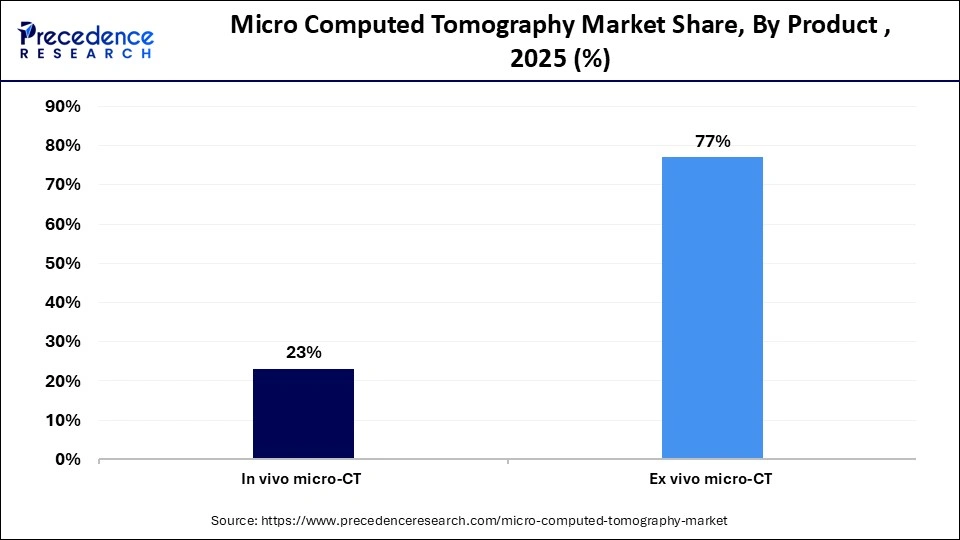
The in vivo micro-CT segment is expected to grow at the fastest CAGR over the forecast period. In-vivo systems allow scientists to monitor disease progression, bone remodeling, and treatment response in live animal models without necessarily relying on destructive testing methods. With the integration of artificial intelligence and machine learning, in-vivo micro-CT has become increasingly advanced, now automating image reconstruction, segmentation, and quantitative analysis. These technologies improve measurement accuracy and reduce scan time and radiation exposure, which are often major barriers to adoption.
Additionally, growing investments in drug discovery, oncology research, and translational medicine drive demand. As ethical considerations increasingly favor minimizing animal use through repeated imaging of the same subjects, in-vivo micro-CT systems become increasingly vital for advanced biomedical research.
Application Insights
What Made Life Science the Dominant Segment in the Market in 2025?
The life science segment dominated the market in 2025 because micro-CT is widely used in biomedical and preclinical studies. Micro-CT enables visualization of bones, tissues, and organs in high resolution and three dimensions, which supports the analysis of anatomical and pathological changes. Micro-CT is applied in disease research, disease progression, and treatment outcomes in osteoporosis, cancer, and cardiovascular diseases. It is non-destructive and preserves samples for future research, enhancing the effectiveness of studies. Additionally, new imaging software and contrast agents have increased the use of micro-CTs in soft tissue imaging, making life sciences the most profitable business division.
The dentistry segment is expected to grow the fastest in the near future as demand for accurate dental images and treatment planning increases. Micro-CT provides the highest resolution images of dental structures, including enamel, dentin, pulp, and root canals, enabling accurate diagnosis of complex cases. This level of detail supports complex procedures such as implant placement, endodontic treatments, and orthodontic evaluations. Micro-CT is also widely used in dental research for assessing restorative materials, implant stability, and tooth morphology. Growing adoption in dental schools and research labs, along with the development of smaller, more user-friendly systems, will fuel significant growth in this segment.
End-Use Insights
Why Does the Research Institutes Segment Lead the Micro Computed Tomography Market?
The research institutes segment led the market while holding the largest revenue share in 2025. This is because these institutes prioritize scientific discovery and innovation, which require high-resolution, non-destructive imaging to study complex structures at the microscopic level. Micro-CT systems enable detailed analysis of biological samples, tissues, cells, and small organisms without damaging them, making them essential tools for advancing research across biomedical, life sciences, and materials science fields.
The diagnostic imaging labs segment is expected to experience the highest CAGR during the forecast period. This is due to the increasing demand for precise, non-invasive imaging in clinical diagnostics and preclinical research. Micro-CT enables labs to provide high-resolution, three-dimensional imaging of tissues, bones, and small biological structures, improving diagnostic accuracy and supporting the early detection and monitoring of diseases, which drives market adoption.
Region Insights
How Big is the North America Micro Computed Tomography Market Size?
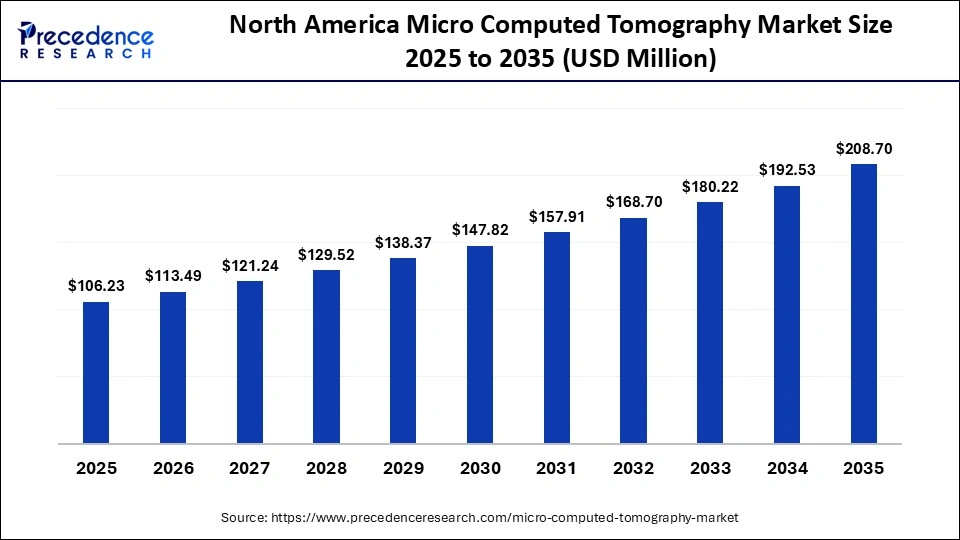
The North America micro computed tomography market size is estimated at USD 106.23 million in 2025 and is projected to reach approximately USD 208.70 million by 2035, with a 6.99% CAGR from 2026 to 2035.
What Made North America the Dominant Region in the Micro Computed Tomography Market?
North America dominated the market by capturing the largest share in 2025. This is mainly due to its advanced technological infrastructure and significant investments in new imaging solutions. Continuous advancements in micro-CT equipment, detectors, and X-ray sources have improved image resolution and scanning performance across a wide range of applications, including life sciences, materials research, and industrial inspection. The integration of machine learning and artificial intelligence has further strengthened the region's leadership by enabling faster image reconstruction, automated analysis, and more accurate diagnostics. Additionally, the presence of major micro-CT manufacturers and frequent product innovations encourages widespread adoption. Robust biomedical research and quality control initiatives in high-tech manufacturing continue to reinforce North America's dominant position in the market.
What is the Size of the U.S. Micro Computed Tomography Market?
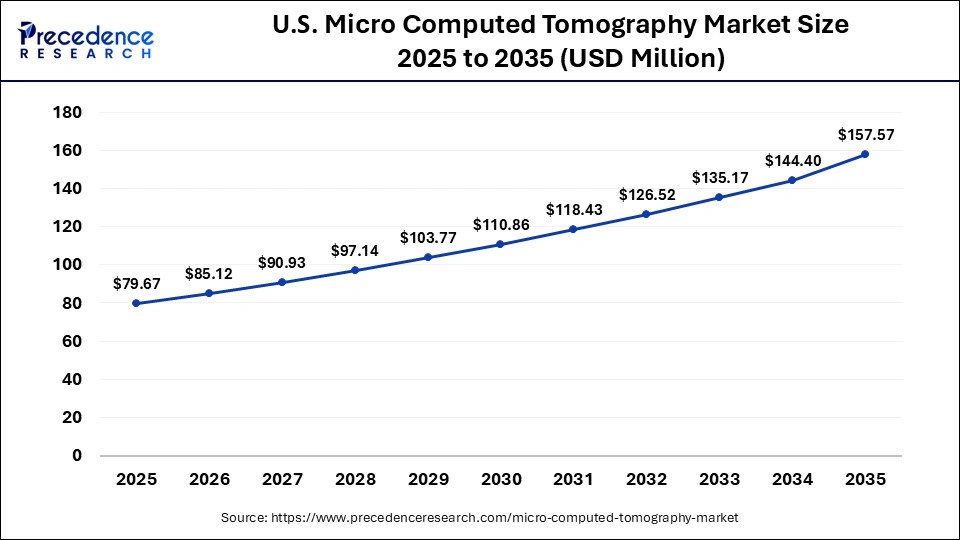
The U.S. micro computed tomography market size is calculated at USD 79.67 million in 2025 and is expected to reach nearly USD 157.57 million in 2035, accelerating at a strong CAGR of 7.06% between 2026 and 2035.
U.S Micro Computed Tomography Market Analysis
The market in the U.S. is driven by the increasing use of Micro-CT in healthcare, research, and dentistry. Micro-CT is gaining traction in the country for preclinical imaging and studying disease models, drug efficacy, and anatomical structures in small animals. The rising demand for high-resolution imaging for preclinical studies and drug development also supports market growth.
What Potentiates the Micro Computed Tomography Market within Asia Pacific?
The market in Asia Pacific is driven by industrialization and growing research capabilities. As an alternative to destructive testing and quality control, micro-CT is gaining popularity in countries like China, India, Japan, and South Korea across industries such as electronics, aerospace, automotive, and additive manufacturing. As manufacturing complexity increases, the demand for precise internal inspection technologies rises. Growing investments in health infrastructure, drug research, and biotechnology are accelerating the adoption of micro-CT.
China Micro Computed Tomography Market Analysis
The market in China is expanding because the country is experiencing rapid industrial growth and is increasingly focused on research and innovation. Micro-CT is widely used in manufacturing sectors such as electronics, batteries, and aerospace for non-destructive inspection and failure analysis. At the same time, rising investments in biomedical research and pharmaceutical development are boosting demand for micro-CT systems in academic and research institutions. Adoption is also increasing due to government support for advanced imaging technologies and the domestic production of equipment.
Why is Europe Considered the Fastest-Growing Region in the Micro Computed Tomography Market?
Europe is expected to grow at the fastest rate throughout the forecast period due to its strong emphasis on research and development, particularly in life sciences, materials science, and industrial applications. The region benefits from significant investments in biomedical research, pharmaceutical development, and high-tech manufacturing, where micro-CT plays a crucial role in non-destructive testing and quality control. Additionally, the integration of AI and machine learning into micro-CT systems is accelerating imaging capabilities, enhancing their utility across sectors.
UK Micro Computed Tomography Market Analysis
In the UK, the market is growing due to its established academic research base and strong investments in life sciences and materials research. Universities and research institutions in the UK are extensively using micro-CT to study biomedical matters, tissues, and materials characterization, with government-backed funding programs further promoting the adoption of advanced imaging technologies. The growing focus on regenerative medicine, orthopedics, and dental research has significantly increased demand for micro-CT systems. Additionally, the integration of AI-based imaging software is enhancing scan efficiency and improving data interpretation, making micro-CT an even more valuable tool in both clinical and research settings.
Why is the MEA Micro Computed Tomography Market Gaining Momentum?
The Middle East & Africa (MEA) micro computed tomography market is growing as healthcare infrastructure and research facilities are improving steadily. Increased investments in medical research, academic institutions, and diagnostic centers support the adoption of advanced imaging technologies. Micro-CT is increasingly used in biomedical research, dentistry, and material testing. Regional governments are focusing on healthcare modernization and scientific progress, which boosts the use of high-precision imaging equipment. Additionally, partnerships with foreign research institutions and equipment suppliers are broadening access to this technology.
What Opportunities Exist in South America for the Micro Computed Tomography Market?
South America presents significant growth opportunities in the market, driven by increasing investments in research, healthcare, and industrial sectors. Countries like Brazil and Mexico are expanding their academic research facilities and adopting advanced imaging technologies for biomedical and materials research. As awareness of non-destructive testing methods grows, industries in the region are increasingly utilizing micro-CT for quality control and defect detection. Government initiatives aimed at enhancing scientific research and improving medical care further support market expansion. With better access to advanced imaging equipment and a rise in research activities, the market is expected to grow in the region.
Top Companies in the Micro Computed Tomography Market
- Bruker Corporation: Bruker Corporation is a company engaged in the production of high-resolution SkyScan micro-CT systems in life sciences, materials research, and industrial nondestructive testing.
- PerkinElmer Inc.: The Company sells a wide variety of micro-CT imaging products, which help in preclinical research, diagnostics, and pharmaceutical research.
- Thermo Fisher Scientific: It offers micro-CT and analytical imaging systems, which are entirely incorporated in the life sciences, materials characterization, and industrial inspection.
- ZEISS: It offers Xradia micro-CT equipment, with less than a micrometer resolution in life science and materials science, and high-end industrial applications.
- SCANCO Medical AG: It focuses on micro-CT systems of great accuracy in the analysis of bone, tissue, and biomaterials used in preclinical and medical research.
Other Major Companies
- NeoScan
- Sanying Precision Instruments Co., Ltd
- North Star Imaging Inc
- TESCAN
Recent Developments
- In August 2024, researchers at the Beckman Institute for Advanced Science and Technology in Illinois, along with global collaborators, advanced their projects using the new ZEISS Xradia 630 Versa micro-CT scanner, the first of its kind in the U.S. for life science applications. Unlike traditional micro-CT scanners that use only X-rays, the 630 Versa incorporates visible light through scintillation. It can scan small subsections of large materials while achieving an impressive resolution of 40 nanometers, 2,500 times narrower than a human hair.(Source: https://www.prnewswire.com)
- In December 2023, PerkinElmer bought Covaris to strengthen its operations in the life sciences and diagnostics industry. The acquisition is likely to increase PerkinElmer's imaging and sample preparation capabilities and facilitate the broader adoption of micro-CT-enabled research processes.(Source: https://clpmag.com)
Segments Covered in the Report
By Application
- Life science
- Bone
- Dentistry
- Plant and Food
- Material science
- Geology/Oil and Gas Geology
By Product
- In vivo micro-CT
- Ex vivo micro-CT
By End-use
- Industries
- Research Institutes
- Diagnostic Imaging Labs
- Others
By Region
- North America
- Europe
- Asia-Pacific
- Latin America
- Middle East and Africa
For inquiries regarding discounts, bulk purchases, or customization requests, please contact us at sales@precedenceresearch.com
Frequently Asked Questions





Ask For Sample
No cookie-cutter, only authentic analysis – take the 1st step to become a Precedence Research client
 Get a Sample




 sales@precedenceresearch.com
 Schedule a Meeting
