



Preclinical Imaging Market Size, Key Companies, Company Market Share, Patient Volume, Treatment Adoption Rates, Pricing Analysis, Regulatory Landscape, Competitive Positioning, and Demand Forecast
Preclinical Imaging Market (By Product: CT Imaging, MRI Imaging, PET/SPECT Imaging, Multi-modal Imaging, Optical Imaging, Ultrasound Imaging, Photoacoustic Imaging, Reagents, Services; By End-User: Biotech Companies, Pharmaceutical Companies, Research Institutes) - Global Industry Analysis, Size, Trends, Leading Companies, Regional Outlook, and Forecast 2026 to 2035
Source: https://www.precedenceresearch.com/preclinical-imaging-market
 Get a Sample
 Table Of Content


What is Preclinical Imaging Market Size?
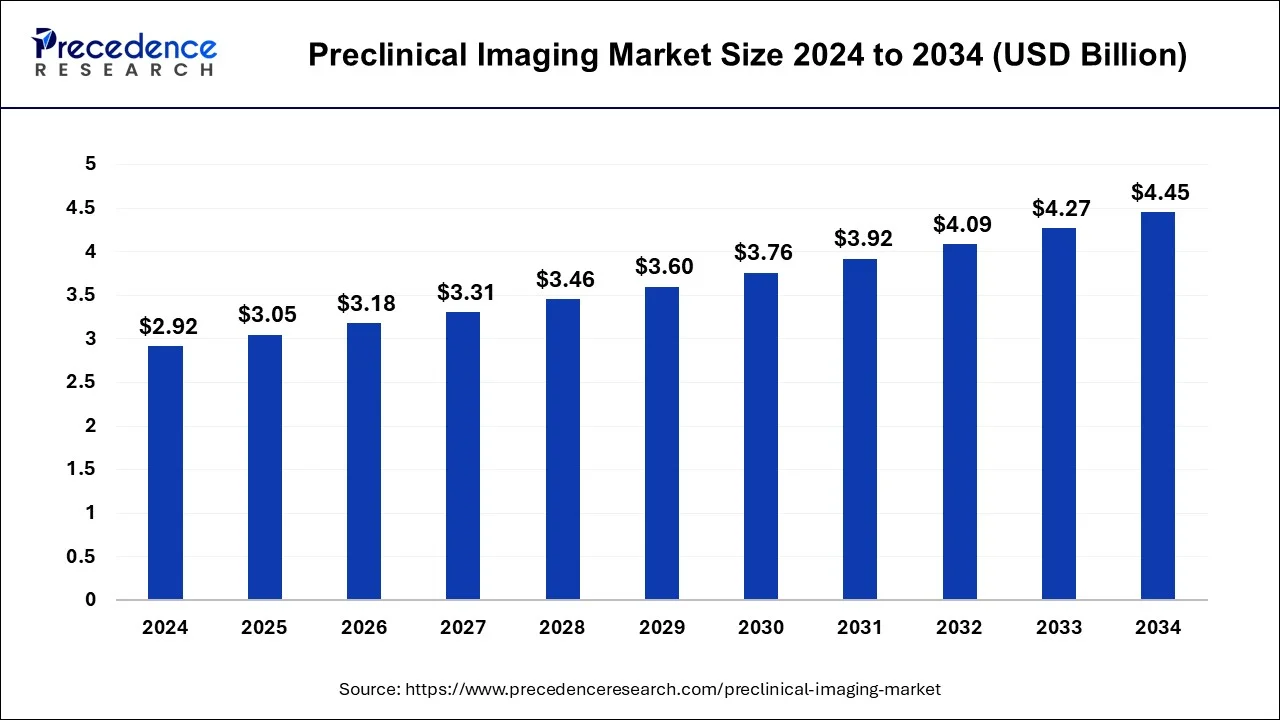
The global preclinical imaging market size accounted for USD 3.05 billion in 2025, grew to USD 3.18 billion in 2026 and is projected to surpass around USD 4.63 billion by 2035, representing a healthy CAGR of 4.26% between 2026 and 2035. The market is growing due to increased demand for drug development derived from technological advancements, rising research investments, growing Clinical Research Organizations (CRO) expansions, research infrastructure, and multimodal imaging.
Market Highlights
- By product insight, the optical imaging segment dominated the market in 2025.
- By product insight, the multimodal segment is expected to grow at the fastest rate in the market during the forecast period.
- By application insight, the research and development segment led the market in 2025.
- By application insight, the drug discovery segment is anticipated to grow at the fastest rate during the forecast period.
- By end-use insight, the pharma and biotech companies segment dominated the market in 2025.
How does AI impact the preclinical imaging market?
The applications of artificial intelligence in health diagnostics are expected to be revolutionary. AI integrates many advanced algorithms and machine learning capabilities to process medical images more quickly than before, which can save time for the adjusted time diagnosis to make it more accurate. Pattern recognition and anomaly knowledge across large datasets with AI improve diagnosis accuracy for most diagnoses avoided. It can also serve as a diagnostic prediction to allow early disease detection for better patient outcomes in situations like cancer.
In addition, AI has a core role in personalized medicine, providing tailored results based on the patient's characteristics and medical history. Nevertheless, AI in diagnostic imaging will face challenges of privacy in data use, the risk of bias in algorithms, and the need for investments in technology and training. There will also be a requirement for sound guidelines and ethical parameters to enforce.
What is preclinical imaging?
The preclinical imaging market is in reference to the living animal vision which helps in analysis. Imaging modes as well as drug development are extremely important for researchers. The number of funds received all various organizations for research purpose have increased in recent years and these are extremely supportive of Preclinical Research. As the market demand for preclinical imaging has also increased in recent years the market will show significant growth.
The existing market players will lead to the introduction of innovative technologies for molecular imaging and it will also receive a large amount of funding from various organizations and this will lead to the growth of the market during the forecast period. Technological advancements will also play a significant role in the growth of the market as it has led to the introduction of hybrid systems for imaging.
Preclinical Research is extremely important in transforming the performance of modern medicines and how these medicines are delivered in order to treat and resolve the problems that patients face. As clinical research organizations are also increasing in number the market is expected to grow well. There are many other factors that will help the growth of the market like the policies or the rights that protect the animals due to which the use of these animals for testing will be reduced. The availability of alternative methods in the market like that of computer-based models and micro-dosing is growing rapidly.
Preclinical Imaging Market Growth Factors
Most of the market players are engaged in research and development activities in order to enhance the existing products in the market. These companies are also focused on making investments to launch new products. These are the most important strategies adopted by organizations. The number of partnerships, collaborations, and agreements has also increased in recent years which has led to the introduction and enhancement of better technologies. In order to strengthen the product portfolio, the companies are constantly focusing on expanding their presence in various geographical locations.
The government support received by companies in developing nations will play a significant role in the growth of the market. Translational activities of research have also grown. The regulatory policies in Asian countries have evolved and they are extremely beneficial for the growth of the market. The adoption of novel imaging technologies at the molecular level has also grown significantly. The increase in the number of biotechnology companies and pharmaceutical companies across the globe will lead to the growth of the market.
The demand for multi-modality systems has also increased which will drive market growth in the coming years. The demand for non-invasive procedures on small animals has also increased significantly. The number of funds received by the organizations and the initiatives taken by the organizations for the Preclinical Research will propel the market growth.
- The number of technological advancements made in the field is high
- Development in the hybrid imaging system will drive the market growth
- the way modern medicines are delivered will be revolutionized by preclinical research
- The revolutionization to health problems and the treatment for health problems will also be revolutionized
- The need for noninvasive techniques for the imaging of small animals is in greater demand which will we increase the need for research
Preclinical Imaging Market Outlook
- Industry Growth Overview: The Preclinical imaging market is expected to show a steady growth between 2025 and 2030, owing to increased demand for molecular imaging, multimodal imaging systems, and artificial intelligence (AI) enabled frameworks. Industry growth is particularly high in North America and Europe, due to the rapid expansion of pharmaceutical research and development (R&D), and greater incorporation of non-invasive imaging within drug development protocols.
- Global Expansion: Executives at key player companies are taking major steps to create a presence in Asia-Pacific and Latin America to assist with the development of additional biotech and academic research hubs. Canon Medical and MILabs have opened regional offices and service centers to improve accessibility while shortening turnaround times.
- Key Investors: Venture capital and private equity investors are stepping in, attracted by ROI potential from imaging technologies and long-term preclinical contract research clients. Sequoia Capital and 5 AM Ventures have raised funds for startups developing AI-enabled imaging platforms.
- Startup Ecosystem: There is a growing startup market developing AI-enhanced imaging, targeted contrast agents, and scale-down imaging systems. Startups like NanoCellect and Molecular Imaging Innovations have received large venture capital funding to commercialize next-generation preclinical imaging.
Market Scope
| Report Coverage | Details |
| Market Size by 2025 | USD 3.05 Billion |
| Market Size by 2026 | USD 3.18 Billion |
| Market Size in 2035 | USD 4.63 Billion |
| Market Growth Rate from 2026 to 2035 | CAGR of 4.26% |
| Leading Region | North America |
| Base Year | 2025 |
| Forecast Period | 2026 to 2035 |
| Segments Covered | Product, End User, and Regions |
| Regions Covered | North America, Europe, Asia-Pacific, Latin America, and Middle East & Africa |
Market Dynamics
Drivers
- Increase in the number of investments - As there has been a growth in the investments and the funds received for research and development purposes the market is expected to grow well. With the speed at which technological advancements are taking place the market is expected to grow well. The use of imaging systems of the hybrid kind is also driving market growth. Preclinical research has played an important role in transforming modern medicine, especially in the ways how health issues are resolved and treated with the help of modern medicine.
- Increase in clinical research organizations - Clinical research organizations as well as pharmaceutical companies are making use of the in vivo systems in Preclinical Research. The growing demand for imaging techniques hurdles led to the introduction of more and more organizations conducting the research. This research is conducted with the help of advanced devices, especially in developed regions across the world.
Key Market Challenges
- Stringent regulations - As the framework provided by the government bodies for the conduction of research is strict the preclinical imaging market will suffer in the long run. There are many limitations with the procedural and technical aspects and this will hamper the growth of the market in the coming years period there are many restrictions imposed on the testing of animals through the activist that fight for animal rights and this will also hamper the growth of the market during the forecast period.
- High costs - The operational cost for conducting the research is extremely high and the installation of various equipment for conducting the procedures is also expensive and this will hamper the growth of the market during the forecast period.
Key Market Opportunities
Technological Advancements
Medical imaging is now transforming rapidly because of new technological and methodological innovations. Hybrid imaging modalities like PET/CT, PET/MRI, and SPECT/CT provide for the integral anatomy and function in precise disease detection and monitoring of treatment. Artificial intelligence and machine learning made a revolutionized change in image analysis, enhancing the quality of images and preserving early diagnosis. The Checklist for Artificial Intelligence in Medical Imaging (CLAIM) is being updated to define elements for popular reporting of artificial intelligence advances. Molecular probes and radiopharmaceuticals have broadened the horizon for nuclear imaging techniques, MRI technology has updated on the spatial-temporal resolution and the 3D printings of organs from MRI and CT scans allow precise surgical planning along with personalized treatment strategies.
Segment Insights
Product Insights
The optical imaging devices segment is expected to have the largest share in the market in the coming years period as a large number of small animals are used in the imaging for the discovery of drugs the market is expected to grow well. The segment of multimodal imaging devices is also expected to show significant growth in the coming years period technological advancements will play a significant role in the growth of the market as it will lead to an introduction of integrated systems like anatomical digital imaging systems and molecular digital imaging systems. these systems help in multiple screenings of a single unit. These are the devices of the new generation that have integrated the technology of imaging and this shall provide maximum growth opportunities in the coming years period the segment of the reagents will also continue to grow in the coming years. Increased digitalization in the field has provided an interface that is user-friendly and it is finding major application in the field of oncology research.
End-User Insights
On the basis of the end user, biotechnology companies are expected to have the highest share of the market during the forecast period. The amount of research and development work carried out in these companies has grown significantly and the amount of investment made for these activities has also grown. The constant need for advanced drugs will create more demand for research and development work. The use of this technology in biotechnology companies is more due to its application. Research institutes and pharmaceutical companies also make use of preclinical imaging techniques to a great extent.
Regional insights
U.S. Preclinical Imaging Market Size and Growth 2026 to 2035
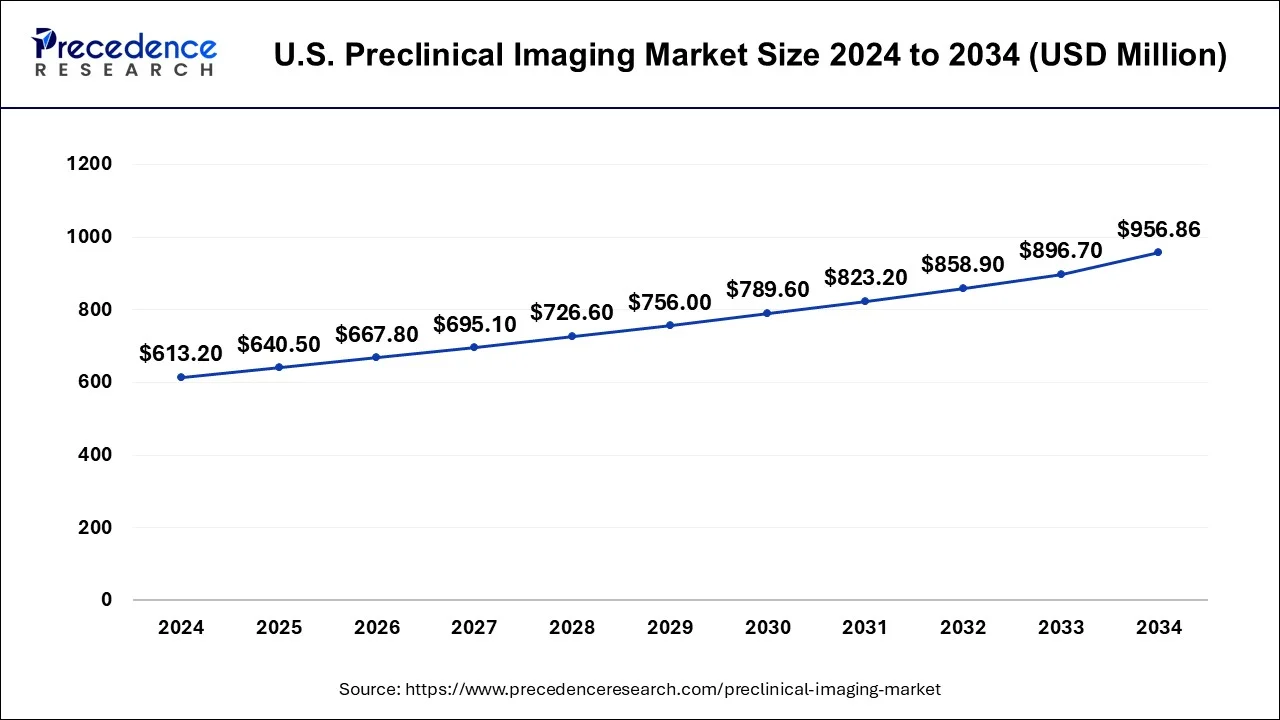
The U.S. preclinical imaging market size accounted for USD 667.80 million in 2026 and is expected to be worth around USD 1,002.11 million by 2035, growing at a CAGR of 4.58% between 2026 and 2035.
U.S. Preclinical Imaging Market Trends
The U.S. holding major position in the North America's market driven by rising investment in drug discovery and translational research, especially in oncology, neurology, and cardiology, supported by strong pharmaceutical and academic adoption. Modality equipment, such as micro MRI, micro PET/CT, and optical imaging, remains the largest segment, while service offerings, including imaging analysis and CRO platforms, are gaining the fastest momentum. Technological innovations, including multimodal systems and AI enabled image analysis, are enhancing capabilities and fueling demand.
Maximum revenue was generated through the North American region in the past and there are many factors that support the growth of this market in the North American region. The research infrastructure in the North American region is extremely developed which proves to be a major growth factor. The skilled professionals available in the North American region plays a significant role in the growth of the market. The number of preclinical initiatives taken by the organizations or the projects that are in progress or large in number. The use of technologically advanced equipment is more in the North American region due to which quality products can be obtained. A large number of initiatives are taken by the government in various regions of the North American area which are extremely supportive of the development and research activities for all the projects in the region.
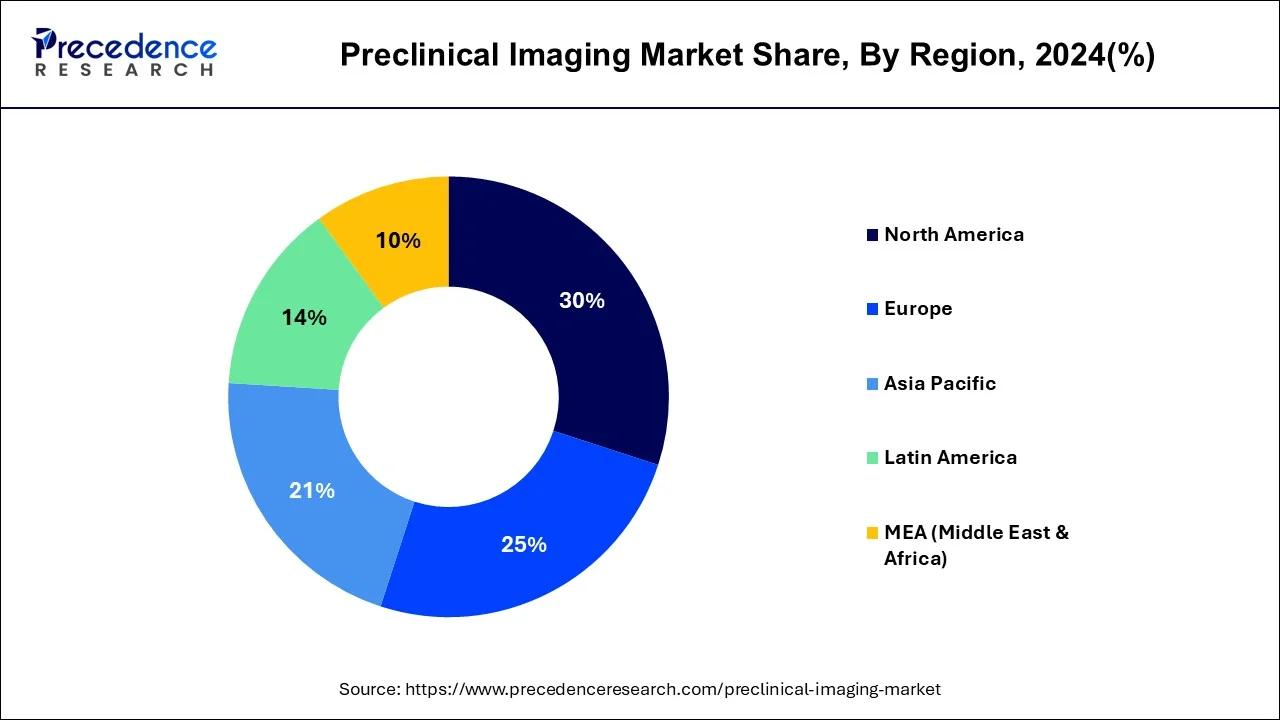
The research and development activities receive a boost in the nations like Canada especially due to the introduction of the programs like tax credits. as the regulatory guidelines are favorable and the cost of research is less in the Asia Pacific region the market growth will be good. These factors will bring more opportunities in the Asia Pacific region for Preclinical Research. The outsourcing industry in clinical research is also growing in developing nations of the world like India and China.
Latin America - The New Frontier of Discovery
Latin America experienced moderate growth in the preclinical imaging market as a result of the expansion of biotech research, increased pharma investment, and greater acceptance of imaging capabilities. Opportunities existed in the low-cost imaging systems, training programs, and partnerships with global pharmaceutical companies. The rising demand for small-animal and in vivo imaging modalities, especially optical and multi-modal systems, and expanding biotechnology and contract research organization (CRO) activities in countries such as Brazil and Mexico.
Brazil Preclinical Imaging Market Trends
Brazil was the leader in preclinical imaging in Latin America. Growth was supported by large pharmaceutical companies' R&D centers, government-funded studies, and acceptance of molecular imaging. The development of companies concentrated on preclinical imaging powered by AI and making the clinical trial processes more efficient. Key growth drivers include increasing investment in translational research, demand for non-invasive imaging in small-animal models, and government initiatives supporting drug discovery and preclinical research infrastructure.
Middle East & Africa - Awakening Scientific Potential
The Middle East & Africa grew steadily in the preclinical imaging market based on increased healthcare investments, government-funded research, and growth in pharmaceutical R&D. Opportunities exist in low-cost imaging systems, AI-enabled imaging tools developed for preclinical application, and partnerships with global pharmaceutical companies in the region. Equipment modalities, such as small animal CT/MR and PET/SPECT, represent the largest segment, while service offerings, including imaging services and CRO support, are growing fastest. Growth is driven by increased R&D investment, expansion of biotech and academic research infrastructure in countries like the UAE, Saudi Arabia, and South Arabia.
UAE Preclinical Imaging Market Trends
The UAE was the leader in the MEA region. Growth was related to a strong governmental partner, the establishment of healthcare infrastructure, and the acceptance of advanced imaging technology. Companies concentrated on AI-enhanced imaging models and molecular imaging capabilities for areas of preclinical research. Growth is driven mainly by rising investment in preclinical and translational research, especially in small animal imaging systems, the UAE government's push to modernize healthcare infrastructure, and increasing demand for advanced imaging modalities.
What Factors Contributed to Europe's Significant Revenue Share in the Preclinical Imaging Market in 2024?
The European preclinical imaging market held a significant revenue share in 2024. It was encouraged by the high population of major pharmaceutical organizations, research academic institutions, and sophisticated health care establishments in the region. These organizations are heavily involved in the use of preclinical imaging modalities to fast-track drug development, privilege disease research, and promote the personalized medicine agenda.
The UK is estimated to experience significant market expansion due to an established research and development system. The German market is expected to improve steadily, also due to well-funded policies by the government and high investments in the innovation of biomedical research. The R&D focus in Germany and the friendly regulatory conditions have continued to be highly attractive for investments in the preclinical imaging market.
Why Is the Asia Pacific Region Becoming a Hub for Preclinical Imaging Market Growth?
The Asia Pacific preclinical imaging market is expected to grow. Development of preclinical imaging in Asia Pacific is increasing with a regional advantage of low research costs, minimal research restrictions, and greater government funding for research and development. These strategic advantages will make Asia Pacific more appealing for preclinical research and clinical research outsourcing (CRO), especially in developing countries like China and India.
The rapidly evolving CRO sector in these countries supports the adoption of preclinical imaging technologies by providing support and contract research services, which enable continued pharmaceutical and biomedical innovation. In addition, the market in China is rapidly moving into the areas of drug discovery, disease modeling, and therapeutic development, which supports increased use of advanced preclinical imaging technologies in their research activities. The government policy initiatives aimed at increasing support and innovation for biomedical research within the government framework strengthen the Asia Pa
Preclinical Imaging Market Companies
|
Company |
About |
|
Bruker Corporation |
Bruker Corporation was established in 1960 and is recognized for developing advanced imaging and analytical tools used to develop sustainable mobility technologies, including lighter composite materials and cleaner battery technologies for electric vehicles. |
|
MR Solutions |
MR Solutions Limited was founded in 1998. The Company provides preclinical imaging solutions that allow for continued research and development in sustainable transportation technologies, like testing new battery materials and light-weight components in vehicles to achieve emission reductions. |
|
PerkinElmer |
PerkinElmer, Inc. was founded in 1937. The Company provides imaging and analytical solutions that can support the development of greener transportation technologies, such as providing cleaner fuels, better batteries, and materials used to improve energy-efficiency in vehicles. |
Industry Leaders' Announcements
- Dr. Fletcher, leading the imaging frontier, underscored the company's innovation and collaboration, with a special emphasis on the evolving portfolio of advanced imaging tools that would enable researchers to study biology, facilitate workflows, and speed scientific progress.
Recent Developments
- In September 2023, Revvity released several new preclinical imaging technologies, including the IVIS Spectrum 2, IVIS SpectrumCT 2, Quantum GX3 microCT, and Vega ultrasound system, to expand the imaging capabilities in vivo and ex vivo for researchers. All products were presented at the World Molecular Imaging Congress (WMIC) 2023. (Source: https://news.revvity.com)
- In October 2024, Bruker Corporation announced the OptoVolt module, which is an expanding neuroscience research capacity on the Ultima multiphoton microscope platform. This module allows imaging speeds to exceed 1000 frames per second, permitting researchers to measure neural activity with a higher temporal resolution.
- In February 2024, Monopar Therapeutics presented encouraging preclinical imaging and therapeutic efficacy results for the MNPR-101 radiopharmaceutical program targeting cancers having the urokinase plasminogen activator receptor, including breast triple-negative, colorectal, and pancreatic cancers.
Segments Covered in the Report
By Product
- CT Imaging
- MRI Imaging
- PET/SPECT Imaging
- Multi-modal Imaging
- Optical Imaging
- Ultrasound Imaging
- Photoacoustic Imaging
- Reagents
- Services
By End-User
- Biotech Companies
- Pharmaceutical Companies
- Research Institutes
By Region
- North America
- Europe
- Asia-Pacific
- Latin America
- Middle East & Africa (MEA)
For inquiries regarding discounts, bulk purchases, or customization requests, please contact us at sales@precedenceresearch.com
Frequently Asked Questions
Tags





Ask For Sample
No cookie-cutter, only authentic analysis – take the 1st step to become a Precedence Research client
 Get a Sample
.webp)



 sales@precedenceresearch.com
 Schedule a Meeting
