



Radiopharmaceutical Preclinical CRO Market Size, Key Companies, Company Production Capacity, Healthcare Infrastructure Growth, Product Utilization, Regulatory Compliance, Company Expansion Strategies, Company Investment Strategies, and Market Outlook
The radiopharmaceutical preclinical CRO market reached USD 2.50 billion in 2026. The growth is driven by the demand for outsourced research services to evaluate radiopharmaceutical candidates before clinical advancement. These trends were analyzed by Deepa Pandey, Research Analyst, to curate this report. The industry-driven move toward targeted radioligand therapies (RLTs) and theranostic drug design has made mandatory nonclinical validation a core requirement for this specialized contract research sector. The report covers R&D and services, including molecular imaging, quantitative autoradiography, in vitro screening, and biodistribution.
Source: https://www.precedenceresearch.com/radiopharmaceutical-preclinical-cro-market
 Get a Sample
 Table Of Content


Radiopharmaceutical Preclinical CRO Market Trends, Share, and Growth Analysis 2035
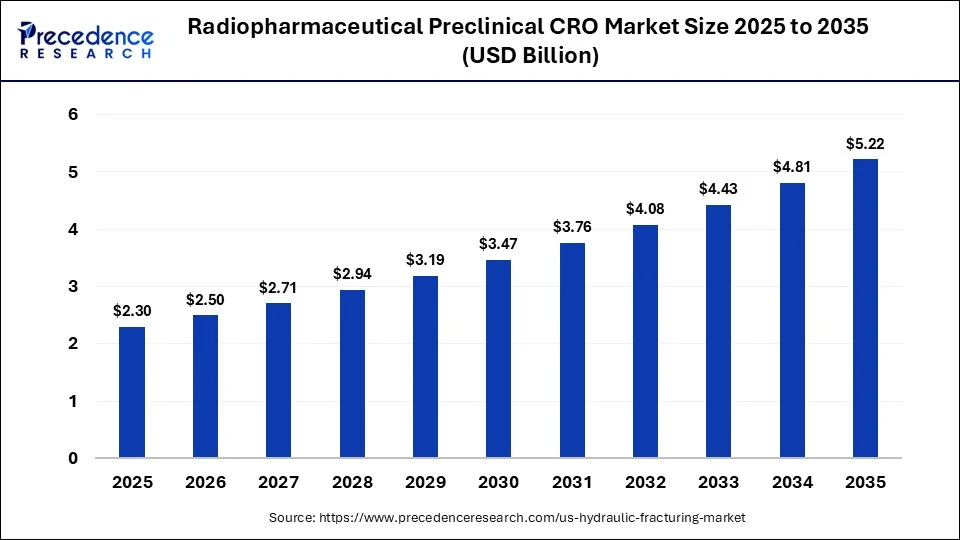
The radiopharmaceutical preclinical CRO market is forecasted to expand from USD 2.50 billion in 2026 to USD 5.22 billion by 2035, growing at a CAGR of 8.55% from 2026 to 2035. the forecast period. The market is driven by the transition towards targeted radioligand therapies and stringent regulatory compliance from the FDA and IAEA. Deepa Pandey identified that biopharmaceutical sponsors increasingly depend on these specialized contract research organizations for crucial outsourced research services.
Key Takeaways
- By service type, the biodistribution & pharmacokinetics segment dominated the market with a share of 21.85% in 2025.
- By radiopharmaceutical type analysis, the radioligand therapeutics segment held the largest market share of 29.85% in 2025.
- By radioisotope analysis, the beta emitters segment accounted for the highest market share of 31.85% in 2025.
- By study type, the biodistribution studies segment contributed the biggest market share of 23.85% in 2025.
- By imaging modality analysis, the PET/CT segment dominated the market with a share of 31.45% in 2025.
- By application analysis, the oncology segment held the largest market share of 54.85% in 2025.
- By disease area analysis, the solid tumors segment accounted for the highest market share of 42.65% in 2025.
- By animal model, the mice segment contributed the biggest market share of 47.85% in 2025.
- By end-user analysis, the pharmaceutical companies segment accounted for the highest market share of 39.85% in 2025.
- By delivery model analysis, the full-service CRO segment contributed the largest market share of 34.65% in 2025.
- By region, North America held a major market share of 39.85% in 2025.
- The validated workflows, radiation-safety controls, animal-study capability, and isotope-handling expertise are core values of CRO.
- The IAEA has also documented efforts to expand production routes for medical isotopes, including Ac-225 and Cu-67.
- The rapid expansion of radioligand therapy pipelines, growth of targeted alpha therapy, theranostic developments, and greater use of quantitative imaging are major drivers of the market.
How is the Radiopharmaceutical Preclinical CRO Market Expanding Through 2035?
The radiopharmaceutical preclinical CRO market is expanding rapidly, valued at USD 1.01 billion in 2025 and projected to reach approximately USD 2.30 billion by 2035 at a forecasted CAGR of 8.55%. Driven by recent developments in the pharmaceutical sector. The technical complexity of targeted radioligand therapy (RLTs) and theranostics is driving demand for integrated preclinical workflows. Biopharma sponsors increasingly seek development packages that combine radiochemistry, animal models, PET/SPECT imaging, biodistribution, dosimetry, bioanalysis, and toxicology on a single timeline. Strict regulations shape CRO operations. The IAEA's 2023 guidance specifies the scientific activities and facility infrastructure contract laboratories need for compliance.
Expert Analyst View-Market Size
The market expands from USD 1.01 billion in 2025 to approximately USD 2.30 billion in 2035. Market growth is driven by increasingly complex radiopharmaceutical pipelines. Developers must assess radiation kinetics together with biological activity, including whole-body distribution, tissue retention, organ uptake, absorbed dose, and radiation toxicity. FDA guidance requires therapeutic radiopharmaceutical nonclinical programs to address toxicity risk and irreversible organ damage. Therefore, the strongest opportunities favor specialized CROs that integrate radiochemistry, imaging, biodistribution, dosimetry, efficacy, and safety in one development package.
Segmentation Analysis
Which Preclinical CRO Services are Expanding Fastest?
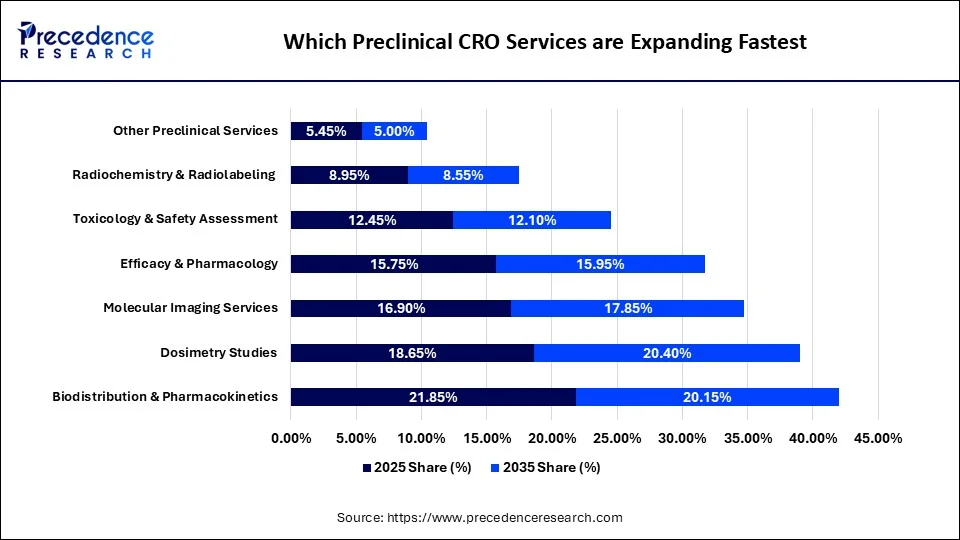
Biodistribution & pharmacokinetics held the largest market share of 21.85% in 2025 and is expected to show slight growth through 2035, with a market share of 20.15%. Leadership is driven by expanded quantitative tissue distribution. The dosimetry studies are projected to expand at the highest CAGR of 9.55% over the studied period due to increasing emphasis on radiation-dose characterization. Integrated CRO offerings commonly combine molecular imaging, efficacy, and toxicology rather than treating these activities as isolated services expected to lose market share during the forecast period.
Expert Analyst View-Material Type
The demand for supplied services highlights the growing role of quantitative radiation-exposure assessment in therapeutic radiopharmaceutical programs. Biodistribution & pharmacokinetics is the largest supplied service category, while Dosimetry involves specialized imaging, scanner calibration, activity quantification, organ segmentation, and dose calculations. Medpace is currently working on this by offering quantitative PET/CT and SPECT/CT imaging, uptake assessment, and dose calculations for beta- and alpha-emitting radiopharmaceuticals.
Why are Radioligand Therapies Gaining Share in Preclinical CRO Demand?
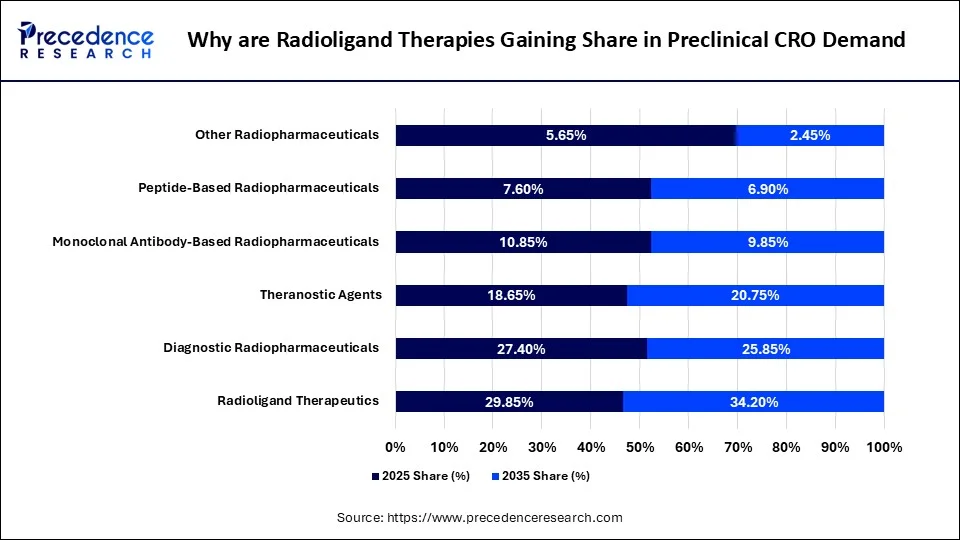
Radioligand therapeutics remained the highest market shareholder due to the expansion of targeted radionuclide therapies, with a share of 29.85% in 2025, and is expected to retain dominance with a share of 34.20% in 2035. The market share of diagnostic radiopharmaceuticals and theranostic agents is projected to witness expansion between 2025 and 2035. Rising R&D in PET and SPECT diagnostic development and diagnostic-therapeutic pairing support this growth.
Expert Analyst View- Radiopharmaceutical Type Analysis
Radioligand therapeutics are increasingly used; Novartis' pipeline is expanding, with Pluvicto, Lutathera, FAP-targeting AAA614, actinium-based ^225Ac-PSMA-617, and other RLT programs. This growth adds preclinical needs to assess target engagement, isotope selection, biodistribution, dosimetry, and normal-organ exposure. Its pipeline includes multiple RLT programs in Phase 2, Phase 3, and registration. In 2026, Novartis reported advancing an actinium-based RLT into Phase 3 while continuing broader oncology development.
Which Radionuclides are Creating New CRO Opportunities?
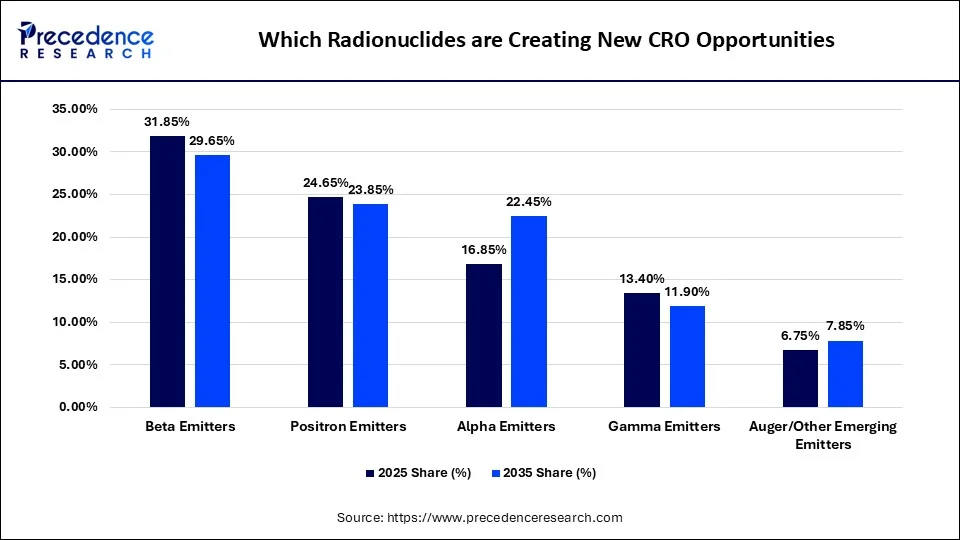
The beta emitters held the largest market share of 31.85% in 2025 and remain dominant with a share of 29.65% in 2035. Beta emitters are used in therapeutic applications. Positron emitters held the second-largest share in 2025 at 24.65% and are projected to grow at the highest CAGR of 8.20% during the forecast period. Additionally, the growing interest in target alpha theory drives the importance of alpha emitters.
Expert Analyst View-Radioisotope Category Analysis
The high Interest in alpha emitters is due to targeted alpha therapy. In 2025, the U.S. Department of Energy reported that accelerator-produced Ac-225 would support a trial of an FDA-approved cancer therapy, noting its historically complex production requirements. The IAEA identifies several production pathways for medical radionuclides. Its preclinical guidance lists ^177Lu (6.64-day half-life), ^225Ac (9.92 days), ^211At (7.2 hours), ^67Cu (61.8 hours), and ^68Ga (68 minutes), highlighting the requirement for CRO study designs to account for isotope-specific decay and logistics.
What Preclinical Studies are Most Important Before Clinical Development?
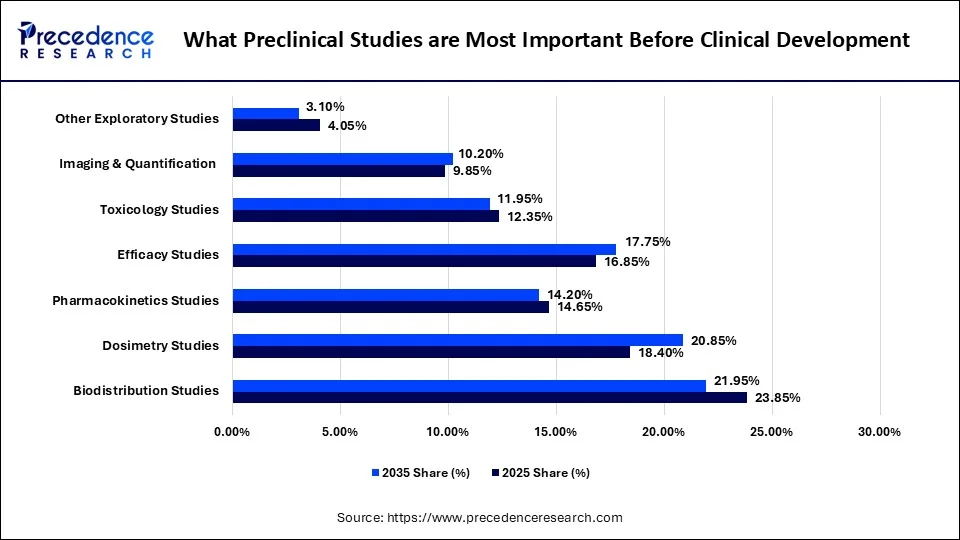
Biodistribution studies lead the market, holding a 23.85% share in 2025 and projected to remain the largest through 2035 at 21.95%. Dosimetry studies are forecast to grow rapidly, with a 9.95% CAGR from 2026–2035, driven by increased human- and organ-dose modeling. The efficacy studies and imaging and quantification are also expected to expand, supported by targeted therapy pipelines.
Expert Analyst View-Study Type Analysis
Biodistribution Studies remain the largest category, while Dosimetry Studies grow fastest at 9.95%. The fields are linked: biodistribution identifies radiopharmaceutical-targeted tissues, and dosimetry estimates radiation doses from activity-distribution data. Charles River offers traditional tissue-distribution studies and quantitative whole-body autoradiography (QWBA), which measures tissue concentrations and spatial distribution for ADME and dosimetry planning.
How are PET and SPECT Used in Radiopharmaceutical Preclinical CRO Programs?
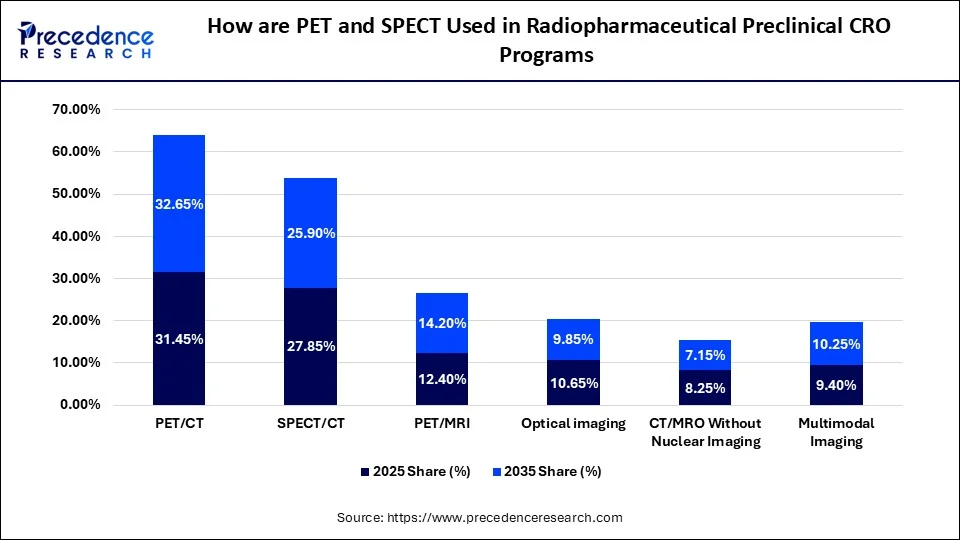
PET/CT imaging modality remained the highest market share holder with a share of 31.45% in 2025 and is expected to retain dominance with a share of 32.65% in 2035. The market share of PET/MRI and SPECT/CT is projected to witness expansion between 2025 and 2035. PET/CT dominance is driven by its high-resolution quantitative biodistribution.
Expert Analyst View-Imaging Modality Analysis
PET/CT is the largest imaging modality, holding a market share of 31.45%; at the same time, PET/MRI has the highest supplied CAGR (10.10%). PET and SPECT also provide longitudinal quantitative data on target occupancy, tissue uptake, tumor localization, and biodistribution. Charles River offers microPET, microSPECT, CT, MRI, QWBA, and quantitative autoradiography, with radiolabeling capabilities for ^18F, ^68Ga, ^89Zr, ^177Lu, ^125I, and ^111In.
Why does Oncology Dominate Radiopharmaceutical Preclinical CRO Demand?
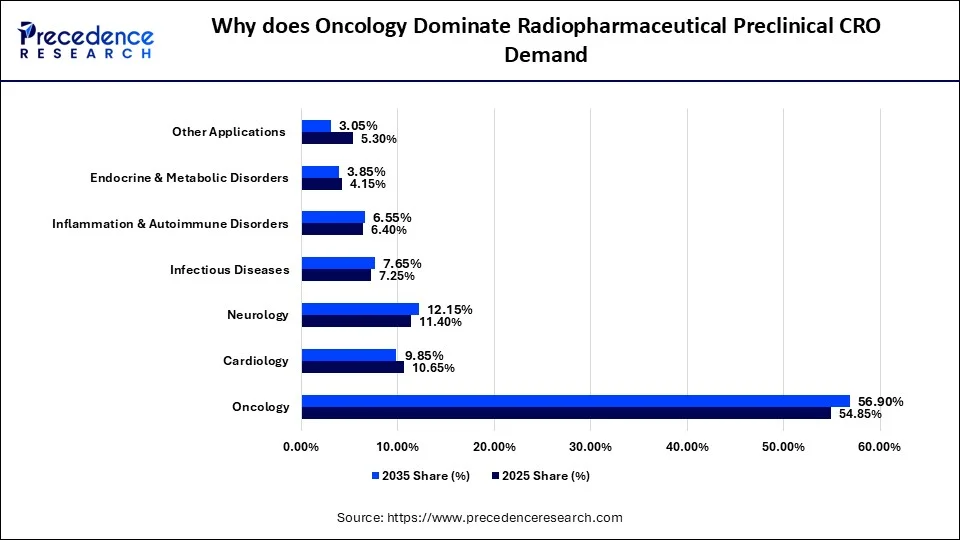
The oncology sector remained the highest market share holder with a share of 54.85% in 2025 and is expected to retain dominance with a share of 56.90% in 2035. The neurology market share is projected to expand at a 9.25% CAGR between 2025 and 2035. The rising cancer patient rate is driving the expansion of targeted radiotherapy practices.
Expert Analyst View-Application Analysis
Oncology accounts for 54.85% of the market, rising to 56.90% by 2035, reflecting the focus on targeted radionuclide therapies. Novartis, for example, is developing RLTs for prostate, breast, colon, lung, and pancreatic cancers and investing in manufacturing. Neurology and infectious diseases are projected to grow faster, potentially expanding CRO use in molecular imaging beyond oncology.
Which Disease Areas Generate the Largest Preclinical CRO Opportunity?
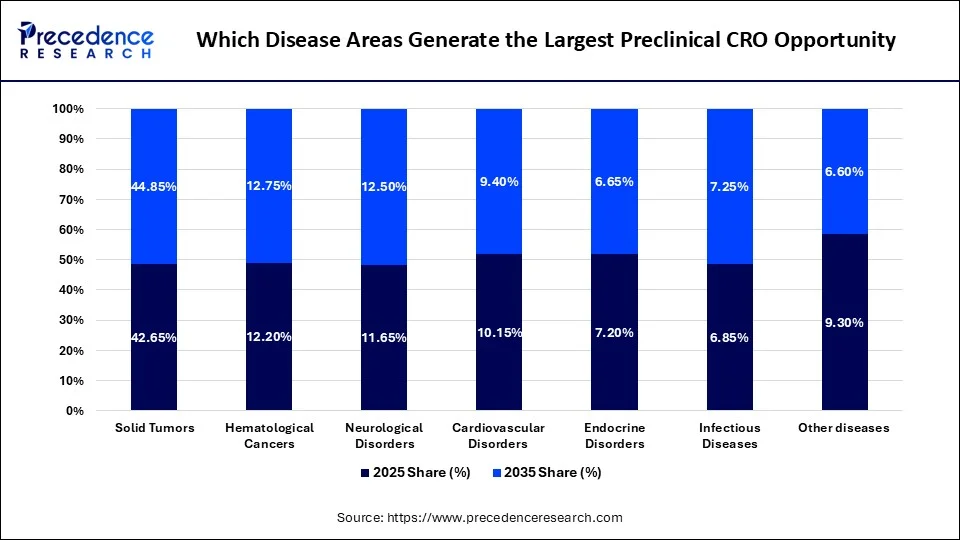
Solid tumor disease holds a large market share of 42.65% in 2025. Neurological disorders are projected to grow at the highest CAGR of 9.35% during the forecast period, driven by molecular imaging infrastructure. The target-specific radiotherapeutic research for hematological cancers area held the second-largest market share with 12.20% in 2025 and is expected to retain its position with 12.75% in 2035.
Expert Analyst View-Disease Area Analysis
Solid tumors remain the largest disease area, growing from 42.65% to 44.85%. CRO demand is strongest when developers need preclinical assessment of target expression, tumor-to-background ratios, normal-organ uptake, and radiation exposure. Neurological disorders have the highest supplied CAGR of 9.35%, reflecting PET/SPECT use in receptor imaging, neurodegeneration, and other CNS applications.
Which Animal Models are Used in Radiopharmaceutical Preclinical Studies?
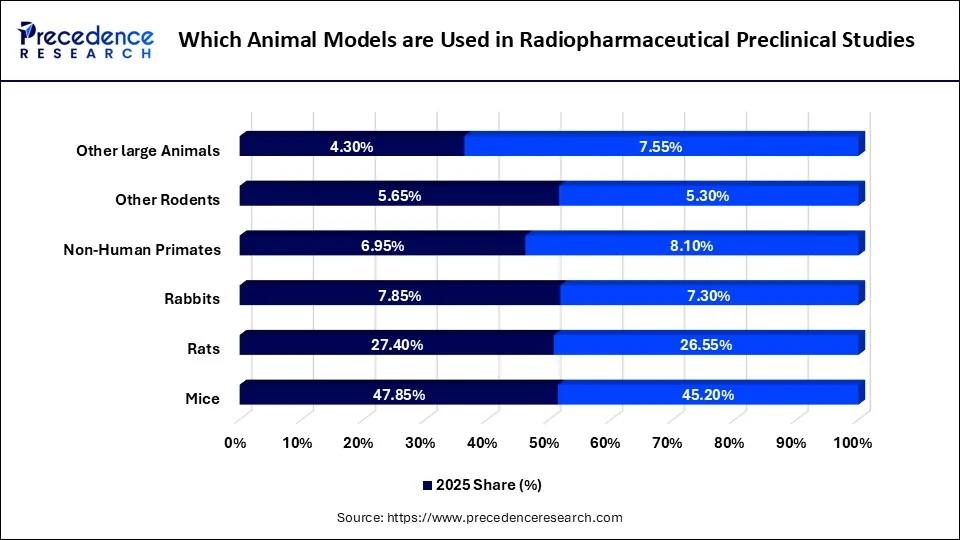
The mouse is the dominant animal model in the market and held a share of 47.85% in 2025 because mice provide high-throughput and biodistribution data in the oncology sector. The other large animals are projected to expand at the highest CAGR of 10.15% over the studied period. Additionally, rats represent the second-dominant animal model in pharmacology and imaging studies, accounting for 27.40% market share in 2025.
Expert Analyst View-Animal Model Analysis
Mice remain the dominant animal model at 47.85%, widely used in oncology, biodistribution, and receptor-targeting studies. Other large animals show the highest reported growth rate, at 13.20%, followed by non-human primates at 10.15%. The increasing aim at higher-order models serves specialized purposes when anatomical scale, physiology, or advanced translational imaging matters. IAEA preclinical guidance recommends tailoring study design to the radiopharmaceutical and scientific objective, rather than treating studies as interchangeable.
Who is Outsourcing Radiopharmaceutical Preclinical Research?
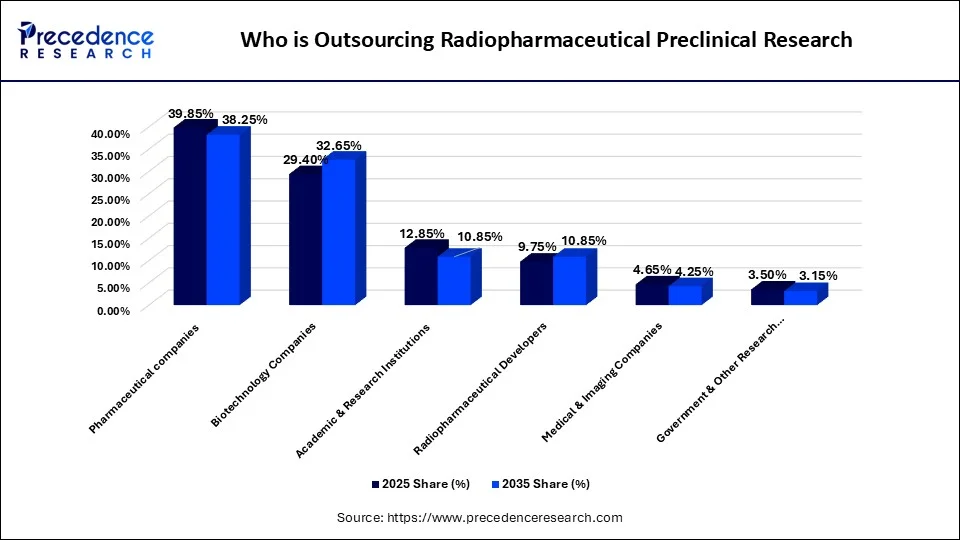
Pharmaceutical companies accounted for the largest revenue share of 39.85% in 2025, and biotechnology companies are expected to expand at the highest CAGR of 9.70% from 2026 to 2035. Pharmaceutical companies has a mature radiopharmaceutical development pipeline. Radiopharmaceutical developers are expanding at a healthy CAGR of 9.65% because of their dedicated RLT and theranostic pipelines. Biotechnology companies' market share is expected to leap from 29.40% in 2025 to 32.65% in 2035.
Expert Analyst View-End-User Analysis
Pharmaceutical companies remain the largest end-user segment at 39.85%, while biotechnology companies grow from 29.40% to 32.65%. This faster growth reflects the economics of outsourcing specialized radiopharmaceutical development. Emerging developers can access radiochemistry facilities, isotope handling, PET/SPECT equipment, animal models, dosimetry expertise, and regulatory study capabilities without building them in-house.
Which CRO Delivery Model is Gaining Importance?
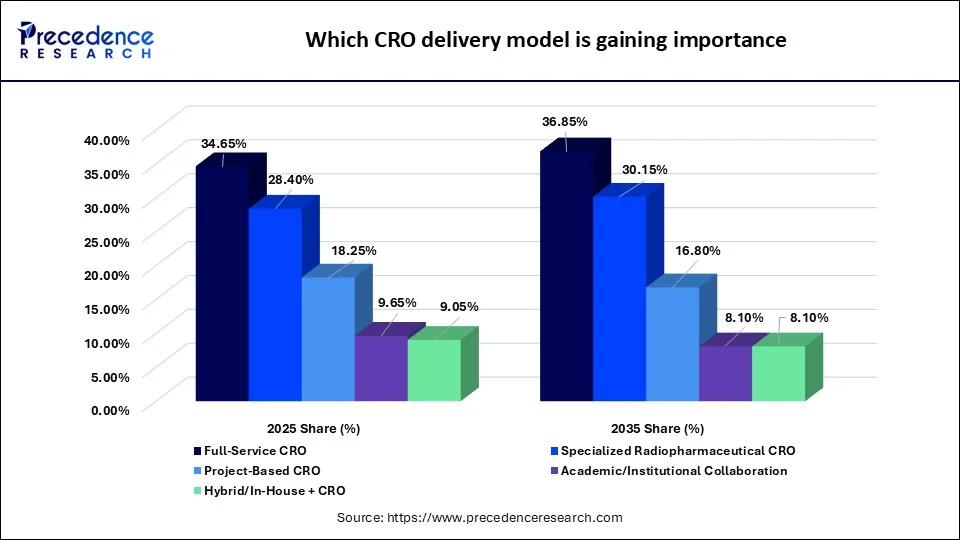
The full-service CRO held the major market share of 34.65% in 2025 and is expected to show slight growth through 2035, with a market share of 36.85%. This dominance is a result of demand for integrated development. The specialized radiopharmaceutical CRO is projected to expand at a CAGR of 9.15% over the studied period due to its expertise in imaging and specialized isotopes.
Expert Analyst View-Study Type Analysis
Full-Service CROs grew from 34.65% to 36.85%, reflecting the need to integrate datasets in radiopharmaceutical development. A single question may require radiolabeling, PET/SPECT imaging, biodistribution, PK, dosimetry, and toxicology. Charles River's preclinical platform combines radiochemistry, imaging, QWBA, animal models, and data analysis.
Regional Analysis
Which Regions are Driving Radiopharmaceutical Preclinical CRO Growth?
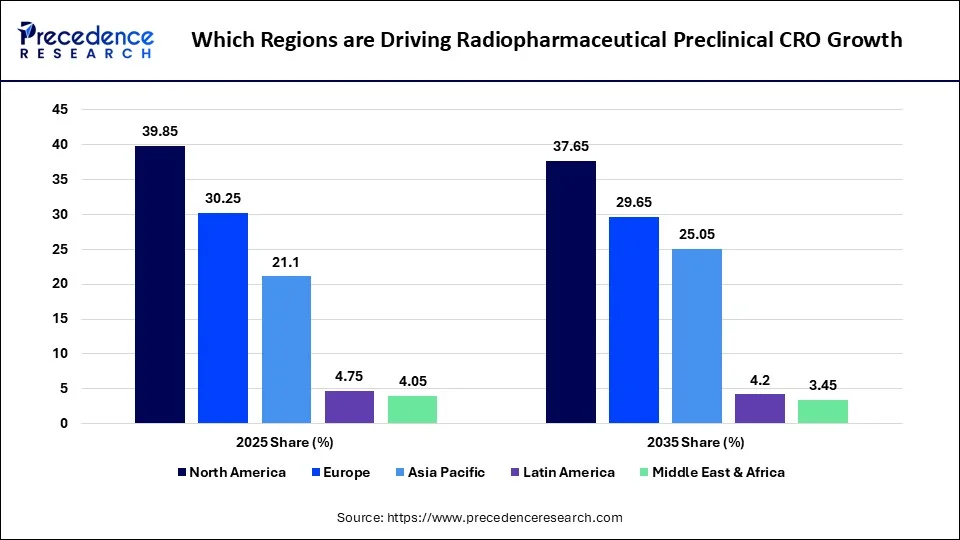
North America dominated the market with a share of 39.85% in 2025, due to its well-established CRO infrastructure and radiopharmaceutical pipelines. Europe held 30.25% of market share in 2025 and is expected to experience the fastest growth with a CAGR of 8.25% during the predicted timeframe. Additionally, the Asia Pacific market share is expected to increase from 21.10% in 2025 to 25.05% in 2035, driven by its expanding domestic scale biopharma and CRO capabilities.
Expert Analyst View-Regional Analysis
North America remains the largest regional market at 39.85%, supported by established CRO infrastructure, radiopharmaceutical programs and specialized imaging. Asia Pacific has the highest CAGR at 10.45%, growing from 21.10% to 25.05%, as radiopharmaceutical research, manufacturing and clinical development localize. CROs combining local animal research, isotope handling and imaging with global regulatory expertise can serve increasingly international programs.
What Regulatory Requirements Influence Radiopharmaceutical Preclinical CRO Studies?
| Regulatory Area | Key Requirement/Consideration | CRO Implication |
| Therapeutic radiopharmaceuticals | Nonclinical safety and pharmacology program | Specialized study design |
| Diagnostic radiopharmaceuticals | Dose- and molecular-specific nonclinical assessment | Efficient diagnostic packages |
| Radiation toxicity | Assessment of potential late radiation effects | Longer-duration safety expertise |
| Biodistribution | Target and non-target tissue exposure | Quantitative tissue analysis |
| Dosimetry | Organ/tissue radiation exposure | Imaging and absorbed-dose calculations |
| Radiochemistry | Identity,purity ad radiolabeling | Specialized hot-cell/radiochemistry infrastructure |
| Animal Studies | Appropriate species and models | Specialized animal facilities |
| Data integrity | Reliable Study data and documentation | GLP/QC systems and traceability |
FDA oncology guidance covers systemic therapeutic radiopharmaceuticals undergoing alpha, beta, and/or gamma decay and recommends appropriate nonclinical programs. Separate FDA microdose guidance addresses nonclinical studies supporting diagnostic radiopharmaceutical development. The IAEA preclinical guidance offers an international framework for scientific activities and facility considerations.
Expert Analyst View - Regulatory Framework Analysis
Regulation increases the value of CROs that can demonstrate validated workflows, isotope-handling expertise, radiation-safety controls, imaging qualification, animal-study capabilities, and defensible quantitative analysis. The regulatory burden is therefore not limited to toxicology; it spans the entire data chain, from radiochemistry and animal dosing through imaging, biodistribution, dosimetry, and interpretation.
Which Companies Provide Relevant Radiopharmaceutical Preclinical Capabilities?
| Company | Relevant Capability | Market Relevance |
| Medpace | Radiopharmaceutical imaging, PET/SPECT, dosimetry and nuclear medicine expertise | Integrated imaging/dosimetry and clinical-development support |
| Charles River | PET/SPECT, radiochemistry, QWBA, biodistribution, animal models, radiolabeling | Integrated preclinical radiopharmaceutical development |
| Other Specialized CROs | Radiochemistry, imaging, animal studies, biodistribution and toxicology | Specialized project outsourcing |
Charles River
Charles River Laboratories provides preclinical imaging and radiochemistry services, including microPET/SPECT, CT, QWBA, radiolabeling, biodistribution, animal models, and quantitative analysis. It labels antibodies, peptides, oligonucleotides, nanoparticles, and small molecules. PET/SPECT studies support oncology and neuroscience research and use tracers such as ^18F, ^68Ga, ^89Zr, ^177Lu, ^125I, and ^111In.
Medpace
Medpace offers specialized radiopharmaceutical capabilities in nuclear imaging, dosimetry, and radiation therapy development. Its platform supports quantitative PET/CT, SPECT/CT, and planar imaging, plus customized biodistribution and absorbed dose.
Medpace's imaging organization also has specialized expertise in scanner calibration, image reconstruction, and PET/CT and SPECT/CT analysis.
Expert Analyst View - Company and CRO Intelligence
The competitive edge is shifting toward specialization combined with integration.
A generalist CRO may offer animal pharmacology or toxicology, but radiopharmaceutical developers increasingly need access to specialized infrastructure, including:
- Hot-cell/radiochemistry facilities
- Cyclotron or isotope access
- PET/SPECT systems
- Quantitative image analysis
- QWBA/autoradiography
- Radioactive sample analysis
- Radiation dosimetry
- Specialized animal models
- Radiation safety infrastructure
- Regulatory documentation
CROs that combine several of these capabilities can potentially reduce the number of handoffs between study providers.
How is the RLT Pipeline Expanding the Preclinical Research Opportunity?
Expert Analyst View - R&D Pipeline
| Development Area | Example | Development Relevance |
| PSMA-targeted RLT | ^177Lu-PSMA-617 | Biodistribution, dosimetry and efficacy |
| Actinium PSMA | ^225Ac-PSMA-617 | Alpha-particle dosimetry and safety |
| SSTR-targeted RLT | Lutathera | Peptide targeting and organ distribution |
| FAP-targeted RLT | AAA614 | New-target biodistribution |
| CCK2R-targeted RLT | LNTH-2503 | New therapeutic target and isotope pairing |
| Other theranostics | Multiple isotope/ligand combinations | Paired imaging and therapy development |
Novartis' current pipeline includes AAA614, an FAP-targeting radioligand program; AAA817 (^225Ac-PSMA-617); and several Pluvicto/Lutathera development programs.
In 2025, Lantheus reported that LNTH-2503, a lutetium-177 theranostic pair targeting CCK2R, had entered therapeutic clinical development planning, while its gallium-68 imaging study was ongoing.
Expert Analyst View - R&D Pipeline
Pipeline expansion creates demand for CRO services at several stages:
- Discovery: radiolabeling, receptor binding, and imaging.
- Lead optimization: biodistribution, target-to-background ratios, and pharmacokinetics.
- Candidate selection: efficacy, organ uptake, and dosimetry
- IND-enabling: toxicology, radiation safety characterization, and regulatory documentation.
- Translation: Translate preclinical imaging and dosimetry methods into clinical protocols.
This creates an ongoing CRO opportunity, not just a one-time study requirement.
What do Radiopharmaceutical Developers Evaluate When Selecting a Preclinical CRO?
| Buyer Criterion | Importance | Procurement Question |
| Isotope Access | Very high | Can the CRO reliably obtain the required radionuclide? |
| Radiolabeling Capacity | Very high | Can the candidate be labeled without compromising biological activity? |
| PET/SPECT Infrastructure | Very high | Can quantitative imaging be performed internally? |
| Biodistribution | Very high | Can target and non-target tissue exposure be quantified? |
| Dosimetry | Very high | Can absorbed doses be calculated using validated workflows? |
| Animal Models | High | Are appropriate disease and translational models available? |
| Toxicology | Very high | Can radiation and ligand-related safety be assessed? |
| GLP Capability | Very high | Can studies support regulatory submissions where required? |
| Data Integration | High | Can imaging, PK, biodistribution, and toxicology be integrated? |
| Turnaround Time | High | Can studies be synchronized with isotope half-life and program milestones? |
| Regulatory Expertise | Very high | Can the study package align with FDA/EMA/other expectations? |
| Radiation Safety | Very high | Are isotope handling and radioactive waste processes established? |
| Global Reach | Medium-high | Can the CRO support multinational development? |
| Cost | High | Is outsourcing economically justified versus internal infrastructure? |
Radiopharmaceutical developers prioritize multiple parameters whens depending on their preclinical requirements. Buyers consider isotope access, radiolabeling capability, GLP capability, toxicology data, and animal models to meet regulatory safety standards. The developers consider cost, turnaround time, and global reach. Research institutions are ahead in developing imaging and biodistribution infrastructure
Expert Analyst View - Buyer Intelligence
Buying decisions are more technical than conventional preclinical CRO outsourcing; sponsors may prioritize isotope availability and imaging infrastructure over cost, especially for short-lived or scarce isotopes.
Another key criterion is the ability to integrate datasets, which helps sponsors realize greater development value when a single CRO can connect radiolabeling → PET/SPECT → biodistribution → PK → dosimetry → efficacy, rather than requiring multiple vendors.
What is driving Radiopharmaceutical Preclinical CRO Demand?
Expansion of Radioligand Therapy Pipelines
RLT programs are moving beyond established PSMA and SSTR targets to include FAP, CCK2R, and others.
Growth of targeted Alpha Therapy
The supplied 11.85% CAGR for alpha emitters reflects growing development activity involving alpha-emitting radionuclides.
Increasing Dosimetry Requirements
As therapeutic radiopharmaceutical programs mature, quantitative radiation exposure assessment becomes increasingly important.
New Isotope Development
New radionuclides bring new CRO requirements for chemistry, imaging, safety, and dosimetry.
What are the Potential Market Challenges in the Radiopharmaceutical Preclinical CRO Market?
Regulatory Complexity and Cost: This infrastructure requires specialized scientific and documentation expertise that increases CRO capital investment requirements.
Limited Specialized Equipment and Workforce: Large-animal and NHP studies require high-value and well-established expertise workers that constrain capacity
Cross-Border Transport Hurdle: The lack of a mature supply chain and complicated international projects create logistical restraint
Experts Insights
The main operational constraint is the combination of isotope logistics and specialized infrastructure. A CRO may have animal facilities and imaging equipment yet still lack access to the required radionuclide. This is especially relevant for Ac-225 and other emerging therapeutic isotopes.
The DOE's recent work to expand Ac-225 production illustrates how isotope availability itself is becoming an infrastructure-development issue.
The radiopharmaceutical preclinical CRO market is evolving from a set of specialized laboratory services into integrated translational development infrastructure. Traditional radiolabeling, animal testing, and biodistribution workflows are expanding into a more sophisticated sequence:
Radiochemistry → Target Binding → PET/SPECT → Biodistribution → PK → Dosimetry → Efficacy → Toxicology → Regulatory Package
This shift is particularly evident in targeted radioligand therapy. The growing number of PSMA, SSTR, FAP, and other target programs is driving recurring demand for quantitative imaging and radiation-dose characterization.
Novartis' pipeline alone demonstrates development across multiple RLT targets and radionuclides.
At the same time, isotope supply is becoming a strategic part of preclinical CRO capacity. The DOE's ongoing expansion of Ac-225 production and the IAEA's work on medical-isotope production underscore that access to therapeutic radionuclides remains an important industry infrastructure issue.
Our Experts
- The primary market research process was carried out by Deepa Pandey, Senior Research Associate, who also developed the methodology and conducted market segmentation, regional trend analysis, buyer intelligence, competitive analysis, and forecasting, establishing the report's analytical foundation.
- Aman Singh, Head of Research, has gathered and confirmed regulatory policies, company financial information, and other quantitative data from independent sources, strengthening the evidence supporting the market value calculations.
- Aditi Shivarkar, VP Research, has reviewed and refined the research material, verified the facts, corrected inconsistencies, and completed the document to ensure it is accurate and brief.
Radiopharmaceutical Preclinical CRO Market Segments Covered in the Report
By Service Type
- Biodistribution & Pharmacokinetics
- Dosimetry Studies
- Molecular Imaging Services
- Efficacy & Pharmacology
- Toxicology & Safety Assessment
- Radiochemistry & Radiolabeling
- Other Preclinical Services
By Radiopharmaceutical Type
- Radioligand Therapeutics
- Diagnostic Radiopharmaceuticals
- Theranostic Agents
- Monoclonal Antibody-Based Radiopharmaceuticals
- Peptide-Based Radiopharmaceuticals
- Other Radiopharmaceuticals
By Radioisotope
- Beta Emitters
- Positron Emitters
- Alpha Emitters
- Gamma Emitters
- Auger/Other Emerging Emitters
- Mixed/Paired Isotopes
By Study Type
- Biodistribution Studies
- Dosimetry Studies
- Pharmacokinetic Studies
- Efficacy Studies
- Toxicology Studies
- Imaging & Quantification
- Other Exploratory Studies
By Imaging Modality
- PET/CT
- SPECT/CT
- PET/MRI
- Optical Imaging
- CT/MRI Without Nuclear Imaging
- Multimodal Imaging
By Application
- Oncology
- Cardiology
- Neurology
- Infectious Diseases
- Inflammation & Autoimmune Disorders
- Endocrine & Metabolic Disorders
- Other Applications
By Disease Area
- Solid Tumors
- Hematological Cancers
- Neurological Disorders
- Cardiovascular Disorders
- Endocrine Disorders
- Infectious Diseases
- Other Diseases
By Animal Model
- Mice
- Rats
- Rabbits
- Non-Human Primates
- Other Rodents
- Other Large Animals
By End User
- Pharmaceutical Companies
- Biotechnology Companies
- Academic & Research Institutions
- Radiopharmaceutical Developers
- Medical & Imaging Companies
- Government & Other Research Organizations
By Delivery Model
- Full-Service CR
- Specialized Radiopharmaceutical CRO
- Project-Based CRO
- Academic/Institutional Collaboration
- Hybrid/In-House + CRO
By Region
- North America
- Europe
- Asia Pacific
- Latin America
- Middle East & Africa
For inquiries regarding discounts, bulk purchases, or customization requests, please contact us at sales@precedenceresearch.com
Frequently Asked Questions





Ask For Sample
No cookie-cutter, only authentic analysis – take the 1st step to become a Precedence Research client
 Get a Sample
.webp)



 sales@precedenceresearch.com
 Schedule a Meeting
