



Preclinical Bioanalytical Testing Services Market Trends, Cost per Unit, Sales Volume, Recycling Rate, Export & Import Metrics, Adoption Rates, Pricing Strategies, Production Volume, and Logistics Efficiency
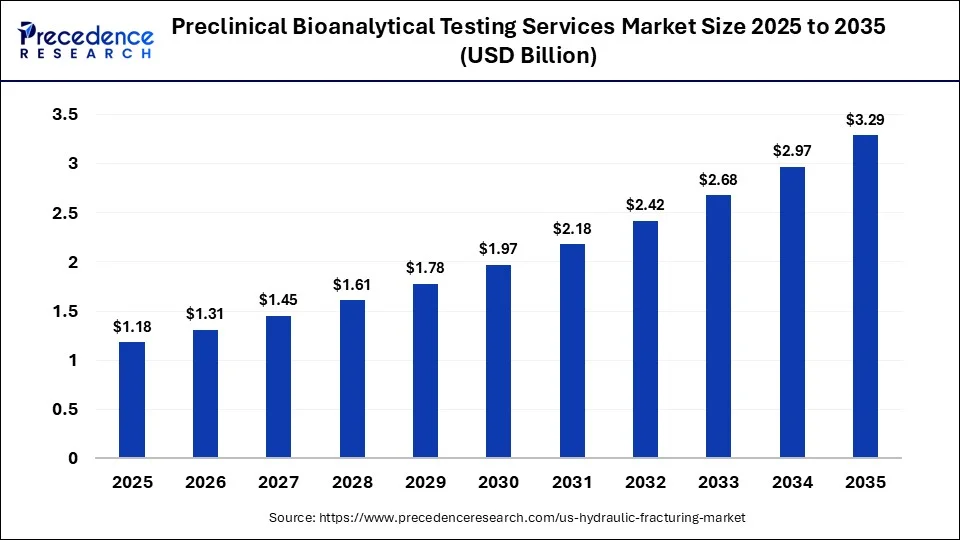
The preclinical bioanalytical testing services market was valued at USD million in 2025, expanding at a CAGR of 10.80% by 2035. An expanding volume of drug candidates demands rigorous pharmacokinetic (PK), toxicokinetic (TK), and biomarker evaluations before human clinical trials. This report was curated by our healthcare research analyst, Deepa Pandey. Her research is useful for healthcare providers, medical product manufacturers, biotechnology firms, and investors for competitive benchmarking and strategic decision-making.
Source: https://www.precedenceresearch.com/preclinical-bioanalytical-testing-services-market
 Get a Sample
 Table Of Content


Preclinical Bioanalytical Testing Services Market Growth, Innovations and Market Size Forecast
The preclinical bioanalytical testing services market is forecasted to expand from USD 1.31 billion in 2026 to USD 3.29 billion by 2035, growing at a CAGR of 10.8% from 2026 to 2035. Meanwhile, evolving regulatory standards require precise pharmacokinetic (PK), toxicokinetic (TK), and even biomarker validation data before human trials. Deepa Pandey has more than 5 years of experience focusing on the healthcare and medicine sector. Automated robotic liquid handlers and integrated sample-preparation systems standardize repetitive tasks like pipetting, dilution, and plate preparation, decreasing human error and boosting daily throughput. The market is estimated at USD 1.18 billion in 2025, expanding at a CAGR of 10.80% by 2035. Agencies such as the U.S. FDA and the European Medicines Agency (EMA) need rigorous, precise pharmacokinetic and toxicokinetic data during preclinical evaluations, thus prompting pharmaceutical sponsors to partner with specialized laboratories.
Key Takeaways
- By service type, the pharmacokinetic (PK) testing segment led the market with a share of 24.85% in 2025.
- By analytical technique, the LC-MS/MS segment led the market with a 39.65% share in 2025.
- By molecule type, the small molecules segment captured a major revenue share of 48.25% in 2025.
- By sample type, the plasma & serum segment captured the largest market share of 53.85% in 2025.
- By application, the pharmacokinetics segment led the market with a share of 28.65% in 2025.
- By end user, the pharmaceutical companies segment led the market with a share of 42.35% in 2025.
- By service delivery model, the outsourced contract testing segment led the market with a share of 29.85% in 2025.
- ICON has reported a figure of $8.251B in total revenue in 2025 for bioanalytical, biomarker, and laboratory services.
- Charles River has reported a figure of $4.02B in total revenue for its broad nonclinical development platform.
Segmental Analysis
How Large Will the Preclinical Bioanalytical Testing Services Market Become by 2035?
The global preclinical bioanalytical testing services market comprises analytical services utilized to characterize drug candidates and biological samples during preclinical development. These services support toxicokinetic (TK), bioavailability, pharmacokinetic (PK), exposure, biomarker, immunogenicity, and even drug-metabolism studies across small molecules, vaccines, biologics, and advanced therapeutic candidates.
Demand is increasingly supported by complex drug-development pipelines, greater outsourcing to specialized laboratories and CROs, sophisticated LC-MS/MS along with ligand-binding assays, and the requirement to generate reliable exposure and safety data before clinical development. The market is also moving toward integrated bioanalytical programs combining sample analysis, validation, pharmacokinetic interpretation, method development, and biomarker testing.
Analyst View - Service Type
The market is positioned for sustained double-digit growth as bioanalytical testing becomes increasingly integrated into preclinical pharmacology, toxicology, and translational development. Moreover, the strongest structural opportunity is not simply higher sample volumes but greater analytical complexity per development program. Biologics, cell and gene therapies, oligonucleotides, peptides, and targeted therapies require more specialized assays, matrices, and biomarker measurements.
The regulatory significance of reliable bioanalytical data is also increasing. ICH M10 establishes harmonized expectations for validation as well as study-sample analysis for chemical and biological drugs and mainly covers nonclinical PK and TK studies.
Which Service Type Accounts for the Largest Demand?
| Service Type | 2025 Share (%) | 2035 Share (%) | CAGR | Growth Factor |
| Pharmacokinetic (PK) Testing | 24.85% | 23.35% | 10.05% | Core exposure and drug-development studies |
| Toxicokinetic (TK) Testing | 16.20% | 15.85% | 10.55% | Safety exposure assessment |
| Bioavailability & Bioequivalence Testing | 12.65% | 11.80% | 9.95% | Comparative exposure evaluation |
| Drug Metabolism & Pharmacology | 11.35% | 10.90% | 10.35% | Increasing characterization of drug disposition |
| Biomarker Analysis | 12.80% | 14.10% | 11.90% | Precision development and translational research |
| Immunogenicity Testing | 9.75% | 11.20% | 12.35% | Growth of biologics and advanced therapies |
| Method Development & Validation | 8.85% | 9.45% | 11.55% | Increasing analytical complexity |
| Other Bioanalytical Services | 3.55% | 3.35% | 10.15% | Specialized testing requirements |
| Total | 100.00% | 100.00% | — | — |
PK testing dominates the market with a share of 24.85%, representing the largest service category, as exposure and concentration data are fundamental to preclinical drug development because they measure how a new drug moves through a living body, which aids in proving safety before human trials begin.
Biomarker and immunogenicity testing are modeled to gain share more rapidly as targeted therapies, biologics, and increasingly complex development programs need more specialized analytical characterization.
Analyst View - Analytical Technique
PK remains the foundational workload because sponsors need quantitative exposure information to connect administered dose with systemic concentrations along with pharmacological or toxicological effects. TK testing remains closely associated with regulated safety studies. Further, biomarker analysis and immunogenicity testing should capture increasing analytical spend as development programs become more biologically complex.
ICH M10 explicitly covers concentration measurement of chemicals and biological drugs in biological matrices from nonclinical TK and PK studies, thus reinforcing the importance of validated quantitative assays.
Which Analytical Technique Is Growing Fastest?
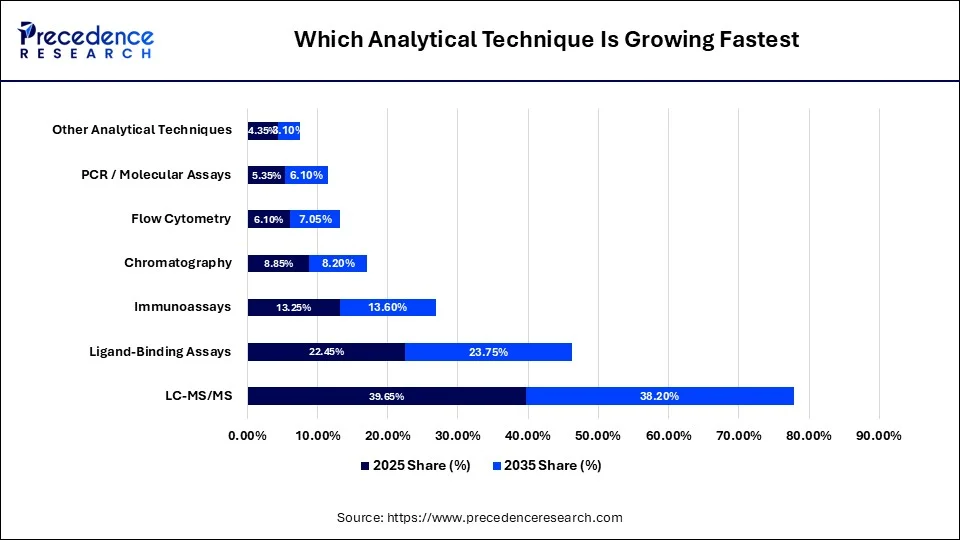
LC-MS/MS maintains the largest share of 39.65% as of its established role in quantitative bioanalysis and drug-metabolism studies. Ligand-binding, flow cytometry, along with molecular approaches, are positioned for stronger growth as the pipeline shifts toward cellular therapies, biologics, and molecularly targeted candidates.
Analyst View - Analytical Technique
The technology mix suggests a two-track market. LC-MS/MS remains the quantitative backbone, mainly for small molecules and metabolites, while ligand-binding and molecular or cellular platforms are expanding with biologics and advanced therapies. Moreover, ICH M10 separately offers recommendations for chromatographic and ligand-binding assays, which include validation and study-sample analysis.
The analytical opportunity therefore increasingly depends on laboratories being able to function multiple platforms within a single development program rather than depending on a single analytical technology.
Which Molecule Type Accounts for the Largest Preclinical Bioanalytical Testing Services Market Share?
| Molecule Type | 2025 Share (%) | 2035 Share (%) | CAGR | Growth Factor |
| Small Molecules | 48.25% | 43.80% | 9.65% | Large installed development base |
| Biologics | 28.40% | 31.15% | 11.85% | Expansion of biologic pipelines |
| Vaccines | 8.15% | 7.90% | 10.45% | Preclinical safety and immunogenicity |
| Cell & Gene Therapies | 5.85% | 8.25% | 15.25% | Advanced therapy development |
| Peptides & Oligonucleotides | 6.20% | 6.95% | 12.10% | Increasing nucleic-acid and peptide pipelines |
| Other Advanced Therapies | 3.15% | 1.95% | 6.85% | Smaller specialized pipeline |
| Total | 100.00% | 100.00% | — | — |
Small molecules remain the largest molecule category because they remain foundational to traditional drug development, generic formulations, and high-volume oral solid dosage drugs. Global health regulators, such as the FDA, require core small-molecule bioequivalence and even toxicokinetic studies for standard drug approvals and generic submissions, but biologics and advanced therapies are driving a larger proportion of analytical requirements. Cell and gene therapies represent the fastest-growing segment because of their more complex bioanalytical and biomarker characterization requirements.
Analyst View - Molecule Type
The market is gradually changing from a predominantly small-molecule analytical model toward multi-platform characterization of complex biological products. This increases need for ligand-binding assays, flow cytometry, immunogenicity testing, molecular assays, and specialized biomarker panels.
A useful external indicator is the development pipeline itself: Labcorp recorded that nearly 2,000 cell and gene therapy clinical trials were underway worldwide and described cell and gene therapy as representing approximately 20% of biopharma development pipelines. During 2025, it expanded its cell and gene therapy laboratory in Madison, Wisconsin.
Which Sample Type Is Growing Fastest?
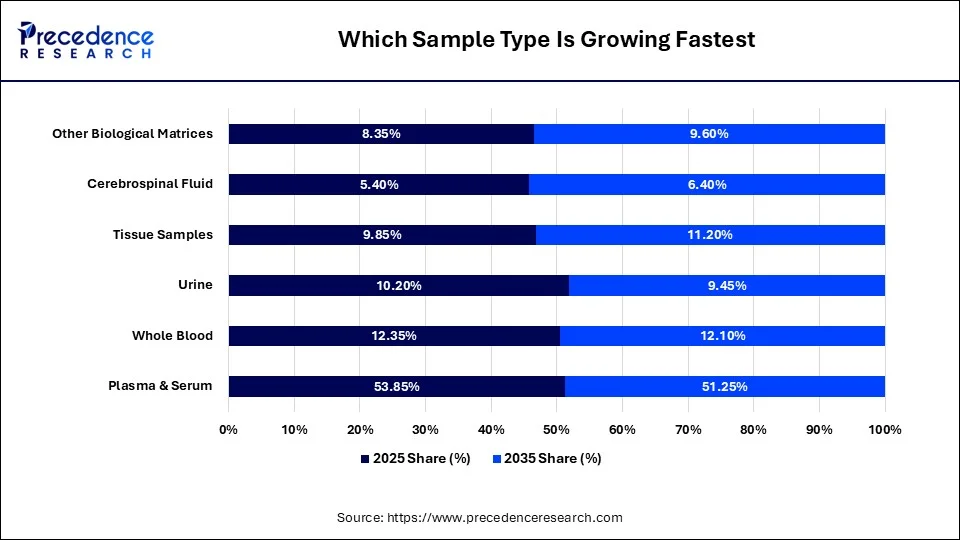
Plasma and serum remain the principal sample matrices and also hold a market share of 53.85% in 2025 as they are extensively used for concentration, PK, TK, and exposure assessments. Tissue and cerebrospinal fluid testing are expected to expand faster as researchers investigate tissue distribution and therapies targeting the central nervous system.
Analyst View - Sample Type
The continued dominance of plasma and serum thus reflects their central role in systemic exposure studies. However, the faster growth of tissue along with CSF analysis indicates increasing interest in site-specific drug distribution, mainly for CNS, oncology, neurological and advanced therapeutic programs. ICH M10 explicitly recognizes blood, serum, plasma, other body fluids, and tissues as biological matrices used for bioanalytical measurements in nonclinical studies.
Which Application Accounts for the Largest Preclinical Bioanalytical Testing Services Market Share?
| Application | 2025 Share (%) | 2035 Share (%) | CAGR | Growth Factor |
| Pharmacokinetics | 28.65% | 26.80% | 9.95% | Core preclinical exposure studies |
| Toxicology & Safety Assessment | 21.85% | 20.90% | 10.30% | Safety characterization |
| Drug Metabolism | 13.40% | 12.85% | 10.35% | Increasing disposition studies |
| Bioavailability | 10.65% | 9.65% | 9.75% | Exposure comparison |
| Biomarker Analysis | 10.95% | 12.80% | 12.45% | Translational and precision development |
| Immunogenicity | 7.85% | 9.75% | 13.05% | Biologics and advanced therapies |
| Exposure & Dose Optimization | 4.95% | 5.40% | 11.75% | Data-driven dose selection |
| Other Applications | 1.70% | 1.85% | 11.70% | Specialized development needs |
| Total | 100.00% | 100.00% | — | — |
Pharmacokinetics represents the largest application with a market share of 28.65% in 2025; drug developers require precise data on how complex new therapeutics move through the body before human trials, while immunogenicity and biomarker analysis are modeled as faster-growing applications. Increasing usage of biologics and advanced therapies demands analytical programs capable of characterizing drug exposure alongside biological response.
Analyst View - Application
The application mix is moving from pure concentration measurement toward exposure-plus-response characterization. Moreover, biomarkers can offer pharmacodynamic and translational information, while immunogenicity becomes mainly relevant for biological products. FDA's April 2026 final guidance specifically addresses validation of bioanalytical methods utilized to evaluate biomarker concentrations and notes that the guidance can inform methods used for biomarker analysis in nonclinical samples.
Which End User Accounts for the Largest Demand?
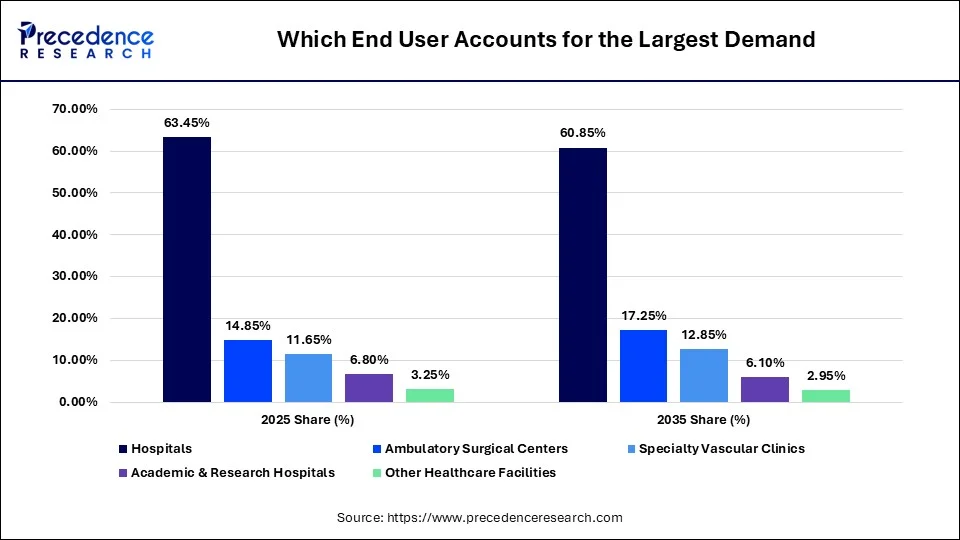
Pharmaceutical firms represent the largest end-user segment because outsourcing saves money, and complex new drug types require specialized laboratory expertise, while biotechnology companies and CROs are expected to gain share. Smaller biotechnology firms frequently depend on external laboratories for specialized analytical capabilities that would otherwise need significant investment in instrumentation and validated infrastructure.
Analyst View - End User
Outsourcing is a central structural driver. Bioanalytical laboratories demand expensive mass spectrometry platforms, qualified personnel, assay-development expertise, validated processes, and appropriate sample-management infrastructure. For smaller biotech companies, thus, outsourcing converts these fixed investments into project-based expenditure.
The CRO model is also increasingly integrated. ICON plc recorded that its laboratory services include bioanalytical, vaccine, biomarker, and GMP laboratory services, while its broader model spans services from compound selection through clinical development. ICON reported $8.25 billion in 2025 revenue and nearly 40,100 employees across 97 locations in 55 countries; this is company-wide revenue and should not be interpreted as preclinical bioanalytical revenue.
Which Service Delivery Model Accounts for the Largest Demand?
Outsourced contract testing accounts for the largest delivery-model share with 29.85%. The outsourcing trend is mainly relevant for smaller biotechnology companies and sponsors requiring access to advanced mass spectrometry, validated methods, ligand-binding assays, and specialized biological matrices.
Analyst View - Service Delivery Model
The delivery model is becoming increasingly essential to competitive positioning. Sponsors increasingly value providers that can combine method development, validation, sample analysis, data interpretation, and reporting rather than managing several specialist vendors.
This is consistent with the wider CRO industry's evolution toward integrated R&D services. Charles River Laboratories is mainly described as a full-service nonclinical drug-development partner supporting clients from target identification via nonclinical development, including GLP and non-GLP discovery and safety-assessment services.
Regional Market Analysis
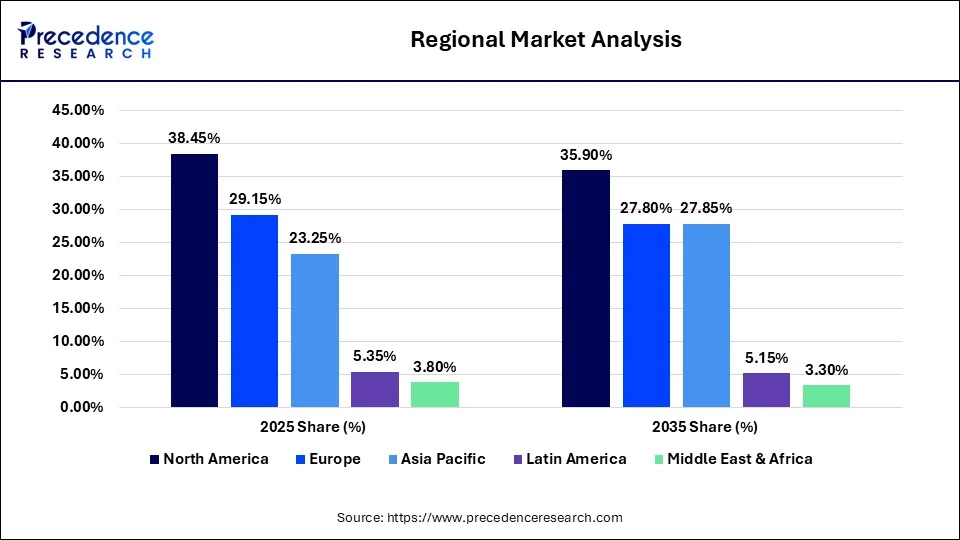
North America holds the largest revenue share in the preclinical bioanalytical testing services market as biopharmaceutical firms continuously invest heavily in new drug pipelines, biologics, along with personalized medicines. The United States drives the majority of this regional market because of high biopharmaceutical R&D spending and a dense concentration of research hubs.
Analyst View
North America remains the largest regional market because it concentrates pharmaceutical companies, biotechnology firms, CROs, research institutions, and regulatory-driven development activity. Europe follows with a mature pharmaceutical along with analytical ecosystem.
Asia Pacific has the highest supply CAGR at 12.85%, thus indicating the strongest expansion opportunity. The region benefits from rising pharmaceutical manufacturing, biotechnology investment, CRO development, along with cost-sensitive outsourcing.
The regional competitive structure is also becoming more distributed. For instance, Labcorp's Biopharma Laboratory Services segment generated $3.098 billion in 2025 revenue, thus serving pharmaceutical, biotechnology, and diagnostic companies globally; its Central Laboratory business supports clinical-trial activity in nearly 100 countries. This is broader than preclinical bioanalysis, but demonstrates the scale of the global outsourced laboratory ecosystem.
Regulatory & Technical Environment
| Regulatory/Technical Area | Relevance to Preclinical Bioanalysis | Market Impact |
| ICH M10 | Bioanalytical method validation and study-sample analysis | Standardization of assay quality |
| GLP | Quality requirements for nonclinical laboratory studies | Supports validated, traceable testing |
| PK/TK Analysis | Exposure measurement during nonclinical development | Core recurring testing demand |
| Biomarker Validation | Quantification of biological response indicators | Expands specialized assay demand |
| Ligand-Binding Assays | Large-molecule and biologic quantification | Supports biologics growth |
| Chromatographic Assays | Chemical and metabolite quantification | Supports LC-MS/MS and related services |
| NAMs | Increasing use of non-animal approaches | Changes the composition of preclinical analytical demand |
| Animal Rule | PK/PD and animal efficacy data in specific circumstances | Creates specialized bioanalytical requirements |
ICH M10 is mainly important because it applies to bioanalytical methods used to quantify chemical and biological drugs in biological samples obtained during nonclinical TK and PK studies. It demands methods to be appropriately characterized, validated, and documented to produce reliable data for regulatory decision-making.
FDA also finalized a dedicated Bioanalytical Method Validation for Biomarkers guidance in April 2026, thus extending regulatory attention around biomarker assay validation and explaining that the guidance can inform methods utilized for nonclinical biomarker samples.
At the same time, FDA is pursuing approaches that decrease unnecessary animal testing. Its March 2026 draft guidance offers considerations for using new approach methodologies (NAMs) in drug development, which includes validation principles and regulatory submissions.
Analyst View - Regulatory and Technical Environment
The emergence of NAMs should not be interpreted simply as a reduction in bioanalytical testing. Instead, it is likely to change the analytical mix. Moreover, conventional animal PK/TK studies may increasingly coexist with human-relevant models, organoids, in vitro systems, and other approaches that still require quantitative measurement of drug concentrations, metabolites, and biomarkers.
Company & Competitive Intelligence
Labcorp
Labcorp offers one of the clearest examples of the scale of outsourced laboratory infrastructure. Its Biopharma Laboratory Services segment generated $3,098.2 million in 2025 revenue, up from $2,922.6 million in 2024. The segment involves Early Development Research Laboratories and Central Laboratory Services and serves biotechnology, pharmaceutical, and diagnostic companies worldwide.
Labcorp reported that its BLS business supported nearly 85% of new drugs and therapeutic products accepted by the FDA in 2025. This is a broad BLS statistic and is not equivalent to market share in preclinical bioanalytical testing. For 2026, the firm disclosed an updated BLS revenue guidance range of $3.269–$3.300 billion, thus representing 5.5%-6.5% growth based on 2025 revenue.
Strategic relevance: integrated early-development, central-lab, and analytical infrastructure creates opportunities to bundle bioanalytical work into wider development programs.
Charles River Laboratories
Charles River reported $4.02 billion in total 2025 revenue. Its Discovery and Safety Assessment segment generated $2.40 billion, thus representing nearly 60% of company revenue. The DSA segment offers discovery and regulated safety-assessment services, positioning Charles River as an important integrated nonclinical-development provider. Company-wide revenue should not be treated as bioanalytical-testing revenue.
Strategic relevance: providers with nonclinical safety and pharmacology along with analytical capabilities can integrate bioanalysis directly into wider preclinical study workflows.
ICON plc
ICON reported $8.251 billion in 2025 revenue and nearly 40,100 employees across 97 locations in 55 countries. Its laboratory portfolio involves bioanalytical and biomarker services alongside vaccine, GMP, and central-laboratory capabilities.
Strategic relevance: ICON illustrates the rising convergence between specialist laboratory services and full-service CRO models.
Company Operational Indicators
| Company | 2025 Relevant Reported Figure | Capability / Relevance |
| Labcorp | $3.098B BLS revenue | Early development + central laboratory |
| Charles River | $2.400B DSA revenue | Discovery + regulated safety assessment |
| ICON | $8.251B total revenue | Bioanalytical + biomarker + laboratory services |
| Labcorp | ~85% of 2025 FDA-approved new drugs/therapeutics supported | Broad development/laboratory reach |
| Labcorp | ~100 countries | Global laboratory footprint |
| ICON | 97 locations / 55 countries | Global CRO infrastructure |
| Charles River | $4.02B total revenue | Broad nonclinical development platform |
Important: These are company-level or segment-level operational indicators, not estimates of each firm's revenue from preclinical bioanalytical testing services.
Analyst View:
The competitive landscape is characterized by three provider models:
- Integrated global CROs combining preclinical, clinical, and laboratory services.
- Large laboratory platforms with specialized bioanalytical and also biomarker capabilities.
- Specialist bioanalytical laboratories competing on assay depth, turnaround time, complex matrices, and technical expertise.
This creates room for differentiation around validated methods, assay sensitivity, difficult matrices, biomarker panels, advanced biologics, and integrated study interpretation rather than basic sample testing alone.
Industry Data Points Supporting Demand
| Indicator | Latest Reported Data | Relevance |
| Labcorp BLS revenue, 2025 | $3.098B | Scale of outsourced biopharma laboratory demand |
| Labcorp BLS growth, 2025 | ~6.0% vs. 2024 | Continued laboratory-services expansion |
| Labcorp FDA-approved products supported, 2025 | ~85% | Broad development-services penetration |
| Labcorp countries served through Central Laboratory | ~100 | International laboratory network |
| Charles River DSA revenue, 2025 | $2.40B | Scale of nonclinical development outsourcing |
| Charles River total revenue, 2025 | $4.02B | Overall CRO/nonclinical platform scale |
| ICON total revenue, 2025 | $8.251B | Scale of global outsourced development |
| ICON locations | 9700.00% | Global operating footprint |
| ICON countries | 5500.00% | International service coverage |
These indicators do not represent the size of the preclinical bioanalytical testing services market itself. They offer observable operating evidence around the scale and direction of the laboratory or CRO ecosystem supporting drug development.
Key Growth Drivers
Increasing complexity of drug candidates
Biologics, peptides, oligonucleotides, and cell or gene therapies require more specialized analytical methods than conventional small molecules.
Expansion of outsourced development
Sponsors increasingly outsource specialized laboratory functions instead of building complete analytical infrastructure internally.
Greater biomarker utilization
Biomarkers are becoming more significant in translational research, dose selection, and mechanism-of-action assessment.
Higher analytical requirements for biologics
Large molecules frequently demand ligand-binding and immunological approaches alongside conventional analytical platforms.
Increasing method-development requirements
Novel molecules and unusual matrices often demand customized assays, validation, and cross-validation.
Regulatory emphasis on data quality
ICH M10 offers harmonized expectations for validation and study-sample analysis, reinforcing the significance of reliable bioanalytical data.
Increasing advanced-therapy development
Cell and gene therapy development creates demand for molecular assays, specialized biomarkers, cellular analysis, and tissue-related testing.
Integrated CRO models
Sponsors increasingly prefer providers capable of linking toxicology, bioanalysis, pharmacology, biomarker analysis, and interpretation within a single program.
Key Challenges
| Challenge | Market Implication |
| High capital cost of LC-MS/MS and advanced platforms | Favors established laboratories and CROs |
| Shortage of specialized bioanalytical scientists | Can constrain capacity |
| Complex biologic matrices | Increases method-development time |
| Assay validation requirements | Raises project cost and documentation burden |
| Cross-study assay comparability | Requires strong quality systems |
| Difficult tissue/CSF matrices | Creates technical barriers |
| Rapid evolution of advanced therapies | Requires continuous platform investment |
| NAM adoption | May change conventional preclinical study structures |
| Pricing pressure from outsourced providers | Can affect routine-testing margins |
| Long project timelines | Requires capacity planning and sample-management systems |
The principal competitive challenge is changing from simple analytical capacity toward scientific depth plus operational scalability. Providers demand enough instruments and personnel to process high sample volumes while maintaining traceability, data integrity, validated methods, and turnaround performance.
Buyer Intelligence
| Buyer Requirement | Why It Matters |
| Method sensitivity | Required for low-concentration analytes |
| Accuracy and precision | Critical for regulatory-quality datasets |
| Assay validation | Determines suitability for intended study |
| GLP capability | Important for regulated nonclinical programs |
| LC-MS/MS capacity | Core requirement for small molecules/metabolites |
| Ligand-binding capability | Important for biologics |
| Biomarker expertise | Supports translational development |
| Complex-matrix capability | Enables tissue, CSF and specialized studies |
| Turnaround time | Influences development-program timelines |
| Sample logistics | Critical for geographically distributed studies |
| Data integrity | Necessary for regulatory submissions |
| Regulatory experience | Reduces submission and compliance risk |
| Integrated PK/TK interpretation | Converts analytical output into development insight |
| Global capacity | Important for multinational development programs |
Method sensitivity is required for low-concentration analytes. Accuracy and precision are vital for regulatory-quality datasets. Assay validation analyses suitability for the intended study.
Analyst View - Buyer Intelligence
Bioanalytical buyers increasingly determine laboratories on more than price. The purchasing decision is influenced by technical capability, turnaround time, regulatory history, assay robustness, sample handling, scientific consultation, data quality, and ability to scale with the sponsor's pipeline.
For smaller biotech firms, access to sophisticated infrastructure without large capital investment can be mainly important. For large pharmaceutical firms, vendor selection increasingly focuses on global capacity, standardized quality systems, and the ability to handle complex multi-study programs.
Strategic Market Outlook
The preclinical bioanalytical testing services market is evolving from a conventional drug-concentration measurement business into an integrated analytical intelligence layer for preclinical development.
The core market remains anchored by PK, TK, plasma or serum testing, and LC-MS/MS. However, future incremental need is increasingly associated with biologics, advanced therapies, immunogenicity, cellular analysis, biomarkers, molecular assays, and difficult biological matrices.
The supplied segmentation shows three particularly important structural shifts:
- Cell & gene therapies: 15.25% CAGR
- PCR/molecular assays: 12.35% CAGR
- Immunogenicity testing: 12.35% CAGR
- Cerebrospinal-fluid testing: 12.85% CAGR
- Asia Pacific: 12.85% CAGR
At the same time, FDA's evolving approach to biomarker validation and even new approach methodologies suggest that the analytical environment will continue to change. FDA's 2026 biomarker guidance directly aims to validate biomarker bioanalytical methods, while its NAM guidance reflects increasing interest in methods that can enhance the human relevance of nonclinical development.
For service providers, the commercial opportunity therefore extends beyond routine testing toward validated assays, complex-matrix analysis, integrated method development, biomarker characterization, PK/TK interpretation, immunogenicity, and regulatory-quality data packages.
Expert Insights
The preclinical bioanalytical testing services market is Preclinical bioanalytical testing involves identifying and quantifying drugs, metabolites, and biomarkers within biological matrices, such as blood, plasma, or urine, prior to human clinical trials. Our researchers believe that it is anticipated that pharmaceutical firms routinely partner with specialized contract research organizations (CROs) to cut costs and gain technical expertise.
Our Experts
The primary market research process was carried out by Deepa Pandey, Senior Research Associate, who also designed the methodology and did market segmentation, regional trend analysis, competitive analysis, recycling technologies, and forecasts, laying the foundation for the analytical part of the report.
Aman, Head of Research, has gathered and checked regulatory policies, information on recycling capacity, production information, commodity price information, company financial information, and numerous other quantitative information sources, which are obtained independently, thereby increasing the quality of evidence supporting calculations of the market values.
Aditi, VP Research, has validated and refined the research material, verified facts, corrected inconsistencies, and completed the research document, making it accurate and to the point.
Preclinical Bioanalytical Testing Services Market Segmentation
By Service Type
- Pharmacokinetic (PK) Testing
- Toxicokinetic (TK) Testing
- Bioavailability & Bioequivalence Testing
- Drug Metabolism & Pharmacology
- Biomarker Analysis
- Immunogenicity Testing
- Method Development & Validation
- Other Bioanalytical Services
By Analytical Technique
- LC-MS/MS
- Ligand-Binding Assays
- Immunoassays
- Chromatography
- Flow Cytometry
- PCR/Molecular Assays
- Other Analytical Techniques
By Molecule Type
- Small Molecules
- Biologics
- Vaccines
- Cell & Gene Therapies
- Peptides & Oligonucleotides
- Other Advanced Therapies
By Sample Type
- Plasma & Serum
- Whole Blood, Urine, Tissue Samples
- Cerebrospinal Fluid
- Other Biological Matrices
By Application
- Pharmacokinetics
- Toxicology & Safety Assessment
- Drug Metabolism
- Bioavailability
- Biomarker Analysis
- Immunogenicity
- Exposure & Dose Optimization
- Other Applications
By End User
- Pharmaceutical Companies
- Biotechnology Companies
- Contract Research Organizations
- Academic & Research Institutions
- Government & Regulatory Organizations
By Service Delivery Model
- Outsourced Contract Testing
- Full-Service CRO
- Specialized Bioanalytical Laboratory
- Project-Based Testing
- In-House Testing
- Hybrid Model
By Region
- North America
- US
- Canada
- Mexico
- Rest of North America
- South America
- Brazil
- Argentina
- Rest of South America
- Europe
- Western Europe
- Germany
- Italy
- France
- Netherlands
- Spain
- Portugal
- Belgium
- Ireland
- UK
- Iceland
- Switzerland
- Poland
- Rest of Western Europe
- Eastern Europe
- Austria
- Russia & Belarus
- Turkiye
- Albania
- Rest of Eastern Europe
- Asia Pacific (APAC)
- China
- Taiwan
- India
- Japan
- Australia and New Zealand
- ASEAN Countries (Singapore, Malaysia)
- South Korea
- Rest of APAC
- Middle East and Africa (MEA)
- GCC Countries
- Saudi Arabia
- United Arab Emirates (UAE)
- Qatar
- Kuwait
- Oman
- Bahrain
- South Africa
- Egypt
- Rest of MEA
- GCC Countries
For inquiries regarding discounts, bulk purchases, or customization requests, please contact us at sales@precedenceresearch.com
Frequently Asked Questions





Ask For Sample
No cookie-cutter, only authentic analysis – take the 1st step to become a Precedence Research client
 Get a Sample
.webp)



 sales@precedenceresearch.com
 Schedule a Meeting
