



Pipeline Integrity Management Market Size, Trends, Growth, and Forecast (2026-2035)
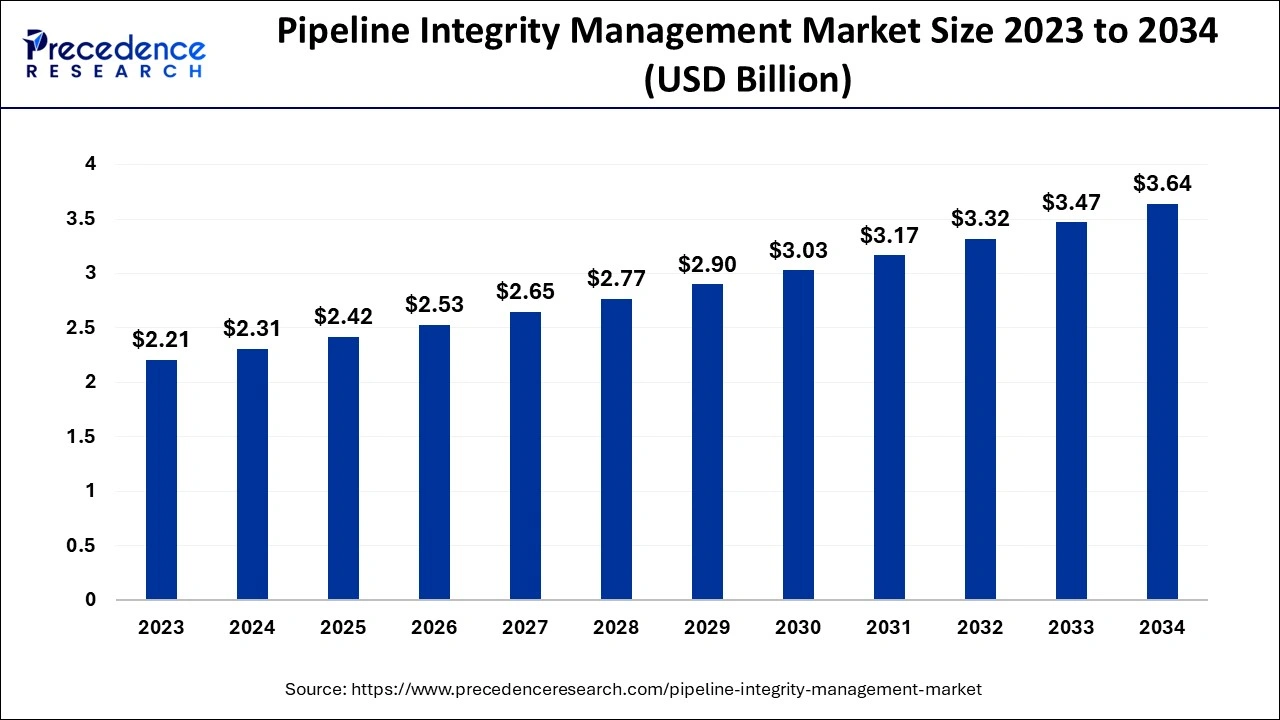
The global pipeline integrity management market was valued at USD 2.42 billion in 2025 and is projected to reach USD 3.80 billion by 2035, growing at a CAGR of 4.62% from 2026 to 2035. Market growth is driven by the increasing need for operational safety, aging pipeline infrastructure, stringent environmental regulations, and rising investments in oil, gas, and energy transportation networks. The adoption of AI-powered predictive maintenance, IoT-enabled monitoring, advanced inspection technologies, and risk-based integrity management solutions is further enhancing pipeline reliability, minimizing leak risks, and supporting regulatory compliance across global energy infrastructure.
Source: https://www.precedenceresearch.com/pipeline-integrity-management-market
 Get a Sample
 Table Of Content


What is the Pipeline Integrity Management Market Size?
The global pipeline integrity management market size was estimated at USD 2.42 billion in 2025 and is predicted to increase from USD 2.53 billion in 2026 to approximately USD 3.80 billion by 2035, expanding at a CAGR of 4.62% from 2026 to 2035. Market growth is propelled by a focus on operational safety, the expansion of customized services, regulatory compliance, and advances in risk assessment.
Pipeline Integrity Management Market Key Takeaways
- The global pipeline integrity management market was valued at USD 2.42 billion in 2025.
- It is projected to reach USD 3.80 billion by 2035.
- The pipeline integrity management market is expected to grow at a CAGR of 4.65% from 2026 to 2035.
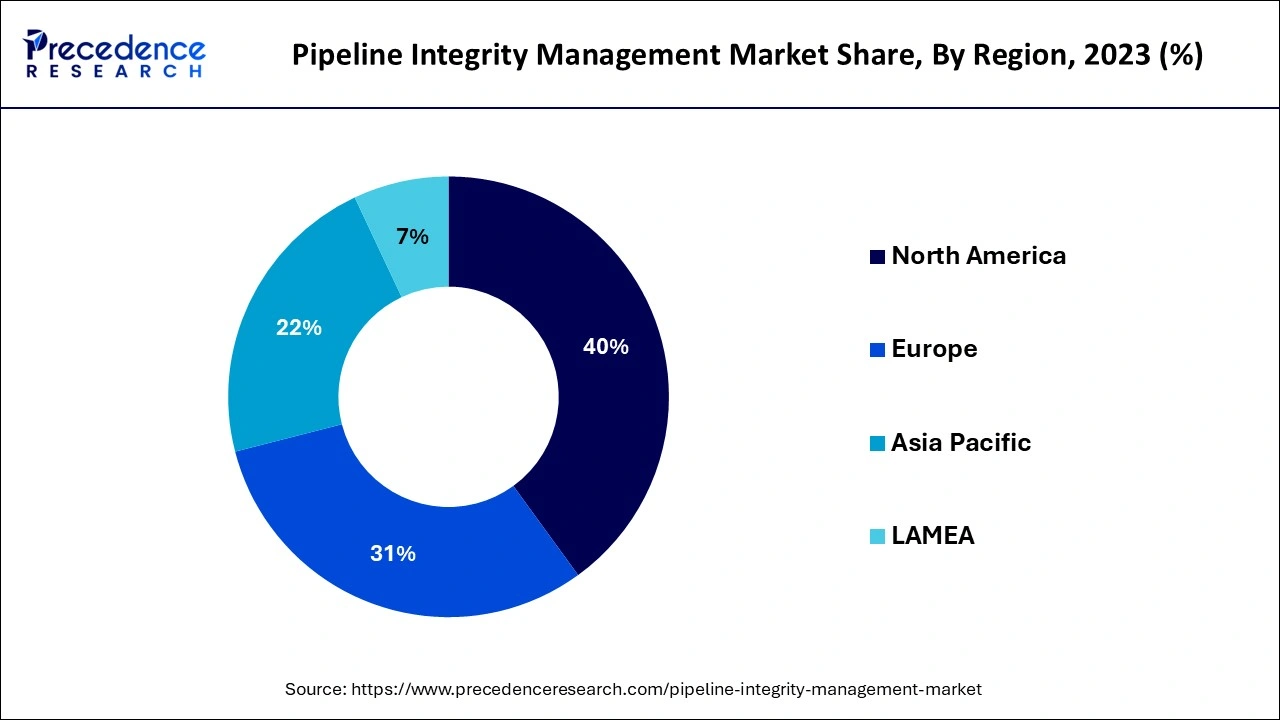
- North America dominated the global market with the largest market share of 40% in 2025.
- Middle East and Africa is anticipated to grow significantly during the forecast period.
- By location, the onshore segment contributed the highest market share of 65% in 2025.
- By location, the offshore segment is anticipated to grow at the fastest CAGR from 2026 to 2035.
- By service, the inspection services segment captured the biggest market share of 61% in 2025.
- By service, the repairs and refurbishment segment are anticipated to grow at a significant during the forecast period.
Market Overview
Pipeline integrity looks upon the overall safety of the pipelines, covering all the components that can protect the pipelines from leaks, failures, and other damages. The pipeline integrity management market focuses on technologies that can efficiently process various applications like the transportation of water, gas, oil, etc. The demand for pipeline integrity has risen due to rising transportation processes which require efficient solutions. The market focuses on developing various devices that can be used in inspection and also protection to prevent damages. This is also expected to drive technological advancements to maintain the pipelines due to its increasing use in various applications.
What is the Role of AI in the Pipeline Integrity Market?
The emergence of technologies like artificial intelligence (AI) and machine learning (ML) are playing a transformative role in the growth of the pipeline integrity management market by contributing towards improvements of these systems. AI is gaining popularity for predictive maintenance of this machinery, which can predict breakdowns and help reduce additional costs. Additionally, technological advancements have enabled the detection of leaks and cracks in pipelines, which is becoming a crucial factor in the market. Companies are using AI sensors to monitor these systems and give insights into the whole process. These factors play a critical role in reducing the inspection time and enhancing overall efficiency.
- In September 2024, Penspen and Senslytics collaborated to enhance pipeline integrity analysis with AI-powered THEIA and CorroX technologies, improving decision-making and risk mitigation.
Pipeline Integrity Management Market Trends
- Increasing Use of Unmanned Aerial Vehicles: The UAVs offer high-resolution imagery, thermal imagery, and quick access to remote sites by maintaining worker safety and risk assessments. Pipeline operators are progressively using drones for surveillance, inspections, and emergency responses.
- Risk-Driven Integrity Management Approaches: This strategy improves resource use, boosts asset performance, operational efficiency, and lowers unnecessary inspections in pipeline infrastructure. This trend is reshaped by major administrations that are adopting risk-driven integrity management, focusing on inspections and maintenance.
- Focus on Sustainability and Environmental Protection: These trends support environmental goals, compliance, and pipeline infrastructure handling, boosting the move towards environmental sustainability and technological advancement to reduce methane emissions for pipeline integrity management.
- Regulatory Compliance and Safety Standards: Governments and major operators are investing in advanced integrity systems to achieve stringent pipeline safety rules and environmental regulations to improve risk assessment and increase transparency.
- Demand for Corrosion Monitoring Solutions: Corrosion key cause of pipeline failures, accelerating the need for improved monitoring solutions. Companies use advanced sensors, remote pipeline systems, and resistant materials to detect corrosion early, improve maintenance, extend pipeline lifespan, and enhance consistency.
Pipeline Integrity Management Market Growth Factors
- The aging infrastructure of the pipelines is leading to the rising need for pipeline integrity systems to maintain their health and prevent damage and failures.
- Rising government operations in the energy sector are playing a crucial role towards the development of the pipeline integrity management market.
- The increasing market competitiveness is one of the major reasons behind the adoption of these services that focus on improving the operational efficiency within the company.
- The adoption of pipeline integrity is witnessing rapid demand due to the rising focus on the expansion of customized services in emerging markets.
Market Report Coverage and Key Metrics
| Report Coverage | Details |
| Market Size by 2035 | USD 3.80 Billion |
| Market Size in 2025 | USD 2.42 Billion |
| Market Size in 2026 | USD 2.53 Billion |
| Market Growth Rate from 2026 to 2035 | CAGR of 4.62% |
| Largest Market | North America |
| Base Year | 2025 |
| Forecast Period | 2026 to 2035 |
| Segments Covered | Location, Service, and Regions |
| Regions Covered | North America, Europe, Asia-Pacific, Latin America and Middle East, and Africa |
Market Dynamics
Drivers
Rising environmental concerns
The rising incidences of pipeline leaks in the gas and oil industry are one of the major factors that contaminate the soil and can also pollute the water. This can also severely affect the human population located in a particular area. The pipeline integrity management market becomes a crucial factor that helps in reducing failures like deepwater spills and others with the help of these systems. The rising digitalization has increased the information flow among the public, which makes it mandatory for companies to adopt these systems. This adoption also benefits companies by improving their brand value by targeting these factors. Additionally, regulatory bodies like the European Union are promoting the adoption of these technologies to minimize environmental risks.
Increasing investments in energy infrastructure
The rapid increase in the global population is the main factor behind the increasing need for energy consumption. The pipeline integrity management market is growing efficiently due to the increasing consumption of oil and gas. The rising demand stands out as a major driver that requires advanced infrastructure, including advanced transportation technologies and pipelines. Additionally, the aging of these pipelines also increases the chances of corrosion and other damages.
Restraint
Higher implementation costs
The implementation of a pipeline integrity system requires advanced technologies like AI and other smart sensors, which can be financially unaffordable for small enterprises. The pipeline integrity management market has registered significant growth in the developed areas, but the expansion of the market can be hampered for these reasons. Additionally, the limitation of the infrastructure can also restrict the market growth in underdeveloped regions. This leads to increasing market competition, which can reduce the profit margins in the market. This also leads to several changes in pipeline management integration companies, which can hamper the jobs in the institution.
Opportunities
Adoption of smart pipelines
The rising demand for efficient pipelines is leading to multiple changes and progress in the particular market. Many companies are adopting smart pipelines, which ensures the growth of the pipeline integrity management market. The exceptional capabilities of these pipelines help companies monitor real-time conditions like temperature and other aspects that are essential in the application. Additionally, the main reason for the implementation of smart pipelines is that they help manage the company's budgetary factors. There are many rising trends like Industry 4.0, which are projected to help in the adoption of smart technologies.
Global shift towards natural gas
The rising trend for clean energy adoption is playing a critical role in the adoption of natural gas that eliminates the use of pollutants within the pipeline integrity management market. The market has risen significantly due to the increasing initiatives from governments that support the adoption of natural gas through various investments. For instance, the demand for LNG is increasing in the transportation sector, which is leading to the adoption of these pipelines. The rising technological innovations are also leading to the adoption of several technologies like smart sensors and AI tools.
Market Segmentation Analysis
Location Insights
What Made Onshore Segment Dominates the Pipeline Integrity Management Market?
The onshore segment led the market while holding the largest share in 2025, due to its extensive network of pipelines for oil, water, gas, and chemicals across industrial sectors and infrastructure, spanning long routes. Onshore operators use inline inspection, corrosion detection, leak monitoring solutions, and GIS management systems to increase reliability, reduce risks, and allow continuous transport. The aging infrastructure is aligning with stringent regulations, driving substantial investment in upgrades to advanced integrity solutions. Additionally, energy needs and expansion in emerging economies are driving the importance of onshore pipeline integrity management.
The offshore segment is projected to grow at the fastest rate in the upcoming years, driven by rising oil and gas exploration in deeper waters, there is a need to address harsh conditions such as saltwater corrosion, high pressure, sea floor shifts, and mechanical strains, emphasizing the demand for robust integrity management. Major companies invest in remotely operated vehicles and autonomous underwater vehicles to ensure pipeline safety and integrity. Increasing offshore project focus on advanced corrosion protection through real-time monitoring to meet environmental compliances boosting the use of advanced pipeline integrity solutions.
Service Insights
How did the Inspection Services Segment hold the Largest Share in the Pipeline Integrity Management Market?
The inspection services segment dominated the market in 2025, due to operators detecting defects early through inspection methods involving pigging, ultrasonic testing, and magnetic flux leakage. Regular inspections identify corrosion, cracks, metal loss, and deformation, enabling quick repairs and boosting segment growth. The pipeline integrity management market continues to expand, influenced by visual checks, drone surveys, and remote monitoring. Regulators focus on preventive maintenance and asset reliability, and demand for inspection services is growing across new and aging pipelines.
The repairs and refurbishment segment is experiencing the fastest growth in the market during the forecast period, as it is vital to extending pipeline life and ensuring safety. Global demand for pipeline integrity management is increasing due to infrastructure upgradation and maintenance. Operators increasingly invest in rehabilitation activities, such as corrosion repair, coatings, pipe replacement, welding, wrapping, and reinforcement, to support the repairs and refurbishment segment and combat aging and environmental damage. Additionally, these services reduce downtime and costs by ensuring safety compliance.
Market Regional Analysis: North America, Europe, Asia-Pacific
U.S. Pipeline Integrity Management Market Size and Growth 2026 to 2035
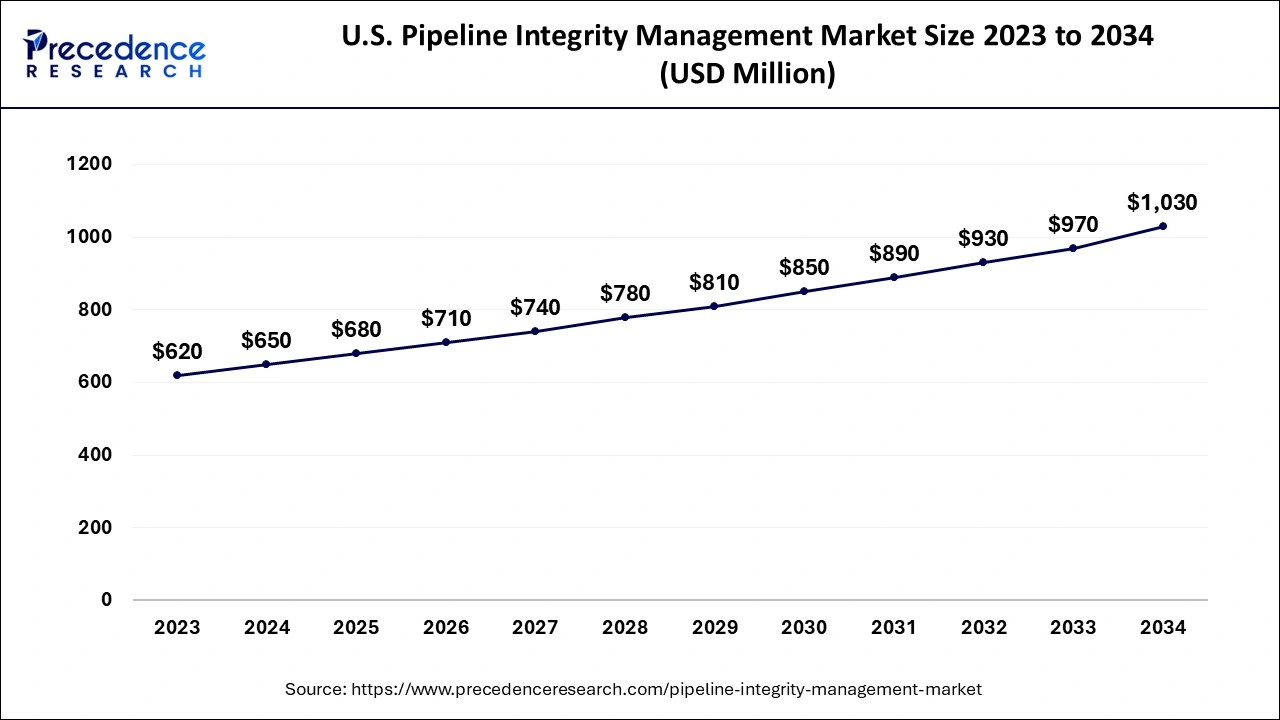
The U.S. pipeline integrity management market size was exhibited at USD 650 million in 2025 and is projected to be worth around USD 1,030 million by 2035, growing at a CAGR of 4.71% from 2026 to 2035.
Why did North America Dominate the Pipeline Integrity Management Market? 
North America dominated the market by capturing the largest share in 2025, supported by regional extensive crude oil, natural gas, and refined products pipelines. North America's top service providers, adopting predictive maintenance systems for pipeline integrity management and expanding energy networks, ensure steady growth. The aging infrastructure and stringent regulations enable significant investments in digital monitoring, fostering the adoption of advanced pipeline safety solutions.
U.S. Pipeline Integrity Management Market Trends
The United States dominates North America's market due to its extensive pipeline network and advanced oil and gas production practices. The domestic growth is driven by federal safety regulations, infrastructure investment, and an advanced inspection framework. Local operators use AI and real-time monitoring to improve pipeline safety, lower pipeline leaks, and comply with environmental standards.
How is Middle East and Africa is expected to grow at the fastest CAGR in the market during the forecast period?
The Middle East and Africa are expected to grow fastest during the forecast period, driven by their large oil and gas reserves and expanding pipeline infrastructure. The strong government policies and growing energy firm investment in pipeline upgrades, digital monitoring, and predictive maintenance to advance reliability and reduce environmental risks across MEA. Overall, the regional shift towards increased energy exports, infrastructure development, and a focus on asset integrity is expected to support long-term growth.
UAE Pipeline Integrity Management Market Trends
The UAE serves as the main market, with ongoing investments in oil and gas and pipeline infrastructure, and digital energy transformation driving market growth. The government support for infrastructure and sustainable energy also drives domestic growth. UAE firms use advanced pipeline integrity solutions, such as real-time monitoring, smart inspections, and corrosion control, to accelerate efficiency.
Why is Asia Pacific Witnessing the Steady Growth in the Pipeline Integrity Management Market?
Asia Pacific is a significantly growing regional market, driven by increasing industrial development, urbanization, offshore exploration, and rising energy demand. The region is expanding its natural gas networks and investing in pipeline infrastructure due to rising energy demand. The increasing safety awareness across the Asia Pacific, supported by government initiatives for digital integrity technology, is boosting growth.
India Pipeline Integrity Management Market Trends
India's market progress is driven by expanding oil pipelines and government efforts to boost energy infrastructure. Domestic operators are adopting modern inspection and corrosion-monitoring practices to boost efficiency, reduce costs, and maintain compliance. Significant investments in cross-country pipelines, city gas, and industrial energy logistics create opportunities for pipeline integrity management services across India.
What Drives the Europe Pipeline Integrity Management Market?
The Europe market is driven by stringent regulatory frameworks, rising operational safety concerns, and aging pipelines. Regional operators are investing in advanced inspection technology, corrosion control, and digital monitoring, promoting the pipeline integrity management market. Increasing regional targets to reduce greenhouse gas emissions, secure energy supplies, and modernize cross-border pipelines are boosting demand for comprehensive pipeline integrity services across Europe.
Germany Pipeline Integrity Management Market Trends
Germany leads Europe's market due to its advanced industrial infrastructure, engineering expertise, and well-established energy infrastructure. Countries that focus on infrastructure upgrades, pipeline safety, and sustainability drive the adoption of modern monitoring. The digital inspection, corrosion control, and automated management tools to enhance efficiency and meet strict safety and environmental standards across Germany.
Why is the Pipeline Integrity Management Market Within the Latin America Growing?
Latin America is experiencing sustained market growth driven by increased investments in oil and gas, pipeline expansion, and infrastructure development. Latin America is adopting advanced monitoring and preventive measures to improve pipeline reliability and reduce risks. The growing focus on safety and security boosts demand for inspections, maintenance, and integrity checks across Latin America.
Brazil Pipeline Integrity Management Market Trends
Brazil leads the Latin America market because of its large oil and gas sector and pipeline advancement infrastructure. Local companies adopt advanced inspection, corrosion stoppage, and digital monitoring to ensure operational safety and achieve environmental standards. Additionally, Brazil's ongoing increase in offshore exploration, transportation, and energy safety investments is enhancing demand for advanced pipeline integrity solutions.
Market Competitive Landscape: Leading Companies and Strategies
The pipeline integrity management market is extremely competitive, with global firms, inspection specialists, digital technology providers, and energy companies. The major organization is competing through innovation, alliances, announcements, and expanded services. The rising focus on advanced technologies such as AI, machine learning, cloud, digital twins, and IoT sensors is improving inspection efficiency in the pipeline framework.
Additionally, it expands into inline inspection, remote monitoring, corrosion, and asset management through strategic R&D investments that fuel growth. The demand for customized programs and stricter environmental regulations is fueling ongoing innovation and competition in the pipeline integrity management market.
Pipeline Integrity Management Market Companies
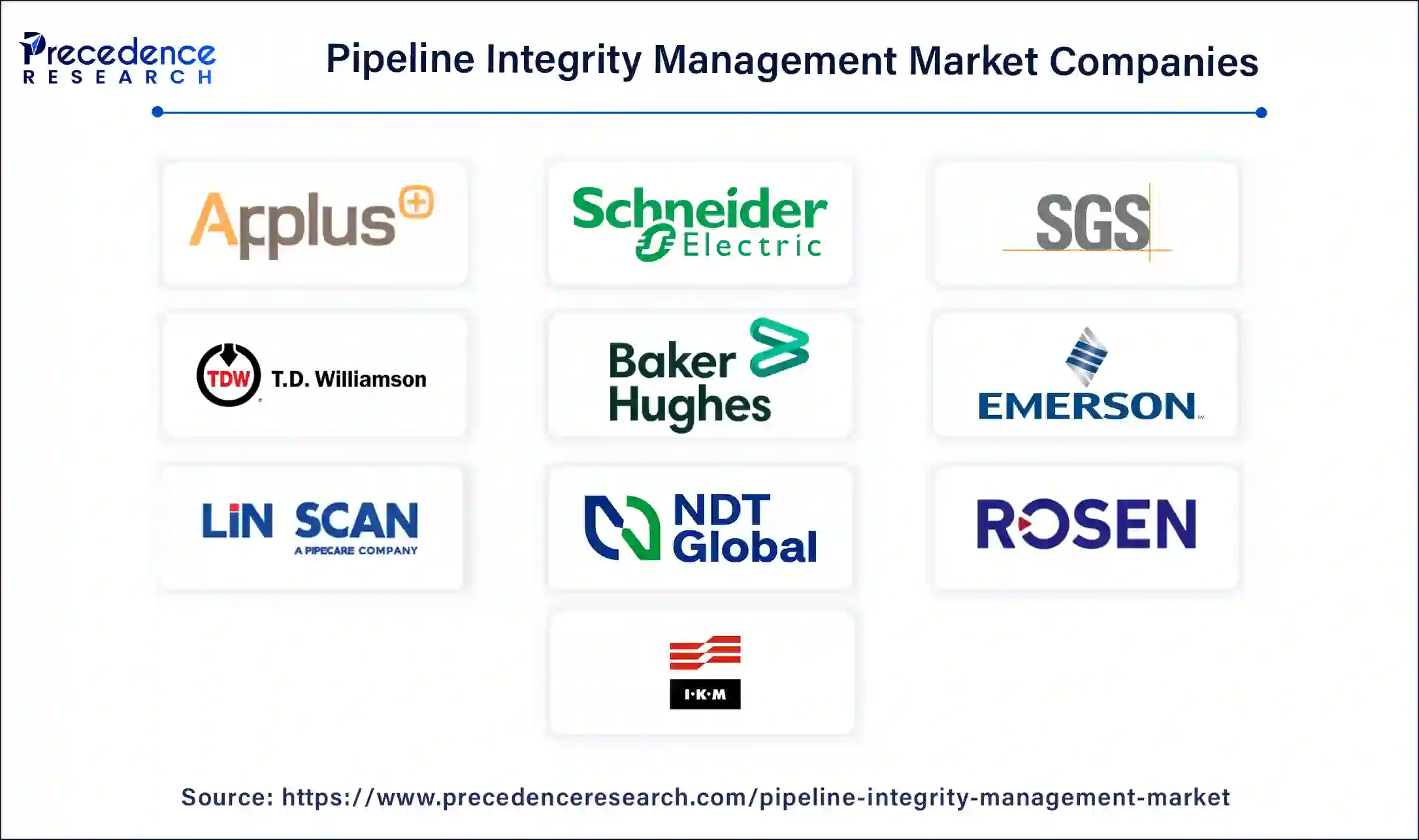
- Applus
- Schneider Electric
- SGS
- T.D. Williamson
- Baker Hughes
- Emerson
- IKM Gruppen
- Lin Scan
- NDT Global
- Rosen
Latest Announcements by Global Leaders
- In August 2024, MPE Partners and its portfolio company, Precision Pipeline Services, announced the acquisition of Allegheny Contracting, a provider of gas transmission pipeline integrity services and gas distribution repairs in the Mid-Atlantic and Midwest regions.
Recent Developments in the Pipeline Integrity Management Market (2025–2026)
- In October 2024, PipeSense and EnControl partnered to combat gas pipeline leaks by deploying PipeSense's advanced leak detection systems across multiple U.S. locations.
- In October 2024, NDT Global and Aramco unveiled a 56-inch ultrasonic pipeline inspection tool, offering advanced crack and metal loss detection for large-diameter pipelines.
Segments Covered in the Report
By Location
- Onshore
- Offshore
By Service
- Inspection Service
- Cleaning Service
- Repairs and Refurbishment
By Geography
- North America
- Asia Pacific
- Europe
- Latin America
- Middle East and Africa
For inquiries regarding discounts, bulk purchases, or customization requests, please contact us at sales@precedenceresearch.com
Frequently Asked Questions





Ask For Sample
No cookie-cutter, only authentic analysis – take the 1st step to become a Precedence Research client
 Get a Sample




 sales@precedenceresearch.com
 Schedule a Meeting
