


Endocrinology Market Size, Key Companies, Company Production Capacity, Healthcare Infrastructure Growth, Product Utilization, Regulatory Compliance, Company Expansion Strategies, Company Investment Strategies, and Market Outlook
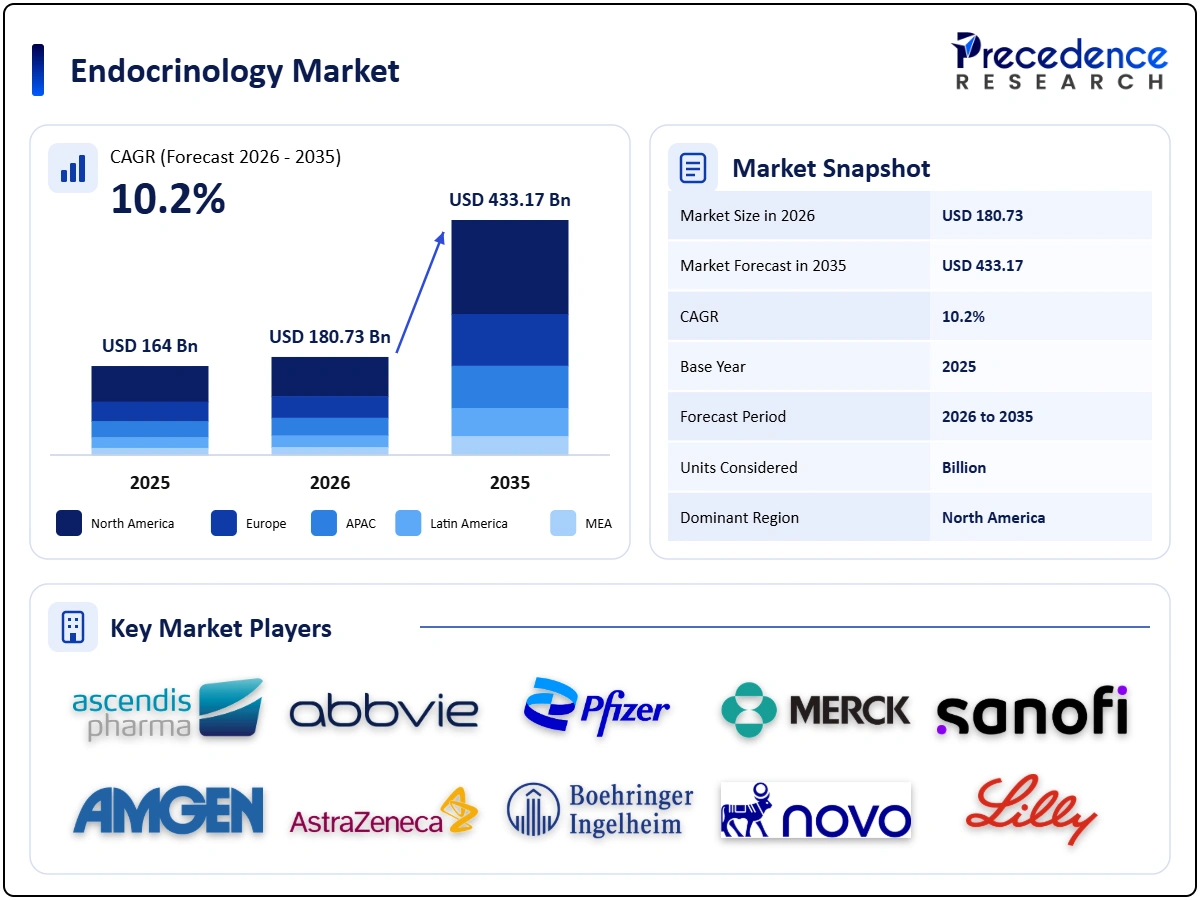
Payal Rabde, a Healthcare Industry Expert, highlights that the endocrinology market has reached USD 180.73 billion in 2026 and is on track to reach USD 433.17 billion by 2035, advancing at a CAGR of 10.2%. Key endocrinology market companies shaping the market include Novo Nordisk, Boehringer Ingelheim, AstraZeneca, while major growth segments span drug class, indication, route of administration, distribution channel and region.
Source: https://www.precedenceresearch.com/precedence-endocrinology-market
 Get a Sample
 Report Description
Key Takeaways
Market Size & Growth Outlook
- Market size in 2025: USD 164 billion
- Estimated market size in 2026: USD 180.73 billion
- Projected market size by 2035: USD 433.17 billion
- CAGR (2026-2035): 10.2%
Regional Market Spotlight
- North America: The region dominated the global endocrinology market with a 50.4% share in 2025, valued at USD 82.66 billion.
- Europe: The market reached USD 35.42 billion in 2025, accounting for 21.6% of global revenue.
- Asia Pacific: The region accounted for 21.2% of the market in 2025, valued at USD 34.77 billion. It is projected to register the fastest regional growth, with a CAGR of 11.56% from 2025 to 2035.
Segmental Spotlight
- By drug class, diabetes and metabolic drugs held the largest share in 2025, at 72.4% (USD 118.74 billion).
- By indication, Type 2 diabetes accounted for 52.6% (USD 86.26 billion) of the market in 2025.
- Based on the route of administration, subcutaneous captured 66.4% of the market, valued at USD 108.90 billion in 2025.
- By distribution channel, retail pharmacies held the largest share in 2025, at 58.2% (USD 95.45 billion).
Endocrinology Market Size and Forecast, 2025-2035 (USD Billion)
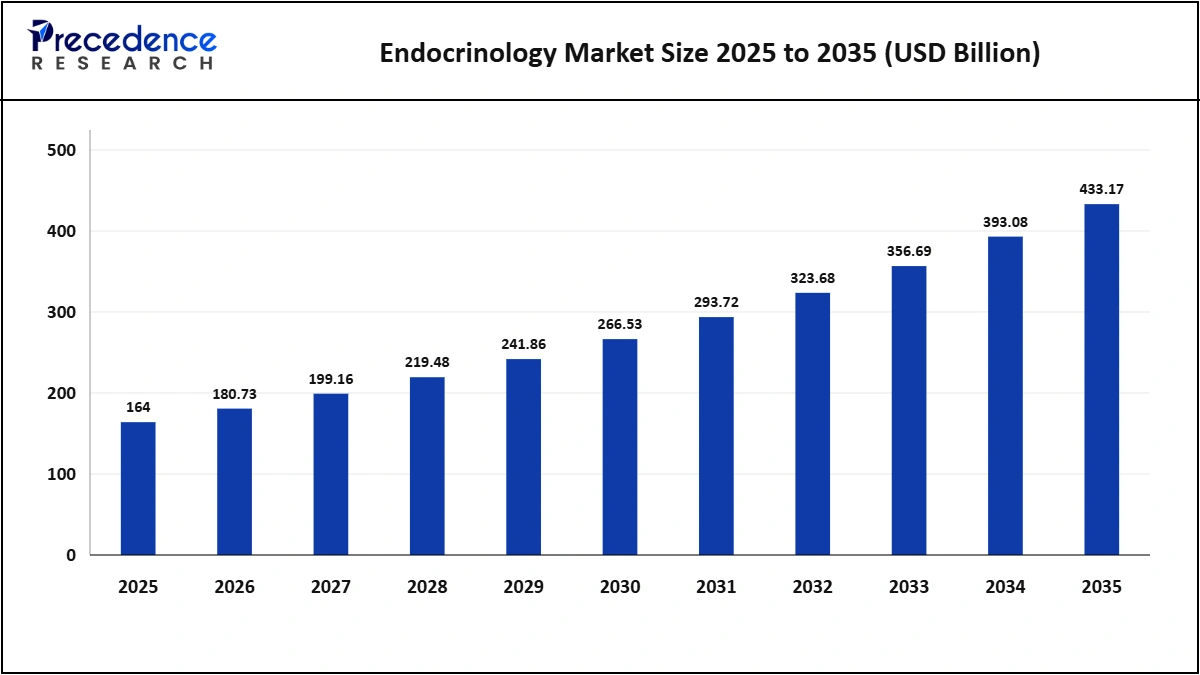
Note: 2025 is the base year; 2026-2035 values are forecasts.
Sources: Expert interviews, secondary sources, Precedence Research database, and Precedence Research analysts.
The global endocrinology market is projected to grow from USD 164 billion in 2025 to USD 433.17 billion by 2035, driven by the rising prevalence of diabetes and obesity and the rapid adoption of GLP-1-based therapies. Market expansion reflects new obesity treatment indications, the launch of oral GLP-1 medications, broader insurance coverage, and sustained demand for insulin, SGLT2 inhibitors, and osteoporosis therapies. The market is projected to reach USD 266.53 billion by 2030, registering a CAGR of 10.2% from 2026 to 2035, despite pricing pressures and potential competition from generic drugs.
Analyst View: Our market estimate was developed using a bottom-up assessment of patient populations, treatment penetration, average selling prices, and reimbursement levels across major endocrine and metabolic therapeutic categories. The analysis incorporates changes in treatment adoption, product launches, manufacturing capacity, pricing, and patent expiries. Company-level product revenues and comparable market estimates were used to cross-check the 2025 base-year estimate. Our forecast reflects strong demand for incretin-based therapies, expanding obesity treatment indications, and the introduction of oral formulations, while accounting for pricing pressure, reimbursement restrictions, and increasing competition.
Market Trends
- Oral GLP-1 receptor agonist pills are revolutionizing obesity and endocrinology treatment by providing a needle-free alternative to conventional injectable formulations.
- Next-generation multi-receptor incretin therapies are transforming endocrinology by targeting multiple metabolic receptors, resulting in improved weight loss, glycemic control, and cardiometabolic protection over single-agent therapies.
- Direct-to-consumer (D2C) and direct-to-patient digital models are rapidly expanding in endocrinology and metabolic treatment markets, driven by the increased demand for treatments such as GLP-1 receptor agonists, notably Mounjaro.
- Generic semaglutide marks a pivotal shift in endocrinology due to the expiration of patent protections and rising global demand for GLP-1 receptor agonists.
- Long-acting growth hormone therapies are improving the treatment of growth hormone deficiency (GHD) by offering once-weekly injections instead of daily ones.
- Denosumab biosimilars have gained significant global regulatory approvals, altering the market dynamics of bone health management in endocrinology and oncology.
Endocrinology Market Drivers, Restraints, and Opportunities
Driver
The rising global prevalence of diabetes and obesity drives advancements in treatment options. Glucagon-like peptide-1 (GLP-1) receptor agonists are being explored for new indications beyond diabetes, particularly for obesity management. The introduction of oral GLP-1 medications is further improving accessibility, allowing more patients to benefit from these therapies. Additionally, aging populations propel demand for bone health and hormone management solutions. Expanding insurance coverage for obesity treatments improves access to essential interventions for patients with obesity-related health conditions.
Restraint
The endocrinology market faces pricing and accessibility challenges arising from government price negotiations, reimbursement restrictions, and increasing competition from generic and biosimilar products. The high cost of innovative GLP-1 therapies can restrict patient access, particularly in price-sensitive markets. Additionally, manufacturing constraints, complex biologic production requirements, and the need for specialized delivery systems can limit product availability. These factors may moderate revenue growth despite increasing demand for diabetes and obesity treatments.
Opportunity
Emerging markets offer significant growth opportunities, supported by large untreated patient populations across multiple therapeutic areas. Advances in combination incretin therapies are improving clinical outcomes and expanding treatment options. New therapies for rare endocrine disorders are also addressing unmet medical needs and broadening the therapeutic landscape. The integration of digital health technologies supports better patient adherence, treatment monitoring, and clinical outcomes. In addition, expanding manufacturing capacity supports higher production volumes and improves access to endocrine treatments across underserved markets.
Endocrinology Market Segmentation: 2025 Share and Size
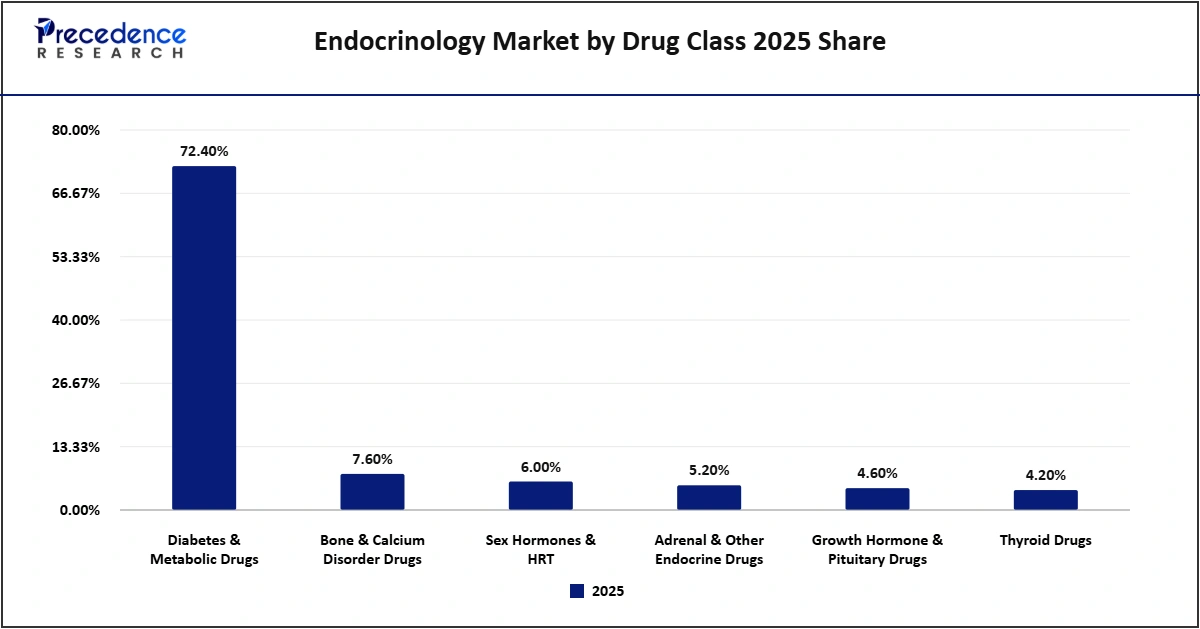
Endocrinology Market by Drug Class 2025 Share
Note: 2025 is the base year; 2035 values are forecasts.
Sources: Expert interviews, secondary sources, Precedence Research database, and Precedence Research analysts.
In 2025, diabetes and metabolic drugs dominated the global endocrinology market by drug class, accounting for 72.4% of total revenue, valued at USD 118.74 billion. Bone and calcium disorder drugs represented 7.6% of the market, equivalent to USD 12.46 billion, while sex hormones and hormone replacement therapy (HRT) accounted for 6.0%, valued at USD 9.84 billion. Adrenal and other endocrine drugs held a 5.2% share, worth USD 8.53 billion, followed by growth hormone and pituitary drugs at 4.6%, valued at USD 7.54 billion. Thyroid drugs accounted for the remaining 4.2%, equivalent to USD 6.89 billion. Diabetes and metabolic drugs remained the largest segment, reflecting the substantial global demand for diabetes and obesity treatments.
The diabetes and metabolic drugs segment was valued at USD 118.74 billion in 2025 and is projected to reach USD 318.27 billion by 2035, recording a CAGR of 10.36% from 2026 to 2035. Key drug classes in this segment include GLP-1 and GIP/GLP-1 receptor agonists (Mounjaro, Zepbound, Ozempic, and Wegovy), insulin products, SGLT2 inhibitors (Jardiance and Farxiga), and DPP-4 inhibitors. Demand for these drugs is driven by the adoption of incretin-based therapies, which are effective in managing diabetes, obesity, and related metabolic conditions. This trend highlights the growing focus on comprehensive metabolic health management.
Bone and calcium disorder drugs accounted for 7.6% of the global endocrinology market in 2025, valued at USD 12.46 billion. This segment includes therapies such as denosumab, romosozumab, teriparatide, and parathyroid hormone replacement treatments for osteoporosis and hypoparathyroidism. The entry of denosumab biosimilars is intensifying competition and increasing pricing pressure across the segment.
Endocrinology Market By Indication 2025 Share & Size
| Segments | 2025 Share | 2025 Value (USD Billion) | 2035 Value (USD Billion) | CAGR 2026-2035 |
| Type 2 Diabetes | 52.60% | 86.26 | 204.19 | 9.00% |
| Obesity | 16.80% | 27.55 | 105.77 | 14.40% |
| Osteoporosis | 7.60% | 12.46 | 30.60 | 9.40% |
| Type 1 Diabetes | 7.40% | 12.14 | 29.80 | 9.40% |
| Others | 6.80% | 11.15 | 27.38 | 9.40% |
| Growth Disorders | 4.60% | 7.54 | 18.52 | 9.40% |
| Thyroid Disorders | 4.20% | 6.89 | 16.91 | 9.40% |
Note: 2025 is the base year; 2035 values are forecasts.
Sources: Expert interviews, secondary sources, Precedence Research database, and Precedence Research analysts.
Based on indication, type 2 diabetes accounted for 52.6% of the market, equivalent to USD 86.26 billion in 2025, followed by obesity, with a 16.8% market share valued at USD 27.55 billion. Osteoporosis captured 7.6% of the market, worth USD 12.46 billion, while type 1 diabetes accounted for 7.4% (USD 12.14 billion). Other conditions represented 6.8% of the market, valued at USD 11.15 billion, followed by growth disorders at 4.6% (USD 7.54 billion) and thyroid disorders at 4.2% (USD 6.89 billion).
Type 2 diabetes dominated the market in 2025, accounting for 52.6% of the market, valued at USD 86.26 billion. It remains the largest indication, supported by a wide range of treatment options, including metformin, GLP-1 receptor agonists, SGLT2 inhibitors, DPP-4 inhibitors, and insulin. The condition affects more than 500 million adults worldwide, making it a major driver of market demand.
Obesity accounted for 16.8% of the market in 2025, worth USD 27.55 billion, and is projected to grow to USD 105.77 billion by 2035, with a CAGR of 14.4% from 2026 to 2035. This rapid growth is driven by increasing demand for innovative weight-management therapies, including Wegovy, Zepbound, and emerging oral GLP-1 treatments. Recent regulatory approvals, such as oral Wegovy in December 2025 and Lilly's Foundayo in April 2026, are further expected to support market expansion.
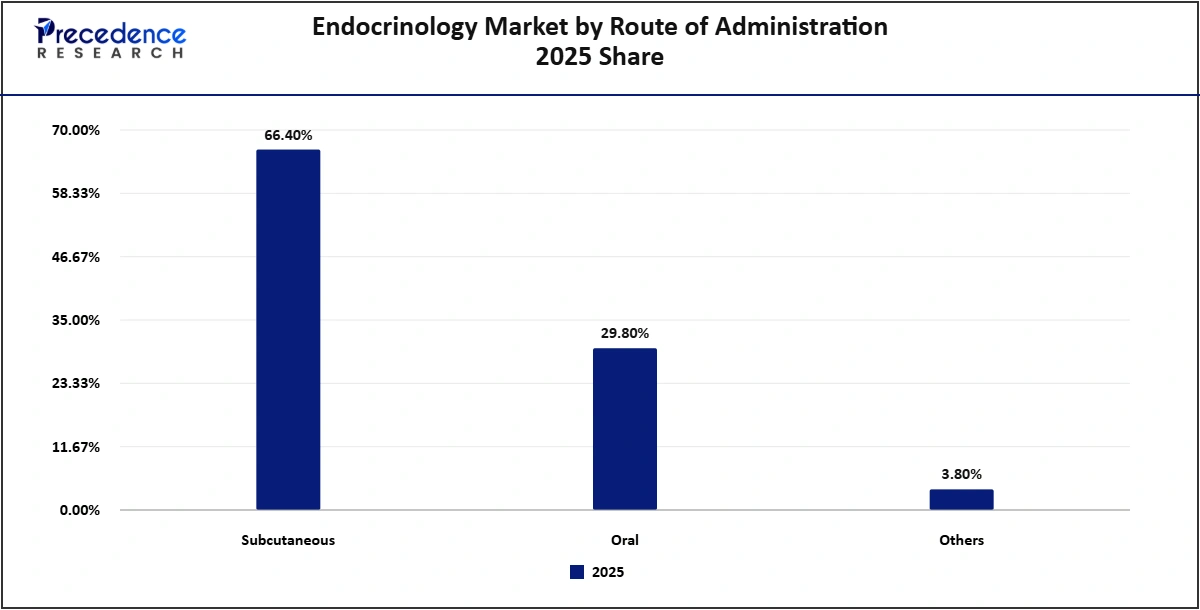
Endocrinology Market by Route of Administration 2025 Share
Note: 2025 is the base year; 2035 values are forecasts.
Sources: Expert interviews, secondary sources, Precedence Research database, and Precedence Research analysts.
By route of administration, the subcutaneous route accounted for 66.4%, valued at USD 108.90 billion in 2025. Oral drugs followed with 29.8% of the market, worth USD 48.87 billion, while other drugs captured 3.8% of the market, equivalent to USD 6.23 billion.
In 2025, the subcutaneous route accounted for 66.4% of the market, worth USD 108.90 billion. This route dominates because insulin, injectable GLP-1 therapies, growth hormones, and denosumab are administered under the skin.
Oral administration accounted for 29.8% of the market, valued at USD 48.87 billion. It is also the fastest-growing route because oral GLP-1 medicines for obesity have received approval, while SGLT2 and DPP-4 inhibitors continue to see widespread use.
Other routes of administration accounted for 3.8% of the market, equivalent to USD 6.23 billion. This segment includes intravenous, transdermal, and nasal products, such as testosterone gels and intravenous therapies for thyroid eye disease.
Endocrinology Market By Distribution Channel 2025 Share & Size
| Segments | 2025 Share | 2025 Value (USD Billion) | 2035 Value (USD Billion) | CAGR 2026-2035 |
| Retail Pharmacies | 58.20% | 95.45 | 235.46 | 9.45% |
| Hospital Pharmacies | 24.60% | 40.34 | 103.22 | 9.85% |
| Online Pharmacies | 17.20% | 28.21 | 94.49 | 12.85% |
Note: 2025 is the base year; 2035 values are forecasts.
Sources: Expert interviews, secondary sources, Precedence Research database, and Precedence Research analysts.
By distribution channel, retail pharmacies accounted for 58.2% of the market, valued at USD 95.45 billion in 2025. Hospital pharmacies followed with a 24.6% share, worth USD 40.34 billion, while online pharmacies captured 17.2% of the market, equivalent to USD 28.21 billion.
In 2025, retail pharmacies accounted for 58.2% of the market, valued at USD 95.45 billion. This segment dominates because most endocrine medications are prescribed for long-term management of chronic conditions and are dispensed through outpatient retail pharmacy channels. It is projected to reach USD 235.46 billion by 2035, recording a CAGR of 9.45% from 2026 to 2035.
Hospital pharmacies captured 24.6% of the market, valued at USD 40.34 billion in 2025. These pharmacies play an important role in dispensing insulin, infused therapies, and specialized endocrine medications.
Online pharmacies accounted for 17.2% of the market, equivalent to USD 28.21 billion in 2025. This segment is also the fastest-growing distribution channel, driven by the expansion of direct-to-consumer platforms, increasing online sales of obesity medications by manufacturers such as Lilly and Novo Nordisk, and the growing adoption of telehealth-based prescribing. It is projected to reach USD 94.49 billion by 2035, with a CAGR of 12.85% from 2026 to 2035.
Analyst View: We estimated that diabetes and metabolic drugs lead because of the high demand for treatments targeting metabolic conditions, while type 2 diabetes leads among indications due to its large patient base. Subcutaneous injections and retail pharmacies lead because of the widespread use of injectable therapies and the established role of retail pharmacies in drug distribution. We expect obesity treatments, oral drugs, and online pharmacy channels to gain market share.
Regional Analysis
Endocrinology Market by Region 2025 Share
Note: 2025 is the base year; 2035 values are forecasts.
Sources: Expert interviews, secondary sources, Precedence Research database, and Precedence Research analysts.
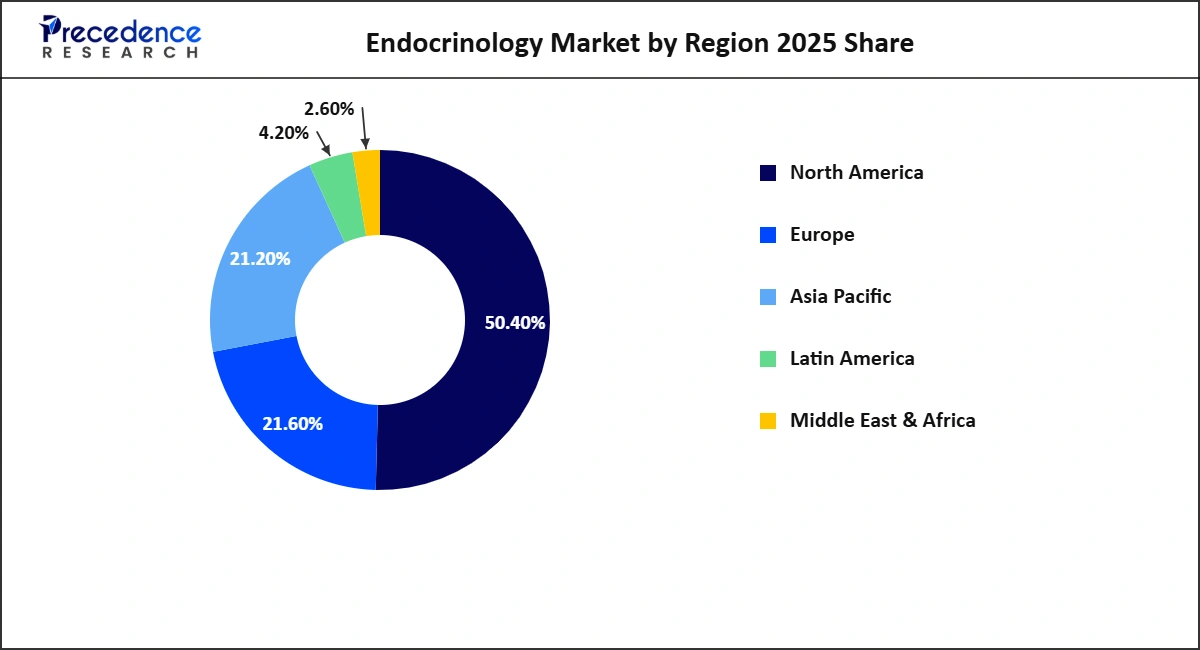
In 2025, North America dominated the market, accounting for 50.4% of the market share, valued at USD 82.66 billion. Europe followed, holding a 21.6% share, equivalent to USD 35.42 billion. Asia Pacific accounted for 21.2% of the market, valued at USD 34.77 billion, and is the fastest-growing region. Meanwhile, Latin America represented 4.2% of the market, worth USD 6.89 billion, while the Middle East and Africa accounted for 2.6% of the market, valued at USD 4.26 billion.
North America dominated the global endocrinology market in 2025, accounting for 50.4% of total revenue, valued at USD 82.66 billion. The United States represents the region's largest market, driven by the high prevalence of obesity and diabetes, rapid adoption of GLP-1 therapies, higher treatment prices, and broad insurance coverage. Government-led price negotiations and direct-to-consumer pricing reductions are expected to lower treatment costs, improve affordability, and support higher treatment volumes.
Europe accounted for 21.6% of the market, worth USD 35.42 billion. Large diabetes populations and increasing adoption of GLP-1 therapies for obesity are supporting market growth. However, national healthcare systems often limit reimbursement for weight-loss treatments. Germany, the UK, France, Italy, and Spain are the region's largest markets.
Asia Pacific captured 21.2% of the market, equivalent to USD 34.77 billion, in 2025. It is the fastest-growing regional market, supported by large diabetes populations in China and India, rising obesity rates, and expanding insurance coverage. The presence of local insulin and GLP-1 manufacturers is also improving treatment accessibility. Semaglutide patent expiries in some Asian markets are expected to encourage the availability of lower-cost alternatives.
In 2025, Latin America accounted for 4.2% of the market, valued at USD 6.89 billion. High diabetes and obesity rates in countries such as Mexico and Brazil are supporting demand for endocrinology treatments. Growing adoption of GLP-1 therapies and the expected introduction of generic semaglutide in some countries are likely to improve market accessibility.
The Middle East & Africa accounted for 2.6% of the global endocrinology market in 2025, valued at USD 4.26 billion. High diabetes prevalence, particularly across Gulf countries, drives demand for insulin and GLP-1 therapies. Rising healthcare investments and increasing demand for diabetes and obesity management further support regional market growth.
Analyst View: Based on our analysis, North America leads the global endocrinology market due to high prices and the adoption of GLP-1 (glucagon-like peptide-1) medications. In contrast, the Asia Pacific region is assigned the highest growth premium, attributed to the rapid expansion of patient numbers and healthcare coverage in that area.
Competitive Landscape
Top 10 Companies in the Endocrinology Market, 2025
| Rank | Company Name | Market-Specific Revenue (USD Billion) | 2025 Share | Key Products / Business | Headquarters |
| 1 | Eli Lilly | 48.00 | 29.27% | Mounjaro, Zepbound, Foundayo, Trulicity and insulins | United States |
| 2 | Novo Nordisk | 44.00 | 26.83% | Ozempic, Wegovy, Rybelsus and insulins | Denmark |
| 3 | Boehringer Ingelheim | 8.50 | 5.18% | Jardiance and diabetes portfolio | Germany |
| 4 | AstraZeneca | 8.00 | 4.88% | Farxiga and diabetes medicines | United Kingdom |
| 5 | Amgen | 7.80 | 4.76% | Prolia, Evenity and Tepezza | United States |
| 6 | Sanofi | 5.50 | 3.35% | Lantus, Toujeo and Soliqua | France |
| 7 | Merck & Co. | 2.20 | 1.34% | Januvia and Janumet | United States |
| 8 | Pfizer | 1.00 | 0.61% | Genotropin and Ngenla | United States |
| 9 | AbbVie | 1.00 | 0.61% | Synthroid and AndroGel | United States |
| 10 | Ascendis Pharma | 0.60 | 0.37% | Skytrofa and Yorvipath | Denmark |
Note: Company revenues and shares are 2025 estimates.
Sources: Company press releases, expert interviews, secondary sources, Precedence Research database, and Precedence Research analysts.
The top 10 companies accounted for 77.2% of the global endocrinology market in 2025. The remaining 22.8% was shared by generic and biosimilar manufacturers, regional insulin producers, and specialty endocrine companies. Eli Lilly led the market in 2025, with an estimated 29.27% share and USD 48.00 billion in revenue. Novo Nordisk ranked second, with a 26.83% share (USD 44.00 billion), followed by Boehringer Ingelheim, with a 5.18% share (USD 8.50 billion).
Eli Lilly maintains a leading position through its tirzepatide products, Mounjaro and Zepbound, as well as Trulicity, insulin products, and its oral GLP-1 drug, Foundayo, approved in 2026. Its strong portfolio of incretin-based therapies has strengthened its position in the diabetes and obesity treatment markets.
Novo Nordisk is another major competitor, with a broad portfolio of semaglutide products, including Ozempic, Wegovy, and Rybelsus. The company has expanded its obesity portfolio with the introduction of oral Wegovy and insulin products, maintaining a strong presence across diabetes and obesity care. Boehringer Ingelheim competes through Jardiance, which it markets in partnership with Eli Lilly.
AstraZeneca, Amgen, Sanofi, Merck & Co., Pfizer, AbbVie and Ascendis Pharma also compete in the market. Their portfolios include Farxiga, biologics for bone disorders and thyroid eye disease, basal insulins, DPP-4 inhibitors, growth hormones, thyroid and testosterone treatments, and long-acting endocrine therapies.
The market is highly concentrated around Eli Lilly and Novo Nordisk, particularly in the incretin-based treatment segment. Companies compete through treatment efficacy, clinical outcomes, convenient oral formulations, less frequent dosing, manufacturing capacity, pricing, and market access. The development of next-generation incretin therapies, new oral treatments, and generic semaglutide in selected markets is expected to reshape the competitive landscape.
Companies Ecosystem
The endocrinology ecosystem links drug developers and API and device makers with contract manufacturers, regulators, payers, pharmacies, and prescribers.
| Ecosystem Stage | Role in the Market | Key Companies |
| Drug Developers | Develop endocrine medicines | Eli Lilly, Novo Nordisk, Boehringer Ingelheim, AstraZeneca, Amgen |
| Manufacturing & Devices | Produce APIs, pens and injectors | In-house plants, CDMOs, pen and autoinjector makers |
| Regulators & Payers | Approve and reimburse | FDA, EMA, NMPA, Medicare, insurers, national health systems |
| Distribution | Dispense medicines | Retail, hospital, online pharmacies, direct-to-consumer platforms |
| Prescribers | Diagnose and treat | Endocrinologists, primary care physicians, obesity specialists |
Sources: Company press releases, expert interviews, secondary sources, Precedence Research database and Precedence Research analysts.
Precedence Research Companies Quadrant
The Precedence Research Companies Quadrant positions key participants in the endocrinology market by market strength, reflecting revenue scale, market share, and geographic reach, and by innovation and growth strategy, reflecting product portfolio breadth, R&D intensity, and partnerships. Positions reflect each company's estimated 2025 endocrinology revenue and our assessment of its pipeline, launches, and manufacturing investments.
Sources: Company press releases, expert interviews, secondary sources, Precedence Research database and Precedence Research analysts.
Leaders: Eli Lilly, Novo Nordisk, Boehringer Ingelheim, AstraZeneca, and Amgen combine very large endocrine revenue with broad incretin and metabolic portfolios and strong pipelines.
Challengers: Sanofi has an established presence in diabetes care through its insulin portfolio, although biosimilar competition and pricing pressures affect its market position.
Innovators: Ascendis Pharma brings differentiated long-acting therapies for rare endocrine disorders, strengthening its position in specialized endocrine treatment markets.
Niche Players: Merck, Pfizer, and AbbVie participate in selected endocrine segments through established diabetes, growth hormone, thyroid, and hormone replacement products.
Recent Developments
- April 2026: The FDA approved Eli Lilly's Foundayo (orforglipron), a once-daily oral GLP-1 receptor agonist for adults with obesity, under its national priority voucher pilot, 50 days after filing.
- December 2025: The FDA approved oral semaglutide 25 mg (Wegovy pill) from Novo Nordisk, the first oral GLP-1 for chronic weight management in adults with obesity or overweight.
Endocrinology Market Segments
By Drug Class
- Diabetes & Metabolic Drugs
- Bone & Calcium Disorder Drugs
- Sex Hormones & HRT
- Adrenal & Other Endocrine Drugs
- Growth Hormone & Pituitary Drugs
- Thyroid Drugs
By Indication
- Type 2 Diabetes
- Obesity
- Osteoporosis
- Type 1 Diabetes
- Others
- Growth Disorders
- Thyroid Disorders
By Route of Administration
- Subcutaneous
- Oral
- Others
By Distribution Channel
- Retail Pharmacies
- Hospital Pharmacies
- Online Pharmacies
By Region
- North America (U.S., Canada, Mexico)
- Europe (Germany, U.K., France, Italy, Spain, Rest of Europe)
- Asia Pacific (China, Japan, India, South Korea, Taiwan, Rest of Asia Pacific)
- Latin America (Brazil, Argentina, Rest of Latin America)
- Middle East & Africa (GCC, South Africa, Rest of MEA)
Research Methodology
This report covers prescription medicines used to treat diabetes, obesity, bone and calcium disorders, thyroid disorders, growth and pituitary disorders, sex hormone disorders, and adrenal disorders across the world. The base-year 2025 market size was estimated using a bottom-up approach by calculating endocrine and metabolic drug sales across drug classes, indications, routes of administration, distribution channels, and regions. The result was then compared with the endocrinology-related revenues of leading pharmaceutical companies.
Market values for individual segments, regions and companies were estimated based on drug classes, indications, routes of administration, distribution channels and regional sales. Key estimates were checked against company disclosures, regulatory information, industry data and published third-party estimates. Figures or inputs that could not be matched or reconciled were excluded. All segment, regional and company estimates were aligned with the same 2025 base year. The forecast for 2026-2035 was then calculated using a constant CAGR from the 2025 base and checked for consistency.
Analyst View
The endocrinology market is closely linked to the treatment of diabetes and obesity. Demand is increasingly being driven by the growing adoption of incretin therapies, which have become the main contributors to market growth and value. Our estimate is based on drug sales, patient numbers, and pricing across different treatment areas. This means the forecast depends on the uptake of obesity treatments, the launch of oral therapies, changes in drug prices, and patent expiries. The strongest growth opportunities are expected to emerge from the expanding obesity treatment market and increasing adoption in emerging markets.
Sources and References
- Healio. "FDA approves orforglipron, an oral GLP-1, for adults with obesity". April 2026. News. (Source: healio.com)
- AJMC. “FDA Approves Oral Semaglutide as First GLP-1 Pill for Weight Loss”. News. (Source: ajmc.com)
- U.S. Food and Drug Administration (FDA). “FDA Approves First New Molecular Entity Under National Priority Voucher Program”. News. (Source: fda.gov)
For inquiries regarding discounts, bulk purchases, or customization requests, please contact us at sales@precedenceresearch.com
Frequently Asked Questions





Ask For Sample
No cookie-cutter, only authentic analysis – take the 1st step to become a Precedence Research client
 Get a Sample




 sales@precedenceresearch.com
 Schedule a Meeting