



RAN Analytics and Monitoring Market Trends, Companies, Revenue / Sales Performance, Subscriber Growth, Pricing Strategies, Cloud Adoption, Infrastructure Expansion, Competitive Landscape, and Industry Outlook
RAN Analytics and Monitoring Market (By Component: Platform / Software; Services; By Deployment Mode: On-premises; Cloud-based; By Network Technology: 2G / 3G; 4G / LTE; 5G NR; Open RAN / vRAN; By Application: Performance Management; Fault and Event Management; Mobility and Handover Optimization; Energy and Capacity Optimization; By End User: Tier-1 Mobile Network Operators; Mobile Virtual Network Operators; Private Enterprise Networks; Neutral-Host / TowerCos) - Global Industry Analysis, Size, Trends, Leading Companies, Regional Outlook, and Forecast 2026 to 2035
Source: https://www.precedenceresearch.com/ran-analytics-and-monitoring-market
 Get a Sample
 Table Of Content


What is the RAN Analytics and Monitoring Market Size in 2026?
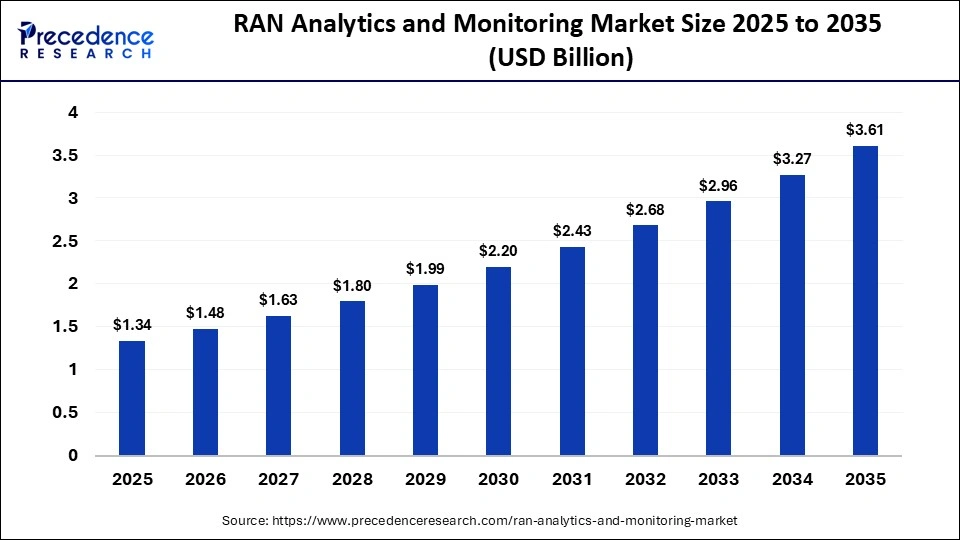
The global RAN analytics and monitoring market size was calculated at USD 1.34 billion in 2025 and is predicted to increase from USD 1.48 billion in 2026 to approximately USD 3.61 billion by 2035, expanding at a CAGR of 10.42% from 2026 to 2035. The market is growing as telecom operators are adopting AI-driven observability tools to improve 5G value, while cloud-native networks and edge computing enhance visibility. The rising adoption of 5G across industries is also increasing demand for advanced analytics solutions.
Key Takeaways
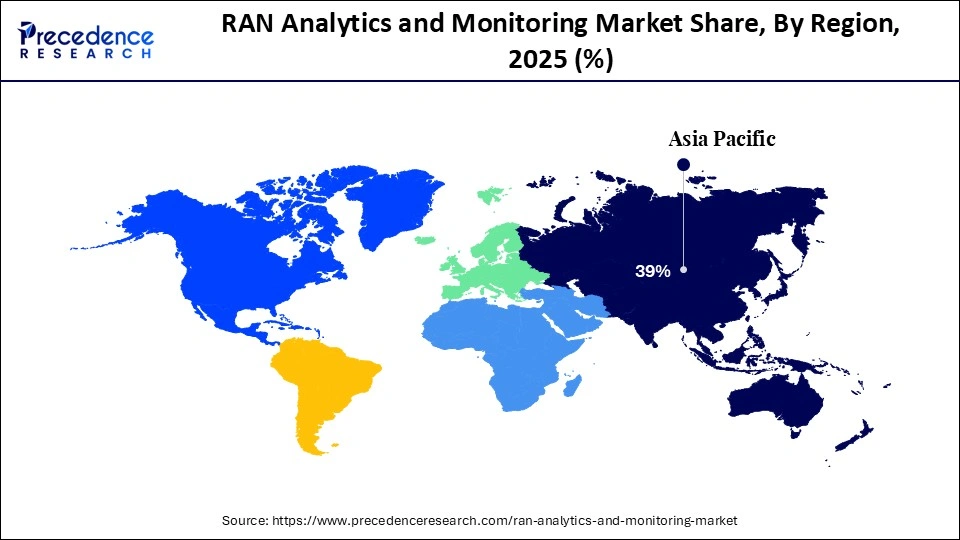
- The Asia Pacific dominated the market with the largest market share of 39% in 2025.
- North America is expected to grow at the fastest CAGR during the forecast period.
- By component type, the platform/software segment held the major market share of 58% in 2025.
- By component type, the services segment is expected to grow at a significant CAGR during the forecast period.
- By deployment type, the cloud-based segment contributed the biggest market share of 64% in 2025.
- By deployment type, the on-premises segment is predicted to grow at the fastest CAGR during the forecast period.
- By network technology, the 4G/LTE segment dominated the market with the largest share in 2025.
- By network technology, the open RAN/vRAN segment is expected to grow at the fastest CAGR during the forecast period.
- By application, the performance management segment dominated the market with the largest share in 2025.
- By application, the energy and capacity optimization segment is expected to grow at the fastest CAGR during the forecast period.
- By end-user, the tier-1 mobile network operators segment dominated the market with the highest share in 2025.
- By end-user, the private enterprise networks segment is expected to grow at the fastest CAGR during the forecast period.
Market Overview
The RAN analytics and monitoring market includes tools and solutions that help telecom operators keep a close watch on how their wireless networks are performing. These systems collect and analyze large amounts of network data to quickly detect issues, manage traffic, and improve overall efficiency. They are especially important for handling the growing complexity of 4G and 5G networks. As networks expand and user expectations rise, telecom companies are increasingly relying on these solutions to maintain strong performance and deliver a better user experience. Additionally rapid growth of IoT is bridging a surge of connected devices, each with different data and connectivity needs. The RAN Analytics and monitoring health telecom operators manage this diverse traffic banalizing device usage patterns.
Impact of AI on the RAN Analytics and Monitoring Market
Artificial Intelligence (AI) and advanced technologies are transforming the RAN analytics and monitoring market by enabling smarter and more predictive network management. AI-driven analytics processes large volumes of network data to detect faults, predict failures, and support predictive maintenance, helping telecom operators reduce downtime and operational costs. These technologies also automate complex processes such as network optimization, traffic management, and resource allocation. With the rapid growth of 5G networks and IoT devices, AI-based monitoring solutions help manage increasing network complexity and varying traffic patterns. Overall, AI enables telecom operators to identify issues early, improve service reliability, and shift toward proactive and intelligent network management.
RAN Analytics and Monitoring Market Trends
- AI-driven predictive maintenance supporting 5G network expansion: With the rapid rollout of 5G technologies such as Massive MIMO and millimeter-wave small cells, telecom networks are generating huge volumes of data. Operators are increasingly using AI-based analytics to predict network faults, manage congestion, and optimize capacity, enabling a shift from reactive troubleshooting to proactive network management.
- Cloud-native RAN architecture improving network visibility: The move toward cloud-native and containerized RAN systems is helping telecom operators gain better visibility into network performance. Microservices and open APIs allow real-time data monitoring, faster issue detection, and easier deployment of analytics tools across distributed network environments.
- Growing use of private 5G networks in Industry 4.0: Industries such as manufacturing, mining, and logistics are increasingly adopting private 5G networks to support automation, robotics, and smart factory operations. This trend is driving demand for advanced RAN analytics solutions to ensure reliable connectivity and maintain efficient industrial operations.
- Expansion of Open RAN automation through xApps and rApps: Open RAN technologies are enabling telecom operators to deploy third-party applications such as xApps and rApps to improve network efficiency. These applications help optimize spectrum usage, enhance energy efficiency, and support automated network management across multi-vendor environments.
- Greater focus on network resilience after COVID-19: The surge in remote work, online services, and digital communication during the COVID-19 pandemic highlighted the need for stronger network monitoring systems. Telecom providers are therefore investing more in RAN analytics tools to maintain service reliability and manage increasing data traffic.
- Rising regulatory requirements for telecom networks: Stricter government regulations on data security, privacy, and service quality are encouraging telecom operators to adopt advanced monitoring solutions. RAN analytics platforms help operators track network performance in real time and ensure compliance with evolving regulatory standards.
Market Scope
| Report Coverage | Details |
| Market Size in 2025 | USD 1.34 Billion |
| Market Size in 2026 | USD 1.48 Billion |
| Market Size by 2035 | USD 3.61 Billion |
| Market Growth Rate from 2026 to 2035 | CAGR of 10.42% |
| Dominating Region | Asia Pacific |
| Fastest Growing Region | North America |
| Base Year | 2025 |
| Forecast Period | 2026 to 2035 |
| Segments Covered | Component, Deployment Mode, Network Technology, Application, End User, and region |
| Regions Covered | North America, Europe, Asia-Pacific, Latin America, and Middle East & Africa |
Segment Insights
Component Insights
What Made Platform/Software the Dominant Segment in the Market?
The platform/software segment led the RAN analytics and monitoring market with the largest share in 2025, as telecom operators increasingly preferred integrated observability platforms that combine performance monitoring, fault detection, and energy analytics within a unified system. These platforms support subscription-based models and modular upgrades, making them suitable for phased 5G deployments. In addition, vendors are incorporating low-code interfaces and automated analytics tools that allow network teams to easily build dashboards and deploy monitoring features, accelerating adoption among both large and mid-sized telecom operators.
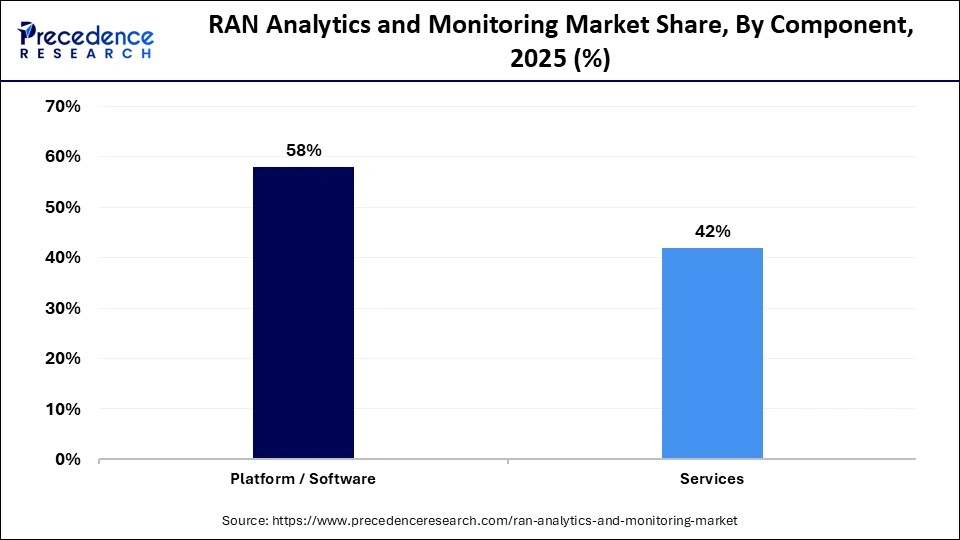
The services segment is expected to grow at the fastest rate during the forecast period. This is because many telecom operators and enterprises lack specialized expertise in AI-driven analytics, automation, and advanced network orchestration. As a result, they are increasingly relying on consulting firms and managed service providers for tasks such as predictive maintenance, digital twin simulations, and network lifecycle management. This trend is particularly evident in private 5G deployments, where organizations seek external expertise to ensure reliable and efficient network performance.
Deployment Mode Insights
Why Did the Cloud-Based Segment Dominate the RAN Analytics and Monitoring Market?
The cloud-based segment dominated the market with the largest share in 2025, as telecom operators increasingly rely on cloud infrastructure to manage large volumes of network data and AI workloads. Cloud platforms offer scalable computing resources, advanced analytics capabilities, and high system availability, making them well-suited for real-time network monitoring. Many operators are also adopting hybrid approaches that combine public cloud for data processing with edge computing for low-latency analytics near network sites.
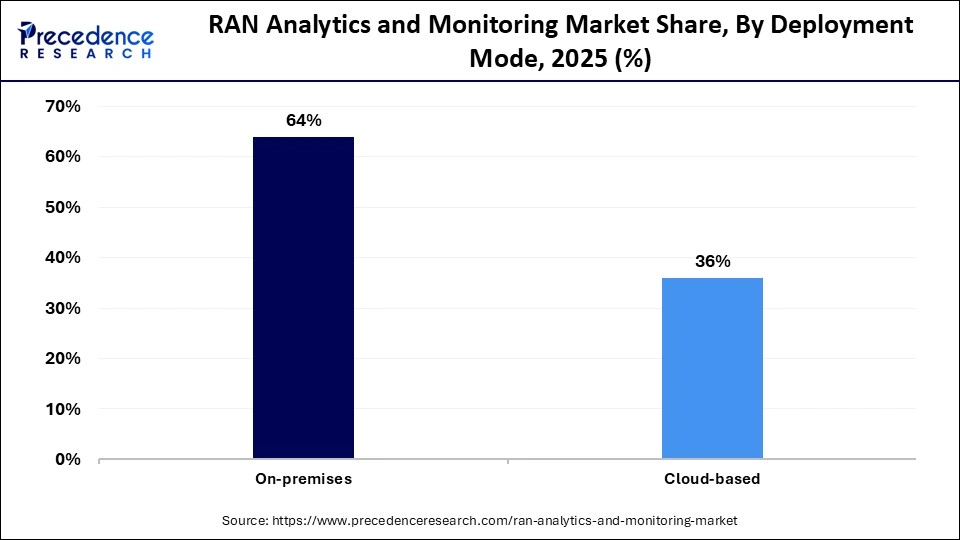
The on-premises segment is expected to grow at a significant rate in the coming years. This is because of the rising use of on-premises solutions, particularly in sectors such as defense, energy, mining, and utilities, where strict security requirements and isolated network environments are essential. Organizations in these industries prefer localized analytics infrastructure to maintain control over sensitive operational data. Vendors are responding by offering compact, integrated solutions that simplify deployment while supporting advanced monitoring capabilities in private 5G environments.
Network Technology Insights
How Does the 4G/LTE Segment Lead the RAN Analytics and Monitoring Market?
The 4G/LTE segment led the market, accounting for the largest share in 2025, primarily due to its widespread global deployment and the large volume of network traffic it supports. Most telecom operators continue to rely heavily on 4G/LTE infrastructure for delivering mobile broadband services, which creates a strong need for advanced analytics tools to monitor network performance, optimize capacity, and ensure service quality. Additionally, operators use RAN analytics to manage network congestion, improve coverage, and support the transition toward 5G networks by integrating 4G/LTE with next-generation infrastructure.
The open RAN / vRAN segment is expected to experience the fastest growth during the forecast period. These architectures support multi-vendor ecosystems and flexible network deployments, but they also increase operational complexity. As a result, operators are adopting advanced analytics and monitoring tools to gain real-time visibility, manage network performance, and ensure service reliability across open and virtualized network environments.
Application Insights
What Made Performance Management the Dominant Segment in the Market?
The performance management segment dominated the RAN analytics and monitoring market while holding the largest share in 2025, as telecom operators rely heavily on analytics platforms to monitor network performance, manage capacity, and maintain service-level agreements. These tools help identify network congestion, optimize signal quality, and reduce service disruptions, which is essential for maintaining a consistent user experience.
The energy and capacity optimization segment is expected to grow at the fastest rate as telecom operators increasingly focus on reducing energy consumption and improving network efficiency. AI-based analytics solutions allow operators to dynamically manage network resources and reduce power usage during low-traffic periods, helping telecom providers lower operational costs while supporting sustainability goals.
End User Insights
How Does the Tier-1 Mobile Network Operators Segment Lead the Market?
The tier-1 mobile network operators segment led the RAN analytics and monitoring market by capturing the maximum share in 2025. This is mainly due to their extensive network infrastructure and strong investments in advanced network monitoring solutions. These operators are often early adopters of AI-driven analytics and automated network management technologies to improve service reliability and support large-scale 5G deployments.
The private enterprise networks segment is expected to grow at the fastest rate, as organizations increasingly deploy private 5G networks within factories, campuses, airports, and industrial facilities. These networks require detailed monitoring and analytics tools to maintain performance, ensure connectivity for critical applications, and support automation technologies in modern industrial environments.
Regional Analysis
Asia Pacific RAN Analytics and Monitoring Market Size and Growth 2026 to 2035
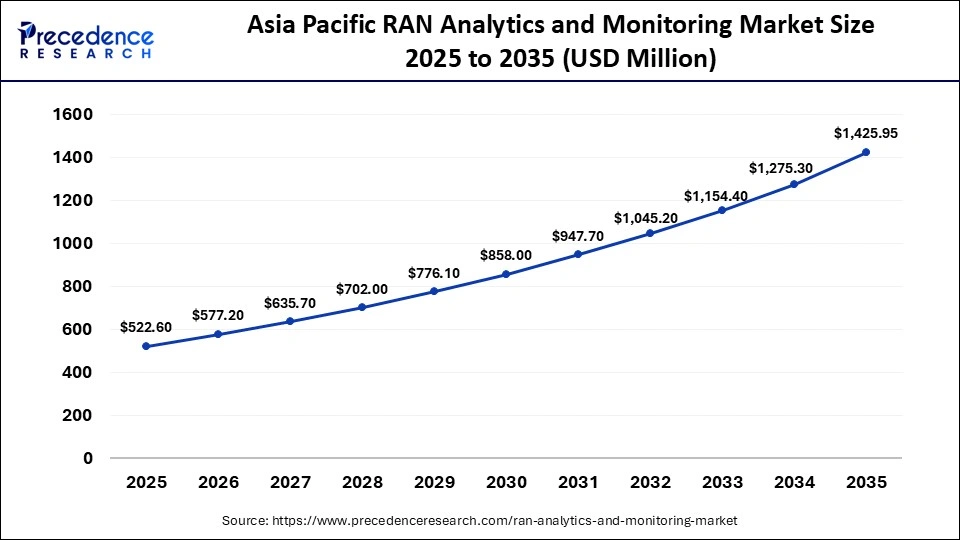
The Asia Pacific ran analytics and monitoring market size is expected to be worth USD 1,425.95 million by 2035, increasing from USD 522.60 million by 2025, growing at a CAGR of 10.56% from 2026 to 2035.
What Made Asia Pacific the Dominant Region in the RAN Analytics and Monitoring Market?
Asia Pacific dominated the RAN analytics and monitoring market by capturing the largest share in 2025. The region's dominant position in the market is largely driven by rapid technological progress, increasing investments in telecommunications infrastructure, and the rising number of mobile subscribers across the region. Countries such as China, Japan, and India are leading this expansion as they continue to invest heavily in 5G deployment and broader digital transformation initiatives. In addition, the growing development of smart city projects and the rising use of advanced data analytics solutions are creating new opportunities for RAN monitoring technologies. Telecom operators in the region are focusing on improving network performance and managing increasing data traffic, which is further accelerating market demand.
What Makes North America the Fastest-Growing Region in the RAN Analytics and Monitoring Market?
North America is expected to grow at the fastest rate in the coming years. This is due to the rapid expansion of advanced telecom infrastructure, especially the large-scale rollout of 5G networks, which has increased the complexity of network operations. To manage this complexity and maintain high service quality, telecom operators are increasingly adopting advanced RAN analytics and monitoring solutions that provide real-time insights into network performance and user experience.
The presence of leading technology companies such as Cisco Systems, Intel Corporation, and Qualcomm also plays an important role in strengthening the region's market growth, as these companies continue to invest in innovation and network analytics technologies. In addition, North America's well-developed IT infrastructure and strict regulations around data security and privacy encourage telecom providers to invest in reliable monitoring systems, further supporting the adoption of advanced RAN analytics solutions.
How is the Opportunistic Rise of Europe in the RAN Analytics and Monitoring Market?
Europe is expected to grow at a significant rate during the forecast period, supported by the region's growing focus on improving network efficiency and strengthening network security. Telecom operators across Europe are investing in advanced telecom infrastructure and adopting digital technologies to manage increasing data traffic and ensure reliable network performance. Countries such as Germany, the UK, and France are among the leading adopters of RAN analytics and monitoring platforms in the region.
Another key factor supporting market growth is the presence of strict regulations related to data protection and privacy, which require telecom providers to maintain strong monitoring and security systems. These regulatory requirements are encouraging operators to deploy advanced analytics tools that provide better visibility into network operations and help maintain compliance.
RAN Analytics and Monitoring Value Chain Analysis
- Infrastructure and Hardware Providers
Companies in this stage develop the physical RAN infrastructure, including base stations, antennas, and network equipment. These components generate large volumes of network data that form the foundation for analytics and monitoring solutions.
Key players: Nokia, Samsung Electronics, Huawei Technologies, ZTE Corporation, Cisco Systems, NEC Corporation
- Data Collection and Integration
At this stage, network data from different RAN elements, such as base stations, sensors, and network controllers, is captured and integrated into centralized systems. Advanced data pipelines and interfaces ensure that information from multiple sources can be processed efficiently.
Key players: Juniper Networks, Viavi Solutions, Anritsu Corporation, Spirent Communications, Keysight Technologies.
- Analytics and Software Platform Development
Software providers design analytics platforms, AI tools, and monitoring software that analyze RAN performance. These platforms use machine learning and advanced algorithms to detect network anomalies, predict faults, and optimize resource allocation.
Key players: Cisco Systems, NEC Corporation, Rohde & Schwarz, Infovista, Radcom Ltd., Teoco Corporation, NetScout Systems.
- Installation and Commissioning
System integrators and telecom technology partners combine hardware infrastructure with analytics platforms. They ensure the solutions are properly deployed within telecom operators' existing networks, enabling seamless monitoring and automation.
Key players: Juniper Networks, Viavi Solutions, Anritsu Corporation, Spirent Communications, Keysight Technologies
- Maintenance and After-Sales Service
Telecommunication companies use RAN analytics and monitoring solutions to improve network performance, enhance the quality of service, and reduce operational costs. This stage represents the main end-users of these technologies.
Key players: Ericsson, Nokia, Huawei Technologies, ZTE Corporation, Samsung Electronics, Juniper Networks, Viavi Solutions.
- Product Lifecycle Management
After deployment, vendors provide continuous monitoring, software updates, and technical support. These services help telecom operators maintain network reliability, adapt to increasing data traffic, and optimize performance over time
Key players: Ericsson, Nokia, Samsung Electronics, Rohde & Schwarz, Infovista, Radcom Ltd
RAN Analytics and Monitoring Market Companies
- Ericsson
- Nokia
- Huawei Technologies
- ZTE Corporation
- Cisco Systems
- NEC Corporation
- Samsung Electronics
- Juniper Networks
- Viavi Solutions
- Anritsu Corporation
- Spirent Communications
- Keysight Technologies
- Rohde & Schwarz
- Infovista
- Radcom Ltd.
- Teoco Corporation
- NetScout Systems
Recent Developments
- In March 1, 2026, Nokia expanded its AI-RAN collaborations with telecom operators, including TIM Brasil and Deutsche Telekom, to accelerate the deployment of AI-driven radio access networks. The partnership focuses on integrating advanced analytics and automation tools that enable real-time monitoring, predictive maintenance, and intelligent network optimization in 5G infrastructure.(Source: https://www.nokia.com)
- In March 2, 2026, Samsung Electronics announced a strategic collaboration with AMD to develop AI-powered RAN technologies for next-generation telecom networks. The collaboration aims to enhance network monitoring, improve traffic analytics, and enable high-performance processing capabilities required for advanced 5G and future 6G services.(Source: https://www.samsung.com)
- In February 17, 2026, Ericsson introduced a new portfolio of AI-ready radios, advanced antennas, and AI-based RAN software designed to support the growing demand for intelligent telecom networks. These solutions enable telecom operators to perform real-time network analytics, automate fault detection, and optimize radio network performance. Source: https://www.ericsson.com)
- In October 28, 2025, NVIDIA partnered with telecom and technology companies, including Cisco Systems, Booz Allen Hamilton, and T-Mobile, to develop an AI-RAN technology stack. The platform integrates GPU-accelerated computing with telecom networks to enable real-time analytics, network automation, and enhanced monitoring capabilities.(Source: https://www.nextgov.com)
- In September 23, 2025, Ericsson and Nokia secured a multi-billion-dollar contract from a major telecom operator in the UK to deploy advanced 5G radio access network infrastructure. The project includes the integration of AI-based monitoring tools and analytics platforms to improve network coverage, reliability, and performance.(Source: https://www.telecomrevieweurope.com)
- In March 2, 2026, Nokia expanded its AI-driven RAN initiatives through partnerships with telecom operators such as TIM Brasil and Deutsche Telekom. The collaborations aim to deploy cloud-based and AI-native radio access networks capable of advanced network monitoring, predictive analytics, and automated optimization for large-scale 5G networks. (Source: https://www.nokia.com)
- In February 2026, at the global telecom event Mobile World Congress 2026, industry leaders, including Ericsson and Qualcomm, highlighted the development of AI-native 6G networks. These networks will integrate intelligent radios, advanced sensing capabilities, and automated analytics to improve network monitoring and operational efficiency. (Source: https://www.fierce-network.com)
Segments Covered in the Report
By Component
- Platform / Software
- Services
By Deployment Mode
- On-premises
- Cloud-based
By Network Technology
- 2G / 3G
- 4G / LTE
- 5G NR
- Open RAN / vRAN
By Application
- Performance Management
- Fault and Event Management
- Mobility and Handover Optimization
- Energy and Capacity Optimization
By End User
- Tier-1 Mobile Network Operators
- Mobile Virtual Network Operators
- Private Enterprise Networks
- Neutral-Host / TowerCos
By Region
- North America
- Latin America
- Europe
- Asia-pacific
- Middle and East Africa
For inquiries regarding discounts, bulk purchases, or customization requests, please contact us at sales@precedenceresearch.com
Frequently Asked Questions





Ask For Sample
No cookie-cutter, only authentic analysis – take the 1st step to become a Precedence Research client
 Get a Sample




 sales@precedenceresearch.com
 Schedule a Meeting
