



Respiratory Monitoring Devices Market Size, Leading Companies, Company Technology / Innovation, Hospital Procurement Trends, Manufacturing Capacity, Sales Performance, Regulatory Approvals, Patient Outcomes, Competitive Landscape, and Forecast
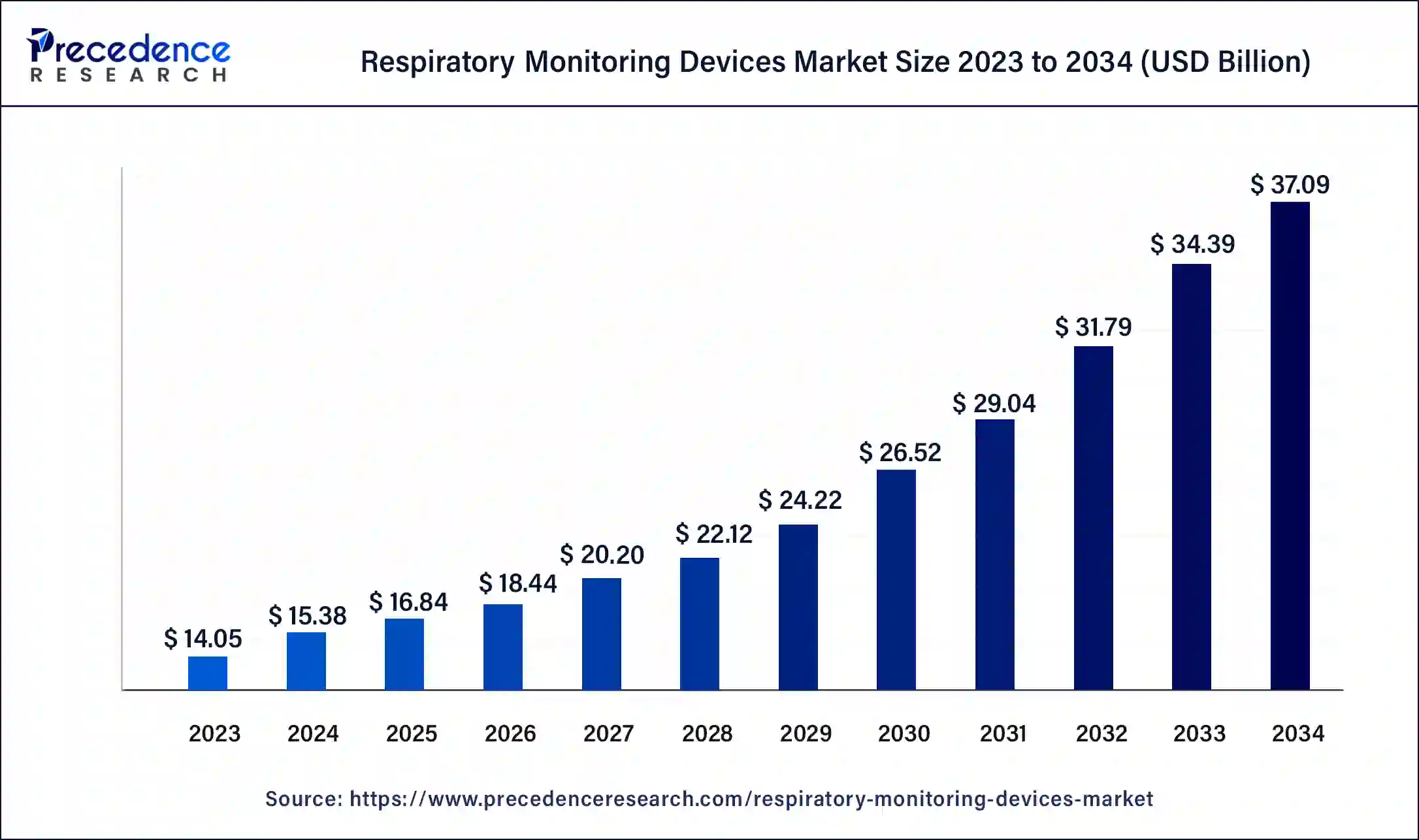
The global Respiratory Monitoring Devices Market was valued at USD 18.44 billion in 2026 and is projected to reach USD 18.44 billion in 2026 and approximately USD 39.72 billion by 2035, expanding at a CAGR of 8.96% from 2026 to 2035. Market growth is driven by the rising prevalence of respiratory diseases, including COPD, asthma, and respiratory infections, along with increasing demand for portable and connected monitoring devices. Pulse oximeters held the largest device-type share in 2025, while homecare is expected to be the fastest-growing end-user segment. North America led the market, while Asia-Pacific is projected to record the fastest growth.
Source: https://www.precedenceresearch.com/respiratory-monitoring-devices-market
 Get a Sample
 Table Of Content


What is the Respiratory Monitoring Devices Market Size?
The global respiratory monitoring devices market size is calculated at USD 16.84 billion in 2025 and is predicted to increase from USD 18.44 billion in 2026 to approximately USD 39.72 billion by 2035, growing at a CAGR of 8.96% from 2026 to 2035.
Respiratory Monitoring Devices Market Key Takeaways
- North America led the global market with the largest market share in 2025.
- Asia-Pacific is expected to expand at the fastest CAGR during the forecast period.
- By Device Type, the pulse oximeters segment has held the largest revenue share in 2025.
- By Device Type, the peak flow meters segment is anticipated to grow at the fastest CAGR during the projected period.
- By Indication, the COPD dominated the global market in 2025.
- By Indication, the infectious disease segment is projected to expand at the fastest CAGR over the projected period.
- By End User, the hospitals segment had the biggest market share in 2025.
- By End User, the homecare segment is anticipated to grow at the fastest CAGR over the projected period.
How is AI contributing to the Respiratory Monitoring Devices Market?
Continuous data analysis of patients' breathing patterns, blood gas levels, and lung mechanics is how AI helps respiratory monitoring. Smart algorithms adjust ventilation settings automatically in real time, thus making clinical decisions and therapy precision more accurate. AI-based monitoring has the potential to bolster early intervention, cut down manual workload, and provide remote supervision through predictive alerts, data interpretation, and automated parameter optimization for customized respiratory care.
Respiratory Monitoring Devices Market Growth Factors
The demand for the respiratory monitoring devices is expected to grow at a promising rate in the forthcoming years owing to the rising prevalence of various respiratory diseases. The alarming rising in the incidences of chronic obstructive pulmonary disease (COPD), asthma, and respiratory infections across the globe is boosting the growth of the global respiratory monitoring devices market. According to the World Health Organization, around 65 million people across the globe suffers from COPD and around 3 million dies due to it every year. Around 334 million people are suffering from asthma and around 14% of the global children are affected from it. The rising pollution levels, rising demand for tobacco smoking, and changing lifestyle of the consumers are the major contributors to the surging cases of respiratory diseases among the global population. The manufacturers are investing in the development of the wearable sensors that can efficiently monitor the respiration rate. The increasing focus on making comfortable and convenient devices for the patients is expected to drive the demand for the various innovative respiratory monitoring devices in the forthcoming years. Furthermore, the integration of the latest technologies like integration of the smartphone technology with the pulse oximeters is driving the growth of the market.
Market Outlook
- Industry Growth Overview: Thanks to the increasing respiratory disease burden and the gradual adoption of compact monitoring devices in healthcare settings, the industry is growing.
- Sustainability Trends: The emphasis is on recyclable components of devices, energy-efficient systems, and refurbishment programs that help responsible product lifecycle management.
- Global Expansion: North America is the leader in adoption, while Asia-Pacific is taking the lead with the rapid expansion of care infrastructure and device penetration.
- Major Investors: Medtronic, GE Healthcare, Philips Healthcare, ResMed, and Masimo enrich the market with innovations, device integration, and commercialization efforts.
- Startup Ecosystem: Startups push the limits of the potential of wearables and AI-powered respiratory solutions to improve diagnostic processes, remote monitoring, and patient-inclusive care.
Scope of the Respiratory Monitoring Devices Market Report
| Report Coverage | Details |
| Market Size by 2035 | USD 39.72 Billion |
| Market Size in 2026 | USD 18.44 Billion |
| Market Size in 2025 | USD 16.84 Billion |
| Market Growth Rate from 2026 to 2035 | CAGR of 8.96% |
| Largest Market | North America |
| Base Year | 2025 |
| Forecast Period | 2026 to 2035 |
| Segments Covered | Device Type, End User, Indication, and Region |
| Regions Covered | North America, Europe, Asia-Pacific, Latin America, and Middle East & Africa |
Market Dynamics
Driver
Proactive Care Drives Respiratory Device Demand
The primary driver for the market is increasing global prevalence of chronic respiratory disorders, such as chronic obstructive pulmonary disease (COPD), asthma, and sleep-disordered breathing, and ultimately acts as a significant propellant. As there is a strong shift toward proactive management, continuous, real-time tracking of vital parameters, including respiratory rate and oxygen saturation, to preempt acute clinical deterioration.
Opportunity
AI and Sensors Transform Care
The major opportunity lies in integrating artificial intelligence with advanced wearable and contactless sensors, providing a transformative avenue for market expansion. Furthermore, integrating Internet of Things architecture with remote patient monitoring provides personalized respiratory healthcare, lowers lengthy hospital admissions, and streamlines decentralized disease tracking.
Restraint
Cost and Compliance Hurdles
Despite its strong potential, stringent regulatory frameworks and complex reimbursement barriers significantly obstruct rapid commercialization. According to implementation analyses hosted on PubMed Central, mounting compliance hurdles, uncertainties about affordability, and the upfront cost of specialized biometric units constrain broader clinical deployment and global patient adoption.
Segment Insights
Device Type Insights
What Factors Are Driving the Dominance of Pulse Oximeters in the Respiratory Monitoring Devices Market?
Based on the device type, the pulse oximeters segment dominated the global respiratory monitoring devices market in 2025, in terms of revenue and is estimated to sustain its dominance during the forecast period. The increased popularity of the pulse oximeters in the recent times owing to the COVID-19 pandemic has fostered its growth significantly. In 2020, owing to the rapid spread of the COVID-19 disease, patients were increasingly adopting the pulse oximeters to monitor their oxygen saturation. Moreover, pulse oximeters are non-invasive and can efficiently monitor heart rate and oxygen level, which fueled the demand for the pulse oximeters among the global population. Moreover, the integration of the smartphones with the pulse oximeters can help the healthcare professionals to curb the death rate of the patients suffering from the chronic respiratory diseases. Therefore, the technological advancements in the pulse oximeters are expected to provide new growth avenues to the market players in the forthcoming future.
On the other hand, the peak flow meters are estimated to be the most opportunistic segment during the forecast period. The various benefits of the peak flow meters such as portability, remote accessibility, and easy to handle are the major factors that boosts the growth of the peak flow meters. It can monitor respiratory disease like asthma and can also diagnose chronic disease like lungs cancer. This is a significant driver of the peak flow meters segment. The growing prevalence of asthma and alarming rise in the incidences of lungs cancer is expected to drive the growth of this segment.
Indication Insights
Which Indication Segment Dominated the Global Respiratory Monitoring Devices Market in 2025?
Based on the indication, the COPD segment dominated the global respiratory monitoring devices market in 2025, in terms of revenue and is estimated to sustain its dominance during the forecast period. This is attributable to the increased pollution levels and high prevalence of smoking. The increased prevalence of chronic obstructive pulmonary disease among the global population is the sole driver of the segment.
On the other hand, infectious disease segment is expected to be the fastest-growing segment during the forecast period. The rising prevalence of various infectious respiratory diseases such as influenza, coronavirus infection, and pneumonia is expected to boost the growth of this segment during the forecast period.
End User Insights
Which End User Segment Dominated the Global Respiratory Monitoring Devices Market in 2025?
Based on the end user, the hospitals segment dominated the global respiratory monitoring devices market in 2025, in terms of revenue and is estimated to sustain its dominance during the forecast period. This is attributed to the increased penetration of hospitals across the globe. The increasing investments by the public and the private sector in improving the access to the healthcare facilities coupled with the development of healthcare infrastructure has significantly boosted the growth of the respiratory monitoring devices usage in the hospitals.
On the other hand, the homecare is estimated to be the fastest-growing segment during the forecast period. The increased healthcare expenditure, availability of home healthcare services, growing geriatric population, and increased demand for the convenient healthcare services is fueling the growth of the homecare segment across the globe.
Regionl Insights
How is North America leading in the Respiratory Monitoring Devices Market?
North America dominated the global respiratory monitoring devices market in 2025, in terms of revenue and is estimated to sustain its dominance during the forecast period. The dominant market like US is characterized by the rising healthcare expenditure along with the presence of strong healthcare infrastructure and improved access to the healthcare services. The per capita healthcare expenditure in US is significant, which amounted to US$ 10,624 in 2018. Moreover, increased awareness regarding the various advanced respiratory monitoring devices among the population has fostered the growth of the North America respiratory monitoring devices market.
Market leader because of its developed healthcare systems, high acceptance of monitoring technologies, and favorable reimbursement policies. The integration of telehealth and the adoption of analytical tools for upgrading patient management through devices are the main opportunities for efficient care delivery.
United States Respiratory Monitoring Devices Market Trends:
There is a big requirement for portable and home-use respiratory monitoring solutions, with the connected systems being the favorite. More and more hospitals are investing in new equipment and employing AI for quicker respiratory diagnostics and patient care response.
How is Asia-Pacific performing in the Respiratory Monitoring Devices Market?
Asia Pacific is estimated to be the most opportunistic segment during the forecast period. The rising prevalence of the chronic respiratory diseases among the population owing to the rising pollution levels due to rapid industrialization and rapid urbanization is a significant driver that boosts the demand for the respiratory monitoring devices in Asia Pacific. Asia Pacific is considered to be a hub for medical tourism, which makes it one of the fastest-growing markets for the advanced medical devices and equipment. Hence, this region is expected to grow at a significant CAGR during the forecast period.
The region with the highest growth rate is backed by the aging populations and increased awareness about respiratory diseases. Enhanced healthcare infrastructure and demand for affordable portable monitoring devices across underserved areas are the primary sources of the opportunity, which will ultimately lead to easier and wider access to respiratory care.
China Respiratory Monitoring Devices Market Trends:
An enormous opportunity is expected to come from respiratory-related diseases and investments in healthcare together. The growing market of respiratory monitoring devices will be supported by the adoption of more portable units, thus enabling access to larger populations and better monitoring in various healthcare settings.
What are the driving factors of the Respiratory Monitoring Devices Market in Europe?
The region has the most developed healthcare and the strongest focus on chronic disease management. The demand for home-use devices is growing, and among the connected monitoring solutions, the ones enabling remote supervision and data-based clinical coordination across healthcare networks have the highest growth potential.
Germany Respiratory Monitoring Devices Market Trends
A market that is not prone to fluctuations but rather shows a continuous preference for advanced respiratory diagnostics tools, such as detailed assessment systems. The significant uptake of high-performance technologies is the result of the emphasis on thorough lung and clinical accuracy in patient monitoring.
How will Latin America Grow in the Respiratory Monitoring Devices Market?
Latin America is experiencing significant growth in the global market, mainly due to increasing burden of chronic obstructive pulmonary disease and asthma, urban air pollution, a growing geriatric demographic, and a rapid shift toward home healthcare and remote patient monitoring. Widespread internet penetration and smartphone utilization enable the deployment of mobile health and connected pulse oximetry tools. Government and institutional focus on mitigating hospital expenditures improves the uptake of portable and home-use monitoring hardware.
Brazil Market Trends
Brazil is a key contributor within the region, mainly due to its massive aging demographic and a high prevalence of chronic conditions like COPD and asthma. The national regulator ANVISA is modernizing guidelines for software-as-a-medical-device and electronic labeling. The Unified Health System (SUS) also monitors severe acute respiratory infections (SARI) to manage outbreaks and distribute therapeutic equipment. Their techno-vigilance programs, like the e-Notivisa system, further improve post-market surveillance of medical devices.
How will the Middle East and Africa Surge in the Respiratory Monitoring Devices Market?
The Middle East and Africa are surging as significant growth regions in the global market, mainly due to their massive health infrastructure investments and expanding digital health and remote monitoring. Gulf Cooperation Council nations and South Africa actively allocate substantial public funds to upgrade clinical facilities and digital telehealth tools. Furthermore, the rapid shift to home care is resulting in growing interest in non-invasive, portable, and remote-tracking equipment, enabling continuous monitoring outside traditional hospital settings.
The UAE Market Trends
The UAE plays a distinctive role in the region, characterized by its established market centered in Dubai and Abu Dhabi, prioritizing advanced pulmonology centers and connected patient monitoring. The Ministry of Health and Prevention (MoHAP) implements smart health applications for AI-based patient tracking and early respiratory diagnostics. Collaborations with global health organizations aim to improve early detection of chronic respiratory illnesses, and expanded health insurance policies promote home-care device use.
Value Chain Analysis
- R&D: Making creative ideas, device technology, and engineering of working prototypes.
Key Players: Academic Institutions (e.g., MIT) and Specialized Biotech Firms - Clinical Trials & Regulatory Approvals: Human testing and obtaining necessary medical certification.
Key players: IQVIA, FDA - Manufacturing & Assembly: Manufacturing, building, and testing for quality control.
Key Players: Medtronic, Flextronics and ResMed - Packaging & Serialization: Device packaging that is safe with an identification code for tracing and complying with regulations.
Key players: Cardinal Health, Gerresheimer, and West Pharmaceutical Services - Distribution to Healthcare Channels: Movement and supply of goods to hospitals, pharmacies, and providers.
Key players: Cardinal Health, McKesson, and Owens & Minor
Respiratory Monitoring Devices Market Companies
- Medtronic: These systems allow the healthcare personnel to carry out a continuous, detailed assessment of ventilation and oxygenation for many different cases.
- GE Healthcare: Distributing airway gas monitoring, patient spirometry, and ventilator systems, the company places these at the core of the monitoring platforms, making critical respiratory support more advanced.
- Masimo: Production includes, among others, non-invasive monitoring, such as pulse oximetry, capnography, and acoustic respiratory tools for continuous respiratory assessment.
Other Major Key Players
- Philips Healthcare
- Welch Allyn, Inc.
- Smiths Medical
- MGC Diagnostics Corporation
- Novelda AS
- Dragerwerk AG & Co. KGaA
- Nihon Kohden Corporation
Key Companies & Market Share Insights
The market is moderately fragmented with the presence of several local companies. These market players are striving to gain higher market share by adopting strategies, such as investments, partnerships, and acquisitions & mergers. Companies are also spending on the development of improved products. Moreover, they are also focusing on maintaining competitive pricing.
In January 2019, the FDA approved Masimo'sMightSat Rx oximeter used especially for homecare setting.
The various developmental strategies like new product launches with latest and innovative features fosters market growth and offers lucrative growth opportunities to the market players.
Recent Developments
- In September 2025, electronRx will unveil its pDx app for chronic respiratory disease management at HLTH 2025, providing a mobile assessment device to enable remote monitoring and optimize patient treatment outcomes.
(Source: respiratory-therapy.com) - In May 2025, ABM Respiratory Care launched a multi-center home care study with Delve Health to evaluate the BiWaze Clear System's impact on respiratory health in bronchiectasis patients over six months.
(Source: globenewswire.com)
Segments Covered in the Report
By Device Type
- Capnography
- Peak Flow Meters
- Pulse Oximeters
- Spirometers
- Gas Analyzers
- Polysomnography
- Others
By Indication
- Sleep Apnea
- COPD
- Asthma
- Infectious Disease
By End User
- Hospitals
- Clinics
- Homecare
By Geography
- North America
- U.S.
- Canada
- Europe
- U.K.
- Germany
- France
- Asia Pacific
- China
- India
- Japan
- South Korea
- Rest of the World
For inquiries regarding discounts, bulk purchases, or customization requests, please contact us at sales@precedenceresearch.com
Frequently Asked Questions





Ask For Sample
No cookie-cutter, only authentic analysis – take the 1st step to become a Precedence Research client
 Get a Sample
.webp)



 sales@precedenceresearch.com
 Schedule a Meeting
