



Surgical Fluid Disposal Market Size, Key Companies, Company Product Portfolio, Surgical Procedure Volume, Hospital Adoption, Automation Trends, Competitive Landscape, and Growth Forecast
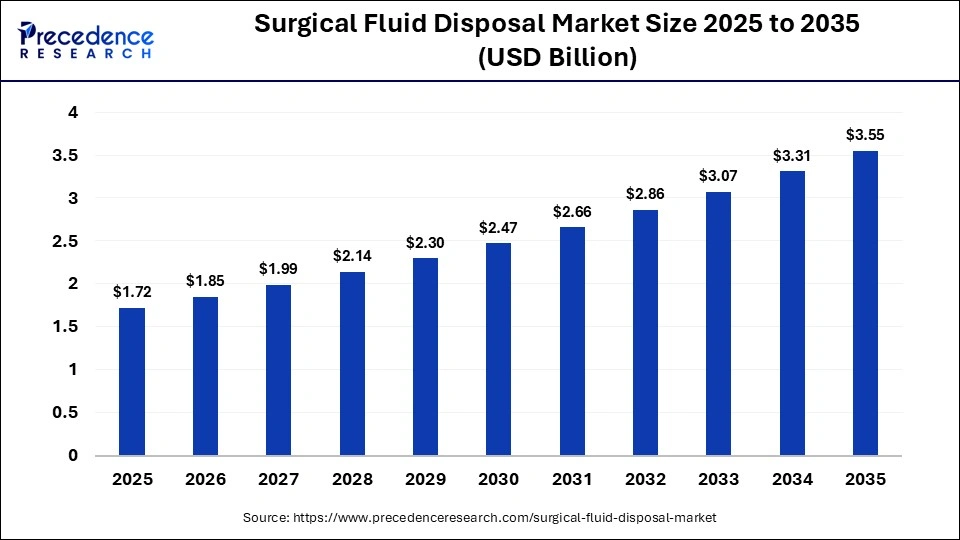
Deepa Pandey, a Healthcare Industry Expert, highlights that the surgical fluid disposal market has reached USD 1.85 billion in 2026 and is on track to reach USD 3.55 billion by 2035, advancing at a CAGR of 7.53%. Key surgical fluid disposal market companies shaping the market include Danaher Corporation, Tecan Group Ltd, Promega Corporation, while major growth segments span by product type, by end-user, by application.
Source: https://www.precedenceresearch.com/surgical-fluid-disposal-market
 Get a Sample
 Table Of Content


What is Surgical Fluid Disposal Market Size?
The global surgical fluid disposal market size accounted for USD 1.72 billion in 2025 and is predicted to increase from USD 1.85 billion in 2026 to approximately USD 3.55 billion by 2035, expanding at a CAGR of 7.53% from 2026 to 2035. The surgical fluid disposal market is growing as hospitals increase procedure volumes, prioritize infection prevention, adopt safer waste handling technologies, and comply with evolving healthcare safety and hygiene standards worldwide.
Market Highlights
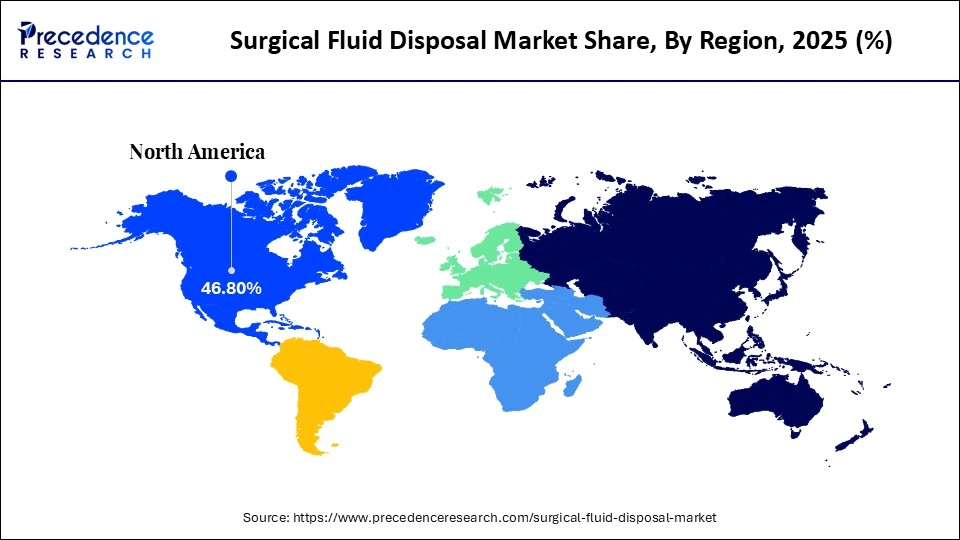
- North America led the surgical fluid disposal market with a 46.8% share in the global market in 2025.
- Asia Pacific is estimated to expand at the fastest CAGR of 8% in the market between 2026 and 2035.
- By product type, the suction canisters segment captured 45.3% share in 2025.
- By product type, the solidifiers segment is growing at a strong CAGR of 7.0% between 2026 and 2035.
- By end-user, the hospitals segment held 54.5% market share in 2025.
- By end-user, the ambulatory surgical centers segment is projected to grow at a solid CAGR of 7.3% in the surgical fluid disposal market between 2026 and 2035.
- By application, the orthopedic surgeries segment captured 45.8% market share in 2025.
- By application, the cardiovascular surgeries segment is poised to grow at a healthy CAGR of 7.1% between 2026 and 2035.
- By technology/system type, the closed suction systems segment led the market and held 43.7% market share in 2025.
- By technology, the other automated fluid disposal segment is expected to expand at a notable CAGR of 7.2% in the surgical fluid disposal market from 2026 to 2035.
Managing Surgical Waste More Efficiently
The surgical liquid disposal industry includes both systems and devices for collecting, transporting, and safely disposing of fluids created in both same-day and inpatient surgeries. Interest in this marketplace has been increased through consistent surgical increases, tighter guidelines around infection control, and the desire for increased efficiencies in operating room activities. Because of this, hospitals are opting for closed, mechanized methods of disposing of surgical liquid, reducing their need to manually handle and potentially expose themselves and staff to contaminated liquids.
The demand for these closed, mechanized systems is bolstered through government regulation on healthcare waste management and a necessity for quicker operating room turnover times. In addition, the development of technologies designed for portability, lower noise levels, compatibility with complex surgical equipment, and enhanced reliability will encourage demand for these products. Many of these recently launched interrogation systems will continue to grow due to the introduction of new ambulatory surgical centers and increased focus on safeguarding staff health and safety, sustainable practices, and enhancing the workflow of today's modern hospitals.
Key Factors Impacting Surgical Fluid Disposal Market
- Integration of Automation: By including automated pumps, sensors, and digital monitors, manual handling of instruments in an operating room has decreased as the efficiency of workflow is greatly improved. This reduction in manual handling also reduces the chances of human error during high-volume surgical procedures.
- Requires Compliance with Regulations: The increasing number of regulations regarding the safe handling, transportation, and destruction of biohazardous waste has led all healthcare facilities to invest in fluid disposal technologies to meet their regulatory and occupational safety obligations.
- Emerging Markets: Emerging economies are experiencing a dramatic increase in the volumes of surgical operations being performed, coupled with increased investment into hospital infrastructure, and as a result, there is also a heightened interest in worker safety in these markets compared to other regions. These trends will cause the demand for modern, cost-effective surgical fluid decomposition solutions to grow in importance in all locations around the world.
How Is Artificial Intelligence Revolutionizing the Way in Which Surgical Fluids Are Disposed?
Artificial intelligence is significantly improving the processing and management of surgical fluid waste by reducing reliance on manual handling and increasing operational precision. Artificial Intelligence -enabled surgical fluid waste management systems automate fluid collection, transfer, and disposal, which minimizes human contact and lowers the risk of contamination or handling errors. Automated dispensing and monitoring functions ensure accurate fluid management during procedures, reducing spillage, misuse, and workplace accidents associated with traditional methods.
Recent market developments show a clear shift toward AI-integrated systems that help healthcare facilities reduce costs linked to inefficiencies and procedural delays. Real-time analytics allow surgical teams and facility managers to monitor fluid volumes, system performance, and safety parameters continuously. Predictive maintenance capabilities identify potential equipment issues before failures occur, improving system uptime and reliability. These advancements support smoother surgical workflows and align with broader adoption of robotics and autonomous assistance technologies in modern operating rooms.
Market Scope
| Report Coverage | Details |
| Market Size in 2025 | USD 1.72 Billion |
| Market Size in 2026 | USD 1.85 Billion |
| Market Size by 2035 | USD 3.55 Billion |
| Market Growth Rate from 2026 to 2035 | CAGR of 7.53% |
| Dominating Region | North America |
| Fastest Growing Region | Asia Pacific |
| Base Year | 2025 |
| Forecast Period | 2026 to 2035 |
| Segments Covered | Product Type, Technology, Application, End User, Technology/System Type, and Region |
| Regions Covered | North America, Europe, Asia-Pacific, Latin America, and Middle East & Africa |
Segments Insights
Product Type Insights
Why Are Suction Canisters the first choice for disposing of surgical fluids after surgery?
The suction canisters segment is the first choice in the market with a 45.3% share with the disposing of surgical fluids, as they are essential for collecting and temporarily storing large volumes of surgical fluids from various operating rooms. Suction canisters also have a number of advantages that support their use by hospitals and the wide acceptance of suction canisters as part of their surgical fluid disposal processes. The constant high volume of surgical procedures performed at hospitals and the regular predictable schedule on which suction canisters must be replaced further enhance the market demand for suction canisters and strengthen their position as the most commonly used products in surgical fluid disposal.
Solidifiers are set to be the fastest-growing segment in the market with a 7% CAGR, primarily because of stricter regulations governing the disposal of biomedical waste and a greater emphasis on safely handling and disposing of surgical fluids. By converting surgical fluid waste from a liquid form to a gel form, solidifiers decrease the likelihood of spills occurring, the potential for the exposure of clinic staff and patients to surgical fluid waste, and the complexity associated with disposing of gel waste. The adoption of solidifiers is accelerating as a result of the acceptance of solidifiers in outpatient facilities and other cost-sensitive environments, as well as their ease of integration into existing waste processes in a variety of surgical environments.
End-User Insights
Why Are Hospitals the Primary End Users Of Surgical Fluid Waste Disposal Solutions?
Hospitals are the dominating segment in 2025, with a 54.5% share for surgical fluid disposal solutions, driven by a combination of a high volume of complex and emergency surgeries requiring continuous management of fluids, centralized purchasing, regulatory oversight, and the use of standardized methods for the disposal of all types of surgical waste. Hospitals also have the financial resources to invest in advanced systems and accessories, which further solidifies their position in the overall hospital surgical fluid disposal solution market.
Ambulatory surgical centers are the fastest-growing surgical fluid waste disposal market segment, set to grow at a 7.3% CAGR, because of the global shift toward outpatient procedures. The growing popularity of less invasive and less costly surgeries has resulted in increased demand for surgical fluid disposal from ASCs. ASCs are focused on providing smaller, user-friendly, and regulatory-compliant disposal solutions and, as a result, can rapidly adapt to upgrade their surgical capacities and patient volume.
Application Insights
Why Is Orthopaedic Surgery The Biggest Area Of Applications For Surgical Fluid Disposal?
The orthopedic surgery segment accounted for the highest 45.8% share due to the amount of fluid generated during procedures such as: Joint replacement, Trauma repair, and Arthroscopic procedure. As these types of surgeries continue to be performed at a high volume, there is a significant need for proper and compliant disposal of surgical fluids generated from these surgeries. In addition, the rapid increase in musculoskeletal disorders caused by an aging population has continued to increase the number of procedures performed, thus continuing the demand for safe, effective, and compliant methods of disposing of surgical fluids in an orthopedic operating room.
The cardiovascular surgery segment is set to be the fastest-growing, with a 7.1% expected growth rate during the forecast period, due to the high prevalence of cardiac diseases and the growing number of interventional procedures being performed on cardiovascular patients. Cardiac surgical procedures generate large volumes of blood and fluids and require safe, accurate, and contamination-free methods for disposal. Technological improvements in cardiac care (i.e., Coronary Artery Bypass Graft [CABG]) and the fact that more cardiac patients are having their surgeries performed at specialized surgical centers also increase the demand for improved methods for compliance and disposal of surgical fluids in this area.
Technology/System Type Insights
Why are Closed Suction Systems Dominating the Surgical Fluid Disposal Market during 2025?
Closed suction systems dominated the market with a 43.7% share during 2025 due to their ability to safely contain and remove surgical fluids without exposure to the surrounding environment. These systems are widely used in operating rooms to minimize infection risk and protect healthcare staff from biohazardous contact. Their sealed design supports compliance with hospital safety protocols and infection control standards. Closed suction solutions also integrate easily with existing surgical setups, reducing workflow disruption. Consistent performance, reliability, and lower training requirements have reinforced their strong adoption across hospitals and surgical centers.
The automated fluid disposal systems market is set to grow at a 7.2% CAGR between 2026 and 2035, driven by rising demand for efficiency and safety in surgical waste handling. Automation reduces manual intervention by enabling hands-free fluid transfer, monitoring, and disposal during procedures. These systems help hospitals lower labor burden, reduce spill-related incidents, and improve turnaround times between surgeries. Integration of sensors and analytics supports real-time volume tracking and system status monitoring. Growing emphasis on smart operating rooms and infection prevention is expected to further accelerate adoption of automated fluid disposal technologies.
Regional Insights
How Big is the North America Surgical Fluid Disposal Market Size?
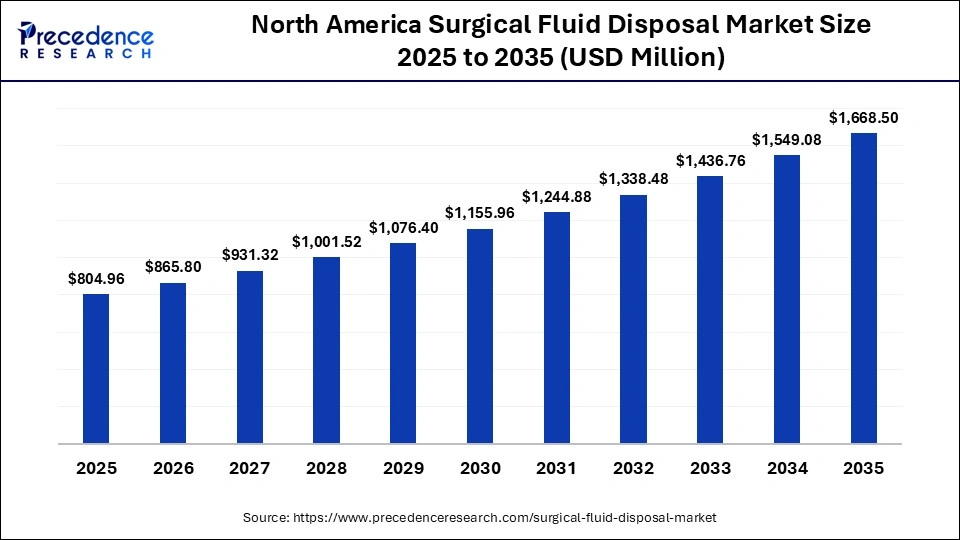
The North America surgical fluid disposal market size is estimated at USD 804.96 million in 2025 and is projected to reach approximately USD 1,668.50 million by 2035, with a 7.56% CAGR from 2026 to 2035.
Why Is North America the Top Region for the Surgical Fluid Disposal Market?
North America's position as the dominant region for the surgical fluids disposal market with a 46.8% share, due to its advanced healthcare systems and high volumes of surgical procedures. Both hospitals and surgical centers have rapidly adopted safe disposal methods to increase workflow and protect clinical staff from exposure to harmful substances. North America also places a high priority on patient safety and has many well-funded hospital systems. Manufacturers and end-users often work in partnership when designing fluid disposal systems that meet the needs of the growing number of surgical procedures. Additionally, there is a strong need for easy-to-operate and reliable fluid management systems for both inpatient and outpatient surgery across North America.
Strict enforcement of occupational safety and infection control standards is accelerating replacement of manual fluid handling practices. High penetration of ambulatory surgical centers is increasing demand for compact and automated disposal solutions. Integration with modern operating room infrastructure is improving turnaround times between procedures. Continuous investment in surgical workflow optimization is further reinforcing regional adoption.
How Big is the U.S. Surgical Fluid Disposal Market Size?
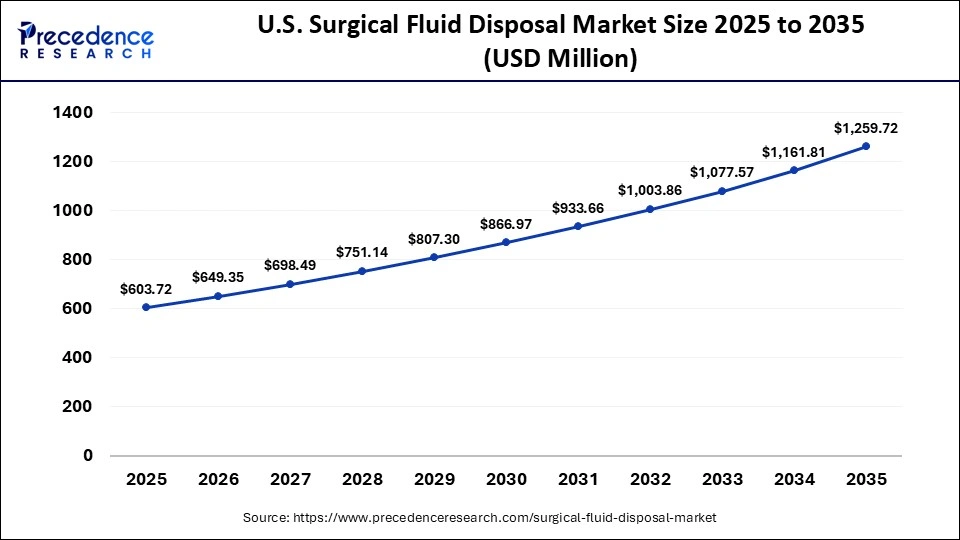
The U.S. surgical fluid disposal market size is exhibited at USD 603.72 million in 2025 and is projected to be worth around USD 1,259.72 million by 2035, growing at a CAGR of 7.63% from 2026 to 2035.
U.S. Surgical Fluid Disposal Market Trends
The United States is the leading country in North America because of its large and sophisticated healthcare system that offers extensive options for surgical innovation, as well as its substantial investment in facility upgrades to support surgical fluid disposal solutions. Additionally, there is a strong focus on providing a safe working environment for healthcare professionals who perform many complex surgical procedures daily and a large demand for high-performance surgical fluid disposal systems and products.
Why is Asia Pacific experiencing the fastest growth of Surgical Fluid Disposal Market?
Asia Pacific is set to be the fastest-growing in the market with an expected 8% CAGR, accelerating due to the increasing availability of healthcare services and surgical procedures and the increasing investment in upgrading hospitals. With the growth of both public and private healthcare sectors, there is an increased demand for the development and promotion of more efficient and safe ways to dispose of surgical fluids. The growing emphasis on the need to ensure a safe working environment for healthcare providers and meet quality criteria is also a driving force behind the adoption of better practices.
Due to rapid population growth and an expanding middle class, there is a growing need for improved surgical care. This has resulted in the need to upgrade fluid management procedures in medical facilities. By developing comprehensive training programs for healthcare professionals and using best practices from around the world, there is an increasing momentum in developing this market across East and South Asia.
China Surgical Fluid Disposal Market Trends
Owing to the vast healthcare infrastructure in China and the significant emphasis on upgrading surgical services, China is a primary driver of regional growth. Due to the intended commitment to consistently upgrade surgical services, this means that China is an influential country in terms of technology and supplying a wide range of hospital services through a large number of hospitals. Consequently, the adoption of new and advanced methods of disposing of surgical fluids supports the development of China's role for the continual use and application of new technologies and promotes innovation and creativity.
How Europe is Entering a New Era of the Surgical Fluid Disposal Market?
In Europe, surgical fluid disposal is on the rise due to increased safety regulations in hospitals and due to the fact that health care systems are being improved throughout Europe by modernizing their hospitals and establishing standard operating procedures for surgery. Health care systems throughout the central and western parts of Europe are working to increase their operational efficiencies and reduce exposure risk for patients during their perioperative time frame, and throughout Europe, the cross-jurisdictional exchange of knowledge related to best practices and the adoption of environmentally sustainable, compliance solutions has generated a high interest in the potential of surgical fluid disposal.
The continued focus of the Region on reducing complications that occur during surgical procedures and improving the workflow of health care services has contributed to the continued growth of the use of surgical fluid disposal within the public and private health care sectors in Europe.
Germany Surgical Fluid Disposal Market Trends
Germany is leading the way with an advanced health care infrastructure and stringent safety requirements. Germany's early commitment to the implementation of efficient surgical fluid disposal systems has enabled it to become the example of excellence within the Region.
Why is the Middle East & Africa Region Driving the Use Of the Surgical Fluid Disposal Market?
The Middle East and Africa region is emerging in terms of surgical fluid disposal through accelerating healthcare modernization and improved access to surgical care in this region. The increasing number of new hospitals and surgical centers has generated an increased demand for improved clinical support systems. In addition to increasing perioperative patient safety and enhancing conformity with international standards of care, growing interest in effective surgical fluid disposal systems is supported by international collaboration between healthcare systems and the expansion of medical tourism initiatives, which are driving upgrades in clinical capabilities across the region.
The pattern of increase in adopting surgical fluid disposal solutions is being followed by both government and private sectors across this region; however, the level and speed of adoption will vary by country. Public healthcare investments are prioritizing large tertiary hospitals, while private providers are adopting systems to support high-throughput surgical services. Training availability, procurement frameworks, and regulatory readiness are influencing rollout timelines. Over time, standardization of infection control practices is expected to narrow adoption gaps across markets.
UAE Surgical Fluid Disposal Market Trends
The United Arab Emirates has developed the most advanced healthcare infrastructure within the region, with emphasis placed on medical excellence as a driving force for the establishment of an innovative surgical environment. The UAE has been at the leading edge of the development and implementation of advanced surgical fluid disposal systems throughout the Middle East and Africa.
Large public hospitals and private specialty centers are adopting automated and closed-system disposal solutions to support high surgical volumes. Strong regulatory oversight and accreditation standards are reinforcing consistent use of safe fluid management technologies. Ongoing investment in smart operating room infrastructure is further accelerating system deployment across the country.
Who are the Major Players in the Global Surgical Fluid Disposal Market?
- B. Braun Melsungen AG
- Skyline Medical, Inc.
- Baxter International, Inc.
- Cardinal health, Inc.
- Hill Rom holdings, Inc.
- CR Bard, Inc.
- Medtronic Plc
- Olympus Corporation
- Stryker Corporation
- Smith & Nephew Plc
Recent Developments
- In September 2025, Serres, a sustainable surgical fluid management company, partnered with Master World Medical to introduce its smart and sustainable surgical suction solutions across Peru, expanding access for healthcare providers and improving surgical workflows nationwide. (Source: https://www.serres.com)
- In November 2025, DelivHer launched Anu™, a disposable, fluid-retentive menstrual disc using Leak-Lock™ technology to contain heavy, clot-rich flow, offering extended wear and mess-free protection for heavier menstrual cycles.
(Source: https://www.citizen-times.com)
Segments Covered in the Report
By Product Type
- Solidifiers
- Suction Canisters and Liners
- Waste Bags
- Accessories
By End-User
- Hospitals
- Ambulatory Surgical Centers
- Clinics
- Others
By Application
- Orthopedic Surgeries
- Cardiovascular Surgeries
- Neurological Surgeries
- Others
By Region
- North America
- Europe
- Asia-Pacific
- Latin America
- Middle East & Africa
For inquiries regarding discounts, bulk purchases, or customization requests, please contact us at sales@precedenceresearch.com
Frequently Asked Questions





Ask For Sample
No cookie-cutter, only authentic analysis – take the 1st step to become a Precedence Research client
 Get a Sample
.webp)



 sales@precedenceresearch.com
 Schedule a Meeting
