



Ultrasonic Tissue Ablation System Market Size, Companies, Share, Patient Volume, Treatment Adoption Rates, Pricing Analysis, Regulatory Landscape, Competitive Positioning, and Demand Forecast
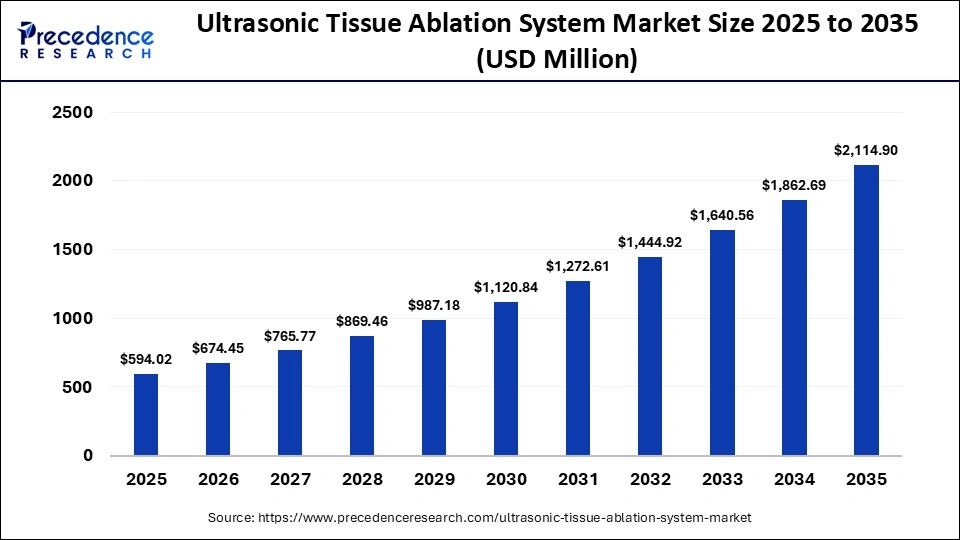
Rohan Patil, a Healthcare Industry Expert, highlights that the ultrasonic tissue ablation system market has reached USD 674.45 million in 2026 and is on track to reach USD 2,114.90 million by 2035, advancing at a CAGR of 13.54%. Key ultrasonic tissue ablation system market companies shaping the market include Insightec, HistoSonics, Profound Medical, EDAP TMS, SonaCare Medical, while major growth segments span By Technology, By Modality, By Application, By Procedure.
Source: https://www.precedenceresearch.com/ultrasonic-tissue-ablation-system-market
 Get a Sample
 Table Of Content


What is the Ultrasonic Tissue Ablation System Market Size in 2026?
The global ultrasonic tissue ablation system market size was calculated at USD 594.02 million in 2025 and is predicted to increase from USD 674.45 million in 2026 to approximately USD 2,114.90 million by 2035, expanding at a CAGR of 13.54% from 2026 to 2035. The ultrasonic tissue ablation system market is driven by growing demand for minimally invasive and safer tissue ablation therapy.
Key Takeaways
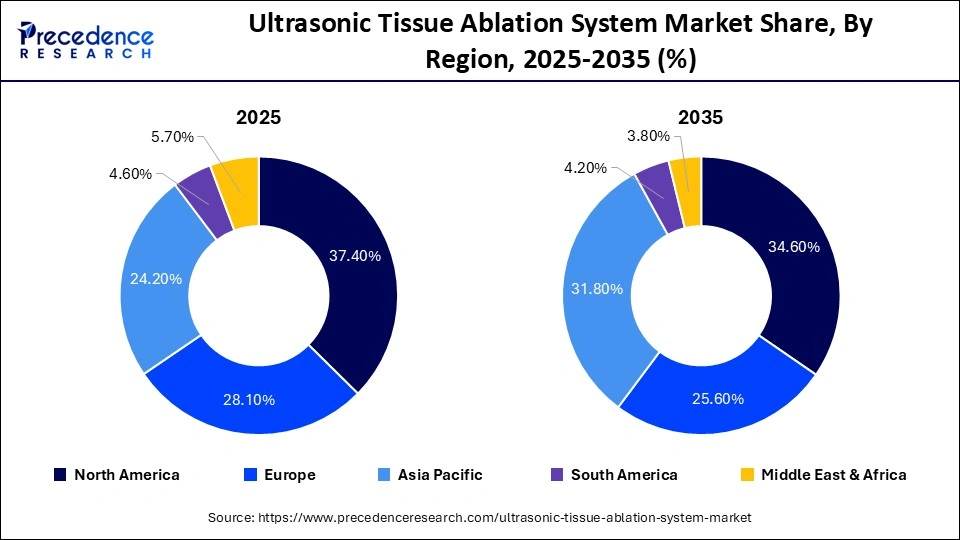
- North America dominated the ultrasonic tissue ablation system market with a share of 37.4% in 2025.
- The Asia Pacific is expected to grow at the fastest rate during the forecast period.
- By technology, the high-intensity focused ultrasound systems segment held a dominant share of 44.7% in the market in 2025.
- By technology, the MR-guided focused ultrasound systems segment is the second-largest shareholder, holding an 18.6% share in 2025.
- By modality, the non-invasive extracorporeal systems segment accounted for a major market share of 58.4% in 2025.
- By modality, the robot-assisted integrated ablation systems segment is expected to grow at the fastest rate between 2026 and 2035.
- By application, the oncology segment led the global market with a share of 37.6% in 2025.
- By application, the urology segment is the second-largest shareholder and is expected to grow at a significant rate between 2026 and 2035.
- By indication, the prostate tissue ablation segment registered its dominance in the global market with a share of 23.4% in 2025.
- By indication, the liver tumors segment is expected to grow at the fastest rate between 2026 and 2035.
- By end user, the hospitals segment dominated the global market with a share of 49.3% in 2025.
- By end user, the specialty clinics segment is the second-largest shareholder in 2025 and is expected to grow at a significant rate in the coming years.
Market Overview
The ultrasonic tissue ablation system market comprises therapeutic platforms that use focused ultrasonic energy to specifically destroy, melt, or heat ablate targeted tissue and spares adjacent healthy tissue. Oncology, urology, neurology, gynecology, and some benign lesion treatments are well represented with the use of these systems. The market covers a diverse variety of products, which include image-guided capital systems, robotic-assisted platforms, treatment planning software, specialized transducers, and related service support. The market is driven by the increasing need for minimally invasive and non-invasive procedures that help to reduce the recovery period, lower complications, and improve patient outcomes. Rising rates of chronic disease, especially cancer, and the increase in awareness of early medicine and treatment, are major factors contributing to market growth.
How is AI Integration Influencing the Ultrasonic Tissue Ablation System Market?
The integration of artificial intelligence into ultrasonic tissue ablation systems is significantly enhancing the precision, efficiency, and safety of less-invasive therapies. AI-powered imaging, robotic platforms, and treatment planning software enable real-time targeting, tissue recognition, and improved procedural accuracy. Additionally, AI supports remote monitoring, post-procedure evaluation, and data-driven decision-making, allowing continuous learning and optimization of treatment outcomes.
Ultrasonic Tissue Ablation System Market Trends
- The increasing demand for minimally invasive and non-invasive procedures is driving the adoption of ultrasonic tissue ablation systems, offering faster recovery, fewer complications, and improved patient comfort, particularly in oncology, urology, gynecology, and benign lesion treatments.
- Advancements in imaging-guided systems, robotic assistance, and treatment planning software are enhancing procedural accuracy, safety, and clinical outcomes, boosting the use of ultrasonic tissue ablation across healthcare settings.
- The rise of outpatient care, ambulatory surgical centers, and specialty clinics is improving accessibility to these procedures, supporting minimally invasive treatments that reduce hospital stays and enhance patient convenience.
- The rise in the number of cases of chronic diseases like cancer and prostate diseases creates a great demand for tissue ablation systems.
Market Scope
| Report Coverage | Details |
| Market Size in 2025 | USD 594.02 Million |
| Market Size in 2026 | USD 674.45 Million |
| Market Size by 2035 | USD 2,114.90 Million |
| Market Growth Rate from 2026 to 2035 | CAGR of 13.54% |
| Dominating Region | North America |
| Fastest Growing Region | Asia-Pacific |
| Base Year | 2025 |
| Forecast Period | 2026 to 2035 |
| Segments Covered | Technology, Modality, Application, Indication, End User, System Configuration, Component, Procedure Setting, and Region |
| Regions Covered | North America, Europe, Asia-Pacific, Latin America, and Middle East & Africa |
Market Dynamics
Drivers
Rising Demand for Minimally Invasive Therapies
The increasing demand for minimally invasive and non-invasive therapies in oncology, urology, gynecology, and neurology is a major factor driving the growth of the ultrasonic tissue ablation system market. With the increasing awareness of the benefits of minimally invasive approaches, patients and healthcare providers have shifted to ultrasonic ablation technologies due to their reduced recovery period, fewer complications, and preservation of tissues.
Restraint
High Costs and Limited Awareness
Image-guided systems, robot platforms, and certain transducers are expensive, which creates barriers for small hospitals. The regulatory issues and lengthy approval of these devices delay the period of commercialization, which may limit the adoption and hinder the growth of the market.
Opportunity
Technological Advancements and Expansion into Emerging Regions
Advancements in artificial intelligence, robotics, and high-quality imaging are enabling safer, more precise, and personalized treatments. Additionally, expanding healthcare infrastructure and growing awareness of early diagnosis in emerging regions present significant untapped growth opportunities for the market.
Segment Insights
Technology Insights
The HIFU Systems Segment Led the Market With a 44.7% Share in 2025
The high-intensity focused ultrasound (HIFU) systems segment held a dominant share of 44.7% in the ultrasonic tissue ablation system market in 2025. This is mainly due to the capability of these systems in delivering precise tissue ablation as well as minimal damage to the surrounding structures. HIFU has been broadly used in oncology and urology to shorten the recovery period and minimize post-surgery complications.
Ultrasonic Tissue Ablation System Market Share, By Technology, 2025-2035 (%)
| Technology | 2025 | 2035 |
| High-Intensity Focused Ultrasound (HIFU) Systems | 44.70% | 40.80% |
| MR-Guided Focused Ultrasound Systems | 18.60% | 20.70% |
| Ultrasound-Guided Focused Ultrasound Systems | 16.90% | 17.80% |
| Histotripsy Systems | 6.80% | 12.90% |
| Transurethral Ultrasound Ablation Systems | 9.10% | 5.90% |
| Other Ultrasonic Ablation Platforms | 3.90% | 1.90% |
The MR-guided focused ultrasound systems segment held a 18.6% share of the market in 2025 due to the increased integration of real-time MRI to enable accurate targeting and monitoring of tissues. These systems enable clinicians to enhance accuracy in ultrasound procedures. Their proven safety and ability to lower the risk of complications and improve outcomes make them the preferred choice. The histotripsy systems segment held a 6.8% share of the market in 2025 and is expected to grow at the fastest rate, owing to their non-thermal tissue ablation mechanism with focused acoustic pulses. This technology interferes with tissue in a non-thermal manner, minimizing the collateral damage.
The ultrasound-guided focused ultrasound systems segment held a 16.9% market share in 2025 due to their affordability and availability in most hospitals and specialty centers. They are highly employed in the field of urology and gynecology for their low-invasive method, which enhances patient comfort and the healing period.The transurethral ultrasound ablation systems segment held a 9.1% share of the market in 2025 due to the heightened adoption of less invasive ablation systems for prostate tissue. These systems prevent damage to healthy tissues by applying ultrasonic energy to the urethra. The growing prevalence of prostate cancer is boosting the adoption of these systems.
Modality Insights
Ultrasonic Tissue Ablation System Market Share, By Modality, 2025-2035 (%)
| Modality | 2025 | 2035 |
| Non-Invasive Extracorporeal Systems | 58.40% | 61.30% |
| Minimally Invasive Transurethral Systems | 14.80% | 11.20% |
| Laparoscopic / Intraoperative Ultrasonic Ablation Systems | 16.70% | 15.10% |
| Robot-Assisted Integrated Ablation Systems | 10.10% | 12.40% |
The Non-Invasive Extracorporeal Systems Segment Held a 58.4% Market Share in 2025
The non-invasive extracorporeal systems segment dominated the ultrasonic tissue ablation system market with a share of 58.4% in 2025 due to its non-surgical methodology, which does not require any incision. These systems are more suitable for outpatient procedures due to the shorter recovery period associated with them. Their widespread use in the field of oncology and urology to ablate tissues in a very specific and detailed manner also reinforced the segment's dominance.
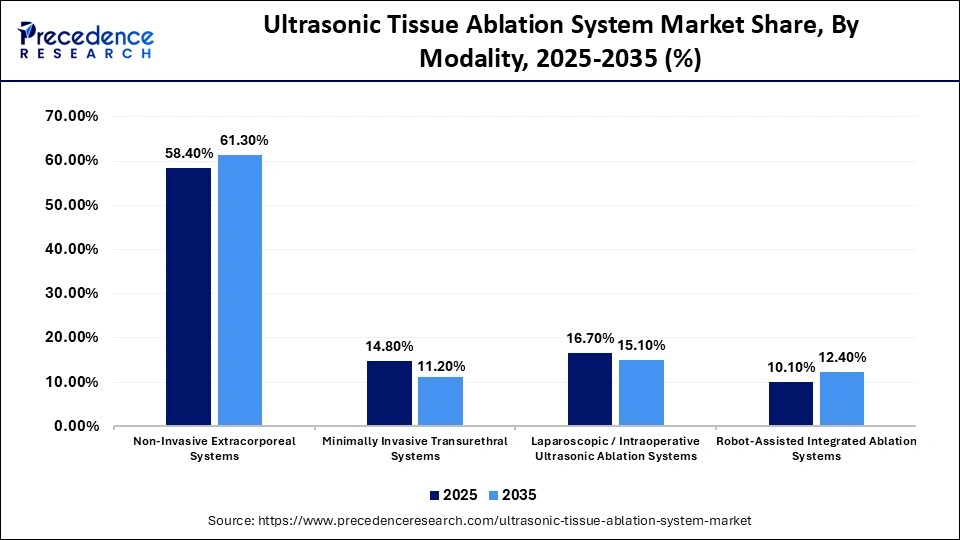
The robot-assisted integrated ablation systems segment held a 10.1% share of the market in 2025, owing to the ability of these systems to precisely target tissues. These systems minimize human errors and enhance procedure uniformity. They are widely used in complicated oncology and urology procedures. The minimally invasive transurethral systems segment held a 14.8% market share in 2025, as they provide focused ultrasonic energy that is delivered directly through the urethra to ensure precise ablation of the prostate tissue. This approach preserves surrounding structures and enables faster recovery times. The growing preference for less invasive treatments is further supporting the segment's growth.
The laparoscopic/intraoperative ultrasonic ablation systems segment held a 16.7% share in 2025. This is because of the widespread use of these systems in surgical and intraoperative processes that demand accurate tissue ablation. They are commonly used in gynecological, urological, and oncological operations.
Application Insights
Why Did the Oncology Segment Lead the Ultrasonic Tissue Ablation System Market?
The oncology segment dominated the market with a major share of 37.6% in 2025 due to the increased number of cases of cancer worldwide, including but not limited to prostate, liver, and kidney cancer. Ultrasonic tissue ablation systems offer precise localization of malignant tissues while preserving surrounding healthy structures, making them highly effective for oncological applications.
The urology segment held a 24.8% share of the market in 2025, as the prostate and kidney ailments affected more people of the aging population. Minimally invasive transurethral and extracorporeal ablation systems provide effective treatment while reducing complications such as incontinence and erectile dysfunction. Advances in imaging and planning software further enhance the precision of urological ablation procedures.
Ultrasonic Tissue Ablation System Market Share, By Application, 2025-2035 (%)
| Application | 2025 | 2035 |
| Oncology | 37.60% | 41.50% |
| Urology | 24.80% | 20.60% |
| Neurology | 12.20% | 13.60% |
| Gynecology | 11.90% | 10.20% |
| Breast and Endocrine Lesions | 7.10% | 7.50% |
| Cardiovascular / Vascular | 3.40% | 3.70% |
| Pain Palliation | 3.00% | 2.90% |
The neurology segment held a 12.2% share of the market in 2025 due to the increased applications of MR-guided focused ultrasound systems for neurological diseases, including essential tremor and brain tumors. These minimally invasive interventions reduce surgical risks and promote faster recovery. Integration with AI and robotic platforms further improves the safety and effectiveness of these procedures.
The gynecology segment held a 11.9% share of the market in 2025, as ultrasonic tissue ablation became increasingly employed for conditions such as uterine fibroids and other benign gynecological disorders. Minimally invasive procedures are less painful, involve less blood loss, and are quicker than conventional surgery. The use of image-guided and robot-assisted systems enhances the precision of targeted ablation.
Indication Insights
The Prostate Tissue Ablation Segment Held a 23.4% Share in the Market in 2025
The prostate tissue ablation segment led the ultrasonic tissue ablation system market with a share of 23.4% in 2025 due to the rising prevalence of prostate cancer around the world. Minimally invasive transurethral and high-intensity focused ultrasound (HIFU) systems enable precise ablation of diseased tissue while preserving adjacent healthy structures. Thus, they are widely preferred in prostate tissue ablation.
Ultrasonic Tissue Ablation System Market Share, By Indication, 2025-2035 (%)
| Indication | 2025 | 2035 |
| Liver Tumors | 15.90% | 20.40% |
| Prostate Tissue Ablation | 23.40% | 18.50% |
| Uterine Fibroids and Adenomyosis | 16.20% | 13.80% |
| Essential Tremor and Parkinsonian Tremor | 11.10% | 12.80% |
| Thyroid Nodules | 8.70% | 9.60% |
| Breast Fibroadenoma and Benign Breast Lesions | 6.30% | 6.10% |
| Pancreatic, Kidney, and Other Solid Tumors | 10.80% | 12.60% |
| Varicose Veins and Other Niche Soft Tissue Lesions | 7.60% | 6.20% |
The liver tumors segment accounted for 15.9% market share in 2025, owing to the increasing incidence of hepatocellular carcinoma and metastatic liver tumors. Focused ultrasonic energy allows for targeted ablation of malignant tissue without the need for major surgery, offering a minimally invasive treatment that reduces hospital stays and postoperative risks.The uterine fibroids and adenomyosis segment held a 16.2% share in 2025 due to the growing preference for non-surgical treatment of gynecological disorders. Ultrasonic tissue ablation provides a safe, less painful procedure that effectively reduces fibroid size and shortens recovery time.
Ongoing technological innovations have enabled the widespread adoption of these systems in gynecology clinics and hospitals globally.The essential tremor and Parkinsonian tremor segment held a 11.1% share of the market in 2025, supported by the increased use of MR-guided focused ultrasound systems for neurological disorders. These systems allow accurate ablation of specific brain regions without invasive surgery. Real-time imaging reduces complications and improves patient outcomes.
End-User Insights
What Made Hospitals the Leading Segment in the Ultrasonic Tissue Ablation System Market?
The hospitals segment held a major market share of 49.3% in 2025, driven by their high-end infrastructure and access to skilled clinical staff capable of performing complex ultrasonic tissue ablation procedures. Hospitals implement a wide range of oncology, urology, and gynecology modalities and technologies. The integration of imaging, robotic, and AI-controlled systems further enhances procedural efficiency.
Ultrasonic Tissue Ablation System Market Share, By End User, 2025-2035 (%)
| End User | 2025 | 2035 |
| Hospitals | 49.30% | 45.80% |
| Specialty Clinics | 18.70% | 21.60% |
| Ambulatory Surgical Centers | 9.80% | 10.70% |
| Cancer Centers | 13.60% | 14.80% |
| Academic and Research Institutes | 8.60% | 7.10% |
The specialty clinics segment held a 18.7% share of the market in 2025 due to the heightened demand for minimally invasive therapies and outpatient care. These clinics offer convenient access and faster recovery for patients seeking specific tissue ablation. Advanced imaging and transducer technologies support the adoption of these procedures in specialty settings. The ambulatory surgical centers segment held a 9.8% share of the market in 2025, driven by the shift toward outpatient treatments and cost-effective operations. These centers enable minimally invasive tissue ablation without prolonged hospitalization, supported by high-frequency ultrasonic systems designed for ambulatory use.
The cancer centers segment held a 13.6% share of the market in 2025 due to the growing incidence of various cancers and the demand for targeted oncology treatments. Ultrasonic ablation in these centers aims to destroy tumors while preserving surrounding healthy tissue. Image-guided and robot-assisted systems enhance treatment precision, supporting the segment's growth.The academic and research institutes segment held an 8.6% share of the market in 2025, driven by ongoing clinical trials and the development of next-generation ultrasonic tissue ablation systems. These institutions focus on exploring new indications, optimizing procedural workflows, and validating technologies, boosting the adoption of tissue ablation systems for research purposes.
Region Insights
North America Ultrasonic Tissue Ablation System Market Size and Growth 2026 to 2035
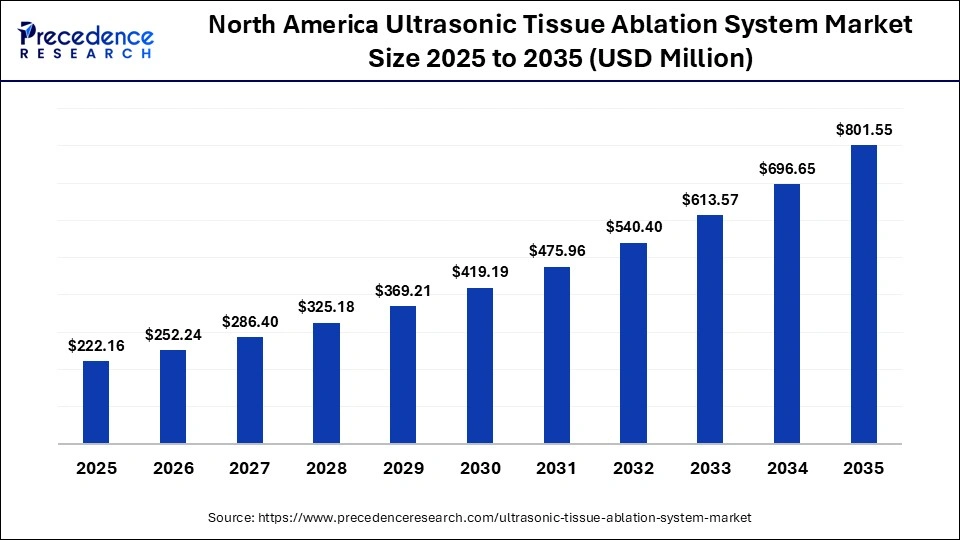
The North America ultrasonic tissue ablation system market size is estimated at USD 222.16 million in 2025 and is projected to reach approximately USD 801.55 million by 2035, with a 13.69% CAGR from 2026 to 2035.
Why Did North America Lead the Global Ultrasonic Tissue Ablation System Market?
North America dominated the global ultrasonic tissue ablation system market with a share of 37.4% in 2025 due to its advanced healthcare infrastructure. There is a heightened adoption of minimally invasive procedures, driven by awareness of new treatment options. Increasing cases of prostate, liver, and kidney cancers are boosting the demand for targeted tissue ablation therapies. The U.S. and Canada have been expanding hospitals, specialized clinics, and cancer centers that increasingly adopt ultrasonic tissue ablation technologies to improve clinical outcomes, reduce patient recovery time, and enhance operational efficiency. Additionally, FDA 510(k) regulatory approvals and ongoing clinical trials reinforced the region's dominance.
U.S. Ultrasonic Tissue Ablation System Market Size and Growth 2026 to 2035
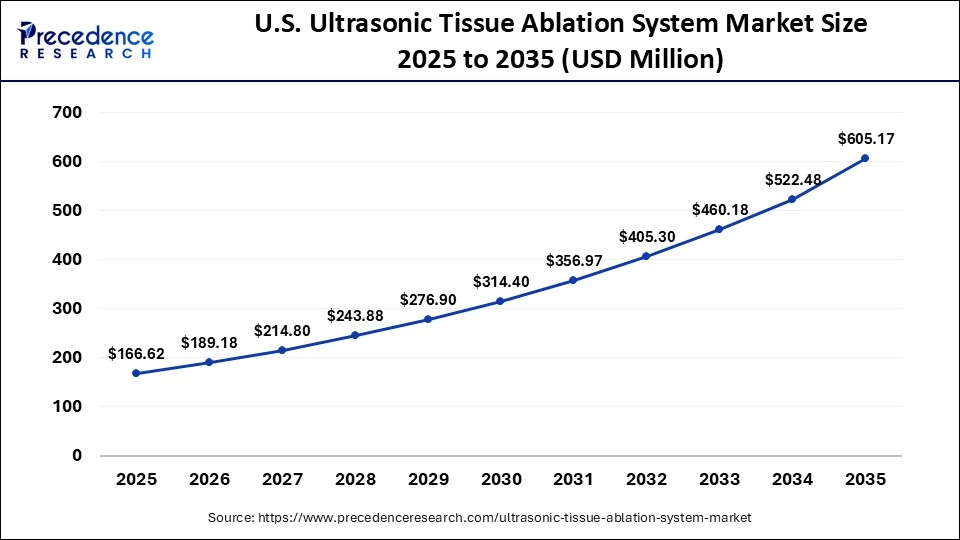
The U.S. ultrasonic tissue ablation system market size is calculated at USD 166.62 million in 2025 and is expected to reach nearly USD 605.17 million in 2035, accelerating at a strong CAGR of 13.77% between 2026 and 2035.
U.S. Ultrasonic Tissue Ablation System Market Analysis
The U.S. leads the market within North America due to the rising demand for portable tracking devices, along with the integration of mobile-based eye trackers in the manufacturing sector. Moreover, the increasing use of advanced tracking devices in the advertising sector, as well as collaborations among automakers and VR providers, is positively contributing to the growth of the market.
Why is Asia Pacific Experiencing the Fastest Growth in the Ultrasonic Tissue Ablation System Market?
Asia Pacific is expected to be the fastest-growing region during the forecast period, driven by rising healthcare spending, improved medical infrastructure, and increasing awareness of minimally invasive treatment options. Adoption of advanced ultrasonic ablation systems is accelerating, particularly in China, Japan, South Korea, and India, across oncology, urology, and gynecology applications. The rising prevalence of chronic diseases, such as prostate and liver cancers, is increasing the demand for highly targeted therapies. Additionally, the expansion of outpatient centers, supportive government policies promoting early diagnosis, and growing disposable incomes are contributing to the region's market growth.
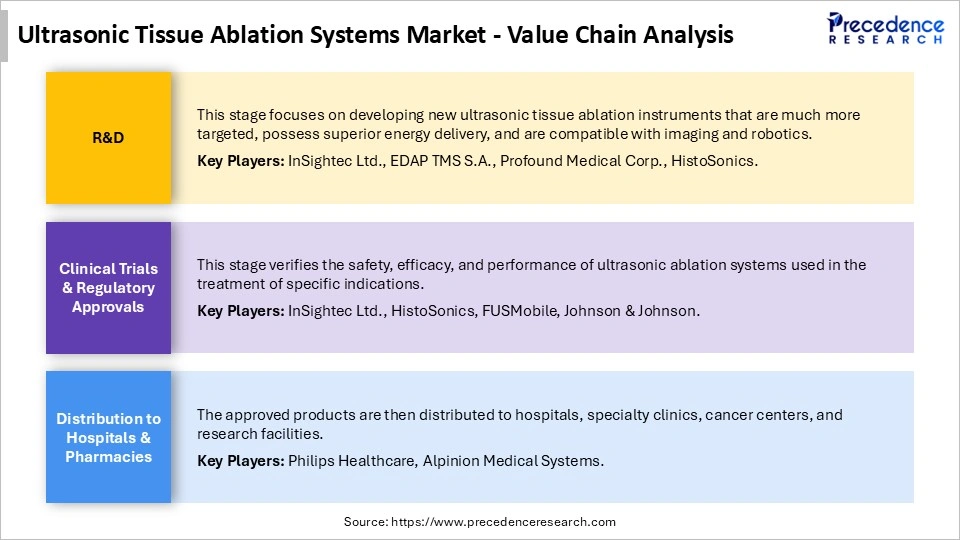
Ultrasonic Tissue Ablation Systems Market Value Chain Analysis
Ultrasonic Tissue Ablation System Market Companies
- Insightec
- HistoSonics
- Profound Medical
- EDAP TMS
- SonaCare Medical
- Theraclion
- Chongqing Haifu Medical Technology
- Alpinion Medical Systems
- Philips
- GE HealthCare
- Siemens Healthineers
- JC Medical
- Mianyang Sonic Electronic
- FUSMobile
- Image Guided Therapy
Recent Developments
- In November 2025, Johnson & Johnson MedTech announced that new clinical and real-world data for its VARIPULSE Platform in pulsed field ablation (PFA) for atrial fibrillation will be presented at the APHRS-JHRS annual meeting in Yokohama, Japan. The fully integrated platform, featuring the VARIPULSE Catheter, TRUPULSE Generator, and CARTO 3 Mapping System, is approved across major global regions, including the U.S., Europe, Asia Pacific, Canada, and Latin America.(Source: https://www.jnjmedtech.com)
- In September 2024, Verasonics, Inc. has announced new features and enhanced functionality for its Vantage NXT Research Ultrasound System, the next-generation successor to its industry-leading Vantage platform.
- In August 2024, FUSMobile's Neurolyser XR received Health Canada approval for treating chronic low back pain caused by facet arthritis. The device uses high-intensity focused ultrasound (HIFU) with fluoroscopic guidance to noninvasively target and destroy neural tissue, reducing discomfort and post-procedure pain compared to traditional treatments(Source: https://www.fusfoundation.org)
Segments Covered in the Report
By Technology
- High-Intensity Focused Ultrasound (HIFU) Systems
- MR-Guided Focused Ultrasound Systems
- Ultrasound-Guided Focused Ultrasound Systems
- Histotripsy Systems
- Transurethral Ultrasound Ablation Systems
- Other Ultrasonic Ablation Platforms
By Modality
- Non-Invasive Extracorporeal Systems
- Minimally Invasive Transurethral Systems
- Laparoscopic / Intraoperative Ultrasonic Ablation Systems
- Robot-Assisted Integrated Ablation Systems
By Application
- Oncology
- Urology
- Neurology
- Gynecology
- Breast and Endocrine Lesions
- Cardiovascular/Vascular
- Pain Palliation
By Indication
- Liver Tumors
- Prostate Tissue Ablation
- Uterine Fibroids and Adenomyosis
- Essential Tremor and Parkinsonian Tremor
- Thyroid Nodules
- Breast Fibroadenoma and Benign Breast Lesions
- Pancreatic, Kidney, and Other Solid Tumors
- Varicose Veins and Other Niche Soft Tissue Lesions
By End User
- Hospitals
- Specialty Clinics
- Ambulatory Surgical Centers
- Cancer Centers
- Academic and Research Institutes
By System Configuration
- Cart-Based Systems
- Console / Room-Based Integrated Systems
- Robotic Image-Guided Platforms
By Component
- Capital Equipment
- Handpieces and Transducers
- Planning and Imaging Software
- Service and Maintenance
By Procedure Setting
- Inpatient Setting
- Outpatient Hospital Setting
- Office-Based/Day Care Setting
- Mobile/Shared Access Setting
By Region
- North America
- Latin America
- Europe
- Asia-pacific
- Middle and East Africa
For inquiries regarding discounts, bulk purchases, or customization requests, please contact us at sales@precedenceresearch.com
Frequently Asked Questions





Ask For Sample
No cookie-cutter, only authentic analysis – take the 1st step to become a Precedence Research client
 Get a Sample




 sales@precedenceresearch.com
 Schedule a Meeting
