



U.S. and Europe Cardiac Ablation Market Size, Key Companies, Company Production Capacity, Healthcare Infrastructure Growth, Product Utilization, Regulatory Compliance, Company Expansion Strategies, Company Investment Strategies, and Market Outlook
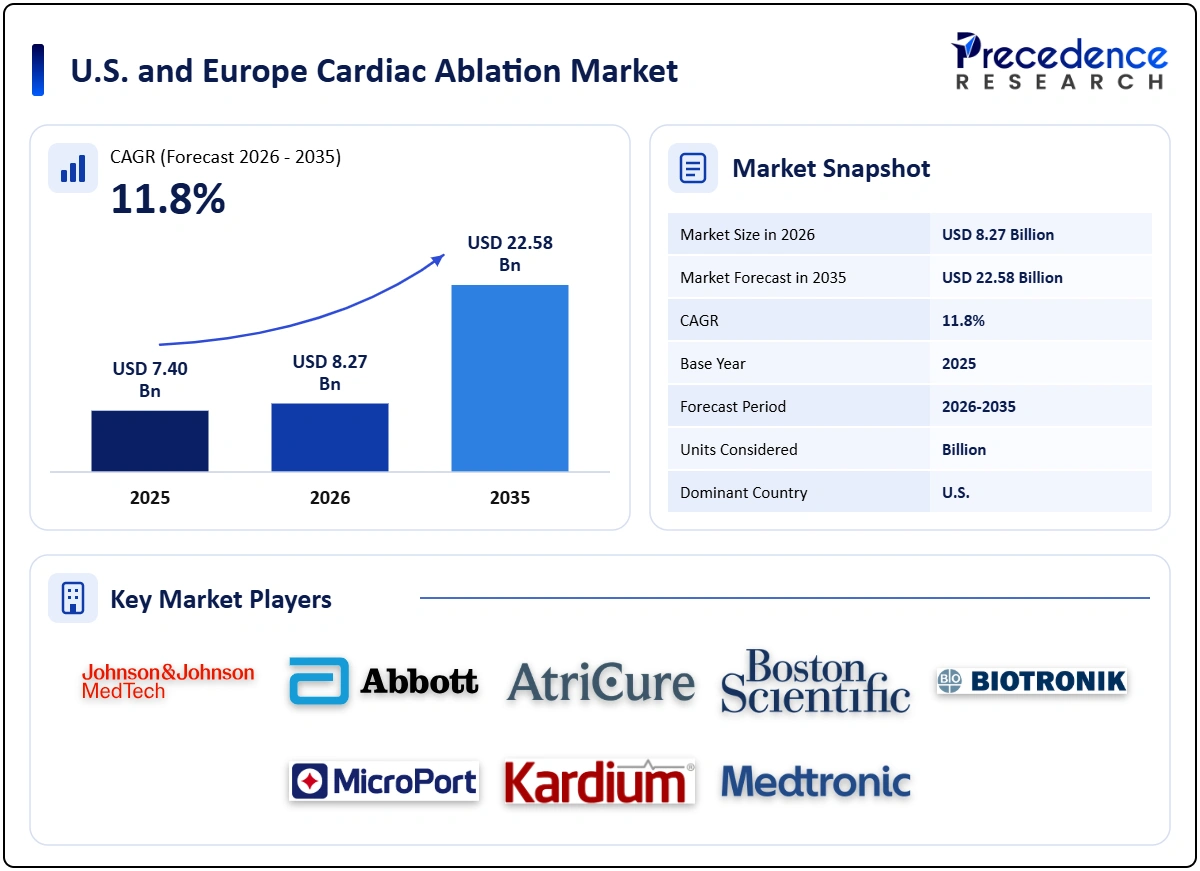
Payal Rabde a Healthcare Industry Expert, highlights that the U.S. and Europe cardiac ablation market has reached USD 8.27 billion in 2026 and is on track to reach USD 22.58 billion by 2035, advancing at a CAGR of 11.8%. Key U.S. and Europe cardiac ablation market companies shaping the market include Boston Scientific, Johnson & Johnson MedTech while major growth segments span technology, product, Indication, end-user.
Source: https://www.precedenceresearch.com/us-and-europe-cardiac-ablation-market
 Get a Sample
 Table Of Content
Key Takeaways
Market Size & Growth Outlook
- Market size in 2025: USD 7.40 billion
- Estimated market size in 2026: USD 8.27 billion
- Projected market size by 2035: USD 22.58 billion
- CAGR (2026-2035): 11.8%
Regional Market Spotlight
- The United States led the U.S. and Europe cardiac ablation market in 2025, accounting for 58% of total revenue. It is projected to record the fastest growth among the individually analysed country markets, with a CAGR of 12.29% from 2026 to 2035.
- In 2025, Germany accounted for 11% of the market.
- The Rest of Europe segment held an 11% revenue share of the market in 2025.
Segmental Spotlight
- Pulsed field ablation emerged as the leading technology segment in 2025, capturing the highest market share of 46%.
- Ablation catheters maintained their dominance across product categories, accounting for 58% of total market revenue in 2025.
- In 2025, Atrial fibrillation remained the primary indication driving market demand, representing a substantial 78% share of the market.
- Hospitals continued to be the principal end-user segment in 2025, contributing the largest revenue share of 84% to the cardiac ablation market.
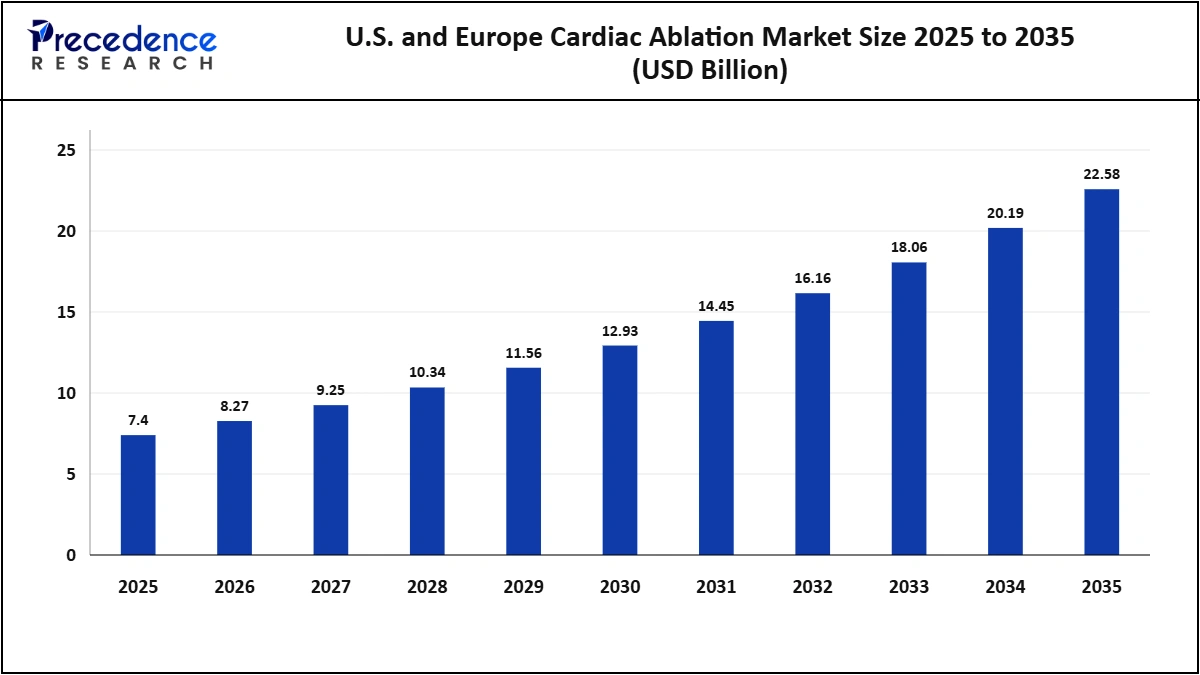
U.S. and Europe Cardiac Ablation Market Size, 2025-2035 (USD Billion)
Note: 2025 is the base year; 2026-2035 values are forecasts.
Sources: Expert interviews, secondary sources, Precedence Research database, and Precedence Research analysts.
The U.S. and Europe cardiac ablation market is projected to grow from USD 7.40 billion in 2025 to USD 22.58 billion by 2035, registering a CAGR of 11.8% from 2026 to 2035. This growth is driven by the prevalence of atrial fibrillation, rising adoption of PFA, and preference for catheter ablation as an earlier treatment option. The market is expected to reach USD 12.93 billion by 2030, supported by the use of advanced ablation catheters, integrated mapping technologies, and improvements in procedural efficiency. Additionally, expanding clinical applications, product approvals, and the growing availability of electrophysiology treatment facilities are expected to strengthen market growth.
Analyst View: Our market forecast is based on an assessment of cardiac ablation procedure volumes by country, catheter and mapping system utilisation per procedure, and average selling prices. We cross-check these estimates against the electrophysiology revenues of leading companies, expert interviews, and industry data to provide a comprehensive market outlook.
U.S. and Europe Cardiac Ablation Market Trends
- PFA becomes standard: Pulsed field ablation is gaining adoption for pulmonary vein isolation because it enables efficient cardiac tissue treatment while reducing the risk of collateral damage to surrounding structures.
- Integrated mapping and ablation: Development of integrated mapping and ablation technologies improves procedural efficiency. Advanced systems combine real-time anatomical visualisation, catheter navigation, and ablation capabilities to support greater procedural precision.
- First-line ablation: Clinical evidence supporting catheter ablation as an earlier treatment option for atrial fibrillation is encouraging physicians to consider intervention before prolonged dependence on antiarrhythmic medications.
- Same-day discharge: Improvements in ablation technologies, shorter procedure times, and enhanced post-procedure monitoring support the expansion of same-day discharge protocols for eligible patients.
- Persistent AF labels: Regulatory approvals and expanded clinical indications for PFA systems increase their potential patient populations for persistent atrial fibrillation treatment.
U.S. and Europe Cardiac Ablation Market Dynamics
The U.S. and Europe cardiac ablation market is expanding as pulsed field ablation is reshaping the competitive landscape for atrial fibrillation and other cardiac rhythm disorders. Rising procedure volumes and adoption of catheter ablation in earlier treatment stages are supporting market growth. However, limited electrophysiology laboratory capacity and reimbursement constraints remain important challenges. At the same time, the expansion of ambulatory treatment settings, new applications in persistent atrial fibrillation, and emerging ventricular arrhythmia treatments are creating additional growth opportunities.
Drivers
Rising AF prevalence
The prevalence of atrial fibrillation, driven by ageing populations, obesity, hypertension, and other cardiovascular risk factors, is increasing demand for cardiac ablation procedures, particularly catheter-based pulmonary vein isolation. Greater awareness of rhythm-control treatment options and the use of catheter ablation in eligible patients are supporting procedural demand.
PFA efficiency
The adoption of pulsed field ablation accelerated due to its shorter procedure times, tissue-selective treatment approach, and potential safety advantages associated with tissue-selective energy delivery, encouraging electrophysiologists to transition from conventional thermal techniques.
Earlier treatment
Growing evidence supporting early catheter ablation is encouraging doctors to recommend the procedure sooner, increasing the number of eligible patients and demand for ablation technologies.
New products
Improvements in ablation catheters, mapping systems, and generators are improving treatment accuracy and efficiency, encouraging wider adoption of cardiac ablation technologies.
Market Drivers - Impact & CAGR Contribution (2026-2035)
| Driver | Impact | ≈ CAGR Contribution | Time Horizon | Key Regions |
| Rising AF prevalence | High | +4.61 pp | Short to long term | U.S. & Europe-wide, strongest in U.S. |
| PFA efficiency | Medium | +3.89 pp | Medium to long term | U.S. & Europe-wide, fastest uptake in U.S. |
| Earlier treatment | Medium | +3.31 pp | Short to medium term | U.S. & Europe-wide |
| New products | Low | +2.59 pp | Long term | U.S. |
Note: Contributions are indicative estimates of each factor's effect on annual growth.
Sources: Expert interviews, secondary sources, Precedence Research database and Precedence Research analysts.
Rising atrial fibrillation prevalence, improvements in PFA efficiency, and the increasing adoption of catheter ablation as an earlier treatment option are driving the market. The growing patient population is increasing procedure demand, while PFA technologies are improving treatment efficiency and encouraging broader adoption. Furthermore, continued product innovation and expanded clinical applications are expected to strengthen market growth throughout the forecast period.
Restraints
EP lab capacity
Limited laboratory facilities and a shortage of trained specialists can delay procedures and restrict the number of cardiac ablation treatments performed, slowing market growth during the forecast period.
Price competition
Growing competition among device manufacturers is putting pressure on product prices. The availability of different ablation technologies may exert downward pressure on average selling prices and affect market revenue growth across countries.
Reimbursement pressure
Differences in reimbursement policies and limited healthcare budgets across European countries can make advanced ablation technologies expensive for hospitals, delaying their adoption and limiting procedure volumes.
Market Restraints - Impact & Negative CAGR Contribution (2026-2035)
| Restraint | Impact | ≈ Negative CAGR Contribution | Time Horizon | Key Regions |
| EP lab capacity | High | -1.17 pp | Short to medium term | U.S. & Europe-wide |
| Price competition | High | -0.86 pp | Medium term | Smaller and price-sensitive markets |
| Reimbursement pressure | Medium | -0.57 pp | Short term | U.S. and other mature markets |
Note: Contributions are indicative estimates of each factor's effect on annual growth.
Sources: Expert interviews, secondary sources, Precedence Research database and Precedence Research analysts.
Limited electrophysiology laboratory capacity constrains the market, followed by pricing competition and reimbursement pressure. Infrastructure constraints and shortages of trained specialists can restrict procedure volumes, while increasing competition among device manufacturers may reduce average selling prices.
Opportunities
Ambulatory centres
The use of ambulatory surgery centres for eligible cardiac ablation procedures presents a growth opportunity in the United States. Improvements in pulsed field ablation technologies, shorter procedure times, and enhanced post-procedure monitoring are supporting the gradual expansion of outpatient care. This shift can improve healthcare resource utilisation, reduce hospital infrastructure requirements, and increase access to cardiac ablation procedures.
Persistent AF
The expansion of pulsed field ablation applications into persistent atrial fibrillation is creating new market opportunities. Expanded regulatory indications and ongoing clinical research are increasing the potential patient population eligible for advanced ablation procedures.
Ventricular arrhythmias
The investigation of PFA for ventricular arrhythmias, particularly ventricular tachycardia, is opening new avenues beyond atrial fibrillation treatments. Research is ongoing into electrical-field-based ablation technologies targeting complex cardiac arrhythmias. Successful validations and regulatory approvals may broaden the use of cardiac ablation devices and foster long-term growth opportunities.
Market Segmentation: 2025 Share and Size
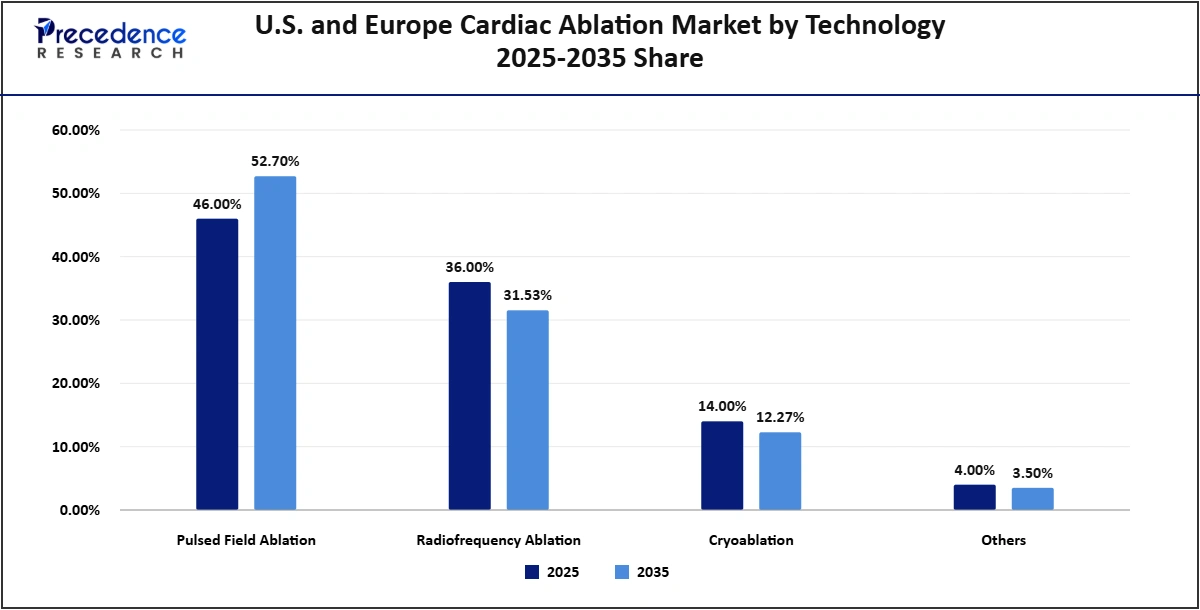
U.S. and Europe Cardiac Ablation Market by Technology, 2025-2035 Share (%)
Note: 2025 is the base year; 2035 shares and CAGRs are forecasts.
Sources: Expert interviews, secondary sources, Precedence Research database, and Precedence Research analysts.
In 2025, pulsed field ablation led the U.S. and Europe cardiac ablation market with a 46% revenue share, followed by radiofrequency ablation at 36%. Cryoablation and other technologies accounted for 14% and 4%, respectively. PFA's shorter procedure times and improved safety profile support its dominance, while its non-thermal approach is expected to drive the fastest growth during the forecast period.
Pulsed field ablation accounted for 46% of the market in 2025 and is projected to grow at a CAGR of 13.33% through 2035. The segment is gaining traction due to efficient pulmonary vein isolation and reduced tissue damage risks. Boston Scientific's Farapulse platform and Medtronic's Affera platform are strengthening the competitive landscape. In March 2026, Farapulse gained a European label expansion for persistent atrial fibrillation, supporting broader clinical adoption.
Radiofrequency ablation represented 36% of the market in 2025. The segment is projected to expand at a CAGR of 10.33% from 2026 to 2035. Radiofrequency ablation remains widely used for complex arrhythmias and repeat procedures, supported by proven effectiveness, advanced catheters, and mapping systems. Despite competition from pulsed field ablation, it is expected to retain a significant market share.
Cryoablation held 14% of the market in 2025. From 2026 to 2035, the segment is expected to grow at a CAGR of 10.33%. The technology is primarily used for pulmonary vein isolation in patients with atrial fibrillation. However, adoption of PFA is creating competitive pressure, particularly in procedures where non-thermal energy delivery offers advantages in procedural safety and efficiency. Established clinical experience and the availability of cryoballoon systems are expected to sustain demand during the forecast period.
Other technologies captured the remaining 4% of the market in 2025 and are projected to grow at a CAGR of 10.33% through 2035. This segment includes laser-based ablation and other emerging energy delivery approaches. Although these technologies account for a smaller market share, continued research and improvements in catheter design may support specialised clinical applications and incremental market opportunities.
U.S. and Europe Cardiac Ablation Market by Product, 2025 Share (%)
| Segments | 2025 Share | 2035 Share | CAGR 2026-2035 |
| Ablation Catheters | 58.00% | 55.05% | 11.21% |
| Mapping & Navigation Systems | 28.00% | 31.18% | 13.01% |
| Generators & Accessories | 14.00% | 13.77% | 11.61% |
Note: 2025 is the base year; 2035 shares and CAGRs are forecasts.
Sources: Expert interviews, secondary sources, Precedence Research database, and Precedence Research analysts.
By product, ablation catheters led the U.S. and Europe cardiac ablation market with a 58% revenue share in 2025, followed by mapping and navigation systems at 28% and generators and accessories at 14%. Mapping and navigation systems are expected to grow fastest during the forecast period, driven by increasing integration with ablation technologies.
Ablation catheters held the largest product share at 58% in 2025 and are expected to grow at a CAGR of 11.21% through 2035. Rising procedure volumes, increasing atrial fibrillation cases, and advancements in catheter technology are supporting continued demand. Continued innovation in catheter flexibility, energy delivery, and integrated mapping capabilities is expected to sustain demand throughout the forecast period.
Mapping and navigation systems accounted for 28% of the market in 2025 and are projected to record the highest CAGR of 13.01% from 2026 to 2035. Adoption of integrated mapping and ablation platforms is driving demand for improved procedural accuracy and efficiency. Continued improvements in real-time visualisation, procedural accuracy, and workflow efficiency are expected to increase the segment's market contribution.
Generators and accessories represented the remaining 14% of the market in 2025. The segment is projected to grow at a CAGR of 11.61% through 2035. This segment includes ablation generators, sheaths, and other accessories required for electrophysiology procedures. Rising ablation volumes and installation of advanced PFA and radiofrequency platforms support demand for associated energy delivery equipment.
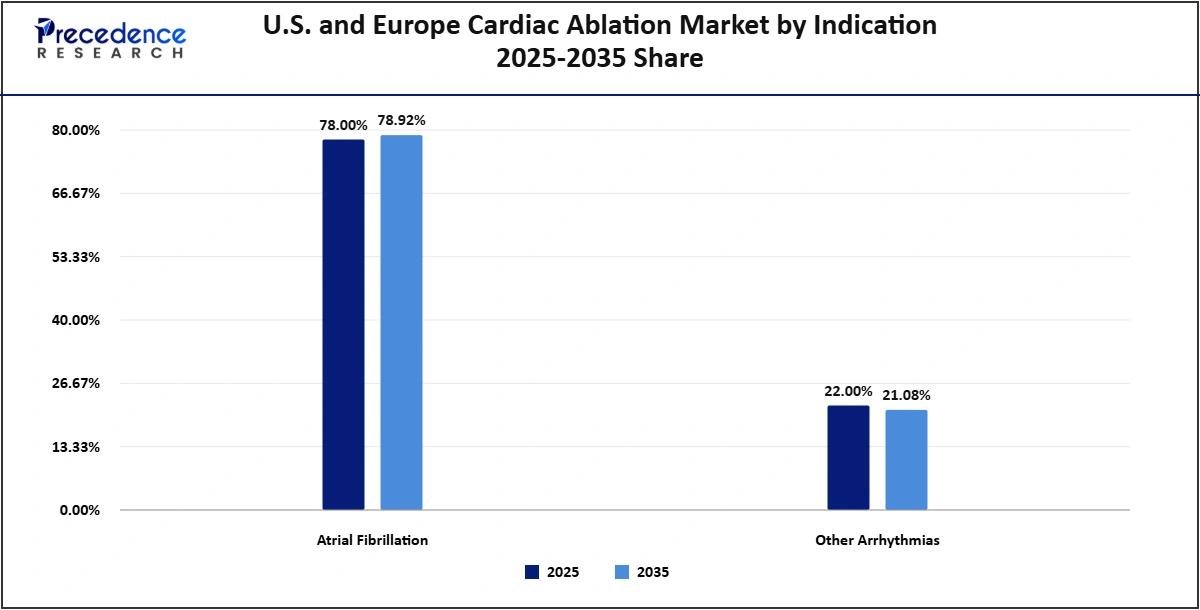
U.S. and Europe Cardiac Ablation Market by Indication, 2025-2035 Share (%)
Note: 2025 is the base year; 2035 shares and CAGRs are forecasts.
Sources: Expert interviews, secondary sources, Precedence Research database and Precedence Research analysts.
Atrial Fibrillation dominated the U.S. and Europe cardiac ablation market by indication, accounting for 78% of total revenue in 2025. Its leading position reflects the high prevalence of atrial fibrillation and the adoption of catheter ablation as an established treatment option. Other Arrhythmias represented the remaining 22% of the market. Atrial Fibrillation is projected to maintain its dominant position and register faster growth during the forecast period.
Atrial fibrillation held 78% of the market in 2025 and is projected to grow at a CAGR of 11.93% through 2035. Increasing clinical evidence supporting catheter ablation as an earlier treatment option is strengthening demand. The AVANT GUARD study reported favourable findings for Farapulse compared with drug therapy as an initial treatment approach for persistent atrial fibrillation, supporting interest in earlier intervention. Expanding PFA adoption, improved procedural efficiency, and broader clinical applications are expected to sustain segment growth.
Other arrhythmias, including atrial flutter, ventricular tachycardia, and supraventricular tachycardia, accounted for 22% of the market in 2025 and are expected to grow at a CAGR of 11.33% through 2035. Catheter ablation is an essential treatment for patients with symptomatic arrhythmias requiring rhythm control or insufficient medication response. Innovations in catheters, mapping systems, and targeted ablation techniques are anticipated to increase demand.
U.S. and Europe Cardiac Ablation Market by End User, 2025 Share (%)
| Segments | 2025 Share | 2035 Share | CAGR 2026-2035 |
| Hospitals | 84.00% | 81.49% | 11.46% |
| Ambulatory Surgery Centres | 16.00% | 18.51% | 13.46% |
Note: 2025 is the base year; 2035 shares and CAGRs are forecasts.
Sources: Expert interviews, secondary sources, Precedence Research database, and Precedence Research analysts.
Hospitals dominated the market in 2025 with an 84% revenue share, supported by advanced facilities and specialised medical teams. Ambulatory surgery centres held the remaining 16% but are expected to grow faster during the forecast period, driven by shorter recovery times and increasing adoption of outpatient procedures.
Hospitals accounted for 84% of the market in 2025. The segment is projected to grow at a CAGR of 11.46% through 2035. Hospitals remain important for patients requiring complex interventions, overnight observation, or additional clinical support. Increasing atrial fibrillation prevalence and the adoption of advanced PFA technologies are expected to sustain hospital demand throughout the forecast period.
Ambulatory surgery centres represented 16% of the market in 2025 and are expected to register the fastest CAGR of 13.46% from 2026 to 2035. These facilities are participating in cardiac ablation procedures as technological advancements improve procedural efficiency and support same-day discharge for selected patients. The expansion of outpatient electrophysiology services in the United States, shorter procedure times, and improvements in patient monitoring are supporting segment growth.
Analyst View: Our analysis indicates that Pulsed Field Ablation, Mapping and Navigation Systems, and Ambulatory Surgery Centres are poised to record the fastest market share gains in the cardiac ablation market in the United States and Europe. In contrast, Ablation Catheters, Atrial Fibrillation, and Hospitals are expected to maintain their dominant positions, supported by their essential roles in electrophysiology procedures, increasing arrhythmia prevalence, and established specialised treatment infrastructure.
Country Analysis
U.S. and Europe Cardiac Ablation Market by Country, 2025 Share (%)
| Country | 2025 Share | 2035 Share | CAGR 2026-2035 |
| U.S. | 58.00% | 60.58% | 12.29% |
| Germany | 11.00% | 10.32% | 11.09% |
| Rest of Europe | 11.00% | 10.32% | 11.09% |
| UK | 6.00% | 5.62% | 11.09% |
| France | 6.00% | 5.62% | 11.09% |
| Italy | 5.00% | 4.69% | 11.09% |
| Spain | 3.00% | 2.83% | 11.09% |
Note: 2025 is the base year; 2035 shares and CAGRs are forecasts.
Sources: Expert interviews, secondary sources, Precedence Research database, and Precedence Research analysts.
In 2025, the United States dominated the U.S. and Europe cardiac ablation market, accounting for 58% of total revenue. Germany ranked as the largest individual European country market, accounting for 11% of total revenue, supported by established cardiac treatment facilities. The Rest of Europe also represented 11% of the market, driven by demand across countries such as the Netherlands, Switzerland, Belgium, and the Nordic countries. The UK and France each accounted for 6%, followed by Italy at 5% and Spain at 3%. The United States is projected to remain the largest and fastest-growing country market during the forecast period.
Country Insights
The United States dominated the U.S. and Europe cardiac ablation market, accounting for 58% of total revenue in 2025. The country is projected to record the fastest CAGR of 12.29% through 2035, driven by high ablation volumes, advanced electrophysiology infrastructure, and rapid adoption of PFA. Continued investments in cardiac care, rising procedure volumes, and adoption of integrated mapping and ablation systems are expected to strengthen its market position.
Germany captured 11% of the U.S. and Europe cardiac ablation market in 2025 and is projected to grow at a CAGR of 11.09% from 2026 to 2035. The country represents the largest individual European market for cardiac ablation, supported by established cardiovascular treatment infrastructure and a strong network of high-volume electrophysiology centres. Advanced catheter adoption, rising atrial fibrillation cases, and investments in cardiac facilities are expected to drive market growth, with Germany remaining a key European market.
The rest of Europe accounted for 11% of the market in 2025 and is expected to expand at a CAGR of 11.09% through 2035. This region includes the Netherlands, Switzerland, Belgium, and the Nordic countries. Established healthcare systems, specialised cardiac treatment centres, and adoption of advanced electrophysiology technologies support regional demand. The expansion of PFA and integrated mapping platforms is expected to create additional growth opportunities across these countries.
In 2025, the UK held a market share of 6% and is projected to grow at a CAGR of 11.09% during the forecast period. The country's market development is supported by established National Health Service cardiac treatment infrastructure and increasing adoption of advanced ablation technologies. NHS electrophysiology centres are expanding their use of PFA, supporting improvements in procedural efficiency and treatment availability. Continued investments in specialised cardiac services are expected to support steady market growth.
France accounted for 6% of the market in 2025 and is expected to register a CAGR of 11.09% through 2035. The country's established cardiovascular care infrastructure and specialised electrophysiology facilities support demand for catheter ablation procedures. Awareness of atrial fibrillation treatment options and adoption of next-generation ablation technologies are expected to strengthen the regional market.
Italy represented 5% of the U.S. and Europe cardiac ablation market in 2025. The country is projected to grow at a CAGR of 11.09% from 2026 to 2035. Demand is supported by established cardiology departments and the need to manage age-related cardiac rhythm disorders. Improvements in catheter technologies and growing adoption of advanced ablation procedures are expected to support market expansion.
Spain captured the remaining 3% of the market in 2025 and is expected to grow at a CAGR of 11.09% through 2035. The demand for atrial fibrillation treatment, established hospital-based cardiac services, and the gradual adoption of advanced electrophysiology technologies are expected to support the regional market.
Analyst View: According to our analysis, the United States is expected to maintain market leadership, driven by higher procedure volumes, advanced electrophysiology infrastructure, and rapid PFA adoption. We project that Germany will remain Europe's largest individual market, while the UK, France, Italy, Spain, and other European countries will contribute to growth through increasing adoption of advanced ablation technologies.
Competitive Landscape
Top Companies in the U.S. and Europe Cardiac Ablation Market, 2025
| Rank | Company Name | 2025 Share (%) | Key Products / Business | Headquarters |
| 1 | Boston Scientific | 28.00% | Farapulse PFA and Opal mapping | United States |
| 2 | Johnson & Johnson MedTech | 27.00% | CARTO mapping, Varipulse PFA and RF catheters | United States |
| 3 | Medtronic | 18.00% | Affera Sphere-9, Sphere-360 and PulseSelect PFA and cryoballoons | Ireland |
| 4 | Abbott | 15.00% | EnSite mapping, TactiFlex and Volt PFA | United States |
| 5 | AtriCure | 2.00% | Surgical ablation systems | United States |
| 6 | Kardium | 1.00% | Globe PFA system | Canada |
| 7 | Biotronik | 1.00% | ablation catheters | Germany |
| 8 | MicroPort EP | 0.50% | ablation catheters | China |
Note: Company shares are 2025 estimates.
Sources: Company press releases, expert interviews, secondary sources, Precedence Research database, and Precedence Research analysts.
Boston Scientific dominated the U.S. and Europe cardiac ablation market in 2025, accounting for an estimated 28% of total revenue, followed by Johnson & Johnson MedTech at 27% and Medtronic at 18%. These companies benefit from established electrophysiology portfolios, advanced catheter technologies, and strong relationships with hospitals and cardiac treatment centres. Boston Scientific competes through its Farapulse PFA platform and Opal mapping, while Johnson & Johnson MedTech focuses on CARTO mapping, Varipulse PFA, and radiofrequency catheters. Medtronic strengthens its position through Affera Sphere-9, Sphere-360, PulseSelect PFA, and cryoballoons.
Abbott accounted for an estimated 15% of the market in 2025, competing through EnSite mapping, TactiFlex, and Volt PFA. Other participants include AtriCure, Kardium, Biotronik, and MicroPort EP, which compete through surgical ablation systems, the Globe PFA system, and specialised ablation catheters. The eight listed companies accounted for an estimated 92.50% of market revenue in 2025, while the remaining 7.50% was distributed among smaller device manufacturers and specialised technology developers. The cardiac ablation market in the United States and Europe is highly concentrated among four major manufacturers, with competition increasingly centred on pulsed field ablation safety and efficacy, integrated mapping capabilities, procedure efficiency, and clinical evidence.
Company Snapshots
Boston Scientific: Boston Scientific held the largest estimated share of the U.S. and Europe cardiac ablation market, accounting for approximately 28% in 2025. Headquartered in the United States, the company competes through its Farapulse PFA platform and Opal mapping solutions, positioning it as a Leader in the Precedence Research Companies Quadrant.
Johnson & Johnson MedTech: In 2025, Johnson & Johnson MedTech accounted for an estimated 27% share of the market. Headquartered in the United States, the company provides CARTO mapping systems, Varipulse PFA, and radiofrequency ablation catheters, positioning itself as a leader in the Precedence Research Companies Quadrant.
Medtronic: With an estimated 18% share of the market in 2025, Medtronic, headquartered in Ireland, competes through Affera Sphere-9, Sphere-360, PulseSelect PFA, and cryoballoon technologies, positioning it as a Leader in the Precedence Research Companies Quadrant.
Abbott: Headquartered in the United States, Abbott accounted for approximately 15% of the market in 2025 and offers EnSite mapping systems, TactiFlex ablation catheters, and Volt PFA technology, establishing its position as a Leader in the Precedence Research Companies Quadrant.
AtriCure: AtriCure focuses on surgical ablation systems and cardiac arrhythmia treatment technologies, thus accounting for about 2% market share in 2025, positioning the United States-based company as a Leader in the Precedence Research Companies Quadrant
Kardium: In 2025, Kardium accounted for approximately 1% of the market. Headquartered in Canada, the company competes through its Globe PFA system, positioning it as a Leader in the Precedence Research Companies Quadrant.
Biotronik: Biotronik held an estimated 1% share of the market in 2025. The German company offers specialised ablation catheters and electrophysiology technologies, positioning it as an Innovator in the Precedence Research Companies Quadrant.
MicroPort EP: MicroPort EP represented about 0.50% of the market in 2025, focusing on ablation catheters and specialized electrophysiology technologies. It is recognized as an Innovator in the Precedence Research Companies Quadrant and is headquartered in China.
Market Ecosystem
The U.S. and Europe cardiac ablation market comprises device manufacturers, hospitals, electrophysiology laboratories, specialists, distributors, payers, and regulatory bodies. These stakeholders drive product development, procurement, clinical adoption, reimbursement, and regulatory compliance. Market competition mainly centres on advanced catheter technologies, intravascular imaging, digital health monitoring, and clinical trials, while strategic partnerships and hospital relationships strengthen competitive positioning.
U.S. and Europe Cardiac Ablation Market Ecosystem
| Ecosystem Stage | Role in the Market | Key Companies |
| Device Makers | Make catheters and mapping systems | Boston Scientific, J&J, Medtronic, Abbott |
| Hospitals & EP Labs | Perform ablations | high-volume EP centres |
| Electrophysiologists | Choose devices | specialists |
| Payers | Reimburse | CMS, European health systems |
| Regulators | Approve devices | FDA, EU notified bodies |
Sources: Company press releases, expert interviews, secondary sources, Precedence Research database, and Precedence Research analysts.
Device Makers: Manufacturers develop advanced pulsed field, radiofrequency, and cryoablation catheters, mapping systems, and generators. Competition focuses on improving procedural safety, efficiency, and integration with electrophysiology platforms.
Hospitals & EP Labs: Hospitals and electrophysiology laboratories provide specialised infrastructure, advanced imaging systems, and trained clinical teams to perform cardiac ablation procedures.
Electrophysiologists: Electrophysiologists drive technology adoption through clinical preferences, procedural outcomes, and demand for reliable, efficient systems.
Payers: Reimbursement rates and payment policies influence the adoption of same-day and outpatient cardiac ablation procedures by shaping treatment costs and hospital preferences.
Regulators: Expanded indications for persistent atrial fibrillation and first-line treatment approvals broaden patient eligibility and support market growth.
The U.S. and Europe cardiac ablation market encompasses a value chain that starts with suppliers of materials and technology, progressing through device manufacturing, distribution, hospital procurement, and clinical administration. Key players include manufacturers of ablation catheters and related systems, hospitals providing treatment infrastructure, and electrophysiologists influencing product choice. Additionally, payers and regulators impact reimbursement and treatment accessibility. Companies that integrate various stages or build strong relationships within the healthcare system can enhance their competitive edge.
Precedence Research Companies Quadrant
The Precedence Research Companies Quadrant positions key participants in the U.S. and Europe cardiac ablation market by market strength, reflecting revenue scale, market share, and geographic reach, and by innovation and growth strategy, reflecting product portfolio breadth, R&D intensity, and partnerships. Positions reflect estimated market strength and assessed innovation capabilities of the cardiac ablation market in the United States and Europe and our assessment of its product innovation, portfolio breadth, and partnerships.
Sources: Company press releases, expert interviews, secondary sources, Precedence Research database, and Precedence Research analysts.
Leaders: Boston Scientific, Johnson & Johnson MedTech, Medtronic, Abbott, AtriCure, and Kardium combine strong market positions with established product portfolios and advanced ablation technologies.
Innovators: Biotronik and MicroPort EP bring specialised catheter technologies and emerging electrophysiology products to the market.
Recent Developments
- March 2026: Boston Scientific's Farapulse PFA system received CE mark for an expanded label covering persistent atrial fibrillation, based on the ADVANTAGE AF trial.
- April 2026: At HRS 2026, the AVANT GUARD study showed Farapulse worked better than drugs as a first treatment for persistent AF, while Medtronic gained PFA momentum and Boston Scientific cut its 2026 forecast.
- January 2026: Medtronic received CE mark for its Affera Sphere-360 single-shot PFA catheter and completed first cases in its U.S. IDE trial.
US and Europe Cardiac Ablation Market Segments
By Technology
- Pulsed Field Ablation
- Radiofrequency Ablation
- Cryoablation
- Others
By Product
- Ablation Catheters
- Mapping & Navigation Systems
- Generators & Accessories
By Indication
- Atrial Fibrillation
- Other Arrhythmias
By End User
- Hospitals
- Ambulatory Surgery Centres
By Country
- U.S.
- Germany
- UK
- France
- Italy
- Spain
- Rest of Europe
Research Methodology: The U.S. and Europe cardiac ablation market was estimated using a bottom-up approach based on procedure volumes, average device prices, and product revenues across major technologies, products, indications, end users, and countries. The market includes pulsed field ablation, radiofrequency ablation, cryoablation, and other energy-based technologies, along with ablation catheters, mapping systems, generators, and accessories used to treat cardiac arrhythmias. The 2025 base-year estimate was developed using a bottom-up revenue model incorporating cardiac ablation procedure volumes, disposable catheter utilisation, mapping and navigation system installations, generator sales, and average selling prices across the United States and major European markets. Recurring revenues from disposable catheters and accessories were distinguished from capital equipment revenues generated by mapping platforms and ablation generators. Estimates were adjusted for technology adoption, hospital procurement patterns, product replacement cycles, and differences in healthcare infrastructure across countries. The resulting market estimates were cross-checked against attributable revenues of leading device manufacturers and industry-level demand indicators. Company market shares were calculated using estimated revenues from cardiac ablation products and related systems. Key assumptions were cross-checked through regulatory information, expert interviews, and industry sources. All segment, country, and company estimates were aligned with the 2025 base year. The 2026-2035 forecast considers atrial fibrillation prevalence, pulsed field ablation adoption, early treatment approaches, electrophysiology laboratory capacity, outpatient procedures, technological advancements, reimbursement policies, and competitive pricing.
Analyst View: In our assessment, the U.S. and Europe cardiac ablation market is positioned for strong growth as pulsed field ablation gains adoption and catheter ablation moves into earlier stages of atrial fibrillation treatment. Pulsed field ablation is expected to maintain its leading technology position, supported by improved procedural efficiency and reduced risk to surrounding tissues. Mapping and navigation systems are anticipated to record faster growth as manufacturers integrate mapping and ablation capabilities. Atrial fibrillation will continue to dominate the indication segment, supported by its high prevalence and increasing adoption of catheter-based treatment. Hospitals will retain the largest end-user share, while ambulatory surgery centres are expected to expand more rapidly as same-day and outpatient procedures gain acceptance. We project that the United States will maintain its leading regional position, supported by advanced electrophysiology infrastructure and rapid PFA adoption, while Germany will remain a major European market. Companies strengthening PFA portfolios, integrated mapping platforms, clinical evidence, and electrophysiology partnerships are expected to improve their competitive positions.
Sources and References
- HospiMedica. "Pulsed field ablation technology cleared in Europe for persistent AFib". March 2026. News. (Source: hospimedica.com)
- MedTech Dive. "4 studies to know from HRS 2026". 2026. News. (Source: medtechdive.com)
- HMP Global Learning Network. "Medtronic announces CE mark in Europe and U.S. IDE first cases for Sphere-360 PFA catheter". 2026. Press release. (Source: hmpgloballearningnetwork.com)
For inquiries regarding discounts, bulk purchases, or customization requests, please contact us at sales@precedenceresearch.com
Frequently Asked Questions





Ask For Sample
No cookie-cutter, only authentic analysis – take the 1st step to become a Precedence Research client
 Get a Sample




 sales@precedenceresearch.com
 Schedule a Meeting
