



U.S. and Europe Pain Management Drugs Market Size, Key Companies, Company Production Capacity, Healthcare Infrastructure Growth, Product Utilization, Regulatory Compliance, Company Expansion Strategies, Company Investment Strategies, and Market Outlook
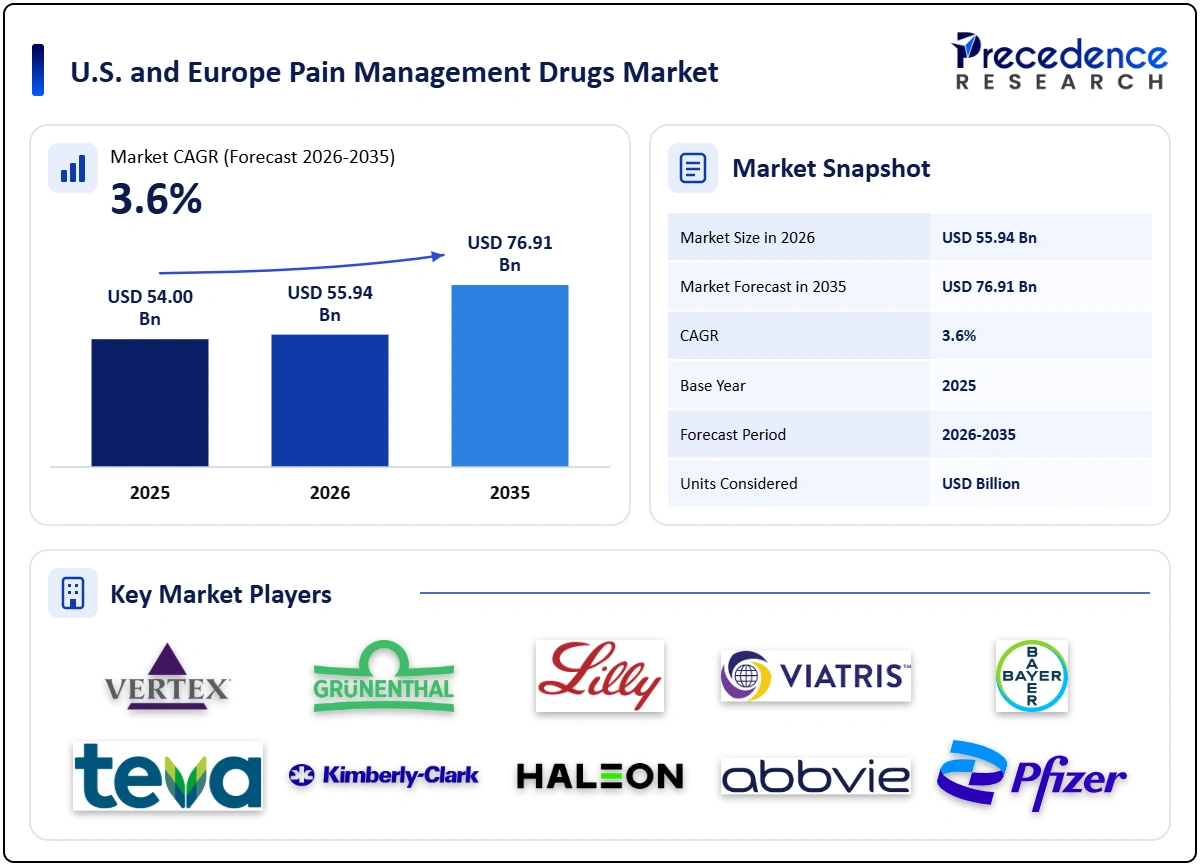
Payal Rabde a Healthcare Industry Expert, highlights that the U.S. and Europe pain management drugs market has reached USD 55.94 billion in 2026 and is on track to reach USD 76.91 billion by 2035, advancing at a CAGR of 3.6%. Key U.S. and Europe pain management drugs market companies shaping the market include Pfizer, AbbVie, Haleon, Kimberly-Clark, while major growth segments span drug class, indication, distribution channel.
Source: https://www.precedenceresearch.com/us-and-europe-pain-management-drugs-market
 Get a Sample
 Table Of Content
Key Takeaways
Market Size & Growth Outlook
- Market size in 2025: USD 54.00 billion
- Estimated market size in 2026: USD 55.94 billion
- Projected market size by 2035: USD 76.91 billion
- CAGR (2026-2035): 3.6%
Regional Market Spotlight
- The United States led the market in 2025, capturing 64% of total revenue, and is projected to record the fastest growth, with a CAGR of 4.02% from 2026 to 2035.
- In 2025, Germany accounted for 9% of the market.
- The rest of Europe accounted for 7% of the market in 2025.
Segmental Spotlight
- Opioids accounted for the largest drug class segment share at 26% in 2025.
- In 2025, chronic pain dominated the indication segment, accounting for 46% of the market.
- Retail pharmacies captured the largest distribution channel share, representing 54% of the market in 2025.
U.S. and Europe Pain Management Drugs Market Size, 2025-2035 (USD Billion)
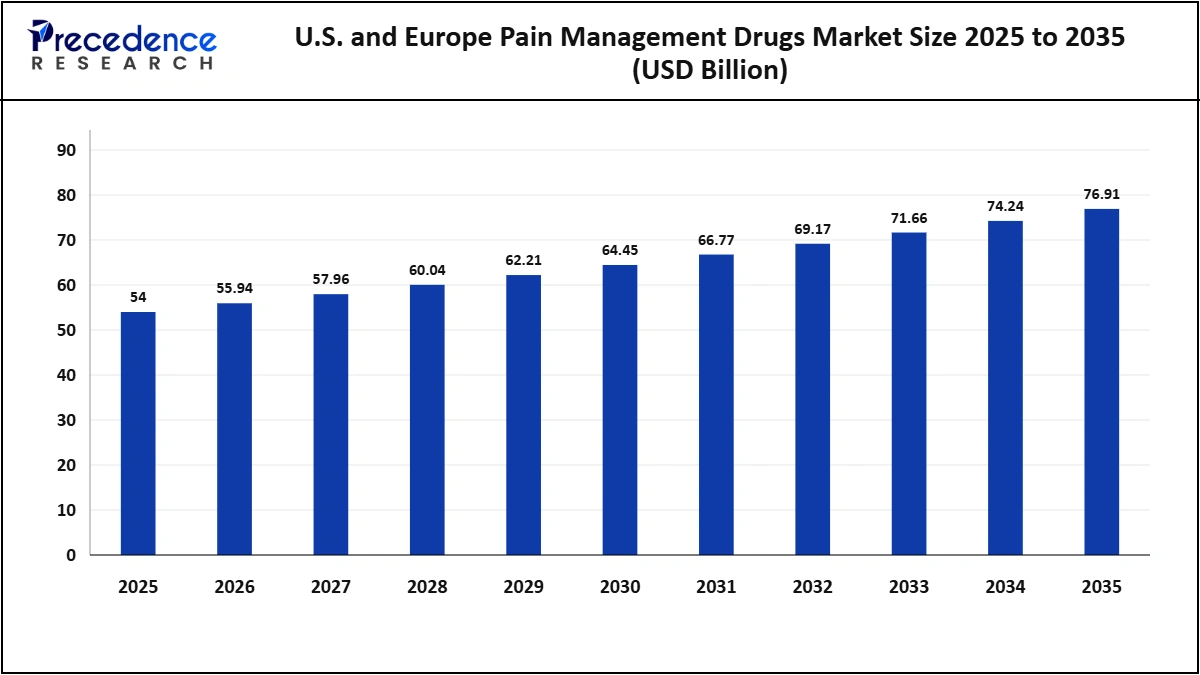
Note: 2025 is the base year; 2026-2035 values are forecasts.
Sources: Expert interviews, secondary sources, Precedence Research database, and Precedence Research analysts.
The U.S. and Europe pain management drugs market is projected to grow from USD 54.00 billion in 2025 to USD 76.91 billion by 2035, registering a CAGR of 3.6% during the 2026-2035 period. This growth is driven by the high prevalence of chronic pain conditions, increasing demand for effective analgesic treatments, and the development of novel non-opioid therapies. The market is expected to reach USD 64.45 billion by 2030, supported by demand for treatments addressing chronic pain, acute pain, post-operative pain, and migraine. Additionally, advances in CGRP-targeted migraine therapies, NaV1.8 inhibitors, and opioid-sparing treatment approaches are expected to support market growth.
Analyst View: Our market forecast is based on an assessment of prescription volumes and net prices across major drug classes, OTC analgesic sales, and company revenues across the United States and major European countries. We cross-check these estimates against company disclosures, expert interviews, and industry data to provide a comprehensive market outlook.
U.S. and Europe Pain Management Drugs Market Trends
- Non-opioid analgesics: NaV1.8 inhibitors emerge as innovative non-opioid pain treatments, targeting pain-signalling pathways and supporting opioid-sparing approaches in pain management.
- CGRP migraine drugs: Oral and injectable CGRP therapies gain adoption, offering targeted migraine prevention and treatment for patients inadequately responding to conventional medications.
- Opioid stewardship: Stricter regulations and prescribing guidelines encourage responsible opioid use, promoting non-opioid alternatives and opioid-sparing protocols across healthcare systems.
- OTC switching: Increasing availability of over-the-counter analgesics supports self-managed pain treatment, driving consumer demand and expanding retail and online pharmacy sales.
- Long-acting anaesthetics: Advances in long-acting local anaesthetics extend post-operative pain relief, supporting opioid-sparing treatment strategies and reducing dependence on conventional opioids.
U.S. and Europe Pain Management Drugs Market Dynamics
The U.S. and Europe pain management drugs market is evolving as healthcare providers expand the use of non-opioid therapies alongside established analgesics, particularly in acute, post-operative, and migraine treatment settings. However, generic competition, opioid prescribing restrictions, and safety concerns associated with conventional analgesics remain important challenges. At the same time, advancements in neuropathic pain treatments, opioid-sparing post-operative protocols, and digital therapeutics are creating new opportunities for market development.
Drivers
Chronic pain prevalence
The rising prevalence of chronic pain across the United States and Europe propelled demand for pain management medications. Conditions such as back pain, arthritis, and neuropathic pain are common, particularly among ageing and obese populations. The need for long-term symptom management continues to support demand for conventional and newer analgesic therapies.
Shift to non-opioids
Growing concerns about opioid dependence accelerated the adoption of non-opioid pain management treatments. Healthcare providers and regulatory authorities favour alternatives that deliver effective pain relief with fewer opioid-related risks. The availability of established alternatives, including NSAIDs, neuropathic pain therapies, and targeted migraine treatments, alongside the emergence of NaV1.8 inhibitors for acute pain, is supporting the transition towards more diversified pain-management approaches.
Migraine innovation
Continuous advancements in migraine therapies have created new opportunities in the pain management drugs market. CGRP-targeted oral and injectable treatments provide specialised options for acute migraine relief and prevention. Rising awareness, improved access to innovative medications, and demand for effective symptom control are encouraging their adoption across the United States and Europe.
Payment incentives
Reimbursement programmes and financial incentives encourage the use of non-opioid analgesics, particularly in outpatient surgical care. CMS add-on payments for eligible treatments improve the financial appeal of opioid alternatives and encourage healthcare providers to incorporate them into post-operative pain management protocols.
Market Drivers - Impact & CAGR Contribution (2026-2035)
| Driver | Impact | ≈ CAGR Contribution | Time Horizon | Key Regions |
| Chronic pain prevalence | High | +1.41 pp | Short to long term | U.S. & Europe-wide, strongest in U.S. |
| Shift to non-opioids | Medium | +1.19 pp | Medium to long term | U.S. & Europe-wide, fastest uptake in U.S. |
| Migraine innovation | Medium | +1.01 pp | Short to medium term | U.S. & Europe-wide |
| Payment incentives | Low | +0.79 pp | Long term | U.S. |
Note: Contributions are indicative estimates of each factor's effect on annual growth.
Sources: Expert interviews, secondary sources, Precedence Research database, and Precedence Research analysts.
Chronic pain prevalence, the shift towards non-opioid therapies, and migraine treatment innovation drove the U.S. and Europe pain management drugs market. Demand for long-term pain relief is supporting consumption across several drug classes, while opioid stewardship initiatives are encouraging the adoption of alternative analgesics. Furthermore, advances in CGRP-targeted treatments and reimbursement support for non-opioid medications are expanding treatment opportunities and strengthening market demand.
Restraints
Generic erosion
The availability of generic pain medications creates pricing pressure across the market. Competition from lower-cost NSAIDs, opioids, and conventional analgesics is reducing branded drug revenues, limiting manufacturers' profitability despite stable or growing prescription demand.
Opioid restrictions
Stricter opioid regulations and prescribing guidelines restrict the use of opioid-based pain medications. Growing efforts to prevent dependence and misuse are encouraging alternative treatments, potentially reducing prescription volumes and revenues from established opioid products.
Safety concerns
Adverse effects associated with conventional analgesics can limit their use among certain patient groups. NSAIDs carry gastrointestinal and cardiovascular risks, while opioids present dependence and misuse concerns, influencing prescribing decisions and encouraging alternative therapies.
Market Restraints - Impact & Negative CAGR Contribution (2026-2035)
| Restraint | Impact | ≈ Negative CAGR Contribution | Time Horizon | Key Regions |
| Generic erosion | High | -0.36 pp | Short to medium term | U.S. & Europe-wide |
| Opioid restrictions | High | -0.26 pp | Medium term | Smaller and price-sensitive markets |
| Safety concerns | Medium | -0.17 pp | Short term | U.S. and other mature markets |
Note: Contributions are indicative estimates of each factor's effect on annual growth.
Sources: Expert interviews, secondary sources, Precedence Research database, and Precedence Research analysts.
Generic erosion constrains the U.S. and Europe pain management drugs market, followed by opioid restrictions and medication safety concerns. Competition from low-cost generic products limits branded drug pricing and revenue growth, while stricter opioid prescribing practices reduce demand for certain established treatments. Furthermore, safety concerns associated with NSAIDs and opioids influence prescribing decisions and encourage healthcare providers to consider alternative pain management therapies.
Opportunities
Chronic pain trials
The development of novel therapies for chronic and neuropathic pain is creating growth opportunities for pharmaceutical manufacturers. Clinical investigations into non-opioid analgesics are expanding treatment options for patients with persistent pain conditions. Advances in targeted pain-signalling mechanisms and alternative pharmacological approaches could address unmet treatment needs among patients who do not respond adequately to conventional medications. Successful clinical development and regulatory approvals are expected to expand the availability of innovative chronic pain treatments.
Post-operative pain
The adoption of opioid-sparing post-operative pain management protocols offers significant market opportunities. Healthcare providers are exploring combinations of non-opioid analgesics, local anaesthetics, and long-acting anaesthetic formulations to improve pain control following surgical procedures. These approaches can reduce reliance on opioid medications while supporting post-operative recovery. Emphasis on enhanced recovery protocols and improved pain management outcomes is expected to encourage demand for innovative analgesic products.
Digital therapeutics
Integrating digital therapeutics with pain medications is creating opportunities for comprehensive treatment solutions. Mobile applications and digital platforms support medication adherence, symptom tracking, and patient engagement, enabling better monitoring of chronic pain management and expanding the adoption of connected healthcare solutions.
Market Segmentation: 2025 Share and Size
U.S. and Europe Pain Management Drugs Market by Drug Class, 2025-2035 Share (%)
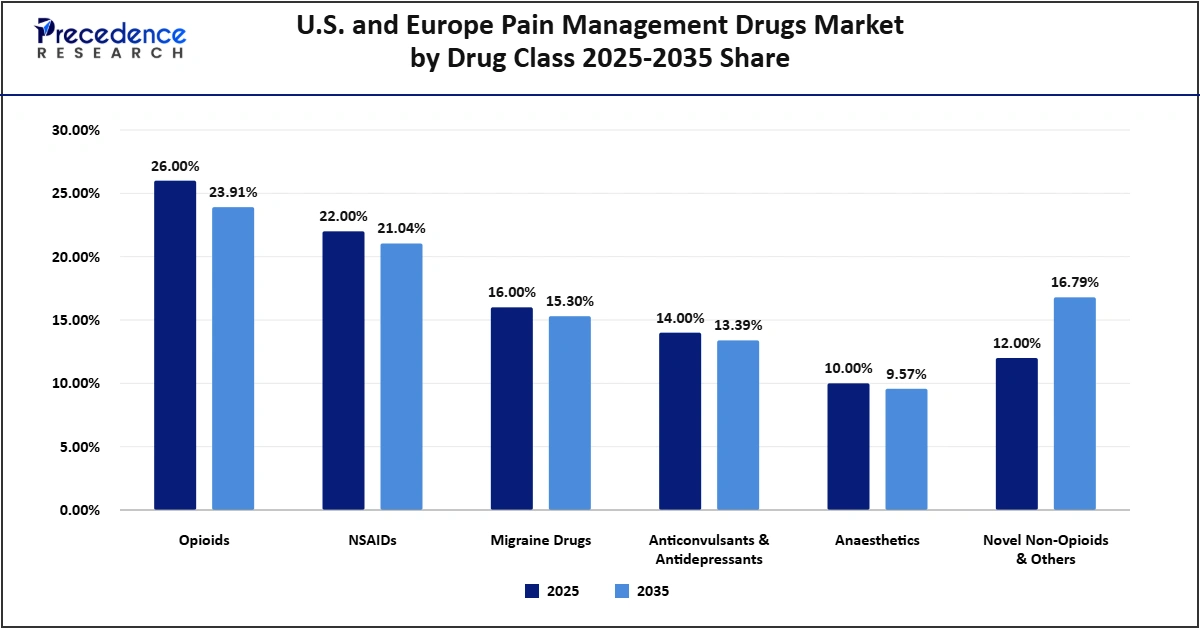
Note: 2025 is the base year; 2035 shares and CAGRs are forecasts.
Sources: Expert interviews, secondary sources, Precedence Research database, and Precedence Research analysts.
In 2025, opioids dominated the U.S. and Europe pain management drugs market, accounting for 26% of total revenue, supported by their established use in severe acute, post-operative, and cancer pain. NSAIDs represented the second-largest segment, with a 22% share, followed by migraine drugs at 16% and anticonvulsants and antidepressants at 14%.
Anaesthetics accounted for 10%, while novel non-opioids and other drugs represented the remaining 12%. Novel non-opioids and other drugs are projected to record the fastest growth during the forecast period, supported by adoption of innovative non-opioid treatments and expanding reimbursement access.
Opioids accounted for 26% of the U.S. and Europe pain management drugs market in 2025, making them a significant therapeutic category. Although prescribing volumes have declined due to stricter regulations and opioid stewardship initiatives, demand for long-acting and abuse-deterrent formulations continues to support segment revenues. The segment is projected to grow at a CAGR of 2.74% through 2035.
NSAIDs represented 22% of the market in 2025. The segment is expected to grow at a CAGR of 3.14% from 2026 to 2035, supported by widespread use for inflammatory and musculoskeletal pain management. Key medications include ibuprofen, naproxen, diclofenac, and celecoxib, which are available through prescription and over-the-counter channels, ensuring broad patient accessibility and consistent demand.
Migraine drugs captured the market share of 16% in 2025 and are projected to grow at a CAGR of 3.14% through 2035. The segment includes CGRP-targeted treatments such as Nurtec, Ubrelvy and Qulipta, alongside monoclonal antibody therapies. Increasing adoption of targeted migraine prevention and treatment options is supporting segment expansion.
Anticonvulsants and antidepressants held 14% of the market in 2025 and are projected to grow at a CAGR of 3.14% during the forecast period. The segment primarily includes pregabalin, gabapentin, and duloxetine, which are widely prescribed for neuropathic pain. Increasing recognition and treatment of chronic neuropathic conditions are expected to support demand.
Anaesthetics accounted for 10% of the market, supported by their role in surgical and post-operative pain management. Local and regional anaesthetics are expected to grow at a CAGR of 3.14% through 2035. Long-acting formulations, including bupivacaine-based products, provide extended pain relief and support multimodal analgesia approaches that reduce reliance on opioid medications.
Novel non-opioids and other drugs represented the remaining 12% of the market in 2025 and are projected to register the fastest CAGR of 7.14% from 2026 to 2035. Increasing interest in opioid-sparing treatments is supporting innovation, with suzetrigine gaining attention after prescriptions approached one million during the first half of 2026.
U.S. and Europe Pain Management Drugs Market by Indication, 2025 Share (%)
| Segments | 2025 Share | 2035 Share | CAGR 2026-2035 |
| Chronic Pain | 46.00% | 44.16% | 3.18% |
| Acute & Post-Operative Pain | 28.00% | 27.94% | 3.58% |
| Migraine | 16.00% | 17.92% | 4.78% |
| Cancer Pain | 10.00% | 9.99% | 3.58% |
Note: 2025 is the base year; 2035 shares and CAGRs are forecasts.
Sources: Expert interviews, secondary sources, Precedence Research database, and Precedence Research analysts.
Chronic pain dominated the U.S. and Europe pain management drugs market by indication, accounting for 46% of total revenue in 2025. Acute and post-operative pain represented the second-largest segment, with a 28% share, followed by migraine at 16% and cancer pain at 10%. Migraine is projected to record the fastest growth during the forecast period, driven by adoption of CGRP-targeted treatments and innovative preventive therapies.
Chronic pain held 46% of the market in 2025, making it the largest application segment. Demand is supported by the rising prevalence of arthritis, back pain, and neuropathic disorders, alongside the need for long-term symptom management. The segment is projected to grow at a CAGR of 3.18% through 2035.
Acute and post-operative pain accounted for 28% of the market, driven by surgical procedures, injuries, and hospital-based pain management requirements. The segment is expected to expand at a CAGR of 3.58% from 2026 to 2035. Increasing adoption of multimodal analgesia and opioid-sparing treatments is supporting demand.
Migraine captured 16% of the market in 2025 and is projected to register the fastest CAGR of 4.78% through 2035. The segment includes acute and preventive migraine treatments, particularly CGRP antagonists and monoclonal antibodies. Increasing awareness, improved diagnosis, and the availability of targeted therapies are expected to strengthen demand throughout the forecast period.
Cancer pain represented the remaining 10% of the market in 2025 and is projected to grow at a CAGR of 3.58% from 2026 to 2035. The segment includes analgesics used to manage pain associated with cancer progression and cancer treatment. Continued demand for effective pain relief among oncology patients and the established use of opioid and non-opioid medications are expected to support segment growth.
U.S. and Europe Pain Management Drugs Market by Distribution Channel, 2025-2035 Share (%)
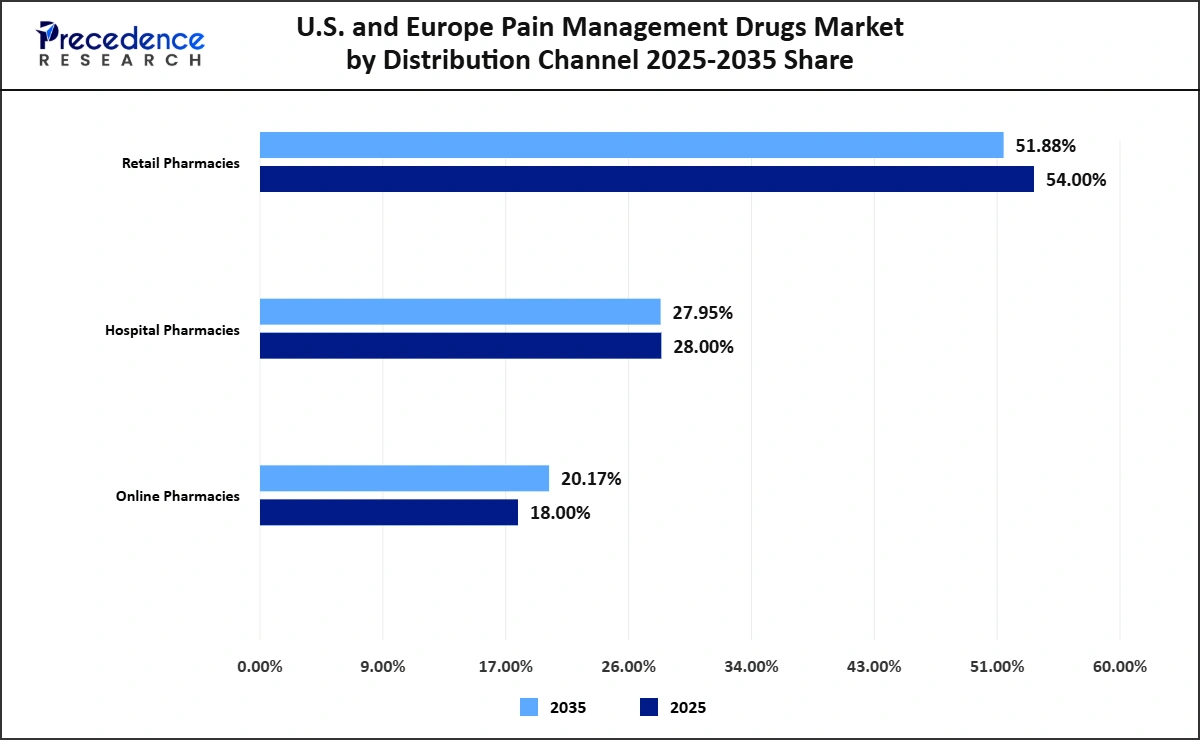
Note: 2025 is the base year; 2035 shares and CAGRs are forecasts.
Sources: Expert interviews, secondary sources, Precedence Research database, and Precedence Research analysts.
In the U.S. and Europe pain management drugs market, retail pharmacies dominated distribution in 2025, accounting for 54% of total revenue. Their leading share reflects widespread access to prescription medications and over-the-counter analgesics through community pharmacy networks. Hospital pharmacies represented 28% of the market, while online pharmacies accounted for the remaining 18%. Online pharmacies are projected to grow fastest during the forecast period, driven by digital purchasing, home delivery, and expanding online prescription fulfillment.
Retail pharmacies accounted for the largest distribution channel share, at 54% in 2025, and are projected to grow at a CAGR of 3.18% through 2035. These pharmacies distribute prescription pain medications and over-the-counter products, including NSAIDs and other commonly used analgesics. Their extensive physical presence, accessibility, and established consumer relationships support continued market dominance.
Hospital pharmacies represented 28% of the market in 2025. The segment is expected to grow at a CAGR of 3.58% from 2026 to 2035. Hospital pharmacies dispense prescription analgesics, anaesthetics, and specialised pain-management medications used in inpatient, surgical, and post-operative care. Increasing surgical procedures, inpatient treatment requirements, and demand for post-operative pain management are supporting segment growth.
Online pharmacies held 18% of the market in 2025 and are projected to register the fastest CAGR of 4.78% through 2035. The segment includes digital platforms providing prescription and over-the-counter pain management medications. Increasing consumer preference for convenient purchasing, home delivery, and digital prescription services is expected to accelerate segment expansion.
Analyst View: Our analysis indicates that novel non-opioids and other drugs, migraine treatments, and online pharmacies are poised to record the fastest market share gains. In contrast, opioids, chronic pain treatments, and retail pharmacies are expected to maintain their market dominance, supported by established clinical applications, widespread demand, and well-developed distribution networks.
Country Analysis
U.S. and Europe Pain Management Drugs Market by Country, 2025 Share (%)
| Country | 2025 Share | 2035 Share | CAGR 2026-2035 |
| U.S. | 64.00% | 66.62% | 4.02% |
| Germany | 9.00% | 8.35% | 2.82% |
| Rest of Europe | 7.00% | 6.49% | 2.82% |
| UK | 6.00% | 5.56% | 2.82% |
| France | 6.00% | 5.56% | 2.82% |
| Italy | 5.00% | 4.63% | 2.82% |
| Spain | 3.00% | 2.78% | 2.82% |
Note: 2025 is the base year; 2035 shares and CAGRs are forecasts.
Sources: Expert interviews, secondary sources, Precedence Research database and Precedence Research analysts.
The United States held a dominant position in the pain management drugs market in 2025, capturing 64% of total revenue, driven by high branded drug prices, established pharmaceutical distribution networks, and the adoption of innovative non-opioid treatments. The United States is also projected to record the fastest growth during the forecast period. Germany ranked as the largest European market, contributing 9% of total revenue, followed by the rest of Europe at 7%. The UK and France each accounted for 6%, while Italy and Spain represented 5% and 3%, respectively.
Country Insights
The United States dominated the market with a 64% share in 2025 and is projected to record the fastest CAGR of 4.02% from 2026 to 2035. The growth in the regional market is supported by premium-priced branded migraine therapies and increasing adoption of innovative non-opioid analgesics. CMS add-on reimbursement payments were introduced in January 2026 for eligible non-opioid pain treatments.
Germany held 9% of the U.S. and Europe pain management drugs market in 2025, making it the largest European country market. Its established healthcare infrastructure, pharmaceutical industry, and access to prescription and over-the-counter pain medications support demand. The market is projected to grow at a CAGR of 2.82% through 2035.
The rest of Europe captured a market share of 7% in 2025 and is projected to grow at a CAGR of 2.82% during the forecast period. Demand across these markets is supported by established healthcare systems, increasing chronic pain prevalence, and access to generic and branded analgesics.
The UK accounted for 6% of the pain management drugs market in the United States and Europe in 2025. The country is expected to expand at a CAGR of 2.82% through 2035. Strong over-the-counter analgesic sales, established community pharmacy networks, and prescription pain management demand support the country's market position.
France held a market share of 6% in 2025 and is projected to grow at a CAGR of 2.82% during the forecast period. Established healthcare services, access to prescription medications, and demand for chronic and acute pain treatments support market development through 2035.
Italy accounted for 5% of the market in 2025. The country is expected to register a CAGR of 2.82% through 2035. Demand is supported by the use of prescription and over-the-counter analgesics, an ageing population, and the treatment of chronic musculoskeletal conditions.
Spain represented the remaining 3% of the pain management drugs market in the United States and Europe in 2025 and is projected to grow at a CAGR of 2.82% during the forecast period. Increasing demand for chronic pain management, established pharmacy networks, and access to generic analgesics support market growth.
Analyst View: Our analysis suggests that the U.S. will retain its leading position in the U.S. and Europe pain management drugs market and record the fastest growth, supported by premium branded drug pricing, innovative non-opioid treatments, and expanding reimbursement. Meanwhile, Germany is expected to maintain its position as the largest European country market, supported by established healthcare infrastructure and sustained demand for pain management medications.
Competitive Landscape
Top 10 Companies in the U.S. and Europe Pain Management Drugs Market, 2025
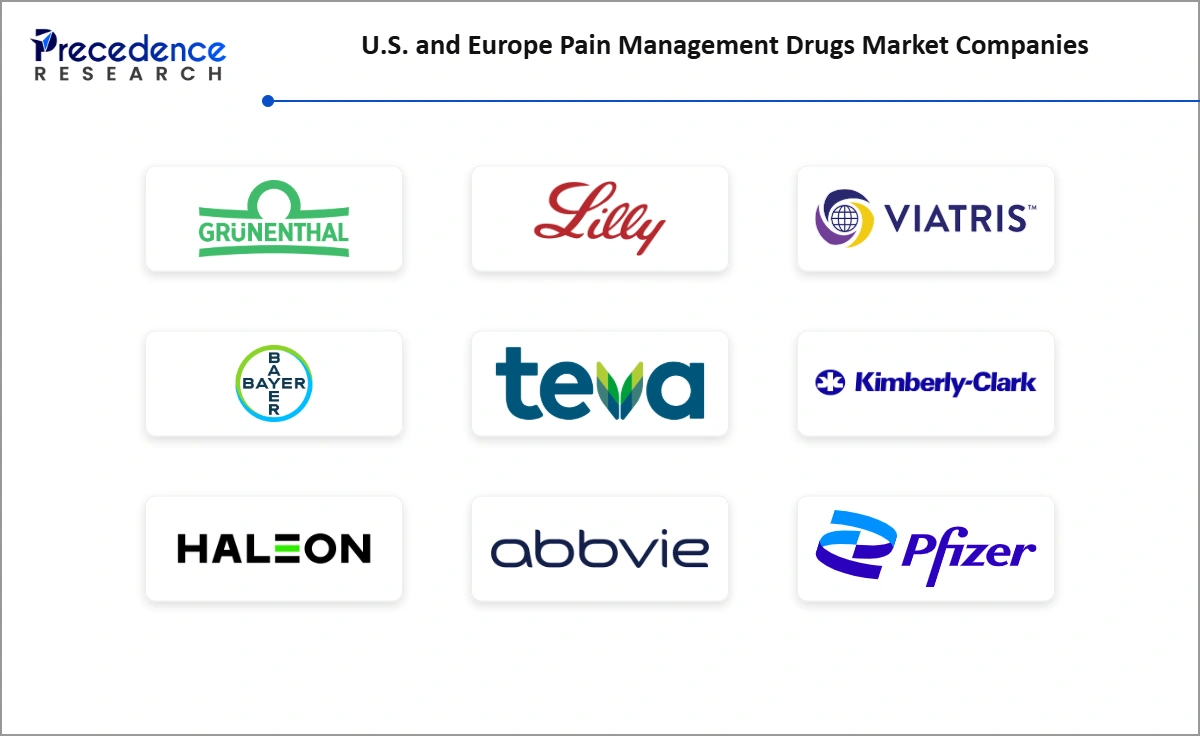
| Rank | Company Name | 2025 Share (%) | Key Products / Business | Headquarters |
| 1 | Pfizer | 8.00% | Nurtec ODT, Celebrex and Lyrica | United States |
| 2 | AbbVie | 7.00% | Ubrelvy and Qulipta | United States |
| 3 | Haleon | 5.00% | Advil and Voltaren OTC | United Kingdom |
| 4 | Kimberly-Clark | 4.00% | Tylenol and Motrin | United States |
| 5 | Teva | 4.00% | Ajovy and generic analgesics | Israel |
| 6 | Bayer | 3.00% | Aleve and Aspirin | Germany |
| 7 | Viatris | 3.00% | generic pain drugs | United States |
| 8 | Eli Lilly | 3.00% | Emgality | United States |
| 9 | Grünenthal | 2.00% | Palexia and Qutenza | Germany |
| 10 | Vertex | 1.50% | Journavx (suzetrigine) | United States |
Note: Company shares are 2025 estimates.
Sources: Company press releases, expert interviews, secondary sources, Precedence Research database and Precedence Research analysts.
Pfizer dominated the pain management drugs market in the U.S. and Europe in 2025, accounting for an estimated 8% of total revenue, followed by AbbVie at 7% and Haleon at 5%. These companies maintain competitive positions through established branded pain management products, innovative migraine treatments, and widely distributed over-the-counter analgesics.
Pfizer competes through Nurtec ODT, Celebrex and Lyrica, while AbbVie strengthens its position through Ubrelvy and Qulipta. Haleon maintains its presence through Advil and Voltaren OTC products. Kimberly-Clark, Teva, Bayer, Viatris, Eli Lilly, Grünenthal and Vertex participate through Tylenol and Motrin, Ajovy and generic analgesics, Aleve and Aspirin, generic pain medications, Emgality, Palexia and Qutenza, and Journavx (suzetrigine), respectively.
In 2025, the top 10 listed companies accounted for an estimated 40.50% of the U.S. and Europe pain management drugs market revenue, while the remaining 59.50% was distributed among generic manufacturers and other branded over-the-counter product companies. The market remains fragmented, with competition shaped by branded drug innovation, clinical efficacy, safety profiles, generic pricing, and established distribution networks. Companies investing in novel non-opioid analgesics and targeted migraine therapies are strengthening their competitive positions.
Company Snapshots
Pfizer: Pfizer held the largest estimated share of the U.S. and Europe pain management drugs market, accounting for approximately 8% in 2025. Headquartered in the United States, the company competes through Nurtec ODT, Celebrex, and Lyrica, positioning it as a Leader in the Precedence Research Companies Quadrant.
AbbVie: With an estimated 7% share of the market in 2025, AbbVie, headquartered in the United States, competes through its migraine treatment portfolio, including Ubrelvy and Qulipta, positioning it as a Leader in the Precedence Research Companies Quadrant.
Haleon: In 2025, Haleon accounted for approximately 5% of the market. Headquartered in the United Kingdom, the company competes through its Advil and Voltaren over-the-counter products, positioning it as a Leader in the Precedence Research Companies Quadrant.
Kimberly-Clark: Kimberly-Clark held an estimated 4% share of the market in 2025. Headquartered in the United States, the company competes through Tylenol and Motrin pain relief products, categorizing it as a Leader in the Precedence Research Companies Quadrant.
Teva: Headquartered in Israel, Teva accounted for approximately 4% of the market in 2025 and competes through Ajovy and generic analgesics, positioning it as a Leader in the Precedence Research Companies Quadrant.
Bayer: Bayer held an estimated 3% share of the market in 2025. The German company competes through Aleve and Aspirin, positioning it as a Leader in the Precedence Research Companies Quadrant.
Viatris: Viatris accounted for approximately 3% of the market in 2025, focusing on generic pain management medications. Headquartered in the United States, the company is categorized as an Innovator in the Precedence Research Companies Quadrant.
Eli Lilly: In 2025, Eli Lilly held an estimated 3% share of the market. Headquartered in the United States, the company competes through Emgality, a CGRP-targeted migraine treatment, positioning it as an Innovator in the Precedence Research Companies Quadrant.
Grünenthal: With an estimated 2% share of the market in 2025, Grünenthal, headquartered in Germany, competes through Palexia and Qutenza, positioning it as an Innovator in the Precedence Research Companies Quadrant.
Vertex: Vertex accounted for approximately 1.50% of the market in 2025. Headquartered in the United States, the company focuses on Journavx (suzetrigine), an innovative non-opioid analgesic, positioning it as an Innovator in the Precedence Research Companies Quadrant.
Companies Ecosystem
The U.S. and Europe pain management drugs ecosystem comprises pharmaceutical manufacturers, pharmacies, healthcare providers, regulatory authorities, and payers involved in drug development, distribution, and patient access. Clinical trials support innovation in non-opioid analgesics and migraine therapies, while hospitals administer medications through an infusion pump. Additionally, behavioral health services and digital health programmes complement pharmacological treatments by supporting chronic pain management and patient monitoring.
U.S. and Europe Pain Management Drugs Market Ecosystem
| Ecosystem Stage | Role in the Market | Key Companies |
| Drug Makers | Develop and sell drugs | Pfizer, AbbVie, Vertex, Haleon |
| Generic Makers | Supply generics | Teva, Viatris, Sandoz |
| Pharmacies & PBMs | Dispense | CVS, Walgreens, European pharmacies |
| Prescribers | Treat pain | primary care, pain specialists, surgeons |
| Regulators & Payers | Approve and pay | FDA, EMA, CMS |
Sources: Company press releases, expert interviews, secondary sources, Precedence Research database and Precedence Research analysts.
Drug Makers: Branded pharmaceutical manufacturers prioritise innovation in migraine therapies and novel non-opioid analgesics, while OTC brands strengthen market presence through consumer trust, product recognition, and accessibility.
Generic Makers: Generic drug manufacturers supply substantial volumes of opioids, NSAIDs, and neuropathic pain medications, competing through affordable pricing, broad availability, and established distribution networks.
Pharmacies & PBMs: Pharmacies and pharmacy benefit managers influence medication availability, affordability, and patient access. Formulary placement and reimbursement decisions determine the adoption of newer pain management drugs.
Prescribers: Healthcare providers are opting for non-opioid alternatives over opioid prescriptions, influenced by considerations of patient safety, prescribing guidelines, and clinical effectiveness.
Regulators & Payers: Regulatory authorities and healthcare payers shape market adoption via prescribing policies and reimbursement frameworks, favoring payment incentives for non-opioid pain management alternatives.
The U.S. and Europe pain management drugs market value chain begins with pharmaceutical ingredient and material suppliers and continues through branded and generic drug manufacturing, distribution partners, pharmacies, prescribers, and end users. Regulatory requirements, reimbursement policies and formulary decisions influence product development, market accessibility and treatment adoption. Companies that integrate multiple stages or establish long-term relationships with healthcare providers, pharmacies, and distribution partners can strengthen their competitive positions.
Precedence Research Companies Quadrant
The Precedence Research Companies Quadrant positions key participants in the U.S. and Europe pain management drugs market by market strength, reflecting revenue scale, market share, and geographic reach, and by innovation and growth strategy, reflecting product portfolio breadth, R&D intensity, and partnerships. Positions reflect each company's estimated 2025 share of the pain management drugs market in the United States and Europe and our assessment of its product innovation, portfolio breadth, and partnerships.
Sources: Company press releases, expert interviews, secondary sources, Precedence Research database and Precedence Research analysts.
Leaders: Pfizer, AbbVie, Haleon, Kimberly-Clark, Teva, and Bayer combine high market share with broad portfolios and strong innovation.
Innovators: Viatris, Eli Lilly, Grünenthal, and Vertex bring newer technologies and specialised products.
Recent Developments
- August 2026: Approximately 900,000 filled prescriptions for suzetrigine (Journavx) were reported in the United States during the first half of 2026, including approximately 535,000 in the second quarter. The figure indicates early commercial uptake of a novel non-opioid acute-pain treatment.
- January 2026: CMS added Journavx (suzetrigine) to its qualifying non-opioid pain-treatment list under HCPCS code C9818, effective January 23, 2026, for eligible hospital outpatient and ambulatory surgical centre payment arrangements.
U.S. and Europe Pain Management Drugs Market Segments
By Drug Class
- Opioids
- NSAIDs
- Migraine Drugs
- Anticonvulsants & Antidepressants
- Anaesthetics
- Novel Non-Opioids & Others
By Indication
- Chronic Pain
- Acute & Post-Operative Pain
- Migraine
- Cancer Pain
By Distribution Channel
- Retail Pharmacies
- Hospital Pharmacies
- Online Pharmacies
By Country
- U.S.
- Germany
- UK
- France
- Italy
- Spain
- Rest of Europe
Research Methodology: The U.S. and Europe pain management drugs market was evaluated using a bottom-up assessment of drug demand volumes, average selling prices, and product revenues across major drug class, indication, distribution channel, and country categories. The market comprises prescription and over-the-counter medications, including opioids, NSAIDs, anticonvulsants and antidepressants for neuropathic pain, migraine drugs, local and regional anaesthetics and novel non-opioid analgesics. These treatments address chronic pain, acute and post-operative pain, migraine and cancer pain across the United States and major European markets. The 2025 base-year estimate was developed by analysing prescription volumes, over-the-counter analgesic sales and average drug prices across drug classes, indications and distribution channels in the United States and major European countries. It was validated against market-specific revenues of leading pharmaceutical companies, public industry information and relevant company disclosures. Company market shares were determined using estimated revenues attributable to pain management drug portfolios. Key assumptions were cross-checked against company disclosures, regulatory and industry information, expert interviews and third-party estimates. Estimates that could not be reconciled were excluded from the final assessment. All segment, country and company estimates were reconciled to the same 2025 base year. The 2026-2035 forecast incorporates expected changes in chronic pain prevalence, opioid prescribing restrictions, non-opioid treatment adoption, migraine drug innovation, generic competition, reimbursement policies, and distribution channel expansion.
Analyst View: In our assessment, the U.S. and Europe pain management drugs market is positioned for moderate growth as demand for innovative non-opioid analgesics and targeted migraine treatments increases. We expect opioids to maintain their leading drug class position, supported by established applications in severe acute, post-operative, and cancer pain, although their market share is projected to decline. Novel non-opioids and other drugs are anticipated to expand at a faster rate, driven by adoption of innovative analgesics and improving reimbursement access. Chronic Pain will remain the largest indication, while Migraine is projected to record the fastest growth. Retail Pharmacies will continue to account for the largest distribution channel share, whereas Online Pharmacies are expected to expand more rapidly. The United States is projected to retain its leading regional share and record the fastest growth, supported by branded drug pricing and expanding non-opioid reimbursement. Companies strengthening innovative drug pipelines, targeted migraine portfolios, non-opioid treatment options, and distribution networks will improve their competitive positions.
Sources and References
- Pharmacy Times. "Suzetrigine nears 1 million prescriptions as reimbursed access expands for nonopioid acute pain treatment". August 2026. News. (Source: pharmacytimes.com)
- Business Wire. "Vertex announces FDA approval of JOURNAVX (suzetrigine) for moderate-to-severe acute pain". January 2025. Press release. (Source: businesswire.com)
For inquiries regarding discounts, bulk purchases, or customization requests, please contact us at sales@precedenceresearch.com
Frequently Asked Questions





Ask For Sample
No cookie-cutter, only authentic analysis – take the 1st step to become a Precedence Research client
 Get a Sample




 sales@precedenceresearch.com
 Schedule a Meeting
